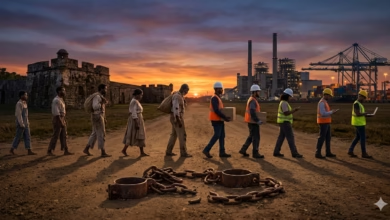

Cautious Neighbors: Harsh Geography And The Problematic Partnership On The Russian-Chinese Border


In A World Where Geopolitical Shifts Are Accelerating And The Interests Of Great Powers Intertwine, The Book “On The Edge: Life Along The Russia-China Border” Emerges As A Research And Anthropological Document Shedding Light On One Of The Most Complex And Mysterious Regions In The World. This Work (On The Edge: Life Along The Russia-China Border), Authored By Researchers Frank Billé And Caroline Humphrey And Published By Harvard University Press In 2021, Offers A Deep Exploratory Journey Blending Politics, Geography, And Everyday Human Life In Those Remote Places. This Journey Begins From A Highly Important Geographical And Political Fact, As The Border Between Russia And China Extends For Thousands Of Miles, Formed Mostly By Great Rivers Including The Argun River, The Amur River, And The Ussuri River, Reaching Mongolia On One Side And North Korea On The Other. Here Lies The Essence Of The Paradox: In This Region There Are No Buffer Zones, No Intermediary States, And No Oceans To Soften The Intensity Of Direct Sovereign Contact Between The Two Giants. Yet, Despite This Vast Expanse And The Presence Of Major Cities Situated Directly On The Banks Of These Rivers, It Is Simultaneously Remarkable And Strange That Effective Bridges—Whether Paved Roads Or Railways—That Would Seamlessly Connect The Two Countries Are Absent. This Absence Of Bridges Is No Coincidence; It Carries Both Symbolic And Practical Significance, As The Rivers Appear Like Psychological And Physical Barriers Designed To Separate Rather Than Spaces Created To Connect.
Through Examining These Barriers, The Book Presents A Critical Thesis Challenging The Traditional Western View That Accustomed Itself To Lump Both Countries Into One Basket Under The Banner Of “Political Capitalism” Or Authoritarian Regimes. For Despite The Superficial Resemblance Joining Them In Opposing Western Hegemony, Russia And China Differ Radically To The Core And In Their Farthest Reaches. The Chinese System Relies On An Established, Well-Organized Party Bureaucracy With A Collective And Institutional Nature That Adapts To Public Opinion In Its Own Calculated Way. In Contrast, The Russian System Is Characterized By Extreme Personalization, Strict Vertical Centralization, And Individual, Irregular Decision-Making Completely Dependent On Top Leadership Interventions. This Cultural and Administrative Contrast Is Strikingly Reflected In The Form Of Life And The Concept Of The State At The Border, Which Also Extends To The Nature Of The Strategic Partnership Between Them. On The Surface, Bilateral Relations Seem To Be In Their Golden Age, As Chinese President Xi Jinping Describes His Russian Counterpart Vladimir Putin As His Best Friend, And Trade Volume Reached 107 Billion Dollars In 2018, With Stated Ambitions To Double This Figure Through Joint Projects In Energy, Industry, And Agriculture. But Diving Beneath This Shining Diplomatic Surface Reveals Deep Imbalances. For Russia, China Is At The Top Of Its Foreign Policy Priorities, Especially After The 2014 Sanctions And Russia’s Pivot To The East, Whereas For Beijing, Russia Represents Only One Aspect Of Its Multifaceted Foreign Policy. Therefore, Analysts Describe This Relationship As Akin To A Marriage Of Convenience Driven Primarily By Shared Pressure From The United States And The West. Most Importantly, There Is A Overwhelming Demographic And Economic Disparity: China’s Population Outnumbers Russia’s By Nearly Tenfold, An Imbalance Reflected With Terrifying Clarity For Russians On The Border. Opposite The 38 Million Chinese Living In Heilongjiang Province Adjacent To The Russian Border, The Population Of The Entire Russian Far East—Which Represents A Third Of Russia’s Land Area—Does Not Exceed 6 Million People, A Figure Continuously Declining Due To Reverse Migration Toward Western Russia. This Disparity Creates A State Of Constant Apprehension Within Russia Over The Possibility Of Becoming Merely A Natural Resource Annex Feeding The Insatiable Chinese Economy Eager For Gas, Timber, And Minerals.
The Dynamics Of This Border Cannot Be Understood Without Returning To A History Burdened By Past Traumas And Clashing Geopolitical Projects. The Ideological Rift In The 1950s And The Military Confrontations In The 1960s, Which Culminated In March 1969 With Bloody Armed Clashes Around The Small Damansky Island On The Ussuri River, Still Cast Their Shadows. Although Border Disputes Were Peacefully Settled Later, The Historical Memory Of Russians Remains Haunted By The Specter Of Chinese Expansionism, Which Manifests In An Exaggerated Fear Of Chinese Immigrants And The Formation Of Ethnic Enclaves, Even Though Reality Shows Their Small Numbers There And Their Preference For Other Destinations. On The Other Side, Bitterness Remains Present In Chinese Consciousness Due To The Unequal Treaties Signed Between 1858–1860, Under Which China Lost Vast Territories To The Russian Empire. Today, These Apprehensions Take Shape In Major Strategic Projects, As China Launched The Belt And Road Initiative In 2013 As A Flexible, Open Global Network Aiming To Connect The World Commercially Without Being Bound By Rigid Borders, Reflecting Its Functional And Comprehensive View Of Regionalism. In Contrast, Russia Launched The Eurasian Economic Union As An Exclusionary Space Defined By Clear Borders, Attempting To Revive Its Soviet Glory As A Central Power—A Contradiction That Effectively Led To Russia Being Marginalized From Fully Benefiting From The Asian Boom And Retaining Policies That Hinder The Smooth Flow Of Free Trade Compared To Its Neighbors.
In This Context, The Researchers Excel At Analyzing The Spatial Structure Of Both Countries And How They Manage Their Peripheries, Revealing A Striking Contrast In Border Planning. Standing On The Chinese Bank, You Are Overcome By The Feeling That You Are At The Forefront Of A Civilization Rushing Forward, Embracing The Adage That If You Want To Create Wealth, Build Roads First. Accordingly, Beijing Has Woven A Dense, Tightly Knit Network Of Highways And Local Roads Penetrating To The Farthest Border Point, Linking Villages And Factories To The Center And Facilitating Security And Economic Control. On The Russian Bank, However, The Picture Appears Gloomy And Desolate, As State Planning Relies On Radial Centralization Originating From Moscow. Authority There Cares About Vertical Roads Leading To The Capital While Intentionally Ignoring Horizontal Links Between Border Villages And Towns, Creating What Geographer Boris Rodoman Calls Depressed Regions Or Voids. There Are No Main Roads Running Parallel To The River Border In Russia; Indeed, The New Highway And The Trans-Siberian Railway Deliberately Keep Away From The Border By A Distance Ranging From 25 To 40 Miles. This Isolation Is Not Accidental But Entirely Intentional, Servicing As An Extension Of A Soviet Security Mindset That Views The Border As A Closed Zone Forbidden To Enter Without Complex Security Permits From The Russian Federal Security Service. For Russia, Security Is Achieved Through The Absence Of Infrastructure And Rough Terrain, Not Through Development.
We Move From Major Infrastructure And Political Decisions To The True Pulse Of The Border, Where Economic And Social Life Is Manifested In Its Grandest Forms Of Contradiction And Complementarity Simultaneously. Perhaps The Most Shining And Symbolic Example Of This Complex Reality Is Embodied In The Unique Geographical Twinning Between The Russian City Of Blagoveshchensk And The Chinese City Of Heihe, Which Face Each Other On Opposite Banks Of The Great Amur River. While The Russian City Stands In Its Classical Quietness And History Dating Back To The Nineteenth Century, Retaining An Architectural Character Tending Toward Stagnation And Slow Development, The Chinese City Of Heihe Stands On The Opposite Bank Like A Gleaming Urban Beast, Transforming Within A Few Decades From A Quiet Agricultural Village Into An Economic Metropolis Buzzing With Skyscrapers And Dazzling Lights Reflected On The River’s Waters. This Visual Contrast Is Not Random; Rather, It Is At Its Core A Deliberate Chinese Display Of Economic Power, And A Light And Architectural Message Directed At The Russian Bank Reflecting The Vitality Of Accelerating Chinese Capitalism. Yet, Despite This Vast Visual And Economic Disparity, The Two Cities Are Linked By A Hidden, Complex Lifeline Of Trade Exchange And Mutual Dependence That Transcends Official Political Slogans And Imposes A Pragmatic Reality Lived Daily By The Residents.
At The Heart Of This Mutual Dependence Emerges The Phenomenon Of Border Trade, Or What Is Known As Shuttle Trade, Which Played A Historical And Decisive Role In Saving The Russian Far East From Total Economic Collapse After The Dissolution Of The Soviet Union. Despite The Constant Security And Political Apprehension Of Chinese Expansion, The Russian Citizen Living On The Border Finds Himself Almost Completely Dependent On Consumer Goods, Clothing, Electronic Devices, And Even Agricultural And Food Products Coming From China. This Dynamic Has Created A Broad Class Of Small Traders And Middlemen Crossing The River Back And Forth, Transforming The Border From A Sovereign Barrier Into An Open Market Governed By The Laws Of Supply And Demand And Run By Networks Of Individual Interests More Than Managed By Decisions From Moscow Or Beijing. In Return, China Finds In Its Russian Neighbor A Cheap And Indispensable Source Of Natural Resources And Raw Materials, In Addition To Being A Greedy Consumer Market For Its Light Industrial Products. This Deep Economic Entanglement Creates A State Of Practical Synergism, But An Imbalanced Synergism, Constantly Feeding A Sense Of Bitterness Among Russians Who See Their Country, Once An Industrial Superpower, Gradually Turning In The Eyes Of Its Neighbors Into Merely A Source Of Raw Materials And A Submissive Consumer Of Goods From An Asian Power That Never Stops Expanding And Growing.
This Stark Disparity Does Not Stop At The Boundaries Of Economics And Numbers, But Penetrates Deeply Into The Social And Psychological Fabric Of The Residents On Both Banks, Where Peoples Exchange Looks Filled With Curiosity, Admiration, And Inherent Historical Apprehension. Russians Look At Their Chinese Neighbors With A Great Deal Of Pragmatism Mixed With Caution; They Acknowledge Their Hard Work, Perseverance, And Superior Ability For Continuous Labor And Rapid Achievement, And Indeed Fully Realize That The Economic Survival Of Their Remote Regions Is Bound One Way Or Another To This Dense Chinese Presence. But This Realistic Acknowledgment Is Always Accompanied By A Deep-Seated Fear Of China’s Overwhelming Demographic Superiority, And An Ongoing Existential Anxiety Over The Possibility Of Cultural Assimilation Or Slow Economic Swallowing Of Their Vast, Half-Empty Lands. On The Other Bank, Chinese Carry A Look No Less Complex Toward Their Russian Neighbors—A Look Blending Nostalgia For The Soviet Past, Which Represents An Ideological Big Brother Model For Older Generations In China, With A Growing Sense Of Present Economic Superiority. Chinese Today View Russia As An Aging State Suffering From Economic Stagnation And Administrative Decline, But At The Same Time They View It As A Bearer Of An Ancient, Distinctive European Cultural Heritage That Commands Their Admiration, Which Partially Explains The Massive, Continuous Inflow Of Chinese Tourists Across The Border.
Border Tourism Is Consequently Considered One Of The Most Interesting And Surprising Phenomena In This Transboundary Landscape, As Russian Border Cities Are Cleverly Marketed Inside China As The Geographically Closest, Cheapest, And Safest European Destination. Thousands Of Chinese Cross The River Daily Not To Buy Technology Or Advanced Goods, But To Experience The Illusion Of Immersing Themselves In A Miniature Europe, Enjoying Classical Russian Architecture, Tasting Local Chocolates, Buying Jewelry Made Of Amber, And Eagerly Taking Souvenir Photos With Old Soviet Statues And Landmarks. In A Rapid, Pragmatic Response To This Growing Demand, Russians Innovate And Offer A Theatrical, Stereotyped Version Of Their Culture And History To Meet The Expectations Of The Chinese Tourist, Creating An Entire Economy Based On Selling “Russian Authenticity” As A Packaged Consumer Product. This Intense Daily Interaction, With All The Trade, Cultural, And Tourism Exchange It Entails, Proves Beyond A Shadow Of A Doubt That These Borders Are Not Merely Rigid Lines Separation Maps, But Breathing, Interacting Living Entities That Create Hybrid Communities Adapting To The Major Contradictions Of High Politics With Astonishing Daily Flexibility.
While Trade And Tourism Flows Constitute The Boisterous Human Face Of This Sprawling Border, The Natural Environment And Shared Resource Management Represent The Deeper, Most Complex Arena Of Silent Conflict And Competition Between These Two Giants. The Great Rivers Mapping This Complex Geographical Divide, Led By The Amur River, Which Chinese Call In Their Literature The Black Dragon River, Are Not Merely Transient Waterways Placed For Sovereign Demarcation; Rather, They Are Living Ecosystems And Lifelines Flowing Across Harsh Terrains, Directly And Immediately Affected By Every Political Or Economic Decision Made On Either Bank. Here, A Stark Environmental And Administrative Contradiction Surfaces, Reflecting The Core Philosophy Of Each State. China, With Its Massive Industrial Momentum And High Population Density, Has Undertaken The Construction Of Huge Dams And Massive Engineering Projects To Control Water Flow And Harness It To Generate Power And Support Intensive Agriculture, Leading To Radical, Worrying Changes In River Hydrology. In Contrast, Russia Deals With These Water Bodies And Surrounding Areas With A Form Of Bureaucratic Neglect Or Less Organized Exploitation, Often Leading To Mutual Environmental Crises. Incidents Of Industrial Chemical Spills From Chinese Factories Into The River, And Floods Inundating Low-Lying Russian Lands As A Result Of Waterway Manipulation, Are Among The Prominent Issues Feeding A Bitter Russian Sentiment Of Ongoing Environmental Violation Practiced By The Powerful Neighbor Without Real Accountability or Monitoring.
Perhaps The Most Controversial And Highly Sensitive Issue In This Complex Environmental Context Is The Depletion Of Natural Resources, Specifically The Vast Russian Taiga Forests Standing As A Silent Witness To One Of The Largest Economic Exploitation Operations In The Entire Region. The Insatiable, Growing Chinese Demand For Timber To Support Its Unstoppable Construction And Industrial Boom, Combined With Beijing’s Strict Ban On Logging In Its Domestic Forests To Protect Its Own Environment, Has Greedily Directed The Compass Of Chinese Companies Toward The Russian Far East, Which Suffers From Weak Oversight And A Dire Need For Cash. This Dynamic Has Resulted In Excessive, Intensive Logging Operations In Russian Forests, Often Run Through Complex Corruption Networks And Organized Smuggling Rings Exploiting Legal Loophole, Low Wages, And The Collusion Of Certain Local Officials. These Destructive Practices Have Not Only Stripped Vast Areas Of Virgin Forests And Severely Damaged Biodiversity, But Have Also Sparked Massive Waves Of Deep Popular Anger And Resentment Among Russian Residents. They Have Come To Feel Deeply Bitter That Their National Wealth Is Being Looted In Broad Daylight And Sold Dirt Cheap To Serve The Growth Of The Asian Neighbor, Reinforcing Negative Stereotypes And Turning Timber Trains Headed East Into A Living Symbol Of Chinese Economic Dominance And Russian Sovereign Decline.
This Systemic Exploitation Is Not Confined To Forests Alone, But Extends Its Impact To Fertile Agricultural Lands Left Neglected And Desolate On The Russian Side After The Collapse Of Soviet Collective Farms And The Sharp Decline In Population. Amid These Broad Demographic And Agricultural Voids, Chinese Farmers Emerged As A Practical Alternative And An Unavoidable Economic Savior, Crossing The Border To Rent Vast Swaths Of Russian Land For Cultivation, Particularly Soybeans, Which Constitute A Vital, Indispensable Element For Chinese Food Security. Although This Pragmatic Arrangement Yields Mutual Economic Benefits And Revitalizes Wastelands That Nearly Lost Their Value, It Is Not Devoid Of Deep Popular And Social Tensions. Russians Accuse Chinese Farmers Of Depleting The Soil Through Intensive Agricultural Methods, Harsh Chemicals, And Fertilizers That Exhaust The Land And Destroy Its Natural Fertility Over The Long Term, Turning It Into Dead Zones Once Short-Term Lease Contracts Expire. This Vast Disparity In Viewing The Land—Between Short-Term Pragmatic Exploitation On One Hand, And An Emotional, National Attachment Tinged With An Inability For Local Investment On The Other—Embodies The Broader Geopolitical Dilemma. Thus, The Environment And Its Natural Resources Turn Into A Real Testing Ground For The Solidity Of This Strategic Partnership, Raising Urgent Questions As To Whether This Fragile Balance Is Sustainable In The Future.
Amid This Complex Environmental And Economic Landscape, A Deeper Problematic Emerges Regarding The Impact Of Distant Capitals On Peripheral Life, As The Russia-China Border Appears Like An Open Stage Where Visions Of The Center Clash And Impose Their Strict Dictates On The Forgotten Margin. The Fateful Decisions Shaping The Daily Lives Of These Residents Are Not Made In The Streets Of Chinese Heihe Or Russian Blagoveshchensk, But Are Formulated In Closed Corridors Of Power Thousands Of Miles Away In Moscow And Beijing. Beijing Views Its Northeastern Peripheries As Essential Strategic Gateways To Enhance Its Economic Influence And Expand The Scope Of The Belt And Road Initiative; Therefore, It Pours Massive Investments To Integrate These Regions Into The Global Economy, Making The Border A Launchpad For Expansion And Reach. Moscow, On The Other Hand, Deep In Its Inherited Geopolitical Apprehensions, Views Its Far East As A Vulnerable Front And A Dangerous Demographic Breach That Must Be Fortified By All Means Against Any Potential Chinese Penetration. This Makes Its Policies Toward This Vast Region Governed By Exclusionary Security Apprehensions Rather Than Comprehensive Economic Development, Deepening In Turn The Local Russian Residents’ Sense Of Isolation And Deliberate Marginalization By Their Own Capital.
This Sharp Disparity In Central Visions Is Directly And Strikely Reflected In The Nature Of Security Policies Followed On Both Sides Of The Great River. On The Russian Side, The Specter Of The Soviet Union Remains Strongly And Clearly Present Through An Iron Security Grip Imposed By The Federal Security Service, Which Manages Border Issues With A Strict Military Mindset Considering Any Unjustified Approach To The Border Line A Direct Threat To National Security. Consequently, Vast Areas Of Russian Territory Adjacent To The Border Turn Into So-Called Closed Zones, Where Russian Citizens Themselves Are Forbidden To Enter Or Invest Without Obtaining Complex, Restrictive Security Permits. In Contrast, Chinese Authorities Deal With The Security Aspect With Clear Commercial Pragmatism; Security And Bureaucratic Procedures Are Harnessed To Facilitate Trade, Goods Movement, And Tourist Inflows, Transforming Checkpoints Into Smooth Crossing Gates Serving The Supreme Economic Interest. This Highlights A Stark Contradiction Between A Russian Border Designed Primarily For Rejection And Prevention, And A Chinese Border Cleverly Engineered For Attraction, Containment, And Exchange.
Yet, As Is Always The Case In Human History When Strict Security Policies Collide With Harsh Economic Realities And The Urgent Need For Survival, A Parallel Underground World Arises Transcending Official Laws And Redrawing The Rules Of The Game Through Smuggling Channels And A Vast Gray Economy. Under Suffocating Russian Security Restrictions And Unstoppable, Massive Chinese Demand, Complex Networks Of Smugglers And Middlemen Thrive In The Shadows, Exploiting Rugged Geographical Terrain And Low Wages Among Certain Border Guards To Pass Goods And Resources Outside Official Systems. This Gray Economy Is Not Limited To Smuggling Timber And Precious Metals, But Extends Its Branches To Include Parts Of Endangered Wildlife And Rare Herbs Finding Their Way To Traditional Chinese Medicine Markets At Astronomical Prices. These Invisible Networks Represent Not Merely A Passing Violation Of The Law, But Are At Their Core A Social And Economic Adaptation Mechanism Devised By Margin Residents To Circumvent Center Dictates, Making Smuggling An Organic Part Of Daily Life’s Structure And A Realistic Way To Ensure Survival In A Harsh Region Recognizing Only The Law Of Mutual Benefit.
Away From Strict Political Calculations And Complexities Of The Parallel Economy, This Extraordinary Geography Yields A Unique Case Of Cultural Hybridity Slowing And Deepening Far From The Eyes Of Major Capitals. In These Borderlands, Where Two Completely Different Worlds Touch In Historical Roots And Social Structures, A Hybrid Culture Gradually Arises Adapting To The Requirements Of Coexistence And Daily Exchange. This Hybridity Is Not Manifested In Full Integration Or The Melting Of One Identity Into Another, But Appears In Fascinating Daily Life Details Such As Cuisine, Local Architecture, And Consumer Habits. On The Chinese Side, Bakeries Offering Traditional Russian Bread Spread, And Locally Made Matryoshka Dolls Are Sold With Clever Chinese Touches, While Some Streets Are Adorned With Russian Signs And Designs Mimicking Classic Soviet Styles To Attract Visitors. On The Russian Side, Chinese Markets Have Become An Integral Part Of The Urban Landscape, And Asian Dishes And Eastern Spices Have Crept Onto Local Tables, As Residents Increasingly Rely On This Diversity To Overcome The Monotony Of Geographical Isolation. This Visual And Daily Overlap Creates A Third Space—Neither Purely Russian Nor Purely Chinese—But A Standalone Pragmatic Border Identity Deriving Its Flexibility From Mutual Need And Transcending Psychological Barriers Imposed By Political Centralism.
Language Represents The Most Important And Complex Bridge In This Daily Cultural Interaction, Where Power Dynamics And Adaptation Manifest In Their Clearest Forms. Communication Between Chinese And Russian Traders Does Not Take Place Through Professional Translators Or In Air-Conditioned Diplomatic Salons, But Takes Shape In Open Markets and On Sidewalks Via A Hybrid, Simplified Language Resembling Pidgin Languages That Always Arise At Major Commercial Friction Points. What Is Interesting In This Linguistic Dynamic Is The Clear Disparity Reflecting The Economic And Demographic Balance. Driven By A Dire Need To Penetrate The Russian Market, Attract Customers, And Make Profits, Chinese Exert Double Effort To Learn Russian, Even In A Simplified, Functional Way, With Institutes And Schools Spreading In Their Border Cities To Teach Conversational Basics. Conversely, Russian Interest In Learning Chinese Remains Relatively Limited And Restricted To Commercial Or Academic Elites, Reflecting A Sense Of Cultural Aloofness Mixed With An Inability To Keep Up With Streaming Asian Vitality. Nevertheless, This Hybrid Trade Language, Loaded With Mixed Vocabulary And Mutual Gestures, Is Entirely Sufficient To Create A Daily Space Of Understanding Operating The Wheel Of Life, Proving That The Human Need For Communication And Survival Is Always Capable Of Penetrating The Formidable Political And Linguistic Walls.
Looking At The Outcomes Of This Complex Relationship, The Border Landscape Offers Us A Precise Forward-Looking Window Into The Future Of Strategic Partnership Between The Two Giants, Which Seems At Its Core Governed By An Anxious, Moving Balance Leaving No Room For Stagnation. Deep Contradictions In Developmental Visions, Overwhelming Demographic Disparities Tilting Entirely In Beijing’s Favor, And The Stark Disparity In Resource Management Philosophy All Indicate That This Border Will Remain An Arena For Continuous Adaptation And An Endlessly Hidden Tug-Of-War. Ground Data Does Not Suggest That Genuine Integration Or A Sentimental Alliance Can Arise Between The Two Peoples In The Foreseeable Future; Rather, It Is A Pragmatic Coexistence Imposed By Harsh Necessity And Framed By Shared Interests And Tactical Hostility Toward The West. What Is Happening Today On The Banks Of The Amur River Is Nothing But A Highly Condensed, Clear Microcosm Of Major Shifts Reshaping The Entire World Order, Where The Slowly And Steadily Rising Asian Power Redrafts The Rules Of The Game And Expands Economically, While The Demographically Declining Russian Power Struggles Fiercely To Maintain Its Sovereign Pride And Secure Its Vast, Fragile Peripheries. Amid This Historical Scene, The Border Remains A Breathing, Living Entity Absorbing Shocks, Reflecting In Its Daily Affairs And Paradoxes The Story Of The Rise And Fall Of Empires In A World That Never Knows Rest.
Amid These Slow, Deep Transformations Reshaping Identity, Language, And Everyday Routines, Infrastructure And Major Future Projects Emerge As A New Ground Testing The Intentions Of The Two Giants And The Outcomes Of Their Complex Partnership. For Decades, The Dream Of Building A Physical Bridge Connecting Both Banks Of The Amur River—Specifically Between The Russian City Of Blagoveshchensk And The Chinese City Of Heihe—Remained Merely An Idea Suspended In The Air, Constantly Stumbling Against A Thick Wall Of Russian Security Apprehension And Deep Political Hesitation. China Was Always The Initiating, Enthusiastic Party To Build These Bridges, Driven By Its Expansionist Doctrine Viewing Infrastructure As A Vital Artery For The Flow Of Goods And Enhancing Regional And Global Economic Influence. In Contrast, Russia Stalled and Retreated, Haunted By A Historical Obsession Viewing Any Bridge Built Over This Great River As A Potential Corridor For A Chinese Demographic Flood That Might Overwhelm Its Fragile, Desolate Far East. Nevertheless, Under Western Sanctions Pressure And Moscow’s Dire Need To Strengthen Its Ties With The East, The First Overland Bridge For Freight Vehicles Recently Saw The Light Of Day After Decades Of Delay, But It Arrived Reflecting That Same Old Security Philosophy: A Strictly Monitored Bridge Designed To Pass Goods And Resources More Than To Connect People, Leaving The River Retaining Its Awe As A Psychological And Physical Divide Difficult To Easily Cross.
Future Projects Are Not Confined To Overland Bridges, But Extend To Include Complex, Hidden Networks Underground And In The Depths Of Rivers, Led By Massive Gas Pipelines Such As The “Power Of Siberia” Project, Which Represents The Crown Jewel In Economic Partnership Between The Two Countries. This Huge Project, Pumping Billions Of Cubic Meters Of Russian Gas To Heat Chinese Cities and Power Its Factories, Embodies At Its Core The Nature Of The Unequal Relationship Deepening Day After Day. For Beijing, This Line Represents Merely A Strategic Diversification Of Its Massive Energy Sources To Ensure National Security And Sustain Its Production Cycle, While For Moscow, It Represents An Indispensable Economic Lifeline Amid A Suffocating Western Siege. This Growing Russian Dependence On The Chinese Market Reinforces Local Apprehensions, Confirming That Pessimistic Vision Repeatedly Presented By The Book, Which Views Russia As Gradually Turning—With Implicit Approval From Its Ruling Elites—Into Merely A Geo-Economic Annex And A Massive Raw Material Depot Feeding The Uncapped Ambitions Of An Asian Power, Deepening The Wounds Of Russian National Pride In Those Forgotten Peripheries.
In The Final Conclusions Presented By This Extraordinary Anthropological Research, The Authors Succeed In Deconstructing The Myth Claiming The Existence Of A Unified, Integrated Eastern Authoritarian Bloc Standing In The Face Of The West. What Life On The Edge Reveals Is That The Russia-China Border Represents A Shatter Zone And A Civilizational Fault Line Separating Two Systems Fundamentally Different In Mindset, State Management, And Spatial Existence Philosophy. The Strategic Alliance Celebrated In Official Statements And Photographed Presidential Summits Appears Fragile And Devoid Of Human Content When Tested On The Ground Along The Banks Of The Amur River. The Partnership There Is Not Built On Mutual Trust Or Sentimental Closeness; Rather, Its Threads Are Woven Through An Anxious Balance Between Stark Economic Need And Deep Security Apprehension. Thus, The Book Leaves Us With A Highly Important Geopolitical Fact Stating That Eurasia’s Future Will Not Be Settled Only In Closed Meeting Rooms In Capitals, But Will Be Formed Slowly And Stubbornly Through Daily Interactions, Commercial Exchange, And Silent Contradictions Experienced By Those People Standing On The Edge Of A Great River Separating Two Worlds Destined To Be Neighbors Forever Without Ever Merging.