
Displacement Earthquake And Geographical Shock.. Reading In The Context Of Disaster And Living Space
The Field Report Issued By The Water, Sanitation, And Hygiene Cluster (WASH Cluster) Under The Auspices Of UNICEF And Local And International Partners, Released In June 2026, Presents A Comprehensive Humanitarian And Scientific Document Characterizing The Dimensions Of One Of The Most Severe Complex Crises Witnessed By The Blue Nile Region In Sudan Following The Escalation Of Armed Conflict At The Beginning Of 2026. This Report, Based On A Comprehensive Field Survey Covering More Than 1,337 Households Residing In And Around The “Al-Karmah” Camp Complex, Unveils A Tragic Reality That Transcends Mere Abstract Numbers To Touch The Verge Of An Existential Catastrophe; As The Water And Environmental Sanitation Crisis Transformed From A Mere Shortage In Service Supplies To A Direct Threat To The Lives Of More Than 170,000 Displaced Persons.
An Analytical Review Of The Context Of This Report Reveals A Dramatic Shift In The Demographic Map Of Displaced Persons In Blue Nile State; Since The Outbreak Of Armed Clashes In January 2026 In The Localities Of “Baw”, “Geisan”, And “Kurmuk”, Sweeping Waves Of Population Fleeing The Brunt Of Fighting Surged Toward Damazin And Roseires Localities. According To Data From The Displacement Tracking Matrix (IOM DTM), The Numbers Of Displaced Persons Accumulated To Reach Tens Of Thousands By May 2026, With The Vast Majority (About 72%) Settling In Informal Gatherings And Camps, While The Remaining Percentages Were Distributed Among Schools, Unfinished Government Buildings, Or Hosted By Local Families Who Themselves Lack The Bare Minimum Elements Of Resilience.
This Massive Human Mass Is Distributed Across Nine Main Camps Known As The “Al-Karmah” Camps (From Al-Karmah 1 To Al-Karmah 9), In Addition To Five Small Sub-Sites And Gatherings In Baw And Roseires Localities Such As “Al-Farooq”, “Hafsa” Camps, And Gathering Points Of “Al-Mukhtar” And “Sheikh Youssef”. The Analytical Reading Of The Population Pyramid Within These Camps Shows That The Crisis Hits The Most Vulnerable Groups In Society; As 60% Of The Residents Of These Camps Are Children Under The Age Of Eighteen, Including 23% Children Under The Age Of Five. Furthermore, 57% Of Households Are Headed By A Single Breadwinner (Single-Parent Households), While 46% Of Households Include Pregnant Or Lactating Women, And 14% Of Households Have Members Recording Cases Of Severe Acute Malnutrition And Enrolled In Nutritional Treatment Programs.
The Major Danger Associated With These Demographic Figures Lies In The Dangerous Intersection Between The Scarcity Of Environmental Services And Seasonal And Health Risks; As The Blue Nile Falls Within A High Rainfall Belt Where The Region Witnesses A Heavy Rainy Season Extending From June To October. The Transformation Of Fragile Lands And Overcrowded Camps, Which Lack Basic Drainage And Sanitation Networks, Into Water Swamps And Torrential Floods Is Capable Of Transporting Human Waste And Refuse To Both Surface And Groundwater Sources. This Comprehensive Environmental Degradation Created A Fertile Environment For The Spread Of Waterborne Diseases, Chief Among Them Hepatitis E Virus – For Which The Region Turned Into A Hotspot By Recording Hundreds Of Cases Since March 2026 – Alongside Ongoing Threats Of Renewable Waves Of Cholera And Acute Watery Diarrhea.
The Crisis Grows More Complex Considering The Methodological Approach On Which This Comprehensive Assessment Relied; As The Report Did Not Settle For Passing Observations, But Paired A Precise, Highly Representative Field Survey Of The Eleven Thousand Households Present In These Camps With A Direct Technical Evaluation Of 69 Public Water Facilities, Interviews With Key Informants, And Standardized Evaluation Extending Across Expert Consultations. Even If There Were Logistical Gaps Highlighted Transparently By The Report – Such As The Disruption Of GPS Coordinate Recording For Some And The Changing Dynamic Nature Of Displacement – This Assessment Remains The Most Important And Comprehensive Document Characterizing The Impending Collapse Of Vital Systems In A Face Of Disturbed Sudan.
The Conceptual Structure Of The Report Places Us Before A Canvas Saturated With Fragility; Where Economic Collapse, Rising Fuel Prices, And Supply Chain Disruptions All Combine To Disrupt The Capacity Of Traditional Humanitarian Aid To Endure. For The Displaced Are Not Only Trapped By The Consequences Of Fighting And Displacement, But They Face A Harsh Natural Environment In Which Seasonal Floods Combine With Groundwater Scarcity In Late Summer, Making Every Drop Of Water Fought Over By Displaced Persons A Potential Cause For Disease Or Local Conflict.
The Battle Of Thirsting Souls.. The Reality Of Drinking Water Between Scarcity, Pollution, And Risks
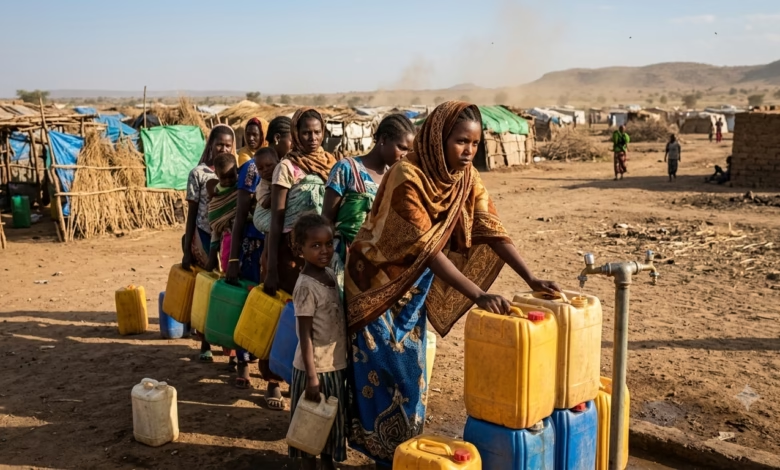
When We Dive Into The Chapter Dedicated To Water Supply Within The Water And Sanitation Sector Report For The Year 2026, We Find Ourselves Before Figures Telling A Story Of Generalized Thirst Suffered By The Vast Majority Of Residents In The “Al-Karmah” Camps. The Report Reviews Precise Details Indicating That 68% Of Camp Households Do Not Receive Even The Minimum Water Requirement In Emergency Situations Set At 15 Liters Per Person Daily, While 49% Of Households Live Below The Critical Survival Line Represented By Only 7.5 Liters Per Person Daily. On General Average, The Average Individual In The Camps Receives About 7.7 Liters Daily, A Figure Falling Far Below Acceptable Humanitarian And Ethical Boundaries.
This Tragic Picture Varies Between Camps; In Camps No. 1 And 4 And Small Gatherings, Median Individual Consumption Reaches Less Than 4 Liters Daily – Which Is A Quarter Of The Global Emergency Minimum! While The Severity Of The Crisis Decreases Relatively In Camp 8 (Where Consumption Reaches 16.7 Liters/Person/Day) And Camp 5 (11.9 Liters/Person/Day), The General Picture Remains Governed By Massive Scarcity Suffered More Severely By New Arrivals; As Newly Arrived Displaced Persons Who Arrived During The Thirty Days Preceding The Survey Receive A Water Average Not Exceeding 3.1 Liters Per Person Daily, Indicating That Water Services Do Not Expand At The Required Speed To Absorb New Human Inflows.
As For The Joint WHO/UNICEF Monitoring Program (JMP) Ladder For Water Service Classification, 67% Of Households Fall Under “Basic Service”, While 24% Fall Under “Limited Service”, And 7% Of Households Remain Completely Reliant On Open Surface Water Like Drains And Swamps, Being The Category Most Vulnerable To Direct Health Risks. Camps No. 3, 5, And 8 Stand Out As The Highest Areas Consuming Polluted Surface Water At Rates Ranging Between 11% And 13%.
The Analysis Of Relied Water Sources Shows That 43% Of Households Rely On Water Yards, And 25% On Water Tankers And Bladders Equipped With Taps, While 13% Rely On Networks Extended From The State Water Corporation. However, The Larger Percentage Of Camps Resort To Secondary Water Sources Due To Instability Of The Main Source; As 58% Of Households Report Depending On A Secondary Water Source, And Upon Failure Of The Primary Source, 15% Of Households Pivot Directly Toward Open Surface Water. This Repeated Disruption Led To 80% Of Households Suffering From Severe Water Shortages At Least Once During Recorded Figures In The Four Weeks Preceding The Survey.
The Crisis Does Not Stop At Quantity But Extends To Terrifyingly Deteriorating Water Quality; Field Testing Of Water Samples At The Household Level Revealed That 69% Of Samples Contain No Free Residual Chlorine (FRC), While Only 5% Of Households Possess Healthy Water With Residual Chlorine Levels That Protect It From Contamination During Transport And Storage. Although 58% Of Households Never Treat Their Water Before Drinking, The Report Clarifies That The Reason Is Not Lack Of Awareness, But The Complete Absence Of Treatment Materials And Chlorine Tablets; As The Majority Of Households Not Treating Water Confirmed Lacking Basic Ingredients And Materials To Do So.
Perhaps The Most Painful Dimension In The Water Report Consists In The Gender Burden Placed Upon Women And Girls; As Responsibility For Fetching Water Falls On Adult Women At 85% And On Girls (Aged 10 To 17) At 33%, Compared To Only 9% For Adult Men. The Water-Fetching Journey Takes More Than 30 Minutes For About 41% Of Households, While 27% Of Households Spend More Than An Entire Hour On This Exhausting Journey. This Journey Is Accompanied By Immense Security Risks; As 30% Of Households Reported Security Concerns And Risks Of Exposure To Harassment, Threats, Verbal And Physical Assaults, Especially In Camp 3 Which Recorded The Highest Rates Of Safety Incidents Around Water Collection Points.
The Report Provides Here A Technical Diagnosis Of Public Water Infrastructure, Confirming That Only Two-Thirds Of Facilities (64%) Function Fully, While 82% Of These Facilities Suffered Damage Or Breakdowns During The Past Six Months. The Greatest Dilemma Lies In The Fact That Most Networks Are Large-Scale And Serve Between 1,000 To 5,000 Households Per Facility; Meaning A Single Breakdown In A Pump Or Tank Is Capable Of Depriving Thousands Of Households Of Water At Once And Plunging The Camp Into Complete Thirst.
The Hell Of Missing Sanitation.. The Disaster Of Open Defecation And Comprehensive Environmental Pollution
The Sanitation And Toilets Chapter In The 2026 Water And Sanitation Needs Assessment Report Represents The Darkest And Most Catastrophic Dimension In The Humanitarian Landscape Of “Al-Karmah”; As The Report Classifies This Sector As The Most Deteriorated Overall, Recording More Than 90% Of The Population Within The “Severe” And “Critical” Condition Categories. This Harsh Situation Exceeds The Scope Of A Normal Humanitarian Crisis To Constitute A Complete Collapse Of Health Prevention Systems And Human Dignity For Displaced Persons.
Figures From The Joint Sanitation Monitoring Program (JMP) Standard Ladder Show That 49% Of Households Across All Camps Practice Open Defecation Directly On A Daily Basis, While The Percentage Of Those Having Access To A Basic Unshared Toilet Does Not Exceed 2% Only! The Remaining Percentage Relies Either On Unimproved Toilets Lacking Concrete Slabs And Covers (27%), Or Overcrowded Shared Toilets Lacking Sanitary Conditions (22%). This Situation Reflects Shockingly On The Residential Environment Surrounding The Camps; As 79% Of Households Reported Visible Open Human Feces Near Their Tents And Dwellings, And Sometimes Dangerously Close To Water Collection Points And Open Wells.
The Tragedy Doubles When Looking At The Geographical Distribution Of This Phenomenon; In Camp 4, The Open Defecation Rate Reaches 82%, In Camp 9 It Reaches 79%, In Camp 8 It Reaches 75%, And In Camp 3 It Records 60%. Camp 1 Alone Sees A Drop In Open Defecation Rate To 20%, Though It Suffers As Well From Massive Overcrowding In Shared Toilets. The Environmental Disaster Is Exacerbated By The Fact That 59% Of Households Reported That Their Children Under Five Practice Open Defecation Publicly, As A Result Of Lacking Child-Friendly Toilets Or Fear Of Falling Into Open Or Collapsed Pit Latrines.
As For Existing Toilets, The Report Documents An Unprecedented State Of Harmful Overcrowding; As An Average Of 21 Households Share The Use Of A Single Toilet! Calculating The Average Household Size (8 Members), This Means Roughly 160 To 170 Individuals Use A Single Toilet Pit! This Immense Pressure Leads To Pits Filling At Record Speeds, Emission Of Foul Odors, Proliferation Of Flies, And Deterioration Of Structural Safety Of Toilets. Camps Like Camp 8 Exceed This Limit Significantly, Where 42 Households (More Than 330 Individuals) Share A Single Toilet!
The Report Delves Into Structural Causes Of This Catastrophe, Pointing Out That 52% Of Used Toilets Are Public Toilets Open To All, Meaning A Complete Absence Of Personal Responsibility For Their Cleanliness And Maintenance, And Their Constant Need For Emptying, Desludging, And Pit Disinfection Interventions By Humanitarian Entities. Furthermore, Sanitation Assessment In Public Institutions (Such As Schools And Gathering Points) Showed They Function In Turn Below Minimum Service Levels, With Most Suffering From Filled Pits And Absence Of Water For Personal Hygiene, Turning Schools And Healthcare Facilities Inside Camps Into Additional Foci For Transmission Of Infection.
This Horrific Environmental Collapse Links Proportionately And Directly To Security Risks And Protection Of Vulnerable Groups; As Women And Girls Suffer From Absence Of Privacy, Exposure To Security Risks And Harassment When Forced To Go Out To Open Areas At Night Or Use Unlit, Unseparated Public Toilets Between Genders. Indeed, 30% Of Households Expressed Direct Security Concerns And Complaints Associated With Accessing Sanitation Facilities.
Under These Conditions, The Food And Water Chain In Camps Turns Into A Direct Carrier For Intestinal Pathogens; The Severe Intersection Between Open Human Feces And Surface Water, And Expected Floods In Autumn, Places “Al-Karmah” Camps On The Brink Of An Inevitable Epidemic Explosion Of Cholera And Viral Hepatitis E, Unless The Situation Is Remedied With Urgent And Expanded Construction And Sanitation Programs.
Impossible Hygiene And Pain Of Dignity.. Soap Crisis And Menstrual Management Among Women
The Report Lifts The Veil In The Chapters On Hygiene And Menstrual Hygiene Management (MHM) Over A Hidden Aspect Of The Suffering Of Displaced Persons In “Al-Karmah” Camps, Where The Crisis Manifests As A Test Undermining Basic Human Dignity Of Individuals. The Report Clarifies That 82% Of The Population Faces Severe Or Even Critical Conditions In The Personal Hygiene Sector, A Clear Deterioration Resulting From Direct Interaction Between Extreme Water Scarcity And Inability To Purchase Hygiene Supplies Financially.
Statistical Data Shows That 80% Of Households Cannot Meet Their Basic Needs For Soap, And 84% Face Severe Difficulties In Obtaining It, Including 38% Facing Absolute Inability. This Severe Shortage Led To A Decline In Handwashing Practices With Soap At Critical Times (After Using The Toilet, Before Eating, Or When Preparing Meals For Children); As 74% Of Households Rely On Negative And Health-Harmful Coping Strategies, Such As Reducing Handwashing, Sharing A Single Piece Of Soap Among Multiple Households, Or Using Ash And Sand As Soap Substitutes! Worse Still, 42% Of Households Reported Becoming Completely Unable To Cope In Any Manner Before This Shortage.
The Collapsed Purchasing Power Of Households In Camps Manifests In Expenditure Data; As The Report Clarifies That Average Household Financial Spending On Personal Hygiene Over 30 Days Tends Toward Zero Among The Majority Of Displaced Persons, With Direct Reasons For Non-Obtainment Of Soap And Cleaning Materials Stemming From High Prices In Local Markets Beyond Capacity Of Displaced Persons Who Lost Their Livelihoods, Alongside Shortage Of Direct Supplies Through Relief Channels.
In The Most Painful Pages Of The Report, The Assessment Addresses The Issue Of Menstrual Hygiene Management (MHM) For Displaced Girls And Women. The Report Documents That Between 65% To 70% Of Women And Girls In Camps Completely Lack Appropriate Hygiene Materials To Manage Menstrual Cycles Safely And With Dignity. More Than Half Of Women Suffer From Clear Difficulties Or Complete Inability To Handle Menstruation In A Healthy And Covered Manner.
The Absence Of Safe Sanitary Pads And Materials Required For Cleanliness Forced Girls And Women To Resort To Coping Mechanisms Dangerous To Their Reproductive And Psychological Health, Including High Rates Of Reusing Soiled, Improperly Washed Cloths, Reducing Time Intervals For Changing Materials, Or Remaining Inside Tents And Refraining From Movement, Education, And Relief Distributions Throughout The Menstruation Period. Added To That Is The Massive Burden Represented By Absence Of Private, Gender-Segregated Sanitation Facilities And Toilets Providing Water, Privacy, And Adequate Lighting, Depriving Women And Girls From Washing Or Disposing Of Used Materials Safely And Honorably.
These Physical And Health Restrictions Connect To Explicit Gender Security Risks; As 24% Of Households Record Increasing Security Concerns While Practicing Hygiene And Washing Activities. Women And Girls Are Particularly Exposed To Risks Of Harassment And Molestation While Searching For Private Spaces For Washing Or Personal Hygiene Amid Overcrowded, Open Camps Lacking Social Protection Measures.
This Data Regarding Hygiene And Menstrual Management Confirms That The Crisis In “Al-Karmah” Camps Exceeds The Mere Medical Dimension; It Is A Crisis Of Dignity Endurance, Depriving Women And Children Of Their Most Basic Human Rights, Multiplying Rates Of Skin Diseases And Reproductive Tract Infections, And Opening The Door Wide To Growing Psychological And Social Crises Within Displaced Communities.
Priority Map And Cry For Help.. Toward An Integrated And Sustainable Response Model
The Water And Environmental Sanitation Needs Assessment Report For “Al-Karmah” Camps For The Year 2026 Concludes By Presenting A Comparative Analysis Among The Nine Camps And Sub-Gatherings, Followed By A “Call For Action” Document Containing Highly Important Operational And Strategic Recommendations To Guide Humanitarian Institutions And Donors.
The Comparative Balance Among Camps Shows Variance In Needs Severity Although All Lie Under “Severe” Or “Critical” Conditions; Camps No. 3, 4, 8, And 9 Top The List Of Most Miserable And Critical Areas, Combining The Highest Open Defecation Rates (Exceeding 75% In Some), And Highest Levels Of Water Scarcity And Environmental Pressures. Meanwhile, Camp No. 2 And Camp No. 9 Appear As Sites Suffering Most From Unstable Water Supplies And Long Waiting Times, While Camp No. 1 Suffers From Suffocating Overcrowding At Shared Sanitation Facilities Despite Relatively Lower Open Defecation Rates. As For Small And Sub-Gatherings, They Suffer From Multiplied Fragility Resulting From Remote Fringes And Difficulty Of Relief Convoys Reaching Them.
When Asking Residents And Displaced Persons About Their Immediate Priorities, Results Came Out Decisive; “Increasing Available Water Quantity” Occupied The First Requested Rank In All Camps Without Exception, Ahead Of Water Quality Or Cost Reduction, Confirming That The Core Issue For Displaced Persons Is A Battle Of “Numerical Survival” Of Water Liters. In Sanitation, Households Demanded Constructing New Toilets, Providing Desludging Services For Filled Pits, And Ending Open Defecation. Personal Hygiene Priorities Were Confined To Providing Soap, Hygiene Kits, And Menstrual Materials For Girls And Women.
Regarding Preferred Modalities Of Support, Households Expressed Preference For Hybrid Models Combining Cash Support/Vouchers For Purchasing Water And Hygiene Supplies From Nearby Partially Functioning Markets, And Direct In-Kind Distributions, Particularly Water Storage Containers And Direct Services Like Network Maintenance And Toilet Emptying.
Based On These Preferences And Field Data, The WASH Cluster Launches Through The Report An Actionable Call For Help And A Strategic Roadmap Summarized In The Following Axes:
-
Stabilization And Expansion In Transformative Water Supply: Maintaining Water Supply Via Tankers (Water Trucking) As A Temporary Emergency Life-Saving Solution, In Parallel With Accelerating Conversion Of Wells And Water Points To Sustainable Certified Solar Energy, And Expanding Networks To Reduce Financial Costs And Ensure Continuity.
-
Comprehensive Water Treatment And Health Monitoring: Imposing Universal Chlorination At All Source And Distribution Points, Strengthening Supply Chains Of Water Purification Tablets For Households, And Activating Periodic Testing Of Free Residual Chlorine (FRC) Levels To Contain Risks Of Epidemic Outbreaks.
-
Expansion In Child-Friendly And Gender-Segregated Sanitation Services: Rapidly Focusing On Constructing Low-Cost, Scalable Toilets, While Providing Gender-Segregated And Child-Friendly Facilities, And Activating Fecal Sludge Management Services For Public And Institutional Toilets.
-
Support For Hygiene Supplies And Menstrual Management: Continuing Supply Lines For Soap, MHM Kits For Women, And Promoting Health Awareness Programs Tailored To Water Scarcity Conditions.
-
Full Integration With Epidemic Response Programs: Direct Linkage Between The Water And Sanitation Sector And Health And Nutrition Sectors For Early Warning And Confronting Outbreaks Of Cholera And Viral Hepatitis E, And Preempting Expected Environmental Degradation During The Rainy Season.
The Water And Environmental Sanitation Needs Assessment Report In “Al-Karmah” Camps In Blue Nile For The Year 2026 Is Not Merely A Passing Humanitarian Evaluation; It Is An Explicit Alarm Bell Warning That Overlooking Funding And Support For These Essential Services Will Inevitably Mean Turning Displaced Camps Into An Open Environment For Epidemic And Humanitarian Disasters. It Is An Appeal To The International Community And Responsible Entities For Immediate Action Before Upcoming Floods Turn Hidden Thirst Into An Open Tragedy.