

Bowing down to survive: Lao Tzu’s Wisdom In The Face Of The Illusion Of Dominance

In A World Teeming With Major Transformations And Where Balances Of Power And Hegemony Struggles Intertwine, The Ancient Text Emerges As A Quiet Voice Yet With A Deep Resonance, Capable Of Reshaping Our Understanding Of Human Nature And The Deep Structure That Governs The Rise And Stability Of Nations. And In This Comprehensive And Extensive Journalistic Review, Which We Will Present In Five Deliberate Installments To Do Justice To The Depth Of The Text And Its Purposes, We Dive Into The Modern And Unique Translation Presented By David Bentley Hart, In Tao Te Ching A New Translation This Work Is Not Merely A Linguistic Transfer Dictated By Academic Necessity, But Rather A Major Philosophical And Spiritual Attempt To Re-Articulate One Of The Greatest Texts That Founded Chinese Civilization, And The Epistemological Model That Has Long Provided A Radical Alternative To Traditional Concepts Of Authority, Power, And Society.
Hart Begins His Rich Introduction By Placing This Book In Its Broader Historical Context, Speaking About The Axial Age, Which Is That Concept That Refers To Rare Periods Of Collective Human Experience That Have, Over A Few Decades Or Centuries, Brought About Radical Changes In Cultures And Spirits. In That Ancient Age, Human Societies Began To Feel A Kind Of Deep Spiritual Exhaustion Toward Ancient Rituals And Purely Local And Parochial Religious Practices. And With The Transformation Of Simple Nomadic And Agrarian Societies Into Stable And Complex Cities And Civilizations, The Human Mind Began An Arduous Journey Of Searching For A Higher Principle, Or An Original Reality That Unites Body And Soul, And Explains The Intertwined Interactions That Make Up Our Material World And What Lies Beyond It. And In The Midst Of This Huge Cosmic And Intellectual Transformation, The Book Tao Te Ching Emerged As One Of The Most Luminous Landmarks Of This Great Awakening, Presenting An Integrated Vision That Unites Man And Heaven And Earth In A Harmonious System That Does Not Depend On Coercion Or Subjugation.
A Careful Reading Reveals To Us That This Book Represents A Blatant And Continuous Challenge To The Common Trends And Categories In Human Thought And Usual Human Ambition. It Presents A Metaphysics Characterized By The Deliberate Subversion Of Concepts Of Dominance And Control; As It Tells Us, In A Series Of Wondrous Paradoxes That Provoke The Strategic Mind, That True Power Lies In Submission And Flexibility, And That True Wealth Is Manifested In Owning Nothing, And That True Greatness Is Inseparable From Humility, And True Glory Lies In Concealment And Distance From Display. This Deep Philosophical Vision Represents The Cornerstone In Understanding The Strategic Mentality That Shaped The East, Which Sees That The Highest Victory And Sustainable Success Lie In Cultivating Indifference Toward Direct Hegemony Struggles, And Avoiding The Frantic Pursuit Of Superiority That Often Leads To Collapse.
And To Understand This Pivotal Text, It Is Necessary To Pause At The Legendary Figure Associated With It, Namely Laozi, Which Is A Title That Does Not Refer To A Personal Name As Much As It Means The Old Master Or The Venerable Lord. Historical Narratives, The Most Important Of Which Are The Annals Of Shiji Dating Back To The First Century BC, Tell Us That He Was A Royal Archivist In The Sixth Century BC, Known As Li Er, And Famous For The Nickname Long Ears As An Indication Of Wisdom And Deep Listening. Legends Speak Of A Historic Meeting That Brought Him Together With The Philosopher Confucius, A Meeting Characterized By Apparent Cordiality But Which Revealed A Deep Chasm Between Two Completely Different Approaches To Viewing The World And Managing People’s Affairs. And It Is Narrated That Confucius Compared Laozi To A Dragon, Which In Chinese Culture Is Not A Predatory Creature As In The West, But A Creature Symbolizing Warmth, Vitality, Mystery, And Absolute Wisdom. And Despite The Long Academic Dispute About The Truth Of Laozi’s Historical Existence, And Whether The Text Is The Product Of Individual Genius Or The Result Of Centuries Of Accumulated Wisdom Collected And Edited Over Time, The Deep And Unified Philosophical Spirit That Runs Through The Veins Of This Book Makes It Necessary To Deal With It As A Cohesive Organic Unit Bearing The Imprint Of A Unique Sage.
The Translator David Bentley Hart Has Chosen In His Dealing With It A Method That Rejects The Modern And Artificial Western Division Between What Is Called Philosophical Taoism Directed At The Elite And Tactics Of Governance, And Religious Or Popular Taoism Full Of Rituals And Myths. Hart Sees That This Division Has Led To Distorted Readings Of The Text, Where Some Try To Strip It Of Its Deep Spiritual Dimension To Make It Merely A Cold Practical Guide For Managing States And Kingdoms, While Others Drown In Mysticisms Detached From Concrete Reality. Instead, Hart Affirms That The Book Is A Mystical And Metaphysical Text Par Excellence, In Which The Spiritual Is Not Separated From The Material, Nor The Epistemological From The Political. For Heaven In This Text Is Not Merely The Blue Dome That Shades Us, And All Under Heaven Is Not Merely An Expression Of Empire Or The Geographical Expanse Of The State, But Rather A World Saturated With Spiritual Forces And Living Agencies That Impose Their Silent Laws On Every Movement And Stillness.
The Central Concept Around Which This Great Journey Revolves Is The Concept Of Tao Or The Way Dao. The Book Opens Its Verses With An Astonishing Statement About The Nature Of This Way, Affirming In Chapter One That The Way That Can Be Spoken Of Or Walked Upon Is Not The Eternal Way, And That The Name That Can Be Uttered Is Not The Eternal Name. In Its Unnamed State, The Tao Represents The Pure Origin Of Heaven And Earth, The Fertile Void From Which All Beings Emerge. And When It Is Named, It Becomes The Mother That Nurtures And Feeds All The Myriad Things. The Text Demands That We Abandon Desire And Its Illusions Permanently So That We Can See This Wondrous Mystery, Warning That Clinging To Desires Reveals To Us Nothing But The Husks And Outer Surfaces Of Things. This Dual Mystery, Where The Hidden And The Manifest Unite In One Source, Forms The Gateway Through Which Man Enters The Secret Of Deep Existence, A Secret That Only Grows Deeper The More We Try To Fathom It.
And Alongside The Concept Of Tao, The Concept Of Te Or De De Emerges, Which Hart Translates With The Word Power Instead Of The Common Translation Virtue. This Precise Choice Reflects A Deep Understanding Of The Chinese Text; For This Power Is Not Merely A Good Moral Trait Or Polite Behavior That An Individual Exhibits In His Society, But Rather A Primordial Cosmic Force Manifested In Heaven And Earth, And Flowing In The Nature Of The Most Enlightened And Wise Persons. It Is An Active And Driving Energy That Makes Things Grow And Flourish Without The Need For Coercive Intervention Or Violent Direction, And It Is The Power Possessed By The Sage Who Imitates The Flow Of Nature And Derives His Energy From Emptiness And Stillness.
And At The Heart Of This Philosophy Sits The Most Important Strategic And Ethical Principle: Wu Wei Wu Wei, Which Means Non-Striving, Or Non-Action, Or Non-Coercive Intervention. What Is Meant Here Is Not Laziness Or Passive Withdrawal From Life, But Rather Active And Conscious Harmony With The Natural Flow Of Events. The Book Teaches Us That The Hard And Rigid Tree Breaks In The Face Of Strong Winds, While The Flexible And Soft Tree That Bends To The Storm Survives. Similarly, He Who Relies On Violence And Coercion To Display His Power And Impose His Control Only Invites Ruin, Because The Use Of Excessive Force Generates Counter-Resistance That Ultimately Leads To Collapse. The Highest Degrees Of Success And The Most Effective Means To Achieve Great Goals Do Not Come Through Noise And Violence, But Through Generous Retreat And Making Way For Natural Processes To Take Their Unhurried Course. The Compulsive Desire To Precisely Control Every Detail Is In Itself A Major Cause Of Chaos And Disorder And Uncontrollable Conflicts.
This Principle Is Clearly Manifested In Chapter Two Of The Book, Where The Dualities Upon Which The Traditional Human Mind Is Based Are Deconstructed. For Beauty Is Only Known By Distinguishing It From Ugliness, And Good Is Only Known By Contrasting It With Evil. Being And Non-Being Generate Each Other, Difficult And Easy Arise Together, And Reaching The Top Is Only Achieved By Relying On The Bottom. Based On This Deep Understanding Of Cosmic Interconnection, The Wise And Sacred Person Sheng Ren Chooses To Live Outside The World Of Frantic Striving, Teaches Without Need For Words, Nurtures All Things Without Claiming To Own Them, And Accomplishes What Is Necessary Without Seeking Honor Or Seeking To Reap Personal Fruits. And Because Of This Voluntary Abandonment Of Self-Affirmation, The Achievements Of This Sage Become Eternal And Never Fade.
Indeed The Book Carries Within Its Folds A Scathing Political And Social Critique That Transcends Its Era To Be Valid For Every Time And Place. In Chapter Three, Laozi Offers Advice That Appears On Its Surface Contrary To Usual Political Logic; He Advises Not To Exalt Worthy Persons So That People Do Not Struggle Over Rank And Status, And Not To Value Rare Possessions So That People Do Not Rush Toward Theft And Intrigue, And Not To Flaunt Fabulous Wealth So That The Minds Of The Masses Are Not Disturbed By Longing And Deprivation. Instead, Good Governance Is Represented In Preserving The Purity Of Simple Souls, And Satiating Bellies, And Weakening Destructive Material Ambitions, And Strengthening Bones, And Protecting Society From Cunning And Deception. It Is A Call To Establish Deep Stability That Does Not Depend On Frantic Competition, But On Harmony And Self-Sufficiency, Which Leads To A Society That No One Can Manipulate Or Deceive.
These Deep Meditations Continue In Chapter Four, Where The Tao Is Likened To A Bottomless Abyss, The Void That Is Never Exhausted No Matter How Much We Draw From It. It Softens All That Is Sharp, And Unravels All Tangled Knots, And Dims Every Glare, And Settles The Dust Of The World And Its Conflicts. This Tao Stands In Quiet Depth, Older Than The Gods Themselves, To Be The Spring From Which All Beings Emerge. And In Chapter Five, The Text Puts Forward A Harsh But Necessary Idea To Understand Cosmic Neutrality; Heaven And Earth Have No Favoritism, But Look At All Living Beings With Complete Detachment, As If They Were Merely Straw Dogs Used In Rituals And Then Discarded. In The Same Way, The Sage Must Be Impartial, Looking At Humanity With Detachment, And Maintaining His Inner Space Like A Blacksmith’s Bellows: Empty Yet Inexhaustible, Moving Continuously To Generate New Energy Without Stopping. Multitude Of Words And Claims Quickly Fade Into Silence, Therefore It Is Better For A Person To Be Still And Keep His Inner Center.
The Book Also Reflects A Deep Appreciation For The Feminine Energy Latent In Nature And In Politics Alike, Which Is Considered An Intellectual Revolution In Societies Long Dominated By Violent Masculine Tendencies. In Chapter Six, The Text Speaks Of The Goddess Of The Valley Who Never Dies, The Mysterious Mother Whose Dark Womb And Hidden Gate Represent The Firm Foundation Of Heaven And Earth. This Single Origin Lasts Forever, Like A Fine And Extended Spider Thread That Never Breaks Despite Continuous Drawing. And In Chapter Seven, The Text Explains The Secret Of The Eternity Of Heaven And Earth As That They Do Not Live For Themselves, Nor Seek Their Own Benefit, But Overflow With Continuous Giving And Generosity. Thus, The Sage Who Puts Himself Last And Prefers Others Finds Himself In The End Ahead Of Everyone, Because By Denying Himself And Abandoning Selfishness He Succeeds In Preserving His True Self And Achieving His Highest Goal.
Indeed The Most Beautiful And Most Influential Metaphor Is Manifested In Chapter Eight, Where The Person Who Possesses The Highest Good Is Likened To Water. Water Nourishes All Things And Maintains Their Life Without Struggling Against Them Or Competing With Them, And Flows Humbly Toward Low Places That Others Despise And Elevate Themselves Above. And Because Of This Humble And Flowing Nature, Water Is The Closest Embodiment To The Nature Of Tao Itself. The Text Teaches Us That The Best Places Are The Low Valley, And The Best Souls Are Those Deep And Calm, And The Best Communities Are Those Where Good Intentions And Humanity Prevail, And The Best Policies Are Those Characterized By Justice And Harmony, And The Best Actions Are Those That Come At The Right Time Without Affectation. The Truly Good Person Does Not Contend With Others, And Therefore Does Not Bring Blame Or Enmity Upon Himself.
Reflecting On Chapters Nine And Ten, Which Lay Golden Rules For Dealing With Resources And Success. The Text Warns Us Against Increasing Greed, Affirming That It Is Better To Leave The Cup Untouched Than To Try To Hold A Cup Overflowing And Completely Full. Also The Knife That Is Sharpened Continuously With Hammer Blows Will Quickly Lose Its Sharpness, And The House Full Of Gold And Jade No One Can Protect Permanently. Displaying Wealth And Positions With Arrogance And Conceit Brings Nothing But Revenge And Disasters. The Eternal Philosophical Advice Here Is: Accomplish Your Task, Do Your Work, Then Quietly Withdraw And Step Back, For This Is The Way Of Heaven. And The Book Poses Deep Spiritual Challenges: Can You Maintain Your Inner Unity And Not Let Your Soul Scatter? Can You Focus To The Point Of Becoming Gentle And Innocent Like A Newborn Child? Can You Cleanse Your Inner Mirror Of All Haze To See Clearly Without Manipulation Or Cunning? True Leadership, According To This Text, Is Represented In Giving Life And Care Without Attempting To Possess, Acting Without Claiming Merit, And Leading Without Dominance Or Tyranny; And This Is What Is Called The Deep Secret Of Power.
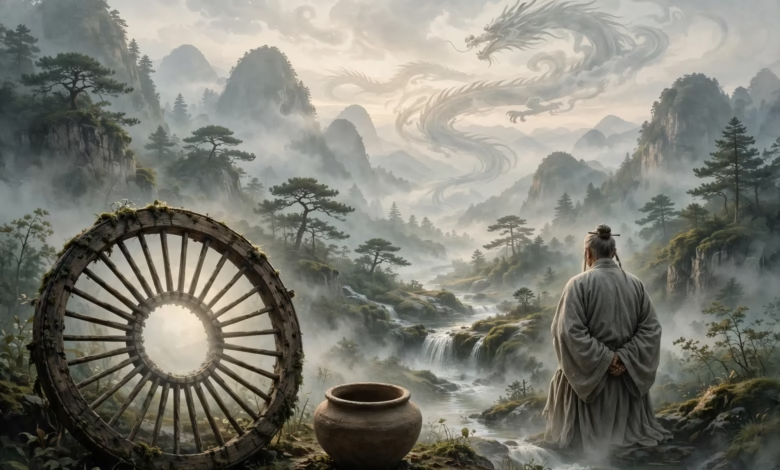
We Move From The Total Metaphysical Foundation That Characterized The First Ten Chapters, To Exploring The Practical Applications Of This Philosophy In Areas Of Human Existence, Political Psychology, And Arts Of Good Governance. The Text Here Is Not Content With Putting Forward Abstract Theories About The Origin Of The Universe, But Dives Skillfully Into Deconstructing The Mechanisms By Which Power Works, And How The Human Mind Interacts With Its Material Surroundings. And In This Context, The Book Presents To Us One Of The Deepest Strategic And Philosophical Concepts That The Mind Can Comprehend, Which Is The Concept Of Emptiness Or Active Nothingness. For In Chapter Eleven, Laozi Puts Forward Simple Sensory Examples But Which Carry Huge Cosmic Connotations; As He Tells Us That The Cart Wheel Consists Of Thirty Spokes Converging In The Center, But The Emptiness Existing In This Center Or Hub Is What Gives The Wheel Its Ability To Rotate And Move. Similarly, We Shape Clay To Make A Vessel, But The Inner Emptiness In The Vessel Is What Gives It Its Value And True Usefulness. And We Build Walls And Open In Them Windows And Doors To Establish A Room, But The Emptiness Inside The Room Is What Makes It Habitable. The Philosophical And Political Conclusion Here Is Resonant: What We Own And What Exists Materially Represents The Tool, But Non-Being Or Emptiness Is What Gives These Tools Their Effectiveness And Usefulness. In The World Of Politics And State Administration, This Means That Latent Power, And Unexhausted Reserves, And Spaces That We Leave Flexibly Without Coercive Intervention, Are What Ensure The Permanence Of The System And Its Ability To Absorb Shocks, And Not The Dense And Continuous Presence Of Authority In Every Detail.
In Chapter Twelve The Text Criticizes Material Excess, The Five Colors Blind The Eye, The Five Sounds Deafen The Ear, The Five Flavors Spoil Taste, Racing And Hunting Madden The Mind, Rare Goods Hinder The Path. Therefore The Sage Focuses On The Belly Not The Eye, On Inner Nourishment Not Outward Show. In Chapter Thirteen Favor And Disgrace Are Both Fearful, Power Brings Fear Of Loss, Loss Brings Fear Of Annihilation, This Fragility Comes From Clinging To Self. Only He Who Honors The World As His Body And Loves All Under Heaven As Himself Can Be Trusted To Rule The World. In Chapter Fourteen Tao Is The Formless Form, The Image Without Substance, Looked At But Not Seen, Listened To But Not Heard, Grasped At But Not Caught, Without Beginning Or End, A Thread Connecting Past And Present, To Hold This Ancient Origin Is The Essence Of The Way. In Chapter Fifteen The Ancient Masters Who Knew The Way Were Mysterious And Unfathomable, Cautious Like One Crossing A Frozen River In Winter, Alert Like One Aware Of Danger, Courteous Like A Guest, Yielding Like Melting Ice, Simple Like Uncarved Wood Pu, Vast Like Open Valleys, They Did Not Seek Fullness And Therefore Could Renew Forever. In Chapter Sixteen Stillness Is The Only Means To Perceive Truth Amid Change, All Beings Flourish Then Return To Root, Returning To Root Is Called Stillness, Stillness Is Returning To Destiny, Knowing This Eternal Law Is Enlightenment, Ignorance Brings Reckless Disaster, The Ruler Who Knows This Becomes Tolerant, Just, Cosmic, Aligned With Heaven And Tao, Thus Safe Till The End Of Life. In Chapter Seventeen The Deepest Theory Of Soft Power And Invisible Leadership, Four Ranks Of Leaders: Highest Barely Known To Exist, His Rule Hidden, His Influence Permeates Like Breeze, Second Loved And Praised, Third Feared, Fourth Despised. The Supreme Leader Speaks Rarely, Intervenes Only When Necessary, And When Goals Are Achieved People Say We Did It Ourselves, It Is Leadership Creating Absolute Self-Empowerment And Voluntarily Relinquishing Monopoly Of Glory. Chapters Eighteen And Nineteen Offer Philosophical Critique Of Artificial Morality, Concepts Like Benevolence, Justice, Filial Piety Only Appear When The Nation Abandons Natural Tao, When True Nature Prevails No Need To Remind Of Loyalty, But When Artificial Wisdom And Cunning Appear Great Hypocrisy Is Born, Solution Abandon Artificial Wisdom And Knowledge And People Will Be Hundred Times Happier, Abandon Coercive Claims Of Benevolence And Justice And People Return To Natural Love, Abandon Greed For Profit And Thieves Disappear, Return To Uncarved Wood, Reduce Selfish Desires To Restore Balance. Chapter Twenty Shows Personal And Mystical Character Of Sage, Alone And Isolated From Crowd Celebrations, Still, Not Showing Emotion, Like An Infant Who Has Not Yet Learned To Smile, Appearing Stupid, Slow, Different, Others Seem Bright While He Seems Dark, Others Certain While He Is Hesitant Like Sea Waves, But This Isolation Is Pride, He Derives Nourishment Directly From The Great Mother, From Tao Itself.
We Dive Into Macro Politics, Statecraft, And Compass Of Complex System Of Nations, Presenting Early And Decisive Critique Of Expansionist Tendencies And Hegemonic Stability Theory, Deconstructing Illusions Of Unipolar Control, Warning That Excessive Display Of Power And Exhausting Resources In Hegemony Struggles Is Shortest Path To Civilizational And Geopolitical Fall. Chapter Twenty-Two Presents Strategy Of Bending To Survive, What Bends Remains Whole, What Is Bent Becomes Straight, What Is Empty Becomes Full, What Is Worn Becomes Renewed. The Wise Leader Or Rising State Does Not Enter Futile Open Confrontation With Existing Powers To Prove Superiority, But Adopts Flexibility And Shock Absorption, By Not Boasting The Sage Shines, By Not Justifying Himself His Voice Is Heard, By Not Boasting He Achieves Lasting Achievements. The Text Culminates When It Affirms That The Sage Does Not Compete With Anyone, Therefore No One In The World Can Compete With Him. Chapter Twenty-Four Uses Bodily Metaphors To Describe Strategic Overextension, He Who Stands On Tiptoes Cannot Stand Firm, He Who Strides Too Wide Cannot Walk Long Distances, Attempting To Accelerate Rise Artificially Is Like Standing On Tiptoes, May Give Illusory Height For Moments But Exhausts Balance And Inevitably Leads To Collapse, Tao Considers Such Acts As Leftover Food Or Malignant Tumors In Body Of Natural System. Chapter Twenty-Six Presents One Of Most Important Strategic Rules: The Heavy Is Root Of Light, The Still Is Master Of Restless. Heavy Represents Strategic Depth, Solid Macro Economy, Resilient Infrastructure, Ability To Secure Basic Resources Without Critical External Dependence, This Heavy Root Allows Lightness And Agility In Foreign Policy. If Lord Of Ten Thousand Chariots That Is Leader Of Superpower Deals Lightly And Recklessly With World, Abandoning Its Heavy Roots, It Will Inevitably Lose Foundation Of Its Authority. Chapter Twenty-Nine Presents Grand Argument Against International Intervention And Attempts To Impose Ideological Models By Force, Laozi Asks Rhetorically Do You Desire To Seize The World And Manipulate It? I See You Will Not Succeed. World Order Is Not Dead Chessboard That Can Be Rearranged According To Whim Of One Superpower, But Rather Sacred Vessel, Complex Organic Being That Breathes And Possesses Its Own Rhythm And Deep Laws, Any Attempt At Forcible Intervention Will Inevitably Lead To Its Destruction And Destruction Of Intervening Power With It, Whoever Tries To Hold World Tightly Will Lose It. Chapters Thirty And Thirty-One Establish Military Doctrine That Categorically Rejects Militarization Of Foreign Policy, Text Advises Ruler Who Resorts To Way Not To Use Military Force To Try To Subjugate World, Wherever Armies Encamp Thorns And Brambles Grow, And In Wake Of Great Wars Come Years Of Hunger And Economic Collapse, Good Commander Strikes His Blow To End Threat Then Stops Immediately, Without Boasting, Without Arrogance. Chapter Thirty-One Condemns Culture Of Glorifying War, Beautiful Weapons Are Ominous Tools, Things Abhorred By All Creatures, Sage Does Not Depend On Weapon, He Who Rejoices In Victory Rejoices In Killing Humans, And He Who Rejoices In Killing Humans Can Never Impose His Will, Therefore When Army Achieves Decisive Victory, It Should Be Received With Mourning Rituals, The Victor Should Stand In Battlefield In Position Of Mourner In Great Funeral, Weeping For Souls That Were Lost.
Moving From War To Internal Structure Of Societies, Theory Of Knowledge, And Stages Of Institutional Decline. Text Presents Deepest Critique Of Institutional Decay, How Complexity Of Administrative Structures And Exaggeration In Imposing Strict Laws Are Not Evidence Of Progress, But Symptoms Of Regression. Chapter Thirty-Two Affirms That Tao In Its Eternal Origin Has No Name, And Resembles Uncarved Wood Block In Its Absolute Simplicity That No Authority Can Subjugate, If Leaders Could Cling To This Original Simplicity, Then Ten Thousand Things Will Submit To Them Voluntarily Like Dewdrops Falling From Sky Harmonious With Earth, But Once Leaders Begin To Divide This Block, Names And Borders And Institutions Appear, Leader Must Know When To Stop. Chapter Thirty-Three Represents Cornerstone In Political Psychology, Knowing Others Is Merely Intelligence, While Knowing Self Is True Enlightenment, Overcoming Others Requires Muscles, But Overcoming Self Requires Real Invincible Power, True Richness Lies In Realizing Sufficiency. Chapter Thirty-Six Explains Hidden Dialectic, If You Want To Shrink Something Allow It To Expand, If You Want To Weaken An Opponent Let Him Display His Power Until Exhaustion, If You Want To Bring Down Something Contribute To Raising It Until It Loses Balance, This Is Subtle Insight Or Hidden Light, Soft And Weak Flexible Always Overcomes Hard And Rigid Stiff, Sharp Weapons Of State Must Remain Hidden In Depths, Just As Fish Should Not Leave Depths Of Water. Chapter Thirty-Eight Represents Peak Of Social Critique, Drawing Geological Map Of Decline Of Values, Decline Begins When Societies Lose Connection With Tao, Then Need For Te Appears, When Natural Virtue Fades Society Invents Benevolence, When Benevolence Fades Recourse To Justice, When Justice Collapses Nothing Remains Except Hollow Rituals And Formal Protocol, Rituals Are Thin Tattered Crust Hiding Decay Of Loyalty And Honesty, And Gate Through Which Chaos Enters Heart Of State, Great Man Settles In Thick And Deep Essence And Does Not Live On Superficial Crusts. Chapter Forty-Six Presents Strongest Argument Against Greed, When World Proceeds According To Tao Horses Used To Plow Fields And Produce Life, But When World Loses Its Way War Horses Raised In Suburbs Always Ready For Conflict, There Is No Greater Crime Than Succumbing To Endless Desires, No More Destructive Catastrophe Than Not Feeling Contentment, Person Who Truly Understands Inner Contentment Alone Possesses Inexhaustible Wealth And Immunity Against Fluctuations That Topple Empires. Chapters Forty-Seven And Forty-Eight Present Unique Epistemology, Sage Can Know Whole World Without Leaving Door Of His House, And Can See Way Of Heaven Without Peeking From His Window, The More Man Goes Outward Seeking Material Knowledge The Less His True Knowledge, Therefore Sage Understands Without Travel, Distinguishes Without Superficial Looking, Accomplishes Greatest Works Without Coercive Movement, Pursuit Of Academic Knowledge Requires Adding More Information Day By Day, While Practice Of Tao Requires Continuous Loss And Daily Abandonment Of Illusions, This Continues Until State Of Non-Action Wu Wei, And In That Absolute Still State Nothing Remains Unaccomplished, Winning World Does Not Come Through Frenzied Intervention But Through Letting Things Take Natural Course.
We Reach Grand Endings That Crown This Lofty Philosophical Edifice, After Roaming Through Horizons Of Metaphysics, Arts Of Good Governance, Critique Of Artificial Structures And Strategies Of Conflict, Text Takes Us Toward Deeper Existential Meditations About Duality Of Life And Death, And Return Of Man To His Simple Origins, To Conclude With Political And Spiritual Vision Representing Absolute Antithesis To Imperial Expansion And Global Hegemony. Chapter Fifty Faces Us With Deepest Reading Of Nature Of Human Existence And Dilemma Of Mortality, Laozi Poses Demographic Division, Three Out Of Ten Are Companions Of Life Who Walk Calmly, Three Out Of Ten Are Companions Of Death Who Drive Themselves Toward Annihilation, Another Three Move Noisily Toward Death Because Of Exaggeration In Clinging To Life, But Exceptional Person Is Sage Who Excels In Preserving His Life, Leaves No Gap Through Which Death Can Sneak, Able To Walk In Wilderness Without Fear Of Rhinoceros Or Tiger, And Enter Battles Without Need For Shield Or Weapon, Secret Lies In That There Is No Place In Him For Death, This Means Sage Has Completely Abandoned Inflated Ego And Burning Desires That Constitute Fatal Weakness, In Politics This Equals Fortifying State From Inside By Reducing Vulnerabilities And Avoiding Excessive Expansion. Chapter Fifty-Two Links Spiritual Stability And Connection With Cosmic Mother, For Everything Under Heaven There Is Beginning, And This Beginning Is Mother Of World, He Who Realizes Mother Easy To Understand Sons, He Who Understands Sons Then Returns To Cling To Mother Will Not Be Exposed To Danger Throughout Life, Way To Achieve This: Close Your Openings, And Shut Your Doors, Means Restricting Senses And Not Responding To External Distractions That Exhaust Energy Of Man And State. Chapter Eighty Presents Most Radical And Challenging Political Proposition, Taoist Utopia, In Sharp Contradiction With Dreams Of Great Empires, Laozi Vision Of Ideal Society Represented In Small State With Few Population, People May Possess Powerful Weapons Or Advanced Tools Multiplying Productivity Tens And Hundreds Times, But They Find No Need To Use Them, They Take Death Seriously And Therefore Do Not Risk Lives In External Adventures, Although Boats And Carts Exist They Do Not Ride Them To Invade Others, Although They Possess Armor And Weapons They Do Not Display Or Use Them For Intimidation, This Society Returns To Absolute Simplicity, Even May Abandon Complexities Of Formal Writing To Return To System Of Knotted Ropes Primitive For Recording Affairs. And Picture Completes With Description Of Complete Contentment, Inhabitants Enjoy Simple Food, Appreciate Modest Clothes, Feel Complete Security In Dwellings, Rejoice In Local Customs, Neighboring State May Be So Close That Barking Of Dogs And Crowing Of Roosters Is Heard From It, And Yet People In This Small State Grow Old And Die Without Bothering To Travel Back And Forth To That Neighboring State, This Is Not Call To Ignorance Or Morbid Isolation, But Highest Degree Of Self-Sufficiency And Complete Getting Rid Of Strategic Anxiety And Desire For Expansion That Destroyed Countless States. And Finally We Reach Chapter Eighty-One Which Is Seal Of Conclusion Summarizing All That Tao Te Ching Wanted To Convey, And Puts Golden Rule Governing Speech And Action And Knowledge, Laozi Opens This Final Chapter With Decisive Law Of Language And Truth: Truthful Words Are Not Beautiful, And Beautiful Words Are Not Truthful, This Is Final Warning Against False Eloquence And Shiny Political Promises Hiding Behind Them Ruin, Truly Good Person Does Not Argue Or Quarrel, While He Who Argues Continuously Lacks True Goodness, He Who Truly Knows Does Not Possess Wide And Scattered Knowledge, While He Who Possesses Wide Information About Everything Does Not Know True Essence Of Anything. In This Final Place Image Of Taoist Sage Embodied In Most Splendid Forms, He Hoards Nothing For Himself, Nor Seeks To Accumulate Wealth Or Power, The More Sage Exerts His Effort For Others, The More What He Owns Increases, And The More He Gives Others, The More His Inner Abundance Magnifies, This Is Way Of Heaven Which Always Brings Benefit And Never Causes Harm, And This Is Way Of Sage Who Acts And Accomplishes Great Works, But Refuses To Compete With Anyone Or Struggle For Self-Affirmation, It Is Philosophy Of Silent Victories, And Cosmic Harmony That Does Not Need Drum Beating To Announce Itself.


