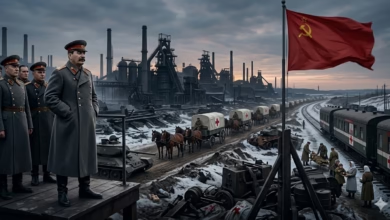



This Is Not A Review Of A Book About World War II As We Knew It In European Textbooks. This Is A Book That Redraws The Mental Map Of The War Itself. When We Say World War II, The Scene Of The Normandy Landings, The Battle Of Stalingrad, And The Bombing Of London Jumps To Mind. As For Asia, It Appears In This Western Narrative As Just A Distant Margin, A Secondary Theater That Ended With Two Atomic Bombs On Hiroshima And Nagasaki. Here Comes The Book By Hans Van De Ven, The Historian Of Dutch Origin And Professor Of Modern Chinese History At Cambridge University, To Turn This Picture Upside Down. His Book “Blood Dawn: World War II And The Making Of Modern Asia” – Blood Dawn: World War II And The Making Of Modern Asia – Does Not Consider The War In Asia As Part Of The World War, But Considers The World War Itself As Part Of A Huge Asian Transformation That Began Years Before It And Did Not End With The Surrender Of Japan.
Van De Ven Is Not A Passing Historian Of This Region. He Is The Author Of The Book “China At War” Which Rehabilitated The Role Of Nationalist China In The War, And He Has Decades Of Research In Chinese, British, American, And Dutch Archives. This Time He Widens His Lens To The Maximum Possible Extent. His Book Is Not About China Alone, Nor About Japan Alone, But About An Entire Continent That Entered The Furnace Of War As A Colony, And Came Out Of It As A Continent Of Modern Nation-States. This Is His Central Thesis On Which He Builds Nearly Four Hundred Pages Of Dense Historical Narrative: World War II Was In Its Essence The War Of The End Of European Empires In Asia And The Beginning Of The Birth Of Asia As We Know It Today.
The Book Begins From A Point That Western History Deliberately Overlooks: The War In Asia Did Not Begin On The First Of September 1939 With The Invasion Of Poland, But Began On The Eighteenth Of September 1931 When The Japanese Army Blew Up A Railway In Manchuria As A Pretext To Occupy It, Then On The Seventh Of July 1937 With The Marco Polo Bridge Incident That Ignited A Full-Scale War Between Japan And China That Lasted Eight Years. For Tens Of Millions Of Chinese, World War II Was Not A European Event That Was Transferred To Them, But Was Their Daily Reality For Long Years Before A Single American Soldier Heard A Shot In Europe. This Temporal Point Is Not An Academic Detail, But A Moral Reframing. If China Was Fighting Alone And Losing Millions Of Lives While Britain And The United States Were Still Negotiating With Tokyo, Then The Narrative Of “The Allies Defending Freedom” Seems More Complicated.
The Method That Van De Ven Follows Is What Gives The Book Its Strength. He Does Not Write Only A History Of Generals And Arrow Maps, But Writes A History Of Peoples Who Suddenly Found Themselves Required To Choose. Do You Ally With The European Colonizer Who Oppressed You For A Century Against The New Japanese Occupier Who Promises You Asia For Asians? This Is The Question That The Japanese Invasion Put Before Indians, Burmese, Indonesians, Vietnamese, And Filipinos. The Japanese Entered With The Slogan “The Greater East Asia Co-Prosperity Sphere,” Which Is A Propagandistic Slogan Par Excellence, But It Touched A Real Chord: The Overwhelming Desire To Get Rid Of The White Man. For This Reason, Van De Ven Explains, Japanese Soldiers Were Initially Received As Liberators In Jakarta And Rangoon, Before People Discovered That The New Monster Is More Cruel Than The Old One.
Van De Ven Does Not Portray Asians As Passive Victims Waiting For What London And Washington And Tokyo Will Decide. Rather, He Portrays Them As Strategic Actors Par Excellence. The Chinese Leader Chiang Kai-Shek, Who American Literature Often Portrayed As A Corrupt And Incompetent General, Appears Here As A Politician Fighting An Existential Battle For The Survival Of A Torn State, Trying To Make China An Equal Partner Of The Allies And Not Just A Battlefield. Sukarno In Indonesia, And Aung San In Burma, And Ho Chi Minh In Vietnam, All Used The Chaos That The War Created To Arm Their Peoples, And Build Their First Armies, And Train Their Political Cadres. The War Was The School Of Revolution. The Armies That The Japanese Created To Serve Them, Such As The Indonesian National Defense Army And The Independent Burma Army, Are The Same Armies That Fought The Netherlands And Britain After 1945 For Independence.
Van De Ven Documents How The British Empire Fought In Asia Not In Defense Of Democracy, But In Defense Of Its Empire. Churchill’s Famous Decision “I Did Not Become The King’s First Minister To Preside Over The Liquidation Of The British Empire” Was Not A Speech But A Policy. And This Explains The Moral Catastrophe Of The Bengal Famine In 1943 That Killed Three Million Indians While London Was Exporting Grains From India To Support The War Effort, And Refused To Send Aid. And This Also Explains Why The Cripps Mission Failed, And Why London Considered The Indian National Congress’s Demand For Independence A Betrayal In Wartime. In Contrast, The United States Was Hesitant, Torn Between Its Need For Britain As An Ally In Europe, And Its Anti-Colonial Rhetoric Promoted By Roosevelt And Especially His Envoy Wendell Willkie In His Bestselling Book “One World.”
In This Sense, The Book “Blood Dawn” Is Not Just Military History, But Is An Anatomy Of The Moment Of Collapse Of A World System Four Hundred Years Old. The System That Was Built On The Idea That Europe Rules And Asia Is Ruled. World War II Did Not Destroy This System By Chance, But Blew It Up From Within. When Singapore Fell In February 1942, Which Is The Fortress That Was Said To Be Impregnable, And When 80,000 British And Australian And Indian Soldiers Surrendered To A Smaller Japanese Army, Then The Myth Of White Supremacy Which Was The Backbone Of Colonialism Shattered Forever In The Eyes Of Every Asian. Even If Britain And The Netherlands And France Returned After The War, They Returned As Ghosts Without Prestige. And This Is The Bloody Dawn That The Title Means: A Dawn That Was Not Born In Peace, But With The Blood Of Millions Of Dead In Battles And Famines And Forced Labor Camps, But It Was A Real Dawn For A New World.
If You Want To Understand Why World War II Ended With Modern Asia, You Must Begin By Understanding The Enigma Of Japan, Which Is The Enigma To Which Hans Van De Ven Devotes Almost A Third Of His Book With The Skill Of An Investigative Journalist Who Dismantles The Structure Of A Gang. Japan Which Entered The War In December 1941 By Bombing Pearl Harbor Was Not A Traditional Imperial Power Like Britain Or France. It Was An Empire Infected With A Deep Historical Paranoia. Van De Ven Takes Us Back To The Year 1853, When The American Black Ships Led By Commodore Perry Entered Tokyo Bay And Forced Japan To Open Its Ports. That Moment, The Moment Of Humiliation, Is What Made Modern Japan. The Japanese Elite Decided That The Only Way Not To Be Colonized Is To Become A Colonizer Itself. The Famous Meiji Reform Slogan “Rich Country, Strong Army” Was Not A Developmental Ambition, But Was A Survival Plan.
And From Here, The Book Explains, The Tragic Contradiction Arose. Japan Learned Everything From The West, From Battleships To Constitutions, But It Learned The Wrong Lesson. It Believed That A Great Power Must Possess Colonies. Therefore, While It Was Taking Off The Kimono And Wearing The Prussian Military Uniform, It Was Crushing Korea And Coveting Manchuria. By The Thirties Of The Twentieth Century, This Existential Anxiety Turned Into A Military Cancer. The Japanese Army Was No Longer A Tool Of The State, But Became The State Itself. Young Extremist Officers Assassinated Prime Ministers, And Imposed Wars Without Permission From Tokyo, And Created A Mixed Ideology Of Imperial Shinto And European Fascism And The Feeling Of Racial Superiority Over The Rest Of Asians. They Saw Themselves As Liberators Of Asia From White Colonialism, But At The Same Time They Saw Chinese And Malaysians And Indonesians As Inferior Races That Need Japanese Discipline.
This Duality Is What Explains The Brutality That Van De Ven Documents Without Falling Into The Trap Of Orientalism. The Japanese Army Was Not Brutal Because It Was “Asian,” But Because It Was An Imperial Army Logistically Bankrupt And Ideologically Poisoned. When It Invaded China, It Did Not Have Enough Food Or Medicine Or Even Ammunition For A Long War, So Its Official Policy Was “Living Off The Land,” Which Is A Polite Expression For Organized Looting And Deliberate Famine. And When It Faced Fierce Chinese Resistance, It Did Not Understand It, So It Considered That Every Civilian Is A Potential Resistor, So The Nanjing Massacre In December 1937, Which The Book Describes Not As An Aberrant Incident, But As A Natural Logic For A Military Machine That Considers Mercy As Weakness.
And Here We Arrive At The Beating Heart Of The Book, Which Represents Its Real Overturning Of The Western Narrative: China. In Western Books, China Appears As A Burden On The Allies, As A Corrupt Ally That Asks For Money And Weapons And Does Not Fight. Van De Ven Destroys This Image With Documents. The Numbers Alone Are Shocking. The Japanese Army Mobilized More Than One Million Soldiers In China Throughout The War, And In Some Periods The Number Reached Two Million Soldiers. These Were Not Secondary Soldiers, But Were The Best And Most Trained Divisions Of Japan. Had It Not Been For The Chinese Quagmire, Japan Could Have Invaded India And Australia Easily. China Was The Real Graveyard Of Japan, Exactly As The Soviet Union Was The Graveyard Of Germany.
But How Did China Fight? Here Van De Ven Excels In Painting The Picture Of Chongqing, The Temporary Capital Full Of Shelters And Mosquitoes And Daily Japanese Bombing. Chiang Kai-Shek, Whom We Are Used To Seeing In American Pictures Smiling Next To Roosevelt, Appears Here As A Man Fighting An Impossible War. His Army Without A War Industry, So Every Factory Was Moved On The Backs Of Men Thousands Of Kilometers To The Interior. His Soldiers Barefoot, Eating Rice Once A Day, And Dying Of Malaria More Than Dying By Bullets. And Yet, He Held On. His Strategy Was Simple And Ingenious: Space For Time. Do Not Surrender, Do Not Win, But Continue Fighting Until Japan Collapses Economically. And This Is What Happened. The War In China Completely Drained The Japanese Economy And Made The Decision To Strike Pearl Harbor Inevitable To Obtain Indonesian Oil.
And More Importantly, The Book Clarifies, That Decisions Taken In The Caves Of Chongqing Are What Made New Delhi And Jakarta. When Chiang Insisted That China Attend As A Victorious Great Power In The Allied Conferences, And When He Insisted On Attending The Cairo Conference In 1943 With Roosevelt And Churchill, He Was Demanding That Asia Be A Partner, Not A Spoils. Roosevelt, Despite All His Hesitation, Understood This Message. He Wanted To Dismantle The British And French And Dutch Empires After The War, Not Out Of Love For Asia, But Because The American Market Wants Open Markets, Not Markets Closed By Empires. Chiang, With His Stubbornness, Gave Roosevelt The Moral Pretext. When The Chinese Say They Are Fighting For Independence, It Becomes Difficult For Churchill To Say He Is Fighting For The Survival Of The Empire.
And In The Midst Of This Great Conflict, There Was Another Conflict More Cruel Going On In The Shadows: The Chinese Civil War. Van De Ven, Who Is An Expert In The History Of The Chinese Communist Party, Reveals How Mao Zedong Exploited The War Against Japan To Build His State Within The State. While The National Army Was Fighting Major Battles Such As The Battle Of Shanghai Which Lasted Three Months And In Which 200,000 Chinese Soldiers Were Killed, The Communists Were Withdrawing To The Countryside, And Building Popular Bases, And Implementing A Radical Agrarian Reform. The Japanese, With Their Brutality, Were The Best Recruiter For The Communist Party. Every Village The Japanese Burned Joined The Communists. Here Lies The Paradox That Van De Ven Excels At Formulating In A Novelistic Style: Japan Wanted To Crush Chinese Nationalism, So It Created Two Armed Nationalisms Instead Of One, One In Chongqing And One In Yan’an, And They Would Struggle Until 1949 To Determine The Fate Of A Quarter Of Humanity.
What The Book Does In This Batch Is That It Transforms The War From A Map Of Arrows Moving Between Islands Into A Network Of Interconnected Human Decisions. A Decision By An Extremist Japanese Officer In Manchuria Led To A Famine In Bengal. Chiang’s Decision Not To Surrender In Wuhan Led To Delaying The Invasion Of Burma, And This Delay Allowed Aung San, Father Of The Leader Aung San Suu Kyi, To Build The Burma Independence Army With Japanese Help, Which Is The Army That Would Later Turn Against Japan And Then Against Britain. Nothing In Asia Was Isolated.
If China Was The Front That Drained Japan Militarily, Then Southeast Asia Is The Theater That Killed It Politically. This Is The Central Idea That Hans Van De Ven Develops In The Middle Chapters Of His Book, Which Are Chapters Dense Like The Jungles Of Burma Itself, Full Of Names And Faces That European History Deliberately Omitted. The War In This Region Was Not A War Of Islands And Airports As Hollywood Films About The Pacific Portrayed It, But Was A War Of Loyalties. Every Vietnamese Peasant And Every Indian Student And Every Indonesian Employee Had To Answer An Impossible Question: Is My Enemy The White Man Who Has Ruled Me Since I Was Born, Or The Yellow Man Coming From Beyond The Seas With His Rifle And His Liberation Rhetoric?
Van De Ven Begins From India, Because India Was The Cornerstone Of The British Empire And Its Center Of Gravity In Asia. When Britain Entered The War In 1939, It Declared That India Was Also In A State Of War Without Consulting A Single Indian. That Moment, In Van De Ven’s Opinion, Was The Moment When The Countdown To The End Of The British Raj Began. The Indian National Congress Led By Nehru And Gandhi Was Ready To Support Britain, But With One Clear Condition: Independence After The War. Churchill Refused To Even Discuss The Matter. So The Cripps Mission Came In 1942, Which Gandhi Described As “A Post-Dated Check On A Bankrupt Bank.” And It Failed. Then Came The “Quit India” Movement In August 1942, So The British Arrested All The Leadership Of The Congress In One Night And Put Them In Prisons Until The End Of The War.
Here The Book Opens A Window On A Personality That History Wronged Greatly: Subhas Chandra Bose. Bose, Who Was A Rival To Nehru For The Leadership Of India, Did Not Believe In Peaceful Resistance. He Escaped From House Arrest, And Went To Berlin Then To Tokyo, And Founded The Indian National Army From Indian Prisoners Of War Whom The Japanese Captured In Singapore. Van De Ven Does Not Portray Him As A Collaborator Traitor, But As A Radical Nationalist Who Used The Logic Of My Enemy’s Enemy Is My Friend. Bose’s Army Did Not Win Militarily, And It Collapsed In The Jungles Of Imphal And Kohima On The Borders Of India And Burma In A Battle Considered One Of The Fiercest Battles Of The War, But It Won Politically. When Britain Tried Officers Of The Indian National Army After The War On Charges Of Treason, All Of India Rose Up, Even Indian Soldiers In The British Army Itself. The Trial That Britain Wanted To Be A Lesson Turned Into A Funeral For Its Legitimacy. Indian Soldiers Who Were The Pillar Of The Empire, From Punjabis And Sikhs, Began Asking Themselves Why They Fight For A Distant King While Their Brothers Fight For The Flag Of India.
And From India The Narrative Moves To Burma, Which Van De Ven Presents As A Miniature Model For All Of Asia. Burma Was A British Colony Ruled By Burmese With Intense Hatred. Its Young Leader Aung San, Father Of Aung San Suu Kyi, Was A Revolutionary Student Who Founded The “Thirty Comrades” And Trained At The Hands Of The Japanese. When Japan Invaded Burma In 1942, Aung San’s Army Entered With It As A Liberator. But Soon The Burmese Discovered That Japan Wants Rice And Oil And Wood, And That Its Soldiers Act With Cruelty No Less Than The British. And Here Lies The Genius Of Aung San That The Book Highlights. In 1944, While Japan Was Still Strong, He Secretly Contacted The British And Offered To Overthrow The Japanese In Exchange For A Promise Of Independence. The British Agreed. And In March 1945, The Burma National Army Turned Against The Japanese And Began Fighting Them. This Double Maneuver Is What Made Aung San A National Hero That Britain Cannot Ignore After The War, Even After His Assassination In 1947. Burma Did Not Obtain Its Independence Because London Decided To Be Generous, But Because It Built An Army In The Heart Of The War That No One Could Disarm Anymore.
The Same Story, But With Greater Momentum And More Bloodiness, Was Repeated In Indonesia. Van De Ven Devotes Moving Pages To Java And Sumatra, Where The Dutch Were Ruling An Empire Of 70 Million People With A Few Thousand Employees. When The Dutch East Indies Fell Into The Hands Of The Japanese In 1942, The Myth Of Dutch White Supremacy Collapsed Forever. The Japanese Needed A Local Administration, So They Released Two Leaders Whom The Dutch Had Imprisoned: Ahmed Sukarno And Mohammad Hatta. Sukarno, The Eloquent Orator Who Was Good At Addressing The Masses, Cooperated With The Japanese. And Here Van De Ven Refuses The Easy Moral Judgment. Sukarno Was Not An Agent, He Was A Nationalist Opportunist Par Excellence. He Used The Japanese To Create A Network Of Youth Organizations, And To Train Tens Of Thousands Of Indonesian Youth In The “Pembela” Paramilitary Organization, And To Broadcast The Discourse Of Independence In Every Village Via Radio. The Japanese Thought They Were Building An Army That Serves Them, While Sukarno Was Building An Army That Would Fight Them Then Fight The Dutch. And When Japan Surrendered On 15 August 1945, Sukarno And Hatta Did Not Wait For Anyone’s Permission. After Only Two Days, On 17 August, They Declared Indonesia’s Independence In Jakarta. When The Dutch Returned After Weeks With British Help To Recover Their Colony, They Found An Existing Republic And A Ready Army. The War That Followed, Which Lasted Four Years And In Which Hundreds Of Thousands Were Killed, Was The First Major National Liberation War After World War II, And It Began From The Womb Of The Japanese Occupation.
As For Vietnam, The Story Is More Complex And Cunning. Ho Chi Minh, The Thin Man Who Lived In Caves On The Sino-Vietnamese Border, Understood The Rules Of The Game Better Than Everyone. Van De Ven Clarifies How Vietnam Was Not Only Fighting Japan, But Was Fighting Vichy France Which Handed Over Indochina To Japan Without Fighting. Ho Chi Minh Built The “Viet Minh” As A Broad National Front, And Obtained American Weapons From The Office Of Strategic Services, The Predecessor Of The Central Intelligence Agency, Because The Americans Hated The French And Wanted Information About The Japanese. On The Night Of Japan’s Surrender, Ho Chi Minh’s Forces Were The Only Organized Ones In Hanoi. So They Entered The City And Declared The Democratic Independence Of Vietnam On 2 September 1945, Quoting Entire Paragraphs From The American Declaration Of Independence In Its Speech, In A Clever Message To Washington. France, Which Returned Heavily Armed, Did Not Understand That The World Had Changed, So It Began A War That Lasted Nine Years And Ended With Its Defeat At Dien Bien Phu, Which Is The Defeat That Paved The Way For All Of America’s Later Wars.
What Connects All These Southern Threads Is One Number That Van De Ven Puts At The Beginning Of The Chapter On Military Mobilization And Does Not Leave The Reader’s Mind After That: The Ratio Of Civilian Deaths To Military Deaths Was Higher In Asia Than In Europe By Stages. In China Alone Twenty Million Civilians Died. In Indonesia Between Three And Four Million, Most Of Them Due To Japan’s Policy Of Confiscating Rice. In India Three Million In The Bengal Famine Alone. These Numbers Are Not Footnotes, But Are The Core Of The Argument. Because These Famines And These Forced Mobilizations Of Labor Are What Broke The Back Of The Asian Countryside, Which Was The Basis Of Colonial Rule. When The Colonizer Cannot Feed You, But Takes Your Food For His Soldiers, Then He Loses The Last Justifications For His Existence.
Up To This Moment Of The Book “Blood Dawn,” It Seems That The War In Asia Is The Story Of Peoples Rising Against Colonizers, But Hans Van De Ven Turns The Table In The Coldest And Most Cunning Chapter In The Book, Where He Reveals That The Fate Of These Peoples Was Not Only Written In The Jungles Of Burma Or The Streets Of Jakarta, But Was Also Written With A Pencil On Maps In Closed Rooms In Cairo And Tehran And Yalta And Potsdam, Where Three Or Four White Men Sat And Decided Who Lives And Who Dies In A Continent They Know Nothing About. This Is The Moment When The Book Transforms From Social History To Diplomatic History Par Excellence, And Van De Ven Appears As The Cambridge Professor Who Masters Reading Between The Lines Of Encrypted Telegrams.
The Story Begins In Cairo In November 1943. Chiang Kai-Shek Arrived At The Conference Carrying A Big Dream: That China Be Treated As A Fourth Great Power, And That It Recover Manchuria And Taiwan, And That It Guarantee The Independence Of Korea. Roosevelt, Who Needed China To Keep Japan Busy, Agreed Ostensibly. But Churchill, Who Was Sitting Next To Them And Smoking His Cigar, Saw All This As Nonsense. For Churchill, Asia Was Just An Extension Of India, And India Is A British Property. What Van De Ven Documents From The British Archive Shows That Churchill Was Writing In The Margin Of Reports “China Is Not A Great Power, But Is A Geographical Chaos.” His Only Goal In Cairo Was To Ensure The Return Of Hong Kong And Malaya And Burma To The British Crown. Roosevelt For His Part Was Playing Another Game. He Was Not Anti-Colonial Out Of Love For Freedom, But Because American Capitalism Wants Open Markets. The British Empire With Its Preferential System Was Closing Markets In The Face Of American Goods. Therefore He Wanted To Dismantle It Quietly.
But The Real Earthquake Happened In Yalta In February 1945. Here Lies One Of The Most Exciting Discoveries In The Book. We Know Yalta As The Place Where Europe Was Divided Between Stalin And Roosevelt And Churchill. But Van De Ven Reveals That Yalta Is Also The Place Where Asia Was Sold. Roosevelt Was Desperate For The Soviet Union To Enter The War Against Japan, Because Pentagon Estimates Expected The Killing Of Half A Million American Soldiers In The Invasion Of Japan. Stalin Said Agreed, But At A Price. The Price Was Outer Mongolia, Which Was Part Of China, And The Kuril Islands, And Half Of The Manchuria Railways, And Port Arthur Port. Roosevelt Agreed, Without Consulting Chiang Kai-Shek, The Chinese Ally Who Had Been Fighting Since 1931. When Chiang Learned Of The Deal After Weeks, He Had To Swallow It. This Deal Is What Made Modern Mongolia As An Independent State Located In The Soviet Orbit, And Cut It Forever From The Chinese World. And It Is The Deal That Beijing Still Considers An Open Wound To This Day.
And More Dangerous Than Mongolia Was The Decision Of Korea. Van De Ven Devotes An Entire Chapter To Explaining How The Korean War Was Born Before World War II Ended. In The Cairo Conference, The Allies Promised Korea’s Independence “In Due Course.” This Vague Phrase Was A Catastrophe. No One Defined How And When And Who Will Rule. In Yalta, Roosevelt And Stalin Agreed That Korea Must Be Under An International Trusteeship For Several Years. But When Japan Collapsed Suddenly In August 1945 After The Two Atomic Bombs, There Was No Time For Trusteeship. Americans And Soviets Were Racing To Who Accepts The Surrender Of The Japanese In Korea. Two Young American Officers, One Of Them Is Dean Rusk Who Would Later Become America’s Secretary Of State, Looked At A Map In The War Department Building In Washington In The Middle Of The Night, And Drew A Line At Latitude 38 As A Temporary Dividing Line For Receiving Troops. A Random Line Drawn In Thirty Seconds Is What Divided One Korean Family Into Two Halves For Eighty Years, And Which Produced Two States One Of Them Nuclear And One Of The Most Dangerous Flashpoints Of War In The World. Van De Ven Insists On This Point With Journalistic Brilliance: Borders In Modern Asia Were Not Drawn Only With The Blood Of Peoples, But With A Trembling American Pencil In The Middle Of The Night.
And Here The Book Arrives At Its Boldest Thesis, Which Is That The Cold War Did Not Begin In Berlin In 1947, But Began In Asia In 1945. While The World Was Celebrating Peace In Europe, The War Was Continuing And Flaring In Asia. In Indonesia, British Forces Arrived In September 1945, Not To Disarm The Japanese As Was Said, But To Re-Arm Them Sometimes To Fight The Indonesians, And To Facilitate The Return Of The Dutch. In Vietnam, British Forces Arrived In The South And Handed Power To The French, While Chinese National Forces Entered The North And Looted Hanoi. In China Itself, America Immediately Began Transporting Hundreds Of Thousands Of Nationalist Soldiers By Air To Manchuria To Occupy It Before The Arrival Of The Communists, While The Soviets Were Looting Japanese Factories There And Handing Over Weapons To Mao Zedong. World War II Did Not End In Asia, But Transformed Directly Into A Chinese Civil War And Two Colonial Wars In Indonesia And Indochina.
Van De Ven Documents How The Same Officers And The Same Planes And The Same Prisons Were Used Without Interruption. The British General Who Fought The Japanese In Burma Is The Same One Who Tried To Crush The Indonesian Revolution. American Pilots Who Were Transporting Aid To Chongqing Became Transporting French Soldiers To Saigon. And Even The Same Discourse Did Not Change. The French And The Dutch And The British Returned To Asia In 1945 Raising The Same Banner Of 1939: We Are Fighting Japanese Fascism, And Now We Are Fighting Chaos And Communism. But Asian Peoples Who Had Tasted The Taste Of Mobilization And Weapons And Organization During The Japanese Occupation No Longer Accepted This Discourse. And This Is What Van De Ven Calls “The Impossible Reverse Mobilization.” When Japan Occupied Asia, It Was Forced To Mobilize Millions Of Asians As Workers And Soldiers And Propaganda Employees And Police. These Millions, After Learning How To Organize And How To Carry Weapons And How To Hate A Foreign Authority, Could Not Be Returned To Rice Fields And Asked To Obey The White Colonizer Again.
The United States Found Itself In The Heart Of This Contradiction. Roosevelt Died In April 1945, And Truman Came Who Did Not Have A Global Vision. Suddenly, The Enemy Became Communism And Not Colonialism. Therefore, The Book Explains How America Turned From A Supporter Of Independence To A Supporter Of Empires. America Financed 80 Percent Of The Costs Of France’s War In Vietnam, And Pressured The Netherlands In The Beginning Then Abandoned The Indonesians, And Supported Chiang Kai-Shek Until The End Despite His Corruption, Because It Saw That Mao Is The Greater Danger. This Is The Moment When America Was Born As An Asian Power, Not As A Liberation Force As Roosevelt Wanted, But As A New Imperial Power Trying To Fill The Vacuum Left By Europe. The American Bases That Were Built In The Philippines And Okinawa And Japan In 1945 Are The Same Ones From Which Planes Take Off Today.
When We Reach The Last Pages Of Hans Van De Ven’s Book, We Feel That We Are Not Finishing A History Book About A War That Ended In 1945, But Opening A Window On Today’s News Bulletin. This Is The Last Journalistic Blow That The Author Directs, Which Makes His Book Which Exceeds Three Hundred Pages Not Just An Academic Reference, But A Guide To Understanding Why The Map Of Asia Today Seems As It Is: Tense, Armed To The Teeth, Angry, And Full Of Wounds That Have Not Healed. Blood Dawn Was Not A Passing Twilight, But Was A Long And Slow Sunrise, And Its Red Light Still Colors Everything.
Van De Ven Begins His Conclusion From A Simple But Revolutionary Truth In The History Of Wars: Ordinary Wars Destroy States, But World War II In Asia Built States. In Europe, The War Destroyed Factories And Cities, But It Kept The Idea Of The Nation-State Itself. In Asia The Opposite Happened. Factories Were Few Already To Be Destroyed, But The War Destroyed The Idea That The State Can Be An Empire Ruled By A White Man From London Or Paris Or The Hague. And In The Vacuum That It Left, Peoples Were Forced To Invent The Modern State From Scratch, And Under Fire.
How Did That Happen? Here Van De Ven Returns To His Thesis That He Hinted At Throughout The Book And Formulates It Now With Wounding Clarity. Japan, With Its Occupation, Did Three Things It Did Not Intend, But They Were Enough To Make Modern Asia. First, It Destroyed The Colonial Bureaucracy. The Dutch And British And French Employee Fled Or Was Imprisoned, And Was Replaced By An Indonesian Or Burmese Or Vietnamese Who Learned How To Run A Railway Or A Port Or A Ministry. Second, It Armed The Countryside. For The First Time In The History Of Colonialism, The Peasant In Java Or In The Mekong Delta Had A Rifle And Military Training, And Belonging To A Militia. Van De Ven Considers This Transformation, That Is Giving The Countryside A Military And Political Importance, A Transformation No Less Important Than The Invention Of The Atomic Bomb. European Armies Defeated Asian Armies Because They Controlled Cities. As For Japanese Armies And Then National Liberation Armies They Controlled The Countryside, And Whoever Controls The Countryside In Asia Controls The Continent. Third, It Created A New Legitimacy. After People Saw That The White Man Can Be Defeated And Humiliated And Driven To Concentration Camps, It Was No Longer Possible To Convince Them That He Is Civilizationally Superior. The New Legitimacy No Longer Came From London, But From Blood. Who Died More, Who Fought More, Is Who Deserves To Rule.
And From These Three Points The Asia We Know Was Born. Take China. The Official Narrative Today In Beijing Says That The Communist Party Unified China And Led It To Victory Over Japan. Van De Ven Dismantles This Myth With Respect But With Firmness. The Truth Is That The Civil War And The War Against Japan Were One War. The Communists Won Not Because They Fought Japan More Than The Nationalists, But Because They Understood The Lesson Of The Countryside. While Chiang Kai-Shek Was Trying To Build A Regular Army In The American Style That Depends On Cities And Roads, Mao Was Building A Peasant Army That Depends On Villages And Tunnels And Popular Support. The Agrarian Reform That Distributed Land To Peasants Was Not A Communist Ideology Imported From Moscow, But Was A Weapon Of War. The Peasant Who Got Land Will Defend It To Death Against The Return Of The Old Landlords Whom The Nationalists Represent. When World War II Ended In August 1945, The Civil War Did Not Begin, But Continued At A Higher Pace. The Victory Of 1949 Was Not The Beginning Of Modern China, But Was Its Natural End After Fourteen Years Of Continuous War.
Take India. Van De Ven Argues That The Partition Of India In 1947 Into India And Pakistan Was Not An Inevitable Result Of The Hindu-Muslim Dispute, But Was A Direct Result Of The War. The War Made Britain Bankrupt And Unable To Rule India, And Made The Indian Army Which Was The Tool Of The Empire A Politicized And Divided Army. And The Fear Of Repeating The Experience Of The Indian National Army Led By Subhas Chandra Bose, That Is An Indian Army Rebelling Against Britain, Is What Pushed London To Hasten The Departure Even If The Price Was A Bloody Partition. Kashmir, The Open Wound To This Day, Is A Direct Son Of This Haste. The Hindu Prince Of Kashmir Who Rules A Muslim Majority, And Decided To Join India At The Last Moment, Was Acting In A Vacuum Left By The War, A Vacuum That Did Not Exist Before 1939.
And The Same Story In Korea And Vietnam. Latitude 38 In Korea Would Not Have Existed Had It Not Been For Yalta’s Decision For The Soviets To Enter The War. And Vietnam Would Not Have Been Divided At Latitude 17 Had It Not Been For Roosevelt’s Death And Truman’s Decision That France Is An Ally Against Communism. Van De Ven Links Brilliantly Between These Random Divisions And Between The South China Sea Today. When Japan Surrendered, It Left Behind Disputed Maps Of The Paracel And Spratly Islands, Maps That Japan Had Drawn To Justify Its Occupation. Nationalist China Led By Chiang Is The One That Drew For The First Time What Is Known Today As The Nine-Dash Line Map, Which Is The Map That Beijing Claims Today For All Islands. The Current Conflict In The South China Sea Is Not A Conflict Over Oil, But Is A Conflict Over The Legacy Of World War II That Was Never Settled With A Comprehensive Peace Treaty In Asia, Unlike Europe Which Settled Its Borders At The Potsdam Conference.
As For Taiwan, It Is The Most Tragic Conclusion Of Blood Dawn. The Island Which Was A Japanese Colony For Fifty Years, Returned To China In 1945, Then Became A Refuge For Two Million Nationalist Soldiers And Employees Who Fled From Mao In 1949. The Original Inhabitants Of Taiwan Who Suffered From Japanese Colonialism, Found Themselves Under A New Nationalist Military Rule That Imposed Martial Law For Thirty-Eight Years. The Flourishing Taiwanese Democracy Today, With All Its Current Tension With Beijing, Is A Direct Offspring Of That Accumulation Of Colonizations And Wars.
In The Conclusion Of The Book, Van De Ven Asks A Question: Why Do We Not Remember This? Why Is World War II In Asia Still A Forgotten War In The West? His Answer Is Not Academic, But Political. Because Remembering It Means Remembering That The Allies Were Not All Heroes. It Means Remembering The Bengal Famine That Churchill Caused, And The Henan Famine In China That Chiang’s Corruption And American Neglect Caused, And The Random American Bombing Of Tokyo That Killed One Hundred Thousand Civilians In One Night Before Hiroshima. And It Also Means Remembering That Peoples That We Call Today “The Third World” Were Not Given Their Independence As A Gift, But Snatched It With Their Blood In A War That Lasted From 1931 To 1949 At Least, And Perhaps Even Until 1975 With The Fall Of Saigon.