
Recentering The War Around The Kremlin
In The Contemporary Cultural And Historical Landscape, Rarely Does A Historian Dare To Undermine The Moral And Geopolitical Pillars Upon Which The Narrative Of World War II Was Built; That War Which Has Settled In The Global Consciousness As The “Just War” Or The “War Of The Good Guys Against The Bad Guys.” However, Professor Sean McMeekin, A Professor Of History At Bard College In New York, Decided In His Massive Book “Stalin’s War: A New History Of World War II” To Cast A Heavy Stone Into The Stagnant Waters Of History, Triggering A Heavyweight Revisionist Debate Through Which He Reshapes The Political Maps And Strategic Motives Of An Entire Century. The Book Does Not Merely Offer An Additional Narrative Of Events Already Saturated With Research, But Rather Presents A Precise Surgical Operation To Extirpate The Historical Myths That Obscured The Primary Mover Of That Era’s Events, Joseph Stalin, To Return Him To His Natural Place: Not As A Sudden Victim Of Hitler’s Aggression In The Summer Of 1941, But As The First Strategic Architect And A Skilled Maker Of Crises, Who Manipulated Both East And West To Emerge As The Sole Victor And The Reaper Of The Greatest Spoils In Eurasia.
McMeekin Begins His Revision By Striking At The Dominant Ideology In Western Capitals, Specifically In London And Washington, Which Has Long Considered That World War II Began And Ended As A Direct and Fateful Struggle To Save Democracy From Fascism And Nazism. The Author Believes That This Shortsighted Vision Completely Ignored The Geopolitical And Ideological Ambitions Of Soviet Communism, Which Saw In The Anticipated Capitalist World War An Irreplaceable Historical Opportunity To Ripen The World Revolution And Achieve Imperial Expansion. From Here, McMeekin Changes The Angle Of Vision, So Instead Of The Traditional Focus On Hitler And His Military Adventures, He Places The Camera Of History Inside The Walls Of The Kremlin, Meticulously Tracing Stalin’s Movements, His Decisions, And His Intelligence Reports, Making It Clear To The Reader That We Are Facing A War Whose Broad Outlines Were Designed In Moscow Just As Much As They Were Designed In Berlin Or Tokyo.
The Central Thesis Around Which This Tightly Crafted Strategic Work Revolves Is That World War II Was Not Necessarily A German War In Its Genesis and Direction, But Was “Stalin’s War” Par Excellence. The Soviet Leader Realized, Based On His Strict Leninist Understanding Of Imperialist Conflicts, That The Survival And Expansion Of The Soviet Union Depended Primarily On Igniting A Massive Conflagration Between The Fascist Capitalist Powers (Germany, Italy, And Japan) And The Democratic Capitalist Powers (Britain, France, And The United States). In This Context, Stalin Was Not That Terrified Leader Waiting For International Absolution, But Rather A Player Who Initiated Aggression And Maneuvered Behind The Scenes. McMeekin Clearly Points Out That Stalin’s Diplomatic And Intelligence Efforts In The Late 1930s Were Entirely Directed Toward Preventing Any Rapprochement Between Germany And Britain, And Securing Russia’s Eastern Borders By Ensnaring Japan In The Trap Of A Long-Term Conflict With China, Allowing The Kremlin To Devote Itself Entirely To Its Grand Game On The European Continent.
McMeekin Takes Us Back To The Famous Molotov-Ribbentrop Pact Signed In August 1939. Here, The Pact Does Not Appear Merely As A “Defensive Maneuver” By Which Stalin Bought Time To Prepare His Army, As Promoted By Soviet Historiography And Many Moderate Western Historians, But Rather Emerges As A Document Of Mutual Offensive Aggression, In Which Stalin Was The More Astute And Voracious Party. Under This Agreement, Stalin Gave Hitler The Green Light To Invade Poland And Ignite The War With The West, While He Himself Was Preparing To Bite Off His Share Of The European Cake, Which Was Not Limited To Eastern Poland, But Extended To Include Latvia, Estonia, Lithuania, A Part Of Finland, And Romania. McMeekin Proves, Relying On Russian And European Archives, That The Soviet Union In The Autumn Of 1939 Was Not Neutral, But Was An Essential Partner And A Strategic Funder Of The Nazi War Machine, As Convoys Of Soviet Oil, Rubber, And Grain Flowed Toward Germany To Arm It For Its Battle Against France And Britain.
At The Time When German Armies Were Grinding The Western Front And Toppling Paris, Stalin Was Executing The Broadest Imperial Expansion In Modern Russian History Without Sufficiently Provoking Western Public Opinion. McMeekin Highlights The Winter War Against Finland In 1939-1940, Showing How This War, Despite The Absolute Initial Military Failure Of The Red Army, Revealed The Kremlin’s True Intentions to Control The Entire Baltic Sea And Secure Advanced Citadels For Future Attacks. The Historical Narrative Flows Here To Reveal A Stark Paradox: While Hitler Was Depleting His Forces And His Economy In Facing The British Blockade, Stalin Was Swallowing The Countries And Societies Surrounding Him, Consolidating His Geopolitical Influence, And Readying For The Moment When The Capitalist Powers Would Collapse Under The Weight Of Mutual Exhaustion, So The Red Army Could Advance As A Savior and Master Of The Entire European Continent.
This Foundation Laيد By McMeekin In The First Chapters Of His Book Presents A Real Intellectual Shock To The Reader Accustomed To Traditional Literature. It Strips Stalin Of The Garb Of A Defensive Pragmatic Leader, And Clothes Him In The Garb Of An Ideological Strategist Who Managed The Geopolitical Game With Utter Coldness. McMeekin’s Strength Lies In His Ability To Transform Silent Figures In Trade Budgets, Schedules Of Raw Material Shipments, And Secret Correspondence Between Ambassadors Into A Vivid, Speaking Medium That Reveals How Moscow Was Managing The Strings Of The Game. Through This Deep Analysis, We See How The Kremlin Was Able To Neutralize The Japanese Danger In The East Through The Neutrality Pact In April 1941, Allowing Stalin To Concentrate His Entire Weight On The European Front, Waiting For The Decisive Moment.
Through The First Pages Of His Book, McMeekin Places The Reader Before A Solid Geopolitical Reality: In The Summer Of 1941, The World Was Not Witnessing A Struggle Between Democracy And Fascism Alone, But Was Witnessing An Inevitable Confrontation Between Two Totalitarian Imperial Projects, One Of Which (The Russian) Managed The Strings Of Global Diplomacy And Trade With An Extraordinary Intelligence That Far Outmatched The Recklessness and Impetuosity Of The Other Project (The German). This Rigorous Assessment Reshapes The Introductory Scene Of The Entire War, And Makes Us Question Deeply The Extent Of The Western Powers’ Responsibility In Facilitating The Terrifying Geopolitical Rise Of The Soviet Union.
Intersecting Lines Of Attack And The American Lifeline To The Kremlin
Professor Sean McMeekin Moves On To Deconstruct One Of The Most Stable Myths In The Prevailing Historical Narrative, Namely The Myth Of The “Complete Surprise” That Befell Joseph Stalin At The Start Of The German Invasion Of The Soviet Union On The Twenty-Second Of June 1941 Within Operation Barbarossa. The Author Does Not Deny That Stalin Was Shocked By The Actual Timing Of The Attack And Hitler’s Recklessness In Opening A Second Front, But He Completely Rejects The Common Image Of A Naive Soviet Leader Who Trusted The German Covenant. Instead, McMeekin Rereads The Military Archive, Pointing To A Highly Dangerous And Exciting Hypothesis That Intersects With The Theses Of Some Revisionist Historians Such As Viktor Suvorov, To the Effect That The Red Army Was Not In A Lurking Defensive State, But Was In The Midst Of A Massive Offensive Mobilization Along The Western Border. Stalin, According To Available Russian Documents, Was Preparing To Launch His Own Preemptive Strike Against Germany In The Summer Or Autumn Of 1941, Or At The Very Least, Was Placing His Forces In An Advanced Offensive Posture That Would Allow Him To Pounce On The Romanian Oil Fields In Ploiești, The Vital Lifeline Without Which The Nazi War Machine Could Not Move A Single Step, Which Explains The Soviet Military Catastrophe In The First Weeks Of The War, Where Advanced Soviet Lines And Stores Stacked Close To The Border Were Destroyed Because They Were Not Engaged Ingeniously Or Logistically For Defense And Retreat, But Were Designed To Rush Westward.
This Bold Reading Of The Soviet Military Posture Gives The Reader A New Explanation For The Rapid Collapse Of The Red Army At the Beginning Of The Invasion; It Was Not A Collapse Resulting From A Scarcity Of Weapons, But From Poor Strategic Positioning Resulting From An Overly Offensive Mentality That Neutralized Traditional Defensive Lines Such As The “Stalin Line.” Here, The Extraordinary Political Intelligence Of The Soviet Leader Manifests Itself; As Soon As He Absorbed The Shock And Returned To The Kremlin Offices, He Succeeded In Transforming The Military Catastrophe Into An Immediate Diplomatic And Moral Victory, As The Soviet Union Transformed In A Few Days, In The Eyes Of British And American Public Opinion, From An Imperial Aggressor That Had Swallowed Half Of Eastern Europe And Attacked Finland, Into An Innocent Victim Defending Global Freedom Against Nazi Barbarism. McMeekin Describes With Tangible Journalistic Bitterness How British Prime Minister Winston Churchill Rushed To Extend A Helping Hand To Stalin Without Any Preconditions, Ignoring The Warnings Of His Ministers And Diplomats That Supporting Communist Totalitarianism Might Create A Future Geopolitical Danger Outweighing The Danger Of Nazism Itself.
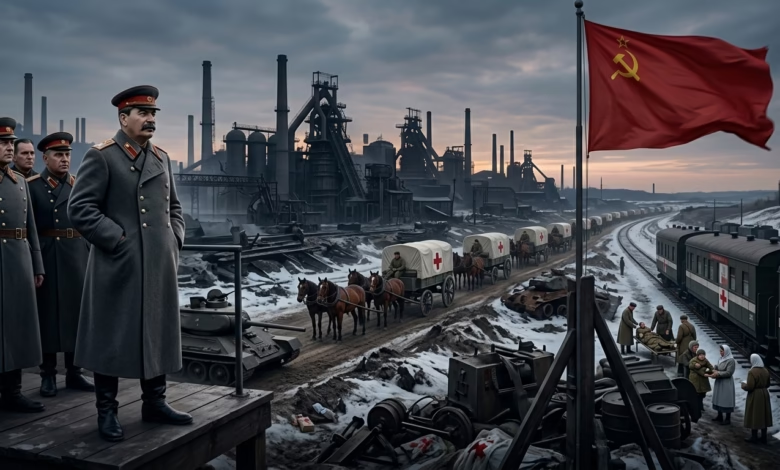
However, The Most Controversial Axis, To Which McMeekin Dedicates Lengthy And Meticulously Documented Pages With Figures And Statistics, Is The American “Lend-Lease” Program, Specifically The Role Played By Harry Hopkins, The Close Advisor To American President Franklin Roosevelt. The Author Believes That Washington Did Not Stop At Assisting An Ally In Distress, But Showed A Strange Readiness, Approaching Ideological Complicity Or Complete Strategic Impotence, To Meet All Of Stalin’s Requests, No Matter How Detrimental They Were To The American And British War Effort Itself. Hopkins Visited Moscow In July 1941, And Returned Laden With A Broad List Of Soviet Requests, And Instead Of Washington Using Its Economic Weight To Impose Conditions On Stalin Regarding The Future Independence Of Poland Or The Baltic States After The War, The American Administration Granted The Kremlin A Blank Check, And Massive Shipments Of Weapons, Raw Materials, Aluminum, Trains, High-Octane Fuel, And Studebaker Trucks Began To Flow Through The Ports Of Arkhangelsk And The Persian Corridor.
McMeekin Confirms Through Figures Contained In American Budgets, Specifically In The Pages Spanning Logistic Support Reviews, That The Soviet War Machine That Defeated The Germans In Stalingrad And The Battle Of Kursk Was Not A Pure Product Of The Planned Soviet Economy, But Was Running On American Tires, Feeding On American “Spam” Canned Meat, And Communicating Via Copper Wires And Wireless Devices Manufactured In American Factories, Where He Mentions In An Important Statistical Footnote The Volume Of The Massive Flow Of Aluminum That Allowed Russia To Build Its Airplanes And Tank Engines Without Interruption (McMeekin, 2021, p. 284). This Absolute Reliance On Western Support Reveals That Stalin Was Able, With Strategic Genius, To Win By The Efforts Of Russian Workers And The Funding Of American Taxpayers, At A Time When Soviet Diplomats In Washington And London Were Exercising Massive Pressures And Threatening To Conclude A Separate Peace With Hitler If The West Did Not Hurry To Open The Second Front In Europe.
He Delves Deeply Into Tracing Soviet Influence Networks Within The American Administration During That Period, Highlighting How The Soviet Intelligence Apparatus (NKVD) Succeeded In Penetrating Vital Institutions Such As The US Treasury Department Through Figures Like Harry Dexter White, The State Department, And Even The Immediate Circle Of Roosevelt. McMeekin Believes That This Penetration Was Not Merely A Traditional Espionage Operation To Steal Secrets, But Was A Strategic “Influence Operation” That Succeeded In Directing American Foreign Policy To Serve Moscow’s Interests, Such As Directing Violent American Pressures Against Japan In Late 1941 To Drive It Toward A Clash With Washington Instead Of Attacking Soviet Siberia, Which Completely Secured Stalin’s Back In The East and Allowed Him To Transfer Highly Trained Siberian Legions To Save Moscow In The Winter Of 1941.
This Analysis Offered By McMeekin Turns The Table On The Traditional Understanding Of The Great War; For While Britain Was Fighting For Its Imperial Survival And The United States Was Building The Arsenal Of Democracy, Stalin Was The Only Party Who Knew Exactly What He Wanted From This War After Its End. He Was Not Looking For Mere Survival, But Was Planning To Engineer A New Geopolitical Space Extending From Berlin To Manchuria. With The Flow Of Thousands Of Tons Of American Equipment Across Dangerous Sea Routes, The Seeds Of The Cold War And The Extension Of Communist Influence Over Half Of The European Continent Were Being Planted With Utter Care, And With Direct Facilitation From The Western Allies Who Completely Dismissed The Logic Of International Balance In Favor Of An Immediate And Near Military Victory, Which Led In The End To The Major Concessionary Conferences That Changed The Face Of The World.
The Architecture Of Concessions In Tehran And Yalta And The Formulation Of Eurasian Hegemony
Professor Sean McMeekin Moves To The Arenas Of International Diplomacy That Witnessed Direct Encounters Between The Giants Of War, To Offer A Highly Harsh And Deconstructive Reading Of The Major Summits That Brought Together Stalin, Churchill, And Roosevelt In Tehran In 1943 And Yalta In 1945. The Author Believes That These Conferences Were Not Just Rounds To Coordinate The Final Military Effort Against The Axis, But Were A Stage For A Historical Strategic Deception Operation, In Which The Soviet Leader Imposed His Conditions And Vision For The Future Of The World, Exploiting The Excessive Political Naivety Of American President Franklin Roosevelt, And The Growing British Exhaustion That Transformed Winston Churchill From An Imperial Leader Into A Partner Incapable Of Curbing The Communist Expansion. McMeekin Proves With Diplomatic Documents That The Kremlin Was Not Negotiating From The Position Of A Partner Desiring To Establish A Democratic Peace, But From The Position Of A Geopolitical Conqueror Who Knows That The Presence Of His Armies On The Ground Grants Him The Right To Draw The Borders Of The European Continent In Red Ink That Cannot Be Erased.
In The Tehran Conference Held In November 1943, The Writer Highlights The Intelligence And Security Atmosphere Imposed By The Soviets On The American And British Delegations, Where Stalin Succeeded In Convincing Roosevelt To Reside Inside The Soviet Compound Under The Pretext Of The Existence Of German Assassination Plots, Which Allowed Soviet Eavesdropping Devices To Monitor All Conversations Of The American President And His Advisors Around The Clock. This Logistical Penetration Granted Stalin Absolute Negotiating Superiority, Enabling Him To Read His Opponents’ And Allies’ Cards Before Sitting Down To The Negotiating Table. McMeekin Documents In The Middle Pages Of This Chapter How This Superiority Was Reflected In Stalin Snatching A Preliminary Approval From Roosevelt And Churchill To Transfer Poland’s Borders Toward The West, Sacrifice The Baltic Countries, And Approve The Inclusion Of Eastern Europe Within The “Security Sphere Of Influence” Of The Soviet Union (McMeekin, 2021, p. 412). This Concession, In The Author’s View, Was A Stab In The Back To The Moral Principles Declared By Britain And America In The “Atlantic Charter,” And A Explicit Abandonment Of The Primary Justification For Which London Declared War On Hitler, Which Was Defending The Sovereignty And Independence Of Poland.
At The Yalta Summit In February 1945, Where The Red Army Had Already Penetrated Into The Heart Of European Geography And Stood Within A Short Distance From Berlin, McMeekin Describes The Scene In The Crimean Peninsula In A Journalistic Style That Blends Psychological Description With Masterful Geopolitical Analysis; Where Roosevelt Appeared Ailing And Mentally And Physically Exhausted, While Stalin Was In The Prime Of His Mental And Political Presence, Backed By Accurate Intelligence Reports And A Network Of Advisors Who Directed Discussions Toward Achieving The Historical Ambitions Of The Russian Empire. Yalta, In McMeekin’s View, Was Not Merely An Agreement To Establish The United Nations Organization Or Divide Germany Into Occupation Zones, But Was A Strategic “Indulgence Operation” By Which The West Granted Stalin The Right Of Absolute Control Over Half Of The European Continent, Including Historical Capitals Such As Warsaw, Budapest, Prague, Bucharest, And Sofia.
The Geopolitical Greed Of The Kremlin Did Not Stop At The Borders Of The Old Continent, As McMeekin Dedicates An Entire Chapter To Deconstructing The Heavy Prices Paid By The West To Stalin In Asia In Exchange For His Promise To Enter The War Against Japan After Germany’s Defeat. In Yalta, Under Secret Agreements Not Disclosed To The Legitimate Chinese Government At That Time, Roosevelt Granted Stalin Control Over The Railways In Manchuria, Exclusive Rights In The Port Of Dairen, And A Naval Base In Port Arthur, In Addition To Control Over The Kuril Islands And Southern Sakhalin. The Author Believes That This Catastrophic Asian Concession Was The Cornerstone That Paved The Way For Undermining The Influence Of The Chinese Nationalist Forces Led By Chiang Kai-shek, And Allowed The Soviet Union To Deliver Massive Amounts Of Confiscated Japanese Weapons To The Chinese Communists Led By Mao Zedong, Which Altered The Balance Of Power In The Chinese Civil War and Led In The End To The Rise Of Communist China And The Disruption Of The Strategic Balance In East Asia For Decades To Come.
The Scathing Criticism That McMeekin Directs At Western Administrations Lies In Their Complete Absence Of The Classic Balance Of Power Logic In International Relations, And Their Identification With Soviet Propaganda That Portrayed Stalin As A Democratic Partner In Making The New World Peace. The Book Highlights How The West Even Approved To Forcefully Return Hundreds Of Thousands Of Russian Prisoners, Emigrants, And Escapees From The Hell Of Communism To The Soviet Union Within What Was Known As “Operation Keelhaul,” Where Most Of Them Faced Immediate Execution Or Exile To Gulag Camps, In A Scene Representing One Of The Greatest Moral Fallacies Of The Western Allies In The War.
The Author Places Us Before A Historical Reality Entirely Contrary To The Prevailing View: That The End Of World War II Was Not A True Victory For Liberal Democracy As Much As It Was A Decisive Victory And A Terrifying Expansion Of Soviet Totalitarianism, Which Succeeded, Thanks To The Blood Of Its Soldiers, Comprehensive American Logistic Funding, And The Impotence Of Western Politicians, In Extending Its Influence From The Elbe River In The Heart Of Germany To The Shores Of The Pacific Ocean In Asia. This Complex Closing Scene Of The War Was Not The Beginning Of A Sustainable Peace, But Was In Itself The Official Document Announcing The Birth Of The Cold War, and The Beginning Of A New Imperial Struggle For Global Sovereignty.
The Harvest Of Blood, The Reich’s Last Bleeding, And The Extension Of The Iron Curtain
Professor Sean McMeekin Traces The Concluding Moments Of The World War II Machine On The European Continent, Focusing His Historical Lens On The Terrifying Soviet Military Rush Toward Berlin In The Spring Of 1945. The Author Believes That The Military Game In Its Last Weeks Was Not Merely A Pursuit Of The Remnants Of The Exhausted German Army, But A Frenzied Strategic Race Waged By Stalin To Acquire As Much Territory, Factories, Vital Centers, And Above All, Scientific And Technical Minds In The Heart Of The Collapsing Reich As Possible. In This Context, McMeekin Reveals How The Soviet Leader Succeeded In Directing His Generals, Specifically Georgy Zhukov And Ivan Konev, To Launch Bloody Attacks Of Immense Human Cost To Topple Berlin Before The Arrival Of American And British Forces, Exploiting The Decision Of The Supreme Commander Of The Western Allied Forces, General Dwight Eisenhower, To Stop The Advance Of His Forces At The Elbe River To Match The Division Lines Drawn Previously In Yalta, A Decision McMeekin Considers One Of The Greatest Strategic Mistakes That Granted The Kremlin Absolute Geopolitical Superiority In The Heart Of The Continent.
The Author’s Narrative Conducts Us To The Atrocities Of The Fall And The Harsh Treatment Experienced By Local Communities In Eastern Europe And Germany At The Hands Of The Conquering Soviet Forces. Instead Of Repeating Traditional Propaganda That Focused On The Concept Of “Liberation,” McMeekin Dives Into Documents and Reports of Military Discipline and Internal Correspondence, Showing That Directives Issued From Moscow Turned A Blind Eye, And At Times Encouraged, Organized Looting, Mass Rape, And The Destruction Of Civil Infrastructure As A Tool To Break The Morale Of Defeated Nations and Subject Them Politically And Psychologically To The New Communist Ideology. The Gripping Scene Painted By The Narrative Here Is Not Confined To Berlin, But Extends To Include The Tragedy Lived By Budapest, Vienna, And Warsaw, Where The Soviet Allies Transformed In The Eyes Of Local Inhabitants From Saviors From Fascism Into Invaders Who Imposed A New Pattern Of Violent and Organized Totalitarianism.
The Writer Mentions In Documented Figures How Specialized Soviet Teams Dismantled Entire Factories, Railway Lines, Scientific Laboratories, Power Generation Stations, And Even Stocks Of Precious Metals And Livestock From Germany, Austria, Poland, Finland, And Romania, And Shipped Them In Thousands Of Trains Headed Eastward To Rebuild The Devastated Soviet Economy (McMeekin, 2021, p. 531). This Organized Economic Looting, Executed With The Implicit Approval Or Impotence Of Western Powers, Was Not Merely A Punishment For The Defeated, But Was A Geopolitical Engineering Operation Aimed At Keeping Eastern European Countries In A State Of Complete Economic And Developmental Dependency On Moscow, Paving The Way To Subject Them Politically Via Establishing Puppet Regimes Led By Local Communists Who Had Been Trained For Years In The Kremlin.
Showing How The “Iron Curtain,” Of Which Winston Churchill Spoke Later In His Famous Speech In The City Of Fulton, Descended To Divide The European Continent Into Two Conflicting Worlds. However, McMeekin Argues That This Curtain Did Not Descend Suddenly In 1946 Or 1947, But Its Lines Were Drawn And Its Pillars Gradually Fixed Throughout The Years Of War Thanks To The Political And Logistical Concessions Granted By The West To Stalin. Politicians In Washington And London Found Themselves, By The End Of The Summer Of 1945, Facing A Terrifying Reality: They Had Destroyed The Nazi Dictatorship In Berlin Only To Be Surprised By The Rise Of A Totalitarian Empire More Lethal, More Expansive, And Possessing A Mighty Army Standing A Short Distance From The Atlantic Shores, Feeding On What Remained Of Western Support Shipments.
Nor Does McMeekin Overlook The Tight Link Between The European And Asian Fronts In The Final Weeks Of The War, Reviewing How Stalin Exploited The Imminent Japanese Collapse After The Dropping Of The Two Atomic Bombs On Hiroshima And Nagasaki To Declare War On Tokyo And Invade Manchuria And Northern Korea In A Swift Operation Known As “Operation August Storm.” Here, The Thesis Re-emerges To Confirm That The Kremlin’s Greed Was Transcontinental, As This Swift Invasion Allowed Stalin To Lay His Hands On The Arsenal Of The Japanese Kwantung Army And Deliver It To The Chinese People’s Liberation Army, Placing Thereby The First Nail In The Coffin Of Chiang Kai-shek’s Nationalist Regime, And Establishing The Violent Geopolitical Theater That Later Ignited The Korean War In The Early 1950s.
This Terrifying Geopolitical Harvest Presented By McMeekin In The Late Chapters Of His Book Reshapes The Concept Of Victory In World War II; It Was Not A Victory For Liberal Democracies That Emerged From The War Burdened With Debts, Obligations, And Confronting The Imminent Disintegration Of Their Old Colonial Empires, But Was The Greatest And Sole Victory For Joseph Stalin Who Sat On The Throne Of Eurasia From Berlin To Pyongyang. This Soviet Totalitarian Superiority, Crafted With Mutual Wealth and Blood, Left The West In A State Of Strategic Astonishment and Genuine Intellectual Shock, Forcing Them To Enter Immediately Into A New Circular Confrontation To Siege This Juggernaut That They Themselves Contributed To Releasing From Its Shackles.
Strategic Outcomes And The Historical Trial Of Totalitarianism’s Victory
In The Concluding Chapters Of His Seminal Book, Professor Sean McMeekin Arrives At Presenting A Rigorous Intellectual And Geopolitical Trial Of The Results Of This Global War, Extracting The Lessons Learned That Altered The Course Of International Relations And Shaped The Features Of The Twentieth Century And Beyond. The Author Believes That The Final Evaluation Of World War II Cannot Stand Straight If Western Intellectual And Political Elites Continue To Look At It Through The Lens Of The “Just War” That Ended With The Victory Of Democracy And Getting Rid Of Fascism, But Must Face The Naked Truth Represented In That The War Ended By Replacing A Reckless and Short-Lived Nazi Totalitarianism With A Well-Established Soviet Communist Totalitarianism, More Organized, Geographically Broader, And More Capable Of Long-Term Strategic Maneuver. McMeekin Argues Deeply That The Moral And Political Cost Of This Victory Was Extremely Heavy, And That The Maps Drawn In Yalta And Potsdam Were Not A Map Of Peace, But Were A Precise Prescription For The Outbreak Of An Extended And Multi-Front Geopolitical Conflict Known As The Cold War.
Where McMeekin Believes That The Excessive Naivety Displayed By Leaders Like Franklin Roosevelt, And The Frenzied Desire Of Winston Churchill To Crush Germany At Any Price and Without Regard For The Consequences Of The Next Day, Were What Enabled Stalin To Achieve His Far-Reaching Objectives. The West Provided The Kremlin With All Tools Of Material Power, Moral Cover, And Political Coverage To Expand In Eurasia, And Western Politicians Did Not Realize The Enormity Of Their Mistake Until They Found Soviet Tanks Standing In The Heart Of Berlin, Communism Swallowing China, And Red Armies Threatening Oil Fields In The Middle East And The Black Sea Straits. The Author Points Out That The Cold War Was Not A Sudden Conflict That Emerged After 1945 Resulting From Transitory Differences, But Was The Inevitable And Logical Outcome Of The Way The West Managed Its Alliance With Stalin, As They Granted Him The Economic And Military Lifeline Without Preconditions Assuring The Freedom And Sovereignty Of Small Nations
He Turns To A Reading Of The Far-Reaching Effects Of This Totalitarian Victory On The Asian Continent, Showing That The Geopolitical Concessions Granted To Stalin In Manchuria And The Kuril Islands Were Not Mere Temporary Military Prices, But Were The Greatest Strategic Earthquake That Altered The Regional Balance Of Power In The Far East. The Rise Of Communist China And The Establishment Of Kim Il-sung’s Regime In North Korea, Thanks To Direct Soviet Logistic And Military Support, Detonated Subsequent Bloody Wars That Cost The American Taxpayer And Asian Societies Millions Of Lives And Billions Of Dollars In The Fifties And Sixties, Proving That “Stalin’s War” Did Not Truly End In August 1945, But Its Fires Extended To Cover A Wide Geography In The Mountains Of Korea, The Jungles Of Vietnam, And The Taiwan Straits, Revealing A Enormous Short-Sightedness In The Infrastructure Of Strategic Decision-Making In Washington.
From A Philosophical And Historical Perspective, McMeekin Directs Scathing Criticism At Traditional Historical Literature That Long Justified Stalin’s Colonial and Expansionist Behavior In The Periods Before and After 1941 As “Defensive Security” Measures Imposed By The Circumstances Of Facing The Nazi Danger. The Writer Believes That This Justifying Reading Involves A Great Moral Defect, Because It Equates The Victim And The Executioner, And Ignores The Fact That The Soviet Union Was An Essential Partner And Funder Of The Hitlerite War Machine In The First Two Years Of The War, And That It Committed Brutal Massacres No Less Atrocious Than Nazi Crimes, Such As The Katyn Forest Massacre In Which Thousands Of Polish Officers And Intellectual Elites Were Eliminated In Cold Blood And With A Direct Signature From Stalin And Members Of The Kremlin’s Politburo. Restoring Consideration To These Documented Facts In War Archives Represents, In McMeekin’s View, A Necessary Step To Purge Global Historical Memory Of The Effects Of Shared Soviet And Western Propaganda That Prevailed During The Years Of The Alliance.