

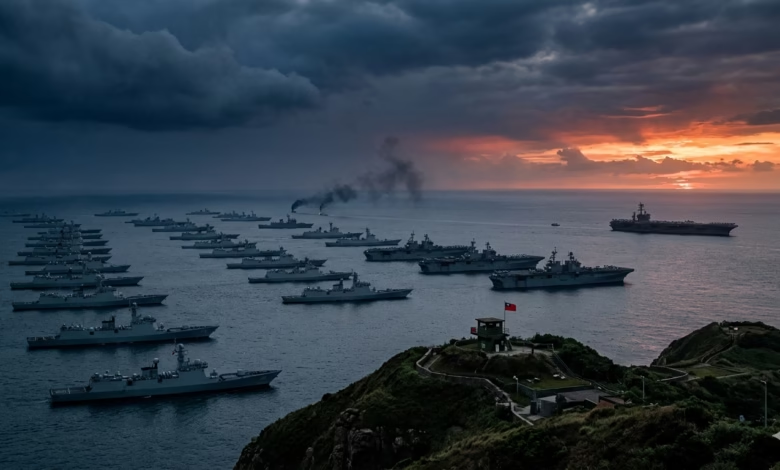
The Strait Earthquake and the Prophecy of the Upcoming Geopolitical Hell
Humanity Sits Today On The Vent Of A Geopolitical Volcano That Never Ceases To Boil, As Political And Military Indicators In East Asia Turn Into Raw Material For The Darkest Scenarios In Modern History. In This Tension-Ridden Context, The Book By Researcher And Strategic Expert Andreas Fulda, Published By The Prestigious German Publishing House C.H. Beck, Stands Out With A Title Carrying A Decisive, Uncompromising Warning Tone: “When China Attacks: A Predictable Scenario”. In This Work, Fulda Does Not Merely Offer A Cold Reading Of Military Balance Of Power, Nor Is He Satisfied With Listing Numbers And Statistics Surrounding The Capabilities Of The Chinese People’s Liberation Army In Confronting The Arsenal Of Taiwan And Its Western Allies. Instead, He Adopts A Style That Merges The Visionary Fictional Scenario With Academic Analysis, Placing The Reader, And The Western Decision-Maker In Particular, Before The Mirror Of A Near Future That Could Explode At Any Moment—Specifically In The Year Two Thousand Twenty-Seven, A Date The Author Uses As The Starting Point For His Tightly Knitted Narrative Plan.
Fulda Begins Forcefully, Bypassing Traditional Introductions, To Remind Us Of History’s Flexibility And Its Susceptibility To Catastrophic Transformation. In His Opening Introduction, He Points To The Atmosphere Of The Cuban Missile Crisis In The Year Nineteen Sixty-Two, And How The World Was On the Verge Of A Comprehensive Nuclear War, Linking That To The Current Reality In The Taiwan Strait, Which The Author Views As The Most Dangerous Fulcrum Of The Twenty-First Century. The Core Value From Which This Book Launches Is Disentangling The False Sense Of Complacency Experienced By Western Capitals, Particularly Berlin And Paris, As The Author Believes That European Political And Economic Elites Remain Drowned In The Illusions of Trade Bringing Democratic Change—A Concept Proven To Be A Miserable Failure With The Fierce Rise Of Military Nationalism In Beijing Under The Leadership Of Xi Jinping. Fulda’s Text Moves Seamlessly Between The Dark Military Operations Rooms In Beijing, Strategic Planning Offices In Washington, And The Crowded Streets Of Taipei That Fail To Realize The Magnitude Of The Impending Storm, Forming A Highly Realistic Narrative That Almost Breathes Suspense With Every Single Page.
The Writer’s Brilliance Evaporates In Capturing The First Spark Of Conflict; He Does Not Assume A Sudden, Barbaric Attack Devoid Of Context, But Builds The Scene Gradually Through A Routine Incident Occurring On The Twenty-Eighth Of February, Two Thousand Twenty-Seven, When Two Taiwanese F-16 Fighter Jets Take Off From A Military Base Near Taitung In The Southeastern Part Of The Island To Intercept A Customary Chinese Incursion Into The Air Defense Identification Zone. This Simple Military Contact Turns, Due To The Charged Atmosphere And Premeditated Political Decision In Beijing, Into A Mid-Air Collision Incident Resulting In The Crash Of A Chinese Fighter Jet And The Death Of Its Pilot, Giving The Chinese Leadership The Golden Pretext It Had Been Waiting For To Mobilize The Massive War Machine Prepared Over Decades. Fulda Describes This Shift In Lucid, Breathtaking Journalistic Language, Showing How Chinese State Media Outlets Transform Within Hours Into Platforms For Global Nationalist Incitement, Demanding To Wash Away The Disgrace And Reclaim The Rebellious Island By Force, Marking The End Of The Strategic Patience Phase And The Beginning Of The Actual Implementation Of The Full-Scale Invasion Scenario.
The Analytical Structure Of The Book Divides The Hypothesized Chinese Invasion Into Explicit Wall-Like Phases, Beginning With The First Phase, Which The Author Terms Information Warfare, Launching On The First Of March, Two Thousand Twenty-Seven. Here, Fulda Takes Us Beyond The Veils In Beijing, Where Heavy Smog Envelopes The City And Streets Are Crowded With Black Cars Belonging To Officials, While Chinese Security And Intelligence Apparatuses Direct A Cyber Attack That Is The Largest In Human History. This Attack Is Not Limited To Paralyzing Taiwan’s Digital Infrastructure, But Extends Via Precise, Targeted Preemptive Strikes To Telecommunication Networks, Power Stations, And Banking Systems In The West, To Cause Utter Chaos And Strategic Blindness That Obstructs Any Swift, Systemic Response By The United States And Its Allies. The Author Emphasizes In This Analytical Domain That Modern Combat Does Not Begin With Cannon Fire, But Launches From Keyboards And Data Centers, Where The People’s Liberation Army Seeks To Isolate Taiwan Completely From The Outside World, Forcing It To Live In Absolute Digital Darkness That Prevents Even Facts And Images From Reaching International Television Screens.
The Author Moves On To The Second Phase Of The Scenario, Which Is The Phase Of The Suffocating Naval And Air Blockade, Whose Features Materialize In Early May Of The Same Year. Here Emerges The Character Of Vice Admiral Zhang, One Of The Chinese Military Leaders Suffering From Sleep Deprivation And The Pressure Of Historical Responsibility, Through Whom Fulda Expresses The Mentality Of The Chinese Military Leadership Which Views Controlling Taiwan As A Matter Of Life Or Death For The Communist Regime And The Legitimacy Of The One-Party Rule. This Blockade, As Formulated In Extreme Precision By The Book, Does Not Only Aim To Prevent Military Supplies From Reaching The Island, But Seeks To Strangle Taiwan’s Economic and Industrial Arsenal, Particularly The Advanced Semiconductor And Electronic Chips Sector Which Represents The Backbone Of The Global Digital Economy. Fulda Plainly Demonstrates, Within This Strategic Discussion, How The World Begins To Feel The Economic Disaster Before The Military One, As Global Supply Chains Halt, Inflation Rates Rise, And International Financial Markets Experience A Free-Fall Collapse Due To The Cessation Of Navigation In One Of The Most Vital Cosmic Marine Straits.
The Central Thesis That Andreas Fulda Tries To Deliver Through This Tightly Executed Dramatic Presentation Is That The Chinese Attack Is Not Merely A Local Regional Dispute That Can Be Contained, But A Structural Earthquake That Will Completely Reshape The Global Map Of Power, Paving The Way For The Emergence Of A Chinese Peace Imposed By Force of Arms and Absolute Control. The Author Argues That China, Under The Rule Of The Communist Party, Does Not Look For Coexistence Within The Current International Order Led By The United States, But Seeks Diligently And Patiently To Demolish This System And Replace It With A Pivotal Model Where Beijing Is The Center And Everyone Orbits Within Its Sphere. The Book Shows How The Chinese Leadership Implemented Lessons Learned From The Russian-Ukrainian War, Fortifying Its Economy And Financial System Against Western Sanctions, Making It More Daring In Taking The Invasion Decision, Relying On The Weakness Of Western Political Will And Washington’s Preoccupation With Its Internal Conflicts And Successive Political Crises.
Fulda Directs His Sharp Arrows Of Criticism Toward German And French Policy, Which Insists On Separating Economic Interests From Geopolitical Values. The Author Believes That Continuing Commercial Dependence On China Represents A Slow Strategic Suicide, Because The Funds Flowing From European Markets Into Beijing’s Coffers Are The Very Same Financing The Construction Of Naval Fleets And The Development Of Hypersonic Missiles That Will Be Used Tomorrow To Break Western Hegemony And Subjugate Taiwan. Fulda’s Language In These Sections Is Characterized By A Smooth Flow And Solid Phrasing That Blends Investigative Journalism Style With The Depth Of Political Philosophy, Making The Article Glide With Extreme Flexibility That Transports The Reader From The Details Of Battles And Aerial Dogfights To The Corridors Of Macro Strategic Thought, Clarifying That What Happens In The Taiwan Strait Is Not Just A War Over A Small Island, But An Existential Conflict To Determine Who Will Lead The World In The Next Century, And Whether Democracy Will Remain The Governing Value Or If Chinese Digital Despotism Is What Will Impose Its Conditions Upon Everyone Without Exception.
The July Shock And Strategic Blindness In The Heart Of Western Capitals
The Hands Of The Geopolitical Clock Move In Andreas Fulda’s Scenario To Reach The Point Of Mega Explosion On The Seventh Of July, Two Thousand Twenty-Seven, The Moment In Which All Attempts Of International Diplomacy Collapse, Turning The Crisis Into A Direct, Broad-Scale Armed Confrontation. The Writer Chooses This Date In Extreme Care To Paint A Highly Complex and Contradictory Canvas, As The Scene Commences From New York City In The Early Evening Hours, Where Times Square In Manhattan Bustles With Habitual Life And Movement, Tourists Stream Into Theaters And Restaurants, And Employees Leave Their Offices In Skyscrapers, Totally Unaware That The World They Know Is Crumbling At That Very Instant On The Other Side Of The Planet. Fulda Links This Quiet New York Scene With The Horrific Shock That Suddenly Hits Communication Networks, When Giant Digital Screens In The Famous Square Go Pitch Black, Coinciding With A Sudden Failure Of Power Grids And Navigation Systems, Signaling The Beginning Of The Comprehensive, Coordinated Chinese Offensive That Does Not Only Target Taiwan, But Spreads Via Paralyzing Cyber Strikes To The Depth Of American Lands To Disable Swift Response Capabilities And Distract Global Public Opinion.
Meanwhile, Beijing Launches Its Direct Military Offensive Under The Cover Of The Third Phase, Which The Author Names The Full-Scale Attack Phase, Where Thousands Of Ballistic And Cruise Missiles Rain Down From The Chinese Coast Toward Military Bases, Airports, And Command Centers In Taipei and All Major Taiwanese Cities. Fulda Describes The Scene With Meticulous Journalistic Detail, Pointing Out That The Chinese People’s Liberation Army Long Term Instated No Longer Relies On Tactical Surprise As Much As It Depends On Massive, Unprecedented Fire Density Designed To Crush The Defense Will Of The Taiwanese Side In The Early Hours. Missiles Fall With Utmost Precision Targeting Radars, Air Defense Platforms, And Vital Communication Centers, Causing Total Paralysis To The Island’s Self-Defense Grid. Despite The Bravery Of Some Taiwanese Units Using Patriot Missiles And Local Systems, Successive Waves Of Chinese Drones And Loitering Munitions Succeed In Completely Exhausting The Taiwanese Arsenal In Record Short Time, Paving The Way For Breaking The Deepest Sea And Air Landing Across The Strait Since The End Of The Second World War.
The Writer Transports Us On The Ninth Of July To The Ground Floor Of The White House, Specifically To The Famous Strategic Situation Room Which Witnessed Throughout History The Making Of The Most Perilous American Military Decisions, Where Total Chaos, Confusion, And Bewilderment Prevail Among Military Commanders And Political Advisors Surrounded By Dark Mahogany Wood Panelings And The Latest Advanced Digital Screens And Technologies Updated Recently. Fulda Displays This Scene Under The Title Of The Fourth Phase, Which He Calls Delayed Defenders, Highlighting The Massive Gap Between The Speed Of Military Decision-Making In A Centralized Autocratic System Governed By One Man, And The Sluggish, Bureaucratic Process In Western Democratic Systems Fettered By Political And Electoral Calculations. The American President And His Advisors Sit In Front Of Conflicting Intelligence Reports, While Chinese Forces Have Already Succeeded In Establishing Beachheads On The Western Shores Of Taiwan, Deploying Tanks, Armored Vehicles, And Hundreds Of Thousands Of Soldiers, While Washington Continues To Search For A Response Formula That Does Not Lead To A Direct Nuclear Confrontation With Beijing.
The Book Reveals Through This Political Anatomy The True Nature Of The American Strategic Dilemma, Where Military Commanders In The Pacific Find Themselves Facing A New, Forcefully Imposed Military Reality. Chinese Hypersonic Missiles And Anti-Access/Area-Denial Systems Have Succeeded In Pushing American Aircraft Carriers Back Great Distances Behind The First Island Chain, Making The Provision Of Direct, Swift Military Support To Taiwan Immensely Difficult And Costly From Both Human And Material Perspectives. Fulda Analyzes With Great Agility How American Strategic Blindness Was Not A Product Of The Moment, But A Consequence Of Decades Of Underestimating Chinese Military Ambitions, And The Faulty Assumption That Beijing’s Economic Integration Into Global Markets Would Restrain It From Any Military Leap That Might Destroy Its Commercial Interests—A Classical Illusion That Fell Under The Feet Of Chinese Marines Pounding The Streets Of Taipei.
The Author Does Not Forget In This Context To Track European Responses, Which Arrived Even More Confused And Fragile Than The American Stance, As Major European Capitals Rushed To Issue Sentiments Of Condemnation And Routine Diplomatic Concern, Incapable Of Mobilizing Any Concrete Practical Measures. Fulda Explains That The Chinese Attack Succeeded In Generating An Immediate, Deep Divide Within The European Union, Flanked By Countries Perceiving The Invasion As An Existential Threat To The Rules-Based International Order That Must Be Met With Universal, Harsh Economic Sanctions Even If It Triggers A European Economic Recession, And Other Nations, On Top Of Which Are Germany And France, That Tried To Hold Unto A Thin Thread With Beijing To Protect Their Colossal Investments And Vital Manufacturing Plants In The Chinese Market, Considering That The War In East Asia Is Primarily An American-Chinese Affair And Europe Ought Not To Burn Its Fingers In The Furnace Of This Cosmic Confrontation.
The Narrative Track Followed By Fulda Puts The Reader In Confrontation With The Naked Truth, Which Is That Taiwan Was Ultimately Left To Face Its Destiny Alone Under The Weight Of The Crushing Chinese War Machine, Amidst A Total Absence Of Genuine Western Political Will To Provide The Sacrifices Required To Protect A Young, Emerging Democracy. The Text Shifts Smoothly To Project The Gradual Collapse Of The Isolated Taiwanese Resistance, As Chinese Special Forces Flow Into Government Buildings and Sovereign Centers In Taipei, A Full Curfew Commences, And The Island That Was Once A Symbol Of Technological And Democratic Prosperity Transforms Into An Occupied Chinese Province Subjected To The Direct Authority Of The Communist Party, Commencing A New, Darker Chapter In The Region’s History, Defined By Political Liquidation And The Engineering Of A New Taiwanese Society Fitting The Ideological Dimensions Of Beijing.
Occupied Taiwan And The Engineering Of Enslavement In The Era Of “Pax Sinica”
Andreas Fulda’s Visionary, Shocking Account Shifts To An Even Darker and Deeper Stage By Early March, Two Thousand Twenty-Eight, When The Dense Clouds Of Smoke Resulting From Missile Bombardment And Direct Military Operations Clear Away, Revealing A Bitter Geopolitical And Human Reality In Post-Annexation Taiwan. The Author Reformulates This Tragic Transition Deep Into The Backstage Of Show Trials Fabricated By Chinese Occupation Authorities In Taipei. The Former Taiwanese Vice President, Who Stood As A Symbol Of Resilience And Free Will, Stands In A Courtroom Constrained Between Two Large-Bodied Chinese Policemen, To Formally Appear Before Judges Brought Especially From Beijing To Try Him For High Treason And Separatism, Depicting Precisely The Liquidation Of The Island’s Political Identity And The Crushing Of Its Democratic Institutions Formed By Efforts Of Successive Generations. Fulda Describes The Painful Paradox When Former Officials Tremble Seeing Companions In Arms And Politics Led To Internment Camps, At A Time When The Island’s Streets Transform Into A Theater For A Large-Scale Ideological Cleansing Operation Greatly Resembling What Occurred In Hong Kong, But With A Fiercer, More Comprehensive Momentum.
The Core Argument Offered By The Author In This Stage Extends Beyond Mere Tracking Of Rights Violations, Tearing Down The Instruments Of Coercive Social Engineering Deployed By The Chinese Communist Party In Taiwan. The Matter Is No Longer Restricted To Swapping Flags And Sovereign Symbols, But Deepens To Infiltrate Educational Curricula, Media Corporations, And Houses Of Worship, Enforcing Beijing’s Historical Narrative That Annihilates Completely The Existence of An Independent Taiwanese Identity and Considers The Island An Inseparable Part Of The Motherland Since Antiquity. Fulda Cleverly Dissects How China Applied Defensive National Mobilization Laws To Confiscate Properties Of Giant Tech Firms, Particularly Microchip Foundries, Fusing Them Fully Into The Chinese Military-Industrial Complex. In These Stern Segments, Distinct Signs Flash Indicating Restrictions On The Movement Of Both Taiwanese And Chinese Academics and Scientists, Whose Passports Were Seized, Banning Them From Flying Abroad Under The Pretext of Protecting National Security And Preserving Top Technological Secrets, Bringing Out The True Face Of Digital Tyranny That Does Not Content Itself With Physical Ground Control But Seeks To Apprehend Minds And Control The Flow of Human Knowledge.
Fulda Outlines The Contours Of The Ascent Of Absolute Chinese Supremacy And The Inception of An Era Best Described As Chinese Peace Imposed By All-Out Firepower. The Author Notes That The Fall Of Taiwan Created A Strategic Cataclysm That Thoroughly Altered Cosmic Balance Of Power In Both The Indian And Pacific Oceans, Inducing A Sharp Decline For American Dominance And A State Of Dread, Panic, And Strategic Blindness Across Regional Allies Like Japan, South Korea, And Australia. New Chinese Military Bases In Taiwan Turned Into Advanced Platforms Enabling The People’s Liberation Army To Encircle Vital Sea Lanes And Control International Trade Striding Through The Malacca Strait And The South China Sea, Depositing Regional States In Front Of Two Bitter Choices: Either Total Submission To Beijing’s Economic and Political Dictates, Folding Under The Traditional Chinese Lens Of “Tianxia” Or All Under Heaven, Or Approaching A Fate Equivalent To Taiwan Should They Dare Contradict The Chinese Central Will.
Fulda Exposes That Chinese Ambition Does Not Stop At Regional Domination, But Seeks The Deep Dissolution Of The Existing International Order’s Foundations, Substituting International Laws And Charters Penned By The West After World War Two With New Standards Serving Beijing’s Geostrategic Interests. Financial Relief Packages And Grand Investments Embedded In The Belt And Road Initiative Turn Into Soft Means To Cultivate Political Vassalage, Leaving Developing Countries Obligated To Validate Chinese Alignments In Global Forums In Exchange For Loans Or To Shield Their Infrastructures Hypothecated To Chinese Banks. He Shows How “Pax Sinica” Is Distinct From A Peace Based On Equilibrium And Collective Values; Rather, It Is An Imperial Peace Injecting Stability Via Terrifying Opponents And Subduing Them, Exploiting Total Deficits In Shared Strategic Insight Within The Democratic Bloc Distracted By Marginal Disputes And Chronic Inward Economic Failures.
He Reviews How The Taiwanese Community Extists Under The Close Eye Of Artificial Intelligence Architectures And Facial Recognition Devices Monopolizing Every Shift And Whisper. Manifestations of Free Press And Open Internet Expired, Swapped With A Cloistered Native Intranet Regulated By Rigid Census Operations Of The Communist Party, Rendering It Explicit That The Toll Paid By Peoples Upon Democracy’s Demise Does Not End With Loss Of State Sovereignty, But Accumulates To Squelch Individual Rights And Personal Freedoms, Remolding Humans Into Minute Gears Spinning Inside A Colossal Totalitarian Complex.
The Fracturing Of The Western House And The Autumn Of Atlantic Solidarity
The Arm Of The Scenario Crafted By Andreas Fulda Moves Towards A Perilous Intersection On The Twenty-Fifth Of July, Two Thousand Twenty-Eight, Migrating The Pulse of Stress And Disturbance From The Lukewarm Streams Of The Taiwan Strait Onto European Offices Packed With Chronic Historical Doubts And Thorny Politics. The Writer Redraws This Harsh Geopolitical Twist In Heavily Packed Media Terms, Escorting Us To The Tumultuous Post-Midnight Media Briefing Commanded By The Polish Prime Minister, Exhausted And Severely Edgy Under Broad Journalist Clusters. Fulda Inherits His Striking Phrasing Delivered Vocally In Wrath, Stating That Berlin Now Constitutes The Fungus Of Partition And Dissolution Across The European Terrain, Translating Through This Core Episode The Total Evaporation Of European And Atlantic Solidarity Against The Raw Elevation Of The Chinese Behemoth Intruding Its New Reality With Iron and Fire. This Sharp Conflict Was Avoided By Any Blind Coincidence; It Emerged As A Linear Outcome of The Deep Crevice Carried By The Joint French-German Initiative Voiding All-Inclusive, Acute Economic Sanctions Targeting Beijing, In A Desperate Striving By West European Capitals To Insulate Commercial Monopolies And Crucial Engineering Fields Placed Within The Extended Chinese Matrix.
He Explains That China’s Military Conquest In Taiwan Swiftly Remodeled Into A Fatal Political and Commercial Asset, Splitting Allied Cooperation and Shattering Universal Understandings. Eastern European Polities, Headed By Poland And The Baltic Frontier, Land In Genuine Panic, Recognizing In The Hesitation of Berlin And Paris To Curb Chinese Coercion A Dreadful Indicator Over The Fragility Of European Defenses, Fearful That Similar Inertia Will Mirror Should They Meet Unveiled Structural Threat From Rival Local Contenders. Fulda Traces Fluidly How The European Union, Frequently Celebrating Collective Values, Decoupled Into Heterogeneous Factions Scrambling Across Scattered Fragments Of Short-Term Industrial Gains, With China’s Material Clout Able To Procure The Compliance of Selected Offices, Mounting An Unadvertised Veto Over Union Decisions Regarding Security Cooperation and External Matters.
In Parallel Continuity, The Volume Measures The Ruinous Impacts Of This Rift Over Transatlantic Contacts, Widening The Wound Intersecting Washington And Its Conventional European Relatives Unprecedentedly In Contemporary Chronicles. The American Strategist Experiences Sensation Of Implicit Deceit From Relatives Who Discarded Broad Commitment In Economic And Material Blocks Intended To Repress Beijing, Compelling The United States to Calibrate Its Global Posture, Deflecting Visibly Towards Isolation Or Restructuring Selective Miniature Pacts Inside The Indopasific Realm Far Removed From Classic Nato Umbrella Configurations. Fulda Relates In Seamless Clauses That European Strategic Blindness Prompted Chinese Architects To Carry Forward Step-By-Step Advancements, Capitalizing On Missing Combined Western Will To Anchor The Anchors Of “Pax Sinica” And Constrain Remaining Democratic Outposts Throughout Asia and Beyond. The Universal Market Driven By Beijing Starts Prescribing New Protectionist Stipulations, Compelling European Associations To Succumb To Chinese Censorship Standardizations If They Prefer Safekeeping Supply Anchors And Indispensable Arenas.
He Maintains That Western Recession Does Not Steer From Material Shortages Or Technical Deficits, But Traces Fundamentally To Crisis Of Resolve And Depletion of Common Ethical Foundations And Vision. West European Economic Executives Assumed They Could Maintain Uncommitted Stances, Retaining Pleasant Ties With Sprouting Tyrannies Devoid of Geopolitical Taxes, Yet The Assault Blueprint Discovered That Indifference In Systems Definition Confrontations Is A Mirage Inducing Postponed Self-Destruction. The Text Reports How European Centers Shifted Into Domains For Indirect Chinese Interventions and Polarizations, Broadcasted Through Analytical Foundations And Corporate Guilds Campaigning For Adapting To The Modern Chinese Century and Adopting The Prescribed Truths, Visualizing The Volume of Mind Penetrations Realized By Beijing Long Before Deploying Any Real Fire In The Strait.
Conclusion Of The Disastrous Prophecy And Strategic Evaluation
Our Deep Journalistic Breakdown Of Andreas Fulda’s Contribution, “When China Attacks: A Predictable Scenario”, Arrives At Its Closing Juncture, Where Visionary Speculation Embraces Naked Realism To Deposit The Reader Before Historical Liability Facing The Governing Architecture. The Supplementary Worth Inserted By This Research Unto The Global Library Projects Beyond Detailing Aggression Metrics Or Warning About Timelines and Structural Sequences; Rather, It Addresses Critical Structural Anatomy Regarding The Fresh Strategic Dawn We Approach Involuntarily—An Interval Highlighted By Waning Western Influence And Shifting Authority Schemes Subverting Democratic Conventions With Massive Automated Tyranny. Fulda Succeeds, Crossing Book Segments Beginning From Jet Contact Incidents Over The Strait Unto Fractured Alignments Within Western Capitals, In Publishing A Live Elegy Commemorating Strategic Inertia Inebriating Political Elites Who Handled Expansion Intentions From Beijing With Extreme Commercial Naivety, Devoid of Macroscopic Caution.
Weighing This Heavy Dynamic Inside Scholarly And Public Matrices Clarifies That Fulda Operates Beyond Basic Reporting Or Weaving Fanciful Thrills; He Validates Himself As An Expert Dissecting Chinese Communist Party Operations And Military Creeds Focusing On Taiwan’s Reclaimed Affiliation As A Correction To Historical Grievance. The Narrative Track Of This Intellectual Piece Harnesses Fluid Fluency Incorporating Individual Trajectories, Recording Experiences Of Taiwanese Managers Alongside Chinese Directors, Fusing Them Inside Gigantic System Operations, Conveying Academic Explanations Easily To Political Supervisors And Ordinary Inquirers Alike. Though Selected Investigators May Criticize These Blueprints As Hyper-Pessimistic Or Devaluating Pacific Defense Potentials Managed By America, Verifiable Records Corroborate That Tyrants Maintain Higher Audacity Initiating Fatal Transformations Disregarded By Democractic Clusters Clinging On Periodic Commerical Satisfactions and Transitional Luxuries.
The Ultimatum Warning Deposited By Fulda Is That “Pax Sinica” Does Not Suggest An Ordered Safe Proxy To American Supremacy, But Materializes A Substitute Macro Cosmos Incubating Mandatory Vassalage, Redefining Elemental Human Truths Like Freedom, Legal Rights, And State Sovereignty In Accordance With Beijing’s Totalitarian Vision. Inside This Emerging Configuration, Applied Advancements And Automated Reason Shifting Away From Knowledge Dissemination Form Instruments Compiling Close Control and Oversight Over Earth’s Occupants, Transforming Hard Military Assets and Brutal Economic Clout Into Singular Standards Validating Global Status and Mapping Societies. The Literature Contends That Western Shrinkage In Front Of This Influx Highlights Civilization Terminus, Given That Compromising Taiwan Today Refuses Stability, Extending Appetites To Further Aggression Over Navigation Arteries, Translating Tomorrow’s Collision Into Heavy Expensiveness.
Consequently, This Text Obtains Properties Of An Indispensable Document Demanding Immediate Preemptive Awakening, Where Fulda Restlessly Demands European Cabinets To Escape Trade Delusions, Initiating Deliberate Material Decoupling Options From China, Guarding Core Infrastructures and Industrial Hubs Against Pending Geopolitical Duress. Securing Taiwan Represents Defensive Strategies Guarding Global Liberties, And Should The Democratic League Falter Unifying Firm Dissuasion Designs In The Strait, Alternatives Yield Extended Winters Damaging Atlantic Integration, Instating Rules Of The Tech Jungle Directed By Autocracies Saturated With Ambitions Of Historic Retaliation And Macro Domination.
With This Eloquent Structural Farewell, Andreas Fulda Anchors His Ominous Warning, Leaving Options Active To Adjust This Impending Shade Provided Western Centers Terminate Strategic Slumber, Cooperating Towards Sincere Deterrence Blueprints Blending Physical Power and Dense Pacts, Preserving This Manual As A Persistent Siren Ringing In Planetary Policy Stations, Declaring That Universal Memory Ignores Vacillating Contenders, And That Imminent Maritime Friction Forms The True Matrix Modeling The Whole Twenty-First Century.