

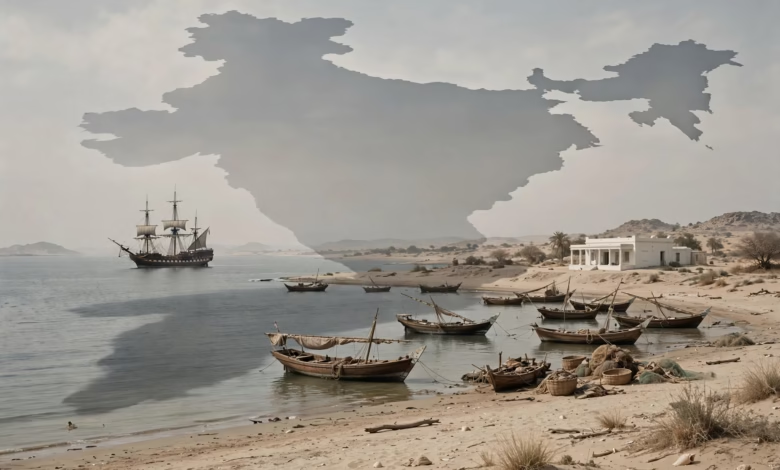
Roots Of Dominance: The Legacy Of The British “Raj” And The Indian Shadow On The Gulf Shores
Today, We Have Before Us A Historically And Politically Distinguished Document, Formatted In The Shape Of A Reference Book Titled: “The End Of Empire In The Gulf: From Trucial States To United Arab Emirates”, By The Academic Researcher And Historical Investigator Tancred Bradshaw, Published By The Prestigious London Publishing House “I.B. Tauris”.
At The Outset Of His Work, Bradshaw Pauses At A Fundamental Historical Fact That Often Falls Outside The Calculations Of Non-Specialists; Namely, That The British Presence In The Arabian Gulf Was Not, Until The Late 1940s, Subject To The Management Of The Foreign Office In London, But Was Rather A Direct Administrative Extension Of The “Government Of India” Or What Is Known As “The Raj”. British Colonialism Has Viewed The Shores Of The Arabian Gulf Since The Dawn Of The Nineteenth Century As The First Line Of Defense And The Maritime Gateway To Protect The Jewel Of The British Crown: India.
The Narrative Begins From That Pivotal Date, Specifically The Year 1820, When British Forces, In Cooperation With Their Local Allies, Launched Strict Military Campaigns Against The Al Qasimi In Ras Al Khaimah, Which Ended With The Destruction Of Local Naval Fleets And Coercing The Coastal Sheikhs To Sign The “General Maritime Treaty”. That Treaty Was Nothing Less Than The Cornerstone Of What The British Later Termed The “Perpetual Treaty Of Maritime Truce” Of 1853, Which Stamped The Region With Its Famous Historical Name: The “Trucial States” Or The “Trucial Coast”.
The Book Analyzes The Nature Of This Hegemony, Pointing Out That It Was Not Direct Colonialism In The Traditional Sense; The British Did Not Send Resident Military Governors To Interfere In The Minutiae Of The Population’s Daily Lives, But Rather Established A System Known As The “Informal Empire”. This System Offered A Unique Model Of Indirect Rule, Where Britain Contented Itself With Imposing Absolute Control Over Territorial Waters, Prohibiting Ship Piracy, And Preventing The Sheikhs From Establishing Any Political, Diplomatic, Or Commercial Relations With Any Other Foreign Power (Particularly France And Russia, And Later Germany), Pursuant To The “Exclusive Agreement” Of 1892.
In Exchange For That External Silence And Relinquishment Of External Sovereignty, Britain Committed To Protecting The Trucial States From Any External Aggression By Land And Sea. As For The Internal Front, Britain Left To The Sheikhs And Their Ruling Families Absolute Administrative Discretion And Control Over Tribal And Local Affairs. Bradshaw Describes This Pattern Of Colonial Engagement As “Benign Neglect”. Britain Viewed This Coast Simply As A “Low-Cost Imperial Facility”; One That Did Not Warrant The Injection Of Development Investments, Nor The Construction Of Educational Or Health Facilities, So Long As Maritime Navigation To India Was Secure, And As Long As The Sheikhs Did Not Sign Agreements With Foreign Competitors.
This Control Did Not Entail Enormous Bureaucratic Complexities; This Vast Coast Was Administered By A Very Small Number Of British Personnel. At The Top Of The Leadership Pyramid Was The “Political Resident In The Persian Gulf”, Who Exercised Near-Absolute Powers Akin To Those Of Uncrowned Kings, Initially Residing In Bushire On The Persian Coast, Before The Residency Moved To Bahrain In The 1940s. Under The Resident’s Command Were The “Political Agents” Who Moved Between Sharjah, Dubai, And Abu Dhabi.
Perhaps The Most Astonishing Aspect Of The Book Is The Author’s Description Of The “Native Agents”; Trustworthy Arab, Iranian, Or Indian Merchants Who Represented The British Political Resident In The Coastal Towns. These Agents Were The Ones Who Transmitted News Of The Sheikhs And Tribes, Drafted Preliminary Regulations, And Represented The Unsleeping Eye Of The Empire In A Region Characterized By Its Harsh Climate, Geographical Isolation, And Aridity Of Resources.
Political And Social Life In The Trucial States During The Period Of The “Government Of India” Supervision Was Characterized By Severe Stagnation. The Economy Was Local And Impoverished, Relying Primarily On Fishing, Simple Transit Trade, And Natural Pearl Extraction, Which Represented The Region’s Sole Lifeline. However, This Lifeline Suffered A Fatal Blow In The 1930s When The Japanese Invented The “Cultured Pearl”, Leading To The Collapse Of Natural Pearl Markets And Plunging The Trucial Coast Into A Crushing Economic And Humanitarian Crisis, Accompanied By A Global Depression And A Second World War That Left The Region In A State Of Abject Poverty And Complete Oblivion.
Meanwhile, Specifically In 1948, With The Independence Of India And Pakistan And The Recession Of The Indian Raj, Britain Had To Transfer The Entire Gulf File From The “India Office” In London To The “Foreign Office”. Here Begins The Second Phase Of The Region’s History, Which The Author Takes As The Primary Arena For His Deep Study; Where British Foreign Policy Shifted From The Role Of An “Distant Observer” To That Of A “Direct Custodian” Plunged Suddenly Into The Whirlpool Of Middle Eastern Oil And Political Transformations.
The Sixties And Priority Challenges.. Oil Discovery, Nationalist Winds, And The Difficulty Of Modernization
With The Transfer Of Administrative Control To The British Foreign Office In London Following The Second World War, British Diplomats Found Themselves Facing A Reality Completely Different From The Slow Indian Legacy. The Trucial States Were No Longer Merely A Station To Protect Navigation Toward The East; They Suddenly Became An Area Of Paramount Strategic And Economic Importance. This Was Primarily Due To Two Factors: The First Was The Growing Importance Of The Gulf As A Primary Source Of Energy To Support The Economy Of Britain And Western Europe Plunged In Reconstruction, And The Second Was The Outbreak Of Consecutive Regional Crises, Such As The Iranian Oil Nationalization Crisis At The Hands Of Mossadegh In 1951, And The Subsequent Rise Of Nationalist And Radical Waves In The Arab World.
Tancred Bradshaw’s Book Tracks How The British Foreign Office Attempted To Formulate What Might Be Termed A “Neo-Raj” In The Gulf During The 1950s And 1960s. This New System Did Not Seek Direct Colonialism, But Rather Aimed To Avoid Past Mistakes By Attempting To Introduce Limited Administrative, Social, And Economic Reforms That Kept The Sheikhs In Power While Protecting Them—And Protecting British Interests With Them—From Internal And External Threats.
However, The First Major Obstacles Facing British Policy Lay In Border And Regional Threats. The Author Devotes A Significant Portion Of His Research To Studying The “Buraimi Oasis Crisis” Of 1952, A Crisis That Clearly Demonstrated The Fragility Of The Borders Between The Trucial States And The Sultanate Of Oman On The One Hand, And The Kingdom Of Saudi Arabia On The Other. The Saudi Kingdom, Backed At The Time By The American Company “Aramco”, Was Seeking To Solidify Its Borders In That Strategic Oasis Believed To Be Rich In Oil. Faced With This Threat, Britain Found Itself Obligated To Intervene To Protect Its Allies Among The Sheikhs Of Abu Dhabi And The Sultan Of Muscat.
Here Emerged The Historic British Decision To Form A Local Military Force Under The Command Of British Officers, Known As The “Trucial Oman Levies” (And Later The “Trucial Oman Scouts”). This Force Was Not Merely An Instrument To Expel Saudi Forces From Buraimi In 1955; Rather, As Bradshaw Explains, It Became The Backbone That Maintained Internal Security, Settled Tribal Disputes, Eradicated The Slave Trade, And Allowed Oil Exploration Companies To Work Deep In The Desert Without Fear. More Importantly, This Force Formed The First Nucleus Of The National Army And Security Systems Upon Which The UAE Was Later Established.
Yet The Greatest Challenge Facing British Diplomacy Was Not Military So Much As It Was “Developmental And Personal”. In 1958, Oil Was Discovered In Commercial Quantities In Abu Dhabi (In The Offshore Umm Shaif Field And Later The Onshore Murban Field), Transforming The Entire Economic Equation. Oil Revenues Began Flowing Into The Emirate Of Abu Dhabi, Which Until Then Had Been Among The Most Impoverished And Isolated Emirates. Here, The British Foreign Office Clashed With The Personality Of The Ruler Of Abu Dhabi At The Time, Sheikh Shakhbut Bin Sultan Al Nahyan (1928–1966).
The Book Paints A Detailed Profile Of The Contrast Between The British Vision For Modernization And The Character Of Sheikh Shakhbut. Sheikh Shakhbut Was A Traditional Ruler, Cautious Of Rapid Change, Who Viewed The Sudden Inflow Of Oil Wealth As A Danger That Could Destroy The Bedouin And Moral Fabric Of His Society. Sheikh Shakhbut’s Refusal To Spend Oil Revenues On Infrastructure Projects, Real Estate Development, Education, And Hospitals Placed The British Foreign Office In An Extremely Embarrassing Position. The Administrative Progress In Dubai—Led By Sheikh Rashid Bin Saeed Al Maktoum, Who Exploited Dubai’s Position As An Active Regional Trading Hub And Built Ports And Airports—Highlighted The Sharp Contrast With The Stagnation In Abu Dhabi.
At The Same Time, The Region Was Subjected To Intense Media And Political Bombardment By The “Voice Of The Arabs” Radio From Cairo, Where Egyptian President Gamal Abdel Nasser Was Attacking “British Imperialism” And The “Oil Sheikhs”. The British Feared That Sheikh Shakhbut’s Inaction On Development Would Foster Revolutionary Cells Or Anti-British And Anti-Ruler Nationalist Sentiments. British Political Agents And Residents Attempted To Exert All Forms Of Pressure And Persuasion On Sheikh Shakhbut To Establish A Modern Administrative Apparatus, Found An Executive Council, And Spend Oil Revenues, But Their Attempts Failed Before The Old Ruler’s Insistence On Managing His Emirate’s Affairs In The Traditional Majlis Style And A State Treasury Attached To His Dishdasha.
This Political Drama Reached Its Climax In August 1966. The Book Clarifies In Precise Detail The Decisive Behind-The-Scenes Role Played By The British Foreign Office In Persuading Members Of The Al Nahyan Family Of The Necessity To Depose Sheikh Shakhbut And Appoint His Brother, Sheikh Zayed Bin Sultan Al Nahyan, To Power. Sheikh Zayed, Who Had Managed Administration With Remarkable Success In Al Ain And The Eastern Region, Possessed A Insightful And Modern Vision, A Deep Understanding Of The Tribes, And A Strong Will To Use Oil Wealth To Build A Modern State. With Sheikh Zayed Assuming Power, The Doors Of Change Swung Wide Open, And Abu Dhabi Began Racing Against Time To Become The Financial And Political Engine For Any Upcoming Federal Project.
The Shock Of Withdrawal.. The Labour Government’s Decision And The Confusion Of Colonial Strategy
While The Trucial States Were Taking Their First Steps Toward Modernization And Achieving Internal Stability Under The Umbrella Of British Protection, An Event Occurred That No One In The Gulf Anticipated: The Shock Of Sudden Withdrawal. Tancred Bradshaw Devotes The Fifth Chapter Of His Book To Analyzing This Pivotal Historical Moment, Entitling It With A Phrase Capturing The Depth Of Its Crisis: “All Politics And No Strategy: The Withdrawal From The Gulf”.
In January 1968, British Labour Prime Minister Harold Wilson Stood In The House Of Commons In London To Announce A Dramatic Decision Stating That Britain Would Withdraw All Its Military Forces From “East Of Suez”—Including The Arabian Gulf And The Far East—By The End Of 1971. This Decision Came As A Thunderbolt Not Only To The Sheikhs Of The Trucial States And Gulf Rulers, But Also To Washington And A Number Of Britain’s Western Allies.
Bradshaw Reveals, Through Documents From The Treasury, The Ministry Of Defence, And Secret British Cabinet Files, That This Decision Was Not The Product Of A Well-Considered Strategic Plan Or The Result Of Military Entanglement On The Ground In The Emirates; Rather, It Was Born Of A Suffocating Financial And Economic Crisis Surrounding Britain. The Devaluation Of The British Pound In 1967 And Enormous Pressure On The British Budget Forced The Labour Government To Reduce Overseas Military Spending To Focus On Domestic Social Welfare. In Other Words: The Historic Imperial Presence In The Gulf Was Sacrificed On The Altar Of Narrow Party And Financial Policies In London.
The Painful Historical Paradox, As Highlighted By The Book, Was That The Sheikhs Of The Trucial States—Unlike What Happened In Other British Colonies In Africa And Asia—Were Not Demanding The Departure Of The Colonizer! On The Contrary, The Rulers Felt That Britain Had Abandoned Them And Broken Promises Extending Back More Than A Century And A Half. The Book Recounts How Sheikh Zayed Bin Sultan, Sheikh Rashid Bin Saeed, And Other Rulers Offered The British Government To Fully Fund The Costs Of Keeping British Forces In The Region From Their Own Oil Revenues, Simply To Ensure A Blanket Of Safety And Stability Until The Region’s Readiness Was Complete. However, Wilson’s Government Rejected The Offer, Considering That Retaining British Troops As “Paid Mercenaries” Would Harm Britain’s Dignity And International Reputation.
This Decision Caused A State Of Diplomatic Chaos And Political Confusion. British Diplomats In The Gulf—Rained Upon With Instructions From London—Found Themselves In An Enviable Position: They Had To Terminate Complex Historical Commitments Within A Very Tight Timeframe (Only Three Years), In A Region Lacking Constitutional Frameworks Or Modern Political Institutions, And Rife With Competing Regional Ambitions.
The Risks Were Not Minor; Iran, Under The Rule Of Shah Mohammad Reza Pahlavi, Was Lurking In The Region, Demanding Sovereignty Over Bahrain, And Eyeing The Three Emirati Islands (Greater Tunb, Lesser Tunb, And Abu Musa). Meanwhile, Iraq Under Ba’athist Rule Viewed The Tribal System Of Governance In The Gulf With Suspicion And Hostility. Added To This Were Chronic Border Disputes Between Saudi Arabia And Abu Dhabi, And Deep-Seated Rivalries Between The Major Emirates (Abu Dhabi And Dubai) And The Five Smaller Emirates.
Faced With This Tumultuous Scene, The British Foreign Office Realized That Leaving These Emirates Individually After 1971 Meant Their Destruction And Absorption By Major Regional Powers, Threatening Oil Flow And Regional Stability. Hence, The British Strategic Objective Shifted In The Blink Of An Eye From “Maintaining Protection” To “Engineering A Political Federation” Uniting These Entities Into A Single State Capable Of Survival And Endurance.
A Marathon Journey Of Arduous Negotiations Began. Britain Initially Sponsored The Idea Of Forming A Broader Federation Comprising Nine Emirates: The Seven Trucial States, In Addition To Bahrain And Qatar. However, This Project Faced Formidable Obstacles; Bahrain Enjoyed A Much Higher Educational And Administrative Level Alongside A Larger Population, Fearing Financial Dominance By Abu Dhabi, While Qatar Preferred Its Political Independence, Not To Mention Personal And Competitive Differences Among Some Rulers. With The Withdrawal Of Bahrain And Qatar To Declare Individual Independence In 1971, British Coordinators—Led By Special British Envoy Sir William Luce—Focused Their Intensive Efforts On Ensuring The Success Of The Federation Among The Seven Emirates.
The Labor Of Federation And The Challenges Of Birth.. British Diplomacy Facing Regional Ambitions
The Years Spanning 1968 To 1971 Are Considered Among The Richest Periods In Political And Diplomatic Drama In Modern Middle Eastern History, Which Tancred Bradshaw Details With Field And Documentary Analytical Skill. The Region Became A Hall For Feverish Negotiations Intertwining British Interests, The National Aspirations Of The Emirates, Regional Ambitions Of Iran And Saudi Arabia, And American Pressure Aimed At Preventing A Security Vacuum.
The British Envoy, Sir William Luce, Shuttled Like A Shuttle Between The Region’s Capitals. Although The Official British Position Claimed That The Federation Was A Purely Emirati Decision, Declassified Archive Papers Prove That British Diplomats Played The Role Of “Behind-The-Scenes Engineer” And Constitutional And Psychological Advisor To Bring The Sheikhs Together. The First Challenge Was Persuading Sheikh Zayed (Ruler Of Abu Dhabi) And Sheikh Rashid (Ruler Of Dubai) To Overcome Historical, Border, And Commercial Differences Between The Two Major Emirates. These Efforts Culminated In The Historic “Smeih” Meeting In 1968, Where They Agreed On The Principle Of Federation And Solidarity, Forming The Nucleus That Invited The Remaining Emirates To Join.
However, The Road Was Not Paved With Roses; The Dilemma Of Border Demarcation And Distribution Of Power And Influence Within The Nascent Federation Emerged. How Could Views Be Reconciled Between Wealthy, Expansive Abu Dhabi, Commercial And Financial Hub Dubai, And The Five Northern Emirates (Sharjah, Ras Al Khaimah, Ajman, Umm Al Quwain, Fujairah) Suffering From A Scarcity Of Financial Resources And Fearing Marginalization? Here Emerged The Political Wisdom Of Sheikh Zayed Bin Sultan Al Nahyan, Who Demonstrated A Generous Willingness To Fund The Federation And Provide Financial Capabilities To All Emirates, Removing Rulers’ Fears And Paving The Way Toward Unity.
On The External Front, The Iranian Dilemma Was The Most Dangerous And Difficult For British Diplomacy. The Shah Refused The Establishment Of The Federation Unless Iran’s Regional Demands Were Met. The British First Succeeded In Convincing The Shah To Relinquish His Claim To Sovereignty Over Bahrain Through A UN-Conducted Survey Proving Bahrain’s Arab Identity And Independence. However, The Shah Shifted His Pressure Toward The Three Emirati Islands: Greater Tunb And Lesser Tunb (Belonging To Ras Al Khaimah) And Abu Musa (Belonging To Sharjah).
Bradshaw Tracks The Complex And Controversial Arrangements Reached On The Eve Of British Withdrawal. While The Ruler Of Sharjah (Sheikh Khalid Bin Mohammed Al Qasimi), With British Approval, Reached A Memorandum Of Understanding With Iran Allowing Shared Administration Of Abu Musa Island And Sharing Its Oil Revenues, The Ruler Of Ras Al Khaimah (Sheikh Saqr Bin Mohammad Al Qasimi) Refused To Make Any Concessions Regarding Greater And Lesser Tunbs. On November 30, 1971—Just One Day Before The Official Expiration Of British Protection—Iranian Forces Occupied The Three Islands By Military Force.
This Event Drew Sharp Criticism Against The British, Who Were Accused Of Inaction In Defending The Land They Guaranteed To Protect Under Treaties. However, Bradshaw Clarifies From Foreign Office Documents That London Was Fully Aware Of Its Military Inability On The Ground And Its Desire To Avoid Direct Confrontation With The Shah, Who Was Considered At The Time The “Gendarme Of The Gulf” And The Greatest Western Ally In The Region.
Obstacles Did Not Stop There; Sheikh Saqr Bin Mohammad Al Qasimi, Ruler Of Ras Al Khaimah, Initially Refused His Emirate’s Joinder To The Nascent Federation On December 2, 1971, Protesting The Handling Of The Islands Issue And The Lack Of Representation Terms He Demanded In The Supreme Council Of the Federation. Ras Al Khaimah Joined The Federal State Only In February 1972, After Realizing That No Choice Remained For Its Survival Except Under The Umbrella Of The United Arab Emirates.
On December 2, 1971, The Declaration Establishing The United Arab Emirates Was Read At “Union House” In Dubai, And Sheikh Zayed Bin Sultan Al Nahyan Was Declared President Of The State, With Sheikh Rashid Bin Saeed Al Maktoum As Vice President And Prime Minister. The Chapter Of British Treaties Extending For A Hundred And Fifty Years Was Closed, The Status Of The “Trucial States” Was Abolished, A New State Was Born On The International Map, Raising Its Flag In The Halls Of The United Nations And The Arab League, Ending One Of The Strangest Chapters Of Colonialism And Withdrawal In Modern Middle Eastern History.
Enduring Legacy And Extended Journalistic Evaluation.. What Did The Empire Leave Behind?
Tancred Bradshaw Concludes His Book With Two Highly Important Chapters: “Epilogue: The British Legacy In The Gulf” And “Conclusion”, In Which He Looks With Enlightened Historical Reflection Upon The Harvest Of Three Decades Of British Foreign Office Administration, And A Century And A Half Of Imperial Presence On The Trucial Coast. The Researcher Poses The Fundamental Question: How Do We Evaluate The Legacy Britain Left Behind? And Was The British Withdrawal A Complete Severance Of Relations Or Merely A Restructuring And Replacement Of The Official Military Umbrella With “Soft Diplomacy” And Deep-Rooted Relations Of Interest?
The Author Believes That The British Legacy In The UAE Is Characterized By Extreme Uniqueness Compared To Other Regions Of The British Empire, Such As India, Palestine, Or Aden; The British Departed Without Fighting Popular Liberation Wars Or Facing Armed Revolts Against Their Presence. The Relationship Between Sheikhs, British Diplomats, And Officers Was Characterized By Warmth And Interdependence. Bradshaw Views That Britain, Despite Its Long Developmental Inaction During Decades Of “Benign Neglect”, Provided The Emirates With Crucial Services That Played A Major Role In The Success And Stability Of The Federal Experiment.
The First Of These Services Was Maintaining Internal Security And Establishing Military Institutions. The “Trucial Oman Scouts” Transformed Following Withdrawal Into The “Union Defence Force”, Which Remained Under The Command And Supervision Of British Officers For Long Years After Independence In 1971. This Force Retained Its Professionalism And Strict Military Doctrine, Never Interfering In Political Labyrinths Or Military Coups, Unlike What Occurred In Large Parts Of The Arab World. This Provided The Newborn Federation With Rare Security Stability Allowing Administrative And Economic Infrastructure To Grow Calmly.
Secondly, Britain Played A Decisive Role In Demarcating Borders And Stabilizing The Political Map. Although Borders Were A Source Of Constant Dispute Among Tribes And Emirates, Arduous Geographic Surveys And Diplomacy Conducted By British Experts In The 1950s And 1960s Led To Establishing Clear And Acceptable Border Frameworks, Preventing Civil Wars Or Territorial Disputes Following The Departure Of The Colonizer.
Thirdly, Bradshaw Highlights A Clever Shift In British Strategy After 1971; British Presence Transformed From Political Control To Economic, Commercial, And Advisory Dominance. Military Departure Made Way For Fleets Of British Companies In Oil (Such As BP), Construction, Engineering Consultancy, And Financial Institutions (Such As The British Bank Of The Middle East), Not To Mention Enormous Military Arms Deals. Furthermore, British Experts And Advisors Continued To Manage Vital Facilities In Dubai And Abu Dhabi, Such As Ports, Police, Water Administrations, And Aviation For Many Years.