
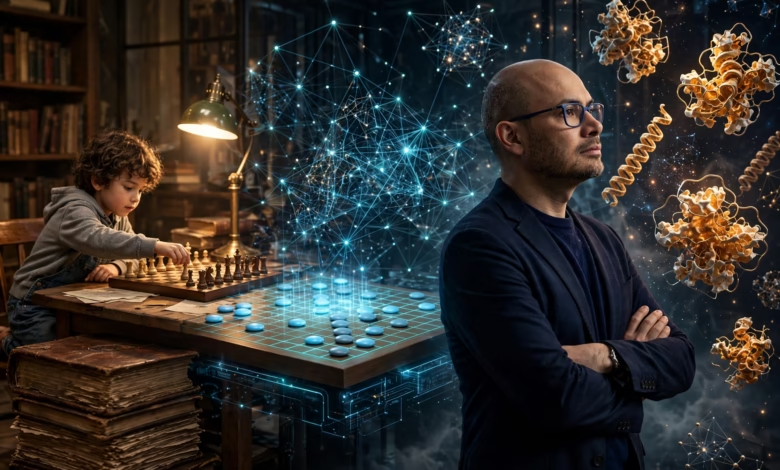
At The Beginning Of His Exceptional Book “The Infinity Machine: Demis Hassabis, DeepMind, And The Quest For Superintelligence” (The Infinity Machine), The Writer Sebastian Mallaby Takes Us On A Deep And Extended Narrative Journey That Does Not Merely Document The History Of Contemporary Technology, But Brilliantly Dives Into The Psychological, Philosophical, And Intellectual Formation Of One Of The Most Important Minds Reshaping Our World Today. The Narrative Begins By Placing Us Before A Pivotal Truth; That Artificial Intelligence, For The Hero Of This Work, Is Not Merely An Economic Tool To Increase Corporate Profits, Nor Is It Merely A Geopolitical Weapon Over Which Superpowers Compete To Control The Future, But It Is An Almost Sacred Means And A Universal Key To Understanding The Deepest Mysteries Of The Universe And Nature. Mallaby Portrays Demis Hassabis As A Unique Personality, Radically Different From The Familiar Stereotype Of Silicon Valley Pioneers Obsessed With Accumulating Wealth And Amassing Influence. He Is A Man Driven By Pure Scientific Passion, Who Sees In Artificial Intelligence That Super Tool That Will Enable Humanity To Transcend The Limits Of Abstract Human Perception, Just As The Telescope Enabled Us To See Distant Stars And Comprehend The Vastness Of Galaxies. This Passion Is Manifest From The Very First Pages, Where A Central Existential And Scientific Question Is Raised: Can A Machine Possess Enough Intelligence And Inductive Ability To Solve The Most Difficult Problems Of Humanity That Have Eluded Minds For Decades? And Who Is This Human Mind Who Decided To Devote His Entire Life To Building This Infinite Machine?
The Story Takes Us Back To The Earliest Roots In The Neighborhoods Of North London, Where Demis Grew Up In A Modest Environment That In No Way Suggested That It Would Produce One Of The Most Important Engineers And Thinkers Of The Human Future. Hassabis Was Born To A Singaporean Mother Of Chinese Origin Who Suffered Extreme Poverty In Her Childhood And Lived For A Time As A Homeless Orphan On The Harsh Streets Of Singapore, And A Greek Cypriot Father Who Dreamed Of Stardom In The World Of Music And Singing, But Ended Up As A Toy Seller Earning His Daily Living From The Trunk Of His Dilapidated Red Volkswagen Car. In This Environment That Mixes Bitter Daily Struggle And The Repressed Unfulfilled Ambition Of The Parents, Signs Of Extreme Genius Appeared In Demis At A Very Early Age. The Writer Narrates In A Dramatic Style How This Small Child, At Only Four Years Old, Sat Watching His Father With Intense Attention As He Played Chess, To Be Able Within A Few Weeks To Understand The Complex Rules Of The Game And Defeat The Adults Around Him. A Stunning And Moving Visual Image Is Embodied In The Book When Mallaby Describes The Child Demis At The Age Of Five, Sitting In Crowded Tournament Halls, Forced To Sit On A Thick Telephone Directory Book On Top Of Two Stacked Chairs To Barely Be Able To See The Chessboard And Overcome The High Edge Of The Table. His Childhood Was Not Ordinary By Any Conventional Measure, As He Quickly Turned Into A Prodigy Phenomenon In The World Of English Chess, And By The Age Of Nine He Became Captain Of The England Team Under Eleven Years Old, And At The Age Of Thirteen He Was Officially Ranked As The Second Strongest Player In The World In His Age Category.
But This Early And Resounding Success Did Not Come Without A Heavy Psychological Price. Mallaby Dives With Analytical Brilliance Into The Psychological Depths Of The Enormous Pressures Demis Was Exposed To In That Sensitive Stage Of His Age. The Environment Of Competitive Chess Tournaments Was Harsh And Merciless To Childhood, So Much So That Organizers Had To Place Solid Wooden Boards Under The Tables To Prevent Small Players From Kicking Each Other Under The Weight Of Severe Nervous Tension. And Harsher Than That Was The Psychological Pressure His Father Exerted On Him. The Book Describes The Outbursts Of Raging Anger That The Father Would Explode With When Demis Lost Any Match No Matter How Small, Where He Would Scream In His Face Demanding That He Exert “The Maximum Possible Effort”. The Problem Is That Demis’s Childish Mind With A Deeply Literal Nature Translated The Phrase “Maximum Effort” In An Extreme And Frightening Way; He Firmly Believed That The Only Way To Prove That He Had Truly Exerted His Effort Was To Push Himself Mentally And Physically To The Edge Of Total Collapse, To The Point Immediately Preceding Loss Of Consciousness Or Death Directly. This Enormous And Continuous Psychological Pressure Polished His Mind To Become A Terrifying And Precise Analytical Machine, But At The Same Time It Planted In Him An Early Philosophical Awareness That This Massive Drain Of Mental Energy In A Game With Closed Rules Does Not In Any Way Correspond To The Huge Capabilities And Energies Of The Human Mind.
Here, And In The Midst Of These Struggles, Comes The Major Turning Point In The Story. In The Midst Of The Exhaustion Of Tournaments And Travel And The Endless Analysis Of Chess Moves, The Young Demis Realized That The Chessboard, With All Its Complexities And Mathematical Aesthetics, Remains A Small And Limited World Governed By Fixed Walls. It Was Merely A Mental Training Ground For His Mind, An Intellectual Gymnasium That Taught Him How To Build Abstract Mental Models, Evaluate Branching Probabilities, And See Future Steps. He Felt The Narrowness Of Horizon In This Square World, And Decided That His Explosive Intellectual Energy Must Be Directed Towards Real Challenges Capable Of Creating Actual Impact In The Real World. His Interest Began To Shift Gradually And Strongly Towards Computers, Programming, And The Creation Of Virtual Worlds. The World Of Programming Code Fascinated Him, Where He Realized That He Could Create Entire Worlds From Nothing By Simply Writing Logical Algorithms. And He Began To Read Voraciously About Computers That Play Chess, And How Machines Can Mimic Steps Of Human Thinking. This Was The First Intellectual Encounter Between Demis And The Spirit Of Artificial Intelligence, And It Is The Encounter That Will Determine The Course Of His Entire Life And Change The Shape Of The Future.
With The Crystallization Of His Deep Passion For Technology, Demis Found Himself Directly Involved In The Video Game Industry That Was Witnessing A Real Revolution In The Early Nineties. He Joined, While Still In His Teens, The “Bullfrog” Games Studio, Where He Worked Under The Supervision Of The Famous And Eccentric Designer Peter Molyneux. The “Bullfrog” Environment Was Ideal For A Rebellious And Ambitious Young Man Like Him; It Was A Chaotic Environment, Full Of Unbridled Creative Energy, And Did Not Recognize Boundaries Or Strict Traditional Rules. There, Demis Participated In The Development Of The Famous “Theme Park” Game That Achieved Sweeping Global Success. His Goal From This Participation Was Not Merely To Design An Entertaining Game For Children, But He Was Obsessed With The Idea Of Integrating Early Artificial Intelligence Mechanisms Into The Basic Game Mechanics. He Wanted The Game Characters To Interact Independently, To Make Their Own Decisions Based On Their Surrounding Environment And Their Needs, Trying To Simulate Basic Human Behavior In A Complex Simulation Environment. Mallaby Narrates How This Experience Was Crucial In Shaping Hassabis’s Understanding Of The Technical Limits Of That Era. Molyneux Was Famous For Making Fantastical Promises About The Intelligence Of The Games He Developed, Promises That Often Collided With The Rock Of Technical Reality And The Limited Computing Capabilities At That Time. Demis Learned From This Early Experience That Ambitious Vision Must Be Based On A Solid Scientific Foundation That Allows No Compromise, And That Flashy Promises Are Not Enough To Create Real Intelligence.
Despite The Dazzling Commercial Success Of The Game And The Promising Future That Awaited Him In The Lucrative World Of The Games Industry, And Despite The Tempting Job Offers That Reached Astronomical Figures To The Point Of Offering Salaries Consisting Of Seven Figures, Demis Made A Shocking Decision To Everyone Around Him. He Coldly Rejected All These Material Temptations And Decided To Return To The Seats Of Strict Academic Study. He Joined The Prestigious University Of Cambridge To Study Computer Science, Believing That Building Real And Deep Artificial Intelligence Requires A Mathematical And Scientific Understanding Much Deeper Than What The Entertainment And Games Industry Provides. In Cambridge, His Intellectual Horizons Opened In An Unprecedented Way And Went Beyond The Boundaries Of The Prescribed Curricula. He Did Not Content Himself With Studying Computers, But Delved Passionately Into The Depths Of Theoretical Physics, Became Fascinated By Biology And Cellular Complexity, And Contemplated Philosophy And Neuroscience. During That Contemplative Period He Realized That The Great Minds In Physics, Despite Their Superhuman Intelligence, Had Not Been Able To Crack The Code Of “Theory Of Everything” Or Understand The Amazing Complexity Of Molecular Biology. An Unshakable Conviction Became Entrenched In Him That The Human Mind, With Its Current Composition And Its Limited Capabilities To Process Data, Needs A Super Powerful Auxiliary Tool To Deal With This Huge Amount Of Cosmic Variables. And In Those Venerable Corridors, He Did Not Stop Searching For New Challenges; He Learned The Complex Asian Game Of “Go”, And Became A Professional Player In The Game Of Poker, Using It As Live Experimental Fields To Understand The Psychology Of Human Decision-Making Under The Weight Of Uncertainty And Lack Of Information, And How These Capabilities Can Be Transferred To Machines.
After His Graduation From Cambridge With Distinction, And Instead Of Joining Large And Stable Technology Companies, Hassabis Chose The Thorny And Risk-Fraught Path Of Entrepreneurship. In The Late Nineties, And Before The Culture Of Start-Ups Became Familiar In Britain, He Founded His Own Game Development Company Which He Called “Elixir Studios”. His Founding Vision Was Summarized In Designing Highly Complex Strategic Simulation Games, Such As The Game “Republic: The Revolution”, Which Relies On Very Ambitious Artificial Intelligence Engines To Simulate The Political And Social Dynamics Of An Entire Virtual World With All Its Contradictions. Mallaby Describes How Demis Faced Huge Technical And Managerial Difficulties In This Stage. His Technological Ambition Ceiling And His Vision For Artificial Intelligence Was Much Higher Than What The Engineering Team Could Achieve At That Time. He Pressed Hard To Integrate Heavy And Complex Artificial Intelligence Systems That Often Led To Slow Games And Overburdened Developers And Pushed Them To The Edge Of Exhaustion. Nevertheless, This Difficult Experience Highlighted A Unique And Amazing Leadership Quality In Demis; He Was Described By His Colleagues As “The Jedi” For His Superb Ability Of Exceptional Persuasion, Where He Was Able To Enter The Minds Of Investors And Programmers And Make Them Believe In His Fantastical Vision And Follow It Without Hesitation, Just As The Heroes Of Star Wars Movies Do.
Although The “Elixir” Studio Did Not Achieve The Legendary Commercial Success He Aspired To Or The Radical Change He Sought, This Experience, As Portrayed By Sebastian Mallaby’s Narrative With Its Precise Human Details, Was The Real Melting Pot That Shaped Hassabis’s Personality As A Seasoned Entrepreneur And A Dreaming Scientist At The Same Time. Demis Realized At The End Of This Stage That The Attempt To Simulate Complex Reality And Reach Independent Intelligence Through Video Games Is Merely An Entertainment Interface For A Much Larger And More Serious Scientific Project. He Realized That Building Real And Generative Artificial Intelligence Does Not Only Require Skilled Programmers And Brilliant Engineers, But Requires First And Foremost A Deep Understanding Of The Mechanism Of The Human Brain Itself And The Dismantling Of Its Neural Architecture, And It Is The Deep Awareness That Will Lead Him In The Next Stage To Return Once Again And With Greater Momentum To The Halls Of Academic Scientific Research To Obtain A Doctorate In Cognitive Neuroscience. This Long And Complex Foundational Stage Narrated By The Book Is Not Just A Biography Of A Talented Young Man Who Went Through An Exceptional Childhood, But It Is A Precise And Deliberate Dissection Of The Journey Of The Evolution Of The Idea Of Artificial Intelligence Itself; From A Wooden Chessboard In North London, To Lines Of Programming Code In Rooms Lit By Computer Screens, To A Firm Belief That Humanity Stands On The Threshold Of Discovering And Inventing The Greatest Tool In Its Long History, An Infinite Machine That Will Change The Face Of Science And Nature And Human Existence Forever.
After Closing The “Elixir” Studio, Demis Hassabis Realized A Fundamental Truth: That The Attempt To Engineer A Thinking Machine Starting From Scratch Using Only Abstract Mathematics And Classical Algorithms Is An Attempt Doomed To Inadequacy. If Humanity Truly Wants To Build Real Intelligence, Intelligence Characterized By Flexibility And Ability To Adapt And Learn, It Must Study And Dismantle The Only Working And Proven “Model” In The Universe For This Intelligence; Namely The Human Brain. This Deep Realization Led Him To Leave The Business World Temporarily And Return To The Halls Of Academic Research, Specifically To University College London (UCL), To Dive Into The Depths Of Cognitive Neuroscience To Obtain A Doctorate. This Academic Return Was Not A Retreat, But Was A Strategic Attack From Another Front; Hassabis Wanted To Extract The Basic Principles And Natural Algorithms That The Brain Uses To Learn And Remember And Imagine, Then Translate Them Into Programming Codes.
In The Laboratories Of The College, Hassabis Focused His Research On The Hippocampus, Which Is The Part Of The Brain Responsible For Memory And Spatial Navigation. And There, He Conducted Pioneering Studies On Amnesia Patients, And Discovered Something Amazing That Overturned Prevailing Concepts: Patients Who Are Unable To Remember Their Past, Are Completely Unable To Imagine Their Future. This Result Was Like A Philosophical And Scientific Enlightenment For Him; Memory Is Not Just An Archival Cabinet For Preserving Images And Events, But It Is A Generative Tool, A Simulation Engine Used By The Mind To Dismantle Past Experiences And Recompose Them To Imagine Future Scenarios And Plan For Them. Demis Realized That The Ability To “Imagine” And “Internal Simulation” Is The Essence Of Human Intelligence, And That Any Machine We Aspire To Be Intelligent Must Be Provided With A Similar Mechanism That Allows It To Imagine The Consequences Of Its Actions Before Implementing Them In Reality. This Brilliant Link Between Neurobiology And Computer Science Is What Distinguished Hassabis From The Rest Of Engineers In His Field, And Made Him The First Engineer Who Possesses A Clear Road Map For Building Artificial Intelligence Inspired By Nature.
And With The Crystallization Of This Mature Vision, The Time Came To Transform Theory Into Institutional Reality. In 2010, And In The Midst Of The Global Economic Recession, The Company “DeepMind” Was Born In London. Hassabis Did Not Found This Entity Alone, But Formed An Unconventional Alliance Reflecting The Nature Of His Complex Project. Mustafa Suleyman Joined Him, His Childhood Friend Who Was Not A Programmer, But A Community Activist And Entrepreneur Possessing A Superb Ability To Communicate And Understand Human And Political Dynamics, And Was Like The Bridge That Connects The Company’s Ambitions With Social And Ethical Reality. And Beside Them Stood Shane Legg, The Calm Academic Researcher And Obsessed With A Purely Mathematical Idea Which Is How To Measure “Artificial General Intelligence” (AGI). The Company’s Mission, As They Formulated It In Their Beginnings, Was Characterized By Boldness Approaching The Limits Of Madness: “Solve The Problem Of Intelligence, Then Use This Solution To Solve All Other Problems”. They Chose London As Their Headquarters Intentionally, Refusing To Move To Silicon Valley; Hassabis Wanted To Build A Unique Institutional Culture Resembling The Great “Bell Labs” Of The Twentieth Century, A Culture Combining The Rigor Of Pure Academic Research And The Speed And Flexibility Of Start-Ups, Far From The Noise Of American Technology Companies That Were Focusing At That Time On Advertisements And Social Media.
But This Boldness Quickly Collided With The Rock Of Financial Reality. Mallaby Describes In The Narrative The Arduous Journey Of Searching For Funding, Where The Trio Faced A European Investment Community Lacking Imagination. How Can An Investor Be Convinced To Pump Millions Into A Company That Does Not Own A Product For Sale, Nor A Clear Plan To Reap Profits, And All It Promises Is A Project That Takes Twenty Years To Build A Machine Possessing Human Intelligence Or Exceeding It? They Were Met With Rejection And Mockery Again And Again. And Here Comes The Dramatic Moment That Changed The Course Of The Company; The Legendary Meeting With Peter Thiel, The American Billionaire And Bold Investor. Hassabis Used His Background As A Chess Champion As An Intellectual Bait To Attract Thiel’s Attention, Who Was Also Obsessed With The Game. In That Meeting, Demis Did Not Present A Traditional Commercial Offer, But Delved Into A Deep Philosophical Discussion About The Stagnation Of Global Technological Innovation And How Artificial General Intelligence Is The Only Breakthrough Capable Of Saving Humanity And Pushing The Wheel Of Scientific Evolution. Thiel Was Enchanted By This Exceptional Proposal, And Provided The Initial Funding That Was Like The Oxygen Of Life For DeepMind Company, To Become The First Artificial Intelligence Company To Attract The Interest Of Major Technology Investors.
With The Availability Of Funding, DeepMind Needed A “Testing Field” To Prove Its Theories. Chess Was Not Suitable Because It Depends On A Limited Environment And Solid Rules, And The Real World Was Not An Available Option Due To Its Infinite Complexities And High Cost. Here, Hassabis’s Roots In Video Games Returned To Play A Decisive Role; They Chose The Classic “Atari” Platform Games From The Seventies To Be The Testing Arena. The Challenge They Set Before Themselves Was Unprecedented: To Innovate A Single Algorithm, An Artificial Intelligence Agent, Capable Of Learning To Play Dozens Of Different Games From The Atari Platform, Without Being Pre-Programmed With The Rules Of Any Game. The Machine Will Receive Only Two Things: Raw Visual Inputs (The Pixels On The Screen), And The Final Goal Represented In Increasing The Digital Score. This Was A Brilliant Integration Between “Deep Learning” To Process Vision, And “Reinforcement Learning” That Mimics The Dopamine Reward System In The Human Brain Which Pushes Living Beings To Learn From Trial And Error.
With The Experience Of The Game “Breakout”, That Classic Game That Depends On Hitting A Ball With A Paddle To Smash A Wall Of Bricks. Artificial Intelligence Started As A Blank Slate, Floundering And Moving The Paddle With Complete Randomness And Losing Continuously. But, With The Passage Of Hours Of Self-Training And Repeating Attempts Millions Of Times, The Magic That Amazed Researchers Happened. The Machine Did Not Content Itself With Learning How To Hit The Ball With Skill Surpassing Humans, But Discovered, By Itself And Without Any Human Guidance, The Optimal Strategy For The Game: Digging A Small Tunnel At One End Of The Brick Wall To Pass The Ball To The Top, So That The Ball Bounces Again And Again Between The Ceiling Of The Screen And The Wall, Smashing Bricks And Harvesting Points At Insane Speed. This Moment, Which Was Documented In A Famous Video Later, Was Like An Earthquake In Scientific Circles. It Was Not Just A Machine Playing Skillfully, But It Was A Machine That Discovers, Plans, And Deduces Complex Strategies From Its Surrounding Environment Based On Its Own Experience Only.
DeepMind Has Proven To The World That “General Intelligence” Is Not Just Science Fiction, But Can Be Engineered. This Achievement With Atari Games Was The Spark That Ignited The Modern Artificial Intelligence Revolution, And It Is The Conclusive Physical Evidence That Put The Small Company In London Under The Eyes Of The Giants Of Technology In The World, To Begin A New Phase Of Geopolitical And Economic Conflict Over Who Will Own This Infinite Power, And It Is A Phase That Will Witness More Dramatic Developments In Humanity’s Diligent Quest To Understand The Machine, And Understand Itself.
After Accomplishing The Algorithms Of “Atari” Games And The Practical Demonstration Of The Power Of “Deep Reinforcement Learning”, Hassabis And His Team Found Themselves Before A Huge Flow Of Global Interest. DeepMind Was No Longer Just A Crazy Idea Chased By Three Dreamers, But Became The Only Entity On Planet Earth That Possesses The Practical Map And The Basic Building Blocks To Build General Artificial Intelligence. This Development Attracted The Attention Of Two Poles Of Contemporary Technology: Mark Zuckerberg In “Facebook”, And Larry Page And His Partner Sergey Brin In “Google”.
The Feverish Conflict Began Behind The Scenes For One Of The Giants To Acquire This Unique Laboratory. Zuckerberg Invited Hassabis To His Home And Hosted Him In Intensive Demonstration Sessions During Which He Tried To Convince Him That The Facebook Environment And Their Huge Infrastructure Would Provide Him With Everything He Needs To Achieve His Dream. But Hassabis, With His Analytical Precision And Strategic Foresight That Was Polished On Chessboards, Was Aware Of The Philosophical And Ethical Danger Of Selling Algorithms Of This Complexity And Danger To A Company Whose Strategy Depends Entirely On Advertisements And Social Networks. On The Other Hand, Larry Page Possessed A More Abstract And Tempting Vision; He Saw In Google A Company Not Only For Searching For Information, But An Engine For Building The Science Of Intelligence Itself, And He Was Ready To Pump Unlimited Computing Resources And Support Hassabis With Huge Funds, With Granting DeepMind A High Degree Of Operational Independence Inside The Google Empire.
In 2014, The Deal Was Decided In Favor Of Google With A Record Amount Estimated At About Half A Billion Dollars, But The Negotiations Were Not Just Financial Figures, But Were An Exceptional Battle Of Values. Hassabis And Mustafa Suleyman And Shane Legg Waged Fierce Negotiations To Ensure That Google Does Not Swallow The Unique Culture Of “DeepMind”, And They Stipulated An Unprecedented Historical Condition: Creating An Independent Safety And Ethics Committee To Monitor The Development Of Artificial Intelligence And Ensure That The Company’s Technologies Are Not Used For Military Purposes Or Comprehensive Surveillance. The Acquisition Turned Into An Earthquake In The World Of Technology, And DeepMind Became The Intellectual Core Of “Google”, And It Was Supplied With Huge Computing Capabilities And Unparalleled Databases, So That Hassabis And His Team Became Armed With The Most Powerful Technical Weapons Available On The Face Of The Earth To Begin The Next Biggest Challenge: The Battle Of The Game Of “Go”.
The Game Of “Go” Is An Ancient Chinese Board Game Extending To A History Of More Than Two Thousand And Fifty Years, And Is Considered In The Far East The Highest Degrees Of Expression Of Art, Intuition, And Human Philosophy. While Chess Contains Mathematical Complexities That Can Be Calculated, The Game Of “Go” Possesses A Number Of Branching Possibilities On The Board That Exceeds The Number Of Atoms Existing In The Entire Visible Universe. The Old School In Artificial Intelligence Considered Evaluating Positions Of The Game Of “Go” Something Impossible For The Computer To Achieve, Because The Game Does Not Depend Only On Direct Computational Rules, But Requires A Sense Of Beauty And Balance And Spatial Visual Intuition, Which Are Qualities That Everyone Thought Would Remain Exclusive To The Human Mind For Decades To Come. For The Majority Of Computer Scientists, Defeating The World Champion In “Go” Was A Far-Fetched Goal Requiring Decades Of Development, But For Demis Hassabis And His Lifelong Friend David Silver, “Go” Was The Mountain Peak That Must Be Climbed To Prove That Artificial Intelligence Is Capable Of Simulating Human “Intuition”.
The DeepMind Team Innovated The Program “AlphaGo”, Which Is A Complex Hybrid System Integrating Between Two Deep Neural Networks; The First Is Called “Policy Network” And Its Function Is To Reduce The Scope Of Available Options And Suggest The Most Logical Moves, And The Second Is Called “Value Network” And Its Function Is To Evaluate Who Is The Leading Player On The Board In Each Position. These Two Networks Are Mixed With The Technique Of Searching In The Monte Carlo Tree Search. At The Beginning, The Program Was Trained On Millions Of Human Moves Made By Professionals, But The Real Turning Point Came When They Made The Program Play Against Advanced Versions Of Itself Millions Of Times, In What Is Known As Self-Reinforcement Learning. Through This Harsh Iterative Process, “AlphaGo” Began To Surpass The Cumulative Human Experience That Humanity Had Acquired Over Thousands Of Years, And Discovered Patterns And Strategies That Had Never Occurred To Any Human Player To Practice Before.
The Narrative Reaches One Of The Most Dramatic And Exciting Scenes In The History Of Technology, When The DeepMind Team Traveled To Seoul In South Korea In March 2016 To Wage A Historic Confrontation Of Five Championships Against “Lee Sedol”, The Living Human Legend Winner Of 18 World Titles In The Game Of “Go”. Millions Followed It Throughout Asia And The World With Passion And Breath Holding, Where This Was Not Just A Match In A Game, But Was An Existential Debate About The Superiority Of The Human Mind In Front Of The Machine. The First Match Began With Severe Tension, And When “AlphaGo” Made Unexpected Moves, The Audience And Experts Thought That They Were Beginner Programming Mistakes, But Soon The Terrifying Power Of These Moves Became Manifest When The Program Wove A Complex Network That Besieged The Stones Of “Lee Sedol” And Forced Him To Surrender In The First Match. The Shock Was The Astonishment That Covered The Faces Of The Korean And Japanese Legends Of The Game.
And In The Second Match, The Legendary Event That Was Immortalized In The History Of Artificial Intelligence Occurred: “Move 37”. In This Move, “AlphaGo” Placed A Black Stone In A Strange Place On The Edge Of The High Board, Which Is A Move That Human “Go” Literature Considers A Grave Mistake Committed Only By Beginners, Because It Violates The Balance Recognized Since A Thousand Years. “Lee Sedol” Stopped Stunned, And Left The Hall For Several Minutes To Regain His Breath, And Took Almost An Hour To Understand The Deep Strategic Significance Lurking Behind This Move. “Move 37” Was Conclusive Evidence That The Machine Was Not Repeating What It Learned From Humans, But Was Creating, Thinking In A Free Way, And Creating Entirely New Strategic Aesthetics. Although “Lee Sedol” Managed With A Superb Human Intuitive Brilliance To Win The Fourth Match Through The Famous “Move 78”, The Epic Ended With “AlphaGo” Winning Four Matches Against One Match.
The Defeat Of The World Champion In “Go” Was Not Just A Marketing Victory For Google Company Or A Commercial Victory For DeepMind, But Was Like A Moment Of “Shedding” For Human Perception. Hassabis And His Team Proved That Deep Reinforcement Learning Algorithms Are Capable Of Producing Intelligence Characterized By Intuition And Creativity Without Being Restricted By Previous Human Knowledge. This Truth Became Manifest More Clearly Later When They Developed The Next Version “AlphaGo Zero”, Which Is A System That Was Not Fed With Any Human Move At All; Rather It Was Given Only The Rules Of The Game, And Played Against Itself From Zero, And Within A Few Days It Was Able To Crush The Version That Defeated “Lee Sedol” With A Score Of One Hundred Against Zero. That Was A Stark Signal That The Future Does Not Lie In Transferring Human Knowledge To The Machine, But In Liberating The Machine To Discover The Secrets Of The World By Itself, So That DeepMind Immediately Began Directing This Destructive And Creative Power Towards The Most Important And Influential Dilemmas In The Real World: Molecular Biology And The Basic Engine Of Life.
For Demis Hassabis, Dominating “Atari” Games Or Crushing Champions Of The Game Of “Go” Was Only A Proof Of Concept And An Initial Training To Develop Algorithm Thinking Tools. The Supreme Goal Was Always To Use This General Artificial Intelligence To Address Scientific Problems That Have Eluded The Human Mind For Long Decades, And At The Top Of These Problems One Of The Biggest Mysteries In The History Of Modern Biology: The Problem Of “Protein Folding”.
Proteins Are The Basic Devices Of Life; Every Cell In The Human Body, From Enzymes That Digest Food To Antibodies That Fight Viruses And Hemoglobin That Transports Oxygen, Depends Entirely On Proteins. These Proteins Consist Of Long Chains Of Amino Acids That Wrap And Fold On Themselves In Highly Complex Three-Dimensional Shapes In Fractions Of A Second. And The Final Shape That The Protein Takes Is What Determines Its Entire Biological Function. For More Than Fifty Years, The Physical And Chemical Principle Of Protein Folding Was Understood, But Calculating The Precise Geometric Shape That A Specific Chain Of Amino Acids Will Take Was A Process Complex To A Terrifying Degree. The Famous Biologist Cyrus Levinthal Pointed Out That A Single Protein May Possess A Number Of Possible Shapes For Its Folding Estimated At  Shape, Which Is A Number Exceeding The Number Of Atoms In The Known Universe By Countless Times. If A Traditional Computer Tried To Calculate All Possibilities To Identify The Shape Of One Protein, It Would Take Time Longer Than The Age Of The Universe Itself.
This Daunting Challenge Was Tested Every Two Years In A Prestigious Global Competition Known As “CASP” (Critical Assessment Of Techniques For Protein Structure Prediction). Senior Scientists And Research Groups From Various Universities And Scientific Institutions Around The World Participate In This Competition, And The Maximum They Had Reached Over Decades Was A Tiny Consensus Accuracy Rate That Did Not Enable Them To Rely On It In Developing Medicines Or Understanding Diseases. In 2016, And After The Historic Victory Of “AlphaGo”, Hassabis Decided To Gather A Team Of The Best Engineers And Scientists In DeepMind To Establish The Project “AlphaFold”. The Goal Was Specific And Bold: To Apply In The “CASP” Competition And Apply Deep Learning Techniques And Neural Networks To Solve The Problem Of Protein Folding Once And For All.
The Road Of “AlphaFold” Was Not Paved With Roses; The Team Faced Huge Scientific And Engineering Obstacles. The First Version Of The Program, “AlphaFold 1”, Achieved A Remarkable Success In The Competition “CASP13” In 2018 Surpassing The Rest Of The Academic Teams, But The Result For Hassabis Was Not Enough At All. The Percentage Of Accuracy Was Insufficient To Provide Conclusive Biological Answers Enabling Scientists To Manufacture Drugs With The Precision Of A Single Atom. Demis Confronted His Team With A Harsh Truth: The Current Approach Has Reached Its Maximum Limits, And The System Must Be Completely Dismantled And Rebuilt From Scratch Based On A Completely New Architectural Engineering That Integrates Physics And Molecular Biology Directly Into The Origin Of The Algorithms.
The Team Designed “AlphaFold 2”, Benefiting From Innovations Of “Transformer” Networks And Integrating Biological Knowledge With Chemical Bonds And Molecular Angles Inside The Layers Of The Neural Network Itself. When The New System Was Operated And Its Results Were Sent To The Competition “CASP14” In 2020, The Result Was Like A Scientific Earthquake That Shook The Global Academic Circles. “AlphaFold 2” Achieved A Degree Of Accuracy Exceeding 90%, Which Is The Accuracy Parallel To The Complex Expensive Laboratory Experiments That Take Years Using X-Rays And Cryo-Electron Microscope. The Official Organizers Of The Competition Announced That The Problem Of Protein Folding Extending For Fifty Years Has Finally Been Solved Thanks To Artificial Intelligence.
Hassabis And DeepMind Did Not Content Themselves With This Theoretical Achievement, But Took A Noble Societal And Scientific Step That Amazed The World; Instead Of Monopolizing This Data Or Selling It For Fantastic Amounts To Major Pharmaceutical Companies, They Decided To Publish The “AlphaFold” Database For Free To All Scientists And Researchers All Over The Earth. This Database Included Three-Dimensional Shapes Of More Than 200 Million Proteins, Which Is Almost All Proteins Known To Science In All Living Organisms, From Bacteria To Humans. This Achievement Shortened Centuries Of Hard Laboratory Work For Biologists In A Few Seconds With A Single Click Of A Button, Opening The Door To An Unprecedented Revolution In Accelerating Drug Discovery, And Designing Enzymes Capable Of Dismantling Plastic Polluting The Environment, And Understanding The Mechanisms Of Intractable Diseases Such As Alzheimer’s And Support Cancer And Predicting Future Epidemics.
In Mallaby’s Extended Narrative, This Moment Appears As The Peak Of The Intellectual And Practical Pyramid Of Demis Hassabis. He Has Proven To The World As A Whole That His Early Vision Was Not Just Dreams Of A Teenager Obsessed With Chess Or Virtual Games, But Was A Penetrating Insight That Changes The Course Of Human History. Artificial Intelligence Under The Hand Of DeepMind Transformed From A Commercial Tool Used To Filter Advertisements And Improve Social Networks Into A Mighty Scientific Engine That Decodes Nature And Helps Humanity Read The Basic Code Of Life. And With This Amazing Scientific Success Which Was Later Crowned With Hassabis And John Jumper Obtaining The Highest Global Recognition, The Features Of A Completely New Stage Began To Loom On The Horizon That Goes Beyond Scientific Boundaries To Collide With Geopolitical Conflicts, And Fierce Commercial Competition With The Emergence Of New Competitors, And Deep Ethical Questions About How To Manage This Power That Has Become Closer To Possessing An Intellectual Nuclear Power.
With The Completion Of The Historic Achievement Of “AlphaFold” And Solving One Of The Most Complex Dilemmas Of Molecular Biology, The Epic Did Not Stop At The Boundaries Of Laboratories And Academic Results; Rather The Story Of “DeepMind” And Its Founder Demis Hassabis Moved To The Most Complex And Ferocious Global Arena, Where Advanced Sciences Intersect With Astronomical Commercial Interests And Comprehensive Geopolitical Wars. Sebastian Mallaby Narrates In The Final Parts Of His Book How Artificial Intelligence Transformed, From Merely A Promising Investment Idea Growing In The Corridors Of London, Into The Most Important Pivot In The Global Strategic Competition Between East And West, And In The Feverish Conflict Inside Silicon Valley Itself.
Inside The Corridors Of “Big Tech Companies” (Big Tech), Balances Began To Change At Amazing Speed. DeepMind Was No Longer Just An Independent Research Department Enjoying The Sponsorship And Pampering Of Larry Page, But Became The Beating Heart Concerned With Preserving The Hegemony Of The Entire “Google” Company In The Face Of A Completely New Wave Of Competitors. With The Emergence Of Large Language Models And Generative Artificial Intelligence, And The Establishment Of Competing Companies Such As “OpenAI” With Huge Financial And Technical Support From “Microsoft”, Google Found Itself In An Unfamiliar Defensive Position It Had Not Witnessed Since Its Founding. The Senior Management Was Forced To Announce “Code Red”, Which Resulted In A Radical Internal Restructuring That Resulted In Merging The “DeepMind” Team With The “Google Brain” Team Into A Unified Entity Under The Leadership Of Demis Hassabis Directly.
This Merger Was Not Just A Routine Administrative Process, But Was A Crushing Leadership And Cultural Test. Hassabis Had To Merge Between Two Completely Different Cultures: The Culture Of DeepMind Built On Sober Long-Term Scientific Research And Deep Philosophical Thinking In General Intelligence, And The Culture Of Google Brain Based On Developing Rapidly Spreading Products To Serve Billions Of Users Immediately. Hassabis Was Forced To Use All His Political And Analytical Skills To Manage This Giant Entity, Directing Huge Computing Resources Towards Developing Models Such As “Gemini”, Which Was Intended To Be The Decisive And Comprehensive Answer To All Competitive Challenges In The Arena, Integrating The Linguistic Power Of Modern Models With Strategic Planning Capabilities Inspired By The Legacy Of “AlphaGo”.
But The Commercial Dimension Was Not The Only Challenge That Haunted Hassabis; Rather The Ethical And Existential Challenge Emerged As One Of The Hottest Files At The Conclusion Of The Book. While The World Was Dazzled By The Amazing Capabilities Of Artificial Intelligence In Predicting Diseases And Designing Materials, Hassabis Realized That The Same Power That Enables The Machine To Design Life-Saving Drugs Can Be Used With Malicious Intent To Design Biological Toxins Or Dangerous Chemical Weapons. This Ethical Dilemma Was Manifested In The Sharp Discussions That Took Place Inside Safety And Ethics Committees; Where It Became Clear That “The Race Towards Superintelligent Artificial Intelligence” Is Not Just A Competition Between Companies, But Is A Race Between Countries That Realize That Whoever Decides This Technology First Will Own The Keys To Economic And Military Power For The Twenty-First Century.