
Conceptual Crises Are Always Born In The Womb Of Transitional Times And Major Structural Transformations; When Material Realities And Social Relations Change At A Speed That Exceeds The Capacity Of Established Political Dictionaries To Absorb, The Inherited Political Lexicon Itself Becomes Subject To Doubt And Questioning, And The Tool Of Description And Observation Becomes As Confused As The Phenomenon To Be Examined. In These Critical Moments When The Old Seems To Have Vanished While The New Has Not Yet Matured Into A Coherent Conceptual Form, Saying That The World Has Become More Complex Or Less Clear Is Merely A First Diagnostic Impression That Neither Satisfies The Researcher Nor Helps The Politician. From This Very Starting Point, German Sociologist And Political Scientist Philip Manow Presents In His Recently Published Book By C.H.Beck Publishing House (C.H.Beck, 2026) Entitled “Lines Of Division: Party Systems In Europe And The Fracturing Of The Nation-State” (Spaltungslinien: Europas Parteiensysteme Und Die Dekonsolidierung Des Nationalstaats) A Thesis That Seeks To Redraw The Interpretive Map Of Contemporary Political Conflicts In Europe, Through A Critique Of Traditional Concepts And Prevailing Narratives About The Causes Of Democratic Transformation And Emerging Party Divisions On The Old Continent.
Manow In This Work Addresses The Geography Of The Current European Political Conflict, Tracing The Guiding Lines That Reorder The Instruments Of Conflict Between Party Forces And Social Strata. He Starts From A Basic Observation That The Classical Analytical Lenses Based On The Traditional Duality Between “Left” And “Right” Are No Longer Able To Track The New Paths Of Conflict, Not Because Of A Temporary Deficiency In Political Thought, But Because The Material And Social Structure On Which Those Concepts Were Founded Has Undergone A Structural Transformation That Shook Its Foundations. In The Second Half Of The Twentieth Century, Specifically In The Post-World War II Period, The Political Equation In The West Settled Into A Clear-Cut Conflict Over How To Organize And Manage The Economy; Where A Compact Left-Wing Working Class Aspiring To Curb Market Excesses And Redistribute Wealth Stood Against A Right-Wing Bourgeoisie Defending Freedom Of Private Property And Freedom Of Markets And Accumulation Of Capital. However, This Stereotypical Image That Shaped The Consciousness Of Modern Political Thought Has Been Turned Upside Down In Recent Decades In A Surprising Way, So That We Find Ourselves Facing A New Scene In Which Workers Vote For Right-Wing Parties, While Educated Bourgeois Groups Concentrated In The Centers Of Large Cities Cluster Around Left-Wing And Green Parties.
This Double Class Shift Raises Profound Questions About The Nature Of Ongoing Transformations; Does The Working Class Voting For Right-Wing Parties Mean That It Has Abandoned The Demand To Curb Capital And Social Safety Nets? A Close Look At The Evolving Political Programs Of Contemporary Right-Wing Populist Parties Quickly Shows That These Parties No Longer Content Themselves With The Traditional Discourse Based Solely On Defeating The Liberal Approach In The Economy, But Have Gradually And Steadily Crept Toward Adopting Inward-Oriented Distributive And Redistributive Policies, Blended With Strict Economic Protectionism And An Emphasis On The Role Of The Social State, Provided That The Benefits Of This State And Its Care Are Restricted To “Native Populations” Or Historical National Components Excluding Newcomers. Thus These Parties Have Come To Represent A Hybrid And Novel Composition Combining Social And Economic Policies Traditionally Attributed To The Left, And Strict Societal And Cultural Policies Belonging To The Far Right.
In Complete Contrast, The Other Pole Has Witnessed A No Less Dramatic Transformation; Traditional Left Parties In Most European Countries Have Turned From Parties Representing Labor And Industrial Working Classes Into Parties Representing Educated Urban Elites And Affluent Segments In Service Sectors And Governmental And Academic Jobs. Perhaps The Striking Note In This Regard Is That These New Elites Often Formulate A Sharp And Extensive Critical Discourse Against What They Call “Neoliberalism,” Yet This Theoretical And Verbal Criticism Remains Isolated From Their Real Material Reality; In Fact These Segments Live And Prosper Within The Framework Of Economic And Social Relations They Criticize. Here Manow Asks Whether This Supposed Hostility To Neoliberalism Is Anything But A Moral And Cultural Cover That Allows This New Middle Class To Combine A Comfortable Economic Position With A Critical Moral Stance That Grants It Distinction And Social Legitimacy In Its Permanent Struggle For Influence And Symbolic Status Within Society.
These Double Shifts Result In A State Of Profound Conceptual Confusion; The Contemporary Political Scene Has Taken On An Almost Inverted Form Summarized In A Confrontation Between A “Right-Wing Working Class” And A “Left-Wing Bourgeoisie.” The Analytical Difficulty Here Lies In That Attempting To Include These New Forces Within The Old Hierarchy Of Right And Left Produces Multiple Paradoxes; The New Right-Wing Parties Coming From Populist Backgrounds Adopt Protective And Social Policies That Were Historically Considered Cornerstones Of The Left’S Program, While The New Left Practices A Critique Of Economic Liberalism That Does Not Prevent It From Fiercely Defending A Model Of Open Global Economic Growth Based On Identity Politics And Cultural Openness. Instead Of Viewing This Phenomenon As Moral Hypocrisy That Can Be Exploited Populistically To Insinuate Against The “Ruling Elites,” Manow Prefers To Close The Door On Superficial Moral Explanations, And To Search Instead For The Deep Structural And Systemic Causes That Led To The Severance Of The Relationship Between The Social Bases Of Parties And Their Historical Ideologies.
In An Attempt To Understand This Unfamiliar Mix Of Political Positions, Contemporary Political Science Literature Resorts To Inventing Hybrid Terms Trying To Combine Opposites; We Hear From The Left About “Progressive Neoliberalism” As Framed By Nancy Fraser, Or About “Woke Capitalism” From The Conservative Perspective As Presented By Patrick Deneen, While The New Populist Parties Are Described As Representing “Left-Right Populism” Or “Left-Conservatism.” Also In Sociological And Electoral Literature The Concept Of The “Left-Authoritarian Voter” Has Emerged To Describe Those Who Demand Economic Justice And Redistribution And At The Same Time Reject Liberal Policies And Cultural Diversity. However, Manow Sees That These Hybrid Labels Merely Describe The Result And Name The Combination Of Contradictions Without Providing A Real Explanation Of How These Compositions Were Formed And Why They Have Come To Enjoy All This Electoral Attraction At This Specific Time And Not In Other Previous Times.
And It Comes To The Attempts Of Sociological Schools To Transform The Conflict Into What Is Called The “Second Dimension” Of Politics, That Is, The Cultural Or Value Or Identity Dimension, As If The First Dimension (The Distributive Economic Dimension) Had Remained Intact And Untouched By Change. Reducing Contemporary Political Conflict To Populist Binaries Such As “Globalists Versus Locals” Or “Somewheres Versus Anywheres” Or “Open Versus Closed,” Contributes To Giving An Emotional And Cultural Character To Conflicts, Portraying Voters Of Populist Parties As A Group Of Angry People Controlled By Irrational Emotions And Feelings That Drive Them To Vote Against Their Direct Economic Interests. Manow Rejects This Simplistic Interpretation That Accuses The Working Classes Of Being Unable To Perceive Their Real Class Interests, Emphasizing That The Conflict Over Openness And Closedness Is Not Merely A Conflict Of Values And Binary Tastes, But Is A Direct Reflection Of The Structural Transformation Witnessed By The Framework On Which The Modern Democratic System Itself Was Founded, Which Is The “Nation-State.” The Transition From The Framework Of The Closed Nation-State With Protective Borders To Supranational And Open Spaces Open To Cross-Border Markets Is What Reshaped Both Material And Cultural Interests, And Made Distributive Policies Organically Intertwined With Identity And Societal Policies In A Way That Prevents Their Disassembly Or Separation Into Independent Dimensions.
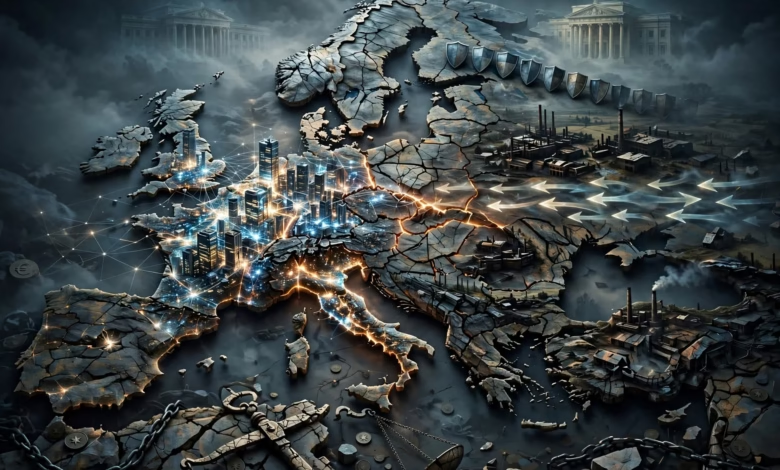
The Book Presents An Analytical Angle Related To Manow’S Perspective Of Comparative Political Economy; Where He Rejects The Projective Generalization That Treats The Populist Phenomenon Or Party Fragmentation In Europe As One Overwhelming Wave With Single Causes. Instead Of Throwing A Loose Cloak Over The European Scene In Its Comprehensive Care, The Researcher Divides The Continent Into Distinct Regions Differing By Their Economic Models And The Structures Of Their Welfare States, To Clarify How The Dismantling Of The Nation-State Has Been Translated Into Sharp Lines Of Division But With Different Implications Between The North Of The Continent And Its South And East. The Crisis Is Not One Because European Models Of Capitalism Are Not Homogeneous, And What Appears On The Surface As A Comprehensive Nationalist Awakening Including The Entire Continent Is In Truth Specific Political Responses Driven By Competitive Advantages And Structural Locations Of Each Region Within The Financial And Political Scope Of The European Union.
In Northern Europe And Its Nordic Countries Based On Export-Oriented Growth Models And Generous Social Safety Nets And Organized Labor Market Institutions, The Primary Threat To The National Model Did Not Come From Financial Austerity Pressures, But From Freedom Of Movement Policies And Opening Borders To Cross-Country Labor And Migration Flows. The European Push Toward A Unified And Open Labor Market Has Undermined The Institutional Foundations On Which The Conditions Of National Solidarity And The Local Labor Market Were Built, Creating A Deep Feeling Among Working And Lower-Middle Classes That The Resources Of The Stable Social State Are Being Depleted Or Subjected To Unequal Competition. From This Precisely, The Phenomenon Of “Welfare Chauvinism” Sprouted And Right-Wing Populist Parties Expanded In The North; These Parties Did Not Demand Undermining The Welfare State Or Abolishing Its Services, But On The Contrary, Demanded Reformulating Its Entitlement Conditions By Re-Fortifying National Borders And Restricting The Benefits Of This State To Citizens Holding Nationality, Which Transforms The Conflict In The North Into A Cultural And Social Protectionist Conflict Aiming To Close Borders To Preserve Internal Distributive Gains.
As For Southern Europe, The Political And Economic Dynamics Take A Completely Different Path Governed By The Eurozone Crisis And The Resulting Power Distributions. Southern Countries Based On Growth Models Dependent On Domestic Demand And Financial Expansion Found Themselves, After Adopting The Single Currency And Signing The European Fiscal Charter, Stripped Of Their Traditional Sovereign Tools For Managing Economic Crises, Such As Adjusting Exchange Rates Or Expanding Independent Government Spending. When The Sovereign Debt Crisis Erupted, European Technocratic Institutions Imposed Strict Austerity Policies And Coercive Reforms That Pushed Aside The Democratic Choices Of Voters In Favor Of Creditors’ Dictates. In This Context, The Main Lines Of Division Were Not Formed Around Immigration Or Identity As In The North, But Were Formed Around Economic Sovereignty And Distributive Justice, Which Explained The Rise Of Leftist And Sovereigntist Movements And Populisms That Waged Their Primary Struggle Against European Technocracy And Austerity Policies, Taking Criticism Of German And European Financial Hegemony As A Title For Their Political Project.
In Eastern Europe And The Countries That Joined The Union After The Fall Of The Eastern Bloc, A Third Model Of The Receding Nation-State Appears, In Which Rapid Economic Transformation Toward Market Capitalism Mixes With The Experience Of Democratic Transition Conditional On European Institutions. These Societies Faced A Huge Demographic Hemorrhage As A Result Of The Migration Of Competencies And Labor Hands Toward The West, Alongside The Dominance Of Foreign Capital Over Local Strategic Sectors, Which Generated A Feeling Of Loss Of National Control And Transformation Into Societies Annexed To The Western Center. Instead Of These Transformations Leading To The Crystallization Of A Traditional Labor Left, These Structural Bitternesses Were Invested By National Conservative Parties That Succeeded In Integrating Protective And Social Policies Directed At The Family With A Conservative Nationalist Discourse That Rejects The Cultural And Political Guardianship Of Brussels, Taking Defense Of Family And Religion And The National Fence As A Means To Rebuild State Legitimacy In The Face Of What It Considers Dismantling Imposed By The European Center.
The Organic Link That Manow Brings Together Between These Distinct Regions Lies In The Concept Of “Emptying Representative Democracy Of Its Content” Or What Can Be Called The Technocratic Displacement Of Politics (Entpolitisierung). The Transfer Of Decision-Making Powers In Areas Of Monetary Policy, Trade, Competition, And Financial Spending To Unelected Bodies—Such As The European Central Bank, The European Commission, And Supranational Courts—Has Created A Strange Situation In Which National Elections Become Merely A Competition Between Different Parties To Implement The Same Economic Policy. Citizens Have Become Able To Change Governments Through Ballot Boxes, But They Cannot Change The Basic Policies That Affect Their Daily Lives, Which Created What Political Literature Described As The Technocratic Dilemma: “Democracy Without Real Political Choices.”
This Gap Between Political Representation And Governing Capacity Leads To The Collapse Of Citizens’ Confidence In Stable Traditional Parties, Which Have Gradually Transformed From Intermediate Institutions Expressing Society’S Demands Into Administrative Tools In The Hands Of The State To Implement Supranational Dictates. In This Desolate Institutional Vacuum, Populist Forces And Alternative Parties Gain Their Political Legitimacy, Not Because They Possess Magical Solutions Or Necessarily Complex Programs, But Because They Reintroduce The Element Of “Conflict And Alternative” Into The Political Space That Technocracy Sought To Dry Up. From Here, Manow Concludes That The Acute Political Disorder Witnessed By European Party Systems Is Not Merely A Symptom Of Illness Or A Transient Stumble In The Path Of Democratic Development, But Is A Natural And Direct Political Manifestation Of The Escalating Conflict Between The Local Democratic Framework Based On The Nation-State, And The Globalized Technocratic Pattern That Seeks To Manage Societies And Economies Without Need For Democratic Monitoring Or Popular Mandate.
The Author Takes Us To The Heart Of The Institutional Mechanism That Has Long Ensured Political Stability In The Old Continent, Namely The Crisis Of What Is Known In European Political Literature Generally And German Particularly As “People’S Parties” Or Big Tent Parties (Volksparteien). Manow Sees That The Accelerating Collapse Of These Large Party Formations, Historically Represented In Social Democracy (Center-Left) And Christian Democracy Or Conservatives (Center-Right), Does Not Return To A Lack Of Leadership Charisma Or A Defect In Electoral Campaigns, But Is An Inevitable Result Of The Collapse Of The Structural And Material Foundation On Which They Were Built. These Parties Were Designed In The Era Of Industrial Capitalism And After The Two Wars To Be Huge Machines For Social Integration; Where Their Basic Mission Was Taming Class Conflict And Rounding The Sharp Corners Between Capital Interests And Workers’ Rights, Through Providing Middle Compromises Ensuring Economic Growth On One Hand, And Redistributing Wealth Through Social Safety Networks On The Other. However, The Disintegration Of The Nation-State And The Shift Of Economic Center Of Gravity From Intensive Manufacturing To Knowledge Economy And Financial Services Has Pulled The Rug From Under This Historical Settlement, Making It Impossible For These Parties To Continue Satisfying Social Alliances Whose Interests Have Become Radically Contradictory And Irreconcilable Within One Party Tent.
In This Context, Manow Traces The Deep Transformation That Occurred In The Nature Of Political Discourse And Electoral Programs Of Traditional Center Parties That Sought, Since The Late Nineties And Early Millennium, To Adopt What Was Known As The “Third Way,” Trying To Adapt To The Pressures Of Financial Globalization Through Adopting Privatization Policies, Labor Market Flexibility, And Easing Regulatory Restrictions On Capital, While Retaining A Progressive Discourse On The Cultural Level. This Strategic Choice Led To A Slow Structural Suicide Of European Social Democracy; It Gradually Lost Its Traditional Working Base That Felt Betrayed And Abandoned, To Find These Classes Themselves Naked And Exposed To The Winds Of Global Competition And Migration Flows. At The Same Time, Center-Right Parties Tried To Adapt By Abandoning Their Traditional Cultural Conservatism And Rushing Toward A Liberated Urban Center, Which Left A Huge Vacuum On The Margins. This Double Vacuum, Economic On The Left And Cultural On The Right, Is What The New Populist Parties And The Radical Right Were Able To Fill Skillfully, Presenting Themselves As The Last Protector Of Local Communities Threatened By Globalized Elites Who No Longer Care About National Destiny.
Manow Does Not Stop At The Limits Of Pure Institutional Analysis, But Expands His Approach To Integrate The Spatial And Geographical Dimension As A Decisive And Determining Element In Redrawing Contemporary Lines Of Division. “Spatial Polarization” Has Replaced Traditional Class Division To Become The Basic Generator Of Political Conflicts; The Main Contradiction Is No Longer Exclusively Between Owners Of Means Of Production And The Proletariat, But Has Mutated To Become A Geographical Conflict Par Excellence Between “Large Metropolitan Centers” And “Peripheries Or Geographical Margins.” In Large Cities And Urban Centers Connected To Global Economic Networks, Wealth Accumulates, High Value-Added Knowledge Jobs Are Concentrated, And University-Educated Elites Who Adopt Open Cosmopolitan Values Gather, And See In Globalization And European Integration And Cultural Diversity A Vital Field For Their Professional And Personal Prosperity. These Urban Centers Have Become The Natural Incubator For Green Parties And The New Liberal Left, Where Material Interests Resulting From Integration Into The Globalized Economy Coincide With Moral Positions Supporting Environmental Policies And Identity Pluralism.
In Complete Contrast, Geographical Peripheries, Represented In Former Industrial Cities That Have Undergone Decline, Small Towns, And Rural Areas, Stand As A Spatial Theater For The Feeling Of Marginalization And Loss Of Importance. In These Geographical Margins, Globalization Is Not Seen As An Opportunity, But As An Existential Threat That Withdraws Investments, Closes Factories, And Pulls Young Competencies Toward Capitals, Leaving Behind Communities Suffering From Declining Public Services, Deteriorating Infrastructure, And Declining Real Estate Value Of Properties. For Residents Of These Peripheries, Cosmopolitan Slogans And Strict Environmental Policies Represent Nothing But A Moral Luxury That Only Elites Of Cities Isolated From Reality Can Afford To Bear Its Cost. From Here, Manow Argues That Voting For Nationalist And Populist Parties In These Areas Is Not Merely A Reactionary Cultural Reaction Or An Expression Of Ignorance Or Deep-Rooted Racism As Urban Elites Like To Portray It, But Is A Rational Protest And Political Resistance Against Multi-Dimensional Structural Marginalization; It Is An Attempt To Use National Sovereignty As A Last Weapon To Protect Their Local Communities From The Wealth Extraction Dynamics Practiced By The Globalized Economy.
And The Book Dives Into This Spatial Dynamics To Clarify How “Geographical Isolation” Has Turned Into A Complete Cognitive And Political Isolation. European Societies Have Lost Spaces Of Meeting And Mixing That Traditional National Institutions Used To Provide Such As Compulsory Military Service, Or Broad Labor Unions, Or Even The Church. In The Absence Of These Intermediate Institutions That Used To Force Different Social Categories To Daily Friction And Negotiation Around Their Interests, Centers And Peripheries Have Turned Into Isolated Bubbles Speaking Political Languages That Are Not Translatable. Urban Elites Speak The Language Of Universal Rights, Climate Protection, And Openness To The Other, While Peripheral Communities Speak The Language Of Protection, Sovereignty, And Economic Security, And Preservation Of Inherited Cultural Identity. This Ontological Divergence Makes Attempts At Reconciliation Between The Two Parties An Extremely Complex Issue, And Establishes A New Pattern Of Political Conflict Characterized By Entrenched Hostility And Emotional Rupture, Where Each Party Does Not View The Other As A Legitimate Political Opponent Possessing A Different Vision, But As A Structural Threat And Representative Of A Counter Project That Undermines The Foundations Of Natural Life.
Philip Manow Moves To The Legal And Constitutional Mechanisms That Led To Transforming The Crisis Of Party And Geographical Representation Into A Comprehensive Institutional Deadlock Affecting The Core Of Democratic Construction In Europe. The Analysis Extends To What Is Known In Political And Constitutional Literature As “Judicialization Of Politics” And The Entrenchment Of “Supranational Constitutionalism.” Manow Sees That The Accelerating Retreat Of The Nation-State From Performing Its Distributive And Conciliatory Role Was Not Merely An Automatic Result Of Globalized Market Forces Or Accelerating Technological Changes, But Was Also The Outcome Of A Conscious Legal And Institutional Engineering Process In Which Sovereign Political Decisions Were Gradually Withdrawn From The Corridors Of Elected National Parliaments, And Transferred To The Chambers Of Fortified Courts And Judicial And Technocratic Bodies That Are Not Subject To Any Direct Popular Accountability.
This Transformative Process Is Based On A Gradual And Continuous Replacement Of “Logic Of Rights And Judicial Oversight” In Place Of “Logic Of Majority And Democratic Deliberation.” Within The Framework Of The European Union System And Supranational Courts—Such As The European Court Of Justice In Brussels And The European Court Of Human Rights In Strasbourg—Economic And Regulatory Arrangements And Freedom Of Movement Policies And Competition Laws And Labor Market Have Turned Into Binding Constitutional Assets That Transcend National Legislations. This Legal Transcendence Has Created A Strange Situation In Which Political Decisions That Were Historically Considered Subject To Dispute And Free Deliberation Between Parties And Parliamentary Blocs—Such As Determining Wage Standards, Restructuring The Public Sector, Asylum And Immigration Policies, And Financial Policies—Become Fortified Legal Judgments By Virtue Of Supranational Treaties. Thus, Jurists And Legal Experts Have Turned Into Real Employers Of Public Policy, Where Political Pluralism Is Abolished In Favor Of Closed Legal Interpretation, And The Will Of The Electoral Majority Is Curtailed As A Supposed Threat To Legal Sovereignty And Cross-Country Principles.
And Through Linking This Judicial Expansion With The Stripping Of Direct Financial Sovereignty Of National Parliaments, Which Is The Sovereignty That Historically Formed The Cornerstone Of The Birth Of Representative Democracy In Its Entirety, The Crisis Becomes Clear. The Historical Constitutional Principle On Which Modern Parliamentary Systems Were Based, Represented In That “No Taxation And No Spending Without Real Populist Representation,” Has Been Restricted Slowly But Steadily Through Strict Financial Standards Agreements Such As “Stability And Growth Pact” And “European Fiscal Pact.” These Frameworks Imposed Solid Rules Obliging States To Maximum Limits For Sanctions And Financial Deficit And Public Debt, Represented In The Famous Three Percent Ratio, Without Any Consideration For Economic Cycle Conditions Or Popular Desire Expressed In Ballot Boxes. As A Result, National Parliaments Were Stripped Of The Budget Tool As The Most Essential Political Act In Determining Social And Distributive Priorities, And Those Parliaments Transformed From Arenas Of Conflict And Political Negotiation Around How To Distribute Wealth Into Administrative Devices Whose Inevitable Mission Is To Rephrase Supranational Financial Dictates In A Local Legislative Template.
This Dual Erosion Of Legislative And Financial Sovereignty Creates, According To Manow, A Dangerous Paradox That Diagnoses The Nature Of The Current Crisis; Where Political And Economic Liberalism Has Transformed From A Project Guaranteeing Individual Freedoms And Curbing Absolute Power Into A Judicial Technocratic System Practicing What Can Be Called “Undemocratic Liberalism.” In This System, Individual Rights And Open Market Rules Are Surrounded By A Fence Isolated From Fluctuations Of Popular Will, And Demands For Economic And Social Protection Raised By Affected Classes Are Treated As Irrational Deviations Or Violations Of The Rule Of Law. In Contrast To This Liberalism Isolated From The People, The Automatic And Parallel Reaction Represented In “Illiberal Democracy” Or Sovereign Populism Emerges, Which Seeks To Reconsider The Principle Of Majority Rule And National Sovereignty Even If That Is At The Expense Of Judicial Institutions And Constitutional Checks And Balances Guarantees.
The Author Rejects The Prevailing Proposition That Merely Condemns The Populist Phenomenon As An Unjustified Exit From Sound Constitutional Rules Or A Transient Authoritarian Tendency, Emphasizing That Contemporary Sovereign And Populist Movements Are The Dialectical And Direct Product Of “Calcification Of Policies” Through Fortified Treaties. When Social Categories Find That Change Through Ballot Boxes Does Not Lead To Any Tangible Change In Economic And Societal Policies Due To Supranational Constitutional And Judicial Restrictions, They Naturally Tend Toward Questioning The Constitutional System Itself, And Transferring The Conflict From A Conflict “Within The System” Around Distribution Of Resources To A Conflict “Over The System” And Around The Extent Of Legitimacy Of Supranational Arrangements As A Whole. This Transformation In The Nature Of Conflict Represents The Greatest Threat To Constitutional Stability, Because It Eliminates The Middle Space Based On Consensus And Negotiation, And Transforms Political Conflict Into A Zero-Sum Battle Around The Form Of The State And The Future Of European Integration.
And Manow Stops At The Phenomenon Of “Blocked Amendment” Or Constitutional Deadlock Facing The European System; The Institutional Frameworks Of The European Union And Its Supranational Institutions Were Designed In A Way That Makes Amending Founding Treaties Require Complete Consensus Among All Member States, Which Has Become Practically Impossible In Light Of The Expansion Of The Union And The Divergence Of Interests Between Its Different Regions. This Institutional Closure Creates A Structural Rigidity That Prevents The System From Flexible Adaptation To Emergency Crises Or To Deep Transformations In Balances Of Social Forces. As A Result Of This Constitutional Trap, Emerging Political Forces Are Pushed To Adopt Direct Confrontation Strategies, Whether Through Fabricating Internal Constitutional Crises, Or Through Tactical Disruption Of Supranational Decisions, Or Through Using Popular Referendums As A Political Pressure Tool To Circumvent Institutional And Judicial Restrictions.
The Danger Of This Constitutional Reality Manifests In The Logic Of Legitimacy Itself; Traditional Democratic Legitimacy Based On Electoral Mandate And Peaceful Rotation Of Power Has Become In Continuous Collision With Technocratic And Judicial Legitimacy Based On Procedural Efficiency And Supremacy Of Supranational Texts. The Conflict Is No Longer Confined To Classical Ideological Issues, But Has Come To Raise Questions About Who Owns The Last Word In Society: Is It The Electorate People Through Their Elected Representatives, Or Is It Judges And Technocratic Experts Through The Texts Of Treaties And Judicial Rulings? The Inability Of European Political Systems To Find A Balanced Formula Integrating These Two Sources Of Legitimacy Is What Deepens The Crisis Of The Nation-State, And Ensures The Continuation Of Party And Institutional Disorder As A Characteristic Inherent To The European Political Scene In The Current Era.
Manow Draws The Path Of Historical Transition From “Welfare And Class Distribution State” That Prevailed In The Mid-Twentieth Century To What Can Be Called “Existential Security And Spatial Sovereignty State” In The Twenty-First Century. The Contemporary European Citizen No Longer Views The State As Merely A Tool To Modify Class Differences Or Provide Routine Public Services, But Has Come To Ask It, Before All Else, To Provide An Existential Safe Haven And A Comprehensive Protection Umbrella Against Severe Risks Resulting From Globalized Fluidity, Whether Those Risks Are Embodied In Cross-Border Economic Shocks, Or Disruption Of Global Supply Chains, Or Accelerating Demographic Changes, Or Loss Of Stable Cultural And Spatial Identity.
This Thesis Is Based On The Concept Of “Citizenship” In The Time Of Virtual Globalization And Open Spaces; Manow Sees That The Persistent Effort To Transform National Borders Into Transparent And Invisible Borders To Serve Freedom Of Movement Of Capital And Goods And Individuals Has Led, Contrary To Liberal Evangelical Promises, To Stripping Protection From Social Categories Least Able To Move And Be Mobile. Citizenship In Open European Space Has Transformed From A Solidary Social Contract Granting The Citizen Exceptional Exclusive Rights And Guaranteed By Virtue Of His Political Affiliation To The National Community, Into What Resembles “Financial Or Competitive Asset” From Which The Enthusiastic And Sovereign Content Is Gradually Stripped Over Time. In This Conceptual And Institutional Vacuum, The Feeling Of “Existential Insecurity” Has Become The Basic Emotional And Material Driver For Electoral Behavior Of Traditional Working And Middle Classes In Geographical Peripheries. The Strong Demand For “Re-Establishing Borders” Is Not Merely A Transient Hatred For The Other Or Mere Cultural Closure, But Is A Direct Material Expression Of The Desire To Revive The “Protective Fence” That Allows Reproduction Of Social Solidarity And Preventing Commodification Of Daily Life In A Merciless Global Market.
In This Context, Manow Links Between Transformations Of European Party Systems And The Sudden Rise Of The Geoeconomic Space In International Politics. Europe Lived For Decades Under The Illusion That History Had Ended In Favor Of The Open Liberal Model, And That Economic Globalization Based On Efficiency And Cost Reduction And Trade Arbitrage Will Continue To Govern The World Forever. However, The Dramatic Fragmentation Of The International System, And The Intensifying Strategic Conflict Between Great Powers, And Emerging Wars On The Borders Of The Old Continent, Have All Revealed The Fragility Of This Supranational European Bet. European Societies, And With Them Large Parts Of Ruling Elites, Have Discovered That Absolute Dependence On Open Markets And Cheap Imports And Supply Chains Extended Across The World Has Stripped The Continent Of “The Nerve Of Technological And Industrial Sovereignty.” Here The Demand For Industrial Re-Localization, And Securing Energy Resources, And Protecting Strategic Industries, Has Become A Decisive Title Rewriting Party Positions In A Way That Was Not Expected A Few Years Ago.
This Geoeconomic Transformation Creates A State Of Shocking Confusion Among Traditional Center Parties That Built Their Entire Legitimacy On The Ideology Of Openness And Removal Of Protectionist Restrictions. At The Time When These Parties Find Themselves Forced To Adopt The Language Of Protection And Governmental Intervention And Direct Industrial Support To Face Emergency Geopolitical Challenges, They Discover That Populist Parties And Radical Right And Sovereign Left Had Preceded Them To This Intellectual Space By Many Years. “State Protectionism” And Planning Intervention Have Become Permissible And Required Concepts Even By The Most Cosmopolitan Elites, Which Impoverished Traditional Party Debate And Deprived The Liberal Center Of Its Moral Weapon That It Used To Demonize Protectionist Propositions As “Populist Charlatanry” Or “Populism Ignorant Of Economics.” Thus It Becomes Clear That What Is Happening In Party Systems Is Not Merely A Local Electoral Phenomenon, But Is A Deep Reflection Of The Divergence Of Global Geoeconomic Reality From The Institutional Principles On Which The European Integration Project Was Built.
And The Book “Lines Of Division” Extends To The Dilemma Of “Green Parties” As The Most Prominent Representative Of Urban Left Bourgeoisie In This Transformation. Manow Clarifies How Green Parties Have Transformed From Radical Protest Movements Opposed To The Establishment Into The Basic Pillar Of The Status Quo In Many European Countries, Especially In Germany And Nordic Countries. The Environmental Discourse And Transition Toward Clean Energy, Even If Wrapped In A Comprehensive Human And Moral Language About Saving The Planet, Works In Reality As An Explicit Strategy For Class Differentiation; It Presents A Lifestyle Intensive In Consumption Of Symbolic Values And Green Technology That Only Affluent Urban Classes Can Afford. When These Environmental Policies Are Translated Into Governmental Legislations Imposing High Carbon Taxes, And Exorbitant Costs On Heating And Homes, And Restrictions On Car Movement And Traditional Mobility, Their Direct Financial Burden Falls With Grievous Injustice On Residents Of Peripheries And Working Classes Who Depend In Their Daily Life On Old Infrastructure And Fossil Fuel.
This Sharp Distributive Disparity Around The Cost Of “Green Transition” Creates A New Highly Inflammatory Line Of Division, Transforming Environmental Policies From A Subject Of General Societal Consensus Into An Arena Of Exposed Class And Spatial Conflict. Green Parties Become In The View Of Peripheral Communities Merely A Tool For Redistributing Wealth From Bottom To Top, Where Financial And Economic Sacrifices Are Imposed On Weak Classes To Qualify Lifestyles Of Urban Elites And Improve Their Local Environment. And This Political Dynamics Manifests In A Continuous Clash Between An Urban Ecological Left That Sees In Green Policies A Moral Duty And A Planetary Necessity Not Accepting Negotiation, And Between A Populist Right And Regional Protest Movements That See In These Policies A Direct Class Aggression On Their Living Standard And Their Ability To Survive Economically. This Polarizing Conflict Prevents Formation Of Any Stable Majorities, And Makes Legislation In Areas Of Energy And Climate And Environment A Process Fraught With Constitutional And Electoral Risks.
And Manow Does Not Neglect Evaluating Future Outcomes Resulting From This Accelerating Structural Weakness Of The Nation-State And Party Systems; He Sees That Illusions Of “Return To Old Stability” Or Restoring The System Of Large Parties Capable Of Absorbing Majority Of Voters Under One Umbrella Have Become Mere Pipe Dreams Reflecting Inability Of Classical Political Theory To Absorb Material Transformations. The Process Of “Deconsolidation” (Dekonsolidierung) Is Not Merely A Transient Crisis Or Temporary Stumble In Democratic Path Whose Effect Will Disappear Once Economic Indicators Improve Or Party Leaderships Change, But Is A “New And Continuous Structural Condition” Expressing The Structural Contradiction Existing Between Political Space Based On Democratic Legitimacy Bounded By National Borders, And Economic And Legal Space Supranational That Seeks To Control Movement Of Societies And Manage Them Through Technocratic Mechanisms.
In Light Of This New Reality, The European Political Scene Is Heading Toward More Fragmentation And Party Fluidity; Where Small And Newly Created Parties Multiply, And Coalition Governments Become More Fragile And Complex And Less Capable Of Making Fateful Decisions. The Extended Ruling Coalitions That Gather Between Opposites—Like Expanded Governments Between Social Democrats And Conservatives Or Complex Tripartite Coalitions—Practically Lead To Further Emptying Of Democracy Of Its Content; Because They Force Participating Parties To Present Sharp Concessions That Make Them Lose Their Ideological Identity In Front Of Their Electoral Bases, Which Continuously Expands The Vacuum On Which Anti-System Populist Forces Feed. Thus The Political System Enters A Vicious Circle: The More Traditional Parties Allied To Block Populists From Power, The More The State Of Integration And Similarity Between Those Traditional Parties Increased, And Popular Fragmentation Increased, And The Electoral Power Of Populist Forces That Remain The Only Party Capable Of Providing A Clear Political Alternative Magnified.
Manow Concludes By Emphasizing That The Political Future Of Europe Will Not Be Determined Through Moral Slogans And Liberal Wishes For Openness, But Through The Ability To Reformulate The Lost Balance Between A Difficult Triad: “Democratic National Sovereignty,” And “Cross-Border Economic Integration,” And “Distributive Justice And Social Security.” The Inability To Find This Balance Will Keep European Party Systems In A State Of Permanent And Continuous Disorder, And Will Push Societies Toward Renewed Geographical And Cultural And Class Conflicts, Making The European Nation-State A Theater For Intersecting Lines Of Division, And Imposing On Political Thought To Completely Rebuild Its Analytical Tools To Unshackle The Complex Political Map That Governs The Old Continent Today.
“The Founding Myth” On Which The European Integration Project Was Based After World War II; That Myth Saying That Transcending The Nation-State And Transition To Supranational Spaces Represents The Inevitable And Evolutionary Only Path To Ensure Peace And Stability And Prosperity Of Democratic Models. The Researcher Sees That This Saying, Which Dominated The Consciousness Of Liberal Political Thought For Long Decades, Was Suffering From An Implicit Flaw; It Assumed That Representative Democracy Could Be Stripped From Its Historical Vessel Represented In The Closed Nation-State Without Losing Its Consensual Content And Its Ability To Control Material And Spatial Disparities.
In This Regard, Manow Recalls The Trilemma Framed By Contemporary Political Economy (Known As “Rodrik’S Trilemma” And Sovereignty Paradoxes), And Reapplies It To European Reality To Clarify That It Is Practically Impossible To Simultaneously Combine Between “Deep Economic Globalization And Supranational Integration,” And “Independent National Sovereignty,” And “Real Representative Democracy With Fertile Choices.” The European Union Chose To Resolve This Paradox In Favor Of Integration Between Supranational Integration And Deepening Freedom Of Markets, Which Necessarily Required Sacrificing One Of The Other Two Elements: Either Reducing National Sovereignty Through Transferring Powers To Unelected Technocratic Bodies, Or Emptying Local Democracy Of Its Competitive Content And Transforming Parliamentary Elections Into Procedural Rituals That Do Not Change Public Policies At All. This Troubled Institutional Choice Is What Made The Nation-State In Europe Enter Into A State Of “Structural Disintegration” (Dekonsolidierung), Where Governments Stand Unable To Respond To Their Citizens’ Distributive Demands, Which Causes Detonation Of Stable Party Systems And Generation Of Unfamiliar Political Alliances Uniting In Their Rejection Of The Technocratic Center.
And Manow Deepens His Critique Of Cosmopolitan And Urban Elites Through Revealing The Character Of “Moral Superiority” With Which Supranational Discourse Wraps Its Economic And Social Decisions And Dictates. When Democracy Is Emptied Of Its Distributive Competitive Dimension, Conflicts Around Legitimate Material Interests Are Replaced By Moral Debates Around Values And Tastes And Cultural Legitimacy. In This Distorted Space, Political Opponents And Demanders Of Economic Protection Or National Sovereignty Are Not Classified As Owners Of Conflicting Interests That Must Be Negotiated With And Integrated Into A Political Settlement, But As “Irrational” Forces, Or “Ignorant Populist,” Or Even “Threat To Democratic Principles.” Manow Emphasizes That This Exclusionary Approach, Practiced By Liberal Left And Technocratic Center Under The Name Of Protecting Constitutionality And Universal Values, In Reality Causes Reproduction Of Symbolic Political Violence, And Pushes Stressed And Marginalized Groups In Geographical Peripheries Toward More Radicalism And Questioning Of The Legitimacy Of The Institutional System As A Whole.
From Here, The Book Sees That The Populist Phenomenon In Its Various Right-Wing And Sovereign Manifestations Is Not A Transient Exit From The Right Path Or Merely A Passing Ideological Contagion, But Is A “Compensatory Function Dictated By The Mechanisms Of The Political System Itself.” Populist Forces Have Reintroduced The Element Of “Conflict And Alternative” (Das Politische) Into The Public Sphere That Supranational Technocracy Exerted Strenuous Efforts To Dry Up And Tame. When These Populist Parties Are Able To Expand In Peripheries And Mobilize Working And Local Categories, They Point Explicitly To The Huge Gap Between What Supranational Institutions Offer Of Welfare And Openness Promises, And Between What The Citizen Lives In His Daily Life Of Decline In Services And Collapse Of Societal Bonds And Loss Of Existential Security. Populism, In Manow’S Condensed Phrase, Is The Natural And Democratic Immune Reaction Against Technocratic Hegemony, Even If This Reaction Sometimes Takes Identity Or Sharp Forms That Terrify Ruling Elites.
And When Looking Toward The Future Of Party Systems And Dynamics Of The Nation-State In The Old Continent, Manow Presents Three Future Scenarios Governing European Political Transformation. The First Scenario Embodies “Permanent Institutional Gridlock And Extended Fragmentation” (Permanent Gridlock), Where The State Of Electoral Fluidity And Decline Of Large Parties Continues, And Traditional Parties Are Forced To Form Fragile And Expanded Coalitions Gathering Contradictory Spectra To Form Governments, Which Paralyzes The Ability Of These Governments To Make Decisive Decisions, And Enters Countries Into Repeated Political Crises Similar To The Belgian Or Italian Model But On The Level Of The Entire Continent. As For The Second Scenario, It Is Represented In “Gradual Normalization Of National Populism” (Normalization Of National-Populism), Where Right-Wing And Sovereign Parties Are Able To Penetrate Centers Of Power And Enter Governments Coalitionally Or Individually, To Produce A New Pattern Of Governance Combining Inward-Directed Economic Protectionism And Conservative Societal Policies, With Re-Imposition Of Some Controls Of National Sovereignty On European Union Treaties From Within Without Fully Dismantling It.
As For The Third Scenario, And The Least Likely In View Of Constitutional Difficulties, It Is Summarized In “Radical Restructuring Of The Depth Of European Integration” (Structural De-Integration), Through Retreat Of The European Union From Some Of Its Technocratic And Judicial Powers, And Re-Granting National Parliaments A Real Margin To Manage Financial And Distributive Policies And Labor Market. Manow Sees That This Scenario, Although It Is The Only One Capable Of Restoring Democratic Balance Between State And Citizen, Faces A Huge Constitutional Obstacle Represented In The Consensus Mechanism Required To Amend Founding Treaties, In Addition To The Severe Resistance That Will Be Met By Globalized Forces And Elites That Prosper Within The Current Supranational Pattern. Thus, Europe Remains Trapped Between The Misery Of Fortified Supranational Technocracy And The Anger Of Fragmented National Street, Which Ensures Continuation Of Lines Of Division As A Decisive And Determining Element For The Coming Political Identity.
- Published Opinions Do Not Necessarily Represent The Opinion Of Nile Post