
Conditional Return And A Burdened Memory – The First Labor Of The Italian Trusteeship In Somalia (1950 – 1955)
In Their Recently Published Book By The Prestigious Publishing House “Il Mulino”, Entitled “Italy And Somalia: A Political History From 1950 To Today”, Historian Annalisa Urbano And Associate Professor Antonio Varsori Open A Wide Window Into The Intricacies Of A Complex And Controversial International Relationship In The History Of Republican Italy. This Solid, Encyclopedic Work Does Not Stop At The Borders Of Cold Documentation Of Events, But Rather Dives Deep Into Half A Century Of Shared Ties Between Rome And Mogadishu. It Masterfully Portrays The Features Of That Relationship, Oscillating Between Ambitions For Influence Inherited From The Colonial Era, And The Reality Of Bitter Failures And Aborted Pledges That Ultimately Left Somalia In The Wind As A Torn State. This Deep Series Of Journalistic Readings Of The Book Begins With This First Installment, Shedding Light On The Crucial Historical Moment That Witnessed Italy’s Return To The Horn Of Africa After Its Defeat In World War II, Carrying A Document Of International Trusteeship From The United Nations.
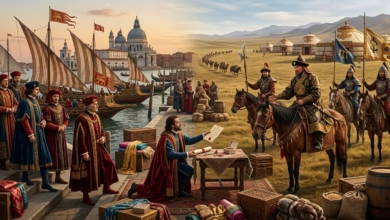
The Return Of The Italian Administration To Mogadishu In 1950 Under The Name Of “The Italian Trusteeship Administration Of Somalia” (AFIS) Was Not A Political Picnic Or A Mere Continuation Of The Old Colonial Role, But Rather An Existential Issue For Post-War Italy, Deliberately Seeking To Restore Its Lost International Prestige And Gain Re-Acceptance In International Forums. The Book Reveals How This Trusteeship Involved A Sharp Temporal And Historical Paradox; On The One Hand, The United Nations Set The Duration Of This Administration To Only Ten Years, Ending By 1960, Placing Somalia At The Forefront Of African Countries With A Precise And Pre-Established Timetable For Gaining Independence. On The Other Hand, The Italian Political Elite In Rome, Led By Prime Minister Alcide De Gasperi, Had To Convince Global And Local Public Opinion That Republican Italy Had Completely Ridden Itself Of The Legacy Of Fascism And Its Imperial Expansions, And Was Now Ready To Offer A Democratic And Civilized Model For Building A Modern State.
However, The Reality On The Ground In Mogadishu Was Boiling Under The Weight Of Severe Tensions And Hidden Conflicts Left Behind By A Full Decade Of The “British Military Administration” (BMA), Which Had Run The Country Since The Defeat Of Italian Forces In 1941. Urbano Explains In The Book’s Early Chapters That The Period Of British Rule Was Not Merely A Stagnant Transitional Phase, But Rather The Real Incubator In Which The First Modern Somali Political And Social Expressions Were Born, Led By The “Somali Youth League” (SYL). This Nascent Party, Founded With An Ardent National Consciousness, Took From the Start A Radical Position Hostile To Any Form Of Italian Return, Considering It A Disguised Attempt To Revive Old Colonialism. Italian Concern Was Not Prompted Merely By Political Slogans, But Was Based On Recent Bloody Memories, Perhaps Most Notably The Famous Mogadishu Events Of 1948, Which Witnessed A Massacre That Claimed The Lives Of Dozens Of Italians, In Addition To The Massive Demonstrations And Acts Of Sabotage That Broke Out In The Autumn Of 1949 In Protest Against The United Nations Decision To Grant Rome The Trusteeship Document.
In Light Of This Atmosphere Charged With Apprehension, Italian Troops Entered Mogadishu Relying On A Massive Military Mobilization Exceeding Six Thousand Soldiers, A Measure That Sparked A Wave Of Criticism From Somali Parties And Italian Left-Wing Forces In Rome Alike, Who Saw This Dense Military Deployment As A Premeditated Intention To Impose Oppressive Rule And Re-Occupy The Country By Force Of Arms. Indeed, The Book Confirms That The First Three Years Of The Trusteeship Were Characterized By A Clear Oppressive Administrative Tendency Aimed At Curbing The National Movement; As Authorities Imposed Strict Restrictions On Party Meetings, Tightened The Noose On The Activities Of The Somali Youth League, And Tried To Diminish Its Presence In Local Advisory Councils Established By The Trusteeship Administration. The Somali Response To This Suppression Took Various Forms, Ranging From Thousands Of Protest Petitions Sent To The United Nations Trusteeship Council To Expose Italian Violations, To Labor Strikes In Ports, And Bloody Field Clashes At Times, Such As The Famous Incident In Kismayo In 1953 That Resulted In The Death Of Two Italian Gendarmes (Carabinieri) During An Unauthorized Demonstration.
By The Midpoint Of The Trusteeship Period, This Zero-Sum Equation Governed By Hostility And Mutual Suspicions Began To Shift Toward A Completely Different And New Path. The Book Attributes This Shift To Dual Structural Reasons Related To Both The Italian And Somali Sides; On The One Hand, The Leadership Of The Somali National Movement Realized, Out Of Political Rationality, That Continuously Confronting The Trusteeship Administration Might Disrupt The Country’s Progress Toward Swift Independence At The Scheduled Time, So They Began To Show Greater Flexibility And Seek Formulas For Joint Cooperation. On The Other Hand, Rome Was Witnessing A Fundamental Strategic Shift In Its Diplomatic Doctrine With The Rise Of The “Neo-Atlanticism” Trend In The Mid-1950s. This Trend, Which Advocated For The Necessity Of Italy’s Involvement In Third World Issues And Presenting Development Support, Saw That Rome’s True Interest Lay In Focusing On The “Extended Mediterranean” Region Rich In Economic Opportunities And Energy Sources, While Somalia Became An Issue That Had To Be Liquidated And Concluded With Minimum Possible Losses, Especially After Italy Obtained Its Greatest Goal And Was Blessed With Its United Nations Membership In 1955.
This New Convergence Of Interests Was Translated By The Trusteeship Administration Through Launching A Broad And Systematized Process Called “Somalization” (Somalizzazione), A Process Aimed At Preparing Local Cadres And Qualifying Them To Take Over The Reins Of Government And Administration. In This Context, Researcher Urbano Analyzes How Rome’s Desire To Win The Favor Of The Future Somali Elite Met With Programmatic Directives Issued By International Organizations Affiliated With The United Nations, Particularly UNESCO, Which Focused On Developing Vocational Education And Building Modern Administrative Institutions. In 1950, The Italian Administration Initiated The Establishment Of The “School Of Political And Administrative Preparation” In Mogadishu, Which Was Dedicated To Training Local Officials And Somali Youth. Although The Authorities Were Cautious At First And Avoided Direct Confrontation With The Leaders Of The National Movement, This School, Which Later Transformed In 1956 Into The “University Institute Of Somalia” (The First Core Of The Somali National University), Became Rome’s Most Prominent Soft Power Tool.
Through A Policy Of Offering Generous Scholarships And Sending Student Delegations To Italian Universities, Rome Managed To Penetrate The Solid Wall Of The Somali Youth League And Transform Historical Hostility Into Channels Of Understanding And Close Cooperation. This Educational And Political Strategy Succeeded In Creating A Wide Segment Of Somali Intellectuals And Statesmen Who Came To View Italy Not As An Occupying Enemy, But As A Partner And Sponsor Of The Sovereign Transition, Even Though The Selection Process For These Grantees And Shaping Their Intellectual Attributes Remained Subject To Strict Censorship And Criteria Set By The Trusteeship Administration To Ensure Their Loyalty And Future Orientations. Thus, Somalia Concluded Its First Trusteeship Years With The Skins Of Its Political Actors Mutated, To Enter The Next Phase Of Institutional Empowerment And Building The Fragile Skeleton Of The Independent State.
Fragile Institutionalization And The Rushed Race Toward Sovereignty (1956 – 1960)
If The First Phase Was Characterized By Confrontation And Mutual Suspicions, The Period Extending Between 1956 And 1960 Witnessed A Dramatic Turn Indicated By The Rushed Italian Scramble Toward Drafting An Institutional Structure For The Nascent Somali State. This Part Of The Book Reveals How The Italian Trusteeship Administration (AFIS) Shifted From The Position Of A Maneuverer Trying To Prolong The Duration Of Influence, To The Role Of A Rushed Party Racing Against Time To Get Rid Of A Financial And Political Burden That Had Begun To Weigh Heavily On Rome, A Matter That Cast Its Shadows On The Quality Of Institutional Building, Which Was Characterized By A Structural Fragility That Later Led The Country Onto Dangerous Slopes.
The Year 1956 Witnessed The Most Prominent Institutional Turning Point In The History Of Modern Somalia; Where The Country’s First General Legislative Elections Were Conducted To Choose Members Of The Legislative Assembly. The Book Explains How These Elections Resulted In An Inevitable Rise Of The “Somali Youth League” (SYL) As A Dominant Political Force, Forcing The Italian Trusteeship Authorities To Recognize The New Reality And Deal With The National Elite As An Official Partner In Governance. Under These Developments, The First Somali Government Enjoying Internal Self-Rule Was Formed, Headed By Abdullahi Issa Mohamud. Although This Step Was Welcomed Internationally And Locally As A Historic Achievement, The Deep Analysis Of The Researchers Reveals That Italy Deliberately Transferred Administrative And Political Powers In A Rushed And Often Unstudied Manner, Driven By The Desire To Demonstrate The Success Of Its Mission Before The United Nations Mission, And To Reduce The Heavy Expenditures That The Italian Treasury Was Pumping Into Its Former Colony.
The Crisis In Transporting Power Was Not Limited To Administrative Aspects Alone, But Rather The Greater Dilemma Emerged In The Economic And Financial File, An Aspect To Which The Book Dedicates A Broad Analytical Space. During The 1950s, The Somali Economy Relied Almost Completely On Direct Financial Aid From Rome, And On A Protected Preferential System Designed Specifically For Exporting Somali Bananas To Italian Markets. The Authors Reveal How The Trusteeship Administration, Despite Directives From World Bank And United Nations Experts On The Necessity Of Diversifying Sources Of National Income And Building An Independent Productive Base, Failed To Create A Somali Economy Capable Of Surviving Without External Support. Economic “Somalization” Was Merely A Loose Slogan, While Reality Continued To Indicate That The Coming Independent State Would Be Born Suffering From A Chronic Structural Deficit In Its Budget, And Absolute Dependency On The International Financial System.
When Moving To The File Of Drafting The Constitution And Establishing The Somali National Army In 1960, Italian Haste Manifests Itself Clearly; As The Italian Constitutional And Parliamentary Model Was Cloned And Projected Onto A Somali Society Characterized By A Complex Tribal Composition And A Traditional Value System Dependent On Local Customs. This Sharp Discrepancy Between The Modern Western Constitutional Text And The Social And Tribal Reality Led To Creating A Formal, Fragile Democracy That Quickly Transformed Into An Arena For Tribal Quotas And Political Settlements. At The Same Time, The Nascent “Somali Security Forces”, Trained By The Italian Carabinieri, Were Integrated In Haste To Become The Core Of The National Army, Without Drafting A Clear National Military Doctrine That Protects The Military Institution From Political Infiltrations Or Tribal Tensions.
In July Of 1960, A Few Months Before The Original Date Set By The United Nations, Italy Officially Announced The Termination Of Its Trusteeship, Coinciding With The Independence Of The Northern Part That Had Been Subject To British Colonialism, And The Birth Of The Unified “Somali Republic”. The Authors Conclude This Important Chapter By Pointing Out That The Departure Of The Italian Administration Was Not The End Of The Road, But Rather The Beginning Of A New Pattern Of Indirect Influence. Rome Left Behind A Somali Political Elite That Spoke Its Language, Relied On Its Financial Support, And Moved Within A Fragile Institutional Framework Put In Place In Haste By The Old Colonialist. Thereby, Somalia Entered The Era Of Independence Carrying In Its Womb The Seeds Of Structural Crises That Would Explode Later.
The False Glitter Of Democracy And Falling Into The Arms Of The Military (1960 – 1969)
Mogadishu Entered A Promising Era Of Pluralistic Democratic Governance That Won Great International Praise Across The African Continent. However, The Researchers, Through Deconstructing Diplomatic Documents And Records Of That Period, Reveal How This Democratic Glitter Concealed Deep Structural Crises Inherited From The Rushed Italian Administration, Making The Nascent State Incapable Of Withstanding The Hurricane Of Internal And Regional Crises, Ending Up Falling Under The Boot Of Military Rule In 1969.
The Newly Unified “Somali Republic” Was Not Just A Geographical Merger Between The Southern (Formerly Italian) And Northern (Formerly British) Parts, But Rather A Complex Confrontation Between Two Completely Distinct Administrative, Legal, And Linguistic Legacies. The Book Explains How Rome Attempted To Maintain Its Cultural And Political Hegemony In The South By Supporting Its Traditional Allies In The “Somali Youth League” (SYL), Which Monopolized Power And Formed Successive Governments Headed By Figures Such As Ibrahim Egal And Abdirashid Ali Shermarke. Despite Broad Hopes, Manifestations Of Tribal Quotas, Administrative Corruption, And Political Clientelism Spread Across The Corridors Of The Emerging State, Where Political Parties Transformed Into Fronts Serving Narrow Tribal Interests, And The Ruling Elite Forgot To Address Urgent Development Issues For A Country Suffering From Dire Poverty And Widespread Illiteracy.
The Gravity Of Historical Analysis In This Part Manifests Itself When Tracking The Italian Stance On The Chronic Economic Crisis That Battered Mogadishu. Driven By Retaining Its Influence, Rome Remained The Primary Commercial And Financial Partner For Somalia, Continuing To Pump Aid And Purchase The Banana Crop At Preferential Prices To Protect The Interests Of Its Companies. However, This Aid, As Urbano Reveals, Was Not Directed At Building A Real Productive Base, But Was Exploited By Ruling Elites To Strengthen Their Political Influence. At the Same Time, Somalia Entered Into Bloody Border Conflicts With Its Neighbors (Ethiopia And Kenya) In Fulfillment Of The Dream Of “Greater Somalia”, Spurring Mogadishu To Search For Sources To Arm Its Young Army, A Matter About Which Rome And Western Capitals Expressed Reservations Out Of Caution For The Region’s Balances, Opening The Door Wide For The Intervention Of The Soviet Union, Which Found In The Horn Of Africa A Strategic Foothold By Supplying The Somali Army With The Latest Weapons.
The Political Drama Reached Its Peak In October Of 1969; In Light Of Widespread Social Discontent And A Dead End In The Political Horizon, Somali President Abdirashid Ali Shermarke Was Assassinated. Only A Few Days Following The Assassination, Major General Mohamed Siad Barre Led A Bloodless Military Coup That Overthrew The Constitution And Parliament, And Announced The Establishment Of The “Supreme Revolutionary Council”. The Authors Reveal That Rome Received News Of The Coup With A Mix Of Apprehension And Pragmatism; Despite The Declared Socialist Tendencies Of The New Military Regime And Its Close Alliance With Moscow, Italian Diplomacy Rushed To Adapt To The New Reality To Protect The Interests Of The Massive Italian Community And Companies Operating There, Preferring Oppressive Stability Over Democratic Chaos. Thereby, The Page Of The Fragile Democratic Experience Was Folded, Marking Somalia’s Entry Into The Tunnel Of Totalitarian Dictatorship.
The Glow Of The Socialist Revolution And The Shadows Of Italian Military Hegemony (1969 – 1978)
This Part Sheds Light On The First Decade Of Major General Mohamed Siad Barre’s Rule, Who Adopted A Scientific Socialism With An Extreme Nationalist Character, Backed By A Massive Soviet Military Arsenal And An Iron Security Bureaucracy. In This Chapter, The Researchers Reveal A Stunning Diplomatic Paradox; While Mogadishu Was Swimming Openly In The Anti-Imperialist Soviet Orbit, Rome Was Managing From Behind the Scenes A Complex Network Of Pragmatic Relations, Using “Parallel Diplomacy” To Maintain Its Economic And Cultural Influence, Making Somalia A Backyard For Cold War Balances In The Red Sea.
The “Somali Revolution” Led By Siad Barre Was Not Merely A Change In Political Leadership, But Rather A Radical Attempt To Reshape Society And The State; As The Regime Nationalized Major Foreign Banks And Corporations, Including Italian Investments In The Sectors Of Agriculture And Commerce, And Launched Inspiring Nationalist Campaigns To Document The Somali Language Using Latin Letters And Eradicate Tribalism. The Book Masterfully Analyzes The Italian Reaction To These Transformations; As Rome, Guided By Successive Christian Democratic Governments, Evaded Direct Confrontation With The Military Dictator, Resorting Instead To Adopting A Policy Of “Flexible Containment”. Italy Realized That Siad Barre, Despite His Resonant Marxist Speeches, Remained Attached To Historical Ties With Rome As An Alternative Bridge Toward The West, Allowing For The Continuation Of Italian Development Aid And Securing The University Institute In Mogadishu’s Survival As A Stronghold For Italian Culture In The Heart Of A Socialist System.
Analytical Excitement In This Chapter Reaches Its Peak With The Outbreak Of The Bloody “Ogaden War” Between Somalia And Ethiopia (1977 – 1978). This War Was Not Merely A Border Dispute, But Rather The Historical Turning Point That Altered International Alliances Across The Entire Region; As The Soviet Union Suddenly Abandoned Mogadishu To Support The Marxist “Derg” Regime Of Mengistu In Addis Ababa, Leaving Siad Barre’s Army Exposed And Isolated. The Authors Reveal, Based On Italian Foreign Ministry Documents, How Rome Found In This Crisis A Golden Opportunity To Restore Its Role As A Primary Sponsor Of The Somali Regime; When The Soviets Shut Off The Weapon Tap, Italian Diplomacy Moved, In Secret Coordination With Washington, To Provide Logistical, Political, And Financial Support To Siad Barre To Save His Regime From Complete Collapse, Exploiting The Dictator’s Desire To Emancipate From International Isolation.
The Ogaden War Ended In A Bitter Military Defeat For The Somali Army, Leaving Behind A Financially Depleted Country, Burdened With Hundreds Of Thousands Of Refugees, And A Political Regime That Began To Lose Its Ideological Legitimacy, Returning By Force To Relies On Tribal Fanaticism To Confront Mounting Opposition. The Researchers Conclude This Chapter By Indicating That This Defeat Represented The Beginning Of The End For Siad Barre’s “Golden Age”, But In Return Opened The Door Wide For An Unprecedented Italian Influx In The 1980s Via Humanitarian Aid And Development Funds, Which Later Transformed Into One Of The Largest Political Corruption Scandals In The History Of Both Italy And Somalia.
The Era Of Suspicious Funds And The Flourishing Of Transcontinental Corruption (1978 – 1986)
Following The Defeat Of The Ogaden War, Mohamed Siad Barre’s Regime Carved Out A New Path Charactered By The Complete Abandonment Of Socialist Slogans, And Unconditional Submission Into The Bosom Of Western Funding To Remain In Power. In This Part, The Authors Reveal How Somalia Transformed During The 1980s Into A “Living Laboratory” For The Largest Financial Inflow Process Under The Cover Of Italian Humanitarian And Development Aid, Which Rome Managed Via The “Fund For Aid Assigned For Development” (FAI), For Those Monies To Quickly Transform Into Channels For Funding The System Of Political Corruption In Both Countries And Securing The Pillars Of A Military Dictatorship Whose Legitimacy Had Begun To Erode.
The Italian Scramble To Pump Funds Into Mogadishu Was Not Prompted By Purely Humanitarian Motives, But Was A Reflection Of The Nature Of The Political Scene In Rome, Where The Italian Socialist Party (PSI) Led By Bettino Craxi Rose To Power. The Book Explains How A Close “Interest Axis” Formed Between Craxi And Siad Barre; As The Italian Government Saw In Somalia An Ideal Arena For Executing Giant Infrastructure Projects Granting Contracts Worth Billions Of Lire To Italian Companies Close To The Ruling Parties, In Exchange For Recycling Part Of These Funds Formed As Illegal “Political Commissions” To Finance Electoral Campaigns In Rome. In Return, The Somali Dictator Obtained A Financial And Military Lifeline That Enabled Him To Purchase The Loyalty Of Tribes And Modernize His Oppressive Security Organs To Confront Armed Opposition Fronts That Had Begun To Form In The North And Center.
The Authors Review Stark Examples Of Major Projects That Cost The Italian Treasury Immense Sums Without Returning Any Benefit To The Somali People, Such As The “Garowe-Bosaso” Road Construction Project Which Was Marred By Massive Financial Corruption, And Establishing Fish Canning Factories And Developing Ports That Did Not Operate For A Single Day At Productive Capacity, Remaining On Paper. These Projects, As Described By The Book, Were Fronts For Looting International Grants, Where The First Beneficiary Was Italian Contractors And Generals Surrounding Siad Barre, While Somali Society Was Drowning Further In A Swamp Of Debt And Poverty, And The Class And Social Gap Widened Between The Ruling Elite And Other Segments Of The People.
In The Mid-1980s, Specifically In 1986, Mohamed Siad Barre Was Exposed To A Horrific Traffic Accident That Almost Claimed His Life, And Was Consequently Transferred To Receive Treatment In Rome Amid Highly Secret Security Measures. The Book Reveals That This Accident Was Not Merely A Health Emergency, But Rather The Spark That Exploded The Succession Struggle Within The Solid Core Of The Military Regime In Mogadishu, And Stripped Bare The Fragility Of The Political Structure That Relied Entirely On The Dictator’s Persona. The Researchers Conclude This Chapter By Pointing Out That At The Very Time Italy Was Celebrating The Success Of Its Alleged Development Model In The Horn Of Africa, The Seeds Of Total Civil War Had Grown And Rooted In Somali Soil Due To Systematized Suppression And Corruption.
The Great Disintegration And The Explosion Of The Cauldron – The Poisoned Autumn Of Dictatorship (1986 – 1991)
The Period Extending Between 1986 And 1991 Was Not Merely Years Of Sunset For An Aging Military Regime, But Rather The Phase In Which The Ties Of The Somali State Dissolved Entirely, Transforming Into Scattered Shards. In This Tragic Chapter, The Researchers Reveal How Rome, Mogadishu’s Historical And First Partner, Stood Powerless And Paralyzed Prior To The Rolling Snowball; As Its Eagerness To Protect Its Political And Financial Investments With The Generals Of The Injured Dictator Mohamed Siad Barre Blinded It From Seeing The Red Warning Signs, Awakening Italian Diplomacy To The Shocking Collapse Of The Entire Skeleton Over Everyone’s Heads.
Following Siad Barre’s Survival Of The Traffic Accident In 1986, He Returned To Mogadishu With A Feeble Body And Diminished Mental Capabilities, Allowing A Tight Circle Of His Relatives And Clan (Known As The Marehan) To Take Control Of Actual Executive Power In The Country. The Book Explains How The Regime Transformed From A Totalitarian State Of Military Institutions Into A Family Gang Wage A Furious War For Survival; Where Massive Armed Uprisings Broke Out In the North Of The Country Led By The “Somali National Movement” (SNM). In Response, The Regime Ordered A Brutal Bombardment Of The City Of Hargeisa, Wiping It Out Almost Entirely, In A Major Human Crime That Sparked Widespread International Condemnation. However, The Shocking Surprise Documented By The Authors Is The Continued Presentation Of Direct Military And Logistical Support To Siad Barre By Some Political Wings In Rome, Turning A Blind Eye To The Blood Of Victims, Under The Justification Of Fearing An Anarchic And Islamist Alternative.
While Opposition Fronts (Such As The United Somali Congress USC) Were Encircling Mogadishu And Tightening The Noose On The Presidential Palace, Rome Was Living Under The Impact Of The Explosion Of The “Clean Hands” (Mani Pulite) Scandals That Rocked The Entire Italian Political System. The Book Reveals How The End Of The Somali Dictatorship Coincided With The Moral And Political Collapse Of The Class Of “Craxi” And His Aides In Rome, Who Engineered Corruption Channels Via Aid Funds. Rome Preoccupied Itself With Saving Itself From The Guillotine Of The Italian Judiciary, And Left Its Old Somali Ally To Face His Fate Alone In “Villa Somalia”, Incapable Even Of Leading A Final Mediation Initiative To Arrange A Peaceful Transfer Of Power That Tries To Spare The Country From The Woes Of Tearing Apart.
In January Of 1991, Opposition Forces Stormed The Streets Of Mogadishu, And Mohamed Siad Barre Fled Boarding A Tank Headed Toward The South, Leaving Behind A Destroyed Capital And A Headless State, Entering Somalia Officially Into The Longest And Most Violent Civil War On The African Continent. The Authors Conclude This Sad Chapter By Pointing Out That Italian Planes That Landed Rushed At Mogadishu Airport In Those Final Days Were Not Carrying Plans For Salvation, But Came To Evacuate Italian Nationals And Escape Escorting What Remained Of Documents And Secrets Of A Second, Undeclared Trusteeship Era That Failed Morally And Politically. With The Exit Of The Last Italian Diplomat, The Lights Of Traditional Influence Extinguished, Announcing The Launch Of An Era Of Violent International Military Interventions.
The Swamp Of International Intervention And The Aborted Disappointment Of “Restore Hope” (1991 – 1995)
With The Fall Of Siad Barre’s Regime And Somalia’s Entry Into A Raging Civil War That Divided Mogadishu Into Factions Conflicting Over Warlords, An Unprecedented International And Humanitarian Dilemma Emerged. This Part Of The Book Focuses On The Period Extending Between 1991 And 1995, A Stage That Witnessed Italy’s Return To Its Former Colony, But This Time Not As An Administrative Trusteeship Power Or A Commercial Partner, But As Part Of An International Military Coalition Led By The United States Under The Umbrella Of The United Nations In Operation “Restore Hope” (UNITAF) And Then (UNOSOM), An Experience That Quickly Transformed Into A Political And Military Nightmare For Rome.
Italian Military Participation In The International Mission Was Not Merely A Response To A Humanitarian Call To Save Millions Of Somalis From Famine Resulting From The War, But Was A Determined Attempt By Rome To Re-Position In The Horn Of Africa File and Retain The Role Of The “Primary Historical Mediator”. The Authors Reveal How The Italian Military Landing (Operation Ibis) Was Received With A Mix Of Welcome And Apprehension By Conflicting Somali Factions; While Some Saw In The Italians A Familiar Face That Mastered The Country’s Language And Understood Its Tribal Nature, Other Factions, Particularly Those Joined Under The Banner Of The “Somali National Alliance” Led By General Mohamed Farrah Aidid, Deemed Them Implicit Historical Allies Of The Extinct Siad Barre Regime Who Came To Reproduce Old Influence By Force Of Arms.
When Analyzing The Hidden Strategic Clash Between The Italian And American Military Leaderships On The Ground, The Book Clarifies That Italian Generals, Relying On Their Long Experience In Somali Society, Preferred To Adopt A “Diplomacy Of Pacification” And Dialogue With Warlords To Save Lives And Secure Relief Convoys, While The American Strategy Focused On Military Decisiveness And Direct Confrontation With General Aidid’s Faction. This Operational Rift Exploded Openly In July 1993 During The Famous “Checkpoint Pasta Battle” In Mogadishu, Which Witnessed Fierce Clashes Resulting In The Death Of Three Soldiers From The Italian Special Forces, Spurring A Sharp Diplomatic Crisis Between Rome And Washington That Reached To The Limit Where Italy Demanded Transferring Its Forces’ Command To A Separate Area.
These Field Failures Coincided With A Moral Shock That Rocked Italian Public Opinion, Bravely Revealed By The Book; Where Scandals Exploded Related To Inhumane Violations And Transgressions Committed By Some Italian Soldiers Against Somali Civilians, Tarnishing The Human Image That Rome Attempted To Paint For Its Mission. In 1995, With The Humiliating Withdrawal Of International And American Forces Following The Battle Of “Black Hawk Down”, Italian Troops Packed Their Bags Departing Mogadishu, Leaving Behind A Country Drowning In A Deeper Swamp Of Chaos And Absence Of State. The Researchers Conclude This Chapter By Indicating That This Withdrawal Represented The Actual Announcement Of The Death Of “Italian Exceptionalism” In Somalia, And The Severance Of The Last Veins Of Organic Ties, Entering The Country Into An Era Of International Oblivion.
Years Of International Oblivion And The Emergence Of Transnational Actors (1995 – 2006)
Following The Collective Withdrawal Of International Forces By Virtue Of Resounding Failure In 1995, The Country Entered A Full Decade Of International Neglect And Oblivion, Where International Hands Were Lifted Over Mogadishu, And Somalia Was Left To Its Fate As A Model “Failed State” Managed By The Rifles Of Warlords Governed By The Laws Of The Tribal Jungle. In This Chapter, The Authors Reveal How The Italian Position Transformed From Rushed Field Momentum Into A Cautious Diplomatic Retreat, Leaving The Political Vacuum To Be Absorbed By New, Unconventional Local And Regional Forces, Crossing Accepted Diplomatic Concepts.
Somalia Was No Longer In This Era The Focus Of Planners Inside The Italian Foreign Ministry In Rome; As Balkan Issues And European Integration Dominated Italian Priorities, And Mogadishu Regressed To Become Merely A Marginal Security File Managed Via The Italian Embassy In Nairobi. The Book Explains How The Somali Capital Transformed During These Years Into An Archipelago Of Torn Military Fiefdoms, Where Manifestations Of Civil Life Were Frozen, Infrastructure Disappeared, And Institutional Connections With The Outside World Severed. Despite Rome’s Timid Attempts To Support Plural National Reconciliation Conferences Conducted In Neighboring African Capitals (Such As The Arta Conference In Djibouti In 2000 And The Mbagathi Conference In Kenya In 2004), Those Efforts Lacked True Political And Financial Momentum, And Transitional Governments Resulting From Them Remained Ink On Paper, Incapable Of Imposing Their Control Outside The Boundaries Of The Hotels In Which They Were Born.
Historical Reading In This Part Gains An Exciting Investigative Character Upon Uncovering The “Dark Side” Of The Absence Years; Where The Authors Document How Long, Unguarded Somali Coasts Were Exploited By International Mafioso Networks And Transcontinental Corporations To Bury Toxic And Radioactive Waste, And Plunder Somali Marine Wealth Without Accountability Or Supervision. This Bitter Reality, Executed With The Knowledge, Silence, And Complicity Of Political And Economic Parties In Italy And Outside It, Exploded Major Environmental And Human Scandals (Linked In The Italian Consciousness To The Assassination Of Italian Journalist Ilaria Alpi And Her Cameraman Miran Hrovatin In Mogadishu In 1994 During Their Investigation Into This File). This Comprehensive Chaos Led To Generating Massive Popular Resentment Among Somalis, And Frustrated Society Began Searching For Rigid Local Alternatives Re-Imposing Order And Security Away From Warlords’ Tricks And False International Promises.
By The Midpoint Of The First Decade Of The New Millennium, Specifically In 2006, The Somali Map Witnessed An Unexpected Seismic Transformation Manifested In The Rise Of The “Islamic Courts Union”, Which Managed Within A Few Months To Defeat American-Backed Warlords, Extending Its Control Over Mogadishu And Most Regions Of The South, Restoring Security To Streets For The First Time In Fifteen Years. The Authors Conclude This Chapter By Pointing Out That The Sudden Rise Of Islamic Courts Represented A Major Shock To Rome And Western Capitals, As It Transferred Somalia From The Square Of Traditional Tribal Chaos To The Square Of Ideological Conflict Linked To The “Global War On Terror” After September 11, Paving The Way For Sharper, Violent Regional Military Interventions.
The Regional Terrorism Swamp And Oil Maneuvers In The Sovereignty Struggle (2006 – 2012)
It Was No Longer Merely An Internal Dispute Between Conflicting Factions, But Rather Transformed Into A Hot, Violent Front Within What Was Known As The “Global War On Terror”. In This Chapter, The Authors Reveal How Rome Found Itself Forced To Exit From The Shell Of Cautious Retreat, Facing A New Geopolitical Reality Dominated By The Rifles Of The Extremist “Al-Shabaab Al-Mujahideen Movement” On One Side, And Military Interventions By Neighboring African Countries On The Other, At A Time In Which The Scent Of Discovered Oil And Gas Off Somali Coasts Began Re-Drafting Italian And Western Interests Behind The Curtain.
The Relative Stability Imposed By The “Islamic Courts Union” In Mogadishu In 2006 Did Not Last Long; Driven By Apprehensions Of Al-Qaeda Expansion In East Africa, Washington Rushed To Apply Pressure And Flash The Green Light For A Sweeping Ethiopian Military Invasion That Overthrew The Islamic Courts And Re-Installed The “Transitional Federal Government” By Force Of Arms. The Book Explains How This External Military Intervention Led To Radicalizing Somali Society, And Prompted The Birth Of “Al-Shabaab” As An Extremist Military Wing That Splintered From The Courts, Waging A Bloody Guerrilla War That Transformed Mogadishu And The South Of The Country Into An Open Warzone. In The Midst Of This Hell, Italian Diplomacy Was Moving Stumblingly, Continuing To Present Financial And Political Support To The Weak Transitional Government Confined Within The Security Square Of The Capital, Attempting In Vain To Revive Its Traditional Role As A Sponsor Of Somali National Interests Amid A Jungle Of Rifles.
When Tracking “Energy Diplomacy” And The Return Of Major Italian Corporations Like “Eni” (ENI) Looking Toward The Horn Of Africa, The Researchers Document How These Security Disturbances Coincided With The Explosion Of Maritime And Terrestrial Dispute Around Oil And Gas Concession Zones In Somalia, Particularly In The Sectors Of Semi-Autonomous Regions “Puntland” And “Galmudug”. Rome Realized That Somali Chaos, Despite Its Heavy Human And Security Toll, Concealed Immense Investment Opportunities Inside Its Core That Might Restore Italy To The Heart Of The Economic Equation In The Region. Based On That, Rome Began Drafting A Dual Strategy: Participating In Funding And Training The Forces Of The African Union Mission In Somalia (AMISOM) To Ensure A Minimum Base Of Stability, And Simultaneously Opening Secret, Direct Communication Channels With Leaders Of Somali Federal Regions To Secure A Foothold For Its Companies In The Future Energy Sector.
In 2012, Somalia Put An End To Long Transitional Phases Via Passing A New Federal Constitution And Electing The First Permanent Parliament And Government Since The Fall Of Siad Barre, In A Step Deemed Internationally The Beginning Of A Gradual Return Of The Concept Of The Sovereign State. The Authors Conclude This Chapter By Indicating That Italy Rushed To Be At the Forefront Of Congratulators And Beneficiaries Of This “Permanent Shift”, Re-Opening Its Embassy Officially In Mogadishu After Decades Of Absence. However, This Diplomatic Optimism Remained Fraught With Risks; As The New Somali State Inherited A Legacy Heavily Burdened With Terrorism, Federal Disintegration, And Regional Ambitions.
A Partnership With New Features – Balance Of Interests And Challenges Of The Twenty-First Century (2012 – 2026)
Following The Passing Of The Federal System In Mogadishu In 2012, Both Countries Shed The Cloak Of A Charged Colonial Past And Civil War Bitterness, Entering A New Stage Governed By Mutual Pragmatism And A Balance Of Shared Interests. In This Concluding Chapter, The Authors Reveal How Rome Re-Drafted Its Role In The Horn Of Africa; It Was No Longer Searching For Political Trusteeship Or An Outdated Paternal Influence, But Had Begun Operating As A Strategic Partner Seeking To Secure Its Geopolitical, Economic, And Security Interests In The Crucial Bab Al-Mandab Region, Amid Intense International And Regional Overcrowding.
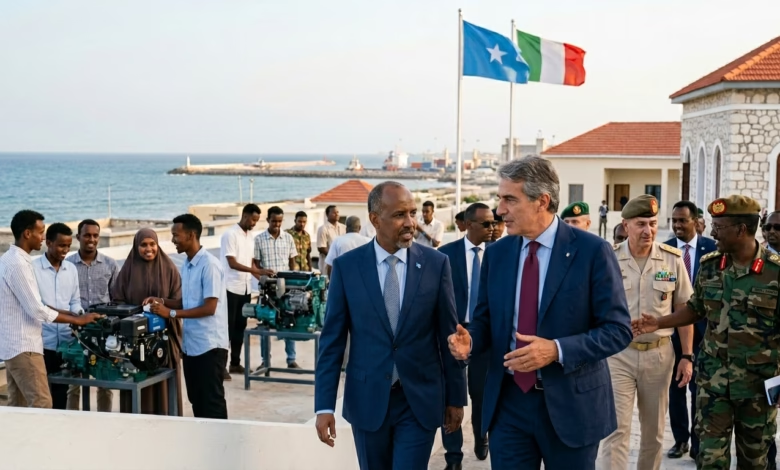
Italian Presence In Mogadishu During The Last Two Decades Was Not Merely A Protocol Diplomatic Representation, But Concentrated Intensely In The Lifeline Of The Security And Military Sector; Where Rome Took Over The Leadership Of The “European Union Training Mission In Somalia” (EUTM Somalia). The Book Explains How Italian Military Cadres Contributed To Rebuilding And Training The Core Of The Somali National Army And Federal Police Organs, To Enable Them To Fill The Critical Security Vacuum Left Behind By The Gradual Withdrawal Of African Peacekeeping Forces. This Security Cooperation Manifested As A Fundamental Pillar For Protecting International Maritime Navigation Off The Coasts Of The Horn Of Africa From Sea Pirates And Remnants Of Extremist Organizations, Making Somali Stability A Direct National Security Interest For Rome, Linked To The Boundaries Of The Extended Mediterranean.
On The Economic And Development Front, The Conclusion Analyzes The Radical Transformation In The Philosophy Of Italian Support; As Giant, Suspicious Aid Funds That Stamped The 1980s Disappeared Forever, Replaced By Flexible, Directed Development Programs Via The “Italian Agency For Development Cooperation” (AICS). These Modern Efforts Concentrated On Vital Sectors Directly Touching The Somali Citizen’s Life, Such As Re-Qualifying The Agricultural And Livestock Sector, And Supporting Local Universities, Led By The “Somali National University” Whose Italian-Speaking Departments Re-Awoke. At the Same Time, Italian Companies Began Building Promising Investment Partnerships With A New Generation Of Somali Entrepreneurs, Specifically From Members Of The Diaspora Who Returned From Italy And Europe Carrying Reciprocal Capital and Experiences That Formed A Living Human And Cultural Bridge Between Both Banks Of The Mediterranean And The Horn Of Africa.
The Authors Conclude This Solid Work With A Forward-Looking Vision Confirming That Writing “Political History” Between Italy And Somalia Has Not Concluded Its Chapters Yet, But Is Opening A New Page Characterized By Equality And Mutual Respect For Sovereignty. Despite Enormous, Continuing Challenges Confronting The Federal Somali State — From Latent Security Threats to Harsh Climate Changes Affecting Its Food Security — Mogadishu Today Is No Longer That Isolated Or Failed State It Was In The 1990s, But Has Become An Actor Searching For Its Place In The International System. Similarly, Rome Realized That Its Historical Legacy In Somalia, For All Its Flaws and Successes, Remains A Winning Card Granting It A Relative Advantage For Understanding The Intricacies Of This Crucial Region Of The World, On Condition That This Relationship Remains Governed By A Forward-Looking Vision, Benefiting From Past Lessons Without Remaining Captive To Them.