
The Silent Weapon And The Geography Of Exploding Hunger
In A World That Claims Technological Evolution And Cyber Leaps, The “Global Report On Food Crises 2026” Comes To Slap The Global Human Conscience, Reminding Us That Hunger Is Not Merely An Absence Of Resources, But Rather A Direct And Horrific Outcome Of The Lack Of International Political Will And The Ferocity Of Armed Conflicts. This Report, Which Extinguishes Its Tenth Candle By Issuing Its Tenth Edition Jointly Produced By The Food And Agriculture Organization Of The United Nations (FAO) And The World Food Programme (WFP), With Support From The European Union, Is Considered The Most Prominent Global Reference Document For Diagnosing The Tragic Reality Of Transcontinental Food Security. However, This Particular Edition Does Not Resemble Its Predecessors; It Carries Within It A Terrifying Omen Summarized By The Secretary-General Of The United Nations, António Guterres, In His Fiery Foreword To The Report, When He Declared With Shocking Clarity: “Hunger Is Increasingly Being Used As A Weapon In Wars.”
The Importance Of The Report Stems From The Fact That It Does Not Represent The Viewpoint Of A Single Organization Or An Institution With A Specific Ideological Orientation, But Rather Embodied The Pinnacle Of Multilateral Cooperation Through The “Global Network Against Food Crises” (GNAFC), Where Dozens Of International Partners And Technical Experts Participate In Its Formulation And Critical Review To Provide A Unified, Documented, And Evidence-Based Analysis. This Joint Analysis, Derived From The “Integrated Food Security Phase Classification” (IPC) And The Cadre Harmonisé (CH), Represents An Objective Compass Amidst The Rubble Of Media Misinformation And The Absence Of Data, Giving It Exceptional Credibility In Both Academic And Journalistic Circles Alike.
The Study Opens Its Chapters By Monitoring The Geography Of Acute Hunger And The Intense Concentration Of Masses Of People Standing On The Brink Of The Abyss. The Figures Show That Global Food Crises Have Become Highly Concentrated Geographically; As Two-Thirds Of The Total Number Of People Facing Acute and High Levels Of Food Insecurity Globally Are Accounted For By Only Ten Countries. The Picture Becomes Even Darker Realizing That Only Three Countries, Namely Nigeria, The Democratic Republic Of The Congo, And Sudan, Alone Represent Nearly One-Third Of This Appalling Global Total. This Unjust Distribution Of Suffering Demonstrates That The Collapse Of Food Systems Is Closely Linked To The Collapse Of The Nation-State Or Its Entry Into The Furnace Of Extended And Chronic Civil Wars, Making The Sub-Saharan Africa Region And Part Of The Middle East Raging Hotspots That Demand Urgent Intervention To Protect Lives And Livelihoods.
In A Comparative Reading Of The 2025 Data And Its Peak Relative To Previous Years, The Report Records The Entry Of The Republic Of South Sudan Into The List Of The Top Ten Food Crises In The World, Driven By The Effects Of Sustained Conflict And The Catastrophic Economic Repercussions Resulting From The Influx Of Those Fleeing The War In Neighboring Sudan. Although The Report Indicates A Relative Improvement In Some Regions Such As Bangladesh, Niger, And Parts Of Nigeria And Sudan, In Addition To The Syrian Arab Republic, As A Result Of Some Temporary Field Stability Or Improved Agricultural Seasons, These Slight Improvements Were Almost Entirely Swallowed Up By The Severe And Widespread Deterioration On Other Fronts. Afghanistan, The Democratic Republic Of The Congo, Myanmar, And Zimbabwe Witnessed A Dramatic Decline That Led Millions More Into Critical Levels Of Hunger.
The Most Terrifying Feature In The Contemporary Food Landscape Of 2025 Is The Re-emergence Of Full-Fledged Open Famine In Two Regions Affected By Armed Conflicts In The Same Year, Which UN Experts Describe As An Unprecedented Development In The Modern History Of Humanitarian Relief. Areas In The Gaza Strip In Palestine And In The States Of Darfur And Kordofan In Sudan Have Been Officially Classified As Regions Experiencing Tragic Famine Conditions, Where The Population Lives In “Phase 5” (IPC Phase 5), Which Is The Stage Of Absolute Humanitarian Catastrophe. Despite The Announcement Of A Slight Decrease In The Total Numbers Of Those Classified In This Phase In Gaza And Sudan By The End Of The Year Compared To The Peak Of The Crisis, The Situation Remains Extremely Fragile And Hanging By A Thin Thread Represented By The Continuity And Expansion Of The Scope Of Humanitarian Aid And Commercial Access.
Thus, It Reveals How Armed Conflict Transforms From A Military Confrontation On The Frontlines Into A Silent Weapon To Cut Off Livelihoods And Destroy Markets. This Report, In Its Essence, Is Not Merely A Compilation Of Statistics, But Rather An International Indictment Against Global Political Failure, And An Urgent Call To International Leaders To Summon The Political Will Capable Of Stopping Wars That Consume Everything, And To Provide Sustainable Funding For Food Analysis Systems That Represent The Safety Valve And Early Warning Before The Occurrence Of The Greater Catastrophe.
The Drivers Of The Triple Hell And The Phenomenon Of Humanitarian Data Drought
The Global Report On Food Crises 2026 Delves Deep Into Deconstructing The Infrastructure Of The Humanitarian Tragedy, Moving Beyond The Direct Statistical Surface To Paint The Features Of What Can Be Called “The Triple Hell”; Which Is The Organic And Destructive Intersection Between Three Main Drivers Reshaping The Maps Of Human Misery: Armed Conflicts, Economic Shocks, And Climate Extremes. These Drivers Do Not Work In Isolation, But Rather Intersect In A Vicious Cycle In Which Each Element Catalyzes The Other, Leaving Fragile Communities In A State Of Utter Exhaustion And Structural Inability To Recover, Threatening To Undermine Decades Of Rural Development And Poverty Alleviation Efforts.
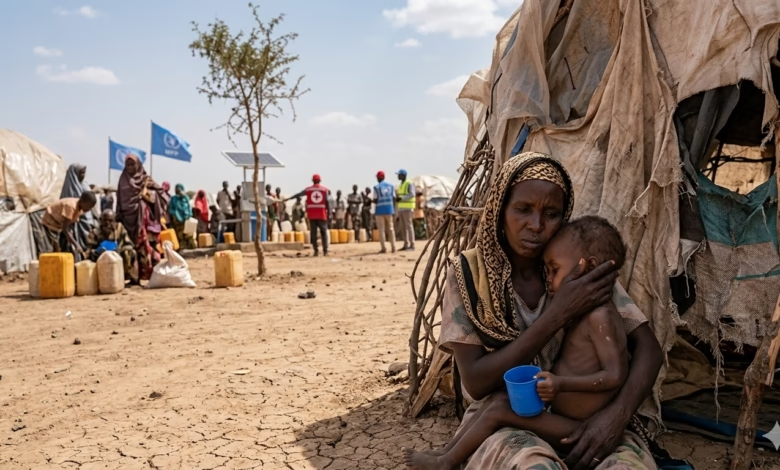
Armed Conflict Remains, Without Dispute, The Largest Horse In The Chariot Of Death And Hunger. It Is The Primary Driver That Has Pushed Millions Of Human Beings To Acute Levels Of Food Insecurity, Causing Systematic Destruction Of Local Markets, Severing Trade Routes, And Ravaging Agricultural Lands And Vital Irrigation Networks. Even More Bitter Is What The Report Monitors Regarding The Direct Targeting Of Livelihoods; As Livestock And Crops Turn Into Spoils Of War Or Tools For Military Pressure, Forcing Farmers And Pastoralists To Flee For Their Lives, Transforming From Food Producers Into Displaced Persons Who Rely Entirely On Humanitarian Crumbs In Refugee Camps. The Matter Does Not Stop At The Borders Of Flaming Frontlines, But Rather Extending The Conflict To Disrupt The Flow Of Relief Aid Itself, As Military Blockades Are Imposed And Bureaucratic And Security Obstacles Are Placed Before International Organizations, Barring Food From Reaching Hungry Mouths In A Scene Reflecting An Absolute Absence Of War Ethics And International Laws.
In Parallel With The Clashing Of Weapons, Economic Shocks Emerge As A Silent Killer That Sometimes Exceeds The Direct Impact Of Bullets. The Report Highlights The Rampant Inflation In Food Prices Locally, Driven By The Collapse Of National Currencies In Countries Suffering From Crises, And The Insane Rise In The Costs Of Agricultural Inputs Such as Fertilizers And Fuel. This Economic Deterioration Led To The Crushing Of The Purchasing Power Of Poor Households; The Problem In Many Cases Was No Longer The Unavailability Of Food In The Markets, But Rather The Absolute Inability To Pay Its Price. This Economic Crisis Is Exacerbated As A Result Of The Stifling Sovereign Debts Of Developing Countries, And Continual Disruptions In Global Supply Chains That Have Not Fully Recovered From The Repercussions Of Major Geopolitical Crises, Making Government Social Safety Networks Completely Incapable Of Absorbing Shocks Or Providing Support To The Most Vulnerable Groups.
As For The Third Side In This Catastrophic Triangle, It Is Climate Change And Extreme Weather Phenomena That Are No Longer Merely Predictions For The Future, But A Lived Daily Reality Wreaking Havoc On Food Systems. The Report Documents How Long And Extended Drought Waves, Often Followed By Unprecedented And Torrential Floods, Led To The Entire Destruction Of Harvest Seasons in Vast Areas Of Eastern And Southern Africa And Parts Of Asia And Latin America. The “El Niño” Climate Phenomenon, Which Struck Powerfully During Recent Periods, Left Its Heavy Fingerprints On Smallholder Farmers Who Depend On Seasonal Rains, Causing The Death Of Millions Of Livestock And The Drying Of Wells, Driving Entire Pastoral And Agricultural Communities Toward The Brink Of Food Perishability Without Any Internal Capacity For Adaptation Or Resilience.
Amidst This Complex Scene, The Report Detonates A Dangerous Methodological And Knowledge Bombshell Related To What Can Be Described As “Humanitarian Data Drought” Or The Crisis Of Information Vacuum. The Authors Of The Report Launch A Resounding Cry Of Warning Regarding The Presence Of Massive Gaps In The Available Data Concerning Food Security And Malnutrition In Several Of The World’s Hottest And Most Affected Hotspots. Entire Countries And Regions Are Classified As “Major Crises” But Lack Modern, Reliable Data Supported By The Integrated Food Security Phase Classification (IPC) System, Making It Nearly Impossible To Include Their True Numbers In Total Global Calculations. This Forced Absence Of Data Does Not Reflect Technical Laxity, But Is A Direct Result Of Local Authorities Or Conflicting Parties Refusing To Allow Field Assessment Teams, Or Due To The Extreme Security Hazards That Threaten The Lives Of Researchers And Analysts.
This Information Vacuum Represents A Catastrophe In Itself; It Means That Millions Of Hungry People Suffer And Die In The Shadows, Away From The Eyes Of International Relief Radars and Humanitarian Funding. Without Accurate And Updated Data, Humanitarian Work Turns Into A Sort Of Guesswork, Depriving Decision-Makers Of The Ability To Direct Scarce Resources To The Areas Of Greatest Need Accurately And In A Timely Manner. The Report Emphasizes That The Early Warning System For Food Security Is Threatened With Collapse In Some Regions Due To This Systematic Suppression Of Information, Requiring Diplomatic And Political International Pressure To Guarantee The Freedom Of Movement For Assessment Teams, And Exerting Redoubled Efforts And Generous Investments To Support National And Local Data Collection Systems And Develop Remote Sensing Technologies As Alternative Solutions, To Prevent Silent Hunger Hotspots From Turning Into Unmarked Mass Graves.
The Tragedy Of Wasting Bodies And The Regional Anatomy Of Hotspots Of Suffering
The Global Report On Food Crises 2026 Shifts From Tracking Major Human kine And The Movement Of Geopolitical And Climate Drivers To Delving Into The Finest And Most Painful Humanitarian Details; As It Sheds A Revealing And Scorching Light On The Acute Malnutrition Crisis Devouring The Bodies Of The Most Vulnerable And Fragile Groups In Societies, And By This We Mean Children Under The Age Of Five And Pregnant And Lactating Mothers. This Part Of The Report Does Not Talk About The Shortage Of Food Meals Merely, But Rather Documents A Process Of Systematic Biological Destruction Of The Next Generation, Where Acute Hunger And Lack Of Essential Nutrients Leave Indelible Scars On The Physical and Mental Structure Of Millions, Threatening To Produce Entire Generations Doomed To Permanent Cognitive And Physical Weakness, Which Represents A Genuine Assassination Of The Future Of Development In These Countries.
Medical Figures And Analyses Embedded In The Report Show That Rates Of Wasting And Severe Acute Malnutrition Have Reached Unprecedented Record Levels In Major Crisis Regions, Where Children’s Bodies Transform Into Wasting Skeletons Losing The Ability To Resist Common Diseases Like Diarrhea, Cholera, And Measles. This Humanitarian Disaster Is Not Linked Only To The Scarcity Of Food As A Source Of Thermal Energy, But Also Stems From The Total Collapse Of Safe Drinking Water And Sanitation Networks, And The Destruction Of Basic Health Centers By Military Operations. This Catastrophic Intersection Leads To Children Falling Into A Vicious Cycle; As Hunger Weakens Their Immunity, And Contaminated Water Infects Them With Diseases That Prevent Their Feeble Bodies From Absorbing The Little Remaining Of Essential Nutrients, Leading Ultimately To A Terrifying Increase in Mortality Rates Before Specialized Aid Can Arrive.
In Its Detailed Regional Anatomy Of The Most Affected Areas Around The World, The Report Paints A Dismal Picture Beginning From The Continent Of Africa, Specifically The Eastern Africa Region, The Horn Of Africa, And The Sahel Region, Where Internal Displacement Crises Intertwine With The Absence Of Political Stability And Successive Environmental Shocks. In The Democratic Republic Of The Congo, Nigeria, And Sudan, The Report Describes The Situation As Approaching A Point Of Total Collapse, Where Extended Civil Wars And Tribal Conflicts Have Isolated Entire Regions From Any Commercial Or Humanitarian Supplies, Turning Besieged Cities And Villages Into Open Prisons Where Hunger Kills Their Residents Daily. In The South Of The Continent, Historical Drought Waves Associated With The “El Niño” Phenomenon Caused The Transformation of Vast Agricultural Spaces That Were Considered An Regional Food Basket Into Arid Lands, Placing Countries Like Zimbabwe, Zambia, And Malawi In A State Of Maximum Food Emergency.
The Scene Is No Less Tragic In The Middle East And Asia Region; As The Report Focuses On The Catastrophic Situation In The Gaza Strip In Palestine, Where Intense Military Operations And The Continuous Total Blockade Led To The Creation Of An Unprecedented Food Security Crisis Historically In Terms Of Speed And Severity, Placing Nearly The Entire Population At Critical Or Catastrophic Levels Of Immediate Food Insecurity. In Yemen And The Syrian Arab Republic, And Despite Some Slight Decline In The Intensity Of Direct Military Battles On Some Fronts, Long Years Of War Left The Economy In A State Of Total Paralysis, And Led To The Collapse Of The Local Currency And The Loss Of Millions of Families’ Livelihoods, Making Securing A Single Meal Daily A Formidable Challenge For The Overwhelming Majority. In Asia, Afghanistan And Myanmar Stand Out As Extended Crises In Which Sharp Political Transitions And International Isolation Intersect With Recurrent Natural Disasters, Depriving Millions Of Women And Children From Accessing Food And Basic Healthcare.
The Geography Of Hunger Is Not Simply Scattered Points On The Map, But A Connected Web Of Human Suffering That Transcends The Political Borders Of States Via Waves Of Mass Migration And Cross-Border Asylum. The Report Explains That Countries Neighboring Major Crises, Which Often Suffer Themselves From Economic Crises And Structural Fragility, Find Themselves Suddenly Facing Massive Human Influxes That Demand The Sharing Of Scarce Water, Food, And Service Resources, Threatening To Transmit The Contagion Of Food And Social Instability Into New Regions That Were Considered Relatively Safe, Reaffirming The Necessity Of Formulating Regional, Comprehensive Relief And Development Strategies Not Confined To Treating Raging Hotspots Alone, But Extending To Protect And Reinforce The Capacity of Host Communities To Endure.
Humanitarian Funding Declines And The Widening Gap Between Needs And Devastation
The Global Report On Food Crises 2026 Moves To The Most Critical And Sensitive Box In The International System, Placing Its Hand On The Bleeding Wound Of Relief Mechanisms Via Deconstructing The Dilemma Of Humanitarian Funding And The Sharp Funding Declines Faced By UN And International Organizations. At A Time When Hunger Indicators Are Escalating And The Footprint Of Human Misery Is Expanding To Unprecedented Levels, The Report Registers A Tragic Paradox and Glaring Contradiction Represented By The Dramatic and Widespread Continual Decline In The Volume Of Financial Aid And Grants Provided By Major Donor Countries. This Sharp Reduction In Support Does Not Represent A Mere Deficit In Budgets, But Rather Translates Directly On The Ground Into Painful And Harsh Decisions That Humanitarian Organizations Are Forced To Make, Including Scaling Back Monthly Food Rations For Millions Of Beneficiaries Or Cutting Off Aid Entirely From Categories That Were Classified Until Recently As Being In Extreme Need.
The Dimensions Of This Suffocating Funding Crisis Manifest In The Widening Of The Massive Gap Between The Actual Cost Of The Required Humanitarian Response And The Actual Funding Available In The Coffers Of International Agencies. The Financial Analysis Of The Report Explains That Humanitarian Response Plans For Food Security In The Majority Of Flaming Crisis Hotspots Obtained Only A Tiny Fraction Of The Target Funding, Leading To A Near-Total Paralysis In Long-Term Preventative And Development Programs That Aim To Build Resilience In The Face Of Future Shocks. In This Context, Programs To Support Smallholder Farmers With Seeds, Provide Fodder For Livestock, And Rehabilitate Small Irrigation Canals Vanished, Restricting Interventions To Emergency, Temporary Relief That Neither Fatten Nor Satiate Hunger, Transforming Humanitarian Aid From A Tool For Recovery And Exiting The Cycle Of Poverty Into Mere Temporary Painkillers For Slow Death.
The Report Attributes This Decline In International Funding To A Combination Of Intertwined Political And Economic Factors On The Global Arena, Where Internal Economic Crises And Inflation In Traditional Donor Countries, Along With The Increasing Rise Of Political Currents Inwardly Focused, Led To Reducing Foreign Aid Budgets And Directing Spending Domestically. In Addition, The Continuation Of Major Extended Wars Has Drained The Largest Share Of Financial Resources And Global Political Attention, Settling In Shadows of Neglect On Other Major Humanitarian And Food Crises In Africa And Parts Of Latin America, Which Have Become Internationally Classified As “Forgotten Crises” Regrettably Despite The Huge Numbers of Hungry People Therein. This Unequal Distribution Of International Financial Resources, Based On Geopolitical Considerations Rather Than Pure Humanitarian Needs, Threatens To Undermine The Credibility of The Multilateral Humanitarian System Whole.
The Danger Of Reduced Funding Does Not Stop At The Bounds Of Decreasing The Quantities Of Distributed Food, But Extends To Strike At The Core Of The Institutional Structures And Complex Logistical Systems Upon Which Global Relief Work Depends. The Report Reveals How The Sharp Shortage Of Resources Prevents Organizations From Investing In Early Warning Systems, And Updating Technologies For Monitoring And Analyzing Food Security Data In The Field, And Deprives Them Of The Ability To Maintain Strategic Stocks Of Food And Medical Supplies In Regional Warehouses Close To Danger Areas. This Enforced Logistical Weakness Makes The International Response Slow and Always Lagging Behind The Pace Of Events, Such That Actual Movements Do Not Begin Until After Pictures Of Famine And Severe Acute Malnutrition Top Television Screens And Social Media Platforms, A Timing At Which Thousands Have Passed Away Already.
The Cost Of Inaction And Withholding Immediate Funding Far Outweighs The Cost Of Early Intervention. Continuation In This Funding Decline Will Mean Inevitably The Collapse Of The Last Lines Of Defense For Millions of Human Beings Living In “Phase 4” Of Food Security Classifications, Pushing Them Forcefully Toward The Catastrophic “Phase 5” And Widespread Famine. This Axis Concludes By Stressing The Necessity Of Effecting A Revolution In Humanitarian Funding Mechanisms, By Moving From The Model Of Volatile Voluntary Grants To Obligatory Strategic Partnerships Involving The Private Sector And International Financial Institutions, With Focus Placed On Investing In Sustainable Rural Development That Empowers Communities to Produce Their Own Food, As The Only Way To Break This Vicious Cycle Of Destitution And Humiliating Waiting Upon The Thresholds Of International Relief.
The Horizon Of Rescue And Deconstructing The Structure Of Food Dependency
The Global Report On Food Crises 2026 Arrives In Its Final Chapters At The Station Of Concluding Observations And The Formulation Of Strategic Approaches For The Future, Moving Beyond The Language Of Lamenting Catastrophic Figures, Destructive Drivers, And Limited Funding, To Place Before The International Community A Roadmap Clear In Features And Executable If Genuine Political Will Is Provided. The Report Stresses That Exiting This Vicious, Perpetual Cycle Of Recurrent Food Crises Requires A Radical Shift In The Philosophy Of International Action; As It Is No Longer Acceptable Nor Feasible To Continue The Arbitrary Separation Between Urgent Humanitarian Interventions And Long-Term Development Projects. Food Systems In Fragile And Developing Nations Need Comprehensive Structural Rebuilding That Enhances Their Internal Capacity For Resilience In The Face Of Multiple, Sudden Shocks, Instead Of Keeping These Communities Prisoner To Absolute Dependency On Fragile Global Supply Chains And Fluctuating Foreign Aid.
The First Pillar In This Strategic Vision Manifests In The Necessity of Intensive, Sustainable Investment In Smallholder Farmers, Local Producers, And Pastoralist Communities, Who Represent The Backbone Of Food Security In The Most Affected Rural Areas. The Report Calls For Equipping These Producers With Modern Agricultural Technologies Resistant To Climate Transformations, Such As Smart Seeds Capable Of Withstanding Extended Drought, Water-Efficient Drip Irrigation Networks, And Technologies For Harvesting And Crop Storage That Reduce Post-Harvest Loss And Waste. Empowering Local Communities To Produce Their Essential Food And Achieve A Type Of Relative Self-Sufficiency Is The First And Strongest Line Of Defense To Protect Lives And Livelihoods When Conflicts Erupt Or Natural Disasters Strike, Which Contributes To Deconstructing The Structure Of Chronic Poverty In Rural Regions.
As For The Second Pillar, It Focuses On Reforming And Developing National Social Protection Systems And Food Security Early Warnings. The Report Explains That Governments in Crisis-Prone Countries Are Demanded To Build Flexible Social Safety Nets Capable Of Rapid Expansion, Such As Conditional And Unconditional Cash Transfer Programs, Climate Risk Insurance For Farmers, And School Meals For Children In Poor Areas. These Institutional Tools Grant Households The Capacity To Absorb Economic And Environmental Shocks Immediately Upon Exposing And Prevent The Collapse Of Their Purchasing Power, Which Obviates Them From Resorting To Negative And Inequitable Coping Mechanisms Like Selling Productive Assets Or Pulling Children Out Of Schools To Support Household Income.
In Concluding This Widespread Analytical Review of The 2026 Report, It Becomes Evident That The Issue Is No Longer An Issue Of Global Food Scarcity, For The Earth Produces Enough For Humanity And More, But Rather An Issue Of Justice, Distribution, And Absent Global Political Will. This Report, With Its Methodological Rigor And Deep Analysis, Represents The Most Prominent Document That Must Be Placed Upon The Tables Of Decision-Makers In Climate Summits, The UN Security Council, And Major Financial Institutions. The Report Has Rung The Alarm Bells In The Loudest Possible Voice, Demonstrating That Continuing On The Current Path Will Mean Inevitably The Death Of Millions More Human Beings In Silence And Under The Weight of The Silent Weapon Of Hunger; Placing The Entire World Before A Fateful Ethical, Humanitarian, And Developmental Test Whose Obligations Cannot Be Escaped.