
Talking About Education In Any Nation Is In Its Essence Talking About Shaping Its Identity, Forging Its Collective Mind, And Drawing The Features Of Its Future. In Sudan, That Vast And Multicultural Country, The Path Of Education Takes An Epic Character Where Political, Social, And Economic Transformations Intertwine. From This Strategic Standpoint, We Dive Today Into A Detailed And Narrative Journalistic Review Of A Highly Important Book Titled “Stations In The Path Of Education In Sudan”. This Valuable Book, Authored By Dr. Omer Mohammed Al-Ammas And Dr. Balla Ahmed Bilal, And Published In The Year 2014, Does Not Merely Present A Dry Historical Record, But Offers A Deep Analysis Aimed At Tracing The Steps Of The Educational Journey In Sudan Since The Early Beginnings Of Its Practice, Passing Through The Most Important Eras In Which It Was Active Or Neglected According To The Educational Policies That Accompanied It.
The Spiritual Dawn: The Khalwa As The First Nucleus For Shaping The Sudanese Conscience
The Authors Take Us Back To The Deep Roots, Where There Were No Concrete Structures Nor Imported Curricula, But The “Khalwa” Was The First Educational And Spiritual Institution. The Two Researchers Do Not Doubt At All That Education In The Khalwas Represented A Necessary Nucleus In The Era Of The Entry Of Islam Into Sudan. This Institution Was Adopted By A Group Of Serious Muslims Dedicated To Establishing The Foundations Of Islamic Teachings With All The Values, Ethics, And Behavior They Contain, And Above All, The Memorization Of The Holy Quran And The Spreading Of The Honorable Prophetic Sunnah.
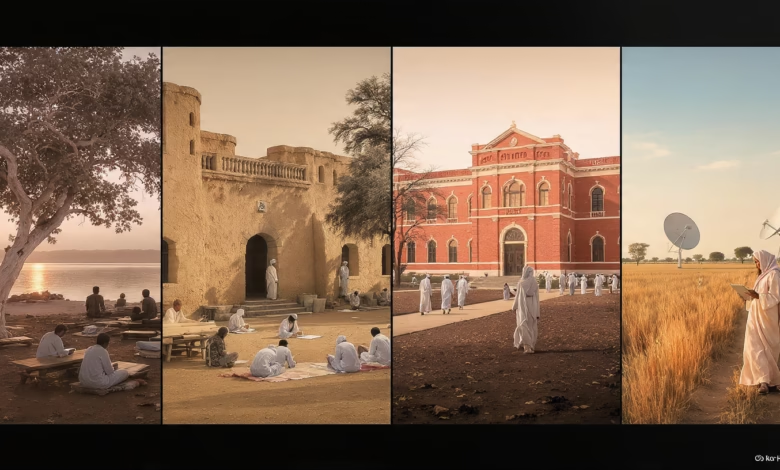
The Khalwa Was Not Just A Place For Random Gathering, But It Was An Established And Organized System Carrying Higher Goals And Values, And Having Specific Methods In Teaching And Transferring Knowledge. This Ancient System Relied On Dictation, The Memorization Of The Holy Quran, Alongside Teaching Parts Of The Prophetic Biography, And The Principles Of Reading And Writing. If We Look With Today’s Standards At Those Means, We Might Describe Them As Primitive, As They Included Wooden Boards, Writing On The Ground, And Gradual Direct Dictation. However, These Simple Means, Which Accompanied Learning To Write And Read The Alphabet Gradually Up To Writing Verses, Perfecting Their Recitation, And Vowelizing Them With Diacritics, Left An Indelible Intellectual And Social Impact.
Time Has Proven That This Modest Spot Illuminated By The Fire Of The Quran Graduated Men Among The Best Of Memorizing Scholars, Who Did Not Settle For Staying Inside The Walls Of The Khalwa, But Set Off To Contribute To The Processes Of Education And Transferring Religious Knowledge On Wider Scales, Becoming Imams Of Mosques, Jurists In Religion, And Social Reformers Leading The First Enlightenment Movement In The Sudanese Society.
From The Womb Of These Khalwas And Mosque Schools, The Modern “School” Emerged As A Product Of Historical And Social Necessity. With The Expansion Of The Scope Of Education, The Need Arose To Present New Educational Subjects Requiring Greater Discipline And Organization, To Include Diverse Knowledge Alongside The Sciences Of The Holy Quran. Here The School Emerged With Its Modern Pillars Represented By The Teacher Who Transfers The Subject, The Learner Whose Definition Shifted From A Mere Passive Recipient To Become The Center Of The Educational Process And The Representative Of The Society’s Characteristics, Culture, And Hopes, And The Educational Content Or Curriculum, Down To The School Textbook Which Became The Constant Companion Of The Learner. This Development Necessitated Dividing Study Time Into Scheduled Periods, Defining Multiple Educational Stages, And Establishing An Organized Administrative Pyramid Specifying The Responsibilities Of School Administration And Methods Of Measurement And Evaluation Such As Exams Which Became The Most Important Standard For Evaluating Success.
The Stumbling Modernist Intervention: The Shock Of The Turco-Egyptian Era
The Book Then Takes Us To A Decisive Historical Turning Point, Which Is The Period Of The Turco-Egyptian Rule. With The Establishment Of This Rule, The Turnout Of The Sudanese To Al-Azhar Al-Sharif In Egypt Increased, Until A Special Pavilion Was Established For Them Similar To Other Islamic Countries, Known As The “Sennari Pavilion” In The Year 1846, And It Received A Full Subsidy From The Egyptian Government.
But The Scene Was Not Always Rosy. The Authors Recount How Khedive Abbas, Whose Rule Extended Between The Years 1848 And 1854, Was Famous For His Hatred Of Education And The Failure To Adopt A Positive Educational Policy, Whether In Egypt Or Sudan, Which Afflicted Sudan With A Noticeable Administrative And Educational Stagnation. Among The Strange Historical Paradoxes Recorded By The Book Is That The Breakthrough Came From The Womb Of Punishment; The Opportunity Of Exiling And Banishing Rifa’a Rafi’ Al-Tahtawi From Egypt Was A Direct Cause In Establishing The Khartoum Primary School, Where He Was Appointed As Its Principal In The Year 1853.
Al-Tahtawi Planned For This School To Follow The Path Of Its Counterparts Among Egyptian Schools, And The Sons Of Tribal Leaders Were Absorbed From Scattered Regions Such As Dongola, Khartoum, And Kassala. The School Operated With A Boarding System For Students’ Residence, And Its Study Duration Was Three Years, Which Were Known At The Time As The Minor Or Council Schools. Admission Was Restricted To The Age Group Between Seven And Twelve, And The School Faced In Its Beginnings A Scarcity In The Numbers Of Students Due To The Popular Stance Rejecting Schools At That Time, Due To The Sudanese Belief In Their Corruption And Distance From Sound Religious Upbringing. Despite That, Basic Courses Were Taught That Included Reading, Writing, The Arabic Language, And Mathematics.
With The Arrival Of Khedive Ismail, Who Ruled From 1863 To 1879, Education Witnessed A Clearer Interest. At The Beginning Of His Reign, Primary Schools Were Opened In Dongola, Berber, Khartoum, Kordofan, And Kassala, Followed By The Opening Of Two Schools In Suakin And Sennar. These Schools Reported Directly To The Egyptian Ministry Of Education And Applied Its Curriculum. The Book Also Records An Important Shift Towards Vocational And Industrial Education, Where Two Vocational Schools Were Established In Khartoum And Kassala In The Year 1870 To Graduate Technicians To Work In Telegraph Lines. In Parallel With That, A Unique School Emerged In Suakin Dedicated To The Children Of Slaves Liberated By The Government, Becoming The First School For A Specific Category In The Country. The Matter Was Not Limited To That, But Teams Were Organized In The Fields Of Medicine And Pharmacy And Craftsmen Were Trained In The Steamboats Department.
Alongside This Governmental Effort, The Book Points To A Highly Important Phenomenon In That Era, Which Is The Spread Of Missionary Schools. Missions Were Allowed To Open Churches And Schools Attached To Them In Cities Like Khartoum, Omdurman, Sennar, And Others. Although The Curricula Included Reading, Writing, Mathematics, And Music, The Religious Content (The Bible) Was Strongly Present, And In This Context, Father Daniel Comboni Emerged, Who Founded The Famous Comboni Schools In The Year 1857.
The Mahdist Rupture And The Machinations Of The Condominium Rule
The Winds Of Radical Change Soon Swept Sudan With The Outbreak Of The Mahdist Revolution. The Book Documents How This Political And Ideological Transformation Led To The Complete Suspension Of Missionary Activity And The Closing Of Its Schools, And At The Same Time, The Modern Education Established During The Turco-Egyptian Rule Stopped. The Mahdist Revolution Proceeded To Establish The Foundations Of Strict Religious Education, So The Khalwa Returned To Be The Sole Source Of Education In Sudan, And The Matter Was Limited To Religious Education In A Limited Number Of Khalwas For The Memorization Of The Quran Until The Fall Of Omdurman In The Year 1898.
With The Fall Of The Mahdist State And The Advent Of The Condominium (Anglo-Egyptian) Rule In The Year 1899, The Path Of Education In Sudan Entered A New Tunnel Governed By Security And Colonial Obsessions. The New Ruling System Adopted The Process Of Developing Education Theoretically, Yet It Looked With Suspicion At The Religious Education Left By The Mahdiyah And Worked To Reduce It Gradually. The Colonial Administration Proceeded With A Policy Of Deliberate Restriction And Reducing The Numbers Of Students Enrolled In Schools, Based On A Political View Aimed At Curbing The Nationalist Movement; As The Colonizer Realized That Educating Large Numbers Of The People Would Inevitably Lead To Creating An Educated Class That Unites To Undermine The Foreign Ruling System.
Therefore, The Direction Of Education Was Limited To Graduating Limited Numbers To Meet The State’s Functional Needs. The Book Clearly Presents The Goals Of Education As Formulated By The Director Of The Department Of Knowledge (James Currie) In The Year 1900, Which Were Summarized In: Creating A Class Of Skilled Craftsmen, Spreading A Simple Education That Helps People Understand The Rules Of The State Apparatus And Especially The Judiciary, Training A Class To Fill Minor Governmental Jobs, And Training Sudanese To Succeed The Egyptians In The Army.
To Tighten Control, The Colonial Administration Encouraged The “Fakis” In The Khalwas To Introduce The Subject Of Mathematics In Exchange For Monthly Salaries, Making The System Dual: Secular Education In Kuttabs, And Religious Education In Subsidized Khalwas, A System Whose Traces Still Extend To Today. On The Other Hand, Christian Missions Became Active And Expanded Until They Reached The Stage Of Absorbing The Children Of Muslims, Which Led To Widespread Social Apprehensions And Fears, Compelling The Authorities To Establish Strict Inspection Regulations Requiring The Consent Of Parents Before Teaching Christian Religious Sciences To Muslim Students.
These Intertwined Interactions, From Khalwas Spreading Light In Remote Villages, To Turkish Schools That Tried To Plant The Seed Of Modernization, Down To Colonial Policies That Attempted To Mold The Sudanese Mind To Serve The Administration.
The Gordon Memorial Edifice: Education As A Tool For Control And Employment
We Find Ourselves Before A Historical Paradox Embodied In The Establishment Of “Gordon Memorial College”. After The Battle Of Omdurman, And Under The Weight Of The Fierce Attack Launched By The British Press Against Lord Kitchener Due To His Excessive Cruelty In Treating The Supporters Of The Mahdi And His Exhumation Of His Grave, The British Administration Sought To Polish Its Image And Immortalize The Memory Of General Gordon. The Goal Of Establishing This College Was Not The Pure Cognitive Advancement Of The Sudanese, But The Colonial Justifications Rested On A Conviction Stating That The Sudanese Would Not Be Able To Participate In The Administration Or Form A Strong Army Without A Minimum Of Directed Education.
The Donations Collected In Britain In The Name Of Gordon College Contributed To Laying The Foundation Stone For A New Educational Structure In The Capital And The States, Where Primary Schools Were Established In Omdurman And Khartoum In The Years 1900 And 1901, And A School For Industry, Alongside A College For Teachers And Judges. These Four Schools Represented The Orphan Educational Structure In Sudan At The Beginning Of The Twentieth Century, And Relied On The Curricula Of Egyptian Schools, While Their Sole And Primary Purpose Was Confined To Graduating “Minor Clerks” To Fill The Need Of The Colonial Administrative Apparatus. With The Passage Of Time, The College Expanded To Include Departments For Surveying And Bacteriological Research, And Intermediate Schools Branched Out From It In Cities Like Wad Madani, Berber, And Suakin, Where The English Language Was Imposed As The Language For Study.
The Scientific Institute In Omdurman: The Fortress Of National And Religious Education In The Face Of Marginalization
In Contrast To This Governmental Education Meticulously Engineered To Serve The Colonizer, The Book Highlights The Resilience Of The Sudanese Conscience Which Did Not Surrender. The Ember Of Knowledge Was Glowing In The Homes Of Scholars Who Took It Upon Themselves To Teach Those Desiring To Receive Religious Sciences, Where Students Would Flock From Everywhere, Crossing Distances And Not Ceasing To Visit The Homes Of These Scholars. This Scattered National Effort Developed Into A Brilliant Idea Of Uniting, So In The Year 1912, And Under The Presidency Of Sheikh Abu Al-Qasim, Scholars Gathered To Teach In One Place Which Is The “Grand Omdurman Mosque”, To Enable The Student To Study More Than One Subject In A Single Day At The Hands Of A Group Of Scholars.
This Brilliant Step Was Like The Foundation Stone For The “Scientific Institute In Omdurman”. The Institute Inspired Its Structure From The Law Of Al-Azhar Al-Sharif, Dividing The Study Into Three Stages: Primary, Secondary, And Higher, The Duration Of Each Being Four Years. Despite This Ambitious Organization, The Institute Faced Deliberate Marginalization From The Colonial Administration Which Was Not Enthusiastic About Religious Education, And Students Suffered From The Scarcity Of Subsidies And The Poor Housing Environment Around The Mosque Built Of Mud.
But The Resilience Of The Sudanese Manifested In The Administration’s Reliance On The Donations Of The Citizens, And Imposing Symbolic Taxes On Livestock And Sorghum In The Omdurman Market For The Benefit Of The Institute. Demands And Reforms Followed Continuously, Especially During The Era Of Sheikh Mohammed Al-Mubarak, Who Brought Al-Azhar Graduates To Work In The Institute, Which Led To An Academic Revolution That Included Modifying The Curricula, And Teaching Modern Subjects Like Philosophy, Mathematics, Geography, And The English Language, Reaching The Equalization Of The Institute’s Certificates With Their Governmental Counterparts, And Establishing Specialized Colleges, Transforming This Edifice That Started On Mats Into The Nucleus For A Major Islamic University.
The Graduates’ General Congress: The Leap Of National Awareness And Breaching The Walls Of Colonialism
The Policy Of “Graduating Minor Clerks” Did Not Deceive The Enlightened Sudanese Mind. The Authors Pause With Reverence Before The Role Of The Educated Class In The Period From 1936 To 1946, Where National Pens Began, Through Magazines Like “Al-Fajr”, To Severely Criticize The Deficient British Educational Policy. This Awareness Reached Its Peak With The Establishment Of The “Graduates’ Congress” In The Year 1938, Which Immediately Upon Its Formation Established A Special Committee For Education That Included National Figures Graduated From Gordon College.
The Congress Submitted A Historical Memorandum To The Government In The Year 1939, Which Was Not Just A Petition Document, But Was A “Manifesto” For A Nation’s Renaissance. The Congress Demanded Directing Education Towards Islamic And Arabic Civilization And African Culture, Eradicating Illiteracy Among All Members Of The People, Allocating A Specific Age For Admission, Sending Missions Abroad, And Most Importantly: Opening Schools In South Sudan And Adopting The Arabic Language As The Language Of Communication There. When The Colonial Administration Refused To Interfere In The Missionary Policy Of The South And Refused To Expand Education, The Congress Did Not Settle For Protesting, But Rolled Up Its Sleeves And Sparked “National Education”.
With The Donations Of Honorable Citizens, The Sudanese Built Their Schools With Their Own Hands. National Intermediate Schools Spread In Omdurman, El Obeid, Atbara, And Al-Goled. In A Phenomenon Indicating The Thirst For Knowledge, 31 National Intermediate Schools Were Established In Various Parts Of The Country Between The Years 1940 And 1952. The Egyptian Government Also Contributed To Breaking The British Monopoly By Opening Its Doors To Sudanese Students For Free, And Establishing “The House Of Sudan” In Cairo For Their Residence, Which Led To A Massive Boom In The Numbers Of Sudanese Students Bypassing The Limited Umbrella Of British Education.
The Dialectic Of Education In The South: The Policy Of Isolation And Evangelization
The Book Opens A Deep Wound In The Sudanese Body When It Addresses The Educational Policy In South Sudan During The Condominium Rule. Education There Was Not A Tool For Enlightenment, But A Weapon For Geographical And Spiritual Isolation. Since The Year 1902, The Government Worked Strictly To Empty The South Of The Northern Presence To Remove Islamic And Arab Influence; It Removed The Last Northern Soldier In The Year 1917, Imposed Sunday As An Official Holiday, And Declared English As An Official Language In The Year 1918, Transforming The South Into A “Closed District”.
The British Administration Handed Over The Reins Of Education Entirely To The Educational Councils Affiliated With The Missionary Missions, And Provided Them With Generous Financial Subsidies And Reductions In Travel Fares. The Declared Goal Of These Schools, According To The “Hillelson” Report, Was To Prepare A Class Of Clan Chiefs, Graduate Local Workers, And Couriers To Serve The Police, With A Focus On Christian Upbringing.
Although The Arabic Language Was The Language Of Practical Communication Among The Multiple Tribes Of The South, By The Admission Of The Governor-General Himself In The Year 1927, The “Rejaf Conference” For Languages In The Year 1928 Settled The Matter With Decisive Arbitrary Decisions: Relying On Local Languages, Absolute Rejection Of The Use Of The Arabic Language In Education And Administration, And If Extreme Necessity Called For Its Use, It Should Be Written In Latin Letters. This Separatist Approach In Education Consecrated A Deep Cultural And Social Rift Between The Two Halves Of The Homeland, Under Which English Was Imposed As A Forced Alternative, And Opportunities For Career Promotion For Southerners Were Linked To It, In A Desperate Colonial Attempt To Eliminate The Natural Blending That Was Being Created Through Trade And Intermarriage.
The Heavy Legacy Of Independence: Engineering Identity And Managing Inherited Contradictions
We Stand Before A Defining Moment In The History Of The Sudanese Mind; The Moment Of The Evacuation Of The Colonizer And The Dawning Of The Dawn Of Independence In The Year 1956. The Nascent National State Was Not Just Receiving Administrative Institutions, But Was Inheriting An Educational And Social Legacy Burdened With Structural Contradictions That Formed The Deep Roots Of The Subsequent Political And Economic Crises. Sudan Found Itself With Its Vast Borders, Stretching From The Desert In The North To The Equatorial Forests In The South, Facing A Complex Demographic Reality In Which Races, Cultures, And Languages Multiplied. Amidst This Momentum, The Illiteracy Rate Stood As A Frightening Ghost Haunting The Ambitions Of The Modern State, As It Approached 98% Of The Total Population.
The Book Explains In A Style That Touches The Depth Of The Political Economy Of Education, How The National State Did Not Inherit A Single Educational System, But A Torn Matrix Pulled By Four Dissonant Currents: The Authentic Traditional Khalwa System, The Missionary Missions System That Planted Its Roots In The South And Some Marginal Areas, The Parallel System Of Egyptian Curricula And Coptic Schools, And Finally The National Governmental System Established By Colonialism To Serve Its Administrative Purposes.
Moreover, The State Inherited A Distorted Educational Map Reflecting The Worst Forms Of The Lack Of Distributive Justice And Structural Imbalance; Education And Its High Density Were Concentrated In The Directorates Of Khartoum, Blue Nile, Kassala, And Northern, While The South And Peripheral Areas Suffered From A Frightening Scarcity In Opportunities. This Geographical Disparity Was Supported By A Blatant Gender Disparity, Where The Opportunities Available To Males Exceeded By Many Folds Those Available To Females. These Deep Gaps Were Not Just Statistical Numbers, But Were Ticking Time Bombs Threatening The Project Of Building The National State, Managing Diversity, And Resolving Historical Conflicts, Which Compelled The Political And Educational Elites At The Time To Search For An Urgent Way Out To Re-Engineer The Path Of Education And Put It In Its Rightful Place.
The “Akrawi” Committee Of The Year 1958: The First Attempt To Unite The Sudanese Mind
Facing This Crisis-Ridden Reality, Which Does Not Fulfill The Aspirations Of A Nation Looking For A Foothold In The March Of Development And Establishing A Cohesive National Economy, The Government Sought The Help Of The UNESCO Expert “Matta Akrawi” In The Year 1958. The Meetings Of The Akrawi Committee Resulted In Strategic Decisions That Attempted To Reformulate The Educational Ladder And Unite The National Conscience. The Committee Approved The Liquidation Of Sub-Primary Schools, Making The Period Of Primary Study Six Years, And Dividing The Secondary Stage Into General And Higher.
Perhaps The Most Prominent Feature Distinguishing This Vision Is Its Attempt To Link Education With The Economy, By Dividing Higher Secondary Education Into Two Tracks: Academic, And Vocational Which Branches In Turn Into Industrial, Agricultural, And Commercial, While Localizing Agricultural Education In The Countryside And Commercial In The Cities To Advance The Requirements Of Development. In A Step With Deep Political And Sovereign Implications, The Committee Recommended Making The Arabic Language The Official Language For Study Up To The Secondary Stage, Provided That English Is Taught As A Subject Starting From The Fourth Primary Year.
The Authors Analyze The Goals Of The Akrawi Committee, Emphasizing That It Was Not Just An Educational Plan, But It Was A Geopolitical Project Aiming To Achieve More Unity And Integration Between The North And The South, Dissolve Class And Gender Differences Between Men And Women, And Align The Outputs Of Education With The Changing Economic And Administrative Conditions Of The Country. Although Some Of These Bold Proposals Were Not Implemented Until Later Periods, They Represented The First Serious Attempt To Disengage From The Legacy Of The Colonial Administration Which Relied On The Cultural “Divide And Rule” Policy.
Vocational Education: The Stalled Engine For The Wheel Of Development
The Book Skillfully Moves Us Towards One Of The Most Important Files Directly Linked To The Sudanese Political Economy; Namely Technical And Vocational Education. The Spark Of This Type Of Education Ignited Since The Era Of The Condominium Rule With The Opening Of The First Industrial School In Omdurman In The Year 1901. The Strategic Goal Of This Track Is To Equip Learners With Technical Skills, Develop The Spirit Of Innovation, And Open Horizons To Supply The Market With Skilled Labor Capable Of Pushing The Wheel Of Production In Various Aspects Of Life.
Vocational Education Branched Out To Embrace The Requirements Of Society; Thus “Industrial Education” Appeared To Develop Environmental And Modern Industries, And “Commercial Education” To Prepare Cadres In The Economic And Accounting Fields To Learn The Language Of Numbers And Computers, And “Agricultural Education” To Create An Awareness Capable Of Developing The Pastoral And Agricultural System As Happened In The Gezira And Sugar Production Projects. Also, “Feminist Education” Emerged Which Aimed To Equip Women With Skills That Directly Benefit The Economies Of The Family And Society.
Despite This Ambitious Developmental Outlook, The Book Reveals A Real Tragedy That Faced This Vital Sector. Vocational Education, By Its Nature, Needs Enormous Capabilities And Huge Budgets To Equip Workshops And Laboratories. But, Unfortunately, This Sector In Sudan Faced Extreme Difficulties In Funding And Providing Technical Cadres, Which Led To A Terrible Deterioration That Made The Practice In Some Institutions Closer To Theorizing Than To Practical Application.
And The Greatest Calamity, As Bitterness Is Observed By The Two Researchers, Was Not Just In The Scarcity Of Funding, But In The “Inferior Societal View” Of This Track. Parents Refrained From Enrolling Their Sons In Vocational Education, Preferring The Academic Track, And No One Joined The Industrial, Commercial, And Feminist Schools Except The Students Who Obtained The Lowest Grades And Percentages, Or What Is Known As The “Absolute Admission Students”. This Societal And Institutional Marginalization Led To Continuous Dropout And A Miserable Failure In Preparing Professional Cadres Capable Of Rescuing The Sudanese Economy From Its Stumbles, Leaving Vocational Education As A Stalled Engine Waiting For A Driving Force To Restore Its Prestige.
The Epic Of Girls’ Education: Breaking The Chains And Storming The Walls
In One Of The Most Enjoyable Chapters Of The Book, We Recall The Great Battle Waged By The Sudanese Society Against Itself; The Battle Of Girls’ Education. The Authors Establish A Harsh Historical Fact: Despite The Entry Of Islam Into Sudan And The Spread Of Khalwas, Education Remained An Almost Exclusive Monopoly For Males For Long Periods, And That Was Due To Strict Societal Customs And Traditions That Stood As A Barrier Preventing Girls From Joining The Procession Of Knowledge.
This Cognitive Disconnection Continued In All Eras; Turkish, Mahdist, And Even In The Beginnings Of The Condominium Rule. When The Formidable Gordon College Was Built, Not A Single Girl Enrolled In It Until After The End Of The Second World War In The Year 1945. Successive Governments Avoided Provoking The Anger Of A Conservative Society That Did Not Believe In Women’s Education, Preferring To Lean Towards Political Safety At The Expense Of Enlightenment.
However, Sudanese History Was Not Deprived Of Pioneering Women Who Rebelled Against This Reality, So Bright Individual Initiatives Emerged, Such As Establishing Khalwas Exclusively For Girls By Lofty Palm Trees Like “Fatima Bint Jaber” And “Aisha Bint Al-Gaddal”. On The Other Side, The Missionary Missions (Like Comboni Schools) Succeeded In Attracting Some Muslim Girls To Teach Them Home Economics Skills, Sewing, And The Making Of Caps.
But The Real Modernist Breakthrough, Which Represents The Great Turning Point, Came At The Hands Of The Pioneer And Reformer Sheikh “Babiker Badri” Who Founded The Rufaa Primary School For Girls. This School, Which Continued Alone In The Arena Until The Year 1911, Was The First Pickaxe That Demolished The Wall Of Isolation. Afterwards, The Government Was Forced To Establish Five Primary Schools For Girls, Followed By The Opening Of The Teachers’ Training College In Omdurman, Which Faced In Its Beginnings A Popular Reluctance That Necessitated Providing Incentives And Facilities To Encourage Citizens To Send Their Daughters.
These Steps Formed The Drop Of Rain That Turned Into A Roaring Torrent. As Customs And Traditions Changed Gradually, Society Raced To Educate Its Girls. From A Statistic Telling Us That At The Beginning Of Independence (1956) The Number Of Girls’ Schools Was 206 Schools Comprising 34,150 Female Students, The Numbers Jump Amazingly In The Year 1968 To Reach 616 Schools Comprising 126,477 Female Students. Girls’ Education In Sudan Has Transformed From A “Social Taboo” Into An Acquired Right, To The Point That Today The Numbers Of Girls Match, And Perhaps Surpass, The Numbers Of Boys In Various Educational Institutions, In A Clear Historical Victory For Free Will.
Eradicating Illiteracy: From The Light Of The Khalwa To The Responsibility Of The State
The Book Does Not Neglect Tracing The Path Of Adult Education And Eradicating Illiteracy, This Vital Tributary Targeting The Categories That Missed The Train Of Formal Education Due To Their Economic Or Social Circumstances. The Two Researchers Link The Beginnings Of This Path Also To The Khalwa, Which Did Not Settle For Teaching The Young, But Opened Its Doors To Adults To Learn Reading And Writing, Considering Them As The First Centers For Eradicating Illiteracy In Sudan.
The Book Proudly Recalls Shining Historical Examples, Such As The Khalwa Of “Wad Nofal” Which Played A Pivotal Role In Eradicating The Illiteracy Of Large Numbers Of People. The Greatness Of The Women’s Role Manifests Again In Mentioning Brilliant Names Like “Amna Bint Abboud”, The Sister Of The Famous Poetess Miheira Bint Abboud, Who Used To Handwrite Qurans With Her Hand And Contribute To Illuminating The Minds Of Her Society.
Despite These Historical Efforts, The Book Indicates That The Movement Of Eradicating Illiteracy In Those Eras Suffered From The Simplicity Of The Curriculum And The Weakness Of Motivation; As Society Was Preoccupied With Its Daily Struggle For Survival In Grazing And Agriculture, And Educational Aspirations Were Limited To Knowing The Pillars Of Islam And Basic Fatwas. But These Spontaneous Beginnings Formed The First Preludes To A Greater National Awareness, Which Later Realized That True Development Cannot Be Achieved In The Shadow Of The Existence Of Human Masses Isolated From The Language Of The Era And Its Knowledge.
The Revolution Of “Open Education” And Distance Education
This Revolution Was Not A Product Of Coincidence, But Came As An Inevitable Response To Three Successive Revolutions That Swept The World: The Industrial Revolution, The Electronic Revolution In The Nineteen-Eighties Which Brought Computers And Software, Then The Wireless Revolution Which Connected The World With Mobile Phone Networks And The Internet. This Amazing Technical Development Transformed The Educational Process From Strict Centralization To Flexible Decentralization, Ending Thereby The Era Of The Traditional Model Which Relied For Long Decades On Memorization, Dictation, And The Absolute Authority Of The Teacher.
Tracing The Historical Roots Of Distance Education, As Presented By The Book, Takes Us On An Amazing Journey That Begins Since The Dawn Of Humanity, Where The First Man Learned From His Environment Through Observation And Imitation In His Relentless Quest For Survival. With The Discovery Of Writing, This Pattern Took More Organized Forms, So It Appeared Clearly In Christian History Through The Letters That Saint Paul Used To Send To His Followers And Disciples In Distant Regions To Spread Religious Teachings, Where They Were Read To The Crowds Due To The Inability Of Direct Meeting. In Islamic History, This Concept Manifested Clearly In The Letters That Prophet Mohammed, Peace Be Upon Him, Used To Address To The Kings And Leaders Of Neighboring Kingdoms, Carrying Within Their Folds The Teachings Of Islam And Its Laws, Forming Thereby A Means Of Distance Education In Its Finest Forms. As For The Modern Era, Correspondence Education Crystallized In Its Formal Shape In Sweden In The Year 1830, When “Muller” And After Him “Hans Hermods” Began Preparing Educational Programs For Students Cut Off From Schools, Where Lessons And Exercises Were Sent Via Mail, For The Professor To Correct And Return Them, Which Laid The First Brick For An Integrated Educational System Relying On Geographical Distancing.
The Concept Of “Open Education” Crystallized As A Revolutionary Educational Formula Aiming In The First Place At Removing All Temporal And Spatial Obstacles Preventing Man’s Access To Knowledge. This System Did Not Settle For Bypassing Geographical Borders, But Smashed The Restrictions Associated With Strict Academic Admission, Presenting A Golden Opportunity, And Sometimes A Second Opportunity, For Those Whose Social Or Economic Circumstances Prevented Completing Their Education. The Greatest Credit In Institutionalizing This Concept Globally Belongs To Britain, When Its Prime Minister “Harold Wilson” Announced In The Year 1963 The Idea Of Establishing “The University Of The Air”, Which Translated Into Reality By Establishing “The Open University” That Began Receiving Thousands Of Learners In The Early Seventies, Relying On Radio, Television, And Correspondence, Becoming A Role Model To Be Followed In All Corners Of The Globe.
In The Sudanese Context, The Need For Open Education Was Not An Academic Luxury, But Was A Necessity Dictated By A Set Of Complex And Intertwined Justifications. Geographically, Sudan Is Distinguished By Its Vast Areas And The Distancing Of Its Regions, Making It Extremely Difficult For Many To Reach Central Educational Institutions, So Open Education Came To Go To The Learner In His Home Or Office. Politically, This System Proved Its Ability To Continue In The Darkest Circumstances And Times Of Instability That Might Lead To The Closing Of Traditional Universities, Which Is What Educators Was Inspired By From The Experience Of Al-Quds Open University. As For The Social And Cultural Levels, Open Education Formed An Effective Tool For Penetrating The Barriers Of Traditions That Restricted Women’s Education For Long Periods, Granting Her The Opportunity Of Learning And Development From Within Her Environment. Added To That Is The Strong Economic Justification; The Cost Of Open Education Barely Exceeds In Most Cases Half The Cost Of Traditional Resident Education, Making It A Strategic Choice For Developing Countries. The Book Did Not Overlook The Important Psychological Justification, As This System Provides A Safe Environment For Learners Who Suffer From Slowness In Comprehension, And Feel Embarrassed In Traditional Classes, Which Spares Them The Ghost Of Dropping Out Of School.
Sudan Had Known The Preludes Of This Type Of Education Since The Nineteen-Thirties Of The Twentieth Century, When Many Thirsty For Knowledge Resorted To The Correspondence System With Arab Institutes In Egypt And British Institutions, Especially Since Formal Education Opportunities Were Extremely Limited At That Time. Pioneering Sudanese Experiences Followed Successively In This Arena, And Among The Most Prominent Is The Experience Of Educational Rehabilitation Institutes In The Year 1972 Which Was Inspired By The Model Of The “UNRWA” Agency For In-Service Teacher Training, Coupling Between The Printed Material And Periodic Meetings. Also Emerged The Experience Of The Sudan Open Learning Unit (SOLU), Which Was Established In Response To The Crisis Of Displaced Persons And Ethiopian And Eritrean Refugees, Providing Them With Secondary Education And Programs For Eradicating Illiteracy And Health Awareness Through Self-Learning. One Cannot Overlook The Project Of “Gezira Rural Television” Which Was Launched In The Year 1974, Using Television Broadcasting In Viewing Clubs In The Villages To Spread Agricultural, Health, And Social Awareness Among The Farmers Of The Gezira Project, In An Early Experience Of Linking Education With Societal Development.
With The Demographic And Cognitive Explosion, Many Traditional Sudanese Universities, Like Al-Zaiem Al-Azhari University, Al-Neelain University, And The University Of Juba, Attempted To Absorb The Increasing Numbers Of Students By Applying Systems Of “Affiliation” And Establishing Centers For Distance Education. However, The Book Directs A Deep Analytical Criticism Of These Experiences, Emphasizing That They, Despite Their Contribution In Expanding Admission Opportunities, Remained Trapped In The Traditional Mentality. These Universities Relied On The Same Notes And Books That Are Taught To Regular Students, Without Subjecting Them To The Standards Of Educational Design Specific To Self-Learning, And Lacked Effective Academic Support, And Ignored The System Of Continuous “Assignments”, Settling For A Single Final Exam, Which Made Them Lose The Essential Characteristics Of True Open Education.
Facing This Shortcoming, The Dawn Of The “Open University Of Sudan” Emerged As A Comprehensive National Response And A Real Revolution In The Path Of Higher Education. The Idea Began Crystallizing Since The Year 1984 Driven By Men Of Education And Media, To Turn Into A Tangible Reality With The Issuance Of The Council Of Ministers’ Decision In The Year 2002 And The University’s Law In The Year 2004, Announcing Its Complete Adoption Of The Open Education System. The University Launched From A Deep Philosophy Believing That Education Is A Right For All, Liberating Knowledge From The Restrictions Of Time And Space, And Inspired By The Directives Of The International Expert “John Daniel” Who Described Open Education As A Flexible Isosceles Triangle, Through Which Cost Can Be Reduced To The Minimum Limit, While Raising Quality Levels And Increasing The Numbers Of Absorbed Students In An Unprecedented Manner.
The Open University Of Sudan Was Not Just An Additional Academic Edifice, But Established A Complex And Integrated Operational System. It Does Not Rely On Dictation, But Makes The Student The Center Of The Educational Process. This Pattern Begins With The “Printed Book” Which Is Prepared Specifically To Address The Absent Learner, And Passes Through A Series Of Arbitration Committees, Educational Design, And Linguistic Proofreading, To Become A Tool Capable Of Self-Direction. This Book Is Supported By A Bundle Of Assisting Media Such As Audio Tapes And Compact Discs. To Embody The Concept Of “The University That Goes To The Learner”, The University Established A Specialized Radio Station And An Educational Satellite Channel To Break The Isolation Of Students In The Peripheries Of The Country. On The Ground, The University Deployed A Vast Network Of Educational Regions And Centers In All States Of Sudan, Where The Learner Is Not Left Alone, But Is Supported By An “Academic Guide” Who Follows His Path, And “Academic Supervisors” (Tutors) Who Meet With Students In Interactive And Direct Meetings That Do Not Rely On Traditional Lectures, But On Dialogue And Problem Solving.
The Greatest Success Of The Open University Of Sudan Was Manifested In Its Confronting The Biggest Crisis That Faced The Public Education Sector, Which Is The Issue Of Preparing And Qualifying Teachers. While Traditional Universities Were Incapable Of Absorbing More Than Ten Percent Out Of A Hundred And Thirty Thousand Teachers In The Basic Stage Needing To Raise Their Qualifications To A Bachelor’s Degree, The Open University Intervened To Offer The Magic Solution. The University Was Able To Qualify These Teachers While They Are On Top Of Their Work, Without Forcing Them To Leave Their Schools Or Their Families, Applying Programs For Field Practical Education Extending For Three Full Academic Semesters Under The Supervision Of Specialized Mentors. The University Crowned Its Efforts In This Arena With Huge Regional And International Partnerships, Most Prominently Its Effective Participation In The Teacher Education In Sub-Saharan Africa (TESSA) Project, Where It Translated The Curricula Into Arabic And Adapted Them To The Sudanese Environment, An Effort That Qualified It Rightfully To Win The Queen Elizabeth II Award For Scientific Excellence In The Year 2010, Outperforming Its Counterparts In The Continent.
Keeping Pace With The Spirit Of The Era, The University Raised The Slogan “Towards A Fully Electronic University”, Employing Internet Technologies Through The (Moodle) System For Learning Management, Which Allowed Students To Interact In Virtual Classes, Submit Assignments Electronically, And Access A Huge Digital Library Linking Them To The Latest Global Databases. The University Also Innovated The Use Of Mobile Phone Networks And The Short Message Service (SMS) System For Instant Communication With Tens Of Thousands Of Learners, To Alert Them Of Registration And Exam Dates, Bypassing Thereby The Complexities Of Traditional Mail And The Weakness Of Infrastructure In Some Areas.
The Book Concludes This Comprehensive Presentation By Emphasizing That The Open Education Revolution Does Not Stop At Obtaining The University Degree, But Opens The Door Wide Before The Concept Of Lifelong “Continuous Education”. In The Era Of The Knowledge Economy And The Information Society, Facts Change And Skills Develop At An Amazing Pace. The Book Gives An Example With The Medical Profession; The Doctor Who Stops Learning Will Find Himself Powerless Before Developments Like Robotic Surgery Or Gene Therapy, Making Continuous Medical Education An Imperative For Survival. Similarly, Fighting Unemployment No Longer Relies On Building Huge Factories As In The Twentieth Century, But Fundamentally Rests On Programs Of Rehabilitation And Continuous Training For Labor And Graduates To Keep Pace With The Changing Requirements Of The Labor Market. Thus, The Book Presents A Living Testimony That Open Education Is Not Just A Forced Alternative, But Is The Educational Philosophy Most Capable Of Leading Societies Towards The Future, And Transforming Dreams Of Development Into A Tangible Reality That Touches The Life Of Every Individual Wherever He Is.