
The Indians’ Journey To Zanzibar: An In-Depth Reading In Saada Wahab’s Book On Diaspora, Trade, And Politics (1870-1963)
The Zanzibar Islands Are Considered A Charming Historical Epicenter Where The Waves Of The Indian Ocean Met On Their Shores, Carrying With Them Cultures, Ethnicities, And Commercial Currents That Formed An Exceptional Demographic Mosaic. In This Complex Geographical And Political Context, The Book “The History Of Indians In Zanzibar From The 1870s To 1963” By Researcher Saada Wahab Emerges As A Highly Important Historical Document. This Book Was Published Within The Göttingen Series In Social And Cultural Anthropology In 2022, To Present A Precise And Detailed Anatomy Of The Social, Political, And Economic Life Of Indians In Zanzibar.
The First Trade Winds: How Did The Story Begin?
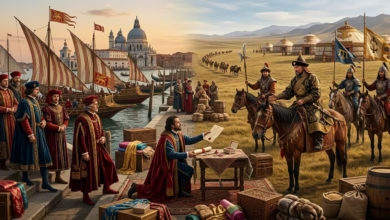
The Migration Of Indians To The East Coast Of Africa Was Not A Product Of The Nineteenth Century; Rather, It Is A Story Deeply Rooted In History. The Book Indicates That Merchants From India, Persia, And The Arabian Peninsula Had Trade Links With The East African Coast From An Early Time. The Monsoon Winds Played A Decisive Role In These Journeys; The Northeast Winds (Kaskazi) Brought Merchants To East Africa Between December And March, While The Southwest Winds (Kusi) Returned Them To Their Homelands Between May And August.
However, This Migration Took An Institutional And More Intense Character With The Dawn Of The Omani Empire In East Africa. The Decision Of Sultan Said Bin Sultan To Move The Capital Of His Rule From Muscat To Zanzibar In 1840 Constituted A Pivotal Turning Point. To Build His Commercial Empire, The Sultan Realized The Urgent Need For Capital And Financial Expertise, So He Invited Indian Merchants (Who Were Already Active In Muscat) To Accompany Him To Zanzibar, Promising Them Security And Multiple Commercial Opportunities.
Push And Pull Factors: Escaping Death Towards Opportunities
Why Did These Indians Leave Their Villages And Cities To Live In Distant Islands? Saada Wahab Brilliantly Addresses The “Push And Pull” Theory To Explain This Phenomenon. It Was Not Limited To The Search For Wealth, But Was Often A Matter Of Survival.
-
Push Factors (The Harshness Of Nature And Economy): The Western Parts Of India, Specifically The State Of Gujarat And The Kutch Region, Suffered From Repeated And Horrific Natural Disasters. Rainfall Was Irregular, Making These Regions Vulnerable To Successive Waves Of Deadly Famines Throughout The Nineteenth And Early Twentieth Centuries. In Addition, Epidemics Such As Cholera, Malaria, Smallpox, Plague, And Influenza Swept Those Areas, Claiming The Lives Of Tens Of Thousands. These Harsh Conditions, Accompanied By Extreme Poverty And Unemployment, Pushed Many Young Indians (Even Children As Young As Ten) To Flee Towards East Africa In Search Of Salvation.
-
Pull Factors (The Glitter Of Ivory And Cloves): In Contrast, Zanzibar Sparkled As A Global Commercial Center Thanks To Sultan Said’s Policies And The Growing Global Demand For Commodities. The Ivory Trade Was One Of The Most Important Attractions; African Ivory Was In Huge Demand In India For Making Women’s Bracelets That Were Destroyed Upon Their Owner’s Death, Which Ensured Continuous Demand. Besides Ivory, The Trade In Cotton Textiles (Such As Indigo-Dyed Indian Kaniki Cloth) Was Highly Popular In Zanzibar And Demanded To Clothe Slaves On Plantations. All These Factors, In Addition To The Later British Administration That Opened The Doors Of Employment For Indians In The Police Force (Especially Sikhs), Railways, And Administration, Made Zanzibar A Promising Land.
The Mosaic Of Religions: The Diversity Of The Immigrant Community
Among The Most Prominent And Deepest Chapters Presented By Wahab In Her Research Is Her Deconstruction Of The Image Of The “Indian Immigrant” As A Homogeneous Bloc. The Indians In Zanzibar Were Torn And Divided Along Strict Religious And Sectarian Lines, Which Radically Affected Their Migration Patterns And Ways Of Living. The Indians Were Divided Into Three Main Religions: Hindus, Muslims, And Christians.
-
Hindus And The Dilemma Of Crossing The Sea (Kala Pani): Hindus Were Among The First Immigrants, And They Divided Into Sects, The Most Important Of Which Were The “Bhatia” (Banians) And The “Lohana”. The Bhatia Dominated Customs Trade And Finance In The Early Nineteenth Century. But The Most Interesting Point Is The Impact Of Their Religious Belief, Specifically The (Kala Pani) Doctrine, Which Forbids Upper-Caste Hindus From Crossing The Sea, Believing That It Cuts Them Off From The Sacred Waters Of The Ganges River And Ends The Cycle Of Reincarnation.
Because Of This Belief, Hindus Did Not Bring Their Women To Zanzibar Initially. The Men Came As Bachelors Or Left Their Wives In India, And Were Known As “Birds Of Passage”; Where They Would Stay For Years To Collect Money And Then Return To India. The Absence Of Hindu Women Committed To The Rules Of Religious Purity And Food Preparation Led Hindu Men To Resort To Bringing Cooks From India From Lower Castes (Such As The Bhoi Caste) To Meet Their Needs. This Situation Also Led Some Hindu Men To Engage In Secret Relationships Or Religiously Unrecognized Marriages With African Or Arab Women, And This Dynamic Did Not Change Until The Late Nineteenth Century When Sultan Barghash Bin Said Encouraged Senior Hindu Merchants To Bring Their Wives, Pledging To Provide An Environment That Respects Their Privacy And Customs (The Marjad).
-
Muslims And Family Migration: In Contrast To Hindus, Indian Muslims (Sunni And Shia) Had No Religious Restrictions Preventing Crossing The Sea. These Groups Included The Khoja (Ismaili And Ithna Ashari), Bohra, And Memon Sects. Given The Absence Of This Religious Taboo, Many Indian Muslims Migrated Accompanied By Their Wives And Children To Settle Permanently In Zanzibar. They Built Permanent Homes And Integrated Culturally And Linguistically Faster With The Local Population, Especially Since The Vast Majority Of Zanzibar’s Population Were Also Muslims.
However, This Integration Was Not Devoid Of Class Complexities. Indian Muslim Men Who Married African Women (Especially Before The Arrival Of Their Indian Families) Fathered A Generation Of Mixed-Race Children Who Were Known Locally As “Chotara”. These Children Faced Harsh Discrimination From Within Their Fathers’ Indian Sects; They Were Looked Down Upon And Socially Excluded, And Many Were Even Denied Inheritance Rights Or Marriage Within The Indian Sect.
-
Goan Christians: The Third Group Was The Catholic Christian Indians Descended From The Portuguese Colony Of Goa. They Were Deeply Influenced By Portuguese Culture And Lifestyle. They Notably Integrated Into The Retail, Photography, Tailoring, And Government Administration Sectors. Their Migration Patterns Were Characterized By Flexibility; They Would Bring Their Wives And Families Without Religious Obstacles, But They Were Often Forced To Send Their Children, Especially Males, Back To Goa Or To Europe To Obtain A Catholic Education Once They Reached The Age Of Twelve, So That These Children Would Later Return To Work In East Africa As Adults.
The Educational Battlefield: Schools As Fortresses Of Identity
Wahab Asserts In Her Book That Education Was One Of The Most Complex Challenges In Zanzibar Due To Its Demographic And Religious Diversity. For Long Periods, Education In Zanzibar Was Limited To Kuttabs And Quranic Schools Whose Roots Trace Back To The Shirazi Migration Period Between The Eighth And Tenth Centuries. These Schools Met The Spiritual Needs Of Muslims (Arabs And Africans), Where Completing The Recitation Of The Holy Quran By The Age Of Ten Was Considered The Pinnacle Of Educational Achievement.
With European Penetration In The Late Nineteenth Century, Christian Missions, Such As The Catholic Holy Ghost Mission And The Universities’ Mission To Central Africa (UMCA), Began Opening Secular Schools That Were Primarily Aimed At Sheltering And Educating Freed Slaves. Naturally, Arab And African Muslims Boycotted These Schools Fearing Christianization. Here, The Indians Found Themselves In A Dilemma; They Desperately Needed Secular Education To Run Their Commercial Businesses, But They Refused To Send Their Children To Missionary Schools That Did Not Respect Their Religious Privacy, Except For The Christian “Goan” Sect Which Benefited From The St. Joseph’s Convent School Founded In 1895.
The Indians Realized They Had To Take The Initiative. After Pressures And Negotiations, They Succeeded In Collecting Donations Ranging From 50,000 To 56,000 Rupees To Establish The First Indian School In Zanzibar And East Africa In 1891, Which Was Named The “Sir Euan Smith Madrasa” (SESM) After The British Consul Who Supported The Idea. This School Was Purely Secular, Open To All Indian Boys Regardless Of Their Sects, And Adopted The Gujarati Language As The Language Of Instruction.
Sectarian Schools: Protecting Faith Or Entrenching Division?
Despite The Success Of The (SESM) School, It Lacked Something Essential For Indian Families: “Religious Education”. Indian Parents Refused To Let Their Children Receive Only A Secular Education, And They Feared The Dissolution Of Their Sectarian Identities. This Fear Led To The Explosion Of The “Sectarian Schools” Phenomenon, Where Every Wealthy Indian Sect Began Establishing Its Own School:
-
Ismaili Khoja Sect Schools: Thanks To The Massive Financial Support Of Their Leader “Aga Khan III” And Wealthy Merchants Like Tharia Topan, They Opened A Girls’ School In 1905 And A Boys’ School In 1907. These Schools Were Distinguished By Providing Free Education To The Sect’s Children, And Teaching Strong Curricula That Later Reached Preparing Students For The Advanced Cambridge Certificate Exams.
-
Bohra Sect Schools: The Bohra Sect Caught Up And Opened The “Muhammadiya School” In 1909, Which Was A Mixed School For Boys And Girls.
-
Ithna Ashari (Shia) Schools: They Established The “Quwwat Ul Islam” School In 1912, Then The “Datubhai Hemani” Girls’ School In 1920 Based On The Will Of A Wealthy Merchant Who Stipulated Teaching Girls The Quran And Home Economics For Free.
-
Hindu Schools: They Established A Free Girls’ School In 1923 And The “Arya Samaj” School In 1925. Because They Did Not Teach Religion In Their Classes, Their Schools Attracted Some Girls From Non-Hindu Sects, Which The School Principals Tried To Reduce By Doubling The Fees For Female Students From Outside The Sect.
This Educational Fragmentation Reveals A Fundamental Truth: Although The Indians Were Known As A Single Economic Bloc To The British And Arabs, Internally They Were A Highly Fragmented Society, Where Each Faction Cherished Its Doctrinal Uniqueness And Refused Even The Mixing Of Children On School Desks.
The Debt Trap And The Abolition Of Slavery: The Clouds Of Economic War Gather
In Parallel With Their Educational Battles, The Indians Were Fighting A Silent And Deadly Economic War. Throughout The Nineteenth Century, Zanzibar’s Economy Relied On Two Pillars: The Clove Trade And The Slave Trade. The Indians Controlled The Financing Of These Operations, Acting As “Informal Banks” That Lent Merchants And Farmers (Mostly Arabs) The Money Needed To Run The Plantations.
The First Blow To The Arabs Came When Britain Pressed Hard To Abolish The Slave Trade (1873) And Then Completely Abolish Slavery (1897). Arab Clove Plantation Owners Suddenly Found Themselves Deprived Of Free Labor And Had To Pay Wages To Workers, Which Made Them Fall Into The Trap Of Accumulated Debts. To Survive, Arab Farmers Mortgaged Their Farms And Lands To Indian Moneylenders At Exorbitant Interest Rates Through Complex Systems Like “Option Sale” (Mortgage With A Guarantee Of Sale).
By The 1920s And 1930s, With The Explosion Of The Great Depression Crisis And The Collapse Of Global Clove Prices, Arabs Were Unable To Repay Debts. Agricultural Lands Began To Leak From Arab Hands Into Indian Hands. In 1933, Two British Officials (Bartlett And Last) Issued A Shocking Report Indicating That Half Of The Agricultural Properties In The Islands Had Passed Or Were On Their Way To Passing Into The Hands Of Indian Moneylenders.
The Colonial Decrees Of 1934: Britain Decides To Break Bones
This Report Caused Panic In The British Administration, Which Officially Considered Zanzibar An “Arab State” And Saw The Need To Protect The Ruling Arab Elite To Ensure The Stability Of The Colonial System. In A Dramatic And Sudden Move, And Within Just 12 Days In June 1934, The British Legislative Council In Zanzibar Passed Six Harsh Economic Decrees Explicitly Aimed At Destroying Indian Financial Influence And Saving The Arabs.
Among The Most Dangerous Of These Decrees Were:
-
Land Alienation Decree: This Law Prevented Arabs And Africans From Selling Or Transferring Ownership Of Their Lands To Anyone Non-Arab Or African (i.e., Indians) Without Personal Approval From The British Resident, And Also Froze The Execution Of Court Decisions To Sell Mortgaged Lands For A Full Year.
-
Clove Growers Association (CGA) Decree: This Decree Granted An Almost Complete Monopoly To The Association (Which Was Run By The Colonial Administration And Europeans) To Control The Purchase And Export Of Cloves, And Granted It Massive Tax Exemptions, Which Completely Pushed Indian Merchants And Middlemen Out Of The Market.
-
Clove Exporters Decree: Imposed Severe Restrictions And Exorbitant Fees (Up To 5,000 Rupees) On Anyone Wishing To Export Cloves, And Gave The (CGA) Board The Power To Refuse Licenses, Threatening To Liquidate The Indian Presence In The Export Trade.
For The Indians, These Decrees Were Tantamount To A Declaration Of A Racist War Aimed At Economically Exterminating Them. They Saw Them As Blatant Discrimination Treating Them As Foreigners Even Though More Than 80% Of Them Were Born And Had Lived For Generations In Zanzibar And Considered It Their Homeland. The Indian Representative In The Legislative Council Asked Bitterly At The Time: “Would These Legislations Have Passed If The Creditors Were British?”.
The Doors Were Closed In The Faces Of The Indians, And They Found Themselves Trapped Between Imminent Bankruptcy And The Loss Of Their Lent Money, And A Colonial Administration Determined To Marginalize Them. But The Indian Response Was Not Surrender; Instead, They Launched One Of The Greatest Movements Of Civil Resistance And Political Organization In The History Of East Africa.
The Indians’ Journey To Zanzibar: The Weapon Of Boycott, The Winds Of Political Change, And The Dilemma Of Stuck Identity
Researcher Saada Wahab Continues Deconstructing The Zanzibari Scene, Moving Us From The Predicament Of Unjust Laws To The Epic Of Civil Resistance That Swept The Islands In The 1930s. After The Issuance Of The 1934 Decrees That Aimed To Undermine Indian Financial Influence, The Indian Community Had No Choice But To Abandon Its Deep Sectarian Divisions And Align Behind One Banner. The “Indian National Association” Was The Main Engine Of This Transformation, As Merchants And Financiers Realized That Their Survival In East Africa Was Threatened At Its Core, And That The Response Had To Be Equivalent To The Size Of The Colonial Challenge.
Zanzibar Entered A Tunnel Of Strict Economic Confrontation In 1937 When The Indians Announced A Comprehensive Boycott Of The Clove Trade, The Crop That Represented The Lifeline Of The Local Economy. This Boycott Was Not Just A Passing Protest, But A Carefully Studied Strategy Of “Mutual Strangulation”; Indian Exporters Stopped Shipping The Crop, And Middlemen Refrained From Buying It From Farmers, Leading To The Accumulation Of Tons Of Cloves In Warehouses And The Beginning Of A Shocking Financial Collapse For The Colonial Government That Relied On Export Duties. In This Context, Wahab Highlights How Zanzibar’s Indians Were Inspired By The Tactics Of “Satyagraha” Or Peaceful Resistance From The Indian Leader Mahatma Gandhi, Turning Their Local Economic Battle Into An Issue Of International Public Opinion That Echoed In The Corridors Of Parliament In London And Reached The Leadership Of The Indian National Congress.
The Resistance Was Not Isolated From Its Global Context, As The Researcher Recounts How The “Mother” India Rushed To Rescue Her Children In The Diaspora. The Indian National Congress Sent Envoys To Study The Situation And Threatened To Impose A Counter-Boycott On Zanzibari Products In Indian Markets, A Threat Britain Could Not Ignore Given The Massive Size Of The Indian Market. Faced With This Dual Pressure, Locally And Internationally, The British Administration Was Forced In 1938 To Retreat And Sit At The Negotiating Table, Resulting In The “Clove Agreement” Which Restored To The Indians A Large Part Of Their Rights In Trade And Export. This Moment, As Described By Wahab, Served As The “Coming Of Age Politically” For The Indians In Zanzibar, Where They Discovered That Their Strength Did Not Lie Only In Their Account Books, But In Their Capacity For Political Organization And Transnational Influence.
With The End Of World War II, The Features Of The World Began To Change, And The Winds Of Decolonization Began To Blow Over The African Continent, And Zanzibar Was No Exception. Here, The Researcher Takes Us To A New And More Complex Stage In The History Of The Indians, Which Is The Transition From “Economic Citizens” To “Political Actors”. With The Rise Of Nationalist Movements In The 1950s, The Indians Found Themselves In An Unenviable Position; The Zanzibari Society Began To Divide Sharply Along Ethnic Lines Between The “Zanzibar Nationalist Party” (ZNP), Led By The Arab Elite, And The “Afro-Shirazi Party” (ASP), Which Represented The African Majority Demanding Historical Rights To The Land.
The Indians, Being The Numerical Minority And Financial Power, Fell Into The Trap Of Political Polarization. Wahab Brilliantly Explains How Indian Loyalties Were Divided; While Some Large Commercial Factions Leaned Towards The (Arab) Nationalist Party To Ensure The Stability Of Traditional Interests, Other Factions, Especially The Youth And Intellectuals, Felt The Need To Build Bridges With The Afro-Shirazi Party, Realizing That The Political Future Of The Islands Would Be Decided By The African Majority. Nevertheless, The Indians Remained In The Eyes Of Both Parties As “Strangers” Or “Middlemen”; To Africans, They Represented The Other Face Of Capitalist Exploitation Allied With Arab Influence, And To Arabs, They Were Untrustworthy Allies Who Might Lean Where The Balance Of Power Tilted.
The Pace Becomes More Dramatic With The Approach Of The Independence Year 1963, As The Researcher Paints A Picture Of A Society Living In A State Of “Existential Anxiety”. The Indians Were Cautiously Watching The British Withdrawal, Realizing That The Colonial Umbrella That Had Provided Them With Legal Protection For Decades Was Folded Forever. Meanwhile, Political Discourses Began To Grow More Intense And Racist, And Signs Of Political Marginalization Of Minorities Began To Appear In The New Constitution. Despite The Attempts Of Some Indian Leaders To Engage In Partisan Work And Run For Elections, The Results Always Indicated That Voting Was Done Based On “Skin Color” Not “Political Program”.
Wahab Concludes This Important Part Of Her Research By Noting That The Indians, Despite Their Massive Contribution To Building The Infrastructure, Educational System, And Commercial Network Of Zanzibar, Found Themselves On The Eve Of Independence As Citizens Ranked “Anxious”. The Indian Identity That Withstood The Hurricanes Of The Indian Ocean And The Famines Of “Gujarat”, And Resisted British Decrees Resolutely, Found Itself Incapable Of Finding A Safe Place In The Explosive African-Arab Identity Conflict. It Is The Story Of A Community That Built A Homeland In Exile, Only To Find Itself Ultimately A Stranger In The Homeland It Built, Paving The Way For The Tragedy That Would Follow The Revolution Later.
The Indians’ Journey To Zanzibar: The Fabric Of Daily Life.. Women, Architecture, And The Melting Of Cultures In The “Indian Quarter”
After Reviewing The Major Paths Of Politics, Economy, And Survival Struggles In The Previous Sections, Researcher Saada Wahab Takes Us In This Chapter Of Her Study Beyond Numbers And Agreements, To Enter The Corridors Of Indian Homes In “Stone Town”, Zanzibar. Here, The Narrative Pauses At The Intimate Details That Shaped The Cultural Conscience Of This Community, As The Indians Were Not Merely Passersby Collecting Money, But Were Artists, Architects, And Life-Makers Who Left Their Marks On The Tiniest Details Of The Zanzibari Scene, Transforming The Islands Into An “Alternative Homeland” Exuding The Scent Of Spices And Gujarati Textiles.
Wahab Dedicates An Exceptional Space To The Role Of The Indian Woman, That Character Who Long Remained In The Shadows Of Written History. In The Beginnings, As We Mentioned, Migration Was Distinctly Male, But With The Arrival Of Wives And Mothers In The Late Nineteenth Century, Zanzibar Transformed From A “Trading Post” To A “Stable Society”. The Indian Woman Was The Faithful Guardian Of Identity; She Was The One Who Transferred Cooking Rituals, Clothing, And Religious Traditions From Her Villages In “Kutch” And “Gujarat” To The Heart Of Africa. In The Kitchens Of Zanzibar, An Amazing Melting Occurred; Indian Curry Blended With African Coconut Milk, And Hybrid Dishes Emerged That Have Become Today An Integral Part Of Authentic Zanzibari Cuisine. Food Was Not Just A Means Of Sustenance, But A Tool For Cultural Resistance And Preserving Sectarian Cohesion, Where “Banquets” (Jamats) Were The Link Gathering Individuals Of The Same Sect Around A Table Reminding Them Of Their Roots.
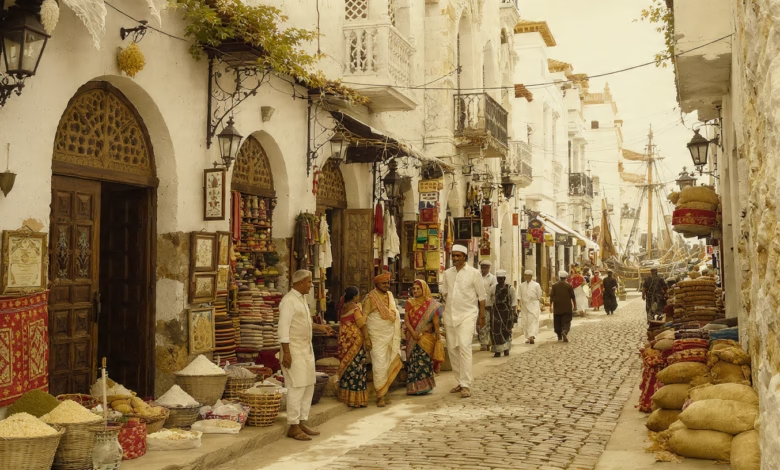
The Researcher Moves To Architecture, Pointing Out That Indians Are The Ones Who Gave “Stone Town” Its Unique Character We See Today. Indians Did Not Just Build Houses, But Constructed The “Shop-House”, An Architectural Style Reflecting The Indian Philosophy Of Life; Where The Ground Floor Is A Shop Bustling With Activity, While The Upper Floor Is A Private Residence Enveloped In Calm And Privacy. Wahab Stops At The Famous “Zanzibar Doors”, Explaining The Fundamental Difference Between The Arab Door And The Indian (Gujarati) Door; Indian Doors Are Characterized By Their Delicate Botanical Carvings, Massive Brass Padlocks, And Pointed Studs That Were Originally Used In India To Deter Elephants, But In Zanzibar Transformed Into A Symbol Of Wealth And Social Prestige. This Architecture Was Not Just Stones, But A Visual Language Telling The Story Of The Indian Merchant’s Success And His Aspiration To Consolidate His Presence In A New Urban Environment.
Regarding Social Structure, The Study Reveals The Role Of “Communities” Or What Is Known As The “Jamatkhana”. Every Indian Sect Had Its Institutional Entity Acting As A State Within A State; Where These Associations Provide Healthcare, Financial Aid For The Poor, And Resolution Of Commercial Disputes Away From Official Courts. This Superior Social Organization Is What Allowed The Indians To Withstand Crises; The Indian Individual Was Never Alone, But Protected By A Sectarian Safety Net Beginning From The Cradle And Ending At The Grave. However, This Sectarian Isolation, As Wahab Critically Points Out, Had A Heavy Price; It Created An Emotional And Spatial Distance Between The Indians And Their African Neighbors, Making Full Integration Into The Zanzibari National Fabric Difficult To Achieve, And The Indians Remained An “Island Within An Island”.
Language Was Also An Arena For Exchanging Influences; While Gujarati Was The Language Of Accounts And Commercial Ledgers, “Swahili” Became The Language Of The Street And Daily Communication. The Researcher Observes How Hundreds Of Indian Words Infiltrated The Swahili Language, And How Indian Tongues Adapted To The African Rhythm, Creating A Kind Of “Indian Swahili” That Was Heard In Spice Markets And Port Corridors. This Linguistic Hybridization Reflects The Reality That Indians Were Not Completely Isolated, But Were In A Continuous Interactive State With Their Surroundings, Yet It Was An Interaction Governed By The Boundaries Of Trade And Common Interest More Than Being A Complete Social Melting.
Wahab Concludes This Section By Painting A Picture Of The Cultural Scene In Zanzibar In The First Half Of The Twentieth Century, When “Indian Cinema” Had Begun To Make Its Way To The Islands, Becoming A Weekly Ritual Gathering Indians From Different Sects, And Even Attracting Arabs And Africans As Well. Indian Films Were A Means Of Connecting Expatriates With Their Motherland, And At The Same Time A Tool Of “Soft Power” That Made Indian Culture Familiar And Beloved To The Rest Of Zanzibar’s Population. This Anthropological Anatomy Presented By Wahab Proves That The History Of Indians In Zanzibar Is Not Merely A History Of Wealth Accumulation, But A History Of Building A Rich Hybrid Culture That Succeeded In Turning Exile Into A Homeland, And Roaming Into Stability, Before The Defining Moment Came In 1964 To Put All This Cultural, Architectural, And Social Legacy On The Edge Of The Abyss.
The Indians’ Journey To Zanzibar: The Autumn Of The Empire, The Earthquake Of The Revolution, And The Historical Testament Of A Diaspora That Did Not Entirely Leave
Researcher Saada Wahab Brings Us In The Final Station Of Her Epic Study To The Year 1963, The Year That Was Supposed To Be The Dawn Of Independence And The Beginning Of A New Golden Age For Zanzibar, But Turned In The Collective Memory Of The Indians Into “The Beginning Of The End”. In This Concluding And Painful Chapter Of Their History In The Islands, Wahab Observes How Dreams Of Citizenship And Equality Turned Into A Nightmare Of Uncertainty, When The Indians Found Themselves Trapped In The Crater Of A Political And Ethnic Volcano Preparing To Erupt, Putting An End To An Era That Lasted For More Than A Century And A Half Of Building And Prosperity.
With The Departure Of The Last British Soldier And The Handover Of Power To The Coalition “Zanzibar Nationalist Party” Government, A State Of Cautious Anticipation Prevailed In The Alleys Of “Stone Town”. Wahab Precisely Describes How Indian Merchants Were Watching The Scene; The New Constitution Did Not Grant Them Sufficient Guarantees As A Minority, And The Revolutionary Discourse Of The “Afro-Shirazi Party” Grew More Radical, Portraying The Indians As Part Of The “Old Regime” That Must Be Dismantled. Indeed, Barely A Month Had Passed Since Independence When The Spark Of The January 12, 1964 Revolution Ignited, Which, Despite Falling Outside The Official Timeframe Of The Book, Wahab Considers The Inevitable Result Of All The Political And Social Accumulations She Observed In Her Previous Chapters.
The Revolution Was A Devastating Earthquake For The Indian Community; Their Properties Were Looted, Their Shops Confiscated, And Thousands Found Themselves Homeless And Identity-Less Overnight. The Researcher Recounts Bitterly The “Exodus” That Followed The Revolution, As Indian Families Who Had Settled In Zanzibar For Generations Fled Towards Britain, Canada, And India, Leaving Behind Their Ancestors’ Graves, Their Homes With Carved Doors, And Their Account Books Telling A Story Of Bitter Struggle. This Forced Departure Was Not Merely An Emigration Of Individuals, But An Emptying Of Zanzibar From Its Middle Class Driving The Economy, Leading To A Prolonged Commercial And Social Stagnation From Which The Islands Never Fully Recovered For Decades.
In Her Review Of The Study’s Results, Saada Wahab Presents Highly Important Conclusions; She Asserts That The “History Of Indians In Zanzibar” Is Not Merely A Story Of “Commercial Middlemen” Who Served Colonialism As Some Promote, But The History Of An Authentic Immigrant Community That Contributed To Shaping The Civilizational Personality Of East Africa. Wahab Argues That The Indians Succeeded In Creating A “Third Space” Between African And Arab Cultures, Using The Weapon Of Education And Sectarian Organization As Shields To Protect Their Identity. She Also Concludes That The Failure Of The Indian Experience In Political Survival After Independence Is Due To The “Inability To Integrate”; The Indians Continued To View Themselves As Separate Sects Rather Than Part Of A Unified Zanzibari Nation, A Profound Historical Lesson On The Dangers Of Isolation In Multi-Ethnic Societies.
The Researcher Concludes Her Book On A Note Mixing Nostalgia With Sober Academic Analysis, Pointing Out That The Indian Legacy In Zanzibar Did Not Entirely Disappear. Today, As You Walk Through The Streets Of “Stone Town”, You Can Still Smell The Scent Of “Biryani” In The Air, Hear The Sounds Of The Call To Prayer From The “Bohra” And “Khoja” Mosques, And See The Architecture That Blends Indian And African Art.