

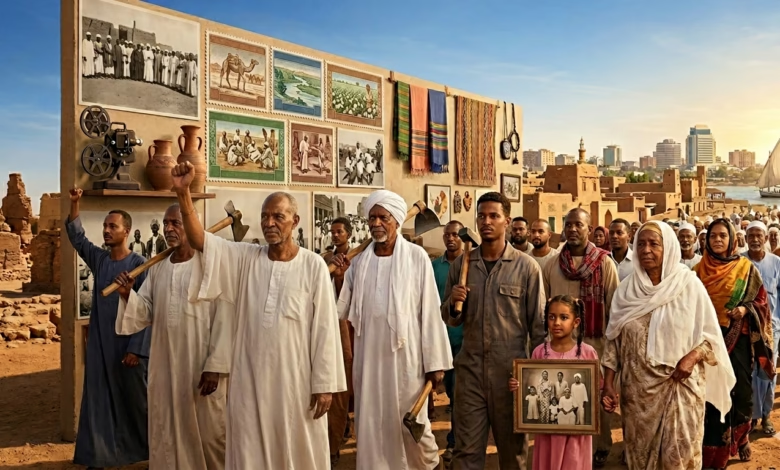
When The Spark Of The Protests Erupted In The Cities Of Sudan In December 2018, The World, Not Even The Leading Political Analysts, Did Not Expect That Those Crowds Filling The Streets Carried In Their Social Genes The Accumulations Of Centuries Of “Politics From Below”. In That Historic Moment, “Ordinary” Bodies Turned Into Major Engines Of Change, Announcing The Fall Of An Authoritarian Regime That Had Sat On The Country’s Chest For Three Decades. And From The Womb Of This Moment, Specifically One Year After The Explosion Of The Revolution, A Constellation Of International And Sudanese Researchers Gathered In Paris To Pose A Fundamental Question: Can The History Of Sudan Be Written Away From Palace Struggles, Elite Conspiracies, And Dry Colonial Reports?
The Answer Came In A Huge Encyclopedic Work Published By De Gruyter Under The Title “Ordinary Sudan, 1504-2019: From Social History To Politics From Below”. This Book, Edited By A Distinguished Academic Team Including Elena Vezzadini, Iris Seri-Hersch, Lucie Revilla, Anaël Poussier, And Mahasin Abd Al-Jalil, Does Not Merely Document Events, But Redefines The Very Concept Of “History” Itself In The Sudanese Context.
Shattering The Idol Of “Elite History”
For A Long Time, Academic Research On Sudan Remained Captive To A Strange Duality; While International Organizations And The Press Are Preoccupied With The Catastrophic Consequences Of Armed Conflicts On “Ordinary People”, Academic Research Tends To Focus On Elite Groups, Which Has Created A Knowledge Gap Between Development And Human Rights Studies And Rigorous Academic Work. This Book Starts From A Revolutionary Premise That Studying Men And Women Who Are “Exceptionally Ordinary” Is Not Merely An Intellectual Luxury, But A Necessity For Understanding The Historical Transformations And Political Dynamics Of Greater Sudan.
These “Ordinary” People, As The Editors Explain In Their Sober Introduction, Were Not Merely Passive Victims, But Were Essential Actors Who Interacted With The State Since The Emergence Of The Funj And Darfur Sultanates In The Sixteenth Century. They Contributed To Running The Daily Life Of Successive Regimes — Whether Sultanistic, Turco-Egyptian, Mahdist, Or Colonial — And At The Same Time, They Themselves Were The Ones Who Toppled These Regimes Through Repeated Popular Uprisings, From The Mahdist Revolution (1881-1885) To The October 1964 Revolution, The April 1985 Uprising, And Up To The December 2018 Earthquake.
The “Quiet History” And The Aesthetics Of The Everyday
The Book Does Not Search For The “Ordinary” Only In Moments Of Revolutionary Clamor, But Dives Into What Researcher Heather Sharkey Calls “Unsensational History” Or The “Quiet History” Of Daily Life. Here We Find Stories About The Worries And Passions Of Humans In Their Simple Details: Requesting An Amulet From A Religious Man To Treat Infertility, Assisting In Childbirth Operations, Practicing Folk Games, Going To The Cinema, And Even Teachers’ Disobedience In Schools.
This Methodological Orientation Restores Consideration To “Social History” As A Critical Tool That Reveals How Ordinary People Are Erased From Dominant Narratives. The Book Adopts The Vision Of “Situated Knowledge”, Inspired By The Theses Of Donna Haraway And Michel-Rolph Trouillot, To Affirm That The View From “Below” — From The Perspective Of Marginalized And Vulnerable Groups — Is The Only One Capable Of Deconstructing The Grand Narratives Of Masters And The State.
The Battle Of The Archive: Recovering Memory From The Clutches Of Erasure
One Of The Most Exciting Chapters Of The Book Is The One That Addresses The “Archive” Not As A Storehouse Of Papers, But As An Arena Of Political Struggle. Researcher Mahasin Abd Al-Jalil Points Out That Sitting Inside The Sudanese National Archives Allows One To Observe How Social Norms And Political Systems Determine What Can Be Written Of History And Who Has The Right To Write.
Abd Al-Jalil Talks About “Acts Of Deliberate Erasure”, Where Administrative Employees Delete Lines From Documents Or Obliterate Entire Historical Facts. But What Is Exciting Is That These “Scars” Left By Attempts At Destruction Remain Witnesses To The Violence That Was Practiced, Which Opens The Door For Historians To Recover Parts Of That Lost Past.
In This Context, The Book Values The New Archival Initiatives Born From The Womb Of The December Revolution, Such As The “Sudan Revolution Archive” And The Archive Of “Women’s Movements In Sudan” Sponsored By France. These Projects, Alongside The “Sudan Memory Project” Which Has Digitized Hundreds Of Thousands Of Documents, Photographs, And Artworks, Represent A Leap In The Digital Humanities, And Provide Protection For Sudanese Memory In A Country Where Climatic Conditions And Political Upheavals Threaten The Safety Of Paper Records.
Politics From Below: Beyond The “Elephant’s Belly”
The Book Moves From History To Political Science, To Apply The Concept Of “Politics From Below”. Instead Of The Traditional Focus On State Institutions And Parties, The Researchers Shed Light On The “Quiet Encroachment Of The Ordinary” — In The Expression Of Asef Bayat — And How The Marginalized Participate Silently In Shaping Power Relations.
The Book Clarifies How The Idea Of “Popular Mobilization” Was Exploited In Modern Sudanese History In Contradictory Ways; While The Mahdist State Used It For Jihad, The Sudanese Communist Party Redefined It In The 1940s, Only For It To Be Later Appropriated By Military Regimes (The May Regime And The Salvation Regime) To Consolidate Their Authority Under The Name “Democracy Of The Masses”. But The “Politics From Below” That The Book Proposes Seeks To Go Beyond These Ready-Made Molds, By Analyzing The Relationship Between Social Movements And Daily Practices That Make Institutional Politics Possible In The First Place.
Women In “Tabaqat Wad Dayf Allah”: Beyond The Sufi Veil
The Book Begins Its Investigative Journey From The Early Modern Era, Specifically Through A Critical Re-Reading Of The Book “Al-Tabaqat” By Wad Dayf Allah, Which Is The Basic Reference For The History Of Saints And Righteous People In The Funj Sultanate. Here, The Researchers Do Not Search Only For The Names Of Queens Or Princesses, But For The “Ordinary Woman” Who Frequented The Retreats Of Sheikhs.
The Analysis Reveals That Women In That Era Were Not Mere Shadows; Rather, They Were Economic And Social Actors. We Find The Woman Who Requests A “Hijab” (Amulet) To Protect Her Children, And The One Who Contributes To The Expenses Of Sufi Lodges, And Those Who Practiced Roles As A “Midwife” Or “Healer”. The Presence Of Women In “Al-Tabaqat” Reflects A Social System In Which Spiritual And Material Authority Were Intertwined, Where Women Were Able To Maneuver Within Masculine Spaces To Extract Their Rights Or Secure Their Daily Lives.
Colonialism And The Restructuring Of “Femininity”
The Book Then Moves To The Era Of The Condominium Rule (Anglo-Egyptian), Which Witnessed Attempts By The Colonial State To “Engineer” Sudanese Society. And Here An Amazing Paradox Emerges; While The Colonizer Claimed To Bring “Civilization”, In Reality He Was Imposing New Restrictions On Women’s Movement And Their Presence In Public Space.
The Researchers Focus On The Evolution Of Professions Such As Nursing, Teaching, And Midwifery. The Midwives School In Omdurman, Founded By “Miss Wolff”, Was Not Merely A Medical Institution, But Was An Arena Of Clash Between Local Culture And Modern Medicine. The Book Clarifies How Sudanese Women Were Able To “Domesticate” These New Professions, And Transform Them From Tools Of Colonial Control Into Platforms For Social And Political Awareness. The Woman Who Learned Nursing Did Not Only Treat Bodies, But She Transmitted Liberating Ideas Between Homes, Paving The Way For The Emergence Of The First Women’s Associations.
The 1924 Revolution: When “Zahra” Shouted In The Face Of The “Veterinarian”
The Book Corrects A Common Mistake In Sudanese Political History By Limiting The 1924 Revolution To The “White Flag League” And Male Officers. It Highlights The Role Of Women Such As “Zahra Al-Khalil” And Others Who Contributed To Demonstrations And Distributing Leaflets. This Moment Was Akin To The “Political Baptism” Of The Sudanese Woman In The Modern Urban Space.
And Research In The Colonial Archives Reveals The State Of Anxiety That Befell The British Administration From The “Emergence Of Women”. Their Demands Were Not Merely General Political Slogans, But Were Linked To Issues Of Personal Status, Education, And The Right To Work, Which Proves That Sudanese Feminism Was From Its Beginnings A “Politics From Below” Par Excellence, Stemming From The Needs Of Reality And Not An Import From Abroad.
From The “Al-Nahda Association” To The Sit-In At The Headquarters
The Cover Of The Book Itself Carries A Deep Significance; It Is Adorned With A Picture Of The “Feminist Renaissance Association”, An Association That Emerged In The Mid-Twentieth Century. This Visual Choice Reflects The Book’s Bias Toward The History Of Grassroots Feminist Organizations.
The Book Connects The Struggles Of The Teachers’ And Nurses’ Unions In The Sixties And Eighties, With The Feminist Momentum That Characterized The December 2018 Revolution. In The Sit-In Square In Front Of The General Command In Khartoum, Women Were Not “Decoration” For The Revolution, But Were Its Backbone. The Researchers Analyze How The “Barricades” Turned Into Gendered Spaces In Which Young Men And Women Reformulated The Concept Of “Masculinity” And “Femininity” Away From The Oppression Of The “Public Order” Laws That Had Sat On Their Chests For Thirty Years.
The “Kandaka” Who Stood On Top Of The Car Chanting, Is Not A Phenomenon Born Of The Moment, But Is The Heiress To Centuries Of Silent And Overt Resistance. She Is The Granddaughter Of The Women Who Resisted Taxation In The Era Of The Funj, And Who Challenged The Colonial Discipline Laws, And Who Went Out In October And April.
Gender History As A Tool For Liberation
What Distinguishes This Section Of The Book Is Its Departure From The Superficial Liberal Language Of “Empowerment”, And Its Focus Instead On “Agency”. Women In Ordinary Sudan Are Not A “Project” In Need Of External Assistance, But Rather They Are Makers Of History Who Possess Their Own Tools Of Resistance, Even In The Darkest Political Circumstances.
By Recovering The Stories Of Ordinary Women — From The Tea Seller In The Streets Of Khartoum To The Academic At The University — The Book Offers A Lesson In How Social History Can Be A Tool For Liberation. Understanding The Past Is Not An End In Itself, But Is A Means To Enable Marginalized Groups To Own Their Own Narrative And Confront Attempts At Deliberate Erasure.
Dismantling The “Myth Of The Center”
The Editors Of The Book See That The Concept Of The “Margin” In Sudan Is Not A Geographic Destiny, But Is A Deliberate Political And Economic Process. And Through Studies Covering Regions From Darfur In The West To The Nuba Mountains In The South, And From Suakin In The East To The Blue Nile, The Book Reveals How The “Ordinary Human” In These Areas Managed His Relations With The Central State Across Centuries.
In The Chapter Dedicated To The Sultanate Of Darfur, The Researchers Clarify How The Western “Margin” Managed Its Own Diplomacy And Its Trans-Saharan Trade Far From The Influence Of The Nile Valley. The History Of Darfur In This Book Does Not Begin With “The Crisis” Or “The War” As Is Usual In Contemporary Media, But Begins As A Complex Political And Social Entity, With Its Own Legal And Land Systems (The Hawakir) That Organized The Lives Of “Ordinary” Farmers And Herders With Amazing Skill.
Human Movement: Migration As A Silent Political Act
One Of The Most Enjoyable Axes The Book Poses Is The Axis Of “Mobility”. The Ordinary Sudanese, Historically, Is A Mobile Human; Whether He Was A Trader On The “Darb Al-Arbaeen”, Or A Displaced Person Because Of Drought, Or A Worker Searching For His Livelihood In Irrigated Agricultural Projects.
The Book Analyzes How These Movements Contributed To Shaping A “Politics From Below”. Migration From The Peripheries To The Center Was Not Merely A Physical Transfer, But Was A Process Of “Melting” Cultural And Social Boundaries. We Find Stories About The Workers Who Founded The “Marginal Neighborhoods” Around Khartoum, And How These Neighborhoods Transformed From Mere Random Residential Gatherings Into Foci Of Political And Social Awareness. These “Ordinary” People Are The Ones Who Brought With Them Their Rhythms, Their Arts, And Their Grievances To The Heart Of The State, Which Forced The Center — In Moments Of Revolution — To Confront The Reality Of Its Diversity Which It Had Denied For Decades.
The Nuba Mountains: Daily Steadfastness In The Face Of “Violent Tools”
The Book Allocates A Distinctive Space To The Nuba Mountains Region, But With A Perspective That Moves Away From Pure Civil War Narratives. The Researchers Focus On How Local Communities Preserved Their Social Fabric Under The Pressures Of The Central State And Attempts At Forced Cultural Assimilation.
Here We Learn About The Role Of The “Kujur” (Spiritual Leaders) And Native Leaderships In Managing Daily Conflicts And Providing Protection For The Community. This “Daily Politics” Is What Enabled The Person Of The Nuba Mountains To Endure. The Book Clarifies That Resistance There Was Not Only By Carrying Arms, But Was Through Holding Onto The Land, Practicing Traditional Agriculture, And Preserving Languages And Rituals, Which Are Acts The Book Describes As “Silent Resistance” That Preceded And Founded Organized Resistance.
The East And Suakin: The World’s Window On The “Ordinary”
The East Of Sudan Is Not Absent From The Scene; Where The Book Re-Reads The History Of The City Of “Suakin” And The Red Sea Coast. Instead Of Seeing It As Merely A Port For Receiving Invaders Or Exporting Raw Materials, The Book Presents It As A Cosmopolitan Cultural Meeting Place That Included Traders From Hadhramaut, And The Hijaz, And Greece, And India, Alongside The Beja Tribes.
This “Ordinary” Diversity In The East Created A Type Of Politics Open To The Outside, Which Repeatedly Collided With Policies Of “Nationalization” Or “Forced Islamization” That Central Regimes Tried To Impose. The Book Shows How The Contemporary Grievances Of The East Have Roots In The Center’s Neglect Of This Historical And Social Specificity That Distinguishes The “Person Of The Sea”.
Toward A “Unified Sudan” From Below
The Most Important Thing The Reader Takes From This Part Of The Book Is That “The Unity Of Sudan” Cannot Be Imposed By Decree From Khartoum, But Is A Unity That Already Exists In The “Dailies” Of People. For The Commercial Relations Between Herders In Kordofan And Farmers In Gezira, And The Intermarriage Between Different Groups In The Neighborhoods Of Omdurman, Are What Made The “Ordinary” Sudan.
The Researchers See That The December 2018 Revolution Was The Moment When The Center Met The Peripheries In The Slogan “Ya Unsuriy Wa Maghrur, Kull Al-Balad Darfur” (“O Racist And Arrogant One, The Whole Country Is Darfur”). This Slogan Was Not Merely A Passing Emotion, But Was A Belated Political Recognition Of The Historical Narrative That This Book Documents: That The History Of The Margins Is, In Its Essence, The True History Of Sudan.
“The Market” As A Daily Parliament For The Marginalized
The Book Takes Us From Government Offices To “The Market”, Not Only As A Place For Commercial Exchange, But As A Political Space Par Excellence. The Researchers Analyze How The “Sudanese Market” Across Centuries Was A Laboratory For Social Negotiation. For In The Weekly Markets In Kordofan And Darfur, People Did Not Only Exchange Crops, But They Exchanged News, And Formed Alliances, And Resolved Tribal Disputes Far From The Eyes Of The Central Authority.
The Book Clarifies That The “Ordinary Economy” In Sudan Remained For A Long Time Resistant To Attempts At “Legalization” By The Colonial And Post-Colonial State. For Ordinary Humans Innovated Local Credit Systems, And Networks Of Solidarity Based On Trust, Which Made Them Possess A Kind Of Material Independence That Protected Their Communities From Total Collapse In Periods Of Political Repression Or Economic Drought.
The Railway: The Birth Of “Class” From The Womb Of Iron And Fire
One Of The Strongest Chapters Of The Book Is The One That Deals With The History Of Railway Workers, Specifically In The City Of “Atbara” (The Capital Of Iron And Fire). Here, We See How The “Ordinary Worker” Transformed From Merely A Cog In The British Colonial Machine Into A Political Vanguard That Shook The Pillars Of Rule.
The Book Draws An Amazing Picture Of Daily Life In The Workers’ “Camps”; Where Demands Were Not Limited To Wages, But Extended To Include The Right To Decent Housing, And Education, And Human Dignity. The Emergence Of The “Railway Workers’ Union” In The Forties Was Not Merely A Labor Event, But Was The Birth Of A Purely Sudanese Class Consciousness, That Linked Between The “Livelihood Demand” And The “National Demand” For Independence. The Book Proves That These Workers, Whom The State Saw As “Merely Laboring Hands”, Were In Truth Strategic Thinkers Who Understood Early That Politics Begins From The Loaf Of Bread.
Land And “Hawakir”: Battles Of Steadfastness Against “Dispossession”
The Analysis Moves To The Sudanese Countryside, Where Land Is Existence. The Book Sheds Light On The Historical Conflict Between The Concept Of “Hawakir” (Traditional Land Ownership) And The Laws Of The Modern State That Tried To “Nationalize” Land For The Benefit Of Large Agricultural Projects (Such As The Gezira Scheme).
The Researchers Reveal How “Ordinary” Farmers Resisted Attempts To Turn Them Into Mere “Wage Laborers” On Their Own Land. This Resistance Was Not Always Through Armed Revolutions, But Was Through “Quiet Resistance”: Manipulating Land Registers, Implicit Refusal To Plant Certain Cash Crops, And Clinging To Subsistence Agriculture That Guaranteed Their Food Security. This Section Of The Book Explains To Us Much Of The Roots Of Current Conflicts In Sudan; For They Are Not “Ethnic Conflicts” As Is Often Rumored, But Are Deep Economic Struggles Over “Who Owns The Land And Who Owns The Right To Live On It”.
Gold And Resources: The “Curse” Of Power And The Resistance Of “Traditional Miners”
In Recent Years, Gold Has Become The Main Engine Of The Sudanese Economy, But Also Of Conflicts. The Book Addresses The Phenomenon Of “Traditional Mining” As An Act Performed By “Ordinary People” Who Tried To Extract Their Share Of Their Country’s Wealth Away From The Control Of The State And Militias.
The Book Analyzes How Mining Areas Turned Into New “Ordinary” Communities, With Their Own Laws And Their Own Rhythm. And Despite Environmental And Health Risks, The Researchers See In This Frenzied Quest A Type Of “Politics From Below”; Where The Individual Refuses To Wait For The “Crumbs” Of The State And Decides To Dig With His Fingernails In The Earth To Obtain His Right. But The Book Does Not Neglect The Tragic Side, Where It Clarifies How These Ordinary People Are In The End “Preyed Upon” By Armed Forces That Control Export Outlets.
Lessons In “Economic Resilience”
What Distinguishes This Section Of The Book Is Its Ability To Show That The Ordinary Sudanese Is Not A “Needy Being” Waiting For Aid, But Is An “Economic Actor” Creative Under The Harshest Conditions. For From The “Tea Ladies” Who Run A Huge Informal Economy In The Cities, To The Herders Who Lead Their Flocks Across Thousands Of Kilometers Defying Political Borders, The Book Presents A Testimony That The “Ordinary Economy” Is What Kept Sudan Standing On Its Feet While The “State Economies” Collapsed And Disintegrated.
The Researchers Conclude This Axis By Affirming That Any Political Reform In Sudan Will Not Succeed Unless It Recognizes These “Grassroots Economies” And Places Them At The Heart Of Its Concern, Instead Of Attempts To Crush Them Or Marginalize Them In Favor Of “Crony Capitalism” And Militias.
Beyond “Sharia”: Religiosity As A Social Act
The Researchers In This Axis Start From The Idea That Religiosity In Ordinary Sudan Was Always A “Communal Affair” Before It Was A “Authoritarian Project”. Through Returning To The Era Of The Funj Sultanate, The Book Clarifies How “Sufi Orders” Were The Real Institution That Managed People’s Lives. The Sufi Sheikh Was Not Merely A Spiritual Guide, But Was A Judge, And A Healer, And A Refuge For The Hungry.
The Book Reveals How The “Ordinary Murid” Found In The Bosom Of Sufism A Space Of Freedom And Equality Not Available In Political Spaces. For In The “Halqa” Or “Dhikr”, Class And Ethnic Differences Melt, And The Human Becomes “Great By His Poverty” And By His Connection To The Creator. This Type Of “Horizontal” Religiosity Remained The First Wall Of Defense Against Attempts By Successive Regimes (Especially The Salvation Regime Later) To Nationalize Religion And Turn It Into A Tool For Repression And Political Sorting.
“Zar” And Marginal Rituals: The Parliament Of Women And The Vulnerable
One Of The Most Exciting Parts Of The Book Is The Anthropological Analysis Of The Phenomenon Of “Zar”. Instead Of Looking At It As “Superstition” Or An “Illegitimate” Practice, The Researchers Read It As “Politics From Below” Par Excellence. The “Zar” Was — And Still Is In Some Places — A Space In Which Women And The Marginalized Possessed A Special Language To Express Their Psychological And Social Pains That Find No Echo In The “Official Language” Of The State Or Institutional Religion.
The Book Clarifies How The “Zar” Ritual Transformed Into A Mechanism Of Social Resilience; Where The Woman Finds In It “Agency” That Enables Her To Pressure Her Masculine Surroundings Or To Liberate Herself Temporarily From The Pressures Of Daily Life. It Is A “Parallel History” Written With Bodies And Rhythms, That Challenges Attempts At Moral “Standardization” That The Colonial State Then The “Islamist” State Tried To Impose On Society.
The Conflict Of “Islams”: The Ordinary Confronting The “Ideologized”
The Book Allocates Space To Critique The Experience Of “Political Islam” In Sudan, But From The Perspective Of Its “Ordinary” Victims. The Researchers Analyze How The Salvation State (1989-2019) Tried To Engineer A “New Sudanese” Through Public Order Laws And Community Police.
But What Is Exciting In The Narrative That The Book Presents Is Its Monitoring Of Mechanisms Of “Silent Resistance” To This Project. We Find Stories About Youth Who Continued To Practice Their Lives, And Their Arts, And Their Social Relationships, Striking The State’s “Manifesto” Against The Wall. The “Civilizational” Project Of Salvation Failed Because It Could Not Penetrate “Ordinary Sudan”; For Religion For Sudanese Was Wider And More Merciful Than The Basements Of Security Apparatuses, Which Made People In The End Lean Toward Their “Innate Islam” Against The “Islam Of Power”.
Lived Identity: When “Combs” And Clothes Speak
The Book Moves To The Language Of “Visuals” As A Tool For Identity. The Researchers Analyze How Ordinary Sudanese Expressed Their Identities Through “Shulukh” (Facial Scarification), Or The Way Of Wrapping The Women’s “Toub”, Or Hairstyles. These “Small” Details Were Not Merely Decoration, But Were Silent “Political Statements” That Defined Belonging And Class And Position Toward The Other.
The Book Clarifies How Forced Modernity Tried To Erase These Marks, And How Identity Returned To Emerge More Strongly In Moments Of Crises. For In The December Revolution, The Revolutionaries Reclaimed Authentic Sudanese Cultural Symbols (Such As The Kandaka’s Toub, And Mural Paintings, And Heritage Songs) To Confront Them With The Dry Identity Of The State That Tried To Isolate Sudan From Its African Depth And Its Cultural Diversity.
Toward A “Citizenship” Stemming From The Everyday
This Part Of The Book Concludes That “Sudanese Identity” Is Not A Fixed Given, But Is A “Continuous Building Process” Carried Out By Ordinary People In Their Daily Encounters. The National Unity That Politicians Search For Already Exists In “Markets” And “Funerals” And “Weddings” In Which Everyone Mixes Spontaneously.
Indeed “Ordinary Sudan” In Its Spiritual And Cultural Dimension Offers A Eloquent Lesson: That The True Strength Of Any Nation Does Not Lie In Imposing “One Identity” From Above, But In Recognizing “Ordinary Diversity” And Protecting It. For Religion And Culture In Sudan Were Always Bridges For Communication, And They Only Turned Into Isolating Walls When “Politics From Above” Intervened To Distort Them.
Education “From Below”: Beyond The Walls Of The Colonizer’s School
The Researchers In This Section Reveal That Sudanese Were Not Merely Passive Recipients Of Colonial Education Which Aimed To Graduate “Effendis” To Serve The Administrative Apparatus. Instead, The Book Sheds Light On “Popular Initiatives” In Education; From “Khalwas” That Developed Their Curricula To Include Social Issues, To “Private Schools” That Sudanese Founded With Self-Financing To Escape The Restrictions Of The British Curriculum.
Here We Learn About Stories Of Ordinary Teachers In The Regions, Who Did Not Content Themselves With Teaching The Alphabet, But Were Instilling In Their Pupils The Spirit Of National Rebellion. The Book Clarifies That “Ordinary Education” In Sudan Was Characterized By A Kind Of “Fluidity”; Where The Student Moved Between Religious And Civil Education, Which Created A Generation Possessing A Compound Awareness Combining Cultural Authenticity And Tools Of Modernity, Which Is The Awareness That Later Formed The Backbone Of National Movements.
Sudanese Cinema: The Parliament Of The “Ordinary Audience”
One Of The Most Exciting Chapters Is The One That Deals With The History Of Cinema In Sudan, Not As Art Only, But As A “Social Space”. The Book Argues That Cinema Halls That Spread In Khartoum, And Omdurman, And Atbara, And Even Small Cities, Represented The Real “Public Sphere” For Sudanese.
In “The Cinema”, The Worker Met The Employee, And The Woman Met The Man, And The Southerner Met The Northerner. The Researchers Analyze How Cinema Screens Became A Window For The Ordinary Sudanese On The World, And How The Popular Imagination Was Influenced By Egyptian, And Indian, And American Films. Cinema Was Not For Entertainment Only, But Was A Space In Which People Trained In “Critical Viewing” And Discussing Issues Of Liberation And Social Justice That Were Shown In Global Films, Which Created A Type Of “Cosmopolitan Culture” In The Heart Of Ordinary Sudanese Cities.
Popular Press: When “Ordinary People” Write Their History
The Book Moves To The World Of The Press, Highlighting The Role Of The “Ordinary Reader” In Shaping Public Discourse. For Sudan Knew A Type Of “Participatory Journalism” Early; Where Letters And Articles Sent By Ordinary Citizens From The Regions To Newspapers Such As “Hadarat Al-Sudan” Or “Al-Sudan Al-Jadid” Formed A Large Part Of The Content.
These Letters Reflected The Concerns Of The “Ordinary Man”; From Problems Of Irrigation In Gezira To Poor Administration In Government Offices. The Researchers See In This Interaction A Type Of “Early Democratic Practice”; Where People Used The Written Letter To Hold Authority Accountable And Document Their Daily Lives, Turning The Press From A Tool Of The Elite Into A Platform For Those Who Have No Platform.
Song And Music: The Emotional And Political Archive
The Book Does Not Neglect The Role Of Music, Specifically The “Haqiba Song” And What Followed It, As A Reservoir For Social Memory. The Researchers Clarify That Song In Sudan Was Not Merely “Tarab” (Musical Ecstasy), But Was A Means To Convey News, And Document Social Transformations, And Express Political Position In A Coded Manner That Censorship Apparatuses Did Not Understand.
In Popular Neighborhoods And “Sports Clubs”, Song Gathered People And Unified Their Sentiment. The Book Analyzes How Some Love Songs Transformed Into “Revolutionary Anthems” In Moments Of National Boiling, And How The “Ordinary” Artist Was Able To Be The Tongue Of Society, Expressing People’s Longings For Freedom And Dignified Life In A Simple And Influential Language That Reaches Everyone.
The Street School And The Revolution Of Consciousness
This Part Concludes By Affirming That The December 2018 Revolution Was Not A “Sudden Exit” Of Youth, But Was The Ripe Fruit Of Centuries Of “Learning In The Street”. For The Awareness That Formed In Cultural Forums, And In Neighborhood Committees, And In Discussions That Took Place In “Public Transportation”, Is What Made The “Rebellious Citizen”.
Indeed “Ordinary Sudan” In This Axis Proves That Knowledge Is Not Monopolized By Those Who Hold Certificates, But Is A Daily Act Practiced By Sudanese In Their Search For Truth. And Through Recovering This Cultural History “From Below”, The Book Restores Consideration To The Sudanese Human As A Creative Maker Of Awareness, Who Despite All Attempts At Systematic Ignorance Was Able To Remain Connected To The Spirit Of His Era And Open To The Great Values Of Humanity.
Khartoum: The Colonial “Grid” And The Rebellious “Ordinary” Spirit
The Book Analyzes The Urban Planning Of Khartoum, Which Lord Kitchener Designed In The Form Of The “Union Jack” To Facilitate Its Security And Military Control. But What Is Exciting In The Researchers’ Analysis Is How The “Ordinary Sudanese” Broke This Strict Grid. For Through “Quiet Encroachment” And Informal Settlement In The Beginnings, Then Transforming Wide Streets Into Open Markets, People “Sudanized” The Colonial Space.
The Book Clarifies That Khartoum Was Never A “European” City As The English Wanted, But Transformed Thanks To Its Ordinary Inhabitants Into A Large “Cosmic Village”, Where Migrants From The Regions Maintained Their Social Ties Inside Urban Neighborhoods, Which Created A Unique Fabric Combining The Efficiency Of The City And The Warmth Of The Countryside.
Omdurman: The National Capital And Refuge Of “Authenticity”
In Contrast, The Book Presents “Omdurman” As A Model Of The City That Was Born From The Womb Of The Revolution (The Mahdiyya). For While Khartoum Represented The “Administrative Face Of The State”, Omdurman Represented “The Popular Heart Of Sudan”. The Researchers Analyze How Omdurman Became A Refuge For Pure Sudanese Culture; Where Arts, And Press, And National Politics Flourished.
In Its Neighborhoods Such As “Hay Al-Arab” And “Al-Mulazimin”, “Ordinary” Elites Formed That Were Not Linked To The State As Much As They Were Linked To Society. The Book Sees That The Psychology Of Omdurman Based On “Parity” With The Central Authority In Khartoum Is What Made It Throughout History The Starting Point For All Major Political Tremors. Indeed The “Omdurmani Citizen” In This Book Is The Embodiment Of Rejection Of Colonial Typification And Clinging To Multiple National Identity.
“Al-Diyum” And The Peripheries: When The Margin Leads The City’s Modernity
One Of The Deepest Chapters Is The One That Deals With The History Of “Al-Diyum” (Popular Neighborhoods) That Arose Around Major Cities. These Areas Were Historically Considered “Margin”, But The Book Proves That They Were The Real “Engine Of Modernity”. For In These Neighborhoods, Workers Coming From The North Met, And Displaced From The West, And Small Employees.
This Mixing In “Al-Diyum” Is What Produced The “Ordinary Sudanese” Transcending Tribe. The Book Analyzes How These Neighborhoods Transformed Into Foci Of Resistance; From Them Emerged The Demonstrations Of October And April, And In Them Were Born The “Resistance Committees” That Led The December Revolution. The Researchers Argue That The “Psychology Of The Urban Margin” Is What Broke The Pride Of Dictatorial Regimes, Because They Are Areas Where The State Does Not Have Full Control Over People’s Daily Lives.
Squares And Clubs: Geography Of “Open Parliaments”
The Talk About The City Is Not Complete Without “The Square” And “The Club”. The Book Highlights The Role Of Sports And Cultural Clubs In Neighborhoods As “Mini Parliaments”. In These Spaces, Ordinary People Trained In Self-Administration, And Resolving Disputes, And Planning For Collective Action.
As For “The Square” (The Public Square), It Transformed From A Place For Playing Football Into A “Political Platform”. The Book Analyzes How The Revolutionaries In 2018 Were Able To Transform “The General Command Square” Into A Miniature “Utopian City”, That Reproduced The Values Of Cooperation And Solidarity That The Book Documents Across Centuries. That Moment Was Not Born Of Chance, But Was A Recovery Of The “Memory Of The City” That The Regime Had Long Tried To Erase With Walls And Security Barriers.
The City As A Laboratory For Gender And Social Liberation
The Book Also Clarifies How The City Granted “Sudanese Women” And “Youth” Margins Of Freedom Not Available In Strict Traditional Frameworks. For In The Space Of The City, Women Were Able To Engage In The Labor Market, And Frequent Cafes, And Participate In Cultural Circles.
This “Ordinary Urban Liberation” Was Arousing The Anxiety Of Conservative Regimes, Which Tried To Fight It Through “Public Order Laws”. But The Psychology Of The City Was Stronger; As The Book Proves That The Sudanese Urban Lifestyle, Based On “Neighborliness” And Daily Solidarity, Created A Sturdy Dam Against Attempts By The State To Impose A Unilateral Moral Vision.
Photography: From “The Colonizer’s Eye” To “Sudanese Pride”
The Book Analyzes How The Camera Was Used In Its Beginnings As A Colonial Tool To Classify Sudanese “As Races” And “Tribes” Within A Rigid Ethnographic Vision. But The Amazing Transformation That The Researchers Monitor Is How Ordinary Sudanese Seized This Tool.
We See Stories Of The First Sudanese Photographers In Khartoum And Atbara, And How The “Ordinary Man” And “Ordinary Woman” Began To Frequent Studios To Take Pictures Reflecting Their Personal Pride. These Pictures — With Their Elegant Dresses, And Colorful “Toubs”, And Confident Youth Sessions — Were A Political Act Par Excellence; They Say To The Colonizer: “We Are Not Merely Models For Study, We Are Humans Making Our Own Modernity”. The Book Argues That The “Family Visual Archive” Is The Truest Witness To The Birth Of The Sudanese Middle Class And Its Aspirations Toward Freedom.
Postage Stamps: State “Propaganda” Confronting People’s “Fingers”
In A Unique Chapter, The Book Deals With The “Postage Stamp” Not As A Tool For Delivering Messages, But As A Miniature “Political Poster”. The Researchers Analyze How The Colonial Administration, Then National Regimes, Tried To Use Stamps To Impose A Certain Image Of Sudan (The Camel, Cotton, Pictures Of Presidents).
But “Politics From Below” Appears Here In How People Dealt With These Symbols. For Merely Sticking A Stamp Bearing The Picture Of A “Dictator” On A Letter Carrying A Groan From Repression Is A Type Of Historical Irony. The Book Clarifies That Postage Stamps Are The Only Material Trace That Linked The “Ordinary Citizen” In The Far Reaches Of The Countryside With “The State” In The Center, And It Is A Relationship That Always Oscillated Between Belonging And Resistance.
Personal Letters: The “Inside” That Historians Did Not Corrupt
The Book Relies On Collections Of Personal Letters That Sudanese Exchanged Across Decades. These Letters Open A Window On The “Inner World” Of Ordinary People; Their Fears Of High Prices, Their Longings For Expatriates, Their Prayers For The Sick, And Even Their Family Conflicts.
The Researchers See That These Letters Are The “Intimate History” Of Sudan, For They Reveal How Major Events (Such As Independence Or Civil Wars) Reflected On The Daily Life Of The Individual. The Letter In This Context Is Not Merely A Text, But Is An “Act Of Resilience” Against The Family And Social Fragmentation Caused By The Vicissitudes Of Politics.
“Sudan Memory”: The Digital Revolution And Protecting The Past
The Book Praises Modern Projects Such As “Sudan Memory Project”, Which Digitized Thousands Of Documents And Pictures And Films. The Researchers Argue That This “Digitization” Is A “Democratization” Process Of History; For It Removes Ownership Of The Past From The Hand Of The “Central Archive” And Places It Within Reach Of The “Ordinary Citizen” Via His Phone Screen.
This Digital Transformation Was Decisive In The December 2018 Revolution; Where Every Mobile Phone Transformed Into An Instant “Documentation Tool”. The Book Links Between The Famous “Picture Of The Kandaka” That Spread Globally, And Centuries Of Sudanese Attempts To Own Their Own Image. Indeed The “Digital Archive” Of The Revolution Is The Natural Extension Of The Paper Photo Albums That Sudanese Used To Hide Under Their Beds For Fear Of Security Raids.
Toward A “Tangible” And “Visible” History
What The Reader Takes From This Axis Is That The History Of Sudan Is Not Merely Words To Be Read, But Is A Feeling To Be Touched And Sights To Be Seen. By Integrating Pictures And Visual Materials Into Academic Research, “Ordinary Sudan” Succeeds In Making History “Human” To The Utmost Degree.
The Researchers Conclude This Part By Affirming That The “True Archive” Is What We Carry In Our Pockets And In Our Hearts. Indeed The Picture Of The Grandfather With The White Turban, And The Letter Of The Grandmother Written In A Trembling Hand, Are The Real Building Blocks Upon Which “Ordinary Sudan” Is Built, And They Are What Will Remain When The Winds Scatter The Governments’ Data And The Hollow Speeches Of Politicians.
“Al-Ajawid”: The Diplomacy Of The Everyday And The Art Of Mending Hearts
The Book Allocates Wide Space To Analyze The Institution Of “Al-Ajawid” (Local Reconcilers). These Are Not Judges Appointed By The State, But Are “Ordinary” People Who Gained Their Legitimacy From Wisdom And Integrity. The Researchers Clarify How The Council Of Ajawid Worked As A Mechanism For “Restorative Justice”; For While Official Courts Search For The “Guilty” To Punish Him, The Ajawid Search For The “Relationship” To Repair It.
We See In The Book’s Stories How The Most Complex Issues Of Land And Blood In The Regions Were Resolved Via “Judiyya”. This Type Of “Justice From Below” Guaranteed The Continuation Of Shared Life Between Disputing Groups, Which Is What The Colonial And Subsequent National Laws Failed To Do, Which Often Escalated Conflicts Instead Of Extinguishing Them. The Book Argues That The “Spirit Of Ajawid” Is What Maintained Sudan’s Cohesion In The Darkest Periods Of State Absence.
The Justice Of “Al-Masid”: When The Sheikh Is A Refuge From The Ruler’s Oppression
The Book Returns To The History Of The Funj Sultanate And Darfur To Analyze The Role Of The “Sufi Sheikh” As A Popular Judge. “Al-Masid” (The Place Of Knowledge And Worship) Was Not Separate From Reality; But Was A Refuge For “Ordinary People” Fleeing The Injustices Of Tax Collectors Or The Oppression Of Landowners.
The Researchers Clarify That The Sheikh’s Legal Authority Was An “Ethical Authority” That Was Effective, Capable Of Standing In The Face Of The Sultan Himself. The Book Documents Cases In Which Ordinary People Were Able To Extract Their Rights Through Sheltering In The “Sanctity Of The Masid”, Which Made Religion In Ordinary Sudan Play The Role Of The “Unwritten Constitution” That Protects The Weak From The Strong’s Tyranny.
Confronting Colonial Law: “Maneuvering” As A Survival Strategy
From The Enjoyable Chapters In This Section, Is The One That Deals With How Sudanese Dealt With British Laws During The “Condominium Rule”. For Instead Of Absolute Rejection, The Ordinary Practiced A Type Of “Legal Maneuvering”. We Find Stories About Citizens Who Used Colonial Courts Against Their Local Opponents, But At The Same Time They Were Hiding The “Social Truth” Of The Dispute From The English Judge.
This “Manipulation Of The Law” The Book Describes As “Politics From Below” Par Excellence; Where The Law Becomes A Tool That Is “Sudanized” And Used To Achieve Social Ends That The Central Authority Does Not Perceive. The Researchers See That The Ordinary Sudanese Was Never “Submissive” To The Law, But Was A “Smart Negotiator” Who Knew When To Comply And When To Circumvent The Texts.
Transitional Justice In The “Street”: Resistance Committees And Popular Retribution
The Book Moves To The Modern Era, Specifically To The Role Of “Resistance Committees” In Sudan’s Neighborhoods During The December Revolution. The Researchers Analyze How These Committees Transformed Into A “Popular Judicial Authority”; For They Were The Ones Who Organized Life, And Resolved Disputes Between Neighbors, And Protected Property In The Absence Of Official Security.
This Model Of “Grassroots Justice” Is A Continuation Of A Long History Of Sudanese Self-Administration. The Book Argues That The Revolutionaries’ Demand For “Qisas” (Retribution) Was Not Merely A Desire For Revenge, But Was A Cry To Restore The “Balance Of Justice” That The Previous Regime Had Broken. Indeed The “Ordinary Citizen” Who Stood In Court Testifying Against The Torturers In Post-Revolution Trials, Is The Embodiment Of The Long Journey That Sudanese Waged To Extract Their Right To “Real Justice” That Expresses Their Values Not The whims Of Their Rulers.
Toward A “Law” That Resembles People
This Part Of The Book Concludes That Any Attempt To Build A “State Of Law” In Sudan Must Begin From Recognizing The “Laws Of The People”. For The Historical Gap Between “Official Law” And “Ordinary Justice” Was The Gap Through Which Despotism Infiltrated.
Indeed “Ordinary Sudan” In Its Judicial Dimension Proves That Sudanese Possess A Huge Heritage Of Values Of Tolerance And Consensus And Justice And Equality, Which Are Values That Were Not Imported From Books, But Were Polished In The Experiences Of Bitter Daily Life. And From Here, The Book Calls For A “Historical Reconciliation” Between State And Society, In Which Legal Institutions Are Built On The Ruins Of The Just Consciousness Of The Ordinary Sudanese Human.
Revolution Of Method: History As A Tool Of Liberation
The Most Important Thing That “Ordinary Sudan” Offers To Sudanese And International Academia Is A “Revolution In Method”. The Researchers Have Proved That Exclusive Reliance On The “State Archive” Only Leads To Reproducing The “State’s Vision”. And Instead, The Book Succeeded In Innovating An “Alternative Archive” That Relies On Diaries, And Pictures, And Religious Practices, And Small Legal Disputes, And Labor Movements.
This Method — “History From Below” — Is Not Merely An Ideological Bias Toward The Poor And Marginalized, But Is A Scientific Necessity To Understand “The State” Itself. For It Is Not Possible To Understand Why Central Regimes In Sudan Failed Except By Understanding How The “Ordinary Human” Resisted Them And How He Built His Life Parallel To Them. Indeed The Book Teaches Us That “Power” Does Not Reside Only In Presidential Palaces Or Army Barracks, But Is Distributed In Markets, And Al-Diyum, And Universities, And Neighborhood Committees.
The Dialectic Of State And Society: From “Predation” To “Citizenship”
The Book Summarizes The History Of Sudan As A Long Conflict Between A “Predatory State” That Tried To Drain Resources And Impose A Singular Identity, And A “Living Society” That Kept Defending Its Diversity And Ways Of Life. The Researchers Clarify That Moments Of Revolutionary Explosion (1964, 1985, 2018) Were Not Emergency Events, But Were The Moments When “Ordinary Sudan” Decided To Emerge From The Realm Of Silent Resistance To Open Confrontation.
The Future Vision That The Book Proposes Requires “Flipping The Political Pyramid”; That Is Building State Institutions To Serve The “Daily Life” Of People, Instead Of Subjugating People To Serve The Survival Of Authority. Indeed Citizenship In “Ordinary Sudan” Is Not A Constitutional Slogan, But Is A Practice That Begins From The Right Of The Woman To Security, And The Right Of The Farmer To Land, And The Right Of The Youth To Expression And Innovation.
“The Sudan That Is Not Yet Completed”: A Call To Coming Generations
The Book Concludes Its Pages With A Tone Full Of Hope Tinged With Caution, Describing Sudan As A Project “Not Yet Completed”. Indeed The December 2018 Revolution, As The Researchers See It, Was An Attempt To Reclaim This Project And Correct Its Historical Course. And Despite The Grave Challenges And Setbacks That Followed The Revolution, The Book Bets On The “Grassroots Awareness” That Formed Across Centuries.
The Editors See That This Work Is A “Cornerstone” For Future Research; For It Calls On Young Researchers Not To Content Themselves With What Was Written, But To Go To The Regions, And Listen To Forgotten Stories, And Document Their Own Archives. For Sudan Cannot Be Truly Known Unless The Voices Of Those Who Tell Its Story Multiply.
Final Word: In Praise Of “The Ordinary”
At The End Of This Lengthy Review Article, We Can Say That The Book “Ordinary Sudan: 1504-2019” Is The Greatest Tribute Offered To The Simple Sudanese Human. It Is A Knowledgeable Apology To All Those Who Were Erased From Official History Books, And A Celebration Of The Intelligence And Resilience Of Mothers, And Teachers, And Workers, And Farmers, And Miners, And The Displaced.
This Book Has Succeeded In Being A “Mirror” In Which Sudanese See Themselves, Not As Victims Of Politics, But As Makers Of Life. Indeed “Ordinary Sudan” Is Not Ordinary At All; Rather It Is A Sudan Exceptional In Its Ability To Renew, And It Is The Sudan That Will Remain Long After The Conflicts Of Elites And The Oppression Of Power End. We Are Facing A New “Manifesto” For Reading Sudan, That Calls On Us All To Contribute To Writing The Coming Chapters Of The History Of This Great Country, With Ink From The Consciousness Of “The Ordinary” And Their Dreams That Do Not Break.