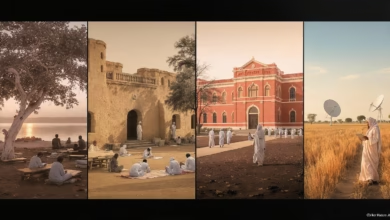

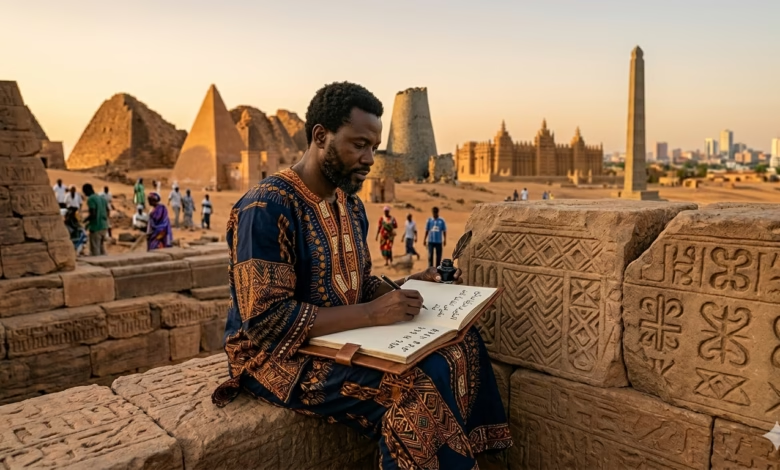
In A World Where The Narratives Of The Victors Have Long Dominated The Pages Of History, The Ancient And Famous African Proverb Stands Out: “Until The Lions Learn To Write, Every Story Will Always Glorify The Hunter.” For Many Centuries, The Continent Of Africa – The Cradle Of Humanity And The Source Of The First Civilizations – Has Been A Victim Of A Systematic Process Of Marginalization And Cognitive And Historical Distortion. The History Of Africa Has Been Written By Western Pens, And Through The Eyes Of Explorers, Colonizers, And Missionaries, Who Viewed The Dark Continent Either As A “Dark Continent” In Need Of Enlightenment And Salvation, Or As A Massive Repository Of Natural And Human Resources Ready For Exploitation. In The Midst Of This Orientalist And Eurocentric Vision, Authentic African Voices Were Obliterated, And Local Narratives Passed Down Through Generations Were Marginalized.
From The Heart Of This Deep Historical Dilemma Emerges The Book “An African History Of Africa: From The Dawn Of Humanity To Independence” By The British Broadcaster And Journalist Of Sudanese Descent, Zeinab Badawi, To Serve As A Corrective Revolution In The World Of Historical Writing. This Massive Tome Is Not Merely An Academic Narration Of Dates And Events; Rather, It Is An Investigative, Journalistic, And Emotional Project Aimed At Reclaiming The Stolen Narrative And Returning The Pen To The “Lions” So They Can Write Their Own History.
Zeinab Badawi Succeeds In This Book In Transforming Dense And Complex Historical Material Into A Vibrant Narrative. As An Experienced Journalist And Broadcaster, Badawi Uses Her Professional Tools With Exceptional Brilliance; She Does Not Settle For Sitting In Library Halls Or Diving Into Colonial Archives In London Or Paris, But Rather Goes Down Into The Field. The Author Toured More Than Thirty African Countries And Traveled Thousands Of Miles To Meet With African Historians, Anthropologists, And Archaeologists, And Most Importantly: The Keepers Of Oral Heritage And Local Narrators (Known In Some Parts Of West Africa As “Griots”). This Field Approach Gave The Book Exceptional Credibility And An Unmatched Vitality.
Dismantling The Myth Of “The Continent Without History”
The Book Begins Its Battle From The Very First Pages By Dismantling One Of The Most Stubborn Myths Entrenched By Western Thought, Which Is The Myth Formulated By The German Philosopher Georg Wilhelm Friedrich Hegel When He Claimed That Africa “Is No Historical Part Of The World; It Has No Movement Or Development To Exhibit.” Badawi Confronts This Flawed And Unjust Vision With A Style That Does Not Lean Towards Rhetoric Or Emotional Outburst, But Rather Relies On The Rigor Of Evidence And The Strength Of Argument. She Builds Her Narrative On The Premise That Africa Was Never Isolated Or Static, But Was Instead A Beating Heart Of Human Interactions, And An Incubator For The Oldest Civilizations Known To Humanity.
The Importance Of This Book Lies In Its Methodology (Afrocentric) Which Does Not Antagonize The West As Much As It Seeks To Do Justice To Africa. The Book Refuses To Begin The History Of Africa From The Moment Of The Arrival Of The “White Man” On Its Shores, Which Is The Trap Many Western Educational Curricula Fall Into By Reducing The Continent’s History To Periods Of Slavery And Colonization, As If Africans Had No Existence Or Political And Cultural Entity Prior To Their Contact With Europe. In Contrast, Zeinab Badawi Places The Periods Of Slavery And Colonization In Their True Proportion Within A Chronological Context Spanning Millions Of Years, Emphasizing That This Dark Era, Despite Its Cruelty And Devastating Impact, Represents Only One Chapter, And Perhaps A Relatively Short One, In The Vast Book Of African History.
A Journey In The Geography Of The Word
Zeinab Badawi’s Language In This Work Is Distinguished By A Narrative Flow That Resembles The Flow Of The Continent’s Great Rivers Like The Nile, The Congo, And The Zambezi. She Blends Breathtaking Geographical Descriptions Of The African Environment With Sober Historical Analysis. You Read And Imagine Yourself Accompanying Her On Her Journeys; You Smell The Scent Of The Earth After The Rain, You Listen To The Beating Of Drums In Remote Villages, And You See Her Fascination As She Stands Before The Ruins Of Empires That Once Touched The Clouds In Their Greatness. This Fusion Of “Field Investigative Journalism” And “Historical Narration” Is What Makes The Book Suitable To Be Fertile Ground For Major Book Reviews, As It Takes History Off The Cold Academic Shelves And Places It In The Hands Of The Reader In A Highly Entertaining Literary And Journalistic Mold.
Furthermore, The Author Pays Special Attention To “Oral History,” Defending It As A Reliable And Important Source Of Historical Knowledge. For In Societies That Did Not Fully Rely On Written Documentation In Some Of Their Periods, The Oral Transmission Of Narratives, Stories, And Lineages Was The National Archive That Preserved The Identity Of The Nation. And Instead Of Excluding This Heritage Under The Pretext Of Its Inaccuracy By Strict Western Standards, Badawi Cross-Referenced It With Modern Archaeological Discoveries To Produce For Us A Complete Panoramic Picture, Proving That African Memory Is Alive And Does Not Forget.
Africa Is Not Merely A Stage For History, But Rather Its First Factory. Badawi Begins Her Journey From The “Great Rift Valley” In East Africa, Where Paleoanthropologists, Like The Leakey Family, Discovered The First Fossils Of Human Ancestors.
Badawi Does Not Present These Discoveries As A Dry List Of Fossilized Bones And Ancient Dates, But Rather Weaves From Them A Continuous Story About The Journey Of Human Cognition. She Recounts How “Homo Sapiens” Evolved On This Land, And How The Diverse African Environment Posed Challenges That Pushed Our Ancestors To Invent Tools, Develop Language, And Establish The First Forms Of Social Organization. Reading These Chapters Is Not Limited To The Pleasure Of Learning About Our Biological Beginnings, But Goes Beyond That To Confirm That Africa Is The Primary Benefactor Of Humanity; From It Emerged The Successive Waves Of Human Migration That Populated Asia, Europe, And The Americas.
The Battle Of Knowledge: The Identity Of Egypt And Dismantling Eurocentrism
When Badawi Transitions To Talking About Early African Civilizations, She Wages A Fierce Intellectual And Historical Battle, Armed With Tools Of Critical Analysis. This Battle Manifests In Its Clearest Forms In Her Treatment Of The Civilization Of Ancient Egypt (Kemet). For Long Centuries, Orientalist And Western Historical Schools Sought To Sever Ancient Egypt From Its African Continent, And Arbitrarily Link It To The Mediterranean Basin And Europe.
Rereading The History Of Ancient Egypt Within A Comprehensive African Context, As Badawi Does, Is Not Merely A Narration Of Past Events, But Rather A Profound Exercise In The Sociology Of Knowledge And The Philosophy Of History; Where The Linguistic And Cultural Frameworks That Shaped The International Epistemological System For Centuries Are Dismantled. The Process Of “Whitewashing” The History Of Ancient Egypt Was An Ideological Necessity To Justify The Colonial Vision That Considered Africa An Incapable Continent Of Producing A Complex Civilization. Badawi Confronts This Narrative, Supported By Modern Archaeological Discoveries And Linguistic And Anthropological Studies, To Prove That Ancient Egypt Was The Pinnacle Of Cultural Evolution That Sprang From Within The Continent, And That Cultural, Commercial, And Demographic Exchange Flowed Freely Between Egypt And Its Neighbors In The South And West.
The Dynamics Of The Nile Basin: The Empire Of Kush And The Black Pharaohs
From Egypt, The Flowing Journalistic Narrative Takes Us South Along The Course Of The Nile, To Shed Light On One Of The Greatest Empires That Was Wronged In General History Records: The Empire Of Kush (In Present-Day Sudan). Here, The Ancient Dynamics Of The Nile Basin Emerge With All Their Strategic And Political Complexities. The Relationship Between Egypt And Kush Was Not Merely A Relationship Of Dominance And Subordination, But Was A Peer-To-Peer Civilizational Interaction, Which Included Periods Of Alliance, Intense Commercial Exchange, And Military Conflict Over Influence.
Zeinab Badawi Pauses With Much Admiration At The Era Of The “Twenty-Fifth Dynasty” (Which Was Sometimes Known As The “Black Pharaohs”), When The Kings Of Kush, Such As “Piye” And “Taharqa”, Managed To Unify The Entire Nile Valley, And Ruled A Vast Empire That Extended From The Heart Of Sudan To The Shores Of The Mediterranean Sea. Badawi Describes The Pyramids Of Meroë, Which Outnumber The Pyramids Of Egypt, And Talks About The Ingenuity Of The Kushites In Iron Smelting, And How Their Cities Were Advanced Industrial Centers. Through This Narrative, The Author Restores Consideration To A Strategic Historical Center Of Gravity That Had A Decisive Role In Shaping The Balances Of Power In The Ancient World.
Aksum And The Sovereignty Of The Red Sea Arena
The Picture Of Ancient Africa Is Incomplete Without Moving East Towards The Ethiopian Highlands And The Eritrean Coast, Where The Empire Of “Aksum” Emerged. With Her Precise Style, Badawi Paints A Panoramic Picture Of This Empire, Which Ancient Thinkers Considered One Of The Four Great Powers In The World (Alongside Rome, Persia, And China).
Aksum Was Not Merely A Local Power, But Rather A Strategic Player Controlling The Red Sea Arena And Vital Waterways. It Formed The Most Important Commercial Connecting Node Between The Roman Empire And India, And Dominated The Trade Of Ivory, Gold, And Spices. The Author Reviews The Profound Transformations That Aksum Underwent, Especially During The Reign Of King “Ezana” Who Made Christianity The Official Religion Of The State In The Fourth Century AD, Leaving Behind Giant Stone Obelisks That Still Stand Today As Silent Witnesses To A Unique Architectural And Spiritual Greatness.
Zeinab Badawi Succeeds In This Part Of Her Book In Linking Geography With History; For She Shows How Ancient Africa Was Not Isolated Communities In The Forests, But Rather Empires With A Strategic Vision, Interacting With The World, Controlling Trade Routes, And Building Civilizational Monuments That Defied Time.
At This Stage Of Reading, We Have Established A Deep Understanding Of The Roots Of African Civilization In The East And North Of The Continent. But African History Expands And Extends, And The Movement Of Trade And Ideas Did Not Stop. So How Did The Center Of Civilizational Gravity Later Shift Towards West Africa? And How Did The Great Gold Empires Arise Like Ghana, Mali, And Songhai, Which Astonished The World With Their Wealth And Their Political And Islamic Systems?
Bridges Of Sand: The Sahara Desert As An Artery For Civilization
Zeinab Badawi Proceeds With Us In Her Book To Break Another Stereotype Entrenched By Colonial Geography, Which Is The Image Of The “Sahara Desert” As An Impassable Geographical Barrier That Separated The North Of The Continent From Its South. In The Chapters Of This Part, Badawi Redraws The Map In The Reader’s Imagination, Transforming The Vast Sands Into A Pulsating Cultural And Economic Bridge, Where She Describes Caravans That Did Not Only Transport Salt And Gold, But Also Carried Ideas, Doctrines, Languages, And Sciences. It Is A Journey In A “Sea Of Sand” That Linked The Shores Of The Mediterranean To The Shores Of The Niger River, And Created An Integrated Geopolitical Space That Produced Empires Which Reached A Level Of Wealth And Organization That Made The Kings Of Europe In The Middle Ages Look At Them With Eyes Of Awe And Fascination.
This Stage Of The Narrative Begins By Shedding Light On The Ancient Empire Of Ghana, The “Land Of Gold,” Which Had No Geographical Relationship To The Present-Day State Of Ghana, But Was Instead Located In The Contemporary Regions Of Mali And Mauritania. Badawi Describes With Journalistic Brilliance How These Leaders Managed A Complex System Of Taxes And Administration, And How They Invested Their Position As Middlemen Between The Gold Mines In The South And The Consumers Of Salt In The North. And The Author Paints A Vivid Picture Of The Capital “Koumbi Saleh”, Where Coexistence Was The Master Of The Situation Between Local Beliefs And The Islam Arriving With Merchants, Thereby Creating An Early Model For Religious Tolerance And Cultural Integration That Characterized The West Of The Continent For Centuries.
Mansa Musa: The Man Who Drowned Cairo In Gold And Changed The Face Of The World
And When The Narrative Reaches The Mali Empire, The Historical Drama Peaks With The Character Of “Mansa Musa.” Here, Zeinab Badawi Uses Her Investigative Tools To Reread The Famous Pilgrimage Journey Of This King In 1324 AD, A Journey Which Was Not Merely A Religious Ritual, But Rather An International “Public Relations Campaign” That Placed Africa In The Heart Of The Global Map. Badawi Describes How Musa Crossed The Desert With A Caravan Comprising Thousands, Carrying With Him Tons Of Pure Gold Which He Distributed Generously In Cairo To A Degree That Led To The Collapse Of The Value Of Gold In The City’s Market For Years.
But Badawi Is Not Satisfied With This Showy Aspect, Rather She Penetrates To What Is Deeper; For She Explains That Musa’s Real Goal Was To Bring Minds, Scholars, And Engineers To Build An Empire Not Based On Gold Alone, But On Knowledge. And From Here, She Embarks On Describing The Qualitative Transformation Witnessed By The City Of “Timbuktu”, And How It Transformed From A Mere Station For Caravans Into A Global Scientific Beacon, Where The “Sankore” University Became A Destination For Students From All Corners Of The Islamic World, And Books And Manuscripts Became The Most Valuable And Traded Commodity, Sometimes Surpassing In Their Price Gold Itself.
From Gold To Knowledge: The Philosophy Of Education In Timbuktu And Djenné
Badawi Moves On So We Contemplate With Her The Unique Mud Architecture In The City Of “Djenné” And Its Great Mosque, Which Represents A Pure African Architectural Genius That Utilized The Resources Of The Local Environment To Build Spiritual And Artistic Monuments That Still Dazzle The World With Their Simple And Majestic Beauty. The Narrative Here Goes Beyond Physical Description To Reach The Philosophy Of Education In Those African Metropolises; Where Knowledge Was Viewed As A Tool For Liberation And Social Advancement. And The Author Asserts That This Scientific Renaissance In West Africa Was Contemporary With The Dark Ages In Europe, Thereby Reinforcing Her Central Argument That The Dark Continent Has Always Been An Authentic Partner In Shaping Human History, And Not Merely A Passive Recipient.
And With The Decline Of Mali’s Power, The “Songhai” Empire Emerges As A Legitimate Heir To This Greatness, Where Badawi Describes The Reign Of “Askia Muhammad” Who Organized The Empire According To The Latest Administrative And Bureaucratic Systems Of His Time. Songhai Created A Centralized Judicial System, Standardized Measures And Weights, And Established A Professional Army, Making It One Of The Largest Empires In African History In Terms Of Area And Organization. Through This Biography, Badawi Demonstrates That African Leaders Possessed Long-Term Strategic Visions, And Fully Understood The Importance Of Institutions In The Stability Of Nations.
Dismantling The Colonial Narrative In The Heart Of West Africa
The Added Value To This Part Of The Book Lies In Zeinab Badawi’s Ability To Connect These Historical Glories To Contemporary Reality. For As She Wanders Among The Ruins Of Timbuktu, Or Converses With Manuscript Preservers Who Risked Their Lives To Protect Them From Damage And Looting, She Reminds Us That This History Is Not Merely A Memory, But Is A Part Of The Living Identity That Africans Today Are Trying To Reclaim. She Confronts The Reader With The Difficult Question: How Can A Continent That Produced This Amount Of Organization, Wealth, And Knowledge Be Later Stigmatized With Primitiveness And Ignorance?
The Author Places Her Hand On The Wound, Explaining That The Deliberate Obscuration Of This History Was A Fundamental Pillar In Building The “Colonial Ideology” That Needed To Strip The African Of His Past In Order To Make It Easier To Enslave Him And Control His Future. This Flowing Narrative Does Not Merely Present Information, But Rather Presents An “Awareness”, Which Is What Makes The Book A Long Journalistic Article Characterized By Intellectual Depth And Literary Appeal.
In This Part, We Saw How Africa Flourished In The West And Center Thanks To Trade And Science. But, What About The Eastern Coasts And The South Of The Continent? How Did Africa Breathe Through The Indian Ocean? And What Are The Secrets Of Those Great Stone Cities In “Great Zimbabwe” That Baffled European Explorers And Who Tried By All Means To Deny Their Attribution To Africans?
An Archipelago Of Civilizations: When The Atmosphere Of The Indian Ocean Breathed Through An African Lung
With The Same Rhythm That Combines The Sobriety Of Historical Research And The Vitality Of The Field Journalistic Report, Zeinab Badawi Transports Us In This Chapter Of Her Book From The Glare Of The Sahara Desert Sands To The Blueness Of The Indian Ocean, To Reveal To Us Another Face Of The Faces Of African Genius: “The Swahili Civilization”. Here, Badawi Does Not Depict The Eastern Coast Of Africa As Merely Isolated Trading Posts, But Describes It As An Integrated “Geopolitical Space”, Which Represented The Beating Heart Of Global Trade For Many Centuries Before The Arrival Of European Explorers. She Paints A Picture Of City-States Like Kilwa, Mombasa, Lamu, And Zanzibar, As Cosmopolitan Metropolises, Where Minarets Built From Coral Embraced The Sky, And Where Merchants And Scholars From China, India, Persia, And The Arabian Peninsula Flocked To Participate In A Global Economic System Managed And Controlled In Its Joints By Par Excellence African Elites.
Badawi Smartly Pauses At The Dilemma Of Identity In The Swahili Culture, Dismantling Colonial Narratives That Attempted To Strip This Civilization Of Its African Roots And Attribute It Entirely To Arab Or Persian Migrations. With Her Investigative Style, The Author Clarifies That The Swahili Language, With Its Foundational “Bantu” Structure, Is The Greatest Evidence That This Civilization Sprouted From African Soil, Before It Absorbed And Integrated Into Its Fabric The Incoming Vocabulary And Influences. She Brilliantly Describes How Africans Harnessed The Monsoons (Strategic Climatic Shifts) To Connect Their Continent To Asia, And How African Commodities Of Gold, Ivory, And Textiles Were The Primary Engine For Prosperity In Distant Ports Like Guangzhou In China.
The Enigma Of Stone: Great Zimbabwe And The Slap Of Truth In The Face Of Eurocentrism
And When The Narrative Heads South Towards The Interior Highlands, Zeinab Badawi Places Us Before One Of The Most Exciting Chapters In The Continent’s History: “Great Zimbabwe”. Here, The Journalistic Article Turns Into Something Resembling A Historical Criminal Investigation; Where The Author Reviews How Early European Explorers Were Struck With Astonishment As They Stood Before The Towering Stone Walls That Were Built Without The Use Of Mortar (Mud Or Cement). And Badawi Bitterly Reveals How These Colonizers Tried In All Ways, Including Forging Evidence And Destroying Some Antiquities, To Deny That The “African Mind” Could Be Capable Of Such A Complex Architectural Achievement, And Falsely Attributed It To The Phoenicians Or King Solomon.
But Badawi Restores Consideration To The “Shona” People, The Builders Of This Civilization, Affirming Through Modern Excavations And Analyses That Great Zimbabwe Was Not Merely A Military Fortress, But Was A Political And Spiritual Center For A Vast Empire That Controlled The Gold Routes Extending To The Coast. Her Description Of Life Inside “The Great Enclosure” Reflects A Depth In Understanding Ancient Sociology, Where She Describes How The King Lived In A Sacred Isolation Reflecting His Status, And How The City Was Bustling With Industrial And Commercial Activity, Making It A Symbol Of Indisputable African Sovereignty.
The End Of Innocence: The First Clash With The Portuguese “Sea Monsters”
The Narrative Shifts Suddenly From A State Of Prosperity And Cultural Exchange To A Moment Of Violent Clash, Which Is The Moment Badawi Describes As “The Beginning Of The Eclipse”. With The Arrival Of “Vasco Da Gama” To The Shores Of East Africa At The End Of The Fifteenth Century, An Era Of “Discovery” Did Not Begin As Western Schoolbooks Claim, But Rather An Era Of “International Piracy” Began. With A Journalistic Style Overflowing With Dramatic Tension, Badawi Describes How The Portuguese Were Met With Surprise By Africans Who Were Accustomed To Peaceful Trade, Only To Be Surprised By Ships Heavily Armed With Cannons Seeking Not Exchange, But Monopoly And Subjugation.
The Author Reviews The Fall Of Swahili Cities One After The Other Under The Weight Of Brutal Military Force, And How The Portuguese Destroyed The Free Trade System In The Indian Ocean In Favor Of The Monopolistic Control Of The Portuguese Crown. And She Pauses At “Fort Jesus” In Mombasa As A Stone Witness To This Dark Age; Where Castles Transformed From Trade Centers Into Prisons And Military Strongholds. This Clash Was Not Merely A Military Conflict, But Was The Beginning Of A Long Process Of “Cognitive Dispossession” And “Economic Dependency” That Would Shape The Continent’s Features For Centuries To Come.
The Kingdom Of Kongo And The Losing Bet On Diplomacy
In The Center Of The Continent, Badawi Takes Us To The Kingdom Of Kongo To Present Us An Eloquent Lesson In The History Of Early International Relations. She Tells The Story Of King “Afonso I”, Who Embraced Christianity And Tried To Build A Peer-To-Peer And Diplomatic Relationship With Portugal, Corresponding With Its King As A “Brother” And Friend. And With Analytical Brilliance, Badawi Shows How This African Desire For Openness Was Exploited To Be Transformed Into A Trap For Dependency And Human Trafficking. The Letters Of Afonso In Which He Pleads To Stop The Kidnapping Of His People Represent One Of The Most Tragic Historical Documents, And They Form The Central Turning Point In The Book From The History Of Great Empires To The History Of “The Great Human Tragedy”: The Transatlantic Slave Trade.
In This Part, Zeinab Badawi Succeeded In Painting The Features Of Africa As It Stands At A Crossroads; Between The Glories Of The Past Built By Arms And Minds, And An External Threat Possessing Destructive Technology And An Endless Desire To Expand. She Has Proven That The Continent Was Not Absent From The Theater Of Events, But Was Rather The Biggest Victim Of A New Global System That Began Forming On The Ruins Of Its Flourishing Civilizations.
The Atlantic Holocaust: When The Ocean Turned Into A Cemetery For Memory
Zeinab Badawi Arrives In The Final Part Of Her Epic Journey To The Darkest And Most Painful Chapters In Human History, Which Is “The Transatlantic Slave Trade”. With Journalistic Brilliance Mixed With High Human Sensibility, Badawi Does Not Settle For Narrating The Numbers Of Victims Which Exceeded Millions, But Penetrates Into The “Sociology Of The Disaster”. She Describes How This Trade Did Not Stop At Kidnapping Bodies, But Sought To “Dismantle The Social Structures” Of The Continent; Where Kingdoms Transformed From Centers Of Production And Creativity Into Turbulent Entities Governed By Obsessions With Security And Fear. And The Author Explains How This Continuous Human Hemorrhage For Centuries Was Not Merely A Loss In The Workforce, But Was A “Brain Drain” And An Uprooting Of An Entire Generation Of Craftsmen, Artists, And Leaders Who Were Supposed To Lead The Renaissance Of The Continent.
And Badawi Pauses At The Scene Of The “Door Of No Return” On Gorée Island In Senegal, Describing It In A Descriptive Style That Makes The Reader Feel The Coldness Of The Stone And The Narrowness Of The Cells. But, And Within The Framework Of Her Corrective Methodology, She Also Highlights The “History Of Resistance” Inside Ships And On Plantations, Emphasizing That The African Was Never A Passive Victim, But Was Resisting With All He Had, From Armed Rebellion To Preserving His Language And Beliefs As A Form Of Spiritual Steadfastness, Which Later Led To The Formation Of Hybrid And Strong Identities In The Diaspora That Enriched The World With Art, Music, And Thought.
The Paper Partition: The Berlin Conference And The Engineering Of Internal Diaspora
The Narrative Moves Towards The Nineteenth Century, To Tackle The Moment Of “Clinical Death” For Traditional African Sovereignty: The Berlin Conference (1884-1885). Badawi Describes This Event With Sharp And Precise Phrases; Where Men Gathered In Air-Conditioned Halls In Europe, And In Their Hands Rulers And Maps, To Divide A Continent Whose Land Most Of Them Had Never Set Foot On, Without The Presence Of A Single African At The Table. She Clarifies How Artificial Borders Were Created Which Tore Single Ethnicities Apart And Brought Together Disparate Groups, Thereby Planting The Seeds Of Geopolitical Conflicts That The Continent Continues To Suffer From To This Day.
And In This Context, Badawi Reviews The “Myth Of The Civilizing Mission” That Colonialism Used As A Pretext. In An Investigative Style, The Author Dismantles These Claims Through Reviewing The “Congo Free State” Under The Rule Of King Leopold II, Where The Continent Transformed Into A Private Estate For The Brutal Plundering Of Rubber And Ivory. She Places The Reader Before A Stark Paradox: How Could Europe, Which Was Calling For Values Of Enlightenment And Freedom, Practice The Most Hideous Types Of Extermination And Disguised Slavery In Africa? This Chapter Is Not Merely History, But Rather A Deep Analysis Of The Historical Roots Of The Economic Underdevelopment And Dependency That Were Forcibly Imposed On The Continent.
The Winds Of Change: The New Dawn And Building The Dream Of Independence
But The African Night Did Not Prolong; As Badawi Transports Us To The Era Of “The Great Awakening”. With A Style That Inspires Hope, She Tells The Story Of The Emergence Of National Liberation Movements And Pan-Africanism. She Brilliantly Reviews Charismatic Figures Like Kwame Nkrumah, Jomo Kenyatta, Patrice Lumumba, And Julius Nyerere. She Does Not Present Them As Deaf Icons, But As Leaders Who Faced Monumental Challenges In Attempting To Forge New National Identities From The Ruins Of Colonial Partition. Badawi Describes The Moments Of Declaring Independence, From Ghana To Algeria, As A Continental Wedding That Restored To Africans Their Belief In Their Ability To Forge Their Destiny.
And The Author Dives Into The Philosophy Of Building The Modern African State, Explaining That Political Independence Was Nothing But The First Step In An Arduous Journey Towards “Cognitive And Economic Independence”. And She Reviews The Conflicts These Leaders Faced In The Midst Of The Cold War, Where The Continent Once Again Transformed Into An Arena For Settling Scores Between Superpowers, Which Led To The Assassination Of Dreams (And Leaders) Who Could Have Changed The Course Of African History, Like Lumumba In The Congo.