
In A World Where Strategic Shifts Are Accelerating And The Interests Of Major And Regional Powers Intersect, The African Continent Emerges As A Vital Theater For Shaping New Global Balances. An Astute Observer Of International Relations Cannot Overlook The Relentless Moves Made By The Islamic Republic Of Iran To Establish A Foothold In Regions Of Immense Geopolitical Importance, Most Notably The Horn Of Africa. In This Controversial And Complex Context, A Profound And Significant Research Study Titled “Iranian Policy Towards The Horn Of Africa Countries” Stands Before Us. This Academic Study, Prepared By Researcher Dr. Samah Mohamed Salem Bayiumi And Published In The “Middle East Research Journal” Issued By The Middle East Research Center At Ain Shams University In Issue No. 358 In September 2014, Provides A Precise And Objective Anatomy Of The Threads Of This Policy, Deciphering The Enigma Of Iranian Maneuvers In That Strategic Part Of The World.
Africa: A Historical Ambition And A Golden Opportunity
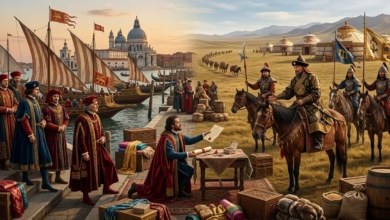
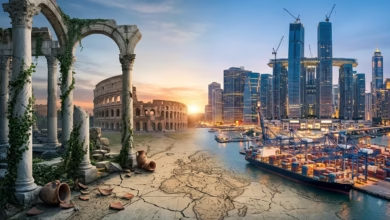
The Researcher Begins Her Analytical Article With A Historical And Economic Contextualization That Places The Reader At The Heart Of The Scene. She Asserts That The African Continent Has Always Been, Throughout History And Across Eras, A Strategic Ambition For Many Countries, Particularly European Colonial Powers That Sought To Control It. This Historical And Ongoing Fascination With The “Dark Continent” Is Due To Its Vast And Unlimited Reserves Of Natural Wealth And Raw Materials, Which Strongly Qualifies It To Become The Primary Supplier And Main Feeder For The World’s Industries In The Near Future.
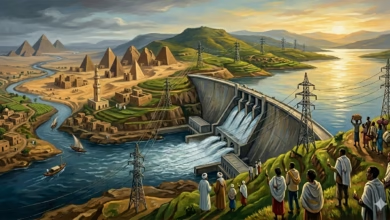
Within This International Scramble, Strategic Experts And Analysts Believe That The Main Driver And Primary Motive Behind Iran’s Growing Interest In African Countries Lies In Tehran’s Urgent Need For The Raw Materials Abundantly Available In Most Of The Continent’s Countries. This Is In Addition To Its Tireless Pursuit To Create New And Promising Markets To Absorb Iranian Exports And Revitalize Its Economy. Tehran Clearly Aspires To Play A Pivotal And Influential Role On The Global Stage. To Achieve This Grand Objective, The African Continent Has Received The Lion’s Share Of Iranian Diplomacy’s Attention, With The Early Roots Of This Iranian Presence In The African Arena Dating Back To The 1960s.
The Strategy Of Soft Power And “Equal Partnership”
To Achieve These Strategic Breakthroughs, Iran Does Not Rely On Crude Traditional Methods. Rather, As The Study Explains, It Resorts To A Pragmatic Policy Based On A Soft Power Strategy And Dual-Objective Approaches Towards The Countries Of The Horn Of Africa. It Seeks To Build Invisible Bridges Of Influence And Makes Strenuous Efforts To Offer A Package Of Economic Incentives To Attract The Attention Of These Countries And Draw Them Into Its Orbit. This Is Not Limited To The Economic Aspect Alone; It Extends To Other Vital Areas, As Tehran Provides Specialized Military Assistance And Conducts Specialized Training Courses To Consolidate This Influence.
What Confirms This Strategic Vision And Iran’s Extreme Eagerness To Deepen Ties With The Countries Of The Horn Of Africa Are The Public And Explicit Statements Made By Top Iranian Leaders. Former Iranian President Mahmoud Ahmadinejad Transparently Expressed Iranian Aspirations And Ambitions To Win A Substantial Share Of Africa’s Latent Wealth. During His Speech At The Twelfth Summit Of The African Union In The Ethiopian Capital, Addis Ababa, In 2009, Ahmadinejad Affirmed That “Africa Is A Continent Brimming With Human And Cultural Values And Great Capabilities In Various Fields. Conversely, Iran Has Immense Capabilities That Enable It To Enter Into Practical And Profitable Cooperation With The African Continent.” On Another Occasion, He Clearly Pointed Out That The African Continent Is Considered The Richest Globally, Given That It Contains The Best Types Of Strategic Natural Resources Such As Oil, Uranium, And Vast Forests, As Well As Possessing The Best Human And Agricultural Resources.
Embodying This Importance, Ahmadinejad Visited West African Countries Five Times Since Taking Power, One Of The Latest Being His Visit To Mauritania In 2011. During His Visit To The Republic Of Mali In July 2010, Ahmadinejad Stated That Mali Offers Excellent Elements For Bilateral Cooperation, Possessing Vast Fertile Agricultural Lands, Rivers, And A Hardworking Labor Force. The Researcher Notes That Iran, Amidst Its Relentless Efforts To Establish These Economic Relations, Attempts To Promote A New Civilizational Concept That Seemingly Contradicts The Western Approach. It Claims That It Does Not Seek To Exploit The Continent’s Countries In Pursuit Of Immediate And Short-Term Economic Gains, But Rather Aspires To Build A True And Equal Partnership That Achieves Benefit And Profit For Both Parties Together. This Was Summarized By Former Iranian Foreign Minister Manouchehr Mottaki When He Said: “We Do Not Wish To Plunder Africa, As Westerners And Colonialists Do; We Seek To Build Bilateral Economic Relations That Are Mutually Beneficial.”
Deciphering Iranian Foreign Policy
To Deconstruct This Strategy Objectively, The Researcher Employed The “Systems Analysis” Approach In Political Science—A Methodology Founded By Thinker David Easton—To Study The Interactions Of Iranian Policy And Its Response To Its Environment. Before Diving Into The Complexities Of The Horn Of Africa, The Study Takes Us On A Foundational Tour To Understand The Essence Of “Foreign Policy” In General, And For Iran In Particular.
The Study Indicates That Foreign Policy Is A Set Of Political Goals Designed To Clarify The Mechanism By Which A Particular Country Engages With Other Countries In The International Community. These Policies Primarily Aim To Protect National Interests, Ensure National Security, And Achieve The State’s Ideological Goals And Economic Prosperity. These Goals Are Realized Either Through Paths Of Positive, Peaceful Cooperation With Other Countries, Or By Resorting To Aggression, Waging Wars, And Practicing Exploitation. This Policy Also Includes Several Core Dimensions, Including Unilateral, Official, And Public Characteristics, As Well As Optional And External Characteristics.
However, When We Focus The Microscope Of Analysis Specifically On Iranian Foreign Policy, We Find Ourselves Facing A Structure Characterized By A Highly Complex And Intertwined Nature. As The Study Points Out, A Researcher Interested In Tracking And Observing This Policy Will Find Clear Equivocation And Deep-Rooted Ambiguities In Many Of Its Aspects. It Is A Policy In Which The Religious Dimension Mixes And Intertwines With The Nationalist Dimension, And Where The Revolutionary Spirit Merges With Pragmatic Utilitarianism. Across Its Various Stages, This Iranian Policy Has Been Distinguished By Striking Characteristics Such As Sensationalism, The Ability To Maneuver, The Mastery Of Distributing Roles Among Its Institutions, And The Proficiency In Playing The Time Factor In The Corridors Of Negotiations And Conflicts.
Breaking Isolation And Repositioning
The Researcher Concludes In This Section That Iranian Foreign Policy Has Recently Intensified Its Earnest Attempts To Open More Circles Of Cooperation And Partnership With All Regional And International Blocs, Whether African, Arab, Or Gulf Circles. This Feverish Diplomatic Activity Did Not Emerge From A Vacuum; Rather, It Runs Entirely Parallel To The Escalating Western And American Pressures Imposed On Tehran Over Its Controversial Nuclear Program File.
The Iranian Diplomatic Machine Aims Behind These African And International Moves To Achieve Two Main Goals: First, To Mobilize And Win More Votes And International Backing To Support Its Positions In UN Forums. Second, To Send A Clear Political Message, Specifically To Western Circles, That Iran Possesses Wide Margins Of Maneuver And A Real Ability For External Openness, In A Desperate Attempt To Change The Stereotypical Image Constantly Depicting It As Extremist And Closed-Off.
From Aryan Nationalism To Global Grievance: Ideological Roots
A Journalist Or Political Analyst Cannot Understand The Nature Of Contemporary Iranian Maneuvers Without Returning To The Foundational Roots Of The Current Iranian Regime. The Study Draws Our Attention To A Highly Significant Historical Paradox; Since Iran Began Its New Era In The Early 1980s Following The Outbreak Of The Khomeinist Revolution, Its Will Was Clear To Become One Of The Active And Influential Powers On The Global Political Map, But Without Abandoning Its Revolutionary Principles By An Inch. The Researcher Points Out That This Revolution Began In Its Early Stages As A Revolution Aiming For The “Triumph Of The Aryan Race,” And Was Raised On The Literature Of Hating What Was Then Called “Westoxification” (Poisoning By The West).
However, The Most Prominent Strategic Shift Occurred When Khomeini Came To Reap The Fruits Of This Revolution, Altering Its Course And Cloaking It In A “Missionary Religious Mantle.” From Here, The Iranian Leadership Attempted To Transform The Local Iranian Situation Into A Global Extension Of The “Revolutions Of The Oppressed” And A Cross-Border Ideological Uprising. Embodying This Vision, Iran, According To The Study’s Expression, Stretched Its Long Neck To Overlook All The “Dead Or Neutral Zones” To Gather And Strengthen Itself There, And The Iranian Arena Found No Land More Fertile And More Neglected Than The African Continent To Begin This Expansion.
The Five Goals: Expansion Strategy Via The Red Sea
Based On This Ideological Perspective Mixed With Political Pragmatism, Iran’s Foreign Policy Towards The Horn Of Africa Countries And The Neighboring Countries Bordering The Red Sea Basin Seeks To Achieve A Quintet Of Specific Strategic Goals:
-
First: To Firmly Consolidate Its Political Influence As An Integral Part Of The Anti-Western Axis, Which Tehran Strives To Establish And Frame In Third World Countries, In A Continuous Attempt To Grow And Diminish The Volume Of Western Influence, Specifically American Influence.
-
Second: To Achieve Its Pressing Economic Interests And Needs, In Light Of The Severe International Sanctions That Have Harmed The Iranian Economy On Other Continents, Making Africa A Vital Breathing Space For It.
-
Third: To Export The Principles Of Its Revolution By Establishing And Sponsoring Iranian Institutions And Cultural Centers That Work On Spreading Shiite Thought, And To Enhance This Influence By Intensifying Its Efforts Within The Countries And Islamic Communities Living In East Africa.
-
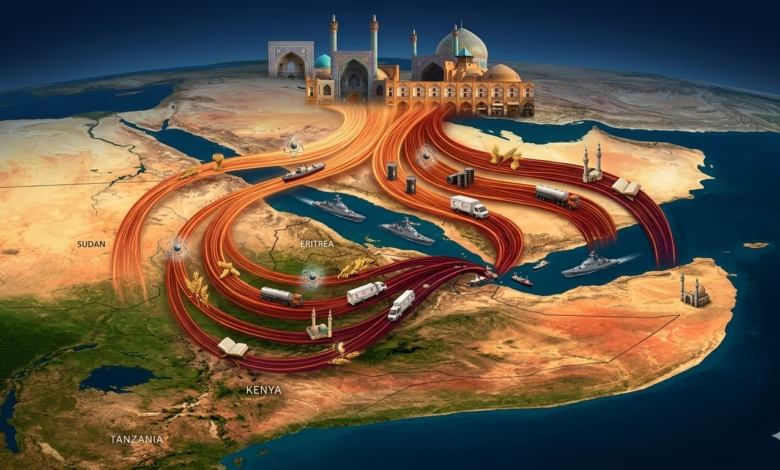
Fourth: To Create And Secure Maritime And Land Corridors That Lead Iran Directly To Competitive Arenas Of A Confrontational And Clash-Oriented Nature In The Middle East. The Study Indicates The Possibility Of These Corridors Being Used For Secret Purposes Such As Arms Smuggling And Executing “Terrorist Operations.” In This Regard, The State Of Sudan Is Considered A Highly Important Station For Tehran.
-
Fifth: To Establish An Actual Physical Presence On The Ground, And An Effective And Influential Naval Presence In The Red Sea Theater. This Sea Is Strategically Important For Iran As It Leads To The Suez Canal. To Achieve This, Tehran Works On Strengthening Its Relations With The African Countries Bordering This Sea, Including Sudan, Eritrea, And Djibouti. On The Opposite Bank, It Seeks To Strengthen Its Naval Influence Through Its Relations With Yemen; In June 2009, It Signed An Agreement Allowing Iranian Military Fleets To Dock In The Strategic Port Of Aden, As An Announced Part Of Iran’s Mission To Combat Somali Pirates, With Expectations Of Them Joining The Iranian Warships Stationed In Somali Waters To Protect Its Commercial Vessels.
Dark Shadows On Arab National Security
These Intense Movements Do Not Pass Without Leaving Dangerous Repercussions. Some Experts View The Increasing Pace Of Iranian Activities In The Horn Of Africa As Casting Dark Shadows And Direct Negative Reflections On The State Of Arab National Security As A Whole, Representing An Explicit Threat To The National Security Systems Of Certain Arab Countries.
The Arms Of This Influence Extend To Play A Hidden And Complex Role In The Fragmented Somali Arena, Adding To The Complexities Of The Continuing Somali Dilemma. Here, The Utmost Degrees Of Iranian Pragmatism Become Evident; Despite The Clear Sectarian Disparity And The Predominantly Sunni Nature Of Somali Groups, Iran—Just As It Did In Previous Experiences Like The Afghanistan Arena—Never Hesitates To Engage And Cooperate Tactically With Any Fundamentalist Sunni Organizations That Serve Its Transitional Interests.
The Horn Of Africa: The Inflamed Chessboard
The Researcher Then Moves On To Dissect The Geography Of The Conflict, Asserting That No One Can Deny The Fact That Africa Is The Continent Of Islam And Civilization, In Addition To Its Natural Wealth And Immense Economic Potential That No Decision-Maker In The Foreign Policy Of The Islamic Republic Of Iran Can Ignore. Iranian Interests Focus Primarily On Forming And Rooting Strong Relations With East African Countries, Especially Those Located In The Horn Of Africa Region Stretching Along The Red Sea Coast, Led By Sudan. Tehran Views The East African Region As Fertile And Ideal Soil For Its Political, Military, And Economic Activities, And Even Considers It An Integral Part Of The Comprehensive Iranian Strategy Seeking To Break The Control And Influence Of Major Powers In The Middle East.
But, What Does This “Horn” Comprise Geographically And Demographically To Garner All This Momentum? The Study Explains That The Horn Of Africa Is That Prominent Geographical Projection In The East Of The Dark Continent, Encompassing Somalia, Djibouti, Ethiopia, And Eritrea, With Sudan, Kenya, And Uganda Attached To It In Terms Of Affect And Influence. This Region Is Characterized By A Clear Islamic Identity Due To The High Muslim Population Density Inhabiting It. This Density Is Mostly Formed By Ancient Tribes Such As The Oromo And Galla In Ethiopia, Somalis Distributed In Somalia, Djibouti, Ogaden In Ethiopia, And NFD In Kenya, In Addition To The Afar Tribes In Djibouti, Eritrea, And Ethiopia, And The Beja Tribes Distributed Between Eritrea And Eastern Sudan, Not To Mention Other Groups And Tribes Comprising Varying Percentages Of Muslims Like The Amhara And Others.
The Strait Conflict And The Battle To Break Isolation
This Region Gains Its Vitality And Extreme Strategic Importance From A Strict Geographical Reality. Its Countries Overlook The Waters Of The Indian Ocean Directly On One Hand, And Fully Control The Southern Entrance To The Red Sea Where The Strategic “Bab El-Mandeb Strait” Lies On The Other Hand. This Unique Location Allows The Horn Of Africa Countries To Strongly Control The Artery Of Global Trade Routes, Specifically The Vital Oil Trade Coming From The Gulf States And Heading To The Markets Of Europe And The United States Of America.
The Region Is Also Considered An Inevitable And Crucial Transit Corridor For Any Military Movements Or Deployments Coming From Europe Or The United States Toward The Arabian Gulf Region. The Importance Of The Horn Of Africa Does Not Stop At Geographical Location Considerations Alone But Extends To Include Latent Natural Resources, Foremost Among Them Oil—A Factor That Is One Of The Main Reasons That Prompted Washington To Sponsor Peace Negotiations In Sudan. Added To This Is Its Geographical And Historical Proximity To The Arabian Peninsula With All Its Cultural Characteristics And Economic Potentials, And The Presence Of Numerous Islands In The Region Of Supreme Strategic Importance From Both Military And Security Perspectives.
This Strategic Weight Of The Horn Of Africa Has Turned It Into A Traditional Sphere Of Western Influence And Made It A Permanent Epicenter For Feverish Competition Among Major Powers. In The Midst Of This Race And International Competition, Iran Steps Forward, Having Shown An Increasing And Unprecedented Interest In The Countries Of The Horn Of Africa Recently. In The Context Of Its Endeavors To Achieve Tangible Breakthroughs, Iranian Policy Relies On Several Axes, Utilizing A Network Of Unofficial Interactions And Soft Tools To Serve Its Interests Through Individuals And Organizations Operating Across The Continent.
However, Iran’s Path Is Not Paved With Roses. The Opportunities For Cooperation Between It And The Countries Of The African Continent Collide With Influential External Factors, Most Notably The Role Of Regional And International External Powers Hostile To The Iranian Regime, Which Make Strenuous Efforts To Isolate It And Spoil Its Relations With The Countries Of The Region. In This Fierce Diplomatic Arena, The Study Highlights The Israeli Stance As A Prominent Example, Where Israel Directly Caused The Severing Of Diplomatic Relations Between Iran And Zambia In 1993, Using The Weapon Of Propagating Media Rumors That Claimed The Iranian Regime Supported The Zambian Opposition. This Is The Exact Same Tactic And The Same Type Of Rumors That Israel Constantly Tries To Promote To Spoil And Undermine The Growing Relations Between Iran And South Africa. In The Same Vein, Western Countries, Led By The United States Of America, View Any Potential Rapprochement Between Iran And South Africa With A Great Deal Of Concern And Anticipation, As Washington Believes This Rapprochement Directly Harms Its Vital Strategic Interests In The Dark Continent.
However, The Researcher, In The Interest Of Truth And Academic Objectivity, Draws Attention To An Important Fact: Iran Is Not The Only Party Seeking To Achieve Its Interests In This Equation. The Countries Of The Horn Of Africa Themselves (Specifically Sudan, Ethiopia, Kenya, Uganda, Eritrea, Djibouti, Somalia, Tanzania, And The Comoros) Traditionally Possess Normal Relations With Iran. These Relations Are Based On Common Goals And Interests For Both Sides, And The Facets Of This Cooperation Diversify To Include Political, Economic, Military, And Even Religious And Cultural Fields, Framed By Numerous Agreements And Mutual Cooperation Protocols.
The Diplomatic Axis: Africa As An International “Backer”
Tehran Is Well Aware Of The Voting Power Of The Dark Continent In International Forums. Africa Holds One-Third Of The Seats In The United Nations General Assembly And Constitutes Half Of The Non-Aligned Movement’s Structure. This Demographic And Political Weight Has Made The Continent An Indispensable Strategic Ally For Iran In Confronting Western Pressures.
The Study Indicates That This Trend Began To Crystallize Clearly Since The Era Of President Hashemi Rafsanjani, Who Undertook A Tour Of Six African Countries In 1996, Accompanied By A High-Level Delegation Of Economic Group Ministers And The Central Bank Governor, In A Clear Indication Of Tehran’s Intention To Link Politics With Economics. However, The Greatest Momentum Was Achieved During The Era Of President Mahmoud Ahmadinejad; In 2009 Alone, Iranian Officials Made More Than Twenty Official Visits To The Continent’s Countries.
The Goal Of This Diplomatic Mobilization, According To The Researcher, Goes Beyond Merely Building Friendships; It Is A Relentless Endeavor To Create An “Alternative Global Order” Comprising Powers Hostile To American Hegemony, And To Win The Support Of The Horn Of Africa Countries For Iran’s Thorny Files, Foremost Of Which Is Its Right To Possess Nuclear Technology For Peaceful Purposes. Africa Here Is Not Just A Continent, But A “Bargaining Platform” That Grants Iran Additional Leverage Cards In Its Struggle With The Superpowers.
The Economic Axis: The Search For “Uranium” And Alternative Markets
Revolutionary Sentiment Alone Was Not The Driver; Rather, Economic Necessity Was The Actual Leader. The Study Describes Iranian Interest In Africa As A “New Discovery” Of A Virgin Continent Teeming With Raw Materials. Iranian Economic Ambitions Are Summarized In Three Fundamental Points:
-
Securing Strategic Resources: Tehran Sets Its Eyes On African Uranium Mines To Ensure The Continuation Of Its Nuclear Program Away From International Monitoring And Restrictions.
-
A Market For Iranian Products: Under The Shadow Of Sanctions, Iran Is Looking For “Favorable” Markets To Offload Its Industrial Products, And It Has Found In The Horn Of Africa Countries A Thirst For Iranian Investments And Goods.
-
Oil Coordination: Iran Seeks To Strengthen Its Relations With Oil-Producing African Countries To Activate OPEC’s Role In Serving The Interests Of Producing Nations And To Cooperate In Exploration And Drilling Fields.
Models Of Penetration: Kenya, Uganda, And Sudan
The Study Reviews Concrete Examples Of This Economic Expansion. In Kenya, The Volume Of Trade Exchange Reached $100 Million Annually, With Ambitions To Reach $1 Billion. In Uganda, Cooperation Transcended The Boundaries Of Simple Trade To Reach Major Industrial And Agricultural Partnerships, Including Launching Factories For Assembling Tractors, Developing Fisheries, And Even Allocating Vast Lands To Iranian Institutions To Establish Model Agricultural Projects.
Sudan Remains The “Crown Jewel” In This Strategy, As Tehran Views It As A Bridge Connecting Its Influence In The Middle East With The Depths Of The African Continent. Cooperation With Khartoum Was Not Limited To Economic Aspects But Extended To Include Military Training And Logistical Assistance, Making Sudan A Vital Station For Securing The Maritime Corridors That Ultimately Lead To The Suez Canal.
Soft Power And “Parallel” Institutions
Iran Does Not Rely Solely On Official Channels But Employs A Complex Network Of “Unofficial Interactions.” Iranian Trade Fairs Are Spread Across Most Capitals Of The Horn Of Africa, And Cultural Centers Act As Arms For Spreading Shiite Thought And Building Loyal Popular Bases. These Soft Tools Are Intelligently Used To Change The “Stereotypical Image” Of Iran As A Hardline State, Presenting It Instead As An Alternative Developmental Model Supportive Of The “Oppressed” In The Continent.
Sudan: The “Bridgehead” And Strategic Depth
The Study Dedicates A Special Section To Sudan, Describing It As The “Most Important State” For Iran In This Region. Sudan Was Not Just A Trading Partner But Transformed In The Iranian Strategic Mind Into A “Bridgehead” Linking Tehran To The African Depth And The Arab Arena Simultaneously. The Researcher Points Out That Sudan Acted As A Vital Station For Creating “Maritime And Land Corridors” Leading Directly To Confrontation Zones In The Middle East. Despite The Declared Official Nature Of The Relations, The Study Points To Accusations And International Concern Over The Use Of These Corridors For “Secret” Purposes, Including Arms Smuggling And Supporting Allied Movements, Which Made Sudan An Indispensable Linking Ring In The “Remote Confrontation” Strategy That Tehran Masters.
Eritrea And Djibouti: A Race Towards “Bab El-Mandeb”
Iranian Influence Is Not Complete Without Control Over—Or At Least A Presence Near—Vital Straits. Here, The Importance Of Eritrea And Djibouti Emerges. Iran Realizes That A Presence In These Countries Means Direct Supervision Over The Bab El-Mandeb Strait, Which Is A “Chokepoint” For Global Trade.
The Study Reveals That Iran Sought To Strengthen Its Naval And Physical Presence In The Red Sea As A Strategic Goal Ultimately Leading To The Suez Canal. Interestingly, Iran Utilized The “Combating Somali Piracy” File As A Legitimate Cover For The Presence Of Its Warships In Somali Waters And Near The Yemeni Port Of Aden, Giving It International Legitimacy For Its Military Movements In A Highly Sensitive Region.
Tools Of Penetration: “The Five Organizations” And Soft Power
One Of The Smartest Aspects Of The Iranian Strategy, As Described By The Study, Is The Reliance On “Parallel Institutions” That Operate Under A Humanitarian Or Cultural Guise While Serving Long-Term Political And Ideological Goals. The Researcher Mentions Five Main Organizations That Play The Role Of “Spearhead” In This Penetration:
-
Al-Balagh Foundation And Cultural Centers: Active In Spreading Shiite Thought And Building Loyal Popular Bases.
-
The Martyr’s Foundation And The (Khomeini) Relief Committee: Providing In-Kind Assistance To The Needy, Creating A State Of “Political Gratitude” Towards Tehran.
-
The Iranian Red Crescent Society: Providing Medical And Humanitarian Cover For Iranian Presence In Remote And Marginalized Areas.
These Organizations, According To The Study, Work In Perfect Harmony To Gradually Change The “Identity Of The Region” And Build Loyalties That Transcend National Borders, Which Provokes The Ire Of Other Regional Powers That See This “Sectarian Encroachment” As A Threat To Social Stability.
Challenges: The Israeli “Veto” And American Pressure
Despite This Success In Penetration, Iran Faces A “Retaining Wall” From External Powers. The Study Cites The Israeli Role, Which Succeeded In Spoiling Tehran’s Relations With Countries Like Zambia Through Intensive Media And Diplomatic Campaigns. Furthermore, The American “Veto” Represents An Obstacle To Iran’s Ambitions In South Africa, Where Washington Monitors Any Rapprochement In The Nuclear Or Military Fields With A High Degree Of Caution And Suspicion.
Conclusion: The Horn Of Africa As An Arena For A New “Great Game”
The Researcher Concludes This Axis By Emphasizing That The Horn Of Africa Region Is No Longer Just Forgotten Geography But Has Transformed Into An International Chessboard, Where Iran Plays The Role Of The “Troublesome Player” Seeking To Overturn Traditional Balances Of Power. Iran Is Not Only Looking For Uranium Or Markets, But It Is Also Searching For Alternative “International Legitimacy” And “Leverage Cards” To Place On The Negotiation Table With The West.