
Reasons For Losses In the Rapid Support Forces
The illusion of superiority and the collapse of the militia structure

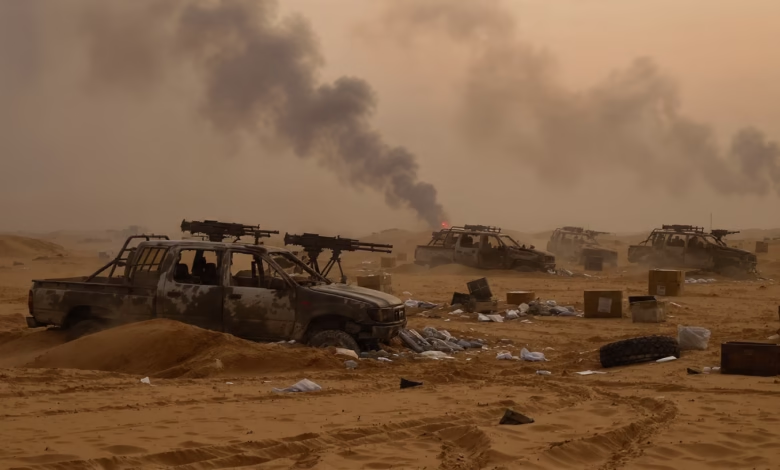
The Ongoing Conflict In Sudan Constitutes A Crucial Turning Point Whose Repercussions Are Not Confined Merely To The Sudanese Domestic Sphere, But Extend To Deeply Affect The Regional Stability Of East Africa And The Strategic Depth Of The Nile Basin. At The Heart Of This Complex Geopolitical Landscape, The Importance Of Dismantling The Combat And Organizational Structure Of The Rebel Forces Emerges As A Key To Understanding The Trajectories Of The War And The Possibilities Of Restoring The Stability Of The Central State. In This Context, A Study By Researcher Abbas Mohammed Salih Abbas, Published By The Capital Forum For Political And Societal Studies Under The Title “Analysis Of The Causes Of Losses In The Combat Approach Of The Rapid Support Forces In Sudan,” Provides A Precise Dissection Of The Structural Contradictions Plaguing These Forces. The Study Sheds Light, In A Deeply Analytical Manner, On How The Combat Tactics That Granted The Militia A Temporary Superiority At The Beginning Of The Rebellion, Which Erupted On April 15, 2023, Are The Very Same Ones That Led To It Suffering Catastrophic Human And Field Losses In The Medium And Long Term.
In Its Initial Offensive, The Rapid Support Forces (RSF) Relied On A Combat Style Based On “Human Waves” And High Firepower Density, Exploiting The Mobility Provided By Four-Wheel-Drive Vehicles And Motorcycles To Execute Rapid Flanking Maneuvers And Lay Ambushes. This Operational Approach Enabled Them, In The Early Stages, To Achieve Tangible Field Breakthroughs, Gain Near-Complete Control Over The Neighborhoods Of The Capital, And Besiege Vital Headquarters Belonging To The Sudanese Armed Forces Inside Khartoum For Several Consecutive Months. However, This Swift Tactical Superiority Carried Within It The Seeds Of Its Own Destruction, As The Subsequent Courses Of The Battles Demonstrated That These Tactics Were Not Devoid Of Fatal Flaws That Drained The Militia In A Manner Unprecedented In The History Of Armed Rebellions In The Region. The Study Transparently Clarifies That The Massive Human Losses Among RSF Fighters Are Approaching, In Their Staggering Volume, The Numbers Of Military Casualties In The Two-Decade-Long Second Sudanese Civil War Or The Prolonged Rebellion In The Darfur Region. This Reflects A Clear Recklessness And Indifference On The Part Of The Militia’s Leadership Toward The Lives Of Its Elements And Their Human Value.
One Of The Most Prominent Deep-Seated Structural Dilemmas Discussed In The Report Is The RSF’s Dependence On The “Al-Faza’a” System. This Is Originally A Rooted Tribal Tradition Among The Arab Communities In Darfur And Kordofan, Typically Used For Limited Local Mobilization To Support Cousins In Transient Tribal Conflicts. This Social Tradition Was Morphed Into The Primary Military Doctrine Of A Militia Whose Solid Core Is Estimated At About Two Hundred Thousand Fighters, In Addition To Vast, Uncountable Numbers Of Mobilized Recruits And Volunteers. Although This Tribal System Provided The Militia With An Exceptional Capacity For Human Mobilization And Filling The Authoritarian Security Vacuum That It Exploited In The Fragility Of Certain Regions And Regional Borders, It Entirely Lacked The Essence Of Military Action—Namely, The Discipline, Commitment, And Strict Hierarchical Command That Characterize Modern Regular Armies. This Total Absence Of Discipline Led The Militia To Commit Widespread Crimes And Atrocities Against Civilians And Prisoners Of War, Stripping It Of Any Political Or Moral Legitimacy That Could Be Built Upon In The Future, And Turning The “Al-Faza’a” Forces Into A Heavy And Costly Burden On A Central Command That Had Lost Effective Control Over Directing Its Groups.
The Study Delves Deeper Into The Analysis Of The Inherent Militia Nature Of The RSF, Affirming That Its Structure—Based On A Narrow Tribal Foundation And The Monopolistic Family Ambitions Of The Dagalo Family—Makes It Structurally Impossible For It To Transform Into A Genuine Regular Force Or To Be Presented As A Viable Model For Governance And Managing State Institutions. This Hybrid Nature Fundamentally Contradicts The Most Basic Foundations And Concepts Of A Modern State Based On The Rule Of Law, Unified Command, And Legal Accountability. This Unbridled Criminal Behavior Became Glaringly Apparent After The Outbreak Of The War, As The Militia Engaged In Widespread And Systematic Looting Of Public And Private Properties And United Nations Headquarters, In Total Disregard For The Most Basic Rules Of International Humanitarian Law. Moreover, This Chaotic Nature Negatively Impacted The Militia’s Efficiency In Effective Military Deployment, Stripping It Of The Ability To Manage Its Stockpiles Of Advanced Weapons And Equipment Received From External Parties. This Weakened Its Capacity To Hold The Areas It Had Captured In The Face Of Systematic Attrition Tactics Brilliantly Applied By Regular Forces Across Multiple Axes.
A Review Of This Report Indicates That The Militia’s Strategy Was Not Limited To Complex Urban Warfare Tactics, But Also Replicated The “Desert Wars” Pattern That Is Widespread And Alarming In The Greater African Sahel Region. This Pattern Essentially Relies On Rapid Attacks, Flanking, And “Hit-And-Run” Tactics Without Tactical Adherence To Holding Ground Or Defending It Desperately. This Combat Style Harmonizes Seamlessly With The Nomadic Nature Of The Tribes And Clans Involved In This Rebellion, Which Inherently Rely On Cross-Border Freedom Of Movement And Complete Liberation From The Constraints Of Central Governments. With The Importation Of Large Numbers Of Mercenaries From Neighboring Countries, Exploiting The Porousness Of The Borders, The Militia Practically Turned Into A Loose Umbrella Encompassing Various Rebel Movements And Criminal Groups With Multiple Objectives. This Was Accompanied By The RSF Leadership’s Tactical Exploitation Of The “Al-Agada” System—The Field Commanders Of The Tribes Who Organize Tribal Mobilization—To Sustain Recruitment Operations By Showering Vast Amounts Of Money And Buying Loyalties In What Was Aptly Termed The “Market Of Political Loyalties” In Darfur. This Over-Reliance On The Power Of Money And Tribal Partisanship To Ensure A Continuous Influx Of Fighters Simultaneously Laid The Foundation For An Inevitable Structural Collapse, As Loyalty Became Tied To Spoils And Immediate Material Interest, Rather Than To A Cohesive National Or Military Doctrine Capable Of Withstanding Long Wars Of Attrition.
The Application Of This Polarizing Group System Led To The Spread Of Utter Chaos And The Comprehensive Undermining Of The Rule Of Law In All Areas Where The Militia Expanded. Fighters Lacking The Most Basic Rules Of Military Training, And Sometimes Even Children And Minors, Were Thrust Onto Raging Frontlines Without Any Regard For Rules Of Engagement. As These Fighters Became Involved In A Parallel War Economy Built On Organized, Systematic Looting To Provide An Alternative To Regular Salaries, The RSF Morphed From A Mere Outlaw Military Force Into An Entrepreneurial Organization Completely Dependent On The Greedy Accumulation Of Looted Resources. This Deep Fragmentation In The Command And Control Structure, And The Growing Reliance On Gangs Seeking Exclusively After Spoils—Known In The Local Context As The “Umm Bagha” Groups—Made It Virtually Impossible To Reach Any Genuine, Serious Commitment To A Ceasefire Or Humanitarian Truces, Given The Absence Of Actual, Absolute Control Over These Scattered, Multi-Motivated Factions.
We Dive Into The Sociological And Psychological Dimension That Formed The Primary Engine For Mobilizing Fighters, Which The Report Clearly Highlights By Reviewing The “Doctrine Of Revenge” As A Lethal Combat Motivator. The Militia’s Leadership Realized That Controlling Minds And Hearts In Tribal Communities, Specifically Among The Arab Tribes In The Kordofan And Darfur Regions, Could Not Be Achieved Solely Through Financial Temptation, But Rather By Exploiting The Most Deeply Rooted Social Instincts; Namely, The Doctrine Of Revenge, Which Grew And Flourished In An Environment Characterized By An Endless, Continuous Cycle Of Internal Tribal Conflicts. In These Communities, Revenge Is Not Considered Merely An Emotional Reaction, But Rather A Standalone Social Institution. Taking Revenge For A Deceased Person Who Falls In Violent Conflicts And Confrontations With Adversaries And Rivals Is A Cause For Pride And A Source Of Social Appreciation And Elevation, While Abandoning This Customary Duty Is Viewed As An Indelible Disgrace And Unforgivable Betrayal.
Through This Deep Understanding Of Tribal Dynamics, The Doctrine Of Revenge Was Transformed From Its Narrow Individual Or Family Scope To Become A Fateful, Collective Decision Made By The Entire Tribe, Bypassing The Direct Blood Relatives, To Become A Strict Moral And Social Obligation That Cannot Be Renegotiated Upon, No Matter How Much Time Passes Or How Many Generations Succeed. The RSF Militia Exploited This Mechanism With Demonic Brilliance; With Every Casualty Who Fell On The Battlefields Against The Armed Forces, His Family And Tribe Members Were Mobilized For Immediate Enlistment In The War Under The Pretext Of “Taking Revenge,” Creating A Self-Propelling, Inexhaustible Recruitment Machine. In This Context, The Pivotal And Dangerous Role Played By The “Al-Hakamat”—Women Who Professionally Recite Enthusiastic Poetry, Whether For Praise Or Disparagement—Emerges. They Turned Into Something Akin To An Effective Media And Psychological Machine That Works To Stoke The Spirit Of Revenge And Fuel Tribal Zeal To Its Highest Degrees, Pushing Men And Youth Into A Blind Rush Towards Fighting And Self-Sacrifice For The Sake Of Elevating The Group’s Status, Even If The Price Was The Fall Of Tens Or Hundreds Of Dead In Ill-Calculated Attacks.
However, The Report Reveals The Tragic Paradox And The Fundamental Difference Between The Practice Of Revenge In Its Limited Traditional Context Within Local Conflicts, And Its Employment In The Context Of A Comprehensive, Open War And Large-Scale Rebellion Against The Central State. In The Latter Case, This Employment Resulted In Catastrophic And Unprecedented Levels Of Human Casualties. The Continuous Collective Response By Families To The Call For Revenge Led To The Decimation Of Entire Communities, Which Began To Reflect In The Form Of Widespread Restlessness And Resentment Among The Militia Elements Themselves. They Realized—Perhaps Too Late—The Magnitude Of The Catastrophe That Had Befallen Them And Their Loved Ones, Who Fell In Exceedingly Massive Numbers Or Became Disabled, Bearing Permanent Impairments That Will Accompany Them And Burden Their Communities For The Rest Of Their Lives.
The RSF Leadership Did Not Stop At Exploiting The Doctrine Of Revenge, But Sought To Frame Its Rebellion Within A Broader Political And Social Project Based On Reviving Tribal Partisanship And Creating An Imagined Unifying Identity Under The Name Of The “State Of Atawa” Or The “State Of The Jundiyyin.” This Dangerous Ethnic Project Aimed To Mobilize A Group Of Tribes That Trace Their Lineage Back To The Common Ancestor “Atiya,” Which Includes Tribes With Significant Demographic And Military Weight Such As The Rizeigat, Misseriya, Hawazma, And Awlad Rashid, In Addition To Other Clans And Sub-Clans. They Were Mobilized And Ideologically Framed Around This Separatist And Supremacist Goal. This Circle Of Partisanship Expanded To Include Other Tribes That Share The Pastoral Lifestyle With Them, Such As The Ta’aisha, Beni Halba, And The Rest Of The Baggara And Abbala Tribal Components, And Even Transcended The Arab Framework To Attract Non-Arab Tribes Allied With Them, Such As The Bargo And Fallata, Reflecting Opportunistic Pragmatism In The Mobilization Operations.
This Tribal Partisanship Evolved To Take On An Ideological Character That Some Have Termed “Neo-Quraishism,” A Dangerous Tendency Seeking To Establish A New Partisan Narrative That Justifies Armed Rebellion Against The Central State Under The Guise Of Correcting Alleged Historical Injustices. The Imperial Ambition Of This Project Manifested In Its Clear Settlement Dimensions, Which Aimed To Bring About A Radical And Comprehensive Demographic Change In The Structure Of The Sudanese State. The Utopian Slogan Of This Ethnic Project Was Highly Attractive To Tribes And Groups Residing Outside The Geographical Borders Of Sudan, Particularly In Countries Experiencing Natural Extensions Of The Atawa Tribes Such As Chad, Libya, Mali, Niger, And Mauritania—Groups That Have Come To Be Referred To In Modern Political Lexicon As “Diaspora Arabs.” This Term, Coined By Former Foreign Minister Dr. Al-Dirdiri Mohamed Ahmed, Reflects How The Project Of The Militia’s Leader, Mohamed Hamdan Dagalo, Touched Upon And Resonated With The Buried National Ambitions And Dreams Of These Communities Living In Their Countries As Effectively Or Even Virtually Marginalized Minorities. As A Result Of This Cross-Border Mobilization, Massive Human Waves Of Youth And Fierce Fighters Poured In From The Sahel And Sahara Countries To Participate In The Sudan War Under The Banner Of The RSF, Driven By Unparalleled Enthusiasm And Inspiration From The Figure Of “Hemedti,” Who Was Portrayed To Them As A Savior And Builder Of New Glory.
Nevertheless, This Massive Mobilization And The Influx Of Human Resources Could Not Have Withstood The Regular War Machine Were It Not For The Organic Link And Absolute Subordination To Foreign Powers, Specifically Emirati Support. The RSF Militia, With Its Capacity For Mobilization And Fierce Combat, Was Transformed Into A Highly Effective Executive Tool Within A Broader Regional Project Led By The UAE In Sudan. It Is A Project Whose Core Aim Is To Establish Complete Control Over The Reins Of Power In The Country, Decisively Overthrow The Institution Of The National Armed Forces, And Eradicate The Islamic Current From The Political Scene, Paving The Way For Sudan’s Forced Integration Into What Is Known As The “Abrahamic Alliance.” This Is The Alliance Through Which Abu Dhabi Seeks To Engineer A New Regional Order Subject To Its Absolute Leadership In The Middle East. In This Complex Geopolitical Context, And Amidst The Reactionary Regional Wave That Followed The Arab Spring Revolutions, “Hemedti” Was Marketed In Gulf Corridors As A Strategic Ally And The Man Of The Hour Most Capable Of Eliminating The Influence Of Political Islam Movements And The Muslim Brotherhood In The Capital, Khartoum.
This Militia Nature, Rooted In Fragile Communities That Are Easily Manipulated And Mobilized, And Its Cross-Border National Tribal Extensions, Coupled With The Immense Influence Of Its Leader Who Was Considered The De Facto Ruler Of The Country Before His Rebellion, Led To A Horrific Exposure Of Sudanese National Security To Negative Foreign Interventions. The RSF Became The Actual And Most Blatant Embodiment Of A Pattern Of Emirati Foreign Policy That Relies On Investing In Irregular Armed Groups, Systematically Working To Dismantle Regular National Armies, And Replacing Them With Pliant, Loyal Militias That Execute Its Agendas At A Low Political Cost.
With The Militia Stumbling On The Ground And Its Utter Failure To Decisively Win The Battle And Seize Power Through The Lightning Coup It Had Planned Against The Armed Forces Leadership, And As The Conflict Transformed Into A Prolonged War Of Attrition Fought On Multiple, Complex Fronts, The RSF Leadership Found Itself In An Existential Dilemma With No Way Out But To Flee Forward. This Leadership Was Forced To Redouble Its Efforts In Mobilizing Its Social And Local Incubators, And To Accelerate The Pace Of Bringing In Foreign Mercenaries From Neighboring Countries To Ensure The Continuity Of Combat Momentum And Cover The Horrific Human Shortfall. However, This Continuation Was Entirely And Crucially Contingent On The Flow Of Emirati Logistical And Military Support. Without It, It Would Have Been Impossible For These Chaotic Groups To Withstand Militarily The Tactics Of The Regular Forces, Or To Withstand Socially The Repercussions And Catastrophic Fallout Within The Local Communities That Were Dragged Into This Absurd Conflict. The Report Clearly Affirms That Tribal Partisanship Alone Is Insufficient As The Sole And Permanent Guarantor Of Loyalty And Discipline, Especially In Light Of The Deep Social And Political Divisions Plaguing Those Fragile Communities.
The Cracks In This Project Began To Visibly Surface With The Escalating Pace Of Military Attrition And The Accumulation Of Staggering Human Losses. Initial Enthusiasm Waned, And The Desire To Fight Faded Among Many, Bringing To The Surface Dangerous Internal Tensions And Conflicts Between The Sons Of Different Tribes Gathered Under The Banner Of The Rebellion. Deep Unrest Emerged In Local Communities, Manifesting In Mounting Complaints Of Deliberate And Systematic Marginalization Within The Militia’s Leadership Structures, Inequity In The Distribution Of Salaries And Loot, And A Horrific Weakness In Providing Logistical Support And Basic Healthcare To The Steadily Growing Numbers Of Wounded And Injured. This Was In Addition To Escalating Grumbling Over Delays And Stalling In Paying Blood Money (Diyya) And Financial Compensation To The Families Of The Dead, Amid A Structural Inability To Meet The Demands With The Astronomical Increase In The Number Of Beneficiaries.
In A Desperate Attempt To Rectify This Internal Erosion And Broaden The Base Of Popular Sympathy, The RSF Leadership, Supported By Aligned Political Elites, Resorted To Employing And Replicating The “Periphery” Discourse. This Is The Ideological Discourse That For Decades Formed The Core Of The Political And Armed Conflict Between Regional Rebel Movements In The Peripheries And The Successive Central Governments In The Capital, Khartoum. Based On This Narrative, The Militia Raised Bombastic, Populist Slogans Calling For The Eradication Of What It Called The “State Of ’56,” In A Clear And Direct Reference To The Structure Of The Central National State Established And Entrenched After Sudan’s Declaration Of Independence From The British Crown In 1956. After The Militia Realized The Impossibility Of Decisively Winning The Military Battle And The Collapse Of Its Coup Plot Against The Armed Forces, It Rushed To Invoke The Historical Grievances Of The “Periphery” To Extort The Emotions Of Marginalized Communities, Attempting To Polish Its Criminal Image And Portray Its Bloody Rebellion As The Natural Extension And Contemporary Embodiment Of The Periphery’s Long Struggles Against The Hegemony Of The “Center.”
This Misleading Narrative Deliberately Reduced The Central State And Its Venerable Institutions, Equating Them With Specific Population Groups Residing In The Center And North Of The Country, Known In Popular Political Parlance As The “Jallaba,” Accusing Them Of Historical And Exclusive Monopolization Of Privileges, Resources, And Wealth Since The Dawn Of Independence. Despite The Superficiality Of This Discourse And Its Contradictions, It Achieved Partial Success In Tickling The Emotions Of Some Groups, Armed Movements, And Tribes, Pushing Them To Join The Ranks Of The Rebellion Under This False Ideological Cover. The Glaring Paradox And Bitter Political Irony In This Scene Lie In The Fact That The Elites And Leading Groups Adopting This Discourse And Leading The RSF Project Today Were, Until The Very Last Moments Before The First Bullet Of The Rebellion Was Fired, An Integral Part Of The Core Of The “Center” In Its Broadest Political And Economic Sense. The Militia’s Leaders—As The Most Prominent Example Of This—Attained Unprecedented Forms Of Absolute Empowerment, Support, And Influence, And Seized The Reins Of Power And Wealth Through Illegitimate Means, Until They Transformed Into An Ultra-Wealthy Oligarchic Class Without Their Ascent Being Based On Any Logical Or Clearly Defined Political Or Economic Justifications. Indeed, The Meteoric And Sudden Rise Of The Militia’s Leader, Mohamed Hamdan Dagalo, His Attainment Of The Highest Military Ranks, And His Monopolization Of The Highest Degrees Of Power And Wealth, Did Not Merely Make Him The Second Man In The State’s Structure; Rather, He Was The De Facto Ruler And The Ultimate Authority In The Country For Almost The Entire Transitional Period That Followed The Political Change In April 2019 Up Until The Outbreak Of The Rebellion In April 2023. This Ascent Was Not The Product Of Personal Genius Or Abstract Tribal Social Power, So Much As It Was A Direct Product Of The Policies, Contradictions, And Mistakes Of The Very “Center” That He Now Claims To Be Fighting And Dismantling.
Moving From Sociological And Political Analysis To The Depth Of Field Practice, The Report Reveals A Highly Significant Technical And Military Paradox That Was A Main Reason For The Hemorrhaging Of Lives Within The Militia’s Ranks: The Massive Gap Between The “Imperial” Aspirations Of Its Leadership And The Primitive Reality Of Its Logistical And Medical Administration. While The Militia Promoted Itself As A Modern Force Equipped With The Latest Four-Wheel-Drive Technologies And Light And Medium Weapons, The Prolonged Battles In Khartoum And Other Cities Exposed A Structural Deficit In The “Culture Of Retention”; That Is, The Ability To Keep The Human Element Alive And Combat-Productive. The Combat Approach Adopted By The Militia, Which Relied Primarily On “Direct Clashes” And Suicidal Assaults On Fortified Military Positions, Reduced The Individual To A Mere Number In An Endless Equation Of Attrition.
The Report Clearly Indicates That One Of The Biggest Reasons For The Exacerbation Of Human Losses Is The Complete Collapse Of The Medical Evacuation And Field Nursing System. At A Time When Regular Armies Possess Strict Protocols Starting From First Aid At The Point Of Engagement All The Way To Field Hospitals And Rear Bases, The RSF Militia Left Its Wounded To Face Their Fate In Environments Lacking The Most Basic Health Necessities. The Looted Homes And Civilian Premises Occupied By The Militia Turned Into “Postponed Cemeteries” For The Wounded, Where Injuries That Could Have Been Treated Under Normal Circumstances Caused Mass Fatalities Due To Gangrene, Severe Bleeding, And The Lack Of Antibiotics And Painkillers. This Neglect Was Not Merely A Technical Failure; Rather, It Was A Reflection Of The Militia Mentality That Views The Fighter As A Renewable Consumable Material Via The “Al-Faza’a” Arriving From The Desert, Creating A State Of Silent Despair Among Junior Field Commanders Who Watched Their Comrades Die Slowly Without The Slightest Attempt To Save Them.
On The Tactical Level, The Report Analyzes The Militia’s “Failure Of Adaptation” In The Face Of The Radical Change In The Strategy Of The Sudanese Armed Forces. In The Early Months, The Militia Relied On The Element Of Surprise And Dense Deployment In Residential Neighborhoods, Taking Shelter Among Civilians And Civilian Objects, Which Limited The Army’s Ability To Use Its Heavy Firepower Of Aviation And Artillery. However, The Prolongation Of The War Turned This “Advantage” Into A Burden; The Militia Transitioned From A Highly Mobile Attacking Force To A Static Holding Force Inside Besieged Buildings, Making It An Easy Target For Sniping Operations, Suicide Drones, And Qualitative Special Operations. The Militia Fell Into The Trap Of “Static Occupation,” Depleting Its Forces Guarding Homes And Facilities Of No Strategic Value, While The Army Followed A Strategy Of “Systematic Erosion,” Seizing The Initiative By Cutting The Long And Extended Supply Lines From The West Of The Country To Its Center—Lines That Over Time Became “Death Roads” At The Mercy Of Warplanes.
Among The Important Features The Report Pauses At Is The Issue Of The “Fading Of Combat Experience.” With The Fall Of The Elite Veteran Fighters And Trainers In The Initial Confrontations, The Militia Was Forced To Rely Entirely On “Mobilized Recruits” And Youth Coming From Pastoral Areas Who Lacked Any Institutional Military Training. These New Fighters Entered The Battles With A “Hunting” Or Traditional “Tribal Raid” Mentality, Characterized By Reckless Rushing And A Lack Of The Basics Of Fire Cover And Military Camouflage. This “Accelerated Recruitment” Led To Veritable Massacres In Their Ranks, Especially When They Attempted To Storm Sovereign Military Camps Such As The “Armored Corps” Or The “Engineers Corps,” Where They Faced Walls Of Organized Fire Against Which Individual Courage Or Tribal Zeal Was Of No Use. This Ceaseless Human Hemorrhage Has Created A Demographic Gap In The Local Communities In Darfur And Kordofan, Where Entire Villages And Tribal Sub-Clans Have Begun To Lose A Generation Of Youth. This Portends A Social And Economic Catastrophe Whose Repercussions Will Persist For Decades, Which The Report Describes As The “Suicide Of The Social Component” Under The Pressure Of Narrow Political Ambition.
Furthermore, The Report Touches Upon The Shift In Combat Motives From Claimed Political Ideology To The “Loot Economy” As A Factor Of Self-Attrition. When The Primary Goal Of The Fighter Becomes Acquiring Quick Material Spoils (Cars, Gold, Money), Interest In Strategic Military Objectives Recedes. The Report Documented Numerous Instances Of Competition And Internal Conflict Within The Militia’s Factions Over The Division Of Stolen Goods; Matters Even Reached The Point Where Entire Groups Withdrew From The Frontlines The Moment They Obtained Enough Loot To Secure It In Their Areas Of Origin. This Professional Laxity Made The Militia A Flabby Body Incapable Of Withstanding Battles That Require Long Breath And Iron Discipline. A Fighter Who Goes To War For A “Television Screen” Or A “Stolen Car” Will Not Hold Firm In A Trench Facing Fierce Aerial Bombardment, And This Explains The Successive Collapses Of The Militia In Positions It Had Considered Impregnable Fortresses.
A Deep Extrapolation Of These Data Places Us Before A Scene Of Structural Disintegration; The Militia That Thought It Would Possess The State Through A Lightning Military Shock Found Itself Drowning In An “Urban Swamp” That Drained Its Human And Logistical Resources. This Part Of The Analysis Concludes By Affirming That The Losses In The RSF’s Combat Approach Were Not Merely A Result Of The Opponent’s Strength, But Rather A Natural Product Of The Collision Of The “Temporary And Primitive” Mentality With The Inevitability Of The “Permanent And Regular.” The Wager On Numerical Abundance And Tribal Partisanship Proved Its Failure Against The State Institution Which, Despite All Challenges, Still Possesses The Longer Breath, Legal Legitimacy, And The Ability To Reorganize Its Ranks, While The Militia Remains Hostage To Its External Backers And The Fluctuations Of Internal Loyalties—A Situation That Can Only Lead To Further Fragmentation And Collapse.