
Why did secularism fail to penetrate Islam?
Book review: " Muslim society" by Ernest Gellner

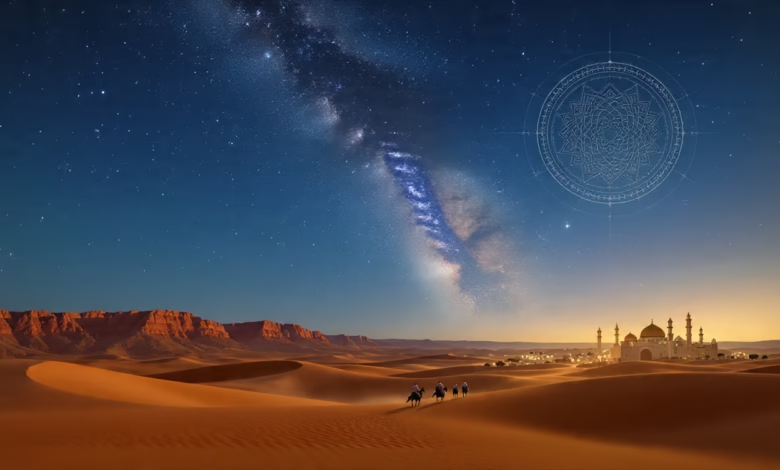
Between The Blueprint Of Heaven And The Asabiyyah Of The Desert: How Do We Read The Sociology Of Islam?
In A Highly Complex And Attractive Intellectual Journey, The Prominent Anthropologist And Sociologist Ernest Gellner Presents In His Book “Muslim Society”, Published Within The Cambridge University Studies In Social Anthropology, A Unique Anatomy Of The Social, Political, And Spiritual Structure That Shaped The Islamic World, Specifically In The Atlas Mountains Region And North Africa. Gellner Is Not Satisfied With Pure Ethnographic Description; Rather, He Brilliantly Weaves Between Political Philosophy And Classical Sociology, Relying On Three Intellectual Pillars: Ibn Khaldun, David Hume, And Robert Montagne, To Present Us With A Comprehensive Theory That Explains The Dynamics Of This Society Throughout History.
Islam As A Comprehensive Blueprint For The Social Order
Gellner Begins His Thesis By Reporting A Fundamental Truth: Islam Represents A “Blueprint For A Social Order”. It Is Based On The Idea Of The Existence Of A Set Of Eternal, Divinely Ordained Rules, Completely Independent Of Human Will, Which Determine How Society Should Be Properly Organized. What Distinguishes This Blueprint, According To Gellner, Is That It Is Available In Writing, Symmetrically And Equally, To All Educated Men, And To Anyone Who Is Ready To Listen To Them.
This Equal Availability Strikes A Fatal Blow To Any Justification For Internally Dividing Society Into Two Parts: One Part Closer To The Divine Essence Than The Other. Islam, In Principle, Does Not Recognize The Existence Of A Class Or Body Of Religious Specialists Who Monopolize Spiritual Mediation; The Rules Are There For Everyone. Despite The Islamic Society’s Need For Scholars, Islam Officially Has No “Clergy” (Clerics) And No Church Organization; Rather, The Church And Society Are One Identical Entity.
Gellner Cleverly Evokes The Saying Of The French Thinker Alexis De Tocqueville, Who Noted That Islam Is The Religion That Has Completely Merged And Mixed The Two Powers, So That All Acts Of Civil And Political Life Have Become Subject In One Way Or Another To The Regulation Of Religious Law. In This Context, Gellner Compares Islam And Christianity; Christianity, Since Its Inception, Included An Explicit Recommendation To Render Unto Caesar What Is Caesar’s. A Religion That Begins And Remains For A Period Without Political Power Has No Choice But To Adapt To The Existing Political System. As For Islam, Thanks To Its Rapid And Early Political Success, It Did Not Need To Concede Anything In Favor Of “Caesar”; It Was Caesar Itself. This Early Success, Coupled With The Doctrine That The Divine Message Is Complete And Final, Made It Very Difficult To Present Alternative Versions Of This Social Blueprint.
David Hume’s Pendulum: The Ebb And Flow In Human Faith
One Of The Most Enjoyable Parts Of The Review In This Book Is How Gellner Employs The Theory Of The Scottish Philosopher David Hume On “The Natural History Of Religion”. Hume Believes That There Is A Psychological And Political Principle Governing Beliefs; The Principles Of Religion Suffer From A State Of “Ebb And Flow” In The Human Mind, Where Humans Possess A Natural Inclination To Ascend From Polytheism To Monotheism, And Then Sink Again From Monotheism Towards Polytheism.
How Does This Happen? Hume Explains (And Gellner Reflects This On Islamic Society) That People, Motivated By Fear And Competitive Flattery For Power, Tend To Elevate Their Gods And Accumulate Absolute And Infinite Qualities Upon Them Until They Reach The Idea Of The One And Only God, Abstract And Transcendent. But This Great And Transcendent God Becomes “Too Far Away And Unreachable” For The Simple Commoners. Here, Trembling Human Nature Intervenes; People Resort To Mediators And Intercessors (Demigods, Saints, Or “Awliya” In The Islamic Case) To Draw Closer To This Great God, Just As They Seek Mediation With A Mighty Worldly Ruler. Thus, The Pendulum Swings Back Towards Polytheism And A Multiplicity Of Mediators, Until Purification Movements Intervene To Restore Matters To The Quorum Of Abstract Monotheism.
The Convergence Of Hume And Ibn Khaldun: The Anatomy Of The Two Societies
Gellner’s Genius Manifests Itself In Merging Hume’s (Psychological) Theory With Abd Al-Rahman Ibn Khaldun’s (Sociological) Theory To Create A Powerful Explanatory Model For Traditional Islamic Society. Ibn Khaldun Does Not Investigate The Secrets Of The Human Soul As Hume Does; Rather, He Investigates The Social Environment And The Concept Of “Asabiyyah” (Social Solidarity).
For Ibn Khaldun, “Leadership Exists Only Through Superiority, And Superiority Is Only Through Asabiyyah”. And The Tribes United By Collective Feeling (Asabiyyah) Are The Only Ones Capable Of Living In The Harshness Of The Desert. In Contrast, Ibn Khaldun Believes That City Dwellers’ Claim To Possess Asabiyyah Or A “House” (In The Tribal Sense) Is A False Claim And Is Easily Refuted.
City Dwellers, Drowning In Luxury And Laziness, Lack Courage And Entrust The Task Of Defending Their Wealth And Lives To The Ruler And Militias. Mutual Aggression Inside Cities Is Prevented By The Government And Authority That Prevent The Masses From Oppressing Each Other, “Except That Oppression Which Comes From The Ruler Himself”. Meanwhile, The Men Of The Bedouins And Tribes, Due To The Absence Of Walls Or Militias To Protect Them, Always Carry Weapons And Defend Themselves By Themselves.
Here Gellner Connects The Two Scenes: Urban Islam (The Islam Of Scholars In Cities) Corresponds To Abstract, Strict Monotheism, Devoid Of Mediators (The Stage Of Monotheism For Hume). While Rural Islam (The Islam Of Bedouin Tribes) Needs Rituals, Celebrations, And Local “Saints” (Marabouts) To Play The Role Of Mediators And Peacekeepers Between Warring Tribes That Are Not Subject To A Central Authority (The Stage Of Polytheism And Mediators For Hume).
The Dynamics Of Power: The Wolves Of The Desert, The Guard Dogs, And Their Flock
In Completing His Anatomy Of The Social And Political Body, Ernest Gellner Dives Into The Details Of The Khaldunian Mechanism That Governs The Rise And Fall Of States In The Traditional Islamic World. Ibn Khaldun, According To Gellner’s Reading, Divides Tribes Into Three Main Types, Using A Political Metaphor Par Excellence: Wolves, Sheep, And Guard Dogs. The “Wolves” Are The Strong Bedouins Of The Desert And Mountains Who Refuse To Submit To Any Authority, And Maintain Their Pure Asabiyyah And Constant Readiness To Fight In Defense Of Their Independence. As For The “Guard Dogs”, They Are Those Wolves Who Succeeded, Thanks To Their Cohesion And Fierceness, In Conquering Cities And Settled Regions, And Turned Into Rulers Exercising Their Authority Over Others To Protect Them And Milk Their Resources. Finally, There Are The “Sheep”, Who Are The Tribes And Urban Dwellers Who Submitted To The Central Authority And Accepted Paying Taxes, Which Stripped Them Of Their Moral Fiber And Cohesion, Melting Into Habits Of Submission, Compliance, And Docility.
Here Emerges The Cyclical Historical Tragedy That Gellner Sees Rooted In This System; For The Political Power And Privileges That Accompany Ruling Cities Gradually Erode That “Asabiyyah” Which Was The First And Only Reason For Reaching The Seat Of Power. With The Erosion Of This Organic Social Cohesion, The Ruler Is Forced To Rely On Mercenaries Instead Of His Clansmen To Ensure His Survival, And The Quality Of Support He Receives Declines And His Base Of Legitimacy Shrinks. Ultimately, After The Passing Of A Few Generations Drowned In Luxury And Weakness, A New Group Of Cohesive And Warrior Tribal “Wolves” Appears To Pounce On The Exhausted “Guard Dogs”, And Replaces Them In The Palaces, To Begin A New Cycle Of Alternation In Power Within A Static Social Structure That Does Not Change Fundamentally.
Mutual Dependence: Bedouins And Urbanites In The Dance Of Economic And Political Survival
Despite This Apparent Contradiction And Hidden Hostility Between The Worlds Of The Bedouin And The Urbanite, Gellner Emphasizes, Based On Ibn Khaldun’s Piercing Observations, That There Is A Deep And Mutual Dependence Between The Two Parties, Which Explains How A Society That Is Fragile And Politically Torn Can Remain Cohesive And Culturally Homogeneous To A Large Extent. The City, With Its Complex Division Of Labor And Precise Craft Specializations, Is Completely Unable To Provide Protection For Itself, And It Structurally Lacks Militarism And Deterrent Social Cohesion. Therefore, Urban Civilization Relies Politically And Militarily On Providing Its Rulers From The Bedouins Coming From The Margins, Who Possess The Toughness And Cruelty Required To Impose Order And Protect The Walls.
But Conversely, And From A Purely Economic Perspective, The Situation Is Completely Reversed So That The Bedouin Becomes The Dependent. For Bedouins Desperately Need Cities To Obtain The Necessities Of Life And Manufactured Goods That They Lack The Skill To Produce. And As The Text Explains, While Bedouins Need Cities For Necessities, City Dwellers Only Need Bedouins For Luxuries And Affluence, As Long As The Bedouins Remain In Their Deserts And Have Not Yet Seized The Reins Of Urban Power. This Economic Inability Of The Bedouins, And Their Severe Lack Of Commercial And Craft Specialists, Keeps Them In A State Of Permanent And Continuous Hostage To The Urban Centers That Constitute Their Markets And Supply Havens.
Plato In The Desert: The Sanctification Of The Word And Its Spiritual Incarnation
Gellner Transitions To The Cultural And Spiritual Dimension, Presenting A Philosophical Approach In Which He Describes Islam As A Modified And Social Version Of Platonic Philosophy. If Classical Platonism Deified The Abstract Concept, Then Islam Conferred A Divine Character Upon The Written And Revealed “Word”. This Absolute Sanctification Of The Written Word Grants Scholars And Guardians Of The Text In The Cities Immense Moral And Legislative Authority, And Binds The Sprawling Society With A Solid Ideological Thread That Is Not Easily Broken.
However, Gellner Poses A Fundamental Question: How Can This Abstract, Transcendent, And Written “Word” Rule And Guide A Tribal Society Dominated By Illiteracy And Living In A Harsh And Rebellious Geographical Environment? Gellner Believes That Tribes Possess Neither The Mental Taste Nor The Cultural Equipment Necessary To Absorb The Urban Faith Based On Jurisprudential Texts And Theological Debate. The Faith Of Tribesmen, By Its Nature, Needs Mediators And Sacred Functionaries; It Needs Tangible Figures In Whom Living Holiness Is Incarnated Instead Of Silent Paper Texts. And Here Clearly Emerges The Field Magician Of Bedouin Spirituality: The Role Of The “Saint” Or “Marabout”, As A Vital And Indispensable Link.
The Society Of Symmetrical Segmentations: The Role Of The “Saint” As A Safety Valve
In The Shadow Of The Absence Of A Central State Capable Of Imposing The Law In Remote Margins And Rugged Mountains, Gellner Describes Tribal Society As A Purely “Segmentary Society”, Drawing Inspiration From The Ideas Of The Famous Anthropologist Edward Evans-Pritchard. In This Simultaneously Primitive And Complex Society, Power And Privileges Are Distributed Almost Equally Across All Segments Of The Tribe, And Every Adult Male Is Essentially A Fighter Participating Effectively In Maintaining Order Within His Group And Defending It. Despite The Widespread Proliferation Of Weapons And Potential Violence At Every Moment, The Social Order Does Not Collapse To Descend Into Comprehensive Chaos And Destructive Civil War.
The Secret To This Delicate Balance Lies In The Most Prominent Religious Institution In The Countryside: The Righteous “Saint”. This Saint, Who Possesses The Charisma Of Holiness And Mostly Belongs To A Noble Lineage Allegedly Connected To The Prophet, Stands Strategically And Ideologically Outside Daily Tribal Alliances And Conflicts. His Sacred Status, And His Mandatory Neutrality Imposed On Him By Virtue Of His Spiritual Function, Make Him The Ideal And Most Credible Mediator And Arbitrator In An Environment Torn By Conflicts And Vengeance. The Saints Do Not Merely Pray; Rather, They Actively Supervise Complex Political Processes Such As Choosing Local Leaders, And They Ratify Customary Legal Procedures Through Strict Supervision Of “Collective Oath” Committees Decisive For Disputes, Just As They Provide Border Safe Havens Where Trade Routes Intersect And The Markets Of Neighboring Tribes Are Peacefully Erected. With This Multi-Dimensional Performance, The Saint Becomes The Living And Local Incarnation Of Islam For The Tribe, Providing Them With The Spiritual And Legal Framework That Abstract Texts Are Unable To Offer In Their Harsh And Independent Environment.
The Colonial Earthquake And The Breaking Of The Khaldunian Pendulum
With The Advent Of The Twentieth Century, The Islamic World Analyzed By Gellner Was No Longer Merely A Closed System Repeating Ibn Khaldun’s Cycles With Monotonous Regularity; The Clash With Western Modernity And The Colonial Tide Caused A Structural Rift In David Hume’s “Pendulum”. Gellner Explains That The Modern State, With Its Technical Equipment And Superior Organizational Capacity, Has Shattered The Old Balance Between The Center And The Tribe. The “Wolves Of The Desert” Are No Longer Able To Threaten The Walls Merely By Possessing Asabiyyah; Because The State Now Possesses The Airplane, The Tank, The Telegraph, And The Central Bureaucracy That Penetrates The Deepest Rugged Mountains. This Technical Transformation Turned The Tribes From “Independent Political Units” Into “Subjects” In An Emerging Nation-State, Which Led To The Erosion Of The Role Of The “Saint” Or “Marabout” As A Political Link; The State No Longer Needs Mediators To Manage Its Subjects, But Has Started Seeking To Impose Its Direct Grip.
Here Gellner Raises A Crucial Observation About The Path Of “Religious Reform” In Islam, Comparing It To The Protestant Experience In Europe. Gellner Believes That Modernity In The Islamic World Did Not Necessarily Lead To Secularization (In The Sense Of The Retreat Of Religion From The Public Sphere), But Led To A Radical “Reformism” That Restored Consideration To “Urban Islam” Or The Islam Of Scholars And Jurists At The Expense Of “Rural Islam” Based On The Miracles Of Saints And Sufi Rituals. This Reformism, Represented In The Salafi And Nahda Movements, Was Not Just A Return To The Past, But Was An Effective Tool For Building A Unified National And Patriotic Identity Transcending Narrow Tribal Affiliations. The Reformist Discourse, By Emphasizing Pure Monotheism And Rejecting “Heresies” Associated With Saints, Provided The Muslim Who Migrated From The Countryside To The City With A “Universal” And Respected Identity, Granting Him A Sense Of Belonging To An Entity Larger And More Sublime Than His Dissolved Tribe.
The Islamic Exception: Why Did Secularization Fail To Defeat The Text?
Gellner Moves To Analyze A Thorny Issue That Occupied Western Sociologists For Decades, Which Is “The Islamic Exception” In The Face Of Secularization. While Classical Sociological Theories, From Marx To Weber, Expected Religion To Withdraw From Public Life With The Rise Of Science And Industrialization, Gellner Noted That Islamic Society Took A Different Path. Instead Of Modernity Weakening Religious Commitment, We Found That Modernity In Muslim Societies Was Often Accompanied By An Increase In Religious Discipline And Adherence To Sharia In Its Strict “Scriptural” Form.
Gellner Explains This Phenomenon By Stating That “High” Islam (The Islam Of Text And Scholars) Possesses Structural Characteristics That Make It Amazingly Compatible With The Requirements Of Modernity. For High Islam Is Characterized By Doctrinal Simplicity, Egalitarianism Among Believers, Commitment To Written Rules, And The Rejection Of Magic And Fickle Spiritual Mediation. These Characteristics Are The Same Ones Needed By The Modern Society Based On Bureaucracy, Citizenship, And Education. Therefore, The “Modern” Muslim Found No Need To Abandon His Religion To Be Modern, But Found In The Reformist And Purified Version Of His Religion The Best Helper To Face The Challenges Of The Era And Compete With Colonial Powers. Islam Has Transformed From A “Spiritual Cover” For The Traditional State Into A “Mobilization Ideology” For The Nation-State And Modern Republics.
The New Proletariat And The Search For Spiritual Purity
In A Brilliant Sociological Analysis Of Demographic Transformations, Gellner Describes The State Of The “Great Transition” From The Tent And The Village To The Slums And The Suburbs Of Major Cities. This Rural Migrant Who Has Lost The Protection Of His Tribe And The Safety Of His Old Sufi “Zawiya”, Finds Himself In A Bleak Urban Environment Dominated By Inequality. In This Context, “Reformist Islam” Becomes A Moral Lifeline. For This New Worker, Adhering To Obligations And A Conservative Religious Appearance Is Not Merely Worship, But It Is A Declaration Of “Human Dignity” In The Face Of Westernization And Corruption That He Might See In The Ruling Elites Influenced By The West.
Gellner Believes That This Type Of Popular Religiosity Mixed With A Reformist Sense Constitutes A Massive Political Force That Cannot Be Bypassed. While The “Westernized” Elites Thought That The Future Belonged To Pure Secularism, The Grassroots Were Rediscovering Their Power Through A Return To The First “Social Blueprint” Of Islam, But With A Modern Fighting And Organizational Spirit. What Gellner Calls The “Awakening” Is Not A Regression To The Middle Ages, But It Is An Attempt To Rebuild Society On Foundations That Muslims See As More Just And Authentic, Far From The Imported Models That Failed To Fulfill The Major Economic And Social Promises.
Between The Jurisprudence Of The State And The Jurisprudence Of Revolution: The Struggle Over Legitimacy
Gellner Sheds Light On The Internal Struggle Over The “Legitimacy Of The Written Word”. If High Islam Is The Victor In The Battle Of Modernity Against Rural Islam, Then The Question That Emerged Strongly Is: Who Owns The Right To Interpret This Text And Apply It? Are They The “Traditional Scholars” Connected To The State Apparatus, Or Are They The “New Intellectuals” And Islamic Activists Who See In Sharia A Tool For Revolution And Social Change?
This Division Inside The Reformist Camp Itself Represents, According To Gellner, One Of The Most Important Features Of Contemporary Islamic Society. The Modern State Always Tries To Domesticate The “Word” To Consolidate Its Power, While Opponents Find In The Very Same “Word” A Legitimate Justification To Rebel Against The Ruler If They Consider Him “Outside The Divine Blueprint”. Thus, Islam Remains, In Gellner’s View, The Only Belief System In The Contemporary World That Is Still Capable Of Exercising A Universal And Comprehensive Political Role, Defying All Expectations Of Extinction Or Neutralization, To Remain A Difficult Number In The Equation Of The Global Future.
The High Atlas Laboratory: The Embodiment Of Theory In The Geography Of Ruggedness
Ernest Gellner Transitions At This Turning Point Of His Book From Macro Theorizing To Microscopic Examination, Taking The High Atlas Mountains In Morocco As A Living Sociological Laboratory To Test His Hypotheses About The “Segmentary Society”. Gellner Believes That These Rugged Mountainous Regions Historically Presented The Clearest Model For What He Calls “Bled Siba” (Regions Of Siba), Which Are Those Regions That Recognize The Spiritual Authority Of The Sultan As An Imam, But Categorically Refuse To Submit To His Temporal Authority Or Pay Taxes To His Administrative Apparatus (The Makhzen). In This Environment, The Absence Of The State Did Not Mean Chaos; Rather, It Meant The Existence Of A Highly Complex Alternative System Relying On The Delicate Balance Between Competing Tribal Forces.
Gellner Explains That The Atlas Tribes Developed What Might Be Called A “Democracy Of Warriors”, Where Fateful Decisions Are Taken Through Councils Of Elders Relying On The Principle Of Consensus Or Symmetrical Opposition. However, For This System To Work Without Drowning In Endless Wars Of Attrition, There Had To Be A Neutral And Sacred “Third Party”. Here Emerges The Role Of The “Zawiyas” Of The Saints Or Marabouts, Who Inhabit The Points Of Contact Between Warring Tribes. These Saints, Whom Gellner Describes As “Specialists In Peace”, Do Not Possess Their Own Military Force, But Derive Their Authority From “Baraka” (Blessing) And Noble Lineage. They Act As Arbitrators In Disputes Over Resources, And Supervisors Over The Weekly Markets That Are Considered The Lung Of Economic Life In The Mountain, And Most Importantly, They Are The Ones Who Grant Legitimacy To The Tribal Leaders Elected Annually, Which Prevents The Transformation Of Tribal Leadership Into Permanent Tyranny.
The Duality Of The Makhzen And Siba: The Dialectic Of Center And Margin
Gellner’s Sociology Cannot Be Understood Without Delving Into The Concepts Of The “Makhzen” And “Siba”, Which Represent In His Reading The Two Poles Between Which The State Swings In Traditional Islamic Society. The “Makhzen” Is Not Merely An Administrative Apparatus, But Is The Embodiment Of “Urban Islam” That Seeks To Impose Order And Law Derived From The Written Sharia. In Contrast, “Siba” Represents Tribal Resistance That Seeks To Maintain Its Autonomy And Local Customs. But Gellner Breaks The Stereotype That Sees In Siba A Mere Rebellion; He Sees It As A Complete Political System Aimed At Preventing The Centralization Of Power And Its Overreach.
The Relationship Between These Two Poles Is Not A Relationship Of Absolute Hostility, But It Is A Strange Complementary Relationship; The Makhzen Needs The Tribal “Asabiyyah” Coming From Siba Regions To Renew Its Military And Ruling Blood, While The Tribes Need The “Legitimacy” Granted By The Sultan, And The Urban Markets Controlled By The Makhzen To Dispose Of Their Products. This Fragile Balance Remained For Centuries, Where The Sultan Exercised A Kind Of “Symbolic Authority” Over The Mountains, Contenting Himself With Spiritual Loyalty, While Leaving The Tribes To Manage Their Daily Affairs Through Mediators From The Saints. This Functional Division Is What Granted Traditional Society Its Long Stability, And It Is What Made The State In The Islamic World, According To Gellner, A “Thin State” That Does Not Penetrate Into The Deep Social Fabric Except In Rare Cases.
The Retreat Of “Baraka” And The Rise Of “Bureaucracy”
Gellner Explains How Modernity, Which Entered Carried On The Shoulders Of Colonialism And Then Adopted By The Independent National State, Led To The Destruction Of This Traditional Balance Between The Center And The Margin. The Modern State, With Its Totalitarian And Bureaucratic Nature, Does Not Accept The Existence Of “Siba Regions” Outside Its Control, Nor Does It Recognize Local Mediators Who Possess Independent Authority Like The Saints. Holiness Has Been “Nationalized” And Transformed Into Institutions Affiliated With Ministries Of Endowments, Just As The Tribal “Collective Oath” Has Been Replaced By Civil And Criminal Courts.
This Transformation Did Not Pass Without A Heavy Social And Psychological Price; The Tribes Stripped Of Their Political And Spatial Independence Found Themselves Transforming Into An Inhomogeneous Human Mass In The Suburbs Of Major Cities. In This Vacuum Left By The Absence Of The Traditional “Saint”, People Did Not Find Solace In The “Secularism” Preached By The Elites, But They Found It In “Reformist Islam” Which Provided Them With A New Moral Language To Protest Against The Central State That Many See As A “New Makhzen” Harsher And Less Legitimate Than Its Traditional Predecessor. Gellner Believes That “Religious Reformism” At This Stage Was Not A Return To Superstition, But Was A Means To “Modernization”; It Demands Equality Before The Law (Sharia) And Rejects Hereditary Privileges And Old Spiritual Mediations, Which Made It Intersect Unexpectedly With The Aspirations Of The New Urban Masses.
Intellectuals And Scholars: The Struggle For The Leadership Of “Civil Society”
In A Deep Analysis Of The Structure Of The Elite, Gellner Discusses The Role Of “Scholars” Versus “Modern Intellectuals”. Traditional Scholars Have Always Been Part Of The State Structure, Providing It With Legal Legitimacy In Exchange For Maintaining Their Status As Guardians Of The Text. But With The Emergence Of Modern Education, A New Class Of Intellectuals Emerged Who Possess Western Cognitive Tools, But They Remain Emotionally Attached To Their Islamic Identity. These Intellectuals, Not The Traditional Scholars, Are The Ones Who Led The Transformation Towards Contemporary “Political Islam”.
Gellner Notes That These Intellectuals Used “Scripturalism” – Meaning The Return To The Strict Written Text – To Undermine The Authority Of Both Traditional Scholars (Associated With Power) And Rural Saints (Associated With Superstition In Their View). Islam Transformed In Their Hands From A “Traditional Social Practice” Into A Self-Conscious “Intellectual Ideology”. This Transformation From “Religion As Heritage” To “Religion As A Political Program” Is The Core That Explains The Vitality Of Islamic Society And Its Ability To Resist In The Twentieth Century. For Islam, Thanks To This Ready And Written “Social Blueprint”, Grants Its Believers A Transcendent “Constitution” That The Modern State, No Matter How Strong, Cannot Obliterate Or Displace From The Center Stage In Public Consciousness.
The Victory Of “High Culture”: When The Text Becomes The Ideology Of The Modern State
In This Pivotal Chapter, Ernest Gellner Places Us Before A Sociological Fact That May Seem Shocking At First Glance: Modernization In The Islamic World Did Not Lead To The Retreat Of Religion, But Led To The Victory Of A Specific Type Of Religiosity At The Expense Of Other Types. Gellner Distinguishes Sharply Between “High Culture” Associated With Cities, Scholars, And Written Texts, And “Low Culture” Associated With The Countryside, Saints, Oral Rituals, And Sensory Miracles. Gellner Believes That The Modern History Of Muslim Societies Is Essentially The Story Of High Culture Sweeping And Destroying Low Culture, Which He Calls “The Great Purge Process”.
This Victory Of High Culture Is Not Just A Theological Transformation, But Is A Political And Social Necessity Imposed By The Modern State. For The Nation-State That Inherited The Legacy Of Colonialism Needed A “Unified National Culture” To Integrate The Masses Into The Crucible Of Citizenship And Production. And Since “Scriptural” (Reformist) Islam Possesses The Qualities Of Monotheism, Equality, And Legal Strictness, Political Leaders And Intellectuals Alike Found In It The Ideal Raw Material To Build A Strong National Identity. The Modern Muslim, According To Gellner, Has Abandoned The Local “Saint” Who Represents The Particularity Of His Tribe, To Embrace “Universal Islam” That Gives Him A Sense Of Peerage With Other Nations, And Frees Him From The Restrictions Of Traditional Affiliations That Have Begun To Hinder His Movement In The World Of Industry And Bureaucracy.
Spiritual Equality And Political Hierarchy: The Paradox Of Social Integration
Gellner Discusses In This Context The Issue Of “Egalitarianism” In Islam, And How It Plays A Dual Role In Shaping Society. For Spiritually, Islam Presents A Unique Model Of Absolute Equality Among Believers Before God, Where There Is No Official Clergy Class Monopolizing Mediation. This Spiritual Egalitarianism, As Gellner Sees It, Was Always A Moral “Safety Valve” In Societies Characterized By The Existence Of Massive Economic And Political Gaps. It Grants The Individual A Sense Of Value And Dignity Regardless Of His Position On The Social Ladder, Which Explains Islam’s Strong Appeal To Marginalized Classes And New Migrants To Cities.
However, Gellner Notes A Strange Paradox; This Spiritual Equality Did Not Translate Historically Into “Political Democracy” In The Western Sense. The Reason For This Is Due To The Fact That The Islamic “Social Blueprint”, Despite Its Emphasis On Equality, Focuses More Broadly On The “Application Of Sharia” As The Ultimate Goal Of The State. And Since The Interpretation Of Sharia Remained Historically The Monopoly Of The Elite Scholars, Political Power Always Found Justification For Its Existence As Long As It Protects Religion And Applies Divine Law. In Modern Islamic Society, This Egalitarianism Transformed Into A Strong “Religious Nationalism”, Where The Individual Identifies With The Ummah (As A Community Of Believers) More Than He Identifies With The State (As An Administrative Apparatus), Which Makes The State In A Constant State Of Search For Legitimacy That Is Not Completed Except By Adopting The Strictest Religious Slogans.
The Death Of The “Saint” And The Birth Of The “Activist”: The Transformation Of Charisma From Magic To Organization
Gellner Draws In The Pages Of His Book A Funerary Painting For The Institution Of The “Saint” Or “Marabout” That Was Once A Pillar Of Rural Society. With The Penetration Of Modern Education And Media, The Saint Lost His Ability To Convince People Of His Blessing And Magic; For Writing, Which Was A Sacred Secret Possessed By The Few, Became A Public Skill. “Ideology” Replaced “Miracle”, And The “Political Activist” Replaced The “Sufi Dervish”. Gellner Believes That This Transformation Is A Transition From “Personal Charisma” Relying On Lineage And Blessing, To “Institutional Charisma” Relying On The Ability To Organize, Mobilize, And Express Social Grievances In A Religious Language.
This New Activist, Who Is Often Educated With A Modern Education, Does Not Seek Mediation Between Tribes In The Mountains, But Seeks To Change Society From Its Center In The City. He Uses The “Written Text” As An Ax To Smash The Remnants Of Popular Superstitions, And At The Same Time As A Shield To Face Cultural Westernization. The Fall Of Rural (Sufi) Islam Did Not Leave A Spiritual Vacuum, But Was Filled By A “Politicized” Reformist Islam That Possesses High Competence In Dealing With The Tools Of The Modern Era, From The Press To Parliaments Down To Communication Platforms, Which Makes Islam, In Gellner’s Vision, The Most “Modern” Religion In Terms Of Its Ability For Mass Mobilization In The Twentieth And Twenty-First Centuries.
Weber’s Paradox: Why Didn’t The “Muslim Protestants” Produce Industrial Capitalism?
In This Part Of Our Analytical Journey, Gellner Confronts One Of The Greatest Sociological Minds In History, Namely Max Weber. Weber Had Argued In His Famous Thesis That “Protestant Ethics” Were The Spiritual Engine For The Emergence Of Modern Capitalism In The West, While He Saw In Islam A Structural Obstacle Before This Development Because Of What He Called “Fatalism” And “Authoritarian Politics” (Patriarchalism). But Gellner, With His Usual Boldness, Overturns This Analytical Table; For He Believes That “High” Or “Reformist” Islam Possesses More “Protestant” Characteristics Than Christian Protestantism Itself. For High Islam Fights Magic, Glorifies Work, Sanctifies Writing, Imposes Strict Self-Discipline, And Calls For Equality Among Believers, All Of Which Are “Rational” Elements Par Excellence.
So, Why Didn’t Capitalism Appear In The Heart Of The Islamic World Before The West? Gellner Believes That The Answer Does Not Lie In The “Essence Of Religion” As Weber Thought, But In The “Political Structure”. For At The Time When Merchants In Europe Were Obtaining Their Autonomy Inside Cities And Protecting Their Wealth From The Confiscation Of Kings, The Merchant In Traditional Islamic Society Always Fell Under The Mercy Of Tribal “Asabiyyah” Or The Ruling Military Authority. The Absence Of “Legal Security” For Wealth, Not The Absence Of The “Capitalist Spirit”, Is What Prevented Long-Term Capital Accumulation. And Thus, Gellner Corrects The Path Of Western Sociology, Affirming That Islam As A Doctrine Was “Ready” For Modernization, But The Traditional Political Environment Was The Obstacle.