

Sudan Today Stands At A Historical Crossroads, Torn By The Pains Of Decades Of Bloody Conflict, And Immense Latent Potentials Waiting For Someone To Unleash Them. Despite The Scourges Of Wars, This Country Possesses Most Of The Elements Of Prosperity: A Highly Fertile Nile Basin, Massive Mineral Wealth, And A Population Predominantly Of Youth Thirsty For Change. In This Highly Complex Geopolitical Context, The Book “A Marshall Plan For Sudan: Rebuilding The Forgotten Global Power” Comes To Present An Integrated Strategic Blueprint, Reimagining The Future Of The Third-Largest Country In Africa As An Active Continental Power. This Prominent Work Does Not Merely Diagnose Crises; Rather, It Dismantles Intractable Economic And Social Challenges To Establish An Executable Framework, Relying On Innovative Solutions To Unlock The Constraints Of Sudanese Potentials Through Strategic Investment, Institutional Reform, And Regional Integration.
This Vision Gains Its Weight And Reliability From The Background Of Its Author, Dr. Kamil Idris, The Global Academic And Thinker And International Law Expert, Who Previously Held High-Level International Positions Including The Director General Of The World Intellectual Property Organization (WIPO) Of The United Nations. Idris Poses In His Book A Bold Challenge To Traditional Conservative Visions Regarding Post-Conflict Reconstruction Policies, Presenting To Decision-Makers, Investors, And Researchers A New Perspective On How Resource-Rich Countries Can Forge Their Own Independent Path Towards Sustainable Prosperity.
The Dialectic Of Greatness And Tragedy: The Weight Of History And The Bill Of Conflict
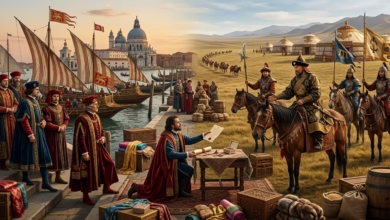
The Dilemma Of The Sudanese State Cannot Be Comprehended Without Diving Into The Depth Of Its History, Which Combines Overwhelming Greatness And Deep Tragedy. Sudan Is Not Merely A Crisis-Ridden Geographical Area, But Rather The Heir To Advanced Ancient Civilizations Such As The “Kingdom Of Kush,” Whose Influence Extended Across The Nile Valley, And Built Pyramids Outnumbering The Pyramids Of Egypt, Forming A Powerful Empire Based On Trade, Technological Innovation (Like Iron Smelting), And Military Power. Historically, Sudan Formed A Vital Geostrategic Link Connecting The Mediterranean World With Sub-Saharan Africa.
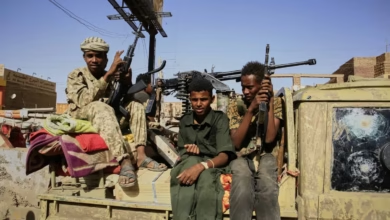
However, This Country Suffered From Foreign Interventions And Colonialism That Exploited Its Human And Material Resources, And Deliberately Implemented Policies That Divided Its North From Its South, Leading To The Deepening Of Cultural And Economic Disparities. Since The Dawn Of Its Independence In 1956, Sudan Entered A Vicious Cycle Of Recurrent Military Coups And Grinding Civil Wars. These Conflicts Culminated In The Catastrophic Darfur Crisis In 2003, Leading Up To The Current Devastating War Ignited By The Rapid Support Forces (RSF) In April 2023, Which Resulted In Horrific Atrocities And War Crimes Including Mass Killings, Ethnic Cleansing, And The Destruction Of National Infrastructure.
Before Embarking On Engineering Any Plan For Renaissance, The Book Strictly Places Us Before The Exorbitant Cost Of Conflict. Wars In Sudan Did Not Merely Claim Hundreds Of Thousands Of Lives, But Also Destroyed An Economic And Social Fabric That Promised A Bright Future; In The 1950s And 1960s, Sudan Was Considered Among The Most Promising Economies In The African Continent. Today, Decades Of Mismanagement And Conflicts Have Caused The Displacement Of Millions, The Collapse Of The National Currency, Soaring Inflation To Record Levels, And Near-Total Paralysis Of The Educational And Health Systems.
But The Most Lethal Impact Manifested In The Severe Tearing Of The Social Fabric; Where Successive Leaderships Have Long Exploited Ethnic And Religious Divisions As Political Tools To Consolidate Power, And Apply A “Divide And Conquer” Policy, Instead Of Formulating A True National Project That Gathers The Diaspora, Making The Building Of An Inclusive National Identity A Highly Complex Challenge.
The Philosophy Of The “Marshall Plan”: From The Rubble To Regional Leadership
To Confront This Collapse, The Book Draws Its Central Philosophy From The Historical “Marshall Plan”; That Massive Economic And Diplomatic Effort Led By The United States That Rebuilt The Torn European Continent After World War II, Transforming It Into A Cohesive Global Economic Power. Idris Argues That Sudan Today Does Not Need Temporary Painkillers Or Short-Term Relief Aid, But Rather Requires A Comprehensive National Strategy For Recovery.
The Hoped-For “Sudanese Marshall Plan” Rests On Four Solid Foundational Pillars:
-
Economic Transformation: Through A Radical Transition From An Economy Dependent On Foreign Aid To A Model Led By Independent Industrial And Agricultural Development.
-
Governance And The Rule Of Law: Establishing An Inclusive Civilian Government, And Building Strong Institutions Capable Of Fighting Institutional Corruption And Strictly Applying The Law.
-
Infrastructure Development: Injecting Massive Investments Into Railways, Ports, Energy, And Road Networks, To Connect The Sudanese Interior With The Outside World.
-
Human Capital: Giving Absolute Priority To Education, Healthcare, And Job Creation, To Empower The Sudanese People To Become The Primary Engine Of Progress.
The Author Believes That The Success Of The European Experience Relied Primarily On Strong Institutions And Regional Cooperation, Which Are The Exact Same Principles That Sudan Must Replicate By Enhancing Trade With Its Neighbors And Building Democratic Institutions That Protect Their Citizens And Do Not Exploit Them.
Idle Treasures: Agriculture And Minerals As Engines For Renaissance
Dr. Kamil Idris Embarks In His Economic Anatomy From An Axiomatic Truth Long Echoed By Experts, But Which Remained Locked In Drawers: Sudan Is The Untapped “Breadbasket Of The World”. With Vast Expanses Of Arable Land, And An Abundance Of Water Resources, Sudan Possesses The Capacity Not Only To Achieve Self-Sufficiency, But Also To Lead A Regional Agricultural Revolution That Guarantees Food Security For Africa And The Middle East. However, The Book Clarifies That The Problem Was Never The Scarcity Of Resources, But Rather The Absence Of A National Strategy That Transforms “Subsistence Agriculture” Into An Advanced “Agricultural Industry”.
The Sudanese “Marshall Plan” Proposes A Radical Transformation Starting With The Electrification Of The Countryside And Modernizing The Means Of Production, Arriving At Building Value-Added Chains; Instead Of Exporting Crops As Raw Materials At Cheap Prices, Sudan Must Transform Into A Hub For Manufacturing And Food Industries. This Path, As Idris Sees It, Is The Guarantor Of Creating Millions Of Job Opportunities For The Sudanese Youth, And Reducing The Reliance On Importing Basic Commodities That Drain Hard Currency.
As For Beneath The Earth, The Book Paints An Astonishing Picture Of The Mineral Wealth That Sudan Possesses, From Gold In Which It Ranks Highly Globally, To Oil, Gas, Uranium, And Rare Earth Minerals Essential For Modern Technological Industries. Yet, This “Blessing” Has Turned, In The Absence Of The State And Institutions, Into A “Resource Curse” That Fueled Local Conflicts And Funded Militias. The Plan Proposes Here A Strict Model For Managing National Wealth, Resting On Absolute Transparency, And Directing Mining Revenues Directly Towards Sovereign Funds For Development And Education, And Ensuring That The Benefit Returns First To Local Communities In Production Areas To Prevent The Outbreak Of New Conflicts Over Resources.
Geopolitics As Destiny And Advantage: Sudan And The Red Sea
One Cannot Speak Of Sudan’s Renaissance Without Paying Attention To Its Unique Geopolitical Location. The Book Dedicates A Significant Space To Analyzing Sudan’s Role As A Strategic Overlook Onto The Red Sea, The Waterway Through Which A Massive Portion Of Global Trade Crosses. Idris Believes That Sudan Can Transform Into A Major Logistical Platform Connecting Landlocked Countries (Such As Ethiopia, Chad, And South Sudan) To Global Markets.
The Development Of Port Sudan, The Construction Of New Specialized Ports, And The Establishment Of Free Trade Zones On The Red Sea Coast, Is Not Merely An Economic Project, But Rather A Tool To Enhance Sudanese Diplomatic Influence. The Author’s Vision Highlights The Necessity Of Building Strategic Partnerships With Neighboring Countries, Especially The Kingdom Of Saudi Arabia And Egypt, To Transform The Red Sea Region Into A Zone Of Joint Economic And Security Cooperation, Instead Of Being An Arena For Regional And International Competition. Sudan, In The “Marshall Plan,” Is Not A Follower Of Any Axis, But Is A Pivotal Player Leading Economic Integration Between Africa And The Arab World.
State Building: Towards A New Social Contract And Transparent Institutions
Idris Moves From Material Resources To Political And Institutional “Software” Without Which No Economic Plan Can Succeed. The Book Emphasizes That Sudan’s Crisis Is At Its Core A “Crisis Of Governance”. Therefore, The Third Pillar Of The Marshall Plan Is Reforming The State Apparatus And Building Strong Civilian Institutions Characterized By Transparency And Accountability.
This Path, According To The Book, Requires Formulating A “New Social Contract” That Recognizes The Cultural And Ethnic Diversity Of Sudan As An Element Of Strength And Not A Cause For Conflict. Building A State Of Law Means That Citizenship Becomes The Sole Criterion For Rights And Duties, Away From Tribal Or Political Quotas That Have Exhausted The Sudanese State For Decades. The Plan Also Stresses The Necessity Of Reforming The Security And Military Sector, To Ensure The Existence Of A Single Unified National Army Subject To Civilian Authority, Ending Once And For All The Era Of Coups And Military Intervention In Economic And Political Affairs.
The Book Also Points To African Success Models, Such As Rwanda, Which Managed To Rise From The Ashes Of Genocide To Become One Of The Fastest-Growing Economies On The Continent Thanks To Visionary Leadership And A Focus On Institutions. Idris Argues That Sudan Possesses Potentials That Exceed Rwanda By Stages, And What It Lacks Is Only That “Political Will” That Places The Nation’s Interest Above The Narrow Interests Of Conflicting Groups.
Dr. Kamil Idris Transitions Us In A Pivotal Chapter Of His Book To What Can Be Described As The “Driving Spirit” Of Any True Renaissance, Which Is Human Capital. While Natural Resources And Geographical Location Represent The “Body” Of The State, The Sudanese Human Being Is Its Beating “Mind And Heart”. The Book Presents A Deep Critical Vision Of The Current Educational And Health Reality, Considering That Investing In People Is Not Merely A Moral Or Social Obligation, But A Supreme Economic Necessity That Lies At The Core Of The “Marshall Plan”. Idris Believes That Sudan Enjoys A Massive Demographic Advantage Represented By The “Youth Dividend”; Where Young Age Groups Constitute The Largest Percentage Of The Population, And They Are A Productive And Creative Energy That If Invested Well, Could Leap The Country Decades Forward, But If Neglected, Will Remain Fuel For Unrest And Illegal Immigration.
In This Context, The Book Calls For A Comprehensive Revolution In Educational Curricula, Transcending The Traditional Pattern Based On Memorization And Indoctrination Towards Curricula That Focus On Critical Thinking, Innovation, And Technical Skills Required By The Global Labor Market In The Twenty-First Century. Idris Does Not Stop At Educational Theorization, But Links Education And Productivity, Proposing The Establishment Of Technical Excellence Centers And Advanced Vocational Institutes In Partnership With The Private Sector And International Organizations, To Ensure That The Sudanese Graduate Is Capable Of Competing Not Only Locally, But Also Regionally And Internationally. Education In The Vision Of The “Marshall Plan” Is The Tool Capable Of Breaking The Cycle Of Poverty And Marginalization, And Is The Bridge Through Which The Sons Of The Periphery And The Center Together Will Cross Towards The Space Of Productive Citizenship.
In Parallel With Education, The Book Places Healthcare As An Indispensable Pillar For The Sustainability Of Development. Idris Bitterly Analyzes How The Deterioration Of The Health System And Forced Displacement Led To The Loss Of Long Years Of Productivity As A Result Of Diseases And Malnutrition. Therefore, His Plan Includes Building A Decentralized Health System That Reaches The Furthest Villages And Rural Areas, With A Focus On Preventive Medicine And Maternal And Child Health, Considering That A Healthy Society Is A Society Capable Of Building And Reconstruction. Spending On Health In This Perspective Is A Strategic Investment That Reduces The Bill Of Treatment Abroad And Increases The Efficiency Of The National Workforce.
One Of The Most Exciting Aspects Of Dr. Kamil Idris’s Presentation Is His Handling Of The “Sudanese Diaspora” Or Migrating Minds File. The Author Sees In The Millions Of Sudanese Spread Across The Corners Of The Earth — From Scientists, Doctors, Engineers, And Businessmen — An “Invisible Army” Of Experts And Ambassadors Who Can Play A Decisive Role In Reconstruction. The Plan Proposes Innovative Mechanisms To Link Migrating Competencies With Development Projects Internally, Not Only Through Financial Remittances That Support The Economy, But More Importantly Through Knowledge Transfer And Building Scientific And Commercial Partnerships Between International Institutions And Their Sudanese Counterparts. Sudan, According To The Book, Must Cease Viewing The Brain Drain As A Sheer Loss, And Instead Transform To A “Brain Circulation” Strategy That Benefits From The Expertise Of Its Sons Wherever They Are Found.
By Virtue Of The Author’s International Background As A Former Director General Of The World Intellectual Property Organization, A Unique Chapter Stands Out In The Book Discussing The “Knowledge And Innovation Economy”. Idris Argues That The True Power Of Nations In The Modern Era Is No Longer Measured Solely By The Barrels Of Oil They Possess, But By The Patents, Intellectual Property Rights, And Trademarks They Own. The Author Bitterly Wonders: How Does Sudan Possess Unique Resources Like “Gum Arabic” Or Rare Agricultural And Animal Strains, Yet The Added Value And Major Profits Go To Global Companies That Manufacture And Market Them? Here, The “Marshall Plan” Appears As A Framework To Protect National Heritage And Local Innovations, Encourage Technological Entrepreneurship Among Youth, And Transform Sudan From A Consumer Of Technology To A Producer Of It, Benefiting From Intellectual Property Laws To Maximize The Returns Of National Resources.
Ambition Does Not Stop At This Limit, But Extends To Include “Digital Transformation” As A Driving Force For Transparency And Fighting Corruption. Idris Believes That Building A “New Sudan” Requires Digitizing Government Services, And Expanding Access To High-Speed Internet In All Corners Of The Country, Which Will Facilitate Farmers’ Access To Markets, Students To Knowledge, And Citizens To Their Legal And Political Rights Without Intermediaries Or Obstructive Bureaucracy. Technology In This Book Is Not A Luxury, But The “Elevator” That Will Enable Sudan To Jump Over Traditional Stages Of Development And Catch Up With The Procession Of Advanced Nations.
Idris Praises The Heroic Role Played By Women In The Ancient And Modern History Of Sudan, Confirming That Any Reconstruction Plan That Ignores The Economic And Political Empowerment Of Women Is A Plan Doomed To Failure. The “Marshall Plan” Calls For Ensuring Women’s Rights To Education, Work, Inheritance, And Participation In Decision-Making, Not Merely As A Human Right Entitlement, But As A Fundamental Engine For Economic Growth And The Cohesion Of The Social Fabric.
The Features Of Any Ambitious Plan The Size Of A “Marshall Plan” Are Not Complete Without Answering The Fundamental And Troubling Question: From Where Will The Funding Come For Such A Colossal Project In A Country Groaning Under The Weight Of Billion-Dollar Debts And Economic Collapse? Here, Dr. Kamil Idris Transitions In His Book To The Square Of “Economic Diplomacy” And “International Financing Architecture,” Presenting A Vision That Transcends The Traditional Concept Of “Grants” That Often Dissipate In The Corridors Of Bureaucracy Or Are Spent On Urgent Consumptive Needs. Idris Believes That Financing The Sudanese Renaissance Requires A Comprehensive Intellectual Shift Among The International Community And Investors, From Viewing Sudan As A “Crisis-Ridden Humanitarian Case” To Considering It A “Major Investment Opportunity” With Guaranteed Geopolitical And Economic Returns.
The Book Analyzes Deeply The Necessity Of Settling The Sudanese External Debt File As An Indispensable Proactive Step, Considering That The Survival Of These Debts Is Like A Shackle That Prevents The State From Breathing In The Global Economy’s Space. But He Does Not Stop At Demanding Relief; Rather, He Links That To A Structural Reform Program That Proves To International Financial Institutions Like The IMF And The World Bank That The New Sudan Possesses “Good Governance” Capable Of Maximizing The Value Of Every Dollar Invested In Its Land. Idris Proposes An Innovative Model Relying On “Joint Sovereign Investment Funds” And “Public-Private Partnerships” (PPP), Where The State Plays The Role Of Regulator And Facilitator, While The National And Foreign Private Sector Assumes The Burden Of Operation And Innovation In Vital Sectors Like Energy, Mining, And Transport.
In This Financing Context, The Role Of “Proactive Diplomacy” That Sudan Must Pursue Stands Out. The Author Believes That Sudan Must Re-Distinguish Itself As A Strategic Bridge Connecting The Financial Surpluses In The Arab Gulf States, Western And Asian Technology, And African Natural Resources. The Sudanese “Marshall Plan” In Its Essence Is A Project For Regional Integration; For The Stability And Prosperity Of Sudan Means Securing Food Supplies For The Gulf, Providing Vast Markets For Egyptian Products, And Creating A Safe Corridor For International Trade In The Red Sea. This Fateful Interconnectedness Is The True “Guarantee” That The Sudanese Negotiator Must Market To Attract Capital, Transforming The Sudanese Geography From An Arena For International Conflict Into A “Zone Of Mutual Interest” For Everyone.
Moving From Money To Land, The Book Poses The Issue Of Existence And Survival In The Era Of Climate Change, An Issue That Acquires Existential Dimensions In Sudan. Idris Brilliantly Analyzes How The Conflicts In Sudan, Especially In Darfur And Kordofan, Were At Their Roots “Resource Wars” Ignited By Desertification And Water Scarcity. Therefore, The Green “Marshall Plan” Proposed By The Book Makes “Environmental Sustainability” A Governing Criterion For All Developmental Projects. The Author Calls For Exploiting Sudan’s Massive Potentials In The Field Of Renewable Energy, Especially Solar And Wind Energy, Considering That Sudan Possesses Enough Solar Irradiation To Qualify It To Be A Major Source Of Clean Energy Not Only For Itself, But Also For Its Neighbors.
Addressing The Water Crisis And Developing Modern Irrigation Technologies And Rainwater Harvesting Are Not Mere Agricultural Projects In Idris’s Vision, But Are Tools For “Peacemaking”. When Water Resources And Pasture Become Available To Farmers And Herders Alike, The Causes Of Tribal Conflicts That Have Long Drained The State’s Energies Vanish. Here The Book Appears As A Work In Which The Economic Is Inseparable From The Environmental Or Social; Building Small Dams, Afforesting Desertified Areas, And Protecting Biodiversity In The Blue Nile Forests, Are In Reality Investments In Sudanese “National Security” In The Long Term.
However, Dr. Kamil Idris Realizes That The Greatest Plans And Financings Might Go In Vain If Not Accompanied By A Solid “Political Will” And A Professional “Executive Administration”. Therefore, The Book Proposes Establishing A “Supreme National Authority For Reconstruction And Development”, Which Would Be Independent Of Political And Partisan Polarization, And Enjoy Broad Powers And Under The Direct Supervision Of Internationally Renowned National Competencies. This Authority Will Be The “Maestro” That Conducts The Symphony Of Renaissance, Monitors Quality Standards, And Guarantees Absolute Transparency Before The Sudanese People And International Partners. It Is An Attempt To Institutionalize The Renaissance Away From The Charisma Of Individuals Or The Fluctuations Of Regimes.
Idris Concludes This Part Of His Analysis By Stressing That The “Marshall Plan” Is Not A Grant Given To Sudan, But Is A “Right” For This People Who Have Suffered Long, And An “Opportunity” For The World To Correct Its Mistakes Towards A Country Whose Potentials Have Been Ignored For A Long Time. The Transition From The “Relief” Phase That Entrenches Dependency, To The “Investment Development” Phase That Creates Sovereignty, Is The Core Of The Transformation That The Book Seeks. Sudan In This Vision Is Not A “Sick Man” Waiting For Aid, But A “Sleeping Giant” Preparing To Awaken, Unsheathing The Weapon Of Knowledge, Supported By Smart Funding, And Fortified By A Sustainable Environment.
At The Heart Of This Strategic Blueprint Drawn By Dr. Kamil Idris, The Necessity Of The Existence Of An “Honest Guardian” Emerges To Ensure That The “Marshall Plan” Does Not Deviate From Its Developmental Path Or Fall Into The Trap Of Nepotism And Corruption That Aborted Previous Attempts At Renaissance. This Guardian, In The Book’s Vision, Is None Other Than The “Sudanese Civil Society” In All Its Spectrums; From Professional Syndicates, Grassroots Organizations, Neighborhood Committees, And Think Tanks. Idris Argues That The Success Of Reconstruction In Europe Was Not Solely Dependent On The Flow Of American Funds, But Was Driven By The Existence Of Vibrant Societies And Intermediary Institutions That Exercised Popular Oversight And Ensured Resources Reached Those Who Deserved Them. Therefore, The Book Demands Empowering The Sudanese Civil Society And Granting It The Legal And Political Space To Be A Partner In Planning, Execution, And Oversight.
The “Participatory Democracy” Sought By The Book Is Not Merely A Political Luxury, But An Economic Mechanism To Reduce Waste And Ensure Spending Efficiency. Idris Believes That Absolute Transparency In Managing Government Contracts And Foreign Investment Flows Must Be Available To The Public Via Interactive Digital Platforms, Which Creates A New Culture Of Societal Accountability. This Orientation Towards “Open Governance” Is What Will Make The Marshall Plan A National Project Owned By The People, And Not Just A Top-Down Government Program That Might Change With The Change Of Faces In Power. The Book, In This Context, Bets On The Awareness Of The Sudanese Masses Who Have Proven In Numerous Historical Milestones Their Ability To Organize And Demand Rights, Transforming This Awareness Into A Constructive Energy That Supports State Stability.
And Returning To The “Innovation Economy” File In Which Dr. Idris Excels By Virtue Of His International Expertise, The Book Presents A Future Vision For Transforming Sudan Into A “Regional Technology And Innovation Center” (Regional Tech Hub). The Author Believes That Sudan, With Its Intermediate Location And Its Tech-Interested Youth Base, Can Jump Over The Traditional Obstacles Of Industrialization By Investing In The “Digital Economy” And “Startups”. The Plan Proposes Creating “Technological Cities” And Tax-Exempt Innovation Zones That Attract Migrating Minds And Major Global Companies In The Fields Of Artificial Intelligence, Smart Agriculture, And Renewable Energy. Sudan In This Vision Does Not Only Seek To Catch Up With Others, But Aims To Occupy An Advanced Position In Global Value Chains, Benefiting From Intellectual Property Laws Which Idris Views As The “Secret Weapon” For Developing Nations In The Battle For Prosperity.
Nor Does The Book Overlook The Role Of “Media And Public Awareness” In The Success Of This National Epic. Idris Demands The Formulation Of A New Media Discourse, Which Moves Away From The Language Of Treason And Exclusion, And Focuses On The “Harbingers Of Renaissance” And Spreading A Culture Of Work And Production. The Author Believes That The Battle Of State-Building Begins With “Building The Mind”, And Through Enhancing The Values Of Tolerance, Coexistence, And National Ambition. Media In The “Marshall Plan” Is The Tool That Will Connect The Aspirations Of The Simple Citizen In The Farthest Rural Areas With The Strategic Visions Of Decision-Makers, Creating A State Of “National Consensus” Around The Major Development Goals.
As For The Broader Geopolitical Level, Dr. Kamil Idris Reminds The World Again That Sudan’s Stability Is Not A Local Matter, But A “Safety Valve” For International Peace And Security. The Book Analyzes How The Collapse Of Sudan Will Necessarily Lead To Unprecedented Waves Of Displacement And Asylum Towards Europe, And Will Provide A Fertile Environment For Extremism, Terrorism, And Human Trafficking In A Sensitive Region Connecting Africa To The Middle East. Therefore, The “Marshall Plan For Sudan” Is In Reality A “Global Security Plan”. Idris Directs A Firm Message To Major Powers And The United Nations That The Cost Of Investing In Building Sudan Today Is Very Minute Compared To The Cost Of Dealing With The Repercussions Of Its Collapse Tomorrow. Sudan, That “Forgotten Power”, Possesses Elements That Make It Capable Of Being A Strong And Responsible International Partner, Contributing To The Stability Of The Energy Market, Securing Global Food, And Protecting Vital Waterways.
Idris Concludes This Part With An Optimistic Tone Tinged With Caution, Affirming That The “Historical Window” Available To Sudan Will Not Remain Open Forever. The Transformation Of Sudan From A “Failed State” Or “Fragile” To A “Rising Power” Requires A Race Against Time, And Unprecedented Solidarity Between The Interior And The Exterior. The Book Here Is Not Merely An Economic Document, But A “Wake-Up Call” And A “Manifesto Of Action” That Calls Upon The Sudanese, Before Anyone Else, To Believe In Their Potentials, And To Begin Laying The Building Blocks Of The Future Despite The Pains Of Current Wounds. For Sudan, Which Has Conquered Difficulties Across Thousands Of Years, Possesses In Its Civilizational Genes The Ability To Rise Anew, Like A Phoenix Emerging From The Ashes Of The Fire Stronger And More Beautiful.