
Slavery in Sudanese society
An analytical reading of the book "Slavery Relations in Sudanese Society: Origins - Characteristics - Decline"

Introduction: Excavating The Historically Unspoken
There Are Pages In The History Of Nations That Are Folded Into The Corners Of Oblivion, For No Reason Other Than That Turning Them Awakens A Deep-Seated Pain, And Raises Thorny Questions About Identity, Social Formation, And Wounds That Have Not Yet Healed. In Sudan, The Phenomenon Of “Slavery And Enslavement” Emerges As One Of The Most Sensitive And Complex Issues, A Phenomenon Intertwined With The Roots Of The Country’s Societal, Economic, And Political Formation Over Many Centuries. Hence, The Book “Slavery Relations In Sudanese Society: Origins – Characteristics – Decay” By The Sudanese Thinker And Politician Muhammad Ibrahim Nugud, Published By Azza Publishing And Distribution House, Stands Out As An Exceptional And Bold Historical Document That Transcends Fleeting Emotion To Dive Deep Into The Depths Of Documents And Manuscripts, Attempting To Decipher The Talismans Of This Institution That Cast Its Dense Shadows Over The March Of The Sudanese Society.
Between The Loneliness Of The Detention Camp And The Lure Of Documents: How Was This Book Born?
The Birth Of This Book Cannot Be Separated From The Exceptional Circumstances In Which It Was Written. Its Initial Core Was Formed As An Obsession And A Wild Desire That Dominated The Author’s Mind For Decades, In An Attempt To Understand The Influences That Contributed To The Formation Of Sudan During The Formative Era Between 1500 And 1900. The Author Hypothesized That The Chemistry Of This Formation Interacted Through Four Main Institutions: Land Relations, Relations Of Slavery And Enslavement, Sufi Thought, And Ethnic Entities. But How To Prove This Hypothesis? Here, The “Circumstantial Motive” Played A Pivotal Role; As The Author Found Himself In The Loneliness Of Detention And House Arrest, Cut Off From Dialogue With Specialists. In This Forced Isolation, “Documents” Became The Available Alternative, And The Dialogue With Them Became “Half Observing And Half Experiencing Its Era.” The Writer Chose To Unburden Himself Procedurally From Excessive Reliance On “Travelers’ Books,” Which Choked The Writings Of Sudan’s History, To Turn Towards Direct Documentary Backing. Despite The Importance Of Travelers’ Blogs In The Absence Of Documents, They Often Lack A Deep Understanding Of The Phenomena Familiar To The People Of The Country, And Remain Hostage To The First Impression Of The Foreign Newcomer. This Strict Methodological Approach Towards Archiving, And Digging Into The National Records Office, Gave The Book Exceptional Credibility, Transforming It From A Mere Historical Narrative Into An Investigative Trial Based On Irrefutable Evidence.
Theoretical Framework: Slavery In Africa.. Social Assimilation Or Economic Exploitation?
Before Diving Into The Details Of The Sudanese Experience, Nugud Paves The Way For His Book By Raising Theoretical Problematic Issues About The Nature Of Slavery In Africa, Reviewing Two Divergent Viewpoints That Prevailed Among Historians, Sociologists, And Anthropologists. Assimilation And Integration (The First Viewpoint): This Approach Argues That The Concept Of Slavery In Africa Differs Radically From That In Europe; It Is Almost Entirely Stripped Of Its Purely Commodified Nature To Take On A Character Closer To Kinship Relations. In African Societies, The Enslaved Was Gradually Absorbed Within The Tribal “Kin-Group” And Became Part Of The Group That Enslaved Him. In This Context, The Individual Was Not Free Through His Individual Independence, But Through His Affiliation With The Tribal Entity; The Tribe Is The One That Protects Him And Supports Him. Slave Mode Of Production (The Second Viewpoint): Conversely, The Second Viewpoint Refuses To Embellish The Phenomenon Of Slavery With The Idea Of Tribal Assimilation, Focusing On The Role Of The Slave In The Economic System As A Means Of Production In The Hands Of Kingdoms And Authorities, And The Impact Of Slave Ownership On The Distribution Of Wealth And Power. Although This Pattern Was Directed Towards Self-Consumption Rather Than The Capitalist Commercial Market, It Established What Can Be Called A “Slave Mode Of Production” In Africa. Nugud Concludes That The Sudanese Society Knew Both Patterns; In Nomadic Tribal Societies, The Slave Gradually Faded Into The Fabric Of Kinship, While In Sites Of Power And Intensive Agricultural Or Military Production, Economic Exploitation Was The Master.
Deep Roots: From The Pyramids Of Meroe To The Era Of The “Baqt”
The Book Plunges Into The Depths Of History, Searching For The Early Roots Of Slavery In The Nile Valley. At The Ancient Station Of “Meroe”, The Researcher Is Struck By The Scarcity Of Sources Of Information About Social Organization And People’s Lives. The Author Asks With Investigative Intelligence: “What Labor Force In The Meroitic Society Built The Pyramids And Temples? What Labor Force Gathered Wood And Lit The Kilns To Smelt Iron?” The Logical Answer, Even If Lacking Direct Documentation, Suggests That Massive Achievements Like These Must Have Relied On A Forced And Enslaved Labor Force, Whether They Were Prisoners Of War, Or Slaves Subjected To The Control Of The Kings Of Meroe And Its Temples. The Entry Of Islam And The “Baqt” Treaty: The Book Smoothly Transitions Towards The Early Christian And Islamic Era In Sudan. Here, The Famous “Baqt” Treaty Emerges As A Milestone In The History Of Legalizing The Trade And Export Of Slaves From Sudan. In The Documents Presented By The Author, We Find The “Covenant Of Abdullah Ibn Abi Sarh To The Great Of Nubia,” Which Explicitly Stipulated The Commitment Of Nubia To Provide An Annual Tax Of Slaves To The Imam Of The Muslims. This Treaty, Which Lasted For Centuries, Organized The Flow Of Caravans Loaded With Slaves From The Nubian Kingdoms Towards Egypt. This Export Was Not Merely An Accidental Occurrence, But A Binding Economic And Political Clause, Which Constituted A Heavy Burden On The Local Population Over Time.
Sudan’s Slaves And Slave Markets In The Islamic Kingdoms
Muhammad Ibrahim Nugud Does Not Content Himself With Tracing The Source Of The Slaves, But Tracks Their Routes Towards The North, Specifically In Egypt And The Neighboring Kingdoms. The Slave Trade From Sudan And East Africa Flourished, And Slave Markets Thrived, Closely Linked To The Mechanisms Of The Umayyad And Abbasid Struggle For Power. The Phenomenon Of Bringing In Slaves And Mawali (Clients) To Perform Defensive And Military Functions Swelled, Until The Slaves Tipped The Balance In Favor Of Their Incoming Master Over The One Who Had Been. In Egypt, Ahmad Ibn Tulun Expanded The Importation Of Black Slaves, Especially Infantry Divisions In The Army, And Organized Raids To Hunt Them In Upper Egypt And Against Nubia And The Beja. The Book Provides A Precise And Painful Detailing Of The Criteria Of The Slave Market In Those Eras, Citing The Description Of The Baghdadi Physician “Ibn Butlan” (D. 1063 AD) In His Book On “The Purchase Of Slaves And The Examination Of Slaves”. This Historical Text Reflects How The Human Being Was Transformed Into A Mere Commodity Subject To Harsh Material Evaluations Based On Color, Race, And Physical Traits; Where Women Were Classified According To Their Origins (Nubians, Abyssinians, Bejawis, Zanjis) To Determine Which Were Fit For Hard Labor, Which For Pleasure, And Which For Enjoyment. Nubians: Described As Possessing Religion, Goodness, Chastity, And Obedience To The Master, With Their Bodies Characterized By Delicate Gentleness. Bejawis: Soft-Skinned, Pleasure Concubines, Though The Historical Writer Pointed Out Some Of Their Flaws In A Crude Orientalist Manner Typical Of That Era. This Cold Classification Reflects The Brutality Of The Prevailing Economic And Social System, Where The Human Body Turned Into An Arena For Bargaining And Profit.
Entering The Dark Atlantic Tunnel: Capitalism And Human Trafficking
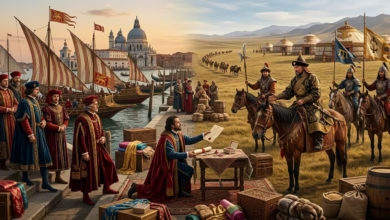
In The Second Chapter Of His Book, Muhammad Ibrahim Nugud Takes Us On A Broader And More Comprehensive Journey, Transcending The Geographical Borders Of Sudan To Place The Institution Of Slavery In Its Global Context, Specifically “The Pioneers Of Enslavement And The Slave Trade In Africa.” The Depth Of The Sudanese Tragedy Cannot Be Understood Without Looking At The International Stage Managed By The Major Colonial Powers. The Great Human Tragedy Began With The Sailing Of Portuguese Ships From The Shores Of Lisbon, Driven By The Winds Of Geographical Discoveries, To Roam The Western Coast Of Africa. The Goal Initially Was Nothing More Than A “Horrific Human Hunt,” But It Soon Turned Into An Institutionalized Activity For Which Ports And Fortified Commercial Centers Were Established Over Thirty Years (1446 – 1476 AD). Portugal Was The Pioneer, Penetrating The Continent From Angola To Mozambique, And Crossing The Atlantic Ocean Towards Brazil And The Caribbean Islands. The Author Points Out With Sorrow That This Exploitative Activity Earned The Islands Adjacent To The African Coast A Name That Is Intimate On The Surface, But Desolate On The Inside: The “Black Mother,” Where These Ports Became Transit Stations For Collecting And Supplying Slaves. Spain And England: From Replacing Victims To Monopolizing The Market Spain Was No Less Brutal, But Played A Dual Role In The Tragedy Of Slavery. After Crushing The Indigenous Indian Civilizations In Its Caribbean Colonies And Exterminating Them, Bishop “Bartolomé De Las Casas” Proposed In 1518 Bringing Slaves From Africa To Replace The Indians In Agriculture And Mines. The Author Asks Here Disapprovingly: “Does The Lord Jesus Accept Replacing The Misery Of One People With The Misery Of Another?!” As For England, It Entered The Arena To Snatch For Itself The Position Of The “First Global Carrier” Of Slaves. In The Port Of Liverpool, Maritime Route Networks Met And Deals Were Struck, Until Its Pens Were Overflowing With The Black Commodity. The Author Places Before Us A Number That Sends Shivers Down The Spine: “Three Gloomy, Bleak Centuries Of The Transatlantic Slave Trade Drained Africa Of 40 Million Human Beings, 90% Of Whom Were Youth.” This Drain Was Not Just Trade, But A Decisive Factor In Paving The Way For The Industrial Revolution And Laying The Foundations Of The Capitalist System In All Four Continents.
Abolition Of Slavery: Awakening Of Conscience Or Pragmatism Of The Steam Engine?
In A Deep Material And Historical Analysis, Nugud Dismantles The Romantic Narrative That Attributes The Abolition Of Slavery Exclusively To The Moral And Religious Awakening In Europe. Despite Acknowledging The Role Of Humanitarians And Clergymen, The Author Asserts That The Primary Motive Was Fundamentally Economic. The Last Quarter Of The Eighteenth Century Witnessed Events That Shook The Institution Of Enslavement, Most Notably The American Revolution, The French Revolution, And Most Importantly: “James Watt’s Invention Of The Steam Engine.” The Industrial Revolution Caused A Leap In The Productivity Of “Wage Labor,” Surpassing The Productivity Of Slave Labor. Concepts Of Political Economy, Headed By The Ideas Of “Adam Smith,” Began To Spread To Prove That Slave Labor Is The Most Costly And Least Yielding In The Long Run. Here, The “Ideological Mask Fell In The Name Of The Christian Religion,” Which Had Long Justified Enslavement Under The Pretext Of Saving Savage Souls, To Be Replaced By A New Economic Law That Sees The Machine And The Factory As A More Effective Alternative Than The Farm And The Whip. Compensating The Owners, Not The Victims: One Of The Stark Paradoxes Documented By The Book Is The Decree Emancipating Slaves Passed By The British Parliament In 1833. Instead Of Compensating The Victims Who Were Stripped Of Their Freedom And Lives, The British Government Provided 20 Million Pounds Sterling “To Compensate The Owners” For The Loss Of Their Human Property. The Law Did Not Stop There, But Stipulated That The Freed Slave Remain A Wage Laborer For His Owner As An Apprentice For 12 Years For Field Slaves, And 7 Years For Domestic Servants, With A Portion Of The Wage Deducted To Cover The Owner’s Compensation!
Slavery In The Funj Society: When The Rosary Intertwines With The Fetters Of The Enslaved
Muhammad Ibrahim Nugud Brings Us Back To The Sudanese Interior, Specifically To The Era Of The “Blue Sultanate” (Funj), To Open A Highly Complex And Intertwined File: The Relationship Of Sufi Orders And Their Leaderships With The Institution Of Slavery. The Author Relies In This Chapter On A Rare Historical Document Dating Back To 1754 AD, Which Is A “Legal Deed” Issued By Sheikh Khojali In A Dispute Over The Ownership Of An “Amah” (Female Slave/Concubine) Between Two Partners. This Orphan Document, As Nugud Describes It, Reveals A Reality In Which Slavery Had Settled As A Legitimate And Economic Institution; Partnership In A Head Of A Slave Represented A Familiar Commercial Activity, And Resorting To Dispute Resolution Was Not Done Through Central State Institutions, But Through The Fatwas Of Sheikhs Who Possessed Spiritual And Judicial Authority. The Book Delves Into Analyzing This Phenomenon With Intense Objectivity, Removing The Halo Of Absolute Sanctity From History. He Explains How The Sufi Orders In The Funj Era Relied In Their Economic Structure On Slave Labor. The Vast Agricultural Lands Granted To The Sheikhs (Jah) Needed Intensive Labor To Cultivate Them. Slave Labor Was Not Limited To Agriculture, But Extended To Serving The “Khalwas” (Quranic Schools), Preparing Food For Guests And “Hiran” (Students Of Knowledge), And It Even Reached The Point Of Using Them As A Force To Maintain Order And Secure Caravan Routes. In This Context, Spiritual Authority Intertwined With The Enslavement Economic Structure, So Female Slaves And Male Slaves Became An Integral Part Of The Production Machine That Maintained The Continuity And Influence Of These Orders. The Book Also Boldly Addresses The Relationship Of “Tasarri” (Taking Concubines), And How It Often Led To The Integration Of The Blood Of Slaves Into Sufi Families And Society In General, Creating A Complex Social Structure In Which Strict Ethnic Differences Gradually Melted Away Over Generations, Even If The Social Stigma Remained Lurking In The Collective Unconscious.
Sennar.. The Capital Of Trade And The Station Of Sorrows
Nugud Uses The Observations Of Western Travelers, Such As Crawford And James Bruce, To Paint A Vivid And Horrific Picture Of The Slave Markets In The City Of Sennar. Crawford Describes How The Market Of Sennar Was One Of The Most Populated Cities After Cairo, Teeming With Meticulous Trade In Various Commodities, Among Which Were Human Beings. The Author Conveys Painful Scenes From The Diaries Of The Travelers: “And In The Market, Slaves, Males And Females Of All Ages, Are Sold Just As Cows Are Sold… And Every Day Two Or Three Hundred Of Them Are Driven To The Slave Market.” The Physical Examinations That The Slaves Underwent Before Purchase Were Degrading And Stripped Of Any Humanity, Where Teeth, Mouth, And Every Part Of The Body Were Examined Crudely, Like Any Commodity Whose Value Is Haggled Over. The Tragedy Does Not Stop At The Borders Of The Sennar Market, But Extends To The Caravans Heading North Across The Desert To Egypt. The Author Provides A Poignant Description Of A Slave Caravan On Its Way In The Middle Of The Scorching Heat Of The Sun; Where The Slaves Walk Shackled, Their Bodies Covered Only By Worn-Out Rags, Facing Death By Thirst And Hunger In The Blazing Heat Of The Lava-Like Terrain. And If One Of Them Fell From Exhaustion, He Was Left Alone To Die In Silence Amidst The Sands, In A Scene That Epitomizes The Cruelty Of This Horrific System.
This Analytical Reading Of Muhammad Ibrahim Nugud’s Book Continues Its Journey Through Sudanese History, Moving From The Markets Of Sennar To The Horizons Of The Sultanate Of Darfur, Where The Institution Of Slavery There Took On A Unique Administrative And Organizational Character That Made It An Inherent Part Of The State Structure. In Darfur, Slaves Were Not Merely A Workforce In The Fields, But Turned Into Active “Instruments Of Power”, As The Sultanate Absorbed Slaves Into High Sovereign And Military Positions, Granting Them Titles Such As “Maqdum” And “Mangal” To Ensure Absolute Loyalty That Transcends Conflicting Tribal Affiliations. The Famous “Darb Al-Arba’in” (Forty Days Road), Which Links El Fasher To Asyut, Represented The Economic Artery Through Which Caravans Flowed, Making The Institution Of Slavery A Fundamental Pillar In Commercial Exchange And The Building Of The Sultanate’s Military Power.
And At The Turn Of The Nineteenth Century, Sudan Entered A New Tunnel With The Turco-Egyptian Invasion In 1821, An Era That Nugud Describes As Having Witnessed The “Nationalization” Of The Enslavement Process And Turning It Into An Official State Policy. Human Hunting Was No Longer A Random Activity, But Became An Organized “Military Mission” Under The Name Of “Al-Ghazwa” (The Raid), Where The Army Was Driven Towards The Nuba Mountains And The Upper Nile Not Only To Collect Taxes, But To Bring The “Men” Needed To Build Muhammad Ali Pasha’s Modern Army. In This Era, The “Zaribas” (Enclosures) Emerged In Bahr El Ghazal As Nearly Independent Commercial And Military Fiefdoms, Led By Slave Trade Emperors Like Zobeir Pasha, Which Created A Bitter Economic And Social Reality That Drained The Country’s Human Energies.
When The Mahdist Revolution Erupted, It Brought With It Promises Of Emancipation, And Thousands Of Slaves (Jihadiya) Joined Its Ranks As A Striking Force That Contributed To The Fall Of Khartoum. However, Nugud Boldly Analyzes How The Aspirations Of Liberation Collided With The Necessities Of The Nascent State; The Mahdi State Did Not Abolish Slavery As An Institution, But Rather Reframed It According To The Provisions Of “Spoils” (Fay’), So The Slaves Of Adversaries Became The Property Of The State, While The Ansar (Supporters) Retained Their Slaves To Ensure The Continuation Of Agricultural Production Amidst Wars And Famines. The Mahdi State Was A Station Of Conflict Between The Call For Freedom And A Social And Economic Structure In Which Slavery Was One Of Its Pillars That Was Difficult To Demolish With A Sudden Decision.
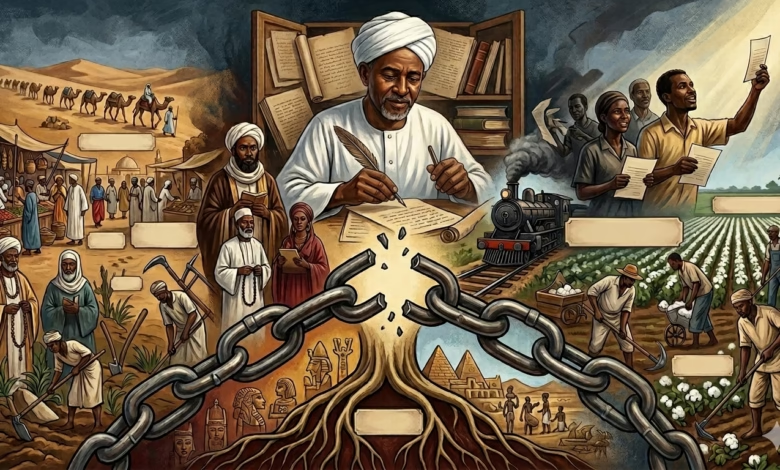
The Phase Of Actual “Decay” Began With The Entry Of The Condominium (Anglo-Egyptian) Rule, But Not Solely Because Of British Laws Or The “Emancipation Offices” That Were Established, But As A Result Of A Deeper Structural Economic Transformation. Nugud Argues That The Emergence Of The “Gezira Scheme” And Railways Led To The Emergence Of A “Free Labor Market”, Where Experience Proved That The Wage Laborer Is More Productive And Less Costly Than The Slave Who Requires Sustenance And Guarding. Thus, Slavery Began To Gradually Fade Away When It Lost Its Economic Function, And The Chains Broke Under The Weight Of Forced Modernity And International Pressures.
Muhammad Ibrahim Nugud Concludes This Valuable Tome By Emphasizing That Our Understanding Of Contemporary Sudan Remains Incomplete Unless We Grasp The “Chemistry Of Formation” In Which The Institutions Of Land, Sufi Orders, And Ethnic Entities Interacted With The Institution Of Slavery. The Decay Of Slavery As A Legal Relationship Did Not Necessarily Mean The Disappearance Of Its Psychological And Social Effects, Which Is What Makes Him Call At The End Of His Book To Face This History With Courage, Not To Open Wounds, But To Purify The National Memory And Build A Future That Transcends The Hierarchies Of The Past Towards A Horizon Of Equal Citizenship.