
Political Reading In The Disintegration Of The State And The Splintering Of National Sovereignty
The Bloody Sudanese Conflict Enters Its Fourth Year By Mid-2026, Carrying With It Deep Structural Transformations That Have Transcended Mere Conventional Military Confrontations Between The Sudanese Armed Forces, Led By General Abdel Fattah Al-Burhan, And The Rapid Support Forces, Led By General Mohamed Hamdan Dagalo “Hemedti.” In A Comprehensive Press Review Of The Strategic Report Issued By The “GANNET” Platform—Affiliated With The “Data Friendly Space” Organization—Entitled “Sudan Crisis: Situation Analysis For The Period From June 8 To 14, 2026,” We Find Ourselves Before A Documenting Paper That Deconstructs The Articulations Of The Complex Humanitarian And Operational Landscape Experienced By Sudan Today.
The Report Reveals At Its Outset The Political Framework That Has Come To Govern Sudanese Geography, Where Sudan Is Living In A State Of Unprecedented Political And Administrative Fragmentation That Solidified By Late 2025 And The Beginnings Of 2026. Two Parallel Administrations Competing For Legitimacy And Sovereignty Have Formed In The Country: The First Is Led By The Sudanese Armed Forces, Which Is Keen To Maintain The Central State Institution Structures And Appoint A Caretaker Government That Included The Naming Of Kamel Idris As Prime Minister In An Attempt To Secure International Recognition And Official State Continuity. On the Other Hand, The Rapid Support Forces Established A Parallel, Fully Fledged Civil Administration In The City Of Nyala In South Darfur Under The Sponsorship Of “Hemedti.” This Administration Is No Longer Merely A De Facto Military Authority; Rather, It Has Begun Issuing Official Decrees, Levying Illegal Local Taxes, And Even Printing Personal Identification Documents For Citizens Under Its Control, Reflecting A Clear Desire To Institutionalize Secession And Consolidate Regional Hegemony.
This Sharp Fragmentation In The Executive And Sovereign Power Structure Is Described By Analysts In The Report As A Practical Declaration Of The Absence Of Any Central National Coordination To Manage The Humanitarian Response Or Lead Economic And Political Operations. Sudanese Citizens Today Are No Longer Governed By A Unified Legislative And Legal System; Instead, They Languish Under The Weight Of Divergent Local Military And Militia Authorities, Ruled By Narrow Field Interests And Tribal Or Political Loyalties, Which Has Accelerated The Pace Of The Comprehensive Institutional Collapse Of The Country. The Judiciary And Justice Authority Have Completely Lost Their Independence, Becoming A Tool In The Hands Of Rooted “Deep State” Networks And Conflicting Military Elites, Leading To A Total Absence Of Accountability And The Rule Of Law.
On The Political Front, The Report Monitors The International And Regional Diplomatic Movements Attempting Desperately To Bridge The Chasm Between The Two Conflict Parties. It Points To The “Nairobi Roadmap” Announced In May 2026, Which Proposes A Three-Track Path Integrating Urgent Humanitarian Measures With A Permanent, Internationally Monitored Ceasefire, Followed By A Comprehensive Political Transition Track. The Most Prominent And Controversial Feature Of This Roadmap Is Its Strict Quest To Exclude Both The Army Leadership And The Rapid Support Forces From The Future Political Composition, In Addition To Imposing A Comprehensive Ban On The Participation Of Leaders Of The Islamic Movement And The Dissolved National Congress Party In Any Upcoming Political Process. This Exclusionary Clause, Despite Its Adoption By Broad Civilian Forces And International Partners, Represents At The Same Time A Major Dilemma; The Islamist Elites Allied With The Army And Their Subordinate Clientelist Networks Consider It An Existential Threat, Making Them Do Everything In Their Power To Obstruct Any Political Settlement That Does Not Guarantee Their Survival In The Scene.
In A Related Context, This Roadmap Received Remarkable International Support Represented In The Consultations Of The “Quintet Group” Held In Addis Ababa From June 3 To 5, 2026, Which Brought Together The United States, Britain, France, Germany, Italy, The African Union, The European Union, The IGAD Organization, The Arab League, And The United Nations. This Group Issued A Joint Statement Demanding An Immediate Humanitarian Truce And The Opening Of A Comprehensive Civilian Political Track To Be Completed Within Six Months, Along With Strict Warnings To Impose Sanctions And Prosecutions Against Individuals And Entities Obstructing This Democratic Civilian Transition. However, These Statements And International Efforts Remain Incapable Of Imposing Their Word On The Ground; The Sudanese Army Recently Rejected A Proposal Submitted By The International Quadripartite Committee (The United States, Saudi Arabia, The United Arab Emirates, Egypt) To Arrange A Three-Month Humanitarian Truce, While The Rapid Support Forces Declared On Their Part A Unilateral Ceasefire That Found No Real Echo On The Burning Combat Fronts.
The Political Analysis Provided By This Report Places The Reader Before A Fact Stating That The Current Crisis Is Not Born Of The Moment, But Is Rather An Extension Of The Policies Of Historical Marginalization And Excessive Centralization Pursued By Successive Governments Since The Colonial Era. The Capital, Khartoum, And The Riverine Regions Enjoyed Wealth, Power, And Services, While The Peripheral Regions In Darfur, Kordofan, Blue Nile, And Eastern Sudan Were Left Suffering From The Absence Of Sustainable Development And Real Political Representation. The Current War Came To Finish Off What Remained Of The Already Collapsed Bonds Of Trust Between The Citizen And State Institutions. There Is No Longer Any Trust In The Judicial Or Security Apparatuses; Rather, This Trust Has Eroded Even Toward Health Authorities And Official Medical Messages, As A Result Of The Systemic Targeting Of Hospitals And The Emergence Of Alternative Tribal And Local Mechanisms For Providing Basic Humanitarian Services.
We Are, Therefore, Confronted With An Extremely Complex Political Scene, In Which Military And Economic Interest Networks Intersect With Sharp Ethnic And Tribal Divisions. The Chapters Of This Report Confirm That The Continuation Of The War And The Deepening Of Administrative And Political Fragmentation, Along With The Emergence Of A New Generation Of Armed Local Authorities That Do Not Recognize The Center, Makes The Option Of Reifying Sudan Under The Banner Of A Single Central Democratic Civilian Government Something That Grows More Difficult With Each Passing Day, Unless A Decisive National Will And A Coordinated International Intervention That Goes Beyond The Language Of Loose Diplomatic Statements Are Provided.
Geography Of Death And Displacement – The Security Scene And The Largest Human Uprooting Disaster In Modern History
The Strategic Report Paints A Grim And Detailed Picture Of The Field Security Landscape In Sudan, Which Has Transformed Into Something Resembling An Open Earthly Hell For Civilians. As Battles Enter Their Fourth Year, Military Confrontations Are No Longer Confined To Conventional Combat Fronts Between Regular Armies; Instead, They Have Turned Into A Comprehensive And Open War Of Attrition Utilizing Drones, Long-Range Artillery Shelling, And Intensive Airstrikes That Directly And Randomly Target Residential Areas, Crowded Markets, Hospitals, Schools, And Displacement Camps. This Uncontrolled Military Escalation Has Led To The Collapse Of The Humanitarian Safety Environment, Turning The Country Into The Epicenter Of The Largest Internal Displacement And External Refugee Crisis In The World Today.
Field Data Documented In The Report Shows That Combat Fronts Witnessed A Tragic Ignition And Escalation In May And June Of 2026, With The Fiercest Battles Concentrated In Northwest Darfur, The Greater Kordofan States, And The Blue Nile Region. Cities And Towns Such As Dilling, Kauda, Heiban, Kurmuk, Baw, And Geissan Witnessed Crushing Ground Confrontations And Continuous Airstrikes That Caused Thousands Of Casualties And Nearly Complete Destruction Of What Remained Of A Dilapidated Infrastructure. Among The Bloodiest Massacres Documented By The Report Is The One That Occurred In The Town Of “Kaluqi” In South Kordofan On December 4 Of Last Year, Where A Drone Strike Targeting A Kindergarten And A Local Hospital Resulted In The Killing Of At Least 114 Civilians, Including 63 Children, In A Scene Reflecting Complete Dissolution From Any Commitment To International Humanitarian Law. In The Same Month, The United Nations Human Rights Office Documented The Killing Of 269 Civilians In Kordofan Alone Within A Few Weeks, In Addition To Monitoring A Drone Attack On The Market Of The Town Of “Ghabaysh” In West Kordofan That Caused The Death Of 28 Civilians, Noting That This Small Town Has Come To Host Approximately 68,000 Displaced Persons Who Fled The Woes Of Fighting In Other Areas.
The Security Landscape Was Not Limited To The Traditional Conflict Between The Army And The Rapid Support Forces, But Extended To Witness A Fracturing And Fragmentation Within The Military Structures Themselves Through A Series Of Defections And Shifts In Loyalties. Combat Fronts In The Spring Of 2026 Recorded Large-Scale Defections Of Prominent Field Commanders From The Ranks Of The Rapid Support Forces And From The Sudan People’s Liberation Movement-North (Agar Faction), Leading To A Destabilization Of Local Command And Control Cohesion, Prompting The Rapid Support Forces To Withdraw Fighting Units From Some Front Lines And Redeploy Them In Nyala And El Fasher To Secure Their Control, Which Caused Violent Retaliatory Waves Against Local Communities Accused Of Bias. This Was Accompanied By The Outbreak Of Bloody Tribal And Ethnic Conflicts Fueled By The War Parties; A Violent Ethnic Conflict Exploded Between The Beni Halba And Salamat Tribes In South Darfur At The Beginning Of June 2026, Causing Hundreds Of Deaths And Resettling More Than 13,000 People Within Just Three Days. The Town Of Kauda Also Witnessed A Tragic Deliberate Arson Campaign Of Homes And Markets In May 2026, Resulting In The Killing Of 61 Civilians And Turning The City’s Central Market To Ashes.
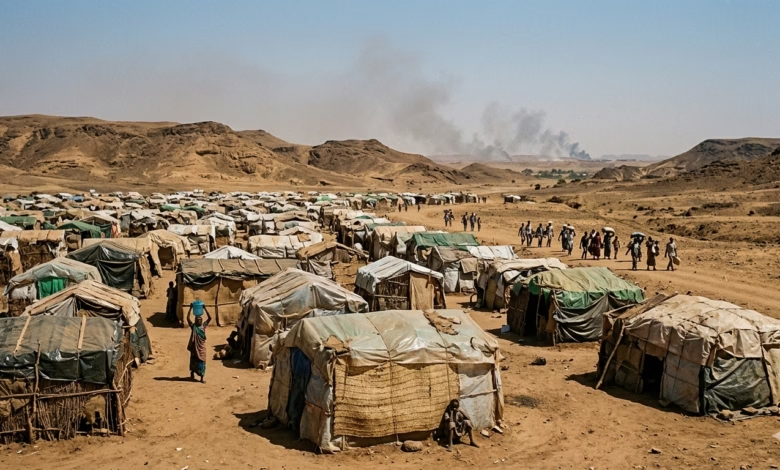
This Widespread Security Chaos Produced The Major Disaster Represented In The Uprooting Of Millions Of Sudanese From Their Homes. The Report Indicates That The Total Number Of Displaced Persons And Refugees Since The Outbreak Of The War In April 2023 Has Exceeded The Barrier Of 14 Million Human Beings. This Frightening Figure Makes The Sudanese Crisis The Largest Human Displacement Crisis On Planet Earth Currently. Data Issued By The International Organization For Migration And Partner Organizations Show That There Are More Than 9 Million Internally Displaced Persons Distributed Across Sudan’s Eighteen States, Living Under Extremely Harsh Conditions Inside Temporary Shelter Centers, Schools, And Camps Lacking The Minimum Requirements For Humane Life. On The External Refugee Front, More Than 4 Million Sudanese Have Crossed Borders Toward Neighboring Countries In Search Of Safety, With Hundreds Of Thousands Pouring Toward Chad, South Sudan, Egypt, Ethiopia, Libya, And The Central African Republic, Posing A Tremendous And Unbearable Pressure On The Already Exhausted Humanitarian And Service Systems In Those Countries.
The Language Of Numbers In The Report Reflects The Magnitude Of The Tragedy In Asylum Countries; The Number Of Sudanese Refugees In Eastern Chad Alone, Up To Mid-May 2026, Reached Around 927,915 Refugees, In Addition To The Influx Of More Than 400,000 Returning Chadian Citizens Who Were Residing In Sudan. Demographic Statistics For Displacement And Asylum Camps, Such As The “Al-Nakhil” Camp In Eastern Darfur, Which Was Established In March 2025 And Houses About 18,000 Displaced Persons, Point To A Demographic And Social Data Infused With Bitterness: Women And Children Constitute Between 85% To 90% Of The Total Camp Population, Amid A Near-Total Absence Of Men Who Either Perished In Battles, Were Arrested, Or Were Forcibly Recruited Into The Ranks Of The Warring Factions.
In Contrast To This Continuous Tragedy, The Report Tracks A Complex Reverse Phenomenon That Began To Appear Since The Beginning Of 2026, Represented In Documenting Limited And Fragile Return Movements Of Some Population Members To Parts Of Khartoum And Gezira States Following The Recess Of The Intensity Of Clashes In Some Field Axes And The Shift Of Confrontation Lines. According To Displacement Tracking Data, A Return Movement Of Approximately 2.6 Million People To Some Relatively Stable Areas Was Recorded. However, This Return Does Not Mean The End Of Suffering; Those Who Chose To Return Voluntarily Found Themselves Facing Comprehensive Destruction In Their Homes, A Complete Absence Of Water, Electricity, And Sanitation Networks, And A Total Lack Of Job Opportunities And Dignified Living, In Addition To The Continuous Security Threat Represented In The Spread Of War Remnants, Landmines, And Unexploded Ordnance That Besiege Agricultural Lands And Residential Areas, Making Daily Life An Adventure Fraught With Death And Disability.
In The Grip Of Famine – Economic Collapse, Inflationary Madness, And The Weapon Of Collective Starvation
If The Artillery Of War and Its Drones Harvest The Lives Of Sudanese On The Combat Fronts, There Is Another Silent And No Less Ferocious War Taking Place In The Bellies Of Millions Of Starving People And In Empty Markets. The Strategic Report Of “GANNET” Dedicates A Wide and Frightening Analytical Space To Monitoring The Insidious Collapse Of The Macroeconomy In Sudan, Which Has Bypassed By Stages The Limits Of Traditional Economic Depression To Reach The Stage Of Complete Structural Decay, Where The Bite Of Food And The Sip Of Water Have Transformed Into Tools And A Weapon Of Deadly Warfare.
The Reading Of The Economic Scene Begins From The National Currency, Which Experiences A Historic Free Fall; The Sudanese Pound Recorded In The Spring And Summer Of 2026 Unprecedented Low Levels In The Parallel Market, Trading At A Level Of 4400 Pounds Against One US Dollar. This Terrible Deterioration Of Purchasing Power Was Accompanied By A Complete Collapse Of The Official Banking System, Which Stopped Operating In Nearly Half Of The Country’s States and Regions As A Result Of The Looting Of Bank Headquarters, The Destruction Of Communications Networks, And The Absence Of Cash Liquidity. As A Result Of This Financial Dissolution, Citizens Lost Trust In The National Currency, And Some Airlines Began Refusing To Sell Travel Tickets Except In US Dollars, While Informal Exchange Networks and The Black Market Flourished, With The Egyptian Pound Trading At Around 87 Sudanese Pounds In Border Areas, Reflecting The Complete Loss Of The Monetary and Financial Sovereignty Of The State.
To Confront This Economic Dissolution, The Report Indicates That Government Authorities Affiliated With The Army In Port Sudan Resorted, In Cooperation With The Central Bank, To Taking Emergency Measures Focused Mainly On Attempting To Increase Gold Production And Exporting It Forcibly To Obtain Foreign Currency Contribuiting To Reining In The Accelerating Deterioration Of The Pound. However, Economic Experts In The Report Describe These Attempts As Patchwork and Temporary Measures That Do Not Touch The Roots Of The Structural Crisis. The War Created A Parallel and Self-Sustaining “War Economy” That Feeds On Smuggling And Looting Operations. The Map Of Military Control Came To Regulate The Map Of Wealth; While The Army Controls The Ports and Central Export Outlets In The East Of The Country, The Rapid Support Forces Impose Their Control Over Most Gold Mines And Livestock Production Areas In Darfur And Kordofan, Enabling Them To Fund Their War Machine By Exporting And Smuggling Huge Quantities Of The Precious Metal (The Rapid Support Forces Produced An Estimated 10 Tons Of Gold In 2024 Alone Worth Approximately 860 Million Dollars), Benefiting From A Historic Leap In Global Gold Prices That Rose By 150% Since 2024 To Approach The Barrier Of 5000 Dollars Per Ounce In March 2026.
This Splintering In resource Control Reflected Horrifically On The Prices Of Food Commodities And Strategic Fuel, Which Recorded Insane Inflationary Leaps In The Spring Of 2026. According To Market Monitoring Data For April 2026, Sorghum Prices (The Staple Food For The Majority Of The Population) Rose By 23% In A Single Month, Settling At A Level 170% Higher Than The General Average Of The Past Five Years. Wheat Increased By 17.5% Monthly To Become 187% Higher Than The Average, While Diesel Jumped By 55% In Official Markets, And Overall Fuel Costs Rose By Percentages Ranging Between 83% And 144% On An Annual Basis. This Inflationary Madness Led To Crushing What Remained Of The Purchasing Power Of Sudanese Families, Especially In Light Of Poverty Rates Reaching A Frightening Percentage Of 73% Of The Total Population (Including Expatriates Abroad Whose Families Inside Were Affected).
The Inevitable Result Of This Catastrophic Combination Of Excessive Price Hikes, Lack Of Income, And The Destruction Of Trade Routes Was The Country’s Fall Into The Bottom Of The Largest Hunger And Famine Crisis Witnessed By the Globe In The Twenty-First Century. The Report Confirms That There Are Approximately 19.5 Million People In Sudan Currently Suffering From Acute Food Insecurity, While Frightening Numbers Exceeding 25 Million People (Equivalent To Nearly Half Of The Country’s Population) Fall Under The Purview Of Urgent And Continuous Need For Humanitarian Assistance To Survive. Even Worse And More Bitter Is The Documented Official Declaration Of The Outbreak Of A State Of “Full And Declared Famine” (IPC Phase 5) In Broad Sectors Of The Besieged City Of El Fasher In North Darfur, and In The City Of Kadugli In South Kordofan, With At Least 20 Other Areas And Districts Strongly Candidates To Slip Into This Dark Bottom Within A Few Weeks.
The Tragedy Acquires An Inhuman Dimension When The Report Explicitly Points To The Use Of “Siege Tactics And Deliberate Starvation” As Direct Tools And Weapons Of War. In El Fasher Alone, Between 70,000 To 100,000 Civilians Languish Under A Suffocating Siege Preventing The Entry Of Wheat Grains And Medicines, Making Acute Malnutrition Rates Exceed The Threshold Of 15% In Many Areas, And Even Crossing The 30% Barrier In Certain Pockets Of Darfur And Kordofan, Which Are Proportions Bypassing By Stages The Standard International Thresholds For Declaring Calamity And Famine. In The Midst Of This Reality, The Report Expects That More Than 825,000 Sudanese Children Will Suffer From Acute and Life-Threatening Malnutrition (Severe Wasting) During 2026, At A Time When Humanitarian Relief Supply Lines For International Organizations Are Shrinking Due To The Scarcity Of International Funding. The World Food Programme Announced Having To Reduce Food Rations By Percentages Up To 70% In Famine Areas And 50% In Other Areas As A Result Of A Huge Funding Deficit Requiring An Urgent Injection Of 695 Million Dollars To Prevent The Comprehensive Collapse Of The Aid System By The Autumn Of This Year.
Ruins Of The Vital System – Tumbling Health, Outbreak Of Epidemics, And The Assassination Of The Right To Education For Rising Generations
The Effects Of The Continuous Sudanese War Until Mid-2026 Transcend The Issue Of Direct Military Losses To Storm The Basic Service and Vital Infrastructure That Guarantees The Survival and Continuity Of The Human Race. In This Context, The Strategic Report Of “GANNET” Provides An Extremely Harsh And Clear Anatomical Reading Of the State Of Complete Mechanical Collapse That Hit The Health, Educational, And Environmental Systems In The Country, Turning Sudan Into An Open Theater For Deadly Epidemics And Forced Ignorance Threatening To Delete The Future Of An Entire Generation From The Map Of Human Development.
The Collapse Begins From The Health Sector; The Report Documents The Exit Of More Than 70% Of Hospitals and Medical Centers Completely Out Of Service Across All States Of Sudan, And This Percentage Rises To Exceed 90% In Hot Clash Areas In Darfur, Kordofan, And Khartoum. This Collapse Was Not A Secondary Product Of The War, But Came As A Result Of Direct And Systemic Targeting Of Medical Facilities and Their Cadres; The World Health Organization Recorded More Than 63 Direct Military Attacks On Hospitals And Health Facilities During the Past Year Alone, Resulting In The Killing Of At Least 1611 Medical Cadres And Patients, And Injuring Hundreds. This Was Accompanied By An Acute And Total Scarcity Of Life-Saving Medicines and Medical Solutions, Not To Mention The Announced Imminent Obligation Of Many International Organizations, Such As The International Rescue Committee (IRC), To Close Dozens Of Clinics And Health Centers Supported By Them Due To Lack Of Funding And The Absence Of Safe Corridors To Bring In Supplies That Were Delayed For Several Months Due To The Disruption Of Global Supply Chains Linked To Disturbances In The Red Sea And The Strait Of Hormuz.
This Complete Medical Paralysis, Coupled With The Collapse Of Clean Water and Sanitation Networks, Accumulation Of Waste, And Ruins Of Destroyed Buildings, Created The Ideal Soil For The Outbreak Of Epidemics and Infectious Diseases In A Terrifying Epidemic Manner. The Report Points Out With Bitterness That The Cholera Epidemic Wave That Swept The Country Caused The Recording Of More Than 113,000 Confirmed Infection Cases, And Led To The Death Of More Than 3000 People From 2024 Until The Beginning Of 2026. Despite The Hesitant Official Declaration Of Containing The Epidemic In March 2026, Field Experts Confirm That The Structural Causes For The Spread Of The Disease Are Still Standing And Exacerbating In Light Of The Crowding Of Millions Of Displaced Persons Inside Camps And Shelter Centers Lacking The Simplest Conditions For Environmental Sanitation And Personal Hygiene, Making The Danger Of The Epidemic’s Return In More Ferocious Forms An Inevitable Matter With The Entry Of The Present Rainy Season. The Health Tragedy Exacerbates With The Spread Of The Malaria Epidemic, Which Reached Record Epidemic Rates, Where Sudan Alone Accounts For A Terrifying Percentage Of 41% Of Total Malaria Infection Cases Globally, Coinciding With The Outbreak Of Dengue Fever, Measles, And Hepatitis E Amid A Total Absence Of Basic Vaccination and Immunization Programs For Children.
In Parallel With The Health Collapse, The Education And Upbringing Sector In Sudan Experiences A Historic Tragedy Laying Foundations For Long-Term Structural Ignorance. Schools In Most Parts Of The Country Have Transformed Either Into Rubble By Action Of Artillery and Aerial Bombardment, Or Were Forcibly Converted By Armed Groups Into Military Barracks And Detention Centers, Or Were Used As Temporary Shelter Centers For Thousands Of Homeless Displaced Families, Leading To Depriving Millions Of Children Of Their Right To Education. The Report Documents A Total Absence Of Educational Aids and Textbooks, And A Complete Interruption Of Salaries And Incentives For Teachers and Professors, Most Of Whom Fled Outside The Country Or Engaged In Marginal Professions To Survive.
The Educational Tragedy Acquires A Serious Political and Institutional Dimension Threatening To Divide The Country Emotionally and Cognitively; The Report Monitors Authorities and Civil Alliances Loyal To The Rapid Support Forces (Such As The “Tassees” Coalition) Organizing Parallel And Separate General Secondary School Certificate Exams In Their Control Areas In Darfur And Parts Of Kordofan In June 2026, Where Around 10,000 Male And Female Students Sat For Exams (Females Constituted A Percentage Of 74% Of Them) Under Direct Sponsorship Of “Hemedti” And His Civil Administration Head, Mohamed Hassan Al-Taishi. This Step Was Met With Hard Warnings And Rejection By UNICEF and International Organizations That Demanded The Necessity of Complete Neutralization Of Education and Allowing All Sudanese Students To Sit For Unified Nationally and Internationally Officially Recognized Exams. Observers Warned That Creating A Parallel, Unrecognized Educational And Examination System Does Not Represent Mere Politicization Of The Educational Process, But Establishes A Deep Social And Institutional Fracture Solidifying National Division, And Creating A Generation Of Students Carrying Certificates And Qualifications That Are Unrecognized, Depriving Them Of Any Real Opportunities For Employment Or Completing Higher Education In The Future.
The Thirsty Land And The Paralyzed Ministry – The Environmental Dimension And Climate Change As Amplifiers Of Human Death
The Details Of The Sudanese Disaster Cannot Be Read In Isolation From The Silent And Most Dangerous Driver In Shaping The Future Of The Region, Namely The Environmental Dimension And The Climate Crisis That Has Struck Its Stakes Into The Structure Of The Collapsed Sudanese State. The Report Dedicates An Analytical Space To Monitoring The Organic and Terrifying Intersection Between The Military War Machine And Extreme Weather Shocks Sweeping The Entire African Sahel Region, Demonstrating That The Environment And Climate Are No Longer Mere External Natural Given Elements, But Have Transformed Into A Lethal Weapon and A Risk Multiplier Accelerating The Pace Of Food and Health Security Collapse. Sudan, Which Is Besieged By Armed Conflicts From Every Side, Finds Itself Today Facing Unprecedented and Excessive Thermal and Water Stress, Placing Millions Of Citizens and Displaced Persons In The Core Of A Merciless Climate Hell, Amid Total Paralysis Of The Official Institutions Tasked With Managing Natural Resources And Protecting The Environment.
The Chapters Of The Environmental Tragedy, As Reviewed By The Report, Begin From The Grim Climate Projections For The Period Extending From June To September Of 2026; Satellite Data and Meteorological Models Point To A Very High Probability Of Weak Coastal and Seasonal Rainfall, Particularly In The Northern and Western Parts Of The Country, Which Include The Stricken Darfur Region and The Greater Kordofan States. This Expected Scarcity In Rainfall Does Not Mean Mere Passing Drought, But Translates Directly In Agricultural Calculations Into A Sharp and Dangerous Decline In Soil Moisture Levels In A Country Whose Majority Of Population Relies On Traditional Rain-Fed Agriculture and Pastoralism. The Decrease In Land Moisture Under These Complex Conditions Inevitably Leads To A Total Failure Of Upcoming Agricultural Seasons, Meaning A Total Lack Of Strategic Crops That Form The Backbone Of Food For The Sudanese Citizen, Pushing Additional Millions Of Human Beings Toward The Slope Of Comprehensive Famine That Has Already Struck Vast Parts Of The Country.
This Climate Deterioration Is Linked To Deep Disruptions In The Water And Environmental Sanitation Sector, A Sector That Was Subjected To Systematic and Widespread Destruction Due To Military Operations. Indiscriminate Shelling and Continuous Ground Battles Were Not Content With Destroying Homes And Hospitals, But Directly Targeted Main Water Supply Lines, Purification Stations, And Groundwater Wells In Cities And Rural Areas. As A Result, Millions Of Sudanese Today, Particularly Those Languishing In Overcrowded Displacement Camps, Face A Suffocating Thirst Crisis, Where Obtaining One Liter Of Clean Drinking Water Has Turned Into A Daily Journey Fraught With Risks And Death. This Acute Shortage Of Clean Water Was Accompanied By A Complete And Comprehensive Collapse Of Sewage Networks and The Cessation of Recycling and Removing Solid Waste That Accumulated In City Streets and Under The Rubble Of Destroyed Buildings, Creating An Extremely Polluted and Toxic Environment, Becoming Fertile Soil For The Outbreak Of Lethal Waterborne And Environmental Epidemics And Diseases Such As Cholera, Malaria, And Dengue Fever.
The Environmental Crisis Acquires A Catastrophic Dimension When The Report Explicitly Points To The Total Paralysis That Hit The Sudanese Ministry Of Irrigation And Water Resources. This Sovereign and Vital Service Ministry, Which Should Have Been Leading Environmental Emergency Plans And Managing Crises Related To Drought and Water Distribution, Found Itself In The Heart Of The Military and Political Hurricane. The Ministry’s Headquarters and Its Research Centers In Khartoum and Other Cities Were Subjected To Vandalism and Looting, Its Budgets Stopped Completely, And Most Dangerous Of All Was The Forced Mass Migration of Technical Talents, Environmental Engineers, And Remote Sensing Experts Who Fled Outside The Country Escaping Death Or Prosecution. This Complete Absence Of Qualified Human Cadre and Institutional Cover Made The State Totally Incapable Of Presenting Any Response Or Developing Any Proactive Plans To Reduce The Effects Of Climate Change Or Deal With The Creeping Drought, Leaving Local Communities and Displaced Persons Facing Their Environmental Fate Alone and Without Any Protection.
The Boundaries Of This Tragedy Do Not Stop At The Internal Sudanese Geography, But The Report Links It To A Complex Network Of Global Geopolitical Disturbances and Regional Transformations That Directly Affected The Environmental And Humanitarian Situation Inside. The Analysis Indicates That High Security Tensions and Continuous Disturbances In International Navigation Lines Across The Red Sea and The Strait Of Hormuz Have Cast Heavy Shadows On Humanitarian and Environmental Supply Chains Heading To Sudan. These Maritime Disturbances Caused Delays In The Arrival Of Shipments and Vital Equipment Necessary For Environmental Sanitation Operations, Water Purification Materials, Pumps, And Insecticides Needed To Combat Disease Vectors For Several Continuous Months. This Forced Logistical Delay Deprived International and Local Organizations Of Basic Tools To Stop Environmental Deterioration In Displacement Camps, Contributing To Exacerbating Pollution and The Spread Of Epidemics In Record Proportions Passing The Capacity To Control Them.
The Interpretation Of Environmental and Climate Data Contained In The Report Places The International Community Before A Harsh Structural Fact; The Conflict In Sudan Is No Longer A Mere Military Confrontation Between Two Parties Over Power, But Has Transformed Into A Comprehensive Destruction Process For The Environmental and Vital Systems Supporting Human Life. Drought and Declining Rainfall Do Not Only Kill Crops, But Ignite Anew The Roots of Historical Tribal and Ethnic Conflicts Around Scarce Water Resources and Grazing Paths, Which Has Already Been Noticed In Areas Of Darfur and Kordofan Where Environmental Disputes Intersected With The Large Armed Conflict, Threatening To Turn Vast Parts Of Sudan Into Arid Lands Unfit For Human Life. This Catastrophic Concomitance Between War and Climate Dictates To Any Regional Or International Settlement Efforts Not To Rest Content With A Traditional Ceasefire, But To Place The Environmental Issue, Rebuilding The Water and Sanitation Infrastructure, And Saving The Ministry Of Irrigation At the Forefront Of Priorities, As A First And Indispensable Step To Prevent The Current Displacement And Famine Crisis From Turning Into A Comprehensive and Sustainable Demographic Eradication Blighting The Future Of Sudan For Generations To Come.