
The Return Of Lost Awareness: Confronting The Italian Colonial Silence
In The Contemporary European Cultural Landscape, Colonial History Remains An Open Wound That Refuses To Heal, Not Due To A Lack Of Written Documentation, But Rather Because Of The Intense Complicity In Silence And The Attempt To Forge A Collective Memory Characterized By Selectivity And Factitious Purification. Within This Distressed Context Comes The Book By Italian Historian Filippo Colombara, Titled “Narrating The Empire: An Oral History Of The Italian Conquest Of Ethiopia (1935-1941)” (Raccontare L’impero. Una Storia Orale Della Conquista D’Etiopia), To Represent A Powerful Epistemological And Methodological Slap Across The Face Of Traditional Narratives That Have Long Tried To Market Italian Colonialism In The Horn Of Africa As a “Soft Colonialism” Or One Less Brutal Than Its British And French Counterparts. Colombara Does Not Merely Re-read The Official Archives Of The Fascist State, But Rather Goes Down To The Field Wielding The Weapon Of “Oral History,” To Turn The Testimonies Of Fascist Soldiers, Settlers, Conscripts, And Victims Into A Living Material Capable Of Blowing Up The Ideological Myths Upon Which Benito Mussolini’s Fake Empire Was Built.
The Book Starts From A Fundamental Thesis Positing That The Italian Colonialism Of Ethiopia Was Not Just A Fleeting Military Adventure Or An Attempt To Restore The Glories Of The Ancient Roman Empire, But Was A Real Laboratory For Forging A Fascist Identity Based On Violence, Systemic Racism, And The Exclusion Of The Other. What Distinguishes Colombara’s Work Is His Categorical Refusal To Surrender To The Written Sources Crafted By The Propaganda Machine Of Mussolini’s Regime; A Machine That Excelled In Falsifying Facts And Portraying The Brutal Invasion As A “Civilizing Mission” For The Peoples Of The Dark Continent, Or An Attempt To Grant Land To Poor Italians Whose Means of Livelihood Had Narrowed In The Italian Peninsula. Instead, The Author Chooses To Walk The Hardest Path: Listening To The Voices Of Ordinary Human Beings Who Participated In That Tragedy, Whether They Were In The Trenches Of Fighting, In Construction Lines, Or Even In The Homes Of Settlers Built Upon The Ruins Of Burned Ethiopian Villages.
Colombara Succeeded In Gathering Hundreds Of Hours Of Recorded Oral Interviews With Italian Veterans Who Were Sent To The Horn Of Africa Between 1935 And 1941. These Interviews, Conducted Over Long Years Of Painstaking Research, Reveal The Magnitude Of The Massive Gap Between What Was Broadcast By Radios And Published By Fascist Newspapers In Rome And Milan, And The Bitter, Bloody Reality Lived By Soldiers On The Ground Of The Abyssinian Highlands. The Great Epistemological Value Of Oral History In This Book Lies In Its Ability To Penetrate The “Political Unconscious” Of The Colonizer; Where Spontaneous Confessions, Linguistic Slips, And Forgotten Stories Flow To Expose The Ugly Face Of Fascism, Which Italian Cinema And Literature Long Attempted To Hide Behind The Curtain After World War II.
From The Very First Chapters Of The Book, Colombara Places Us Before A Complex Historical Context; In The Mid-1930s, The Fascist Regime Was Passing Through A Hidden Internal Crisis Of Legitimacy, And Mussolini Needed A “Decisive Victory” To Reshape The Social Contract With The Italian Masses, Distracting Them From Crushing Economic Crises. Ethiopia Was Not Merely A Geographical Target, But Was The “Psychological Knot” Of Italian Military History, Which Had Stumbled Heavily At The Battle Of Adwa In 1896, When The Ethiopian Army Inflicted A Crushing Defeat Upon The Invading Italian Forces—A Defeat That Remained Described In The Italian Consciousness As “The Shame That Must Be Erased.” From Here, The General Mobilization To Invade Ethiopia In October 1935 Was An Existential Mobilization, In Which Fascism Utilized All The Tools Of Modern Technology And Psychological Propaganda To Convince Italian Peasants And Workers That Africa Was The Promised Land That Would Flow With Milk And Honey.
Colombara Analyzes How The Consciousness Of These Young Soldiers Was Manipulated, As They Were Herded Onto Steamships Headed Toward The Port Of Massawa In Eritrea, Singing Enthusiastic Fascist Anthems Like “Faccetta Nera” (Little Black Face), The Famous Song Narrating The Story Of An Ethiopian Girl Whom The Fascists Would Liberate And Take To Rome To Live Under The Umbrella Of Civilization. The Book Explains, Through The Testimonies Of These Soldiers Decades Later, How This Romantic, Musical Tone Transformed Into A Terrifying Nightmare The Moment Their Feet Stepped Onto The Battlefield. The Veterans Recount How They Were Shocked By The Cruelty Of Nature, The Scorching Heat, And The Towering Mountains They Were Not Accustomed To In Their Peaceful Villages In Northern Or Southern Italy, And How Their Illusions Of A “Clean War” Promised By Mussolini Quickly Began To Collapse.
Furthermore, The Book Deconstructs The Myth Of The “Good Italian” (Italiani Brava Gente), The Prevalent Narrative In Italy After The Fall Of Fascism, Which Attempted To Promote The Idea That The Italian Colonizer Was Inherently Humane, Friendly, And Different From The Arrogant British Or Violent French Colonizer. Through The Shocking Oral Testimonies Provided By Colombara, It Becomes Clear That The Fascist Army Practiced A Real War Of Annihilation In Ethiopia, Utilizing Chemical Weapons And Toxic Gases Such As Mustard Gas (Yperite) Under Direct Orders From Mussolini And General Badoglio—A Matter That The Official Italian Archives Continued To Deny For Decades Until The Late 1990s. The Soldiers In Their Oral Testimonies Remember With Terrifying Precision Those Deadly Clouds Falling From Airplanes, Turning Safe Villages And Fertile Valleys Into Mass Graves For Humans And Livestock, Revealing The Deeply Racist Structure That Guided The Colonial Military Machine.
The Book Does Not Stop At Monitoring Military Operations, But Dives Deeply Into The “Colonial Anthropology” Of Daily Life. Colombara Highlights The Concept Of The “Imperial Narrative” As A Linguistic And Intellectual Structure Imposed Upon Italian Society As A Whole; Through The Interviews, It Becomes Evident How Concepts Of Religion, Patriotism, And Racism Intertwined In The Minds Of These Ordinary Men. Some Soldiers Relate How Catholic Priests Blessed Weapons And Soldiers Bound For Africa, Considering The Invasion A “Holy Mission” To Bring Ethiopian Orthodox Christians Under The Banner Of The Roman Church, Saving Them From “Barbarism And Heresy.” This Intricate Entanglement Between The Religious And The Political Provided The Average Fighter With The Ability To Commit The Most Heinous Crimes Without Feeling Any Remorse, But Rather With An Overwhelming Sense Of Green Moral And Patriotic Duty.
“Fascist Apartheid” And The Engineering Of Segregation In The Highlands
Filippo Colombara Takes Us In The Following Section From The Clamor Of Battles And The Terrifying Thud Of Toxic Gases, To Enter Into The Backstage Of Manufacturing The “New Colonial Society,” Reviewing The Method By Which Fascism Attempted To Formulate A Lifestyle Reflecting White Racial Superiority in The Heart Of The African Continent. The Military Invasion, In Fascist Understanding, Was Naught But The First Step In A Longer And More Dangerous Project Aiming To Re-engineer The Demographic And Social Composition Of Ethiopia. Through The Shocking Oral Testimonies Presented By The Author, It Becomes Clear To The Reader How Ethiopian Cities, Led By The Capital Addis Ababa, Transformed Into Living Laboratories For Implementing One Of The Earliest Systems Of Racial Segregation (Apartheid) In Modern History, A System Planned With Strict Legal And Administrative Rigor Aiming To Prevent Any Form Of Intermixing Or Convergence Between The Colonizer And The Colonized.
Colombara Focuses Intensively On Deconstructing The Phenomenon Of “Madamismo,” Those Contractual Or Informal Marital Relationships That Developed Between Italian Soldiers And Settlers And Ethiopian Women (The Madamas). At The Beginning Of The Military Campaign, The Fascist Authorities Overlooked And Even Implicitly Encouraged These Relationships As A Means To Stabilize Young Soldiers And Provide A Form Of Psychological And Physical Stability For Them In A Strange, Desolate Geographical Environment. However, The Fascist Outlook Soon Shifted Radically Once The Imperial Dream Began To Settle; Mussolini And Racial Theorists In Rome Saw That The Birth Of A Generation Of Mixed-race Children (Mestizos) Represented An Existential Danger Threatening The Purity Of Italian Blood And Destroying The Myth Of Racial Superiority Upon Which Colonial Propaganda Was Built.
Through Oral Interviews, Colombara Listens To Confessions From Veteran Soldiers And Settlers Talking In A Tone Mingled With Feelings Of Nostalgia, Guilt, And Confusion Surrounding That Era. They Recount How Strict Laws Were Issued In 1937 To Criminalize “Madamismo” And Impose Prison Sentences Reaching Up To Several Years On Any Italian Proven To Maintain A Permanent Relationship With An African Woman. The Testimonies Reveal How Fascist Comrades Of Yesterday Transformed Into Informants Spying On Their Colleagues, And How Thousands Of Men Were Forced To Abandon Their Ethiopian Partners And Their Children, Leaving Them To An Unknown Fate In A War-torn Society, Compliant With The Orders Of The Fascist Party Which Considered That Maintaining Colonial Prestige Required Total Separation Between The Italian Bed And The African Body.
This Separation Was Not Restricted To Intimate Personal Relationships, But Extended To Reshape The Urban Space Of Ethiopian Cities. Colombara Analyzes, Relying On The Memories Of Italian Settlers And Construction Workers, How Addis Ababa And Other Cities Such As Asmara And Harar Were Divided Into Completely Isolated Zones; Modern Neighborhoods With Spacious Streets And Buildings Of Modern Italian Architectural Style (Art Deco) Were Allocated For Italians And Europeans Only, While The Native Inhabitants Were Crammed Into Marginalized, Poor Neighborhoods Lacking The Most Basic Necessities Of Life, Banned From Entering White Areas Except By Virtue Of Special Work Permits And Under Strict Security Supervision. The Oral Accounts Disclose How Soldiers And Settlers Viewed This Spatial Division As A Natural Matter Reflecting The Hierarchy Of Civilization Against Barbarism, Illustrating The Depth Of Fascist Ideological Penetration Into The Details Of The Average Italian Man’s Daily Life.
In This Context, Colombara’s Book Highlights Another Facet Often Ignored In Traditional Historiography: The Role Of Italian Workers And Peasants Who Were Sent To Ethiopia Not As Combatant Soldiers, But As A Labor Force To Carve Roads, Build Bridges, And Establish Agricultural Colonies. Mussolini Aspired To Turn Ethiopia Into A “New Italy” Capable Of Absorbing The Population Surplus Of Poor People And The Italian Proletariat Who Suffered Deprivation In The Rural Areas Of The Po Valley Or The Neglected Italian South. However, The Testimonies Of These Laborers, As Conveyed By The Author In A Moving Sred Narrative, Reveal Bitter Disappointment; These Hard Workers Found Themselves Living In Harsh Labor Camps, At The Mercy Of A Strict, Merciless Military System, Facing A Rugged Mountainous Nature And A Local Resistance That Never Stopped Targeting Their Supply Lines.
It Became Clear To Italian Workers That The Empire They Were Promised Would Make Them Masters Was Nothing But A Huge Mechanism To Exploit Them And African Forced Labor Alike For The Benefit Of Fascist Elites And Major Monopolistic Corporations In Rome. Some Veteran Workers Speak In Interviews About Feelings Of Hidden, Silent Solidarity That Sometimes Arose Between Them And Ethiopian Laborers Who Shared The Hardship Of Digging Tunnels And Rolling Rocks In The Highlands—Fleeting Human Moments That Pierced The Solid Wall Of Racial Separation That Fascism Attempted To Erect. Nevertheless, These Moments Remained An Exception, For The Vast Majority Of Settlers Quickly Engaged in Playing The Role Of The “White Master,” Driven By A Desire To Compensate For Their Feeling Of Economic Inferiority In Their Mother Country By Exercising Authority And Condescension Over The Native Inhabitants.
Colombara’s Analysis Extends To Cover The Educational And Propaganda System Accompanying This Colonial Edifice; Explaining How Distorted Educational Programs Were Drafted, Aiming To Brainwash Ethiopian Children And Train Them In Submission And Acceptance Of Inferiority As An Inevitable Fate, Focusing On Teaching Them The Principles Of The Italian Language Only Suffice To Understand Military And Administrative Orders. It Manifests Through The Flowing Narrative Of The Book That Fascism Was Fully Aware That The Sustainability Of The Empire Depended Principally Upon Killing The Spirit Of Cultural And Moral Resistance Among The Ethiopian People, Replacing It With A New, Artificial Memory That Portrays The Occupier As A Savior And A Mover Of History.
The Major Value Filippo Colombara Adds In This Section Of “Narrating The Empire” Is His Supreme Ability To Make These Dry Sociological Details Pulsate With Life Through The Tongues Of Those Who Lived Them. We Do Not Read About Texts Of Racial Laws As They Appeared In The Official Gazette Of The Fascist Government Alone, But We See How Those Laws Were Translated On The Street, In Segregated Buses, In Looks Of Contempt And Fear, And In Silent Conflicts Raging In Bedrooms And Farms. This Stylistic Flow Renders The Book A Pioneering Study In The “History Of Mentalities,” Allowing Us To Understand How Ordinary Human Beings, Who Might Be Good In Their Local Contexts, Can Turn Into Obedient Cogs In A Hellish Machine Of Racial Oppression When Charged With The Ideology Of Fear And Colonial Superiority.
The Volcano Of The Highlands: Guerrilla Warfare And Retaliatory Massacres In The Jungles Of Abyssinia
Filippo Colombara Moves In This Pivotal Part Of His Book To Deconstruct One Of The Biggest Lies Promoted By The Media Machine Of The Fascist Ministry Of Popular Culture In Rome; The Falsehood Of “Comprehensive Pacification” And The Ethiopian People’s Surrender To The New Occupier. For While Italian Newspapers Were Publishing Doctored Photos Of Tribal Leaders Offering Pledges Of Allegiance And Obedience To Fascist Generals, The Reality On The Ground Was Boiling With A Volcano Of Anger And Refusal, Embodied In The Rise Of A Fierce National Resistance Movement Whose Fighters Were Known As The “Patriots” (Arbegnoch). Through The Oral Testimonies Instigated By The Author With High Caution And Depth, It Becomes Clear How The Towering Mountains And Deep Valleys Of Ethiopia Transformed Into A True Death Trap For The Invading Army, And How The Dream Of A Quick, Comfortable Victory Shifted Into A Crushing Psychological And Physical War Of Attrition That Dissipated The Hubris Of The Empire.
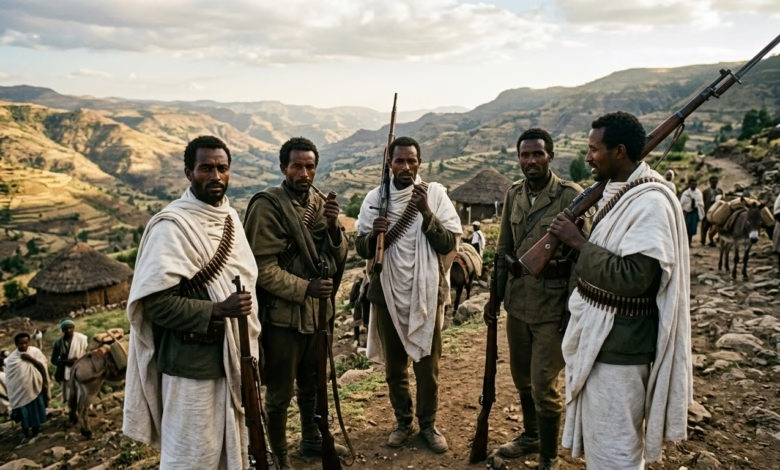
Colombara Reveals, Through The Memories Of Italian Soldiers And Conscripts, How The Abyssinian Highlands Transformed With The Onset Of Darkness Into A Scary, Unknown World Controlled By Ethiopian Resistance Fighters; Where Traditional Lines Of Combat Disappeared and The Enemy Was Everywhere And Nowhere At Once. Veterans Recount In Tones Laden With Horror, Which Decades Have Not Erased, How Italian Supply Convoys Were Subjected To Snapping, Deadly Ambushes In Narrow Mountain Passes, Where Ethiopian Fighters Appeared Suddenly From Between Rocks and Thick Trees, Armed With Old Rifles And Traditional “Shotel” Swords, Inflicting Heavy Casualties On The Ranks Of Soldiers Before Vanishing In The Blink Of An Eye Without Leaving A Trace. This Psychological Warfare Pushed Italian Soldiers To The Brink Of Madness, And Illusions Of Technological Military Superiority Began To Erode Before The Bravery and Desperation Of Fighters Defending Their Land And Freedom.
The Fascist Reaction To This Fierce Resistance Was Nothing But Further Brutality and Naked Barbarism That Transgressed All International Norms And Laws, A Fact Authenticated By Colombara With Testimonies From Eyewitnesses Who Took Part Themselves In Those Atrocities Or Were Tools In Executing Them. The Pivotal Event Manifested In The Attempted Assassination Of The Governor-General Of Italian East Africa, Marshal Rodolfo Graziani, In February 1937 In Addis Ababa At The Hands Of Two Eritrean Youths, Occupies A Wide Space Of Oral and Narrative Analysis In The Book. The Author Exposes How That Failed Attempt Transformed Into A Pretext To Unleash One Of The Most Horrific Collective Massacres In Modern Colonial History, Known As The “Yekatit 12” Massacre; Where Orders Were Given To Soldiers, Blackshirts, And Civilian Italian Settlers To Go Out Into The Streets Of The Capital And Liquidate Any Ethiopian They Encountered.
In Oral Interviews, Some Settlers And Veteran Soldiers Describe With Shame And Confusion Those Three Black Days Of 1937; Where Italian Civilians, Who Had Arrived Months Prior As Builders And Peasants, Transformed Into Butchers Driven By A Desire For Racial Revenge, Utilizing Axes, Clubs, And Fuel To Burn Ethiopian Homes Over The Heads Of Their Inhabitants, Wiping Out Whole Families In The Streets Of Addis Ababa. The Terrifying Oral Narrative Extends To Reveal How This Retaliatory Machine Crept Toward The Religious And Cultural Centers Of Ethiopia, Where Graziani Led A Campaign To Liquidate The Country’s Intellectual And Religious Elite, Culminating In The Massacre Of The Famous “Debre Libanos” Monastery, Where Hundreds Of Monks And Theology Students Were Executed By Firing Squad In The Open Desert, As The Fascist Regime Believed That Breaking The Backbone Of The Ethiopian Orthodox Church Would Annihilate The Moral Spirit Of The Resistance.
Yet, The Result Was Completely Opposite, As Colombara Explains; For These Massacres Led To The Radicalization Of The Resistance Movement, And Thousands Of Peasants And Women Joined The Ranks Of Fighters In The Mountains, Turning Vengeance From A Mere Desire To Expel The Occupier Into An Existential Battle Where There Was No Choice But Victory Or Death. The Book’s Narrative Flows, Demonstrating How Ethiopian Women Contributed To This Epic, Not Only By Providing Supplies and Information To Fighters, But By Bearing Arms And Fighting On The Frontlines—Details That Highlight How The Whole Of Ethiopian Society Transformed Into A Unified Resistance Front Against Fascism.
Methodologically, Colombara Excels In Monitoring The “Psychological Transformation” That Befell The Average Italian Soldier During The Years Of This Holocaust. Through Comparison Between The Letters Of Young Soldiers Filled With Fascist Enthusiasm At The Beginning Of The War In 1935, And Their Late Oral Testimonies, The Reader Notices The Pervasiveness Of Feelings Of Frustration, Gloom, And The Certainty Of Inevitable Defeat. These Soldiers, Who Suffered From Deadly Tropical Diseases Like Malaria and Dysentery, Scarcity Of Provisions, And Constant Fear Of Sudden Death, Realized That Propaganda In Rome Had Sold Them A Great Illusion, And That The Ethiopian Highlands Were Not The “Promised Land” But Rather A Vast Cemetery Swallowing Their Youth And Moral History.
The Cracking Of The Ivory Throne: The Outbreak Of World War And The Collapse Of The Imperial Illusion
Filippo Colombara Takes Us In This Decisive Section Of His Book To The Major Turning Point That Altered The Course Of History In The Horn Of Africa, Where The Conflict In Ethiopia Was No Longer An Isolated Confrontation Between A Colonial Power And A National Liberation Movement, But Its Threads Intertwined With The Igniting Of Fires All Across The European Continent Following The Outbreak Of World War II In September 1939, And Fascist Italy’s Official Entry Into The War Alongside Nazi Germany In June 1940. By Tracing The Oral Testimonies Of Italian Soldiers, Settlers, And Administrative Officials Who Lived Those Hard Moments, The Author Draws A Highly Complex Human And Political Portrait, Flowing With Details Charged With Anxiety and Anticipation, Revealing The Astounding Speed With Which The “Ivory Throne” Shaded By Mussolini Over The Blood And Bones Of Victims In The Abyssinian Highlands Collapsed.
Colombara Explains Through The Flowing Oral Narrative How Italian Occupiers Found Themselves Suddenly In An Almost Impossible Geopolitical Position; For As Soon As Mussolini Declared War On Britain And France, Italian East Africa Transformed Into A Completely Isolated Island Surrounded On All Sides By The Forces Of The British Empire and Its Dependent Colonies. Italian Veterans Remember In Their Interviews With The Author How Naval and Aerial Supply Lines With Rome Were Almost Totally Severed Across The Red Sea And The Suez Canal, And How Stores Of Ammunition, Fuel, Food, And Medical Supplies Began To Deplete At A Terrifying Speed, Leaving Italian Forces, Despite Their Huge Apparent Numbers, Akin To An Army Of Ghosts Awaiting Its Inevitable Fate In An Environment Growing More Hostile Day By Day.
In This Distressed Climate, The Catastrophic Results Of Oppression and Tyranny Practiced By General Graziani And His Successors Exploded; For The Ethiopian Resistance Movement (Arbegnoch) Had Neither Forgotten Nor Forgiven Previous Atrocities and Massacres, But Was Awaiting The Auspicious Opportunity To Deliver The Frying Blow. Colombara Discloses With High Insightful Penetration How Ethiopian Resistance Fighters Coordinated Their Movements With British And Commonwealth Forces That Began Marching Toward Ethiopia From Multiple Fronts Across Sudan And Kenya. The Oral Testimonies Of Italians Describe That Phase As An Era Of “Double Terror”; Where The Average Italian Soldier Was No Longer Facing The Attacks Of The Organized British Army Only With Its Modern Armored Vehicles, But Found Himself Beleaguered By A Raging Popular Uprising That Swept Ethiopian Villages and Cities, Where Every Peasant and Youth Carried His Weapon To Avenge Years Of Humiliation and Toxic Gases.
Striking In Colombara’s Oral Analysis Is His Monitoring Of The Phenomenon Of “Moral And Ethical Dissolution” Within The Ranks Of The Fascist Army; Where Soldiers Speak In Their Testimonies About A Complete Collapse of Belief In Fascist Ideology And In The Promises Of Leaders. For The Average Man Herded From Rural Italy To Defend An Empire He Was Told Was Eternal, Found Himself Abandoned In The Jungles Of Abyssinia, Fighting In A War Where He Had Neither Camel Nor Goat, Under The Command Of Generals Preoccupied With Internal Strife and Amassing Personal Gains Instead Of Developing Real Defensive Strategies. Some Italian Combatants Recount How Cases Of Collective Desertion and Disobedience To Military Orders Began To Surface, And How The Fascist Blackshirt Transformed From A Symbol Of Pride And Strength Into A Heavy Burden That Soldiers Tried To Discard and Bury In The Dirt To Avoid Falling Into The Hands Of Angry Ethiopian Resistance Fighters.
The Discussion Extends To Address The Status Of Civilian Italian Settlers, Who Numbered In The Tens Of Thousands, And Who Found Themselves Suddenly Caught Between Two Jaws Of A Vise; For Families Who Settled In Homes And Farms In Addis Ababa, Asmara, And Harar, Believing The Italian Presence Would Endure Forever, Lived Through Weeks Of Absolute Panic As The Joint Forces Approached The Capital. Oral Interviews With These Settlers, Especially Women And Children Who Grew Up During That Period, Convey Touching Human Details Surrounding Nights Of Siege, Long Waiting To Hear News Of The Front Via Static-filled Radios, And An Overwhelming Sense Of Abandonment By Mussolini’s Regime Which Had Pushed Them Into This Perilous Adventure Then Left Them To Face The Wrath Of An Entire Nation Alone.
With The Crumbling Of Italian Defenses And The Falling Of Fortresses One After Another, Such As The Famous Fortress Of “Keren” In Eritrea After A Fierce Battle In Which Both Sides Displayed Great Valor, It Became Evident That The Fascist Imperial Dream Was Breathing Its Last In The Horn Of Africa. Colombara Analyzes With Supreme Stylistic Craft And A Delightful Narrative Flow How This Dramatic Ending Culminated In May 1941, When Ethiopian Emperor Haile Selassie Entered Victoriously Into His Capital Addis Ababa Exactly Five Years After His Forced Exile, To Raise The Ethiopian Flag Anew Over The Presidential Palace, Announcing The Nullity Of Fascism’s Ephemeral Marriage To The Abyssinian Highlands.
The Guilt Complex And Systemic Oblivion: The Hidden Legacy Of The Empire In Contemporary Italy
Colombara Focuses On Demonstrating How Post-war Italy, In Its Attempt To Construct A New Democratic Identity and Integrate Into The Western System and NATO, Chose To Walk The Path of “Easy Purification”; Where Fascism and Mussolini Alone Were Rendered Scapegoats For All Atrocities, While Society, The Army, And The Average Citizen Were Exempted From Any Ethical Or Criminal Consequences. Here, The Author Delivers A Fatal Blow To The Myth Of The “Good Italian” (Italiani Brava Gente), That Comfortable Narrative Promoting The Idea That The Italian Soldier Was By Nature Empathetic and Humane, Building Roads And Distributing Bread To Ethiopian Children, Contrary To The Brutality Of Other Colonizers. By Comparing This Popular Myth With The Shocking Oral Testimonies Delivered By These Very Soldiers In The Autumn Of Their Lives, Colombara Shows How This Idealized Image Shattered; For Fear, Systemic Racism, And Strict Military Orders Turned The “Good Italian” Into A Pliant Instrument In Exercising Racial Annihilation, Employing Poison Gases, And Demolishing Villages.
The Book Uncovers, With Great Psychological Penetration, The “Heavy Silence” That Enveloped The Lives Of Veterans Upon Their Return Home. For When Colombara Questioned These Men Half A Century Or More After The African Adventure, He Noticed The Presence Of A Thick Wall Of Denial, Linguistic Circumvention, And Evasion From Calling Things By Their True Names. Some Veterans Speak Of The War As A “Patriotic Duty” Or An “Exciting Youth Adventure,” While Their Slips Of The Tongue, Facial Expressions, And Trembling Voices Display The Magnitude Of Internal Disruption and Concealed Guilt Complex; As Some Admit In Rare, Terrifying Moments Of Clarity To Seeing Clouds Of Mustard Gas Burning The Bodies Of Ethiopian Peasants, Or Distinctly Remembering The Features Of Monks Executed At The “Debre Libanos” Monastery—Images That Continued To Haunt Their Nightmares Throughout Their Lives, Yet They Were Incapable Of Revealing Them To Their Children Or Society For Fear Of Ostracism And Stigmatization.
This Social Complicity In Silence, As Colombara Clarifies, Enjoyed Full Political Sponsorship From Successive Post-war Italian Governments, Which Refused For Long Years To Open Military Archives and Obstructed Any Serious Attempt To Re-evaluate The Colonial Era In Educational Curricula Or Official State Media. The Official Denial Of Applying Chemical Weapons In Ethiopia Persisted Until The 1990s, When The Italian Ministry Of Defense Was Finally Forced To Acknowledge Facts Under Pressure From Historians And Irrefutable Documents. Colombara Believes That This Long Delay In Facing Truth Bequeathed Italian Society A Sort Of “Historical Amoeba” Or Selective Memory Loss, Causing New Generations To Grow Up Entirely Ignorant Of The Fact That Their Country Possessed A Colonial Empire Erected Upon The Blood Of Others—An Ignorance Contributing Directly To The Rise Of Extreme Right-wing Movements And Contemporary Racist Discourses Against African Immigrants In Italy Today.