

The Ultimate Weapon And The Birth Of The Destructive Doctrine
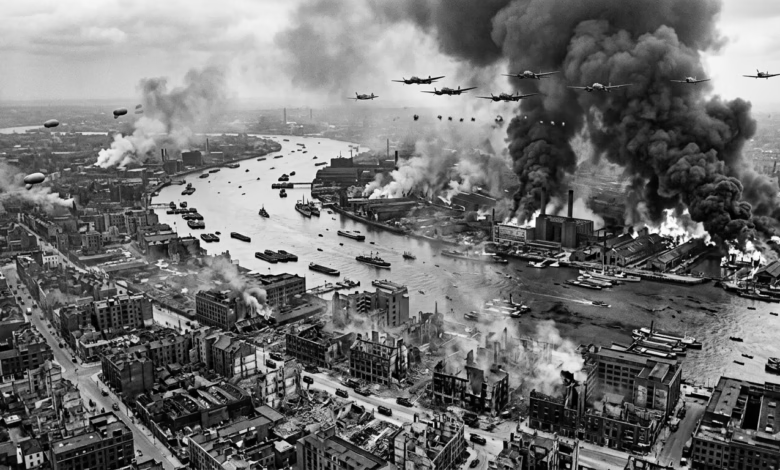
When The British Poet John Betjeman Stood In 1940 Watching The Burning Horizon, He Found Nothing To Confront The Absurdity Of The Scene Except A Bitter, Mocking Cry He Wrote In His Famous Poem: “Oh Gracious Air God! Oh Science And Progress! Oh What A Big Splendid World! Ah, What Have You Done To Us?”. These Lines Summarize The Great Tragedy Into Which The Brilliant British Historian Richard Overy Dives In His Massive Volume, Which Resembles A Documentary Historiographical Epic Bearing The Title “The Bombing War: Europe 1939-1945”. We Are Not Here In Front Of Just A Traditional Military History Book That Lists The Numbers Of Aircraft, Explosive Payloads, And Casualty Statistics; Rather, We Are Facing A Political And Social Analysis Of One Of The Most Out-Of-Control Chapters In Modern Human History. Overy Offers, Through The Pages Of His Book Which Dismantles The Settled Myths About The Air Force In World War II, A Masterful Journalistic And Historiographical Vision Searching For The Fundamental, Burning Question: Did Strategic Bombing Actually Achieve Its Objectives, Or Was It The Clearest Embodiment Of The “Greatest Miscalculation” In The History Of Modern Wars?
The Epistemological Journey To Which The Author Takes Us Begins From A Highly Important Point That Forms The Intellectual Foundation For All The Destruction That Followed; Namely, The Period Preceding The Eruption Of The First Spark Of The War In September 1939. In This Introduction, Which Overy Calls “Bombing Before 1940: The Imagined And The Real,” He Reveals To Us How The Doctrine Of Aerial Bombing Obsessed The Minds Of Military Leaders And Strategic Planners During The Interwar Period. The Airplane Was Born As A Captive To A Military Prophecy Claiming That The Next War Would Not Be Settled In Trenches Of Mud And Blood Similar To The War Of Fronts In World War I, But Rather It Would Be Settled From Above The Clouds. The Popular Theory, Which Was Formulated By Generals Such As The Italian Giulio Douhet, Assured That The Bomber Aircraft Was An Absolute, Unstoppable Offensive Weapon, And That Dropping Massive Quantities Of Explosive Materials On The Cities And Urban Centers Of The Enemy Was Enough To Shatter The Morale Of Civilians And Paralyze The Political Will Of States Within A Few Days Or Weeks.
This “Strategic Illusion” Was Fueled By A Collective Terror Reflected In Literature, Cinema, And The Press Throughout The 1930s. People Imagined The Dropping Of Toxic Gases And Incendiary Bombs Erasing Major Capitals Like London, Paris, And Berlin In the Blink Of An Eye. However, The Shocking Paradox That Overy Highlights Is The Massive Gap Between What Settled In The Imagination And The Actual Technical And Military Reality With The Start Of The War. When The Hour Of Truth Struck, It Became Clear That The Air Force Did Not Possess The Technical Competence, The Targeting Accuracy, Nor The Geographical Range That Would Allow It To Achieve Those Terrifying Prophecies. Bombers Were Not Able To Find Their Targets In The Darkness Of The Night Or Amidst Dense European Clouds, And Ground Defenses And Interceptor Fighters Were Able To Inflict Heavy Losses On The Attackers, Making The Idea Of A “Lightning Resolution From The Air” Evaporate Quickly, Transforming Instead Into A Long And Horrific War Of Attrition That Extended For Years.
Overy Then Moves Us To Dismantle The “German Bombing War” In The First Part Of The Book, Casting A Revealing Light On The First Strategic Aerial Offensive Launched By The German Air Force (The Luftwaffe) Against Britain In What Became Known Historically As “The Blitz” Between September 1940 And June 1941. Here, The Author Re-Reads The Scene, Transcending The Traditional British Narrative That Focused On The Legendary “Resilience Of London”. Overy Explains That The German Leadership, Headed By Hermann Göring And Directed By Adolf Hitler, Did Not Own A Clear, Long-Term Strategy For Bombing. The German Air Force Was Thrown Into The Battle Of Britain As An Improvised Tactical Tool To Force London Into Negotiations Or To Pave The Way For A Land Invasion Whose Plans Were Never Completed. When The Germans Failed To Destroy British Military Airfields, They Turned, Motivated By Frustration And Revenge, To Bombing Urban Cities And Ports, Targeting Areas Of London And Industrial Cities Like Coventry And Leamington.
In This Context, Overy Excels In Describing The Transformation That Occurred In Societies Under The Weight Of This New Pattern Of Total Warfare. In The Chapter He Titles “Bearing The Pain? British Society And The Blitz,” The Author Transcends The Government Propaganda That Showed The British Relaxing And Drinking Tea Amidst The Rubble. He Dives Into Local Archives, Secret Reports Of The Censorship Police, And The Diaries Of Ordinary Citizens To Present To Us A More Complex And Human Picture. Yes, There Was Resilience, But There Was Also Public Panic, Nervous Breakdowns, And Growing Indignation Against The Acute Shortage Of Safe Shelters, As Well As Sharp Class Tensions Between The Residents Of Poor Neighborhoods In The East End Of London, Who Received The Greatest Shock Of Incendiary Bombs, And The Wealthy Neighborhoods That Enjoyed Better Protection. The Book Shows How The British State Was Forced To Reorganize Itself Completely, Creating A Parallel Army Of Fire Brigades, Civil Defense, Raid Wardens, And Ambulance Crews, Which Ultimately Led To Deepening Social Cohesion For A Reason The German Planners Did Not Expect: Instead Of The Bombing Leading To Pushing Civilians To Pressure Their Government To Surrender, It Led To Generating A Shared Sense Of A Common Destiny And Absolute Hostility Toward The Aggressor, Linking The Fate Of The People To The Fate Of The Political Leadership Headed By Winston Churchill.
Perhaps The Most Prominent Added Value In This Part Of Overy’s Book Is His Clever Attention To What He Describes As “The Untold Chapter: The Bombing Of Soviet Cities”. In Most Western Historical Literature, The Bombing War Is Reduced To The Battles That Took Place In The Skies Of Britain, Germany, And Italy. But Overy Opens The Documents Of The Eastern Front To Prove That The Nazi Military Machine Practiced A Brutal, Destructive Bombing Against Soviet Urban Centers Since The Very First Days Of Operation Barbarossa In The Summer Of 1941. The German Bombing Of Cities Like Stalingrad, Leningrad, And Sevastopol Was Not Just Support For Ground Forces, But Rather Part Of A Strategy Of Total Annihilation And Subjugation. The Soviet Society Faced Horrors Exceeding What Any Other European Society Faced; Where Intense Aerial Bombing Merged With A Stifling, Starving Blockade. However, Just As Happened In Britain, The Excessive Cruelty Of The German Bombing Did Not Break The Will Of Soviet Resistance, But Rather Transformed Into Fuel That Kindled The Mobilization Idea Of “The Great Patriotic War,” Proving Once Again That The Military Doctrine Based On The Idea That Civilians Are The Weakest Link In The War Chain Was A Doctrine Flawed By Fatal Defects In Understanding The Human Psyche And Group Behavior Under Existential Threat.
The Rise of the Dragon and the Shift Towards Total War
Hardly Had The Dust Of The Battle Of Britain Settled And The Aircraft Of The German “Luftwaffe” Turned Toward The East To Swallow The Soviet Plains, When London Began Formulating Its Own Response, Which Was Destined To Exceed In Its Violence And Impact All The Destruction Witnessed By The Twentieth Century. At This Decisive Turning Point Of His Book, Richard Overy Takes Us Inside The Corridors Of The British Air Ministry And Bomber Command, To Reveal The Spiritual And Technical Shift That Occurred In Western Military Strategy. Winston Churchill Realized Perfectly That Britain, After The Exit Of France From The Battle And Its Nestling Behind The English Channel, Did Not Possess A Direct Military Means To Strike The Heart Of Nazi Germany Except Through The Air. From Here, The Royal Air Force Transformed From A Defensive Tool That Saved The Country In The Summer Of 1940, Into A Massive Offensive Tool Entrusted With A Mission That Was Holy And Terrifying At The Same Time: Transferring The Horrors Of War To The Doorsteps Of German Citizens’ Homes.
Overy Analyzes The Political And Psychological Roots Of This Transformation; Explaining That The British Aerial Offensive Did Not Begin As A Total Destructive Plan For Cities, But Rather Began As An Attempt To Strike Specific Military And Economic Targets Such As Weapon Factories, Oil Refineries, And Railway Nodes. However, British Air Intelligence Reports In 1941, Particularly The Famous “Butt Report,” Shocked The Political And Military Leadership With A Bitter Truth: Only One-Third Of British Bombers Succeeded In Dropping Their Bombs Within A Five-Mile Range of The Specified Target Due To Darkness, Bad Weather, And German Ground Defenses. Facing This Flagrant Technical Incapability, And As An Extension of The Logic Of Total War Imposed By The Other Side, Britain Took A Decision That Changed The Course Of History; Which Was The Shift From “Precision Bombing” Of Military Targets To What Became Known As “Area Bombing”. This Embellished Term Concealed Behind It A Clear-Cut Strategy: Targeting Entire Urban Centers, And Demolishing The Residential Neighborhoods Of German Cities To Destroy The Morale Of The Working Class And Paralyze Its Capacity For Production.
This Radical Transformation Crystallized With The Appointment Of General Arthur Harris, Who Later Became Famous In History By The Nickname “Bomber Harris” Or “Butch Harris”, As Head Of Bomber Command In Early 1942. Overy Allocates A Wide Space To Analyze The Personality of Harris And His Rigid Military Doctrine. Harris Did Not See In The Bomber Just A Supporting Weapon For The Army Or The Navy, Rather He Believed, With A Semi-Religious Certainty, That Intense And Continuous Aerial Bombing Of German Cities Was Alone Enough To Force The Third Reich To Kneel Without The Need To Launch A Costly Land Invasion Across The Channel. Harris Began Applying His Theory By Organizing Unprecedented Mass Raids, The First And Most Astonishing Of Which Was The “Thousand-Bomber Raid” On The City Of Cologne In May 1942. This Raid Was A Symbolic And Practical Turning Point; As It Proved That The British Air Force Had Become Capable Of Mobilizing A Massive Destructive Power That Concentrated In A Few Hours Thousands Of Tons of Explosive And Incendiary Materials Over A Narrow Geographical Area, Leading To Saturating Ground Defenses And Paralyzing Fire Brigades Completely.
But Overy Does Not Stop At Talking About The British Side, Rather He Takes Us On A Parallel And Interesting Journey Across The Skies To Monitor The German Reaction. Here Appears The Chapter Dedicated To Dissecting the “Crisis Of The Defense Of The Reich,” Where The Author Reveals How The German Leadership Was Forced To Re-Direct Its Military Weight From External Offense To Internal Defense. The Skies Of Germany Transformed Into An Arena For A Ferocious And Technologically Complex Night Battle Between British Bombers And German Night Fighters. The Germans Invested Massive Resources To Build An Advanced Defensive Line Known As The “Kammhuber Line,” Which Was A Sophisticated Network Of Radars, Searchlights, Anti-Aircraft Guns, And Radio-Guided Fighters. Overy Describes This Technological Conflict As Having Been A Real War of Minds, Where Each Side Was Developing Electronic Innovations And Counter-Radar Waves To Confuse The Other Side. As A Result Of This Defensive Development, British Pilots Paid A Heavy Price In Their Blood; As Loss Percentages In The Ranks Of Air Crews Rose Sometimes To Levels That Made Surviving To End A Tour Of Military Service Resmble A Miracle.
With The Entry Of The United States Into The War With All Its Industrial And Military Weight, The Bombing War Witnessed A New Quantitative And Qualitative Transformation; Where The US Army Air Forces Entered The Battle With A Doctrine Completely Different From The British Doctrine. Overy Explains The Fundamental Differences And Muted Conflicts Between The Two Anglo-Saxon Allies; The Americans Refused To Adopt The Strategy Of Random Night Bombing Of Cities Followed By The British, And Clung Instead To The Theory Of “Precision Strategic Bombing In Daylight”. Using Their Famous Heavy Bombers Known As Flying Fortresses And Highly Advanced Aiming Systems, American Generals Believed They Could Strike The Lifeline Of The German Economy By Targeting Specific Factories Precisely, Such As Ball-Bearing Plants, Aircraft Industries, And Synthetic Oil Refineries. This Discrepancy Led To The Birth Of What Was Called The “Combined Bomber Offensive,” Where Germany Became Exposed To Bombing Around The Clock: The Americans Striking By Day And The British Erasing By Night.
However, This American Idealism In Daylight Soon Collided With The Rock Of The Ferocious German Defensive Reality In 1943. Overy Recounts The Details Of The Tragic Raids Launched By The Americans On Industrial Cities Like Schweinfurt And Regensburg, Where German Fighters Were Able To Tear Apart The Formations Of American Bombers Unprotected By Long-Range Fighters, Inflicting Heavy Losses That Threatened To Stop The Entire American Campaign. These Incidents Show, In The Author’s Analysis, That Strategic Bombing Remained Stumbling And Inconclusive Until The Allies Managed To Introduce The Legendary Long-Range Fighter To Accompany The Bombers On Their Journey Into The Deep Territory of Germany. At This Point, The Back Of The German Air Force Was Broken, As Its Pilots Were Exhausted And Its Factories Lost The Capacity To Replace Losses, Making European Skies Completely Vulnerable To the Allied Machine of Destruction, Paving The Way For The Harshest Chapters Of The War Blasting Humans And Stones Alike, Whose Horrific Details And Human And Economic Consequences We Will Address.
The Incendiary Apocalypse and the Dissection of the Economic Efficiency of Ashes
By Late 1943 And The Beginnings Of 1944, The Skies Of The European Continent Had Transformed Into A Theater For What Could Be Described As A “Super Industrial Apocalypse,” Where The Combined Bomber Offensive Reached Its Destructive Peak, Sparing Neither Green Nor Dry. In This Central Part Of His Thesis, Richard Overy Abandons The Cold Neutrality Of The Traditional Military Historian, To Dive Into The Dark Human And Material Depths Of The Results of “Area Bombing” Practiced By British Bomber Command. The Author Takes Us To The Heart Of The Disaster That Befell Major German Cities Such As Hamburg, Kassel, And Düsseldorf, Leading Up To The Great Tragedy In Dresden. Bombing Was No Longer A Merely Scattered Fall Of Explosives, Rather It Transformed, Through A Technically Studied Mix Of Highly Explosive Bombs And Incendiary Bombs Filled With Phosphorus And Napalm, Into A Terrifying Physical Phenomenon Known As The “Firestorm”.
Overy Describes How These Firestorms Formed In The Alleys Of Old Cities With Adjoining Wooden Houses; Where Thousands Of Small Fires United With Super Speed To Form One Giant Fire Rising For Thousands Of Meters Into The Sky. This Massive Fire Sucked Oxygen From The Surroundings With A Titanic Mechanical Force, Leading To Generating Winds Whose Speed Reached The Speed Of Hurricanes, And Temperatures In Its Center Reached More Than A Thousand Degrees Celsius. Under The Weight Of This Hell, It Was Not Just Buildings That Collapsed And Charred, Rather Humans In Shelters Died Of Suffocation Due To The Lack of Oxygen Or Carbon Monoxide Gas, Or Literally Melted In The Hot Asphalt Of The Streets During Their Attempt To Flee. Overy Re-Reads Medical Records And Local Reports of Those Cities To Confirm That Victims Were Not Merely Numbers In War Statistics, But Rather They Were An Entire Civil Society Of Women, Children, The Elderly, Foreign Workers, And Prisoners Who Were Crushed Under The Feet Of A Military Doctrine That Considered The End Justified The Means Completely.
The Author Poses His Shocking Operational Question: Did This Massive Human, Moral, And Material Sacrifice Succeed In Paralyzing The German War Economy? The Answer Provided By Overy, Based On Analyzing The Documents Of The “German Ministry Of Armaments” Led By Albert Speer And Post-War Strategic Bombing Survey Reports, Came As A Disappointment To Air Generals. The Book Reveals A Stunning Fact That Eluded The Minds Of The Allies For Long, Which Is That German War Production Did Not Collapse As A Result Of Bombing In The Years 1943 And 1944, But On The Contrary, It Achieved Its Historical Peak In The Summer Of 1944, Where The Production Of Aircraft, Tanks, And Ammunition Multiplied Several Times Compared To The Beginning Of The War.
Overy Explains This Paradox By The Capacity of Society And The Totalitarian State In Germany For Fast Adaptation And Organized Improvisation. German Factories Possessed A Large Surplus In Productive Capacity, Machinery, And Raw Materials That Were Not Fully Exploited Before 1942. When Bombs Began To Fall, Speer Reorganized Industry Through A System of “Industrial Committees,” Transferring Heavy Machinery From Damaged Factories To Sub-Axes, Or Burying Vital Production Lines In Mountain Tunnels And Underground Mines Inaccessible To Bombs. Moreover, The Nazi Fascism Exploited Millions Of Forced Laborers And Prisoners Of War To Clear Rubble And Repair Railways And Factories Within A Few Hours of The End of Raids. Overy Clarifies That Bombs Destroyed Walls And Roofs, But They Rarely Smashed Heavy Lathe Machines Made Of Solid Steel, Which Were Cleaned From Rubble And Restarted Work Again Within A Few Days.
Nevertheless, Overy Does Not Adopt The Extreme Conclusion Which Says That Bombing Was Of No Military Utility Worth Mentioning, Rather He Presents A Balanced Reading Deep In Impact. The Author Argues That Strategic Bombing, Although It Failed To Destroy Production Entirely, Succeeded In Putting A “Ceiling” On German Industrial Growth; Meaning That It Prevented The Nazi War Economy From Reaching The Massive Levels of Production That It Could Have Achieved Had It Been Left To Operate Under Natural Conditions. More Importantly, The Bombing Campaign Forced The German Leadership To Fight A “Second Defensive Battle” That Drained Massive Resources That The Ground Fronts, Especially The Eastern Front Against The Red Army, Were In Dire Need Of. Overy Explains That The Reich Was Forced To Direct One-Third Of Its Production Of Artillery, Half Of Its Production Of Ammunition, And Hundreds Of Thousands of Soldiers And Workers Just To Manage Ground Air Defense Systems (Flak) And Fighters, Depriving German Ground Forces Of Air Cover And Decisive Artillery Support In Major Tank Battles.
This Economic And Military Dissection Ends By Arriving At The Spring Of 1945, When The Skies Of Germany Transformed Into A Showcase Arena For Absolute Allied Air Power, At A Time When The Petroleum Resources Of The Reich Had Completely Dried Up As A Result of The Americans Finally Focusing On Synthetic Oil Refineries In The Final Stages of The War. Overy Gives Us In This Context A Clear Impression That Aerial Victory Was Achieved In The End, But After The World Paid A Heavy Price Represented In Transforming The European Continent Into A Vast Field Of Human And Material Ashes, Which Paves The Way For Us In Upcoming Portions To Review The Moral, Legal, And Political Aspects That Surrounded This Tragic Conflict, And Its Impact On Civilians In Other Occupied Countries Like France And Italy, Who Fell By Friendly Fire That Sought To Liberate Them But Killed Them.
The Friendly Fire Paradox and the Cost of Liberation from the Sky
While The Skies Of Germany Were Burning With The Fire Of The Combined Bomber Offensive, There Was Another Chapter Of High Tragicism and Moral And Political Complexity To Which Richard Overy Dedicates A Wide Space In His Book, Namely The Allied Bombing Of Areas Under Nazi Occupation In Western And Southern Europe, Particularly France And Italy. Here The Reader Finds Himself Facing A Major Tragic Paradox; As British And American Aircraft, Which The Residents of These Countries Were Awaiting As A Lifeline And A Symbol Of Liberation, Transformed Into Tools For Random Death And Total Destruction Coming To Them From Above The Clouds. Overy Reveals Through The Documents of French And Italian Archives How Cities, Ports, And Transportation Nodes In These Countries Transformed Into Vulnerable Targets For The Aerial War Machine, Under The Pretext of Depriving The Germans From Using Local Infrastructure Or Paralyzing Their Logistical Movement Before The Great Land Landing In Normandy.
The Author Focuses In His Dissection Of The Case of France On What Was Known As The “Transportation Plan” Applied In The Spring Of 1944 Paving The Way For The Allied Landing Operation. The American And British Military Doctrine Maintained That The Success Of The Land Landing Depended Entirely On Isolating The Battlefront Through Destroying The Railway Network, Bridges, And Marshalling Yards In France Entirely. This Decision Caused Violent And Continuous Waves Of Bombing That Struck Historic French Cities Such As Rouen, Nantes, Lyon, And Neighborhoods Surrounding Paris. Overy, Who Touches The Human Pulse, Describes The State Of Astonishment And Sorrow That Prevailed Among French Civilians; As The Technical Systems Of The Bombers Were Not Capable of Confining Destruction Within The Precincts Of Train Stations, But Rather Bombs Were Falling Heavily On Densely Populated Residential Neighborhoods, Resulting In The Killing Of More Than Sixty Thousand French Civilians By The Fire of Their Allies, A Number That Exceeds The Total Number Of British Civilians Killed Throughout The Period of German Bombing Of Britain.
The Political Atmosphere Surrounding This Campaign Was Not Less Complex; Where Overy Details The Sharp Disputes That Took Place Behind The Scenes Between Churchill And General Charles De Gaulle. De Gaulle, In His Capacity As Head Of The Provisional Government Of The French Republic, Was Feeling Deep Bitterness And Sending Stern Protests To London And Washington Warning That This Blind Destruction Of French Cities Would Leave Deep Wounds In The Hearts Of The French And Might Drive Them Towards Questioning The Intentions Of The Allies And Perhaps Throwing Themselves Into The Arms Of Nazi Propaganda Or The Collaborative Vichy Government. But Western Military Pragmatism, Led By General Dwight D. Eisenhower, Settled The Matter In Favor of Continuing The Bombing, Considering That Saving The Lives Of Allied Soldiers On The Beaches Justified The Sacrifice Of The Lives Of French Civilians On The Railway Lines, A Harsh Equation That Shows How Moral And Legal Considerations Vanish Before Accounts Of Military Determination In Total Wars.
On The Southern Front, Overy Moves Us To The Italian Scene, Which Was Not Less Tragic; Rather It Was Characterized By A Strange Overlap Between Identity Conflicts And Political Transformations. After The Fall Of Mussolini’s Fascist Regime In The Summer Of 1943 And Italy’s Signing Of The Armistice With The Allies, The Country Instantly Transformed Into A Battlefield After German Forces Rushed To Occupy It. Italian Civilians Found Themselves Suddenly Exposed To Heavy Bombing From The Allies Who Had Come To Consider Italian Cities As Areas Of Direct Military Confrontation With Fascists And Nazis Alike. Overy Analyzes How Cities Like Milan, Turin, Naples, And Florence Suffered From Systematic Destruction That Targeted Historical Landmarks, Residential Neighborhoods, And Factories. Destruction Was Not Limited To Industrial Facilities; Rather It Extended To Include The Bombing And Destruction Of The Historic, Ancient Abbey Of “Monte Cassino”, Which Was Completely Destroyed By American Heavy Bombers After Suspecting That German Forces Were Using It As A Military Observation Point, Only To Reveal Later That The Abbey Was Completely Empty Of Soldiers And Contained Only Monks And Civilian Refugees.
Overy Concludes From These Painful Chapters That The Allied Strategic Bombing Doctrine Carried Within Its Folds A Type Of “Structural Blindness” That Separated The Purely Material Target From The Human And Social Environment In Which It Was Located. Military Planners In London And Washington Dealt With Occupied European Cities As Merely Points On Aerial Maps And Targeting Grid Squares, Forgetting That The Process Of Liberation From The Air Was Carried Out Via Crushing The Societies That They Came To Save. The Book Shows How This Bitter Experience Led To Creating A State Of Collective Psychological Trauma And Approaching The Brink of Social Disintegration In Those Countries; Where Millions of Citizens Were Forced To Flee Towards The Countryside, And Lived For Long Months In Wretched Living And Health Conditions Under The Weight Of Constant Fear Of Aircraft That Carried The Emblems Of Freedom But Project Death, Which Re-Frames The Traditional Narrative of World War II To Make It Darker And Closer To The Critical Evaluation And Daring Moral Review.
The Moral Balance and the Legal Legacy of the Missing Trial
When World War II Put Down Its Burdens In May 1945, It Left Behind A European Continent Crowned In Black, With The Smell Of Death And Ashes Rising From Its Demolished Cities, Posing Burning Philosophical, Moral, And Legal Questions About The Nature Of Victory And Its Price. In This Concluding And Most Sensitive Part Of His Exceptional Historical Thesis, Richard Overy Places The Entire “Bombing War” Upon The Scale Of International And Historical Justice. The Author Transcends Here Military Narrative And Pure Economic Analysis To Discuss The Greater Moral Dilemma That Still Haunts Modern Human Conscience: How Can The Allies, Who Fought A Just War Against Fascism And Nazism In Defense of The Values Of Freedom And Humanity, Adopt Random Destructive Combat Means That Match In Their Brutality The Means Used By Their Enemies?
Regarding The Double Standards That Prevailed In The Post-War Scene, Specifically During The Famous Nuremberg Trials For Nazi War Crimes. The Author Notes That The Indictments Directed At German Leaders Were Completely Devoid Of Any Clause Related To The Aerial Bombing Of British Or Soviet Cities Or The Targeting of Civilians From The Air. This Absence Was Not Out Of Allied Tolerance, Rather It Was A Result of Their Deep Legal And Political Realization That Directing Such An Accusation To Göring And The Generals Of The “Luftwaffe” Would Automatically Mean Opening The Door To Prosecute The Leaders Of The British And American Air Forces, Chief Among Them Arthur Harris And Carl Spaatz, Who Practiced A Destructive Bombing Of German Cities That Exceeded In Its Size And Impact Everything The Germans Did By Stages. The “Logic Of The Victor” Imposed A Muted Ban On Discussing The Legitimacy Of Strategic Bombing, And This File Was Legally Overlooked To Avoid Self-Condemnation.
Overy Moves After That To Analyze The International Legal Environment That Preceded And Accompanied The War, To Reveal A Major Structural Flaw In Traditional International Law At That Time; As There Was No Explicit and Binding International Convention Regulating And Criminalizing The Aerial Bombing Of Civilians Directly, Similar To The Geneva Conventions Concerning Prisoners Of War Or The Hague Conventions Related To Land And Naval Warfare. Major Powers Sought Throughout The 1920s And 1930s To Keep Aerial Rules Loose And Vague, Out of A Desire Not To Restrict This New And Promising Technological Weapon. British And American Military Planners Used This Legal Vacuum To Justify Their Operations, Arguing That Entire German Cities Had Come To Represent “Integrated Military And Industrial Installations,” And Therefore The Destruction Of Residential Neighborhoods Surrounding Factories Was Not A Deliberate Crime But Rather An “Inevitable Collateral Damage” Imposed By The Nature Of Modern Total War.
However, Overy Rejects This Cold Technical Justification, And Assures That The British Transition Towards “Area Bombing” Was A Conscious Political And Military Decision That Targeted Human Morale And The Social Environment Of Civilians Directly, Which Violates The Fundamental Human Principle Represented In The Necessity Of Distinguishing Between Combatants And Non-Combatants. The Book Shows How This Strategy Led To Creating A State of Collective “Moral Numbness” In The Public Opinion of Democratic Countries; For Citizens Who Were Shocked By The Horrors Of Bombing The British City Of Coventry In 1940, Came After A Few Years To Accept And Applaud The News Of Erasing Complete German Cities Like Hamburg And Dresden From The Map And The Killing Of Tens Of Thousands In A Single Night, Proving That Total War Does Not Destroy Stone and Structures Only, But Also Destroys The Value And Moral System Of The Societies That Fight It.
In His Final Assessment Of The Historical Legacy Of This Aerial Campaign, Richard Overy Concludes With A Central Result Stating That The European Strategic Bombing War Between 1939 And 1945 Was A Flagrant Representation Of “The Utter Failure Of The Absolute Weapon”. Bombs Did Not Succeed In Achieving The Fascist Or Democratic Prophecy Of Deciding The Battle From The Air Without Land Sacrifices, Nor Did They Succeed In Breaking The Morale of Peoples Or Pushing Them To Rebel Against Their Leaders, Rather They Left A Massive Human And Economic Destruction That Required Long Decades To Repair, And Established A New Era Of Nuclear And Conventional Terror Based On The Idea Of Mutually Assured Destruction. Overy Presents To Us In His Massive Historical Volume A Eloquent Journalistic And Historical Lesson Reminding Us That Technological Development In The Means Of Killing, No Matter How Precise And Advanced It Becomes, Remains Blind And Incapable of Understanding The Spirit Of Human Resistance, And That The Ashes Left By Bombs Remain An Eternal Witness To The Limits of Power And The Futility Of Random Destruction As A Means For Shaping History Or Achieving Peace.