

Ghost Schools And Children Who Cannot See The Blackboard: The Other Side of China’s Miracle

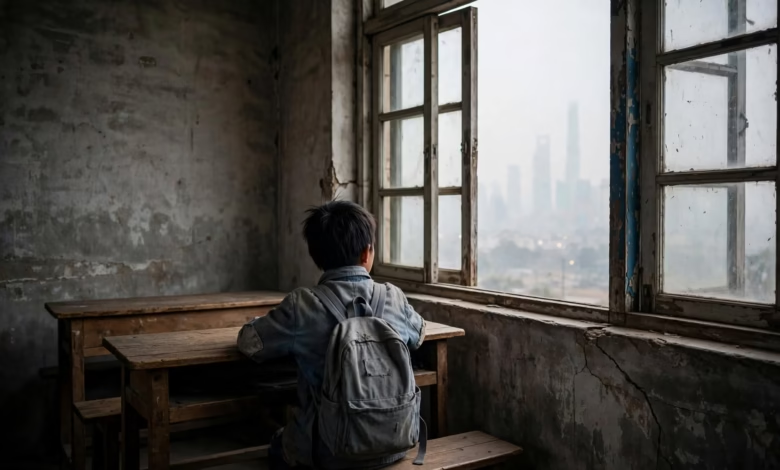
All The Pictures We Know About China Lie. Or At Least, They Tell Only Half The Truth. We Know The Shanghai China Whose Towers Shine At Night Like A Spaceship, And The Beijing China That Builds Airports The Size Of Cities, And The Shenzhen China That Manufactures The World’s Phones In Sterile White Rooms. We Know The China Of Universities That Climb World Rankings, And The China Of Students Who Harvest Medals At The International Mathematical Olympiad, And The China Whose Trains Fly At A Speed Of 350 Kilometers Per Hour. This Is The China The World Sees, And It Is The China That The Chinese Leadership Wants The World To See. But Scott Rozelle, Who Is An American Development Economist, And A Professor At Stanford University, And Holds The Title Of Helen F. Farnsworth Senior Fellow At The Freeman Spogli Institute For International Studies. He Is Also The Co-Director Of The Stanford Center On China’s Economy And Institutions SCCEI. And Natalie Hell Is The Writer And Co-Author Of The Book. A Stanford University Graduate, And She Worked As A Project Manager And Researcher And Research Assistant For Rozelle’s Team At The REAP Center., The Two Authors Tell Us In The First Pages Of Their Shocking Book That This China Represents Less Than Half The Truth, And That The Other Half, The Hidden Half, Is The One That Will Decide The Fate Of The Country.
Rozelle Is Not A Passing Observer. He Is Not A Journalist Who Spent A Week In Beijing And Wrote A Book. He Is An American Who Speaks Chinese Fluently, Who Lived For More Than Thirty Years Moving Between Villages In The Provinces Of Guizhou And Shaanxi And Gansu And Ningxia, Those Names That Do Not Appear In Economic News Bulletins. He Founded With His Chinese Colleagues The Rural Education Action Program Known For Short As REAP, Which Is A Huge Field Laboratory That Conducted Hundreds Of Rigorous Randomized Trials On Hundreds Of Thousands Of Rural Children. Over Two Decades, Rozelle And His Team Were Entering Mud Schools, Examining Children’s Blood, Measuring Their Vision, Testing The Intelligence Of Infants, And Asking A Simple And Frightening Question: What If The China We See Is Not The Real China?
The Book Begins With A Simple Idea In Economics But It Is Fatal In Politics. All The Countries Of The World Dream Of Becoming Rich, But History Says That Very Few Countries Succeed In Crossing What Economists Call The Middle Income Trap. To Get Out Of Extreme Poverty Into Middle Income Is A Great Achievement, China Did It With Unprecedented Skill Since The Reforms Of Deng Xiaoping In 1978. But To Get Out Of Middle Income Into High Income, Into The Ranks Of America And Germany And South Korea, That Is A Completely Different Game. Cheap Factories And Abundant Labor And Intensive Export Take You To The Threshold Of Ten Or Twelve Thousand Dollars Per Person, Then The Engines Stop. What Pushes You After That Is Not The Number Of Working Hands, But The Quality Of Minds. Human Capital. Education, Skill, Health, Ability To Innovate.
And Here Rozelle And Hell Place Their First Statistical Bomb. China Today, According To The World Bank Calculation, Has Reached About Ten Thousand Dollars Per Capita. It Is Officially In The Heart Of The Trap. Does It Have The Human Capital To Get Out? The Official Answer From Beijing Is Yes. The University Enrollment Rate Is Exploding, Patents Are Doubling. But Rozelle Asks Us To Look At The Most Important Number That The Government Does Not Mention In Its Celebrations: The Average Years Of Schooling For The Workforce. In The United States It Is More Than 13 Years. In South Korea And Japan More Than 12. In China, The Workforce As A Whole, Is Still At Less Than 8 Years. And When You Separate The Number, You See The Catastrophe: The Residents Of Major Chinese Cities Have More Than 12 Years Of Education, Like Americans, While The Rural Residents Who Constitute More Than 60% Of The Population, Have Less Than 6 Years. China Is Not One Country In Education, But Two Countries. A Visible Educated Country, And A Hidden Functionally Illiterate Country.
And This Hidden Country Is Not Marginal. We Are Talking About 600 To 800 Million People, Depending On The Definition, Who Live Under The Hukou System, The Household Registration System That Has Divided The Chinese Since The Era Of Mao Into Urban Citizens Who Have Full Rights To Education And Health And Housing, And Rural Citizens Who Are Practically Second-Class Citizens Even If They Migrated To The City And Worked There. Rozelle Calls Them Invisible China Because They Are Statistically And Medially Hidden. Foreign Journalists Do Not Reach Their Villages. Chinese Researchers In Elite Universities Do Not Come From Them. And Even The Decision Maker In Beijing, The Son Of The City Educated Abroad, Rarely Sees Them Except From The Window Of A Fast Car.
The Book Then Is Not A Book About Poverty In Its Romantic Sense, And It Is Not A Book About Injustice In Its Moral Sense Only. It Is A Book About Superpower Calculations. Its Central Argument Is That China Will Not Be Able To Escape The Middle Income Trap Not Because Of A Trade War With America, Nor Because Of Population Aging, Nor Because Of Debt, But Because Of A Silent Human Capital Crisis That Accumulates In The Body Of Half A Billion Rural Children Who Do Not Learn And Do Not See And Do Not Eat Well. And If China Fails To Solve It, Then It Will Not Become The Next America, But Will Become A Giant Mexico Or An Asian Brazil: A Huge Country, With Giant Technology Companies In The Facade, But Stuck In Social Unrest And Chronic Slow Growth Because The Majority Of Its People Are Not Equipped For The Economy Of The Future.
What Makes The Book Dangerous And Different From The Collapse Of China Literature Popular In Washington Is Its Methodology. Rozelle Does Not Predict From An Ivory Tower. He Narrates What He Saw. He Narrates How He Went In The Nineties To Measure The Productivity Of Wheat Farms And Discovered That Children In The Same Villages Do Not Go To Middle School. And How He Began To Measure Dropout And Discovered That The Cause Is Not Only Poverty, But Anemia. And How He Measured Anemia And Discovered That Its Cause Is Intestinal Worms. And How He Treated The Worms And Grades Rose. It Is A Revealing Sequence That Links Biology To Economics, And The Microscope To The Missile. And It Is A Sequence That Proves That The Problems Of Invisible China Are Not A Cultural Fate, But Technical Problems Solvable At A Cheap Cost If There Is Political Will To See Them.
We Are Facing A Book That Demolishes The Most Established Stereotype Of Our Era: The Image Of Invincible China. It Does So Not By Shouting, But By Field Numbers. Scott Rozelle Tells Us: Look Away From The Lights Of Pudong. Look At A Child 18 Months Old In A Village South Of Shaanxi Who Cannot Say A Single Word, And At A Student In Fourth Grade Who Cannot See The Blackboard, And At A Teenager In A Shenzhen Factory Who Cannot Read The Operating Manual. Those Are The Future Of China. And If Their Future Is Weak, Then The Future Of All China Is Weak, No Matter How Bright The Present Seems.
In The Early Nineties, Scott Rozelle Was Playing A Strange Game With His Chinese Colleagues Visiting America. He Would Take Them To The Nearest Walmart Store, And Ask Them To Choose A Random Number, Then Go To A Random Shelf And Pick A Random Product And Turn It Over To See The Country Of Origin. Each Time, The Result Was One: Made In China. In The Toys Section, In The Clothes Section, In The Electronics Section, China Had Occupied The Shelves Completely. The Game Was A Visual Way To Tell Them: Look How You Have Won.
A Few Years Ago, Rozelle Decided To Repeat The Same Game. He Went To The Same Walmart, In The Same Way. He Picked Up A T-Shirt And It Was Made In Bangladesh. He Picked Up A Shoe And It Was Made In India. A Children’s Toy Made In China, But The Plastic Calculator In The Next Aisle Made In Mexico. China No Longer Rules The Shelves. The Market Began To Move.
This Small Snapshot Summarizes The Second Chapter Of The Book, Rozelle Explains That What China Did Over Forty Years Was Not A Mysterious Miracle, But Was A Typical Application Of What Economists Call The Ladder Out Of Poverty. The Idea Is Simple And Cunning: If You Are A Poor Country, You Own One Thing Very Cheap Which Is Human Labor. Open Your Doors To Global Companies That Look For The Cheapest Place To Manufacture Labor-Intensive Goods, Five-Dollar Shirts, Plastic Toys, Christmas Decorations, And Even Assembling Smartphones. These Jobs Do Not Require Education, They Are Routine Jobs, They Require Only Discipline. Rozelle Quoted A Hiring Manager In A Phone Factory That Training A New Worker Takes Twelve Minutes, And Reaches Maximum Productivity After Three Days. Anyone Who Has Two Hands Can Do It. Therefore Factories Flow To Where Wages Are Cheapest. And For The Farmer Who Was Earning A Dollar A Day From Growing Wheat, A Factory Job At Ten Dollars Is A Huge Leap. Millions Jump To It, Their Incomes Rise, They Build Houses, They Buy Services, So Construction And Transportation And Services Flourish, So Other Jobs Are Created Even For The Uneducated. A Strong Virtuous Cycle. This Cycle Is What Took Four Hundred To Five Hundred Million Chinese Out Of Poverty, And It Is The Same That Took South Korea And Brazil And Thailand Before.
The Problem, As Rozelle Explains, Is That This Ladder Has An End. And It Works Only As Long As Wages Remain Low. And Since 2005, Chinese Wages Are No Longer Low. Wages Remained Almost Stable From 1990 To 2005 Because China Had What Seemed Like An Infinite Stock Of Peasants. Whenever Wages Rose A Little, A New Wave From The Countryside Flowed And Lowered Them Again. But This Stock Ran Out. By The Middle Of The First Decade Of The Millennium, There Was No Longer A Young Man Able To Work In The Villages. In 2010 The Chinese Workforce Reached Its Historical Peak And Then Began To Shrink, Due To The One-Child Policy And Low Fertility. Now, Every Year More People Retire Than Enter The Labor Market. Even If Gross Domestic Product Growth Is Zero, The Contraction Of Supply Will Push Wages Up. And This Is What Happens: Wages Rise At A Rate Of Ten Percent Annually For More Than A Decade.
When Wages Rise, Two Inevitable Things Happen. The First Is That Factories Leave. We Saw Them Leave To Vietnam And Bangladesh And Ethiopia. And The Second, More Dangerous, Is That Factories That Cannot Leave Replace Humans With Machines. China Today Is The Largest Buyer Of Industrial Robots In The World, Accounting For Thirty Percent Of Global Sales Since 2016. Automation Is Not A Distant Future, It Is Present In Automobile And Electronics And Metals Factories. Rozelle Says That Automation Will Threaten Jobs In China During The Coming Decades More Than Globalization Did In America During Thirty Years.
What About The Construction Boom That Employed Tens Of Millions? It Also Ended. China Built A Network Of Expressways Eighty Thousand Miles Long, Surpassing America To Become The Longest In The World. It Built Entire Cities, From Shanghai To Zhengzhou And Xi’an And Even Guiyang, The Poorest Provincial Capital, Which Rozelle Visited In 2017 And Found Still Building Crazily, But He Realized That It Is The Last City In The Queue. There Is Nothing Left To Build. And Even The Belt And Road Initiative Launched By Xi Jinping In 2013 And Into Which China Pumped Ninety Billion Dollars, Which Was Supposed To Export Surplus Labor To Central Asia And Africa, Failed To Be An Alternative. Partner Countries Refuse To Import Chinese Workers And Insist On Their Local Labor, And At Least Seven Countries Canceled Or Reduced Their Projects, And Corruption And Western Criticism Made Beijing Itself Lower Its Tone By 2019.
We Are Then Facing A Historical Turning Point. The Old Model Died. So What Next? Here The Book Enters The Core Of Its Theory About The Middle Income Trap. History Says That Few Countries Succeeded In Crossing. Taiwan Is The Example That Rozelle Details Because It Is Culturally Closest To China. Taiwan Also Started Poor After World War Two, And Rose With The Same Ladder Of Cheap Factories, And Its Products Filled Sears Stores Before Chinese Products Filled Walmart. And In The Eighties It Reached The Same Point That China Has Reached Today: Surplus Labor Ended, Wages Rose, Manufacturers Began To Lose. Between 1986 And 1989 Taiwan Lost Three Hundred Thousand Industrial Jobs. Between 1990 And 1998 Eighty Thousand Taiwanese Companies Moved Their Factories Abroad, Half Of Them To Mainland China Itself Because It Was The Cheapest.
But Taiwan Did Not Collapse. It Rose. Instead Of Competing With Cheap Hands, It Competed With Quality Of Mind. Companies Like Acer And Morse Chen And TSMC Began To Make Computer Screens And Chips. By 1990 It Was Making Thirty Percent Of The World’s Screens. It Moved To High-Value Services. Why Was Taiwan Able To Do That While Mexico And Brazil Failed? The Answer, In All The Studies That Rozelle Reviews, Is Secondary Education. The Countries That Crossed The Trap Had Achieved A Completion Rate For Secondary Education Exceeding 75 Percent Of Their Youth Before They Reached The Turning Point. South Korea Did It. Ireland Did It. Israel Did It. As For Mexico And Brazil And South Africa, They Reached The Same Turning Point But The Completion Rate Was Less Than 40 Percent. So They Remained Stuck. They Have Glass Towers In The Capital, But They Also Have Millions Of Young People Who Cannot Work In The Knowledge Economy, So They End Up In An Informal Economy, In Violence, In Populism.
And China? Here Rozelle Returns To His Terrifying Numbers. The Completion Rate Of Secondary Education In The Ranks Of The Rural Chinese Workforce, That Is Those Born In The Countryside, Does Not Exceed 11 Percent In Some Provinces He Studied. Even At The National Level, Less Than 30 Percent Of Rural Youth Complete High School. Beijing Says The Number Is Higher, But Rozelle Proves That Official Statistics Include Fake Vocational Schools. In Other Words, China With Its Current Demographic Composition Resembles Mexico More Than It Resembles Taiwan. It Is A Country That Has An Educated Elite Comparable To The American Elite, And A Broad Base That Has Not Reached The Threshold Of Secondary Education Which Is Considered The Minimum For The Economy Of The Twenty-First Century.
The Conclusion That This Chapter Leaves Hanging Is That China Does Not Face A Passing Economic Cycle Crisis, But Faces The End Of A Model. The Old Jobs Will Not Return, Not By Returning To Cheapness Nor By Exporting Them Via The Belt And Road, And The Future Requires Skills That Most Chinese Do Not Possess. Either China Builds Those Skills At An Unprecedented Speed, Or It Will Enter A Long Recession Accompanied By Unemployment Among Rural Youth, Which Is A Socially And Politically Explosive Mix.
Scott Rozelle Tells The Story Of A Student Named Wang Tao, Which Is A Pseudonym For Thousands Like Him. Wang Tao Loved School. In His Village In Shaanxi Province, He Was Relatively Diligent Among Students, But He Was Not Genius Enough To Pass The Entrance Exam To Academic High School, That Exam Which Resembles A Bottle Neck Which Only City Sons Pass Through. The Chinese System Tells Him: No Problem, You Have The Option Of Vocational High School. You Will Become A Technician, A Mechanic, A Graphic Designer, A Network Expert. The Party Will Take Care Of Teaching You A Profession For The Future.
Wang Tao Arrived At The Vocational School To Which He Was Assigned In A Small City. On The First Day He Noticed That Half Of His Classmates Smoke In The Classroom, And The Other Half Play A Game On Their Phones Under The Table. The Teacher Enters, Writes Something On The Blackboard, Does Not Ask Anyone, And No One Answers. If Tao Tries To Ask, Four Or Five Boys Shout At Him: Why Don’t You Rest? We Are Not Forced To Do That Here. Outside The Classroom, Time Is Wasted In Dormitories Where They Drink Cheap Beer, Or In The Internet Cafe, Or The Math Teacher Himself Sells Them Smuggled Cigarettes.
Students Of Higher Years Told Him That Things Do Not Improve. Two Years Of The Same Empty Classes, Then A Third Year Called Practical Training But In Reality Forced Labor In A Factory. You Stand Twelve Hours On The Assembly Line With Ordinary Workers, You Learn Nothing. Worse, When You Graduate From Vocational School, You Discover That You Will Get Exactly The Same Job That Your Colleague Who Left School Right After Middle School And Went To Work Gets. No Difference.
In The Middle Of The First Semester, Wang Tao Packed His Bag Without Telling Anyone, And Rode The Bus Returning To His Family Farm And Did Not Look Behind Him. After Two Years Rozelle’s Team Found Him Sitting On A Wooden Chair In Front Of His House. They Asked Him How He Summarizes His Experience. He Shrugged His Shoulders And Looked Away And Said One Sentence: A Complete Waste Of Time.
Wang Tao’s Story Is Not An Exception. It Is The Rule. And Here Lies The Most Angering Chapter In The Book Invisible China. Since 2002 The Chinese Government Decided To Solve The Problem Of Rural Secondary Education With A Huge Bureaucratic Decision: It Will Build A Vocational Education System That Absorbs Half Of The High School Students In The Country, About Ten Million Students Each Year By 2020. And With The Speed Of A One-Party State, Money Began To Flow. Between 1990 And 2011 Investment In This Sector Increased Sixfold To Reach Twenty Billion Dollars Annually. Between 2005 And 2010 There Was An Additional Million Students Entering This System Each Year. On Paper, It Seemed An Achievement. Even The World Bank Was Deceived And Funded A Number Of Super Model Schools That Were Displayed To Foreign Delegations.
But Rozelle And His Team Decided To Do What No One Does: To Go Themselves To The Schools. They Went To The Local Education Office In Three Provinces, One Rich Coastal, And Another Middle, And A Third Poor Western, And Asked For A List Of Two Hundred Officially Registered Vocational Schools. Then Researchers Drove Their Cars From One School To Another. What They Found Was An Absurd Theater. In About Twenty Percent Of Cases, There Was No School At All. There Was An Empty Building, Or A Director Sitting Behind A Desk In A Warehouse. A School Registered With Four Different Names And Has No Students. Another School Registers Middle-Aged Farmers As Students To Get Government Support For Each Head. These Schools Existed In Administrative Records, And Get Funding, But Without Students.
And Even In The Schools Where They Found Students, The Scene Was Nightmarish. In Many Classrooms, The Teacher Ignored That Students Are Sleeping Or Playing With Their Phones, And Sometimes Smoking Inside The Classroom. When The Team Conducted Standardized Tests In Mathematics And In The Vocational Specialty Itself, The Result Was Shocking: The Average Student In Vocational School Learns Nothing. Ninety-One Percent Of Students Got The Same Grade Or Less After An Additional Year Of Study. Students Majoring In Computer Do Not Learn Programming Nor Even How To Use Word And Excel Programs. Worse Than That Is What Is Called Practical Training. The Team Found That Sixty-Eight Percent Of Students Go To Training That Has Nothing To Do With Their Specialty. A Student Studying Graphic Design Spends His Training On A Smartphone Assembly Line. A Student Studying Natural Gas Pipe Design Works In Delivering Gas Cylinders Door To Door Or As A Cashier In A Gas Station On The Road. Fifty-Six Percent Work As Low-Wage Manufacturing Workers, Doing The Same Work As A Middle School Graduate Without Any Specialized Training.
The Logical Result Is Escape. The Average Cumulative Dropout Rate Over Three Years In These Schools Is Thirty-Three Percent, And In Some Schools It Exceeded Sixty Percent. Students Vote With Their Feet. They Realize Before Researchers That These Schools Do Not Prepare Them For The Future.
Why Does This Happen? Rozelle Explains That The Root Cause Is Not Lack Of Money, But Lack Of Oversight. In All Other Types Of Education In China, Primary And Middle And Academic Secondary And University, There Is A Strict Evaluation System That Measures Student Outcomes, And Schools That Do Not Meet Standards Are Closed. As For Vocational Education, It Grew At A Crazy Speed Without Ever Entering This Regulatory System. No One Tests Student Learning. No One Monitors The Quality Of Classes. Schools Are Responsible Only For The Number Of Buildings And The Number Of Teachers And The Number Of Students Registered On Paper, And Not For What They Learn.
But Even If The Government Fixed Oversight Tomorrow, Rozelle Says, The System Will Remain Failing For A Deeper And More Dangerous Reason: It Focuses On The Wrong Type Of Skills. There Are Two Types Of Skills In Today’s Economy. The First Is Narrow Vocational Skills: How To Weld, How To Fix A Car, How To Operate A Digital Control Machine. These Are Useful To Get A Job Today, But They Become Useless When The Industry Changes. And We Saw That In China Itself: In 2005 A Colleague Of Rozelle Visited A Vocational School That Encouraged Students To Specialize In Repairing And Maintaining VCR Video Devices, Only Two Years After Video Disappeared From The World. And In One School Accounting Students Spent A Whole Year Learning To Calculate On The Abacus, A Device Not Used For A Century.
The Second Type Is General Or Academic Skills: Mathematics, Reading And Comprehension, Writing, Logic, Informatics, English. These Are The Skills That Teach A Person How To Learn. And They Are The Ones That Allow Him To Move From One Industry To Another, And From A Routine Job To A Non-Routine Job That Requires Dealing With New Problems Every Day, And They Are The Jobs That Pay High Wages In The High-Income Economy. All Long-Term Data In The World Proves That Students Who Get Broad Education In General Skills Achieve Better Income In The Long Term Regardless Of The Industry In Which They End Up.
The Tragic Irony Is That Chinese Vocational Schools Are Designed To Suppress General Skills. Official Policy Says That They Should Spend Only Thirty Percent Of Their Time On Academic Subjects, But Rozelle’s Study Found That Eighty-Two Percent Of School Principals Consider Teaching Academic Skills Is Their Last Priority, And Ten Percent Of Them Admit That They Do Not Offer General Classes At All, And The Real Percentage Is Higher. The Student Enters Vocational School And He Is Already Weak In General Skills Because He Could Not Enter Academic High School, And Exits It With The Same Weakness Or Weaker.
And Thus The Hidden Wall Is Completed. The Rural Child Is Excluded Early From The Academic Path, Then Pushed Into A Fake Vocational Path That Teaches Him Nothing And Does Not Give Him A Certificate With Value, Then Finds Himself At The Age Of Eighteen Without General Skills And Without Real Vocational Skill, Stuck Between A Village Where There Is No Longer Work And A Factory That No Longer Wants Him. This Is The Shaky Foundation On Which China Builds Its Dream Of Becoming A High-Income Country.
In 2005 Scott Rozelle Was Visiting A Mountain Primary School In Southern China As Part Of A Routine Survey. Children In One Class, Wearing Colorful Bags, Seem Ordinary At First Glance. But He Noticed That They Are Smaller Than Their Age By A Year Or Two, And That After The End Of The Class They Do Not Run. No Shouting, No Laughter, No Jump Rope. The Schoolyard After Lunch Is Completely Silent. He Asked The Principal, Li Jun, Who Had Spent A Year As A Visiting Principal In Xiamen, The Rich Coastal City. Li Jun Said: In Xiamen, The Yard Never Calms Down, Before School, In The Break, After School, Boys Run And Shout. Here In My Village, After Lunch Children Themselves Look For A Quiet Place To Sleep. It Was Not Laziness, It Was Biological Fatigue. Those Children Were Sick Without Anyone Knowing.
This Moment Is What Rozelle Builds On His Most Humane And Cruel Chapter At Once: Hidden Barriers. Rozelle Says That When He Began Working In The Late Eighties The Problems Of Rural Education Were Visible To The Naked Eye: Mud Schools And Dirt Floors And Worn Blackboards And No Teachers And No Books. Today, Thanks To Huge Investments From The Ministries Of Finance And Education, All Of That Has Disappeared. Buildings Are Now Solid Concrete, Each Child Has A Seat, Electricity Is Stable, Dormitories Have Been Renovated, Teachers Receive Their Salaries Regularly Since The Central Government Took Over Paying Salaries In 2006, Rather There Became A Surplus Of Qualified Teachers, Three Applicants For Each Job Even In Remote Areas. The Same Curricula That Are Taught In Shanghai, Shanghai That Won First Place In International PISA Tests In 2012 And 2018. A Visitor From The School Of Education At Stanford University Visited One Of These Renovated Rural Schools And Said Amazed: The Classroom Equipment Here Is Better Than Schools In San Jose In The Heart Of Silicon Valley. China Solved The Rural Education Problem. Let’s Go Home.
If Only It Were So. But Studies Show A Learning Gap That Widens Each Year. In 2014 A Study Found That Rural Primary Students Are Behind By More Than Two School Years Compared To Their Urban Peers In Mathematics, And The Gap Grows With Each School Year. How Can This Happen Despite Equality Of Buildings And Teachers And Curricula? The Answer That The REAP Team Discovered After Years Of Measuring Children’s Blood And Examining Their Eyes And Stool Is That Children Do Not Learn Because They Are Sick, Simply Sick.
There Are Three Hidden Epidemics That The Book Makes The Focus Of Understanding The Crisis. The First Is Anemia Resulting From Iron Deficiency. According To The World Health Organization, If The Anemia Rate Exceeds 5% In A Community It Is A Serious Health Problem. In The Villages That Rozelle Studied Between 2009 And 2012, The Rate Exceeded 30% Of Primary Students. In Later Studies In 2016 And 2017 The Rate Remained About 25% In Central And Western China. Anemia Is Not Just Pallor, It Prevents Blood From Carrying Enough Oxygen To The Brain, So It Causes Chronic Fatigue And Poor Concentration And Long-Term Cognitive Damage. Studies All Over The World Link It To Lower Grades And More Absence And Higher Dropout. And Most Importantly, Rozelle Conducted Rigorous Randomized Trials: When Children Were Given Nutritional Supplements Containing Iron, The Anemia Rate Decreased And Their Grades Rose Significantly Compared To The Control Group. A Treatment Whose Cost Is Cents Raises Achievement. But It Is Not Available.
The Second Epidemic Seems Obvious Until It Shocks You That No One Paid Attention To It: Weak Vision. Anywhere In The World, Between 10 And 20% Of Primary Children Need Glasses. In Rural China The Rate Is Two To Three Times Higher, Ranging From 10% Among Third Grade Students To 30% Among Fifth Grade Students And 40% Among Sixth Grade. This Is Not Surprising In East Asia Where Myopia Rates Are High. The Surprise Is That Rural China Alone Leaves Them Without Treatment. Rozelle Calls It Uncorrected Myopia. In His Data From Five Provinces, 9% Of Third Grade Children Need Glasses And Do Not Have Them, And The Rate Rises Sharply With Age To Reach 32% Of Sixth Grade Children, That Is One Third Of The Class Does Not See The Blackboard. When The Team Conducted A Simple Experiment By Giving Free Glasses, Student Grades Almost Doubled In Class. The Glasses Alone Reduced The Gap Between Rural And City To Half In Only Nine Months. Rozelle Says That This Was The Biggest Leap In Learning He Had Seen In His Professional Career. However, Throughout Rural China, There Are Twenty Million Children Sitting Daily In Classrooms Who Do Not See What Is Written On The Board.
The Third Epidemic: Intestinal Parasitic Worms. In 2013 The Team Examined Schools In Guizhou And Found That More Than 40% Of Children Are Infected With Worms In Their Bellies. Other Studies Confirmed Similar Or Higher Rates In Sichuan And Fujian And Hunan And Yunnan. These Worms Are Invisible To The Naked Eye But They Steal Nutrients, Cause Malnutrition, Nausea, Dizziness, And Hinder Physical And Cognitive Growth, And They Are Directly Linked To Anemia. Infected Children Are Absent More, Their Grades Are Lower, And Their Results In Memory And Intelligence Tests Are Lower. One Deworming Pill Costs One Dollar Or Less, And Is Given Twice A Year. But It Does Not Arrive.
Why Do These Cheap Solutions Not Arrive? Here Rozelle Moves From Medicine To Political Economy. The Problem Is That The Rural Health Care System And Rural Education Are Completely Separated. The School Principal Does Not Consider The Child’s Health His Responsibility. And The Doctor In The Health Center Does Not Enter The School. And Parents, Who Are Mostly Illiterate Grandparents Because Parents Migrated To Work In Cities, Do Not Know That The Child’s Pallor Or Silence Or Myopia Is A Medical Problem Treatable. They Think He Is Lazy Or Stupid By Nature. And Thus The Child Remains Sick, So He Is Late Academically, So He Fails In The Entrance Exam To General High School, So He Is Pushed Into Fake Vocational School, So He Drops Out, So He Returns To The Village, So He Reproduces The Cycle With His Children.
But The Book Reveals That The Root Is Deeper Than Primary School, It Begins In The First Thousand Days Of The Child’s Life. In A Shocking Chapter On Early Development, Rozelle Takes Us To Villages Where He Examines Infants With Bayley Tests For Cognitive Development. The Result: About 40% Of Rural Children In The Age Group From 6 To 30 Months Suffer From Cognitive Delay. Not Because Of Acute Malnutrition, But Because Of Lack Of Stimulation. The Mother Or Grandmother Does Not Talk To The Infant, Does Not Read Him A Story, Does Not Give Him A Colorful Stacking Toy, Because She Does Not Know That The Child’s Brain At This Age Needs Words And Interaction To Form. In An Intervention Experiment In Which The Team Trained Mothers On Playing And Talking And Singing, The Intelligence Rate Rose By Tangible Degrees. Once Again, The Solution Is Not Building A Huge Hospital, But A Weekly Home Visit At A Cheap Cost.
The Picture That Emerges Is A Picture Horrifying In Its Simplicity: China Built Walls And Roofs And Roads, But It Forgot To Build The Human From The Inside. Twenty Million Children Do Not See, A Quarter Of Children Are Anemic, Half Of Southern Children Carry Worms, And Forty Percent Of Infants Do Not Receive Sufficient Stimulation. Each One Of These Numbers Was Enough To Declare A National Emergency In Any Other Country. In Invisible China, They Remained Numbers In Research Papers That No One In Beijing Reads.
In The Last Chapter Of His Book, Scott Rozelle Asks A Question That Many Experts In Beijing Do Not Dare To Ask Publicly: Why, Despite All The Intelligence Of The Chinese Leadership And Its Huge Organizational Ability, Have These Simple Problems Not Been Solved? Why Does A Glasses That Costs Five Dollars, And An Iron Pill That Costs Two Cents, And A Deworming Pill That Costs A Dollar, Remain Out Of Reach Of Twenty Million Children? The Answer He Provides Is Not Related To Lack Of Money, China Has Money. And It Is Not Related To Lack Of Knowledge, Science Exists. The Answer Lies In The Structure Of The Chinese Political System Itself, In Three Structural Obstacles That Made The Hidden Crisis Almost Inevitable.
The First Obstacle Is The Hukou System, That Invisible Wall That Still Divides Chinese Into Civil Citizens And Rural Citizens. Hukou Is Not Just An Old Administrative Classification, It Is An Internal Racial Discrimination Machine. A Child Born In A Village In Yunnan Province, Even If Actually Born In Shanghai Because His Parents Are Migrants, Does Not Have The Right To Enter A Shanghai Public School, Nor To Obtain Its Health Insurance, Nor To Compete For A University Seat In Shanghai. He Must Return To His Village To Perform Exams There, Where Competition Is Fiercer And Resources Are Less. The Result Is That Two Hundred And Eighty Million Migrant Workers Live In Cities As Economic Ghosts, They Build Its Skyscrapers But Their Children Are Deprived Of Its Services. And This Creates A Cruel Paradox: The Poorest Families Are Those That Most Need State Support, But They Are The Least To Get It Because Hukou Prevents Them From Accessing The Treasuries Of Rich Cities.
The Second Obstacle Is The Inverted Fiscal Decentralization. On Paper, China Is A Centralized State Ruled By The Communist Party With An Iron Fist, But In Reality, And Since The Reforms Of The Eighties, Funding Of Education And Health Has Become The Responsibility Of Poor Local Governments. The Poor Rural County Government Is The One That Must Pay Teachers’ Salaries And Build Schools And Provide Meals And Examinations, While The Benefit Of Educating This Child Will Never Return To It. The Educated Student Will Migrate To The City Looking For A Better Job, And Will Not Pay Taxes To His Original County And Will Not Contribute To Its Economy, But Will Only Send Small Transfers To His Elderly Parents. From The Point Of View Of The Rational Local Official, Investing In Educating A Rural Child Is A Losing Investment, Costs Locally And Profits Nationally. The Result Is A Chronic And Systematic Shortage In Investment. China Allocates Less Than 4% Of Its GDP To Education, Less Than The Average Of Middle-Income Countries, And Most Of This Spending Goes To Elite Universities In Cities And Not To Nurseries In Villages.
The Third Obstacle Is The Obsession With Short-Term Growth. For Three Decades, The Only Criterion For Promotion Of A Local Official Was The Growth Rate Of Gross Domestic Product. Whoever Achieves Rapid Growth Is Promoted, Whoever Builds An Expressway Or A Factory Appears In Pictures, Whoever Raises Investment Numbers Goes Up. As For Whoever Puts Glasses On The Eyes Of Third Grade Children, The Fruits Of His Work Will Not Appear Before 2045 When These Children Enter The Labor Market, And He Will Have Retired Or Moved To Another Province For A Long Time. The Political System Rewards Immediate Return And Punishes Long-Term Investment, And Human Capital By Its Nature Is A Very Long-Term Investment. Building A Child’s Brain Takes At Least Fifteen Years, While Building A Bridge Takes One Year. So Officials Chose Bridges.
For These Reasons, Rozelle Says, The Crisis Of Invisible China Is Not A Technical Error That Can Be Fixed By A Ministerial Decision, But Is A Logical Result Of The Development Model That Allowed China To Grow At Super Speed. The Rapid Growth Itself Is What Made It Bypass Investment In Humans. And This Is What Economists Call Time Inconsistency: What Was A Rational Decision In 1990, To Leave Secondary Education Aside Because You Need Every Penny To Build Roads And Factories, Became A Destructive Decision In 2025 When You Need Skilled Workers And Do Not Find Them.
Is There Hope? Rozelle Acknowledges That The Current Chinese Leadership, Since About 2000, Began To Realize The Size Of The Problem. It Made Nine Years Of Compulsory Education Really Free For The First Time, Quadrupled The Numbers Of Universities, Built A Huge System Of Vocational Education, And Raised The High School Completion Rate Among Rural Children From About 50% To More Than 80% Among New Generations. There Are National Campaigns To Combat Poverty, And Official Discourse About High-Quality Development. But The Problem, As He Says, Is A Timing Problem. Sixty-Five Percent Of The Current Workforce In China, Those Who Will Be In The Heart Of The Economy In The Next Decade, Grew Up And Were Educated Under The Systems Of Mao And Deng Who Did Not Consider Comprehensive Education A Priority. Even If China Fixed All Its Schools Tomorrow Morning, Those Workers Will Remain At A Low Educational Level For Decades.
What Must Be Done, According To The Book, Is Clear And Cheap And Possible. First, Abolition Or Radical Reform Of The Hukou System, And Making Education A Right Linked To Actual Place Of Residence Not Place Of Birth. Second, Re-Centralization Of Funding For Basic Education And Health Care, So That Beijing Pays Directly For Educating Children Of Poor Villages Instead Of Leaving Them To Budgets Of Bankrupt Counties. Third, Transforming Schools Into Health Platforms: Each Primary School Must Examine Vision And Blood And Stool And Distribute Glasses And Iron And Worm Pills, As Mexico And Brazil Do In Their Successful Programs. Fourth, And Most Important, Investment In The First Thousand Days: Training Mothers And Grandmothers In Villages On How To Talk And Play And Read To Infants, Through Weekly Home Visits Whose Program Costs Less Than Building One Kilometer Of Expressway. These Measures Combined Cost Less Than 0.2% Of GDP, Much Less Than What China Spent On One Airport In Beijing.
But The Political Question Remains: Does The Leadership Have The Will? Reforming Hukou Means That City Residents Must Bear The Burdens Of Schools Hospitals For Migrant Children, Which The Urban Middle Class Strongly Resists. Re-Centralization Of Funding Means Withdrawing Financial Authority From Powerful Local Officials. And Investment In Early Childhood Does Not Give Shiny Pictures That Can Be Displayed At Party Conferences.
The Book Ends With An Image That Returns To The Beginning: To A Small Child In A Forgotten Village In Guizhou, Twenty Months Old, Sitting On Dirt Ground, Not Speaking, Not Playing, Looking With Half-Closed Eyes. This Child Is Not Poor In The Traditional Sense, His Family Owns A Smartphone And A Motorcycle, But His Brain Did Not Receive What It Needs To Grow. If No One Sees Him Today, Then All China Will Feel His Absence After Twenty Years When It Needs An Engineer Or A Nurse Or A Technician And Does Not Find Him. Invisible China Is Not A Distant Place, It Is A Future Being Born Now In Silence, If We Do Not See It, We Will Collide With It.
Source: Invisible China: How The Urban-Rural Divide Threatens China’s Rise, University Of Chicago Press
- The Published Opinions Do Not Necessarily Represent The Opinion Of Nile Post