

Fear As a Political Tool: How Did the Alternative for Germany (AfD) Reshape The German Landscape?

Roots Of Fear And The Manufacture Of Politics
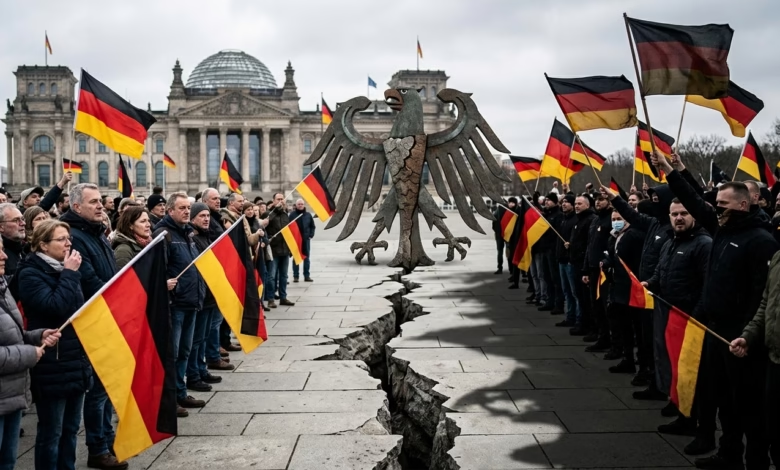
The Contemporary European Political Landscape Stands On A Bed Of Hot Coals, Pulled In Opposite Directions By Geopolitical Currents And Deep Social Transformations That Have Produced Political Phenomena Unfamiliar In The Modern History Of The Old Continent. At The Heart Of This Landscape, Germany Emerges As A Major Economic and Political Power, Today Facing Internal Challenges Re-shaping Its Political Identity That Has Settled For Decades. In This Precise Context Comes The Book “Fear For Germany: The Truth About The Alternative For Germany Party” By Veteran Author And Journalist At “Der Spiegel” Magazine, Melanie Amann, To Represent A Rare Analytical Document And A Deep Investigative Dive Into The Guts Of A Political Phenomenon That Turned The Scales. This Book Is Not Merely A Recounting Of A Political Party’s History, But A Precise Dissection Of Crowd Psychology, And A Careful Reading Of How Buried Emotions And Undeclared Fears Transform Into An Organized Political Force Capable Of Shaking The Foundations Of Ancient Democratic Institutions.
Melanie Amann Launches Her Tightly Woven Journalistic Approach From A Courageous Professional Admission That Bestows Exceptional Credibility Upon Her Work. She Admits That She, Like Other Observers, Misjudged The Strength And Scale Of This Movement In Its Beginnings. She Was Responsible For Covering News Of The “Alternative For Germany” (AfD) Party Since Its Foundation On April 14, 2013, And Throughout Those Years, She Found Herself Repeatedly Forced To Correct Her Expectations And Adjust Her Analyses. Amann Confesses To Having Suffered From What She Calls “Trump Blindness,” Where She Was Absolutely Certain That A Party Adopting Exclusionary Populist Rhetoric Could Not Achieve Broad Mass Success In Modern Germany, Only To Discover Later That That Era Of German Politics Maintaining Its Calm Had Gone Relentlessly. This Admission Paves The Way For An Objective Reading That Transcends Prejudices And Seeks A Genuine Understanding Of The Motives Of Millions Of Voters.
The Central And Ingenious Thesis In Amann’s Analysis Lies In Her Affirmation That The Alternative For Germany Party Was Present And Strongly Existing Before Its Official Foundation Was Announced. The Party In Its Initial Incipient Stages Was Not A Material Entity Or A Tangible Organizational Structure, But A Floating Idea, And A Deep Sense Of Unease And Discomfort Silently Spreading In The Minds And Hearts Of A Wide Swathe Of German People. This Feeling Was Summarized In A Growing Conviction That There Was A Malfunction Striking Its Roots In The Structure Of The State And Society; A Sense That Foreigners Refused To Integrate While Germans Borne The Burdens, That The State’s Prestige Was Declining, And Schools And Universities Were Deteriorating, While Vocal Minorities Imposed Their Hegemony Over The Culture Of The Silent Majority, All While Traditional Politicians Occupied Themselves With Marginal Issues That Did Not Touch The Core Nerve Of Citizens’ Suffering.
To Dive Into The Roots Of This Collective Sentiment, The Author Takes Us In Her Flowing Style To A Basement In The Charlottenburg-Wilmersdorf District Of Capital Berlin, Which Holds The Archives Of Controversy-Inciting Author And Politician Thilo Sarrazin. In This Simple Place, Which Contains Nothing But White Shelves From “IKEA,” Lie The Documents That Represent The Raw Material From Which The AfD Was Later Formed. There, Sarrazin’s Files Retain The Overwhelming Reactions To His Famous Interview In “Lettre International” Magazine In September 2009, In Which He Unleashed Fiery Statements Regarding Immigrants That Sparked A Storm Of Official And Public Condemnation In Elite Circles, Almost Toppling His Professional Future At The German Central Bank.
Yet The Surprise That Amann Reveals Is The Massive, Sweeping Popular Support That Sarrazin Received In Secret. Thousands Of Letters Streamed In, Expressing Clear Gratitude And Deep Appreciation Because He Dared To Speak The “Truth” That Many Feared To Utter. His Words Were Like An Axe Blow Breaking The Wall Of Silence, Granting Ordinary Citizens Relief Because Someone Was Expressing Their Apprehensions Without Them Being Accused Of Racism Or Paranoia. When He Published His Shocking Book “Germany Abolishes Itself” In August 2010, This Support Turned Into A Massive Flood Of Letters Demanding Actual Political Action. Sarrazin Acted Like Someone Striking The Earth With A Magic Wand For Springs Of Raw Political Sentiment To Burst Forth, Waiting For Someone To Refine And Harness Them.
Here The Author Highlights A Paramount Detail In Political Psychology; Namely The Mechanism Of “Rationalization” Adopted By Sarrazin, Which The AfD Later Replicated With Great Brilliance. Fear, By Its Nature, Is An Irrational Sentiment Making Its Holder Appear Weak Or Illogical. But What Sarrazin Did Was Wrap This Dark Fear In A Cover Of Numbers, Statistics, Demographic And Economic Analyses, Turning Fear (Angst) Into Mere Legitimate And Justified “Concern” Or “Interest” (Sorge). He Used Bare Facts As Cover To Pass Scaremongering Messages, Leaving The Audience To Infer Radical Conclusions On Their Own. This Methodology Is What Allowed His Ideas To Penetrate And Spread Within Academic Circles And Middle Classes That Do Not Usually Fancy Crude Right-Wing Slogans.
Amidst This Silent Popular Ferment, Traditional Political Parties Failed To Absorb This Segment, Settling For Timid And Hesitant Reactions That Did Not Rise To The Level Of Swelling Fears On The Street. Early Attempts To Establish Political Platforms Exploiting This Anger, Such As The “Freedom” Party Founded By René Stadtkewitz, Met With Miserable Failure, Because The Political “Refinery” Had Not Yet Completed Its Form, Nor Did It Possess The Appropriate Tools To Convert Popular Anger Into Parliamentary Seats.
Then Came The Pivotal Historical Moment In March 2013, When Economist Bernd Lucke Contacted Sarrazin To Offer Him Entry Into A New Political Project. Despite The Latter’s Refusal, The Nascent Party Took It Upon Itself To Adopt The Exact Methodology, Speaking With Sarrazin’s Tongue And Using His Calm Tone That Claimed To Speak The Language Of Bare Figures And Facts, Raising The Slogan “Courage To Speak The Truth.” Early Founders, Like Lucke And Konrad Adam, Realized How To Blend Economic Fears Stemming From The Euro Crisis And Sovereign Debt With Cultural And Social Fears Regarding Immigration And Integration, Creating A Political Vessel Capable Of Absorbing All Those Angry And Frustrated With Chancellor Angela Merkel’s Policies.
With The Passage Of Time, As Amann Tracks With Meticulous Accuracy, The Calm Rational And Economic Crust Coating The Party Began To Crack, Allowing More Radical And Populist Leadership To Emerge. The Methodology Shifted From Quiet Insinuations About Statistics To Outspoken, Direct Statements Playing On The Chord Of Pure Existential Fear. Figures Like Beatrix Von Storch Started Making Shocking Statements About Using Weapons Against Refugees At The Border, Alexander Gauland Demanded Banning Muslims From Entering Akin To Trump’s Remarks, While Björn Höcke Launched Terrible Warnings Of The “Cultural Annihilation Of The German People,” Evoking Nationalist Vocabulary Steeped In Dark German History.
This Rapid And Dangerous Shift Was No Accident; It Was An Inevitable Result Of The Nature Of The Mass Base Attracted By The Party, Which Found In Successive Crises—Starting From The Euro Crisis Reaching The Influx Of Hundreds Of Thousands Of Refugees In Autumn 2015—Fertile Ground To Justify Its Fears And Fuel Its Anger. Amann Points Out That The Party Gradually Abandoned The Language Of Reason And Logic That The Early Founders Attempted To Impose, Siding Completely With Passionate Emotional Rhetoric, Realizing That Fear Is The Strongest And Most Effective Engine In Mobilizing Masses In Times Of Existential Crisis.
Author Melanie Amann Moves On, After Dissecting The Psychological And Social Roots Paving The Way For The Alternative For Germany, To Dissecting The Tactical Structure And Political Engineering Adopted By The Party To Turn This Massive Capital Of Social Anger And Fear Into A High-Efficiency Electoral Machine. In This Context, A Paramount Thesis In The Book Emerges: That The Party Was Not Content Being A Passive Vessel Receiving Popular Frustrations, But Transformed Over Time Into An Active Crisis Manufacturer And A Continuous Catalyst For Intense Polarization In German Society. The Transition From Silent Grumbling In Middle-Class Basements To Open Confrontation Under The Bundestag Dome Required An Unconventional Media And Rhetorical Strategy Built On Turning Tables On Democratic Institutions And Using System Tools Against The System Itself.
Amann Dives Deeply Into What May Be Termed The “Systematic Provocation Trap,” The Most Prominent Tactic Replicated By AfD Leaders From Global Populist Movements And Tailored To Fit German Historical And Cultural Complexities. This Tactic Operates On A Three-Dimensional Dynamic: Starting By Launching A Shocking Political Or Cultural Statement Intentionally Breaking Settled Post-WWII Taboos, Such As Downplaying Nazi Era Atrocities Or Using Outdated Ethnic Terms To Describe Immigrants. The Second Step Is Waiting For The Inevitable Explosion In Traditional Media And Condemning Reactions From Major Parties And Cultural Institutions, Ensuring Free Media Coverage For The Party And A Monopoly On The News Cycle For Days. The Third And Most Important Step Consists Of A Calculated Tactical Retreat; Where The Party Spokesperson Appears Claiming The Statement Was Taken Out Of Context Or Was A Mere Slip Of The Tongue, Exploiting This Attack To Solidify A Narrative Of “Victimhood” And Convince Its Base That There Is A Conspiracy By The “Corrupt Elite” And “Lying Media” To Silence The Only Voice Expressing The Truth.
Through This Systematic Repetition Of Breaking Verbal Taboos, The Party Successfully Applied The Political “Overton Window” Theory With Extreme Precision, Expanding What Is Acceptable And Allowed To Be Said In The German Public Sphere. Party Theorists Understood That Words Are The First Bullets In Any Culture War, And Altering Political Vocabulary Inevitably Changes Voters’ Choices. Amann Explains How Terms Considered Until Recently Exclusive To The Shunned Far-Right Began Infiltrating Daily Discussions Of Ordinary Citizens, Forcing Traditional Conservative Parties Like The Christian Democratic Union To Alter Their Rhetoric And Borrow AfD Terms In A Desperate Attempt To Stop Voter Bleeding. This Semantic And Political Shift To The Right Is The Party’s Deepest And Most Dangerous Impact, As It Did Not Only Change Parliamentary Power Balances, But Reshaped Collective Consciousness And Drew New Boundaries For German National Identity.
The Author Moves On To Provide A Dissecting Reading Of Internal Dynamics Governing AfD Organization, Highlighting Stark Contradictions Between Its Outer Image As A Solid Block Defying The System, And Its Internal Reality As A Fierce Battleground Dominated By Splinters And Harsh Political Purges. Unlike Traditional Parties Leaning Toward Moderation As They Near Power Or Grow In Size, Amann Proves The AfD Obeys A Law Of Reverse Evolution; Where Extremism And Radicalism Act As The Sole Winning Currency In Its Internal Conflicts. The Process Of “Eating Its Own Children” Inside The Party Was Not Mere Passing Incidents, But A Structural Mechanism Ensuring The Party Remains At Peak Boiling Point.
The Author Outlines In Dramatic Detail How The Founding Generation Was Overthrown; Macroeconomics Professor Bernd Lucke, Who Founded The Party On Rejecting The Euro And Demanding Strict Structural Reforms, Was Ousted. The Nationalist Faction Realized That Dry Talk Of Monetary Policy, Inflation, And Sovereign Debt Lacked Emotional Momentum To Continuously Mobilize Masses. Thus, Lucke Was Politically Purged In Favor Of Frauke Petry, Who Steered The Party Toward Identity Struggles And Immigration Issues. Yet Petry Herself Did Not Escape This Internal Guillotine; When She Later Attempted To Draw Organizational Red Lines To Limit Growing Neo-Nazi Influence And Present A Moderate Face For Coalition Governments, She Was Marginalized In Favor Of The More Extreme “Der Flügel” (The Wing) Faction Led By Björn Höcke, Who Showed No Hesitation In Openly Evoking Völkisch Rhetoric.
This Continuous Drift Toward The Extreme Right Reflects A Deep Understanding Of The Audience Targeted By The Party. Amann Notes Party Leadership Realizes Its Solid Base Does Not Seek Complex Pragmatic Solutions To Geopolitical And Economic Problems Facing Germany, But Primarily Seeks “Emotional Venting” And A Clear Scapegoat Responsible For Stormy Modern Changes. The Party Succeeded In Creating A Two-Dimensional World Sharply Dividing Society: The Authentic, Oppressed “People” Possessing Common Sense, Versus Globalized Urban “Elites” Controlling Institutions And Seeking To Destroy National Cultural Identity For Obscure Globalist Projects.
This Social Engineering Relies Heavily On Exploiting Economic And Cultural Alienation, Particularly In Former East German States Where Scars Of Reunification And Harsh Economic Transitions Remain Fresh In Collective Memory. There, Where Traditional Industries Decline And Young People Desert Towns, Party Discourse Glorifying The Past And Offering Definite Answers Regarding Culprits (Immigrants, EU, Elites) Appears Far More Attractive Than Complex Development Programs. The AfD Evolved From A Mere Political Party Into A Psychological Sanctuary For A Wide Segment Feeling Bypassed By Globalization, Their Identity And Social Status Threatened Amid Turbulent International Order Forcing Compulsory Lifestyle Transformations.
Thus, Melanie Amann Offers In This Part A Methodological Warning Against Simplistic Reductions Of Populist Right Growth. It Is No Longer Limited To A Group Of Discontented Individuals Absorbed By Economic Promises; We Face An Integrated Political Project Possessing An Alternative State Vision, Using Calculated Tactics To Dismantle Democratic Consensus From Within By Exploiting Every Geopolitical Shock.
The Analytical Reading Provided By Amann Goes Beyond Electoral Tactics And Internal Struggles, Diving Into Information Infrastructure And Ideological Foundations Used By The AfD To Solidify Its Counter-System Existence. In This Analysis Segment, A Highly Cunning Strategy Unfolds, Aiming Not Just To Win Votes, But Re-engineer Public Perception And Dismantle Knowledge Frameworks Settled In German Democracy For Decades, Reaching An Alternative Geopolitical Vision Challenging Traditional Western Alliances.
Amann Launches Her Dissection Of The Complex Clash Between The Party And Traditional Media, Demonstrating That Attacks On The Press Were Not Merely Angry Reactions To Critical Coverage, But The Cornerstone Of Its Project. The Party Revived The Term “Lügenpresse” (Lying Press), Heavy With 1930s Historical Weight, As A Powerful Tool To Delegitimize The Fourth Estate. The Strategic Goal Is Not Improving Party Image In Mainstream Media, But Shattering Media Credibility Entirely, Turning It In The Base’s Eyes Into A Mere Propaganda Arm Of “Corrupt Elites.”
Through Systematic Scepticism, The Party Isolated Supporters In Tightly Sealed Digital “Echo Chambers.” Amann Explains How Smart Investments In Social Media Algorithms And Alternative Platforms Created A Parallel Reality Where Fears Are Daily Fed Away From Fact-Checking By Independent Outlets. In This Digital World, Individual Incidents Turn Into Major National Crises, And Conspiracy Theories Are Crafted As Sound Political Analysis. This Strategy Creates “Epistemic Polarization,” Where German Society Is Divided Not Just On Opinions, But On Fundamental “Facts,” Making Rational Dialogue Near Impossible.
Parallel To This Information War, The Author Tracks How The AfD Transcended Local Protest Phenomena To Develop An Integrated Geopolitical Vision Radically Contradicting Post-WWII German Foreign Policy. While German Identity Was Built On Deep Atlantic Integration, US Security Umbrella Reliance, And Strict Liberal International Order Commitment, The Party Offers A Deconstructive Approach. Amann Explains How Leaders Play On National Sovereignty, Viewing Dependence On US Hegemony As Harmful To Germany’s Strategic Interests Amid Global Power Structure Shifts.
This Geopolitical Orientation Appears Clearly In The Party’s Controversial Stance On Russia. Despite International Law Violations, A Broad AfD Faction Adopts Sympathetic Rhetoric Toward Moscow, Demanding Sanctions Lifting And Relations Warmth. This Stance Stems Not Only From Energy Security Pragmatism, But Deep Ideological Affinity; Putin’s Russia Is Viewed In New Right Literature As A Last Bastion Of Conservative Values Standing Against Globalism. This Eurasian Shift Challenges German Foreign Policy And Appeals To Eastern Regions Retaining Less Hostile Memories Of Moscow Compared To Bonn Or Berlin Elites.
Consequences Hit The Core Structural Framework Of Germany’s Party System, Causing Institutional Paralysis. Amann Observes How The “Brandmauer” (Firewall) Policy Adopted By Traditional Parties—Refusing Any Alliance With The AfD—Produced Unintended Backfire. With AfD Polls Touching Or Exceeding Twenty Percent In States, Traditional Parties Are Forced Into Hybrid “Grand Coalitions” Simply To Keep The AfD Out Of Power.
These Forced Coalitions Fade The Identities Of Traditional Parties, Forcing Painful Compromises That Dilute Original Programs Into Dull Technocratic Continuity. In A Bitter Irony, This Paralysis Offers The AfD Its Strongest Argument: Using Hybrid Coalitions As Proof That All Traditional Parties Form A Single “Political Cartel,” Positioning The AfD As The Only Genuine Alternative Outside Elite Consensus.
The Author Deepens The Analysis By Linking The AfD To The “Neue Rechte” (New Right) In Germany, Showing The Party Is The Parliamentary Arm Of A Network Of Think Tanks, Publishing Houses, And Student Groups Like Götz Kubitschek’s Institut Für Staatspolitik. This Intellectual Infrastructure Supplies Cadres, Crafts Philosophical Concepts, And Engineers A Long-Term “Conservative Revolution” Aiming For Cultural Hegemony Influenced By Weimar-Era Conservative Thinkers.
Melanie Amann’s Panoramic Reading Brings Us To A Terrifying Conclusion: The AfD Successfully Created A Self-Sustaining Political And Epistemic Environment Immunized Against External Criticism. The Party Turned Into A Political Black Hole Absorbing Social Anger To Dismantle Republican Foundations, Exploiting Structural Contradictions Of The New World Order.
Amann Dives Into Sociological, Demographic, And Economic Depths Forming The AfD’s Solid Base, Dismantling Simplistic Narratives Reducing Right-Wing Voters To “Globalization Losers” Or Impoverished Classes Facing Unemployment. Using Precise Survey Data And Field Interviews, Amann Proves Liberal Elite Condescension Explains Very Little, Deepening Gaps Between Institutions And Social Realities.
Amann Introduces “Statusangst” (Status Anxiety) To Explain Party Appeal. She Asserts The Primary Engine Moving Millions To The Far Right Is Not Direct Material Deprivation, But Deep Fear Of Social Decline And Loss Of Achievements. The AfD Backbone Consists Of Middle-Class Artisans, Small Business Owners, And Employees With Stable Jobs Living In Psychological Panic About The Future. They Feel Social Safety Nets Modernizing German Social Market Economies Are Eroding Under Inflation And Tech Shifts. This Existential Status Anxiety Creates Hostility Toward Change, Making Them Prey To Discourse Promising To Freeze Time And Restore Imagined Stability.
At The Heart Of This Fear Emerges “Welfare Chauvinism.” Amann Explains How The Party Resolved Contradictions Between Neoliberal Capitalist Roots And Working-Class Voter Attraction By Redefining Welfare States: Rather Than Radical Wealth Redistribution, The Party Promoted The Concept That German Resources Are Drained By “Outsiders.” Immigrants Are Portrayed As Economic Parasites Competing For Housing, Healthcare, And Pensions. Welfare Chauvinism Turns Social Solidarity Into An Exclusive National Privilege, Offering Fearful Voters False Security By Promising To Expel Foreign Competitors.
The Author Devotes Extensive Analysis To Former East Germany As The Party’s Crucial Laboratory. Understanding Sweeping Success In Saxony, Thuringia, And Brandenburg Demands Unearthing Painful Memories Of The Berlin Wall Collapse And Reunification (Die Wende). Millions In The East Suffer Deep Trauma From 1990s Industrial Collapses, Treuhand Privatizations, And Loss Of Social Status In A Western Capitalist System Imposed Upon Them, Creating An Open Narcissistic Wound.
The AfD Hijacked The Moral Legacy Of The 1989 Peaceful Revolution, Utilizing Iconic Slogans Like “Wir Sind Das Volk” (We Are The People). The Party Convinced Eastern Bases That Dictatorship Merely Shifted From Communist East Berlin To Liberal Elite Dictatorship In Unified Berlin. Through Psychological Identification, The Party Offers A Revenge Vote Allowing Easterners To Strike The Western System, Transforming Voting Into An Act Of Existential Rebellion.
Amann Highlights Crucial Demographic And Gender Dimensions: The AfD Is An Overwhelmingly Male Project In Leadership, Membership, And Voters. This Imbalance Reflects A Backlash Against Rapid Social Shifts, Feminist Influence, And Gender Identity Policies. The Party Offers A Refuge For Men Feeling Traditional Patriarchal Authority Is Under Dismantlement, Playing On “Threatened Masculinity” By Promoting Traditional Family Models.
In Criticizing Governing Elites, Amann Places Responsibility On The “Crisis Of Liberal Center” During Angela Merkel’s Era. Ideological Convergence Between CDU And SPD Removed Core Policy Differences. Merkel’s “Alternativlos” (Without Alternative) Slogan Voided Natural Political Debate, Creating A Void Filled By The AfD. When Politics Transpires Into Passionless Administration, Masses Seeking Identity Turn To Radical Forces Mastering Emotional Language.
Amann Explores The Organic Unification Between Institutional Party Structures And Radical Street Protest Movements. Initially, Academic Founders Kept Safe Distance From Angry Street Gatherings Like PEGIDA In Dresden, Fearing Disruption Of Their Respectable Bourgeois Image.
Yet Amann Tracks How Reservations Melted Under Political Pragmatism. Rising Nationalist Factions Realized Suits And Quiet Debates Inadequately Fuel Revolutions; The Party Needed Raw Emotional Fuel Provided By Street Movements. Strategic Fusion Emerged: PEGIDA Offered Mass Momentum And Space For Radical Slogans Without Organizational Burden, While The Party Offered Political Cover, Parliamentary Legitimacy, And Official Platforms. This Interaction Blurred Lines Between Legitimate Opposition And Undemocratic Incitement.
The Author Highlights The Dangerous “Salami-Taktik” (Salami Tactic) Passing Extremism Gradually. Amann Focuses On Björn Höcke’s “Der Flügel” Faction, Showing How A Radical Minority Absorbed The Entity. Höcke Used Continuous Provocation To Test System Immunity; Moderate Leaders Believed They Could Contain Him To Harness Eastern Popularity, Falsely Imagining They Could Tame Extremism.
Amann Labels This Illusion A Fatal Sin Mirrored By Weimar Elite Mistakes In The 1930s. The Radical Faction Always Won Internal Struggles Possessing Cohesive Narratives Appealing To Base Sentiments. “Der Flügel” Became The Party’s True Spirit, Transforming It From Euroskeptic Conservative Into A Radical Nationalist Party.
The AfD Poses A Massive Challenge To German State Structures And “Streitbare Demokratie” (Militant Democracy). Designed To Defend Itself Against Internal Threats via Intelligence Services (BfV), The State Faces An Unprecedented Dilemma Monitoring A Party Representing Millions.
The Party Exploited This Tension Masterfully: Surveillance Steps Are Used As Ammo For Victimhood Narratives, Depicting The Party As A Victim Of Politicized Security Stasi-like Apparatuses. This Rhetoric Delegitimizes State Institutions, Turning Enforcement Agencies Into Political Parties, Deepening Systemic Mistrust.
The Youth Wing, “Junge Alternative,” Acts As A Radicalization Lab And Future Leadership Incubator Embracing “Identitäre Bewegung” (Identitarian Movement) Concepts. Instead Of Outdated Biological Supremacy, Youth Leverage Sophisticated Concepts Like “Ethnopluralism,” Arguing Cultures Must Remain Geographically Separated To Prevent “Great Replacement.” This Philosophy Offers Sophisticated Cover For Xenophobia, Appealing To Educated Youth Practicing Extremism In Modern Attire.
The Author Concludes With A Stern Warning Against Viewing The AfD As An Isolated Phenomenon. The Party Forms A Strong Link In A Transnational Chain Of European Populist Movements. Radical Nationalist Parties Cooperate Closely Across Borders To Form A “Nationalist International” Aimed At Dismantling The EU From Within, Transcending Local Security Containment Efforts Without Addressing The Deep Roots Of Fear Feeding Movements Across Western Societies.