

The First Pardoned Nation: How a Slavery Confederacy Almost Plunged The World Into Darkness

Anatomy Of “The First Pariah State” And The Roots Of The Cosmic Threat
In A World Where Human Values Intertwine And Concepts Of Freedom Clash With The Ambitions Of Exploitation, The Book “The First Pariah State: How The Pro-Slavery Confederacy Threatened The World” By Author Robert E. Bonner, Published By Princeton University Press, Emerges As An Extremely Important Historical Document Shedding Light On One Of The Darkest Periods Of Human History. This Book Offers A Deep And Innovative Reading That Is Not Limited To The Narratives Of The American Civil War As An Internal Conflict, But Goes Beyond That To Place The Confederacy Under The Microscope Of International Relations, As A Severe And Direct Threat To The Global Order And Human Values That Were Crystallizing In The Nineteenth Century. We Dive Into The Folds Of This Work To Explore How The Southern American States Attempted To Impose Their Will And Dark Vision On The Entire World.
Our Journey With This Book Begins From The Point Where The Spark Of Rebellion Was Ignited. From The Moment The Southern Confederacy Declared Its Secession From The United States, It Was Not Only Seeking To Tear Apart The Fabric Of The American Nation, But Unleashed A Bloody War Whose Primary And Horrific Goal Was To Maintain The Enslavement Of Four Million Human Beings. This Dark Goal Did Not Pass Unnoticed On The International Stage; Rather, It Sparked Fierce Global Outrage And Awakened Deep Fears Of A Catastrophic And Shameful Future If This “Slaveocracy” Succeeded In Establishing Its Footing As A Sovereign Nation With International Recognition. The Author Bonner Clearly Explains That The Enemies Of The Confederacy Did Not View This Conflict As A Mere Regional Rebellion, But Saw In It A Direct Threat To The Course Of Human Progress, A Stab At The Heart Of Human Rights, And A Destruction Of The Foundations Of International Law Which Was Slowly Seeking To Rid Itself Of The Heavy Legacy Of Slavery.
The Concept Of The “Pariah State” Or Rogue State, Which We Frequently Use Today To Describe Regimes That Flagrantly Violate International Norms And Laws, Finds Its Deep Roots In The Way The World Viewed The Confederacy In The 1860s. The Hatred And Disgust Toward This Destructive Rebellion Inspired An Overwhelming International Desire To Formulate New Rules Aimed At Isolating Any Similar Diabolical Regime That Might Emerge In The Future. Bonner Masterfully Connects The Feelings Of Disgust That Prevailed During The Civil War Years With The Ongoing Campaigns In Our Present Era Demanding The Removal Of Confederate Flags And The Dismantling Of Statues And Monuments That Glorify What Is Known As The “Lost Cause”.
However, The Confederacy Did Not Stand Idly By In The Face Of This Global Moral Assault. The Book Points Out That Southern Supporters Launched A Powerful Counter-Campaign Of Ideas And Images That Sought To Transform Criminals And Rebels Into Mythical Heroes. Foreign Defenders Of The South Were The Ones Who Created The Discourse That Lived On In Pro-Confederate Commemorative Traditions, A Discourse That Dominated The Way Millions Of Americans Remembered The Civil War For Long Decades. Those Generals Who Rode Their Horses And Gained World Fame While Leading Their Men Into Bloody Battles Were Immortalized In Countless Bronze And Stone Statues, Even After The Government They Fought For Had Vanished. This Propaganda Machine Succeeded In Weaving An Aura Of Victimhood Around A People Who Claimed They Fell Victim To “Yankee Terror” (Northern), Touching The Heartstrings Of Certain Foreign Admirers Before This Sympathy Turned Into Overwhelming Nostalgia In The Post-War Period.
However, The Pivotal Point Upon Which Bonner’s Critique Rests Lies In His Focus On The Global Efforts Exerted In The 1860s To Stigmatize And Isolate The Confederate Entity. Key Figures Opposing The Confederacy, As Highlighted By The Book, Sounded The Alarm Regarding What They Considered An Unparalleled Evil Rebellion. These Accusations Were Built Primarily On The Condemnations Issued By Abolitionists, As They Realized That Secessionists Seeking To Build A National Power Began Boasting About The Benefits Of Suppressing And Enslaving Black People Louder Than Ever Before. It Was Not Difficult To Document The Enthusiasm Of These Secessionists To Expand The Scope Of Their Previous Crimes; This Newly Formed “Slave State” Threatened To Spread The Poison Of Slaveholders’ Ideas, Cause Utter Chaos Across The World’s Oceans, Cast Dark Shadows Over Ancient Religious Traditions, And Pave The Way For A Regression And Return To The Savagery Of Bygone Eras.
The Public Relations Campaign Aimed At Containing The South Overseas Reached Its Peak After The United States (The North) Officially Adopted The Emancipation Policy As A Primary War Goal In Early 1863. This Strategic And Moral Shift Led To An Unprecedented Escalation In Anti-Confederate Advocacy, Which Manifested In A Torrent Of Commentary And Articles Across Both Sides Of The Atlantic Ocean Over The Following Two Years. Despite This Strong Momentum, The Book Notes With Regret That Once The Rebellion Was Defeated, The Anti-Confederate Campaign Receded, And The Promise To Align The Law Of Nations With The New Principles Of Emancipation Quickly Faded. The War-Time Attacks Launched On The Confederacy As A Pariah State Did Not Mean Much To Those Who Later Faced Rogue Regimes In The Twentieth Century, Such As The Soviet Union, Nazi Germany, Or Apartheid South Africa. This Prototype Of A Rogue State That Threatens Global Security Was Largely Forgotten Within Just A Few Decades.
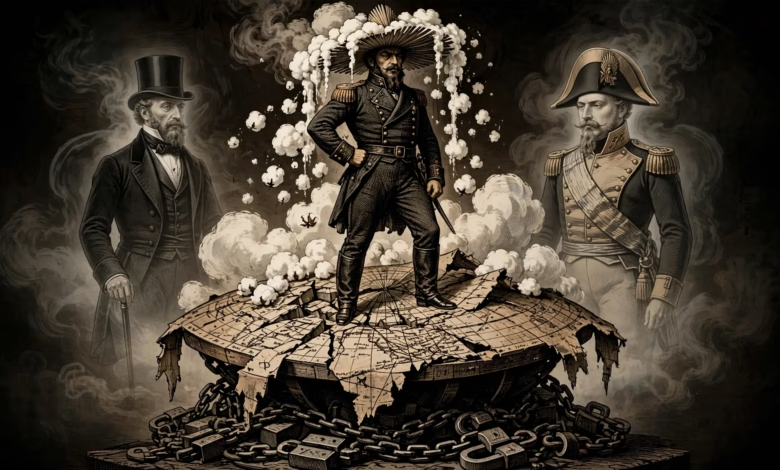
The Book Offers Deep Visual And Symbolic Evidence Through A Woodcut Dating Back To 1861, Embodying The Global Threat Of Rebellion. The Drawing Shows A Figure Whom The Author Calls The “Palmetto Tyrant”, A Muscular Man Standing As A Symbol Of Southern Tyranny. Although This Drawing Was Not Widely Circulated Compared To Other War Images, It Reflects With Extreme Precision How Confederate Meaning Was Made In That Early Stage, Before The Adoption Of The Slanted Southern Cross Flag And Before The Rise Of Military Stars Like Robert E. Lee Or Stonewall Jackson. The Drawing Depicts A Black Man Stretched On The Ground, Bare In His Upper Half, Transformed Into A Mere Human “Footstool”, Symbolizing That The Victim Forms The Foundation Upon Which All The Wealth Of This Entity Is Built. The Drawing Also Overflows With Abundant Cotton Flowing From The Tyrant’s Hat, Showcasing The Immense Profits Generated By Acts Of Mass Violence On Plantations.
Furthermore, The Drawing Points To International Complicity, Where Two Figures Representing The British Economic Elite And The French Emperor Napoleon III Appear Under The Influence Of This Greedy Tyrant. This Artwork Reflects The Moral Danger That Threatened To Drag Major Global Powers Into Turning A Blind Eye To Human Misery In Exchange For Purely Commercial Interests, A Central Axis That Bonner Continues To Deconstruct Throughout The Chapters Of His Book.
Audacity Of Ideology And Ocean Warfare… How The Confederacy Challenged The Stability Of The International System
The Symbolic Image Of The “Palmetto Tyrant” Embodied By Art In That Era Was Nothing But A Faint Reflection Of The Official Discourses Adopted By Secessionist Leaders, Which Established A Complete Ideological And Philosophical Break With The Path Of Enlightenment And The Movement Of Human History. While The Structure Of The International System Was Slowly And Painfully Striving To Establish New Rights Concepts, The Confederacy Chose To Declare Itself As A Political Entity Explicitly Built On The Exact Opposite Of These Concepts. Robert E. Bonner Pauses In His Analysis At The Moments When Southern Leaders Abandoned Any Attempt To Embellish Their Reality, Presenting To The World What Could Be Considered A “Reactionary Philosophy Of History”; A Philosophy That Does Not See Freedom As The Ultimate Goal Of The Human Spirit, But Rather Considers Enslavement A Natural Law And An Indispensable Foundation For Civilization.
Perhaps The Clearest Manifestation Of This Dark Vision Is The Famous “Cornerstone Speech” Delivered By Alexander Stephens, Vice President Of The Confederacy, In The Spring Of 1861. Stephens Was Not Content In His Speech With Merely Defending The Economic Interests Of The South; Rather, He Went Far Beyond That, Declaring With Unprecedented Arrogance That Their New Government Was The First In World History To Take Racial Inequality And The Enslavement Of Black People As Its “Cornerstone”. This Crude Declaration Was Not Just For Domestic Consumption, But Served As A Statement Of Defiance Directed At The Entire World Order. This Speech Placed Major European Powers In A Severe Moral And Geopolitical Dilemma; In An Era Dominated By A “Pax Britannica” Based On The Superiority Of The Royal Navy, Which Had Already Begun Hunting Slave Trade Ships, Diplomatic Recognition Of The Confederacy Became Equivalent To Political And Moral Suicide For Any European Government, No Matter The Degree Of Strategic Competition Among Major Powers And Their Attempts To Weaken The United States.
Here The Book Takes Us From The Arena Of Ideological Theorizing To The Theater Of Operations Where The Confederate Threat Was Embodied In Its Ugliest Form: Ocean Warfare. The Leadership In Richmond Realized That The North’s Demographic And Industrial Superiority Made Traditional Military Victory Almost Impossible, So The Confederacy Decided To Export Its Crisis To The World Via A Catastrophic Naval Strategy That Threatened To Paralyze International Trade. Instead Of Building A Regular Naval Fleet—Which It Lacked—The Secessionist State Resorted To Issuing Letters Of Marque, Opening The Door For Private Vessels To Attack Commercial Fleets And Plunder Them.
This Strategy Was Not Just A Desperate Military Tactic, But A Deliberate Attempt To Hijack The Global Economy. By Targeting Vital Shipping Lines And Deploying Destructive Ships Like The Famous CSS Alabama To Terrorize Commercial Ships On The High Seas, The Confederacy Sought To Create A State Of Total Chaos. The Implicit Goal Was To Force Major International Powers—Chief Among Them Britain And France, Which Relied Heavily On Southern Cotton Supplies—To Intervene Militarily To End The Conflict In Favor Of The South. The Policy Of “Cotton Diplomacy” Transformed From An Instrument Of Economic Pressure Into An Early Form Of Maritime Terrorism Aimed At Striking The Stability Of The International System At Its Core.
This Dangerous Combination Of An Extreme Ideology That Boasted Of Enslaving Human Beings, And Disproportionate Military Tactics That Violated Freedom Of Navigation Norms And Threatened Global Water Security, Is What Cemented The Confederacy’s Image As A “Pariah State” In The Literal Sense Of The Word. Bonner Explains How These Practices Aroused The Resentment Of Political And Economic Elites Around The World, Turning Southern Leaders Into Pirates And Outlaws In The Eyes Of Emerging International Law At The Time. The Battle Was No Longer Merely About The Territorial Integrity Of The United States, But Became A Global Struggle To Maintain A Minimum Of Order And Legitimacy In The Face Of An Entity Prepared To Plunge The World Into Chaos To Protect Its Dark Institution.
Imperial Expansion Ambitions And The Clash Of Political Realism With Rising Values
The Danger Of The Confederacy Did Not Stop At The Borders Of Attempting Secession Or Threatening Maritime Trade Routes, But Extended To Include Expansionist Ambitions That Posed A Structural Threat To The Architecture Of The International System In The Nineteenth Century. Robert E. Bonner Reveals In His Analysis That Southern Leaders Were Not Merely Seeking To Build A Buffer Wall Around The Institution Of Slavery Within Their Borders, But Carried An Imperial Vision Historically Known As The “Golden Circle”. This Geopolitical Vision Aspired To Expand Southward To Swallow Mexico, Central America, And The Caribbean Basin, On Top Of Which Was The Island Of Cuba, For The Purpose Of Establishing A Vast Slave Empire Monopoly Over The Production Of Essential Agricultural Commodities Worldwide. This Ambition Threatened Not Only The Sovereignty Of Neighboring Countries, But Threatened To Overturn The Global Balance Of Power And Abort Liberation Efforts Experienced By Latin America, Making The Confederacy A Revisionist Power Seeking To Undermine Global Stability In Favor Of An Abominable Exploitative Regime.
On The Diplomatic Chessboard, The Confederacy Tried To Exploit The Strategic Rivalry Among Major European Powers To Achieve International Recognition That Would Bestow Legitimacy Upon Its Existence. Southern Diplomats Bet On The Principle Of Realpolitik, Deluding Themselves That Pure Economic Interests, Specifically The Urgent European Need For Cotton, Would Trump Any Moral Or Legal Considerations. This Gamble Came Close To Succeeding When French Emperor Napoleon III Showed Implicit Sympathy For The South, Driven By His Own Ambitions To Build A French Empire In Mexico, Seeing In The Division Of The United States A Golden Opportunity To Weaken Northern American Influence And Establish A French Foothold In The Western Hemisphere.
However, Confederate Calculations Crashed Against The Rock Of British Hegemony And The Parameters Of “Pax Britannica”, Which Was Laying Down The Rules For International System Interactions At The Time. Despite The Severe Economic Suffering That Hit The British Textile Industry As A Result Of The Interruption Of Cotton Supplies—Which Became Known As The Lancashire Cotton Famine—Britain Proved That Great Power Calculations Transcend Immediate Commercial Gains. Driven By Massive Pressure From Public Opinion And The Working Class, Which Unexpectedly Sided With The Principles Of Liberation, The Political Elite In London Realized That Recognizing A State Built Explicitly On Enslaving Humans Would Deal A Fatal Blow To The Moral Legitimacy Upon Which The British Empire Relied In Its Fight Against The Global Slave Trade. London’s Decision On Neutrality And Refusal To Recognize The Confederacy Acted As A Diplomatic Death Sentence For Southern Ambitions, Confirming That The Structure Of The International System Was Beginning To Refuse Accommodating Entities That Directly Collided With Rising Human Standards.
This Clash Between The Confederacy’s Attempts To Impose A New Fait Accompli And The International System’s Resistance Highlights How The American Civil War Transformed From An Internal Matter Into A Real Test Of The Durability Of Emerging International Rules. The Confederacy Was Like An Ideological Contagion That The World Feared Would Spread; If This Secessionist Experiment Had Succeeded In Establishing Its Footing, It Would Have Set A Dangerous Precedent Inspiring Reactionary Movements Around The World And Legitimizing The Use Of Institutional Violence To Justify Racial Superiority, Which Would Have Turned The Wheel Of History Back Centuries And Destroyed The Foundations Of Civilizational Interaction That Were Formed With Great Difficulty.
Transformation Of The Moral Battle And The Lost Memory Of International Legitimacy
The Year 1863 Marked A Decisive Turning Point In The Conflict Over Legitimacy Between North And South On The International Stage, When President Abraham Lincoln Issued The Emancipation Proclamation. This Decision Was Not Merely An Internal Military Or Political Measure, But A Fatal Moral And Diplomatic Blow That Shattered All Efforts Exerted By Southern Diplomacy To Win Global Sympathy. Thanks To This Strategic Shift, The North Succeeded In Reframing The Civil War Before Global Public Opinion As A Decisive Moral Battle Between Freedom And Enslavement. This Proclamation Led To The Mobilization Of Civilian Societies And Working Classes In Europe—Especially Labor Unions In Britain—Which Placed Their Governments Under Tremendous Public Pressure To Prevent Any Form Of Cooperation With Or Recognition Of The Southern Regime, Highlighting The Power Of Moral Public Opinion In Guiding The Decisions Of Major Nations.
The Impact Of This International Confrontation Was Not Limited To Toppling The Southern Project Alone, But Extended To Laying New Foundations In The Architecture Of Emerging International Law. Bonner Explains In This Context How Rogue Confederate Practices Forced Great Powers To Reconsider Neutrality Laws, Foreign Recruitment Prohibition Mechanisms, And Vessel Armament Controls In Neutral Ports—As Embodied In Legal Battles Surrounding The British Foreign Enlistment Act. International Mobilization Against The Confederacy Established A Prototype For How To Isolate And Encircle “Rogue States” That Violate Human Norms, Transcending Traditional Concepts Of Absolute National Sovereignty In Favor Of Transnational Moral And Legal Principles.
However, The Sad Historical Paradox That Bonner Pauses At Manifests In The Period Following The Military Defeat Of The South In 1865. As Soon As The War Ended, A Careful And Systematic Process Of Rewriting History Began, Where The Myth Of The “Lost Cause” Surfaced. This False Romantic Narrative Succeeded In Erasing The Stigma Of The “Pariah State” That Haunted The Confederacy During The War Years, Replacing It With A Noble And Misleading Image Depicting Southern Leaders As Knights Defending A Traditional And Independent Way Of Life Against Northern Tyranny. As Decades Passed, The Tremendous International Efforts That Classified The Confederacy As A Cosmic Threat Were Forgotten, Causing This Early Concept Of The “Rogue State” To Recede From Global Political Memory Until The Emergence Of Major Crises In The Twentieth Century.
Contemporary Legacy And Lessons Learned For The International Order
Robert E. Bonner’s Book Reopens The Historical Record Not Only To Re-Evaluate The American Civil War, But To Provide A Conceptual Framework Illuminating Present Conflicts Over Memory And Written History. Ongoing Efforts To Re-Evaluate Monuments And Remove Confederate Flags From Public Spaces Are Not Merely A Local Dispute Over Heritage, But A Belated Restoration Of The International Moral Consciousness Formed In The 1860s. By Deconstructing The Myth Of The “Lost Cause”, The Work Reminds Us That Overlooking The Nature Of Rogue Entities Grants Them An Opportunity To Return And Influence Collective Consciousness, As Embodied In Transforming Racist Rebel Leaders Into Symbols Of Individual Heroism And Military Honor For Over A Century.
This Historical Presentation Also Contributes To Enriching Contemporary International Relations Literature On The Concept Of The “Pariah State” Or Rogue State. By Tracking How Great Powers, Civil Society Organizations, And Labor Unions Interacted With The Confederate Threat, The Book Demonstrates How International Legitimacy Does Not Rest Solely On Power Balances And Geopolitical Equilibriums, But Requires A Minimum Level Of Moral And Value Consensus. The Confederate Experience Served As A Prototype Repeated In The Twentieth Century With Different Regimes, And Its Lessons Remain Alive In How The International Community Deals With Entities That Challenge Human Norms And International Laws.