
The Book “Stalin’s Great Raid: The Rise Of The Soviet Union And The Plundering Of Germany” By The Author And Historian Bogdan Musial Is An Exceptional Historical And Investigative Document, And An Academic Reference That With Rare Courage Dismantles One Of The Most Complex, Bloodiest, Most Contradictory And Absurd Alliances In The Entire History Of The Twentieth Century, Namely The Secret And Overt Strategic, Economic And Military Alliance Between The Soviet Union And Nazi Germany. This Huge Work Does Not Merely Narrate Historical Events Within The Traditional Classic Framework We Are Accustomed To Reading In School History Books, But Rather Presents An Extremely Broad And Deep Panoramic Vision Of The Symbiotic And Lethal Relationship Between The Two Totalitarian Dictatorial Powers, Proving With Damning Archival Evidence That This Thorny And Intertwined Relationship Is What Actually And Decisively Shaped The Course, Repercussions And Results Of The Entire Second World War. The Bold Central Thesis That Musial Presents In A Smooth And Flowing Narrative Style Can Be Summarized In An Amazing And Shocking Historical Paradox For The Human And Political Conscience: That The Rise Of The Soviet Union As An Invincible Superpower After Its Crushing And Devastating Victory Over Germany In 1945 Would Never Have Been Achieved At All Without The Huge Material, Technological And Industrial Support That Germany Itself Voluntarily Provided To The Soviets, Driven By Short-Sighted Strategic Interests Before The Start Of Military Operations. While History And Peoples Often View These Two Huge Entities As Bitter Ideological Enemies, One Representing The Extreme Of Fascist Right And The Other The Extreme Of Communist Left, The Book, By Delving Into Recently Declassified Russian And German Archival Documents, Reveals That Until The Moment Of The Sudden And Stunning German Invasion At Dawn On The Twenty-Second Of June 1941, The Mighty German Industrial Machine Was The Main Supplier Of Engineering Expertise, Heavy Equipment, Precision Machines And Advanced Tools Without Which The Soviet Union, Amid The International Isolation It Was Living In, Could Not Have Built And Established The Foundations Of Its Heavy And Defense Industries. These Very Industries, Which Were Built Brick By Brick With German Machines, Presses And Lathes, Are What Enabled The Soviets Not Only To Absorb The First Horrific Shock And Withstand The Fierce Waves Of German Invasion That Swept Their Lands, But Also To Completely Turn The Tables On The Invaders, Crush Them Militarily, And Push Them To Retreat Step By Step Across The Plains Of Eastern Europe Until Raising The Red Soviet Flag Over The Ruins Of The Reichstag Building In The Heart Of The German Capital Berlin.
In His Deep And Contemplative Introduction, The Author Borrows The Description Of The Writer And Historian Sebastian Haffner, Who Pointed Out With Unparalleled Brilliance That One Cannot Find In All Of Modern Human History Another Example Of Such Intimate Entanglement, Close Cooperation, And Deadly Enmity Between Two Nations As Happened Between Germany And Soviet Russia, Describing This Intertwined And Complex History As More Astonishing, Exciting And Terrifying Than Any Fictional Novel That A Dramatic Writer’s Mind Could Weave. To Demonstrate This Complex And Time-Spanning Entanglement, Musial Does Not Begin His Analysis From The Nineteen-Thirties Era As Most Historians Do, But Rather Takes The Reader’s Memory Back To The First Foundational Roots Of The Emergence Of The Soviet State Itself, Asking In A Deeply Indignant Manner Whether The Soviet Union Would Have Existed At All In The Pages Of History As A Ruling Political Entity Without The Direct Intervention And Generous Funding Provided By The German Empire. In The Spring Of 1917, Amid The Rampant Chaos And Political Unrest That Followed The Overthrow Of The February Revolution Of The Russian Tsar Nicholas II, Vladimir Ilyich Lenin, The Leader Of The Radical Bolshevik Faction, Was Living In A State Of Political Isolation And Marginalization In His Voluntary Exile In Switzerland, Cut Off From The Rapidly Accelerating Events In His Homeland. Lenin Would Not Have Been Able To Return To The Russian Scene To Overturn The Balance Of Power And Steer The Revolution Without Direct Assistance, Planning And Collusion From The Conservative German Government And The High Command Of The Imperial German Army At That Time. The Germans Provided Lenin And His Bolshevik Comrades With What Became Historically Known As The “Sealed Train,” A Safe And Secret Journey Through German, Swedish And Finnish Territories To The Finland Station In Petrograd, In Addition To Providing Very Huge Financial Funding Estimated At Millions Of Gold Marks, With A Purely Strategic And Military Goal Of Exploiting Lenin’s Inciting Skills To Destabilize Imperial Russia From Within, Destroy The Morale Of Its Army, And Ultimately Push It To A Humiliating Withdrawal From The First World War, Which Would Allow Germany To Close The Eastern Front And Mobilize All Its Forces To Crush The Allies On The Western Front. Haffner Describes The Decision To Send Lenin To Russia As Being Like Throwing “The Political Nuclear Bomb Of The First World War,” A Pragmatic And Tactical Alliance With The Devil On Both Sides That Eventually Led To The Outbreak Of The Bloody October Revolution And The Establishment Of The First Totalitarian Communist State In The World On The Ruins Of The Russian Empire. Without This Initial And Decisive German Assistance, Financially And Logistically, Lenin Might Have Remained Just An Obscure Political Theorist Living On The Margins Of The World’s Great Events, And The Geopolitical Map Of The Twentieth Century Might Not Have Been Formed In The Way We Know It Today.
Musial Then Moves On To Discuss The Historical Doctrine, Political Justifications, And Ideological Restrictions That Surrounded That Pivotal Era, Pointing Out That Soviet History, Especially The Precise And Hidden Details Of German-Soviet Relations During The Interwar Period, Is Still Considered A Very Sensitive Subject Surrounded By Many Taboos That Are Forbidden To Approach, Especially In Contemporary Russia Which Has, With Governmental Support, Revived The Myth Of The “Great Patriotic War” As A Central, Essential And Sacred Element In Its Modern National Narrative, Deliberately Ignoring The Opportunistic Alliances That Preceded The Outbreak Of That War. Musial Sadly Explains How Many Historians And Academics In The Western Camp Have For A Long Time Repeated, In A Sometimes Unconscious And Naive Way, The Old Stalinist Propaganda That Tried Hard To Justify The Notorious Non-Aggression Pact, Known As The “Hitler-Stalin Pact” Or “Molotov-Ribbentrop Pact” Signed In Late August 1939, And To Market This Shameful Alliance To The World And Observers As A Purely Defensive And Compulsory Measure Imposed By Harsh Circumstances And The Inaction Of Western Democracies. This Misleading And Clever Defensive Narrative Was Founded And Its First Building Blocks Were Laid By Joseph Stalin Himself In February And March 1948 When He Wrote And Edited Large Parts By Hand Of A Famous Propaganda Booklet Published Widely Under The Title “Falsifiers Of History,” In A Desperate And Preemptive Attempt To Respond To The Leak By The United States Department Of State And The World’s Discovery Of The Secret Protocol Attached To The Pact, Which Explicitly Provided For The Division Of Eastern Europe And The Baltic States Into Spheres Of Influence Between Nazism And Communism. Stalin Claimed In That Justifying Booklet That The Soviet Union Was Forced Under Threat To Accept The Non-Aggression Agreement In Order To Gain Precious Time, Postpone The Inevitable Clash, And Prepare Its Forces And Modernize Its Industry To Confront A German Aggression That He Saw As Inevitably Coming. This Historical Claim Is Completely And Decisively Refuted By Musial, Based On Recently Declassified Russian Archival Documents And Minutes Of Politburo Meetings, Which Clearly Reveal That Stalin Was Not A Victim Seeking A Way To Survive, But Rather Was The Main Actor And Hidden Driver Who Deliberately And With All Strength And Cunning Sought To Ignite A Destructive And Comprehensive War Between The “Capitalist” And “Imperialist” Countries In Western Europe. Stalin’s Supreme Strategic Goal, Which He Expressed In Several Closed Speeches Before Party Leaders, Was To Push Germany On One Side, And France And Britain On The Other, To Exhaust Each Other In A Bloody And Long-Term Trench War Similar To The Slaughterhouses Of The First World War, So That The Soviet Union Lurking Safely Behind Borders Could Quietly Expand Geographically And Build Its Great Military And Economic Power, While All Its Ideological Enemies Bled To Death, Paving The Way, Without Realizing It, For The March Of The World Proletarian Revolution On The Bayonets Of The Red Army Toward The Exhausted Capitals Of Europe.
On The Nineteenth Of August 1939, That Is, A Few Days Before The Staggering Announcement Of The Non-Aggression Treaty That Shocked European Capitals And Stunned The World Communist Movement, Germany And The Soviet Union Signed An Extremely Important And Dangerous Commercial And Credit Treaty, In Response To A Persistent And Urgent Request From The Soviet Capital Moscow Which Was Eager To Obtain Advanced German Technology. Under This Unprecedented Credit And Commercial Agreement In Its Size And Scope, The Government Of The German Third Reich Granted The Soviet Union A Huge Commercial Credit Worth 200 Million German Marks At A Low And Attractive Financial Interest Rate Of 4.5 Percent, And Berlin At The Same Time, Through Secret And Overt Protocols, Pledged To Export Additional Industrial Goods And Advanced Machines Worth 180 Million German Marks, On Condition That The Value Of These Advanced Equipment Would Later Be Paid Through The Soviets Delivering Strategic Raw And Agricultural Materials That Germany Severely Lacked And Suffered From A Chronic Shortage Of. Interestingly And Paradoxically, The Soviet Negotiating Side Was Given Complete And Absolute Freedom By The German Leadership To Choose The Major German Companies It Wished To Deal With And Buy Their Sensitive Products And Technologies, Where Modern German Industrial Machines And Giant Presses And Lathes Topped The Soviet Purchase List, Accounting For The Lion’s Share Of 44 Percent Of Total Purchases, With A Financial Value Of 167 Million German Marks, In Addition To Various Military Goods And Samples Of Modern Weapons Worth More Than 58 Million German Marks. This Close Economic Alliance, And The Comprehensive Securing Of The Eastern Front Provided By The Political Pact, Is What Gave Adolf Hitler Full Confidence And A Sense Of Security To Attack Hapless Poland At Dawn On The First Of September 1939, Igniting The First Spark Of The Second World War. And When Britain And France Abandoned The Policy Of Appeasement And Intervened And Declared War On Germany In Fulfillment Of Their Military And Moral Obligations Towards Poland, It Seemed As If Stalin’s Desired Dream Of An Imperialist War Exhausting The Great Powers Had Finally Become A Reality And A Bloody Drama Unfolding Before Him, While The Soviet Leaders Sat Quietly And Comfortably In The Corridors Of The Kremlin On The Sidelines Watching The Situation, Before The Invading Red Army Forces Later Intervened To Stab Poland In The Back To Invade And Divide Its Lands With Their New German Allies In Late September Of The Same Year, Meeting On The Bug River To Exchange Congratulations Over The Joint Victory On The Ruins Of The Polish State.
Among The Most Prominent Strategic And Economic Axes That The Book Dismantles And Details With Sober Economic Analysis Is How The Soviet Union Directly And Effectively Contributed To Saving Nazi Germany From The Inevitable And Rapid Economic Collapse That Was Looming On The Horizon As A Result Of The Strict And Tight Naval Blockade Imposed By The British Royal Navy Supported By The French Fleet. The Comprehensive Western Strategy In The First Months Of The Conflict Was Based Entirely On Slowly Strangling The German Economy, Starving The Nazi War Machine, And Completely Isolating It From World Markets And Sources Of Raw Materials, As Happened With Overwhelming Success And Led To The Collapse Of The German Empire In The First World War. This Strategy Was Based On Accurate Calculations, Especially Since Germany Severely Lacked Natural Resources And Depended Vitally And Terrifyingly On Foreign Imports For The Continuation Of Its Military Machine And Civilian Industries; Statistics Confirmed That Berlin Imported 65 Percent Of Its Vital Oil Needs For The Movement Of Tanks And Aircraft, And 80 Percent Of Natural Rubber Necessary For Tires And Engines, And 45 Percent Of Iron Ore Necessary For Steel Industry, And Its Absolute And Decisive Dependence On Importing Rare And Extremely Necessary Metals For Manufacturing High-Quality Military Steel Alloys Such As Tungsten, Molybdenum, Chromium And Nickel Reached 100 Percent. As Soon As The Western Naval Blockade Began And Was Strictly Applied, German Foreign Trade Dropped Catastrophically By More Than 40 Percent In September 1939 Alone, Threatening A Total Paralysis Of German Military Industry, And It Seemed That The Allies’ Plan Was Bearing Fruit Early. And Here Exactly, At This Critical Moment In The History Of The Third Reich, Came The Role Of The Soviets As A Magical Lifeline And An Artificial Lung For The Nazi Military Machine, Where Soviet Shipments Loaded With Vital Resources Began To Flow Uninterrupted Across The New Common Border Into Germany In Late December 1939, Then These Supplies Expanded Hugely And Unprecedentedly Following A New Economic And Commercial Agreement Signed After Painful Negotiations And Personal And Decisive Intervention By Hitler And Stalin To Overcome Bureaucratic Obstacles On 11 February 1940. Under This Expanded Agreement, The Soviets Pledged To Deliver Strategic Raw And Agricultural Materials With A Astronomical Value Of 650 Million German Marks By August 1941, Huge Quantities That Exceeded Even The Most Optimistic German Expectations, And Included A Strict Soviet Commitment To Deliver 872 Thousand Tons Of High-Quality Oil Products Extracted From The Baku Fields, And 934 Thousand Tons Of Grain To Satisfy The German Home Front, And Hundreds Of Thousands Of Tons Of Cotton, Iron Ore, Chromium And Phosphatic Manganese. Indeed, The Matter Went Beyond Direct Export And Reached The Point Where The Soviet Union, With All Its Governmental And Intelligence Apparatuses, Agreed To Help Nazi Germany Secretly And In A Systematic And Institutional Manner To Circumvent The Suffocating British Naval Blockade, By The Government In Moscow Buying The Prohibited Resources That Germany Badly Needed, Such As Rubber From Southeast Asia, From World Markets As A Neutral State, Then Secretly Re-Exporting Them To Germany Via The Vast Soviet Lands Using The Trans-Siberian Railway Line, In An International Smuggling Operation Sponsored By Both States That Provided Germany With Lifelines It Could Never Have Dreamed Of.
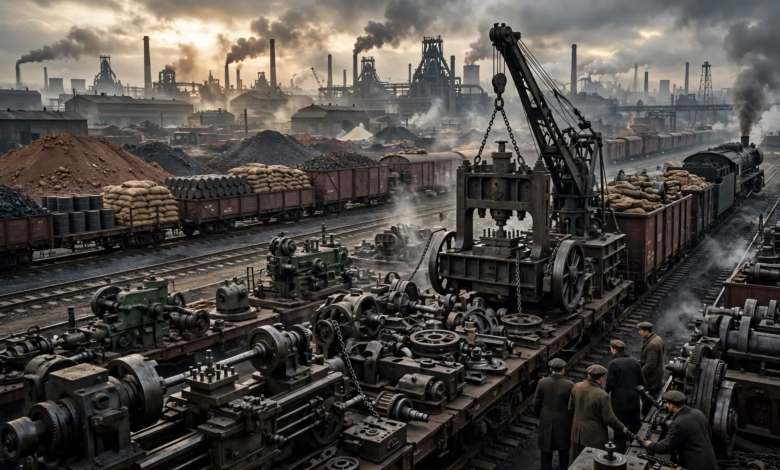
In Exchange For These Vital Arteries Of Natural Resources And Raw Materials That Kept The German War Machine Alive And Ready To Invade Western Europe, The German Leadership Had To Pay A Heavy Strategic And Technological Price Represented In Transferring Its Most Modern And Complex Industrial Technologies And Military Secrets To Its Supposed Soviet Ideological Enemy. The Book Reviews In Amazing Archival Detail The List Of Soviet Purchases That Caused Concern And Discontent Among Some German Military Leaders Who Realized The Danger Of Arming The Eastern Giant, For The Russian List Included Endless Demands For Advanced Equipment And Engineering Plans For Building Warships, Super-Thick Armored Plates, Mighty Marine Engines For Destroyers And Submarines, And Precise And Detailed Technical Samples For Building The Latest Models Of German U-Boats. Indeed, Germany, Under The Pressure Of The Desperate Need For Russian Oil And Grain, Officially Pledged To Deliver To The Soviets A Complete And Majestic Heavy Naval Cruiser Still Under Construction In German Shipyards, The Famous Cruiser “Lutzow” With All Its Plans And Armament Equipment. German Exports, Supervised By Soviet Committees That Freely Toured German Factories, Also Included Highly Advanced Aviation Equipment, Where Moscow Received Complete Warplanes And Engineering Samples Of Every Modern And Superior Model Used By The Advanced German Air Force (Luftwaffe), Including Bombers And Interceptor Fighters, In Addition To Powerful Aircraft Engines And Complex Navigation Devices And Radio And Optical Communication Equipment For Submarines And Tanks From The Production Of The Ancient Carl Zeiss Company. And On The Level Of Arming Ground Forces, Engineering Designs For Modern Artillery Weapons And Samples Of German Tanks Of The Panzer Model Were Delivered, And Stalin Personally And Strongly Insisted, Aware Of The Importance Of Industrial Infrastructure, On The Necessity Of Obtaining Very Advanced And Necessary Machining And Manufacturing Machines For Producing Ammunition And Cannons In Huge Quantities, Including About 200 Specialized And Very Rare Machines From The Production Of The Famous German Company “Hasse And Wrede,” Which Were Necessary For Turning Large Cannon Barrels. The Exchange Was Not Limited To Direct Military Equipment Or Plans Only, But Included Signing Contracts For Selling And Transferring Complete Factories For Chemicals And Production Of Synthetic Rubber Necessary For Tires, And Refining And Production Of Synthetic Oil And High-Octane Aviation Fuel, And Thousands Of Advanced And Complex Machines That Reached More Than 6430 Advanced Machines That Formed The Backbone And Cornerstone For Modernizing The Entire Infrastructure Of Soviet Industry In Preparation For Total War.
The Author Devotes In The Context Of His Book A Wide And In-Depth Space To Analyzing The Impact Of This Intensive And Continuous Technological Exchange On Soviet Military Industry And Its Rapid Development, Taking The Development Of The Soviet Tank Industry As A Stark And Clear Model Of The Extent Of Maximum Benefit From German Technology. Musial Explains How Tanks Were Considered In Soviet Military Doctrine The Main Offensive Weapon That Actually Decided All Major Battles On The Vast Eastern Front, And That The Soviet Union, Thanks To Its Early Focus On Military Manufacturing, Was Able To Possess Before The German Invasion The Largest Tank Fleet On Earth, Surpassing In Numbers All The Armies Of The World Combined, Where The Fantastical Number Jumped From About 100 Outdated And Dilapidated Tanks In 1929 To More Than 23 Thousand Tanks By January 1941. However, This Huge And Theoretically And Statistically Terrifying Fleet Suffered In Practical And Field Reality From Fatal Engineering Defects And Severe Technological Obsolescence, Where Armor Was Thin And Weak And Engines Ran On Highly Flammable And Slow Gasoline, Which Soviet Experts Discovered With Great Shock And Terror During Their Field Experience In The Spanish Civil War And Then More Catastrophically During The Finnish Winter War That Revealed The Fragility Of The Red Army. In Response To These Resounding And Embarrassing Military Failures, The Political Bureau In The Kremlin Led By Stalin Made Decisive And Immediate Decisions To Completely Modernize The Armored Fleet At Maximum Speed By Abandoning Old Models And Immediately Starting Production Of New, Advanced Models With Strong Sloped Armor And Mighty Diesel Engines, Such As The Heavy Tank (KV) And The Legendary Medium Tank (T-34) That Would Later Change The Face Of War And Terrify German Generals. And Amazingly And With Deep Historical Paradox That The Book Focuses On, The Machines, Presses And Heavy Equipment That Were Used In Soviet Factories To Build And Assemble These New Tanks That Crushed German Armor And Led The Counterattack Afterwards, The Largest And Most Advanced Part Of Them Was Imported Directly From Germany Itself With Diligent Directives And Huge Budgets Of Pure Gold Approved By The Political Bureau To Buy German Advanced Metal Pressing, Cutting And Forming Machines That The Soviets Were Unable To Manufacture Locally.
The Solid Evidence That Bogdan Musial Presents In This Work Clearly And Plainly Reveals A Decisive Strategic Paradox That Trapped Both Dictators, Hitler And Stalin, In The Net Of Fatal Miscalculations. The Generous And Continuously And Highly Intensely Flowing Soviet Resources During The Sweeping German Attack On France And The Low Countries In The Spring Of 1940 Contributed To Enabling Hitler To Sustain The Momentum Of The Attack And Crush The Armies In Western Europe In A Few Weeks That Amazed The World, And Avoid The Scenario Of Trench War And Long Starvation Blockade That Stalin Was Heavily Counting On To Exhaust The Germans And Push Them To Internal Collapse. And Thanks To This Rapid And Dashing Military Victory That Secured French Resources And Controlled The Continent, Germany Was Able With Arrogance And Conceit To Convert The Surplus Of Soviet Resources Stockpiled In Its Possession To Secretly And Intensively Prepare And Gather Millions Of Soldiers For Operation Barbarossa And The Invasion Of The Soviet Union Itself, Ignoring With Cold Blood All Diplomatic Pacts And Covenants. And In Return, With The Same Degree Of Cunning And Prior Planning, The Soviets Used Heavy Equipment And Precise Technology And Imported German Expertise To Rebuild, Modernize And Expand Their Heavy Military Industry And Increase Its Production Capacity To The Maximum In The Last Critical Moments Before The German Invasion. And While Hitler Delusionally And Arrogantly Thought With His Striking Military Power That The Giant Soviet Structure Would Collapse Completely Like A House Of Cards Once A Strong Military Blow Was Directed, And He Repeated His Famous Saying “We Only Have To Kick The Door And The Whole Rotten Building Will Collapse,” Stalin Had Built – And With Hitler’s Own Help And Through His Industrial Machines That He Sold Out Of Greed For Wheat And Oil – An Industrial And Military System That Was Flexible And Able To Absorb The First Horrific Shock Of The Invasion, And Then Move Its Factories And Millions Of Workers Beyond The Ural Mountains, And Begin Producing Thousands Of Tanks, Cannons And Aircraft That Tipped The Balance Of War In The End And Made The Great Soviet Victory In The Battles Of Stalingrad And Kursk. This In-Depth Analysis That The Book Presents Is Not At All Limited To Narrating Dry Military Events And Battle Paths, But Rather Dives With Rare Skill Into The Complexities Of The Political Economy Of War, Showing With A Tight Narrative Style And Wonderful Intellectual Flow How The Fate Of The Whole World, Perhaps Without Millions Of Victims Knowing, Was Pawned To That Hidden Economic And Military Partnership And Mutual Interests Between The Two Bloodiest And Cruelest Dictatorial Regimes In Modern History.
The Historical Narrative Of Musial Goes Beyond Merely Counting Numbers Of Tanks, Factories And Tons Of Grain, To Enter Deeply Into The Dark And Harsh Social And Political Fabric That Enabled The Soviet Regime To Finance This Huge Industrial Leap And Provide Hard Currency In Record Time. The Huge Capital Investments Required To Import Expensive German And Western Machines With Gold Were Not At All Available In An Underdeveloped Agricultural Country Destroyed By Civil Wars And Catastrophic Communist Economic Policies Since 1917. The Book Transparently Explains With Heartbreaking Pain How Stalin And His Comrades In The Communist Party Resorted To The Ugly And Bloody Policy Of Forced Collectivization Of Agriculture In The Early Thirties, Where Millions Of Russian And Ukrainian Peasants Were Stripped Of Their Lands, Livestock And Properties By Armed Force, And Transformed By Force Of Arms And Terror Into Something Like Slaves Or Serfs In Collective Farms (Kolkhozes) Run By The Central Communist Bureaucracy With An Iron And Fire Fist. This Brutal And Inhuman System, Which Crushed The Peasant Class, Formed The Only Actual Financial Basis For The Accelerated Soviet Industrialization Process, Where Crops Were Seized And Confiscated And Grains And Raw Resources Were Exported To Western And German Markets At Any Price To Collect The Hard Currency Necessary For Importing And Buying Technology. And The Author Points Out Decisively And Documented With Numbers That These Brutal Policies Led Directly To Catastrophic And Man-Made Famines (Such As The Holodomor Famine In Ukraine) That Harvested The Lives Of Millions Of People From Hunger In Soviet Villages, While, Oh The Tragic Paradox, Soviet Grain Trains Loaded With Wheat Of Starving Peasants Crossed Borders Without Stopping To Unload Their Precious Cargo To Feed German Armies And Cities According To Trade Agreements. This Bloody Capital Accumulation Based On Absolute Confiscation And Free Forced Labor In The Network Of Detention Camps (Gulag) Was The Real And Only Secret Engine That Allowed The Soviets To Pay In Cash And Immediately And In Gold For The Advanced Technology They Imported To Establish The Foundations Of Their Superpower And Build Their Military Empire.
And The Author Continues His Sober Analysis Of The Critical Stage That Preceded The Invasion By Shedding Intensive Light On The Utmost Strategic Importance Of The Mechanical Engineering And Machine-Building Sector, Which Stalin Personally And Very Clearly And Frankly Considered In His Speeches “The Main Nerve Of Soviet Industry In General” Without Which Neither Socialism Nor A Modern Army Can Be Built. The Book Tells The Story Of The Radical And Amazing Transformation In This Vital Sector, Pointing To Statistics That Confirm That In 1928 The Entire Sprawling Soviet Union Possessed Only About Eight Thousand Modest And Primitive Machines For Cutting Metals, And It Depended Almost Completely And Helplessly On German And American Imports To Run Its Minimal Industrial Works And Repair Its Locomotives. But By The Late Thirties, And Thanks To The Intensive And Continuous Transfer Of Advanced German Technology And Huge Import Operations And The Establishment Of Giant Local Factories Extending From The Ural Mountains To The Ukrainian Plains With Design And Supervision Of Western Engineers, This Number Rose In A Rocket And Amazing Way To Approach Six Hundred Thousand Advanced Machines For Metal Operation, Forming An Unprecedented Historical Leap In Military And Industrial Production Capacity Of One Country Within One Decade Of Time. However, This Huge And Accelerated Growth Was Accompanied In Many Cases By Rampant Organizational Chaos, Huge Waste Of Resources, And Poor Management Inherent In The Structure Of The Communist System Based On Rigid Central Planning And Fear Of Initiative, Which Made The Continued Flow Of Advanced German Machines, Technology And Spare Parts An Urgent And Indispensable Strategic Need For Moscow Until The Eve Of The Start Of The Grinding War.
But The Scene Did Not Stop At The Limits Of Commercial Exchanges And Industrial Statistics, But Rather Turned Into A Huge Bloody Tragedy As Soon As The First Bullet Of Operation Barbarossa Was Fired. The First Hours Of Dawn On The Twenty-Second Of June 1941 Were Not Just The Beginning Of A Large-Scale Traditional Military Invasion, But Were A Devastating Earthquake That Dropped In Hours All The Complex Strategic Calculations That Joseph Stalin Had Built Over Years Of Cunning And Maneuvers. At That Fateful Moment, The De Facto Economic Ally Turned Into A Bitter Enemy Seeking Total Annihilation, And The Soviet Military Machine, Which Was In The Midst Of A Wide-Ranging And Incomplete Restructuring And Modernization Process, Found Itself Facing The Storm Of The Nazi Blitzkrieg While In Its Weakest Organizational State Due To Purge Campaigns That Executed Its Senior Generals Years Before. Bogdan Musial Accurately Describes How The Surprise German Attack Struck The Soviet High Command With A State Of Complete Paralysis And Deep Shock That Disabled It From Issuing Coherent Orders. Within A Few Hours, And Amid Leadership Confusion, The Soviet Forward Defensive Lines On The Western Borders Collapsed Completely Like A House Of Cards, And Unprecedented Commotion And Chaos Prevailed In The History Of Modern Armies. Entire Soviet Armies Abandoned Their Positions, Equipment And Modern Tanks That Were Left On Roadsides For Lack Of Fuel Or Orders To Move, And Hundreds Of Thousands Of Surrounded Soldiers And Officers Trapped In Giant Pockets Turned Into Prisoners Of War Falling One After Another By The Thousands Into The Grip Of The Rapidly Advancing German Wehrmacht. And The Horrific And Catastrophic Numbers That The Book Cites Indicate That By The Twentieth Of December Of The Same Year, And While German Tanks Were Freezing At The Gates Of Moscow, The Germans Had Captured More Than Three And A Half Million Soviet Soldiers, A Huge Number That Clearly Reveals The Scale Of Moral, Organizational And Total Collapse That Struck The Ranks Of The Red Army In The First Six Months Of The Bloody Conflict.
And In The Dark Corridors Of The Kremlin, The Picture Was No Less Gloomy And Dramatic Than The Burning Battlefields. After A Few Days Of Receiving Reports Of Successive Defeats And The Fall Of The Strategic City Of Minsk Into German Hands, Stalin Suffered A Severe Nervous Breakdown And Completely Lost His Nerves, And Withdrew In Suspicious Silence To His Country Residence (Dacha) In The Forests Of Kuntsevo, Isolating Himself From The World And In A State Of Deep Despair And Depression, Rightly Believing That Everything He And Lenin And His Comrades Had Built Had Been Destroyed Forever And That His End Was Near. The Book Narrates The Details Of Those Critical Days And How Members Of The Politburo Stricken With Panic, Headed By The Terrifying Intelligence Director Lavrentiy Beria And Foreign Minister Vyacheslav Molotov And Party Official Georgy Malenkov, Dared To Go In A Convoy To Stalin’s Country Residence To Save The Collapsing Situation. And Instead Of Arresting Him And Executing Him For Treason Or Failure, As Stalin Himself Perhaps Feared At That Moment When He Saw Them Entering Him Expecting An Execution Guard, They Proposed To Him In A Trembling Voice The Formation Of The “State Defense Committee” And His Assumption Of Its Presidency To Be A Supreme War Council Possessing Absolute Dictatorship And Unrestricted Powers To Manage The Affairs Of The Defeated Country. And As Soon As He Regained His Composure And Realized That They Desperately Needed His Symbolism, Stalin Assumed The Presidency Of This Committee Without Hesitation, Which Actually Became The Beating And Tyrannical Heart Of Power In The Soviet Union, And Through It He Began Issuing Thousands Of Strict And Bloody Decisions That Sought To Remedy The Catastrophe At Any Cost And Reorganize The War Effort Of The State That Was About To Perish.
Among The Most Prominent Achievements Achieved By This Committee, Which Musial Details While Acknowledging The Scale Of The Achievement Despite Its Cruelty, Was The Legendary Industrial Evacuation Operation From The Western Ukrainian And Belorussian Regions Threatened By Invasion To The Remote Regions Of The Urals, Siberia And The Volga River. This Operation Was Not Just A Random Tactical Withdrawal, But Was A Logistical And Organizational Miracle By All Human Standards, Where Under German Aerial Bombardment Thousands Of Huge Heavy Factories Were Dismantled, Including Those That Were Built And Bought With German Machines Shortly Before The War, And Loaded Accurately On Millions Of Open Wagons In Freight Trains Heading East, And Transported For Distances Of Thousands Of Kilometers To The Remote Cold East. And Under Harsh Climatic Conditions Reaching Forty Degrees Below Zero And A Severe Shortage Of Shelter, Provisions And Medicines, Soviet Workers And Engineers Reassembled These Factories In The Open Air Amid Snow, And Began Operating Machines And Presses To Produce Tanks, Aircraft And Ammunition Even Before Walls And Roofs Were Built Around Them To Protect Them From Frost. The Author Sheds Light In A Particularly Detailed Way On The Soviet Tank Industry And How The Quiet Industrial City Of Chelyabinsk In The Ural Mountains Transformed Into What Was Historically Known As “Tankograd” Or The Giant Tank City, Where Evacuated Factories Were Merged With Local Factories To Produce The Famous Tank (T-34) And Heavy Tanks In Huge Numbers And In A Simplified Mass Production Style, Overwhelmingly Superior In Quantity And Reliability To The Complex And Artisanal German Production, Which Ultimately Formed The Real And Decisive Turning Point In The Industrial And Economic War Of Attrition Between The Two Countries And Decided The War In Favor Of The Soviet Arsenal.
But This Mighty Industrial Achievement And Those Field Heroics Would Not Have Seen The Light Or Withstood The German Machine Without The Exorbitant Human Price That Was Paid, And The Systematic Resort To The Most Brutal Forced Mobilization Methods In Modern History. And Here The Book Courageously Strikes The Deep-Rooted Soviet Myth Promoted By Cinema And Literature About Spontaneous “Soviet Patriotism” And The Voluntary Popular Rush Of Peasants And Workers To Defend The Socialist Motherland. Musial, Supported By Evidence And Internal Intelligence Reports Of The KGB, Explains That The First Weeks And Months Of The War Witnessed Mass Flight Of Party And Political Officials Who Abandoned Their Centers And Left Defenseless Civilians Facing Their Fate In Front Of German Tanks, And That Very Wide Sectors Of The Population In Belarus, Ukraine And The Baltic States, Who Had Tasted The Bitterness Of Forced Collectivization And Stalinist Famines, Initially Welcomed The German Army As A Liberation Force From The Yoke Of Stalinist Oppression And Received Them With Bread And Salt. And What Made Matters Worse And Deepened The Regime’s Crisis, Was The Spread Of The Phenomenon Of Draft Evasion And Mass Defection Of Entire Units And Joining The Enemy Ranks, Where Records Indicate That More Than One And A Half Million Soviet Citizens Chose To Carry Arms And Wear German Uniform And Fight Side By Side With The Germans Against Their Former Government In The Detachment Of The Russian Liberation Army (Vlasov Army) And Auxiliary Units. Faced With This Comprehensive And Deep Collapse In Loyalty And Civil And Military Discipline, Stalin And His Panicked Comrades Had No Choice But To Quickly Resort To The Only Tool That Had Proven Successful In The Past And That They Skillfully Knew How To Use: Organized Mass Terror And Unlimited Bloody Repression.
Stalin Without Hesitation Entrusted To The Internal Security Apparatus And The Notorious Commissariat Of Internal Affairs Led By Lavrentiy Beria The Task Of Restoring Discipline And Stopping The Retreat At Any Required Human Cost. And Soon Blocking Detachments And Barrier Detachments Armed With Machine Guns Were Formed, Which Were Deployed Intensively Behind The Front Lines Of The Red Army With Clear, Direct And Explicit Tasks: Immediate Shooting And Intentional Killing Of Any Soldier, Officer Or Tactical Unit Trying To Retreat, Flee Or Withdraw From The Battlefield Without Explicit And Written Orders From The High Command. Stalin Personally Issued The Famous And Harsh Military Order Number 270 In August 1941, Which Considered Every Officer Or Soldier Who Fell Alive Into Captivity Whatever The Circumstances Of The Battle A Traitor To The Homeland And A Voluntary Surrenderer, And This Horrific Order Was Not Content With Punishing The Powerless Soldier Alone, But The Punishment Extended With Bedouin Revenge To Include His Entire Family, Where Wives, Mothers And Children Of Prisoners And Missing In Battles Were Deprived Of Meager Food Rations And Were Subjected To Direct Arrest And Exile To Forced Labor Camps In Freezing Siberia As Families Of Traitors. This Vile Collective Punishment And Emotional Blackmail Made Soviet Soldiers Fight To The Death With Desperate Ferocity In Their Trenches Not Out Of Love For The Communist System That Oppressed Them, But Out Of Fear And Terror Of The Retaliation That Would Affect Their Wives, Children And Mothers If They Surrendered To The Enemy Or Threw Down Their Arms.
And Military Terror Directed Against The Self Did Not Stop At This Limit, But Was Followed In The Following Summer, When German Tanks Reached The Volga River, By The Historic Order Number 227 Known By The Slogan “Not One Step Back,” Under Which The Huge Expansion In The Creation Of The Notorious Penal Battalions And Companies Took Place. These Suicide Units Were Composed Exclusively Of Officers, Soldiers And Politicians Who Were Convicted Of Charges Of Laxity, Cowardice Or Committing Tactical Mistakes In The Field, And Were Stripped Of Their Ranks And Medals And Pushed As Human Shields To The Direct Front Lines In The Bloodiest, Most Dangerous And Most Fortified Sectors Of The Enemy, To Be Clearly Asked To “Atone For Their Sins And Betrayal With Blood.” Hundreds Of Thousands Of Soviet Men Passed Through The Hell Of These Penal Units In Which The Rate Of Human Losses In Many Cases Exceeded Fifty To Seventy Percent During The Attack In A Single Battle. The Author Clearly Points Out, Based On Soldiers’ Memoirs, That These Severe Repressive Measures And This Organized Institutional Terror From Behind Are What Forced The Red Army To Hold Firm And Pushed It To Advance Over The Bodies Of Its Comrades, And It Is A Historical Truth That Strongly Contradicts And Demolishes From The Foundation The Romantic Heroic Narratives Promoted By Communist Propaganda In The Post-War Period.
And In A Psychological, Social And Political Analysis, Musial Links The Epic Victory Of The Soviet Union In The War Against Nazism With Mass Terror And The Major Bloody Purge Campaigns That Stalin Launched In The Late Thirties Before The War. While Some Superficial Historians Believe That Those Campaigns That Executed Thousands Of Officers Almost Destroyed The State’s Ability To Fight, The Writer And Analyst Sees That The Annihilation Of Independent Peasants, The Liquidation Of Intellectual, Cultural And Political Elites, And The Preemptive Elimination Of Any Potential Opposition Or Free Thought Within The Structures Of The Party, Army And Society, Ultimately Created A Terrified, Paralyzed, Psychologically Shattered And Completely Stripped Of Will Society, A Society Completely Unable To Think About Organizing Any Civil Disobedience Or Internal Rebellion Against The Central Authority, Even In The Darkest Moments Of Foreign Invasion And State Collapse. In Other Words, Stalin’s Crimes In The Thirties Paved The Way For Absolute Control And Iron Dictatorship That Allowed Him To Mobilize Millions Of People As Mere Numbers, Throw Them As Fuel Into The Furnace Of War, And Drive Them To Hard Labor In Factories Under Threat Of Death And Exile Without Facing A Single Internal Revolution Or Strike In A Vital Sector.
In Addition To All That Devastation, The Book Sheds Intensive Light On The Horrific And Absurd Price Paid By Innocent Soviet Civilians Who Found Themselves Mercilessly Caught Between The Fires Of The Harsh German Forces And Nazi Execution Squads (Einsatzgruppen) On One Hand, And Soviet Guerrilla Forces (Partisans) Directed By Moscow On The Other Hand. The Soviet Leadership In Moscow Issued Strict And Merciless Orders To Apply The Policy Of Complete “Scorched Earth,” Which Included Destroying Villages, Burning Crops, And Blowing Up Dams And Soviet Towns Located Near The Advanced Or Retreating German Lines To Prevent The Enemy From Using Them As Winter Shelters Or Sources Of Food, Regardless Of The Fate Of Local Civilian Residents Of Elderly, Women And Children Who Were Left Homeless To Freeze To Death In The Open Air And Harsh Frost. And The Instructions Issued From Moscow Were Clear And Decisive That The Communist Partisan Teams Operating Behind Lines Should Take No Pity On Civilians Who Cooperate Or Work, Or Even Comply Under Duress To Secure Their Daily Bread, With The Orders Of The German Occupation Authorities, Which Turned The Vast Occupied Areas In Belarus, Ukraine And Western Russia Into Open Bloody Slaughterhouses In Which The Defenseless Soviet Citizen Was Exposed To Annihilation And Hanging Either At The Hands Of The Nazi Invaders As Hostages Or At The Hands Of His Own People From The Partisans As Traitors. In This Grinding Conflict That Did Not Recognize Any Religious Or Secular Value For Human Life, But Was Entirely Dedicated And Harnessed To Serve The Survival And Continuity Of The Stalinist Regime In Power, The Final Price Was A Strategic Military Victory Dipped And Stained To The Core With Blood, Iron And Tears, And Built The Glories Of A Superpower On Hills Of Skulls Of Its Citizens Before Its Enemies, So That Bogdan Musial Ultimately Confirms That The War On The Eastern Front Was Not A War Between Good And Evil, But Was A War Of Attritional Annihilation Between Two Of The Fiercest Monsters Of Human History, Who Fed On Each Other Before One Devoured The Other.