

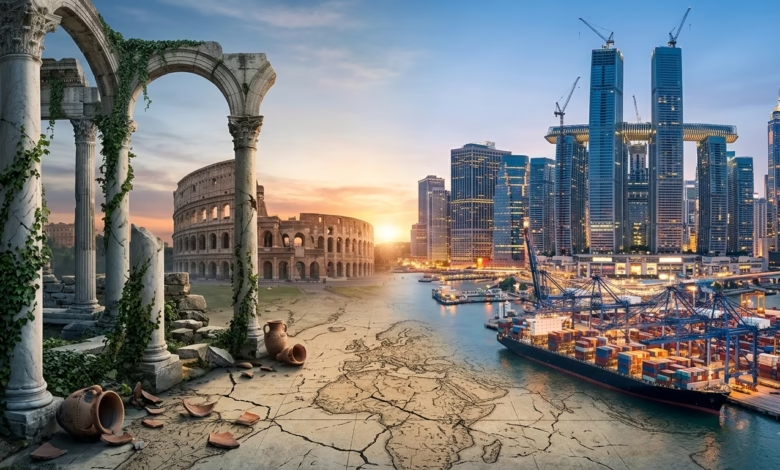
In The Midst Of Major Transformations Witnessed By The Contemporary International System, Troubling Questions Escalated Surrounding The Fate Of Western Hegemony. Reflecting On The Rapid Rise Of Peripheral Powers, And The Strategic Role Played By Major Powers Such As China In The Future Of This System, Has Become A Primary Concern For Academic Circles, International Relations Theorists, And Decision-Makers Alike. In This Context, The Book “Why Empires Fall: Rome, America And The Future Of The West” By Researchers Peter Heather And John Rapley Offers An Innovative And Deep Analytical Approach. This Work Combines The Lens Of A Historian Specializing In The Late Roman Empire And A Political Economy Expert Interested In Globalization In The Developing World, To Present Together A Coherent Theory On The Life Cycle Of Empires And How They Decline.
The Book Begins By Surveying The Current Landscape Of The West, Pointing Out That Between 1800 And The Turn Of The Current Millennium, The West Rose To Dominate Planet Earth Almost Absolutely. During These Two Centuries, The West Transformed From Being Merely A Single Player Among Several Actors In An Emerging Global Economy, Into A Mighty Power Producing Eight-Tenths Of Global Output. Income Levels In Western Nations Multiplied To Become Fifty Times Greater Than Their Counterparts In The Rest Of The World. This Overwhelming Economic Dominance Produced A Political, Cultural, And Social Reshaping Of The Entire Planet In The Image Of The West. The Nation-State Became The Primary Pillar Of Political Life, The English Language Replaced Others As The Language Of Global Commerce, While Western Universities Became A Mecca For Aspiring Intellectuals From All Over The World.
However, Suddenly, It Seemed As Though The Wheel Of History Had Begun To Turn In Reverse. As The Great Recession In 2008 Transformed Into A State Of Sustained Stagnation, The West’s Share Of Global Output Dropped From 80 Percent To 60 Percent, And Continued To Fall. Real Wages Declined, Youth Unemployment Rates Rose, And Public Services Eroded Alongside A Massive Escalation In Debt. In Contrast, Other Models Began Gaining Increasing Influence On The Global Stage, Specifically The Strict Central Planning Of The Chinese State, Which Was Backed By An Economy That Achieved Over The Past Four Decades An Astonishing Annual Average Growth Exceeding 8 Percent, Meaning That Chinese Per Capita Income Multiplied Every Decade. This Stark Contrast Between Western Decline And The Strategic Rise Of Peripheral Powers Confronts Us With A Fundamental Question: Is This Western Decline Inevitable? And How Can It Be Understood In The Context Of The History Of Empires?
To Face This Question, The Authors Take Us Back To Roman History, But They Strongly Reject The Conventional Classical Narrative Formulated By The Famous Historian Edward Gibbon In His Seminal Book “The History Of The Decline And Fall Of The Roman Empire,” Published In 1776. Gibbon Argued That Rome Suffered From A Slow Internal Erosion As A Result Of Abandoning Its Civic-Military Virtues, Laxity Towards “Strangers” From Barbarian Immigrants, And The Effects Of The Christian Religion, Which Created “Idle Mouths” Draining The Vitality Of The Empire. This Narrative, As The Book Explains, Still Dominates Conservative Western Thought Today. Prominent Intellectuals Like Niall Ferguson Explicitly Compare The Cash Flows Of Immigrants To Europe’s Decline, Considering That Europe Is Losing Its Identity In Shopping Malls And Leaving Its Defenses To Collapse Just As Happened To Rome In The Early Fifth Century. Even In The Field Of Social Sciences And International Relations, We Find Echoes Of Gibbon In Writings Such As “Why Nations Fail” By Daron Acemoglu And James Robinson, Where Fall Is Attributed To The Decline Of Democratic Institutions In Favor Of Authoritarianism.
However, Stunning Developments In Archaeology And Modern Historical Studies Shatter This Gibbonian Narrative From Its Roots. In The 1950s, A French Archaeologist Discovered The Remains Of Prosperous Stone Rural Houses Belonging To Roman Peasants In Northern Syria, Built Between The Fourth And Sixth Centuries AD. According To Gibbon’s Model, Which Posited That Exorbitant Taxes Led To Field Abandonment, This Rural Prosperity Should Never Have Existed. In The 1970s And 1980s, The Study Of Broken Pottery Remains Across Thousands Of Miles Of Ancient Empire Territory Sparked A Genuine Revolution In Our Understanding Of The Roman Economy. Through Meticulous Surveying Of These Fragments Uncovered By Modern Plowing, It Became Clear That Rural Population Density, And Consequently Total Agricultural Output, Reached Their Peak Levels In The Fourth Century, On The Eve Of The Empire’s Political Collapse. In Other Words, Rome Did Not Fall Because Of Long-Term Internal Economic Deterioration; Rather, Its Western Half Collapsed Just A Few Decades After Reaching The Peak Of Its Real Economic Prosperity!
This Stunning Archaeological Conclusion Carries Deep Strategic Implications For The Future Of The West Today. In 1999, US President Bill Clinton Delivered A State Of The Union Address Filled With Boundless Optimism, Announcing An Era Of Endless Stability And Economic Growth, At A Time When The West Was Consuming Four-Fifths Of Global Production. Exactly Sixteen Centuries Earlier, Specifically On January 1, 399 AD, The Imperial Spokesman And Poet Claudian Delivered A Similar Speech Before The Senate In Rome, Celebrating Consul Flavius Manlius Theodorus, Announcing The Beginning Of A New “Golden Age” Dominated By Justice, Prosperity, And Equal Opportunities For The Industrious. Claudian’s Speech Today Might Seem Like Mere Political Flattery For A Regime Heading Toward An Abyss, For Just One Decade Later, The City Of Rome Was Sacked By Gothic Warriors Led By Alaric, And Soon The Roman West Disintegrated To Be Partitioned Among Barbarian Kings. However, Modern Archaeological Evidence Proves That Claudian Was Neither Deluded Nor Lying When He Spoke Of Economic Prosperity. The Fourth Century Was Indeed The Golden Age Of The Roman Economy, Just As 1999 Was The Peak Of Western Dominance.
So, If Internal Decay And Institutional Sluggishness Were Not The Cause Of The Fall, What Explains This Sudden Collapse At The Peak Of Power? Heather And Rapley Offer A Theoretical Alternative That Transcends Western-Centric Orientalist Views. They Propose The Idea That Empires Carry In The Very Seeds Of Their Economic Success The Factors Of Their Geopolitical Demise. Empires Begin Their Cycle As Mechanisms To Generate New Flows Of Wealth For The Benefit Of The Dominant Imperial Center. However, In The Context Of Achieving This Goal, They Necessarily Create New Wealth In The Conquered Provinces, And In The Surrounding Peripheral Regions (Those Peoples And Lands That Were Not Officially Colonized But Were Drawn Into Subordinate Economic Relations With The Emerging Center).
These Structural Economic Transformations Inevitably Entail Radical Political Consequences. Any Concentration Or Flow Of Wealth Serves As The Fundamental Building Blocks For Constructing New Political Power For Actors Capable Of Harnessing And Exploiting It. As A Direct Result, Large-Scale Economic Development In The Periphery Triggers A Political Process That Will Ultimately Lead To Challenging The Dominance Of The Central Imperial Power That Initiated The Original Cycle. This Economic And Political Logic Possesses Such Immense Power That A Degree Of Relative Decline For The Old Imperial Center Becomes An Inevitable Mandate.
Based On This Vision, The Illusion That It Is Possible To “Make The West Great Again” Or Revive Empire Glories Through Protectionist And Isolationist Measures Is Merely A Dangerous Mirage. For The West’s Exercise Of Dominance Over The Past Few Centuries Is The Very Phenomenon That Led To Rearranging The Basic Building Blocks Of Global Strategic Power Upon Which That “Greatness” Was Based In The First Place. The Wealth, Knowledge, And Technology Transferred To The Peripheries Have Been Absorbed And Developed To Become The Foundation For Competing Powers Capable Of Reshaping Balances Of International Structure. Attempts To Directly And Unthinkingly Reverse This Relative Decline, Such As The Rise Of Extreme Nationalist Movements, Or Building Walls And Isolating From The World, Only Risk Accelerating And Deepening The Structural Fall.
Despite This Inevitable Fate Of Relative Center Decline, The Overall Outcome Need Not Be A Catastrophic Civilizational Collapse, Nor Does It Necessarily Mean Sliding Toward Widespread Absolute Economic Deterioration Or Destructive Social And Political Disintegration. As The History Of The Roman World Confirms, Empires Can Respond To This Adjustment Process With A Range Of Possible Measures And Options, Ranging From Highly Destructive Options To More Creative And Innovative Responses. The Modern West Stands Today Near The Beginning Of Its Own Adjustment Process; While The Roman World Lived Its Full Experience Long Ago, And Precisely Here Manifests The Great Importance Of The Methodological Comparison Formulated By This Book. The Clear Evolutionary Trajectories In The Modern West Become Sharply And Strikingly Evident When Placed Side By Side With The Long-Term Changes Observable In How The Roman Empire Evolved And Then Disintegrated In The Half-Millennium Following The Birth Of Christ.
To Maximize Benefit From This Historical Comparison, The Book Is Divided Into Two Complementary Parts. In The First Part, Roman History Is Used As A Mirror To Understand The Rise Of The Modern West. This Part Reveals An Astonishing Degree Of Similarity Between The Internal Economic And Political Evolution Of The Modern West Over The Past Few Centuries, And The Evolution Of The Roman Empire. It Analyzes The Deep Reasons Why The West’s Astonishing Dominance Over The Global Economy Has Declined Significantly, And The Reason Why This Decline Is Inevitable To Continue. This Process, According To The Book, Was Not A Flaw In The System, But Rather A Natural Product Of The Imperial Center’s Success In Integrating Peripheries Into Its Own Trade And Economic Networks. For The Roman Empire Brought The Stability Represented By “Pax Romana”, Providing Immense Investment Conditions That Allowed Inhabitants Of Provinces And Peripheries To Grow Their Wealth And Compete With Italy Itself Economically And Politically.
In Parallel, We Find That The Modern Western Empire, Born From The Womb Of Capitalist And Colonial Expansion, Followed Almost The Exact Same Path. From The Northern Italian Cities In The Middle Ages As Trade Pioneers, Passing Through Portugal, Spain, Netherlands, And Britain, All The Way To The United States Of America, The Engine Of Growth Always Lay In The Continuous Search For New Markets And New Sources Of Raw Materials. This Continuous Outward Push Led To Integrating Vast Regions Of The Planet Into The Western Economic System. Just As Gaulish Tribes And Barbarians Surrounding Rhine Borders Flourished Through Interaction With Roman Legions Stationed There And Meeting Their Immense Consumer Needs, Modern Peripheries Benefited From Their Integration Into Trade Networks Built By The West.
The Authors Present Vivid Examples Of This Rise From The Peripheries, Highlighting How New Elites Were Formed Able To Utilize Their Wealth To Enhance Their Cultural And Political Influence. In Ancient Rome, Regional Families Emerged Such As The “Ausonius” Family From The Bordeaux Region, Which Exploited Agricultural Prosperity To Gain Roman Education And Subsequently Occupy The Highest Positions In The Roman Court. In Exactly Similar Fashion, The Story Of The “Tata” Family In India Crystallizes, Where “Jamsetji Tata” Exploited India’s Integration Into The British Imperial Trade Network, And Benefited From Global Cotton Crises, To Build A Massive Industrial And Commercial Empire In Bombay. This Repeated Pattern, From Ausonius In Gaul To Tata In India, Demonstrates That Imperial Economic Mechanisms Inevitably Strengthen Peripheral Power At The Expense Of The Old Center And Push The Entire System Toward Comprehensive Transformations.
To Understand This Dynamic In Greater Depth, Analysis Takes Us Back To Roman Frontiers, Specifically To The Empire’s Relationship With What It Called “Barbarians” Outside The Rhine And Danube Borders. The Simplistic Narrative Depicts These Barbarians As Primitive Savage Tribes Inundating Dilapidated Roman Borders. However, Careful Reading Presented By “Why Empires Fall” Reveals A Completely Different Reality. For The Roman Empire, With Its Massive Economic And Military Engine, Unintentionally Acted As The Single Greatest Catalyst For Development And Modernization In The Regions Of These “Barbarians”. Dense Roman Military Presence On Borders Created Immense Economic Demand, Driving Neighboring Germanic Tribes To Transform From Simple Pastoral Communities Into Organized Agricultural And Commercial Societies To Meet The Needs Of Roman Legions For Food, Raw Materials, And Slaves.
This Continuous Economic And Diplomatic Friction Led To Transferring Technology, Wealth, Organizational Expertise, And Even Roman Military Tactics To These Tribes. Over Time, Rome Was No Longer Facing Small, Scattered Tribal Groups; Rather, It Found Itself Face To Face With Major, Well-Armed Political Confederations Possessing Growing Political Awareness Of Their Capabilities, Aspiring To Obtain A Share Of Wealth And Power Monopolized By The Center. When The Advance Of Huns From The East Pushed These Germanic Confederations Toward The Roman Interior In The Late Fourth And Early Fifth Centuries, These New Immigrants Were Not Seeking To Destroy Rome; Rather, They Were Seeking Integration Into Its System And Obtaining Lands And Political Standing Commensurate With Their New Power. Roman Refusal To Absorb These Rising Powers, And Obstinacy In Preserving Traditional Elite Privileges, Is What Ultimately Led To The Political Disintegration Of The Center And Collapse Of The Western Empire.
And With A Leap Through Time To The Modern Era, We Find That The Economic System Engineered By The West, Led By The United States Of America After World War II, Unleashed Astonishingly Similar Dynamics. Since The Bretton Woods Agreement, The West Sought To Build An Open Global Economic System Ensuring Raw Materials Flowed To Its Factories And Opening New Markets For Its Products. This System Achieved Unparalleled Success In Its First Decades, Consolidating Absolute Western Dominance. However, As The Pace Of Neoliberal Globalization Accelerated In The Late Twentieth Century, Imperial Mechanisms Began Operating For The Benefit Of Peripheries. Continuous Search For Profits And Reducing Production Costs Drove Western Corporations To Transfer Technology And Heavy Industrial Investments To Developing Countries, Especially In Asia.
Just As Germanic Tribes Benefited From Friction With The Roman Economy, Peripheral Countries In The Modern System Benefited From This Massive Inflow Of Capital And Technology. This Manifested Strikingly In The Astonishing Chinese Economic Rise, As Well As Growth Of Other Powers Such As India, Southeast Asian Nations, And Brazil. These Nations Exploited Their Integration Into The US-Led Economic System To Build Solid Industrial Bases, Develop Their Technological Capabilities, And Accumulate Massive Financial Reserves. As A Result, The Structure Of The Global Economy Changed Radically, Where The West No Longer Monopolized Industrial Production Or Technological Innovation, And Economic Centers Of Gravity Gradually Shifted Toward East And South.
This Shift In Global Wealth Distribution Cannot Pass Without Deep Geopolitical And Political Consequences, Which Is What We Live Today In Contemporary International System. For Countries That Accumulated Massive Wealth Thanks To Their Integration Into Globalization Networks No Longer Accept Remaining In A Position Of Political And Strategic Subordination To The Western Center. They Are Seeking Now, With Full Determination, To Reshape Global Game Rules, Build Parallel Institutions, And Secure Strategic Spheres Of Influence Commensurate With Their New Economic Weight. This Inevitable Rise Of Peripheries Places The West Before An Existential Challenge; It No Longer Possesses Ability To Unilaterally Dictate Its Terms, And Has Become Forced To Deal With An International Environment Characterized By Increasing Multipolarity And Immense Complexities.
What Complexifies The Scene Further For The Modern Western Center Is That This Relative Decline In Global Influence Coincides With Serious Internal Cracks, Reminding Us Also Of Roman Elite Crises In Its Final Days. For While Globalization Was Enriching Global Peripheries And Increasing Profits Of Transnational Western Corporations, It Was At The Same Time Undermining Economic Foundations Of Middle And Working Classes Within Western Nations Themselves. Decline Of Domestic Manufacturing, Stagnation Of Real Wages, And Erosion Of Social Safety Nets Created A State Of Sharp Political Polarization And Popular Anger, Manifested In Rise Of Populist Movements, Protectionist Policies, And Isolationist Tendencies.
This Internal Political Fragmentation Makes It Difficult For Western Nations To Formulate A Coherent Long-Term Strategy To Deal With The Strategic Rise Of Peripheral Powers. Instead Of Adapting Flexibly To New International Realities, We Find Growing Tendency Toward Short-Term Solutions, Or Desperate Attempts To Turn Back The Clock Through Trade Wars Or Traditional Containment Policies That May Not Suit The Deep Economic Entanglement Of Today’s World.
So, We Stand Before A Complex Scene Where Mechanisms Of Historical Western Economic Success Work To Dismantle Its Geopolitical Dominance, While Internal Economic Shifts Undermine Its Capacity For Effective Response. However, Does This Structural Similarity With Rome Mean That A Catastrophic End For The West Has Become Inevitable? Or Are There Alternative Paths And Strategic Responses That Could Spare The Current International System The Chaos Of Total Collapse?
The Crisis Of Empires In Stages Of Relative Decline Casts Its Shadow Over All Central Policies, As This Decline Does Not Occur In A Sudden Vacuum, But Passes Through A Long Trajectory Of Adjustment Attempts And Strategic Responses Formulated By Ruling Elites To Face Dual Pressures Stemming From Rise Of Peripheries And Erosion Of Internal Front. Roman History, When Analyzed Through Deep Political Economy Lens Provided By “Why Empires Fall”, Reveals That Late Empire Did Not Stand Idly Before Structural Challenges, But Devised Radical Financial, Military, And Institutional Solutions To Manage Growing Pressures. Yet The Great Historical Paradox Lies In That Very Nature Of These Adjustments Was Reshaping Center Of Imperial Gravity And Accelerating Handover Of Reins To Rising Forces In Peripheries.
The First Of These Mechanisms Manifests In Financial And Monetary Dimension Of Dominance Management. When Roman Conquests Ceased And Spoils Of Outward Expansion Vanished, The Imperial State Found Itself Facing Heavy Management And Maintenance Costs For Vast Borders And Huge Administrative Apparatus. To Face This Worsening Financial Deficit, Roman Authorities In Third Century AD Resort To Debasing Silver Content In Official Imperial Currency, Leading To Successive Waves Of Hyperinflation And Erosion Of Confidence In Roman Specie Intermediary For Commerce. This Monetary Deterioration Forced State To Rely Directly On In-Kind Tax Collections And Forced Labor Services, Imposing Crushing Burdens On Peasants And Productive Classes In Center, While Allowing Peripheral Regions With Subsistence Economies Larger Margin To Hedge And Achieve Local Flourishing Away From Imperial Currency Dominance.
In Modern Counterpart, We Find Deep Similarity In How West, Specifically United States, Exploited International Monetary Dominance As Tool To Manage Global Influence And Absorb Financial Deficits. Since Ending Dollar Gold Backing In 1970s, West Was Able To Fund Its Escalating Consumption, Deficit Trade Balances, And Huge Military Spending By Issuing Benchmark Currency Sought By Entire World. But This “Exorbitant Privilege” Began Colliding With New Reality Of Global Economy; For When Rising Peripheries Become Primary Source Of Material Production, Advanced Technology, And Real Goods, Excessive Reliance On Money Printing And Swelling Sovereign Debts Creates Structural Vulnerability In Heart Of Western Financial System. Growing Tendencies Today Among Rising Bloc Nations Toward Using Local Currencies In International Trade And Reducing Dollar Reserves Represents Modern Equivalent To Declining Reliance On Roman Imperial Currency, Reducing Center’s Ability To Cheaply Finance Its Dominance At Expense Of Rest Of World.
As For Second Mechanism Of Adjustment, It Manifests In Military Strategy And Frontier Management. Late Rome Realized Its Inability To Protect Its Extended Borders Through Its Traditional Italian Army Alone, Relying Increasingly On Policy Of Absorbing Neighboring Tribes And Enlisting Them As Allied Fighting Forces Under Command Of Their Local Chieftains To Protect Empire Territory In Exchange For Money And Land. This Policy Solved Manpower Shortage Dilemma In Short Term, But Led In Long Term To Transferring Advanced Military Doctrine And Organizational Tactics To Peripheral Forces Themselves. With Growing Military Strength Of These New Allies, They Transformed From Border Guards Into Kingmakers Inside Roman Court, Imposing Political And Territorial Demands That Ultimately Led To Carving Out Vast Portions Of Roman West And Transforming Them Into Independent Kingdoms Under Nominal Allegiance Cover To Emperor.
In This Context, Modern Concept Of Military Attrition And Reliance On Proxies Shows Clear Parallel With Roman Experience. Western Powers, In Light Of Escalating Military Exhaustion And Domestic Popular Rejection Of Long-Term Direct Wars, Were Forced Into Intensive Reliance On Regional Allies And Dependent Forces To Maintain Stability In Many Peripheral Regions. Although This Approach Reduces Direct Cost On Center, It Grants Rising Regional Powers Considerable Margin To Strengthen Their Own Military Capabilities, And Formulate Independent Strategic Agendas That May Conflict In Future With Direct Western Interests. Transferring Advanced Military Technology And Enhancing Defense Capabilities Of Peripheries Ends Up, Exactly As Happened In Rome, Making System Peripheries More Able To Impose Their Terms And Weaken Absolute Center Hegemony.
Third Mechanism Appears In Institutional Rigidity And Inability To Absorb New Elites. Roman Empire In Third And Fourth Centuries Showed Exceptional Organizational Flexibility Through Radical Reforms Introduced By Emperors Diocletian And Constantine, Where Administration Was Divided Between East And West, Administrative Capitals Transferred To Borders Near Conflict Regions, And Provincial Elites Integrated Into Governance Bureaucracy. However, This Adjustment, Despite Succeeding In Prolonging Empire Life, Led To Permanently Shifting Political And Economic Center Of Gravity Away From Rome Itself In Favor Of Constantinople And More Flourishing Peripheral Cities, Making Roman West In End An Easily Shattered Administrative Shell When Crises Intensified.
On The Contrary, Governing Institutions Of Modern International System, Established By West Following World War II Such As UN Security Council And Bretton Woods Institutions, Suffer From Acute Structural Rigidity And Refusal To Undertake Real Reforms Reflecting New Distribution Of Global Power. Western Elites’ Refusal To Fairly Integrate Rising Powers In East And South Into Global Decision-Making Mechanisms Has Driven Latter Powers To Accelerate Establishment Of Their Parallel Institutions And Independent Financial And Development Frameworks. This Western Institutional Rigidity, Instead Of Protecting Existing System, Acts As Catalyst For Segmenting International System And Rebuilding Global Rules Away From Unilateral Western Hegemony.
Comparing These Adjustment Mechanisms Clearly Shows That Western Center Today Undergoes Complex And Harsh Reset Process. Decline Is Not Sudden Collapse But Ongoing Process Of Erosion And Adjustment Interspersed With Strategic Choices That May Spare World Chaos Or Push It Toward Destructive Confrontations. In Next Part Of This Analytical Reading, We Will Move To Projecting Future Outcomes And Proposed Alternative Models For Shape Of Coming International System, And How West Can Adapt To Post-Hegemony Reality Without Sliding Into Comprehensive Clashes.
With Full Understanding Of Financial, Military, And Institutional Adjustment Mechanisms Adopted By Empires To Face Decline, “Why Empires Fall” Leads Us To A More Sensitive Stage In This Historical Trajectory; Namely Stage Of Structural Decay Of Unilateral Hegemony And Shaping Features Of Multipolar International System. Relative Decline Of Center Does Not Necessarily Mean Absence Of Order Or Immediate Slide Toward Absolute Chaos, But Indicates Beginning Of Complex Transitional Phase Where Maps Of Power And Influence Are Redrawn. While Late Rome Underwent This Phase Through Gradual Concession Of Its Western Provinces In Favor Of Emerging Germanic Kingdoms, Modern West Stands Today Before Fact That Unilateral Models For Managing World Are No Longer Capable Of Absorbing Existing Geopolitical And Economic Complexities.
At Heart Of This Structural Transformation Stands Strategic Rise Of China As Most Prominent Embodiment Of Phenomenon Of Peripheries Transforming Into Strategic Competitors To Imperial Center. Unlike Historical Aggressor Powers That Sought To Attack Center From Outside, China – And Rest Of Rising Peripheral Nations – Grew And Developed From Within Networks Of Global Economic System Built By West Itself. Since Deng Xiaoping Reforms And Beijing Joining World Trade Organization, Chinese State Managed Combination Between Guided Central Planning And Attracting Western Investments, Successfully Oscillating Between Harnessing Market Mechanisms And Developing Own Capabilities. This Rise Was Not Mere Accumulation Of Material Wealth, But Transformed According To Structural Logic Of International Realism Into Comprehensive Strategic Capability Enabling China To Openly Challenge Rules Of Colonial And Post-Colonial Game Formulated By West For Its Advantage.
This Challenge Was Not Limited To Economic Or Military Aspect Alone, But Extended To Include Structural And Constructive Dimension Of International System. For While West Relied On Spreading Western Liberalism And Democracy Values As Global Normative Framework, Peripheral Forces Began Building Parallel Narratives And Institutions Emphasizing State Sovereignty, Non-Interference In Internal Affairs, And Right To Independent Development. Frameworks Like BRICS Bloc, Shanghai Cooperation Organization, And Belt And Road Initiative Appear As Living Examples Of How Peripheral Forces Establish New Regional And International Institutional Networks Not Subject To Western Center Dictates. These Developments Do Not Represent Mere Passing Alliances, But Are Expression Of Structural Transformation In How Global South Countries Interact With Concept Of International Power And Legitimacy.
Before This Changing Reality, Danger Of Current Western Attempts Calling For Economic “Decoupling” Or “Reshoring” Policies And Heavy Tariff Protectionism Manifests. These Containment Policies Remind Us Of Late Roman Calculations That Attempted To Isolate Empire From Its Germanic Surroundings After Long Decades Of Economic Integration. Just As Roman History Proved That Severing Ties With Peripheries After Intertwining Interests Leads To Opposite Results And Accelerated Center Disintegration, Complex Modern Global Economy Built On Integrated Supply Chains Guarantees That Any Western Attempt To Impose Isolation On Major Powers Like China Will Have Self-Inflicted Costs On Western Center Far Exceeding Its Strategic Returns. Deep Economic Entanglement Has Become Structural Reality Difficult To Dismantle Without Sacrificing Internal Economic Stability Of West Itself.
Thus The West Finds Itself Suspended Between Desire To Maintain Illusions Of Previous Unilateral Hegemony, And Stern Reality Forcing It To Accept A Multipolar World And Coexist With Competing Forces Possessing Same Tools Of Influence. Studying Rome Experience Does Not Only Grant Us Understanding Of Reasons For Decline, But Also Places Us Before Available Strategic Options To Deal With This Decline Without Passing Through Major Geopolitical Catastrophes. In Next Installment, We Will Pose Most Important Philosophical And Strategic Question: How Can Imperial Center Manage Its Relative Decline With Flexibility, And What Are Possible Scenarios For Future Of West And World In Post-Hegemony Era?
The Great Danger Facing The Modern West Lies In Psychological And Political Behavior Of Ruling Elites When Colliding With Reality Of Receding Power. Roman History Clearly Shows That Empires, When Realizing Loss Of Material Superiority, Often Tend Toward Denying Reality And Militarizing Their Foreign Policy, Considering Any Competition Or Rise Of Peripheries As Existential Threat That Must Be Crushed. However, This Response Based On Imperial Panic Often Accelerates Fall Instead Of Delaying It; For It Diverts Center’s Limited Resources Toward Costly Foreign Adventures, And Pushes Rising Peripheral Powers Into Defense Coalitions And Alliances To Protect Their Security And Gains. Option Of “Managing Decline” Requires Strategic Courage Recognizing That Power Has Become Distributed More Fairly And Moderately On Global Level, And That Maintaining Internal Prosperity Of Center Requires Partnership And Adaptation, Not Hegemony And Dictation.
When Exploring Possible Scenarios For Future Of International System In Post-Western Hegemony Era, Analysis Of Book Presents Two Primary Paths. First Path, Which Is Dark Path, Lies In World Sliding Toward State Of Harsh International Fragmentation And Proxy Wars, Where West Fiercely Seeks To Impose Severe Containment On China And Global South Countries, While Latter Responds By Establishing Closed Blocs And Completely Parallel Financial Systems. This Scenario, Based On Economic Severance And Politicization Of Supply Chains, Will Reproduce Climate Of Economic Crises, High Inflation, And Stagnation, Evoking Turmoil Phenomena Witnessed In Late Roman Era Upon Disintegration Of Mediterranean Trade Networks.
As For Second Path, Which Is More Rational And Sustainable, It Manifests In Formulating A “New International Compact” Characterized By Flexible Multipolarity. In This Scenario, West Accepts Its Role As Pivotal Pole Among Several Major Poles, Relinquishing Claim Of Unilateral Hegemony And Formulating Global Rules Alone, In Exchange For Involving Rising Powers In Managing Governing International Institutions And Reshaping Their Financial And Political Structure. Peaceful Adaptation To New Global Balance Allows West To Focus On Reforming Its Internal Economic And Social Structure, Rebuilding Middle Class, And Developing Infrastructure, Which Are Fields Neglected For Decades In Favor Of Funding External Expansion And Global Hegemony.
The Most Important Lesson Extracted By Both Researchers From Comparing Rome To America Is Summarized In That Fall Of Empires Is Not A Biological Or Moral Inevitability, But Is Result Of Structural Interaction Between Success Of Center And Rise Of Peripheries. West Succeeded In Globalizing The World, And This Very Success Was The Arrow That Redrew Geopolitical Map Of Twenty-First Century. West Today Does Not Face Barbarians At The Walls Wishing To Demolish Its Civilization, But Faces Societies And Peoples That Learned From It And Entered Field Of Global Competition On Its Terms And Tools. Real Remaining Bet Is Not In How To Prevent These Peoples From Rising, But In Extent Of West’s Ability To Adapt To A World Where It Is No Longer Sole Center, But A Partner In A Wider, More Complex, And Multipolar International Space.