

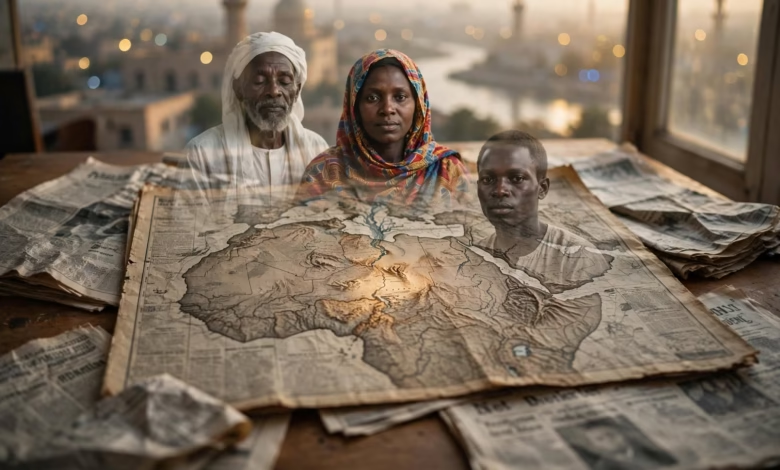
In The Book “Bounds Of Blackness: African Americans, Sudan, And The Politics Of Solidarity” By Author And Historian Christopher Tunsil. A Deep Exploration Into The Heart Of One Of The Most Complex And Enigmatic Relationships In The History Of The African Diaspora: The Relationship Of African Americans With Modern Sudan. Across The Pages Of This Book, Tunsil Takes Us On A Journey Spanning More Than A Century, To Explore How The Interactions Of African Americans With This Country Located In The Nile Valley Shaped Their Own Concept Of “Blackness”, Self-Awareness, And Transnational Solidarity.
The Author Opens His Work With A Highly Significant Historical Paradox, Dating Back To March 13, 1957. On That Day, E. Frederic Morrow, Who Is Considered The First African American Executive Official To Work In The White House, Arrived In The Sudanese Capital, Khartoum, As Part Of The Delegation Of U.S. Vice President Richard Nixon. In His Memoirs, Morrow Described The Sudanese As “A Very Reserved People”, Noting That They “Have Been Free For Only One Year… And Wear It With Dignity And A Deep Sense Of Responsibility”. Despite This Positive Description, Morrow’s Entries About Sudan Were Extremely Brief And Limited, Going No Further Than Describing The Accommodation Overlooking The Nile And A Working Dinner With The Sudanese Prime Minister.
The Striking Paradox Manifests When We Compare This Relative Coolness With What Morrow Wrote About His Visit To Ghana On The Same Trip. Morrow Described With Great Enthusiasm “The Great Excitement In The Negro World Over The Birth Of The New State Of Ghana”, Recording Precise Details About The Celebrations, The Massive Stadium, His Motorcade, And Even His Chance Meeting With Dr. Martin Luther King Jr. Here, Tunsil Poses A Fundamental Question That Represents One Of The Main Pillars Of The Book: Why Did Ghana Receive All This Momentum And Attention From The African Diaspora, While Sudan Was Largely Ignored, Even Though It Officially Inaugurated The Era Of Decolonization In Sub-Saharan Africa By Gaining Independence On January 1, 1956?. Historian Patrick Manning Indicates That Sudan’s Independence Did Not Receive Attention From The African Diaspora Perhaps Because It Was Considered “An Exception And Not The Rule”, While Ghana’s Independence In 1957 Was Considered A Signal For The Fall Of Racist And Colonial Regimes.
To Answer This Question, The Book Brings Us To The Deep Roots Of The Racial And Geographic Classifications Imposed By The History Of The Transatlantic Slave Trade. This Tragic Trade Contributed To “Africanizing” Certain Concepts And Creating Conceptual Barriers, Where The Sahara Desert Came To Be Seen As A “Civilizational Barrier” Separating What Is Called “Negro Africa” Or “True Africa” In The South, From The North. Tunsil Evokes The Writings Of The Philosopher Hegel As A Striking Example Of This Division, As Hegel Considered “True Africa” To Be The Lands From Which Slaves Were Brought, While He Classified Northeastern Africa As The “Land Of The Nile” And Linked It To Asia, And Considered North Africa To Be “European Africa”.
In Facing This Historical Erasure, Tunsil Highlights The Vision Of The Prominent Sociologist And Thinker W. E. B. Du Bois, Who Criticized In His 1939 Book This Arbitrary Separation Of The Nile Valley From African History. Du Bois Emphasized That What Was Known As Anglo-Egyptian Sudan Is “Par Excellence The Land Of The Black Race Since Prehistoric Times”, Yet It Is Left As A “Commons Historical Area (Owned By No One), Viewed Sometimes As Arab, Sometimes As Egyptian, And Always As Unworthy Of Rigorous Investigation”. This Historical Marginalization Makes Sudan An Ideal Case Study For Understanding How The “Bounds Of Blackness” Are Constructed And Deconstructed.
The Review Delves Deep Into Tunsil’s Detail Of The Complex Dual Sudanese Identity, Which Oscillates Between Arab And African Heritages. In Northern Sudan, The Intermarriage Of Incoming Arab Traders With The Indigenous Population Produced An Ethically Mixed (Afro-Arab) Society. The Book Quotes Researcher Francis Deng’s Observation That The Racial Features Resulting From This Mixing Reflect The Features Of African Groups Extending Across The Continent From Somalia To Senegal. However, Unlike Those Countries Whose Inhabitants Define Themselves As African, Deng Points Out That Many Northern Sudanese Not Only Classify Themselves As Arab, But Strongly Deny The African Elements In Their Physical Features. This Bias Toward “Arabism” Is Not Merely A Cultural Choice, But The Result Of A Historical Process In Which Races And Religions Were Hierarchically Arranged, Where Arabs And Muslims Were Viewed As Free Masters, While Negroes And Blacks Were Targeted As Legitimate Victims Of Slavery.
This Complex Dynamic Poses Urgent Questions That The Book Seeks To Answer: What Were The Factors That Determined When African Americans Classified Sudanese As Black, Arab, Or Both?. And How Did Racial Solidarity And Pan-Africanism Change As Africa Transitioned From European Colonialism To Independence?. These Questions Gain Double Importance When Linked To Contemporary Movements, Such As The “Black Lives Matter” Movement. Anthropologist Crystal Strong Notes Africa’s Noticeable Absence From The Analyses And Concerns Of This Movement, Calling For A Deeper Engagement With Contemporary Struggles In Africa. Tunsil Courageously Asks: How Did African Americans Integrate Sudan And South Sudan Into The Black Lives Matter Movement? And Why Were These Two Countries Deprived Of This Integration At Other Times?.
Tunsil’s Methodology In This Book Goes Beyond Familiar Historical Metaphors. While African Americans Were Historically Drawn To Ancient Nubia (The Kingdom Of Kush) As A Center Of Power And Civilization Before The Start Of The Transatlantic Slave Trade, Where Nineteenth-Century African American Writers Were Inspired By The Glories Of The “Black Pharaohs” To Prove Their Right To Civilization And Culture, Tunsil Proves That Their Interaction Was Not Limited To The Ancient Past. African Americans Did Not Look At Sudan Through A Zero-Sum Equation (Either Evoking The Past Or Connecting With The Present), But Rather Did Both, Refusing To Confine Africa To A Noble Past While Contemporary Developments Called To Them.
By Reviewing The Period Extending From The Early Twentieth Century To The Presidency Of Barack Obama, The Book Reveals That The Engagement Of Black Americans With Modern Sudan Included Literary, Cultural, And Diplomatic Endeavors That Played A Pivotal Role In Shaping The Beginnings Of Independence In Sudan And South Sudan. The Author Touches Upon Prominent And Diverse Figures, From Booker T. Washington, To Eslanda Robeson, Malcolm X, And Louis Farrakhan, Reaching Diplomats Like Susan Rice And Susan Page. He Stresses That Racial Solidarity Was Volatile; During The Anglo-Egyptian Condominium Period, Black American Newspapers Depicted Sudanese As Black Brothers Suffering Under State Oppression Based On Race. But, After Independence In 1956 And The Outbreak Of Civil Wars, The Discourse Shifted To Depict Northern Arabs As Oppressors And Southern Blacks As Oppressed. These Shifts Make Sudan An Ideal Model For Studying The Extent Of Flexibility And Temperament Of Transnational “Racial Solidarity”.
To Understand This Complex Tapestry, Tunsil Relies Primarily On The Archives Of The Black American Press, Such As The “Pittsburgh Courier” And The “Chicago Defender”, Considering Them The Most Important Gauge For The Opinions Of The African American Street. He Also Leans On The Concept Of “Blackness” As A Socio-Historical Construction Rather Than A Biological One, Citing Algernon Austin, Who Confirms That Humans Are The Ones Who Make Races, And That American Racial Classifications Often Ignore Physical Appearance When It Conflicts With The Required Social Organization. Consequently, The Meaning Of Being Black, White, Or Brown Changes Across Time And Place.
In The Post-Reconstruction Era Context In The United States, Blacks Faced Harsh Conditions And Difficult Choices To Determine The Path Of Their Revival. While Thinkers Like W. E. B. Du Bois Focused On Academic Achievement, And Marcus Garvey Was Associated With The Back-To-Africa Movement, Booker T. Washington Adopted A Pragmatic Approach Based On Vocational Training And Economic Self-Reliance. Washington’s Vision Extended To The International Arena, Where He Collaborated With Influential Figures Such As U.S. President Theodore Roosevelt To Encourage The Migration Of Black Americans Or The Transfer Of Their Expertise To African Lands, Specifically Toward The Region That Was Known As Sudan.
In 1905, Under The Anglo-Egyptian Condominium Rule Of Sudan, Washington Sponsored The Sending Of A Mission Of Graduates From His Institute There. The Stated Goal Was To Transfer Agricultural Expertise, Specifically In Cotton Cultivation, To Those Vast Lands. For Washington, This Project Represented A Golden Opportunity To Prove The Competence And Ability Of African Americans To Contribute To The Development Of The Mother Continent, And To Expand The Tuskegee Model To Become A Global Model. He Saw In This Project A Means To Elevate The Status Of The Black Race On The International Stage, To Demonstrate To The White World That Blacks Are Capable Of Complex Management And Production.
However, Tunsil, With The Eye Of A Critical Historian Who Is Not Content With Heroic Narratives, Dives Beneath The Surface To Raise Thorny Questions About The Nature Of This Interaction. The Book Explains How Booker T. Washington’s Efforts Were Accompanied By Total Disregard, And Even Strategic Blindness, Toward The Local Sudanese Context. Tunsil Points Out That Washington Did Not Leave In His Correspondence Or Archive Any Indication Showing His Interest In Or Even Inquiry About The Interests And Concerns Of The Sudanese People Themselves. He Did Not Take Into Account The Enormous Diversity Among Sudanese In Terms Of Geography, Languages, And Religious Traditions, Let Alone The History Of Forced Migrations. The Tuskegee Mission Treated Sudan As If It Were A Blank Canvas Upon Which American Aspirations Could Be Painted, Without Any Attempt To Understand The Complexities Of Local Society.
The Paradox Highlighted By The Book Manifests In Washington’s And His Envoys’ Ignorance Of The Reality Of The Regional Slave Trade That Was Still Practiced Under The Eyes Of The British And Egyptian Administration. It Is A Matter Of Sorrow And Contemplation, As Tunsil Sees It, That Descendants Of Enslaved People In The Americas Participated In A Project Led By Imperialist Powers In A Region Still Suffering From The Weight Of Enslavement And Marginalization. The Economic Empowerment Aspirations Of African Americans Aligned With The Interests Of The British Empire In Exploiting Sudanese Lands, Placing Us Before A Complex Picture In Which Transnational Solidarity Is Not Always Innocent, But May Become Intentionally Or Unintentionally Entangled In An Exploitative Colonial System.
The Author Moves Us In The Second Chapter To Another Arena Of Interaction, Which Is The Cultural And Media Arena In The First Half Of The Twentieth Century. Tunsil Explores How African American Writers, Artists, And Journalists Interacted With Sudan, And How They Used Their Platforms To Paint A Picture Of This Country In The Black American Imagination. At This Stage, The “Bounds Of Blackness” Began To Take Shape And Solidify Through Coverage In The Black Press.
Tunsil Points Out That African American Journalists And Intellectuals Relied Heavily On Physical Characteristics And Outer Appearance (Phenotype) Of Sudanese To Confirm The Bond Of Kinship And Belonging. They Saw In The Dark Faces Of Some Sudanese A Reflection Of Themselves, And Used This Physical Resemblance As Conclusive Evidence Of The Unity Of Race and Destiny. This Visual Connection Was A Powerful Tool For Creating Emotional Solidarity That Transcended Borders.
In This Context, Scholars Such As Keisha N. Blain And James Meriwether Argue That Black Internationalism In The Early Twentieth Century Aimed To Create A New Racial Consciousness and A Commitment To Global Liberation. But What Distinguishes Tunsil’s Approach Is His Highlighting Of The Contradictions Within This Movement. Instead Of Solidarity With Sudan Being Built On A Mutual Understanding Of Needs, American Discourse Tended All Too Often To Downplay The Actual Interests Of Sudanese Based On Their Linguistic And Spiritual Differences.
Furthermore, The Second Chapter Explains How The Black Press Viewed Political Dynamics Within Sudan During The Colonial Period. African American Journalists Tended To Construct A Decisive Binary Vision: Indigenous African Subjects In Sudan On One Side, And Arab-Egyptian Elites On The Other Side. Egyptians And Arabs Were Often Viewed As A Dominant Force Oppressing Dark-Skinned Sudanese Inhabitants. This Conception Replicated The American Racial Binary (White/Black, Oppressor/Oppressed) And Forcibly Projecting It Onto The Reality Of The Nile Valley, Which Is Characterized By Ethnic, Cultural, And Religious Intertwinings Far More Complex Than These Strict Divisions.
This Simplified View Led To Fixing Labels Like “Arab” As Fixed And Rigid Identity Markers, Ignoring How Concepts Of Identity Were Fluctuating In Sudan, Changing And Evolving Based On Aspirations For Liberation And Afro-Asian Solidarity. Through This Deep Analysis, Tunsil Challenges Academics And Readers To Reconsider The Terminology Used In Solidarity Studies, Emphasizing The Necessity Of Absorbing Local Complexity Rather Than Imposing Ready-Made Templates.
The Author Devotes Chapters Three And Four Of His Book To Media Coverage And Political Positions Within The African American Community Regarding The Nascent Sudanese Conflict. Before 1956, The Black American Press, Such As The “Chicago Defender” And The “Pittsburgh Courier”, Tended To View All Sudanese As Oppressed Subjects Under The Yoke Of European Colonialism, Making Them All Theoretically Included Under The Umbrella Of Anti-Imperialist Solidarity. However, With The Departure Of The Foreign Colonizer And The Emergence Of The Northern Elite As A Dominant Force Over The Organs Of The Modern State, And Their Imposition Of Arabization And Islamization Policies On The Culturally And Religiously Diverse South, American Solidarity Discourse Faced An Unprecedented Moral And Conceptual Dilemma.
Here, Tunsil Highlights How Black American Cultural And Journalistic Elites Deconstructed And Reconstructed Sudanese Identity To Fit American Epistemological Templates. The “Arab North” Was Gradually Excluded From The Circle Of Racial Solidarity, And Was Re-Portrayed As A New Colonial Force Oppressing The “Black South”. This Shift Was Not Merely A Natural Response To The Human Rights Violations Accompanying The Civil War, But Was, As Tunsil Argues, A Reflection Of A Complex Process Of “Conceptual Projection”. African Americans Projected The Strict Racial Binary Governing Their Society (White Oppressor/Black Oppressed) Onto The Complex Sudanese Geography, So That “Arab” Replaced “White” In The Equation Of Systemic Oppression.
This Analysis Leads Us To One Of The Theoretical Theses In The Book. Tunsil Points Out That This Political Construction Of The Concept Of “Blackness” Revealed A Troubling Problem In The Collective Consciousness Of The Diaspora: When “Blackness” Is Exclusively and Tightly Linked To The Experience Of Suffering, Oppression, And Marginalization, It Becomes Extremely Difficult, Indeed Almost Impossible, To Imagine Black People As Holders Of Power And Influence, Let Alone Imagine Them As Perpetrators Of Injustice And Oppression. This Narrow Conceptual Lens Made Terms Like “Arabism” Or “Whiteness” Exclusive Synonyms For Dominance, While “Blackness” Remained An Exclusive Synonym For Victimhood. This Narrow Framework Left Little Room To Absorb The Complexities Of Black Political Agency, Including Complicity In Oppressive Or Imperialist Systems, Or Absorbing The Fact That Many Northern Sudanese Whom The Diaspora Considered “Oppressive Arabs” Considered Themselves, According To Other Racial Criteria, African And Black As Well.
The Tragedy Revealed By The Book In This Era Lies Not Only In The Severity Of The Sudanese Civil War, But In The Methodological Deficiency Of Transnational Solidarity Approaches. Tunsil Argues That Solidarity Based Exclusively On Phenotypic Similarity Or Imagined Racial Belonging Is A Fragile And Selective Solidarity. This Essentialist Approach Led To “Flattening” Diverse Identities In Africa, And Ignoring How Race Intersects With Religion, Geography, And Local History To Create Power Dynamics That Cannot Be Explained Through The Lens Of American “Jim Crow”. Instead Of Solidarity Being Built On A Precise Understanding Of The Local Sudanese Context And Its Ethnic Pluralism, Sudan Became Merely A Blank Screen Upon Which African Americans Projected Their Fears, Aspirations, And Historical Wounds.
Tunsil Devotes Space In His Book To The Deep Repercussions Of The Rise Of The National Islamic Front To Power In Khartoum, And The 1989 Coup Led By Omar Al-Bashir. This Political Shift Was Accompanied By A Strict Application Of Islamic Sharia Laws, Leading To The Fueling Of The Conflict With The Sudan People’s Liberation Movement Led By John Garang, Which Was Centered In The Predominantly Christian And Animist South. In This Charged Context, The African American Community Split In An Unprecedented Manner, And A Deep Rift Appeared Between Two Completely Contradictory Readings Of The Sudanese Reality, Each Based On A Different Reference Point In Defining “Blackness” And Determining Who Deserves Solidarity.
On One Side Of This Divide, Black American Islamic Institutions And Movements Emerged, Led By The “Nation Of Islam” Under The Leadership Of Louis Farrakhan, To Present A Vision Strongly Challenging The Prevalent Western Narrative. The Author Explains How Farrakhan And His Movement Did Not View The Khartoum Government As An Authoritarian Regime Or An Instrument Of Oppression Against Southern Blacks, But Rather Considered It An Independent Black Islamic Government Standing On The First Line Of Defense Against Western Imperialism And American Dominance. For The “Nation Of Islam”, The Fierce Western Attack On Sudan, And Repeated Accusations Of It Sponsoring Terrorism Or Being Involved In Slavery Practices, Was Merely A Calculated Smear Campaign Aimed At Undermining Any Attempt To Build A Strong And Independent State On The African Continent.
Tunsil Pauses At Length At The Shuttle Tours Undertaken By Louis Farrakhan, Particularly The “Friendship Tours” That Included Visiting Khartoum, And How The Sudanese Government Used These Visits To Break Its International Isolation And Gain Political And Moral Legitimacy By Linking Itself To A Prominent Symbol Of The Black Struggle In America. At That Historical Moment, Anti-Imperialist Religious Identity Prevailed Over Any Other Considerations. Defending Khartoum, For Them, Reflected A Defense Of The Right Of People Of Color To Religious And Political Self-Determination Away From Washington’s Dictates. Here, The Book Reveals How The Suffering Of Southern Sudanese Was Marginalized In This Discourse, As They Were Viewed At Times As Pawns Or Tools Used By Western Powers To Destabilize A Rising Nation Challenging Neocolonialism.
In Stark Contrast, The Book Highlights The Other Side Of The Scene, Where Black Churches And Secular African American Activists Line Up, Along With Human Rights Movements, In A Trench Strongly Opposed To The Khartoum Government. For Them, Horrific Reports About The Return Of Slavery And Enslavement Practices In Sudan Served As A Shock That Reopened The Painful Historical Memory Wounds Of The Transatlantic Slave Trade. These Activists Identified Completely With Southern Blacks, Seeing In The Fighters Of The Sudan People’s Liberation Movement Brothers In Race Subjected To Genocide And Enslavement By An Oppressive Government. Prominent Figures Such As Broadcaster And Activist Joe Madison Led Fierce Campaigns To Condemn Khartoum And Demand The Liberation Of Slaves, Considering That True Racial Solidarity Requires Standing With Vulnerable Victims In The South, Not With The Ruling Authority In The North.
Through This Striking Contrast, Tunsil Proves That The “Bounds Of Blackness” Were Never Fixed Geographical Or Biological Lines, But Were And Still Are Flexible Ideological Boundaries Subject To Reshaping. Sudan In That Era Became A Mirror Reflecting Internal Tensions Within The African Diaspora Itself, Where Anti-Imperialist Religious Solidarity Collided With Anti-Slavery Racial Solidarity. This Chapter Of The Book Demonstrates The Illusion Of A Unified Black Block, And Proves That The Foreign Policy Of African Americans Is As Complex And Multi-Vocal As Their Local Communities and Intellectual Backings.
The Darfur Crisis Posed A Stark Epistemological Challenge To The Concept Of “Blackness” Itself. Tunsil Brilliantly Explains How The Conflict In The Vast Western Region Was Not Explainable Through Traditional American Racial Lenses, As Both Conflicting Parties; Whether The Government-Backed Militias Known As The “Janjaweed” Classified As “Arab” Tribes, Or The Rebel Groups and Targeted Civilians From The Fur, Zaghawa, And Masalit Tribes Classified As “African”, Were All Sharing Adherence To Islam, And Sharing The Deep Blackness Of Skin And Physical Features (Phenotype) That Characterize Inhabitants Of That Geographical Belt. Here, The Idea That Racial Belonging Based On Color Could Be The Sole Guarantor Of Solidarity Or Exclusive Prevention Of Oppression Collapsed. The African Diaspora Realized, With Great Shock, That “Arabism” In The Sudanese Context Was Not Necessarily A Clearly Defined Biological Or Racial Category, But Rather A Cultural And Political Structure Closely Linked To Possessing Tools Of Power, Monopolizing State Wealth, And Positioning At The Dominant Center, While The “African” In Darfur Represented The Geographical And Political Margin Excluded From Equations Of Power And Wealth, Regardless Of Their Religion Or Match Of Features With Their Oppressors.
Amidst This Identity Complexity, The Interaction Of African Americans With The Darfur Tragedy Was Not Isolated From Major Shifts In The International System. A Careful Academic Reading Of This Conflict Requires Placing It In The Context Of Global Power Transition Dynamics, Where The Scene Was No Longer Exclusive To Western Interventions Or Traditional Imperialism. The Darfur Crisis Coincided With The Accelerated Rise Of New Global Powers Reshaping The Balance Of Power In The International System, Led By China, Which Adopted A Grand Strategy Based On Securing Energy Resources And Expanding Geopolitical Influence In Africa Without Conditional Interference In Internal Affairs Of States. African American Activists And Diplomats Found Themselves Confronting Not Only The Khartoum Government, But Colliding With The Complex Structure Of The International System, Where Massive Investments In The Sudanese Oil Sector Turned Into A Protective Shield Safeguarding The Ruling Regime From International Sanctions.
This Geopolitical Entanglement Complicated Solidarity Calculations In An Unprecedented Manner. While Anti-Racism Movements In The United States Pushed Toward Activating The Principle Of “Responsibility To Protect” To Intervene And Stop Atrocities In Darfur, The Alternative Strategic Vision Led By Beijing, Based On Strict Interpretation Of State Sovereignty According To The “Westphalian” Model, Obstructed United Nations Security Council Efforts Through Threats Of Using Veto Power Or Softening The Language Of UN Resolutions. This Confusing International Scene Forced The Black American Political And Intellectual Elite To Broaden Their Analytical Horizons, Realizing That Protecting “Black Lives” In Africa No Longer Required Only Combating Western Colonial Legacy, But Demanded A Deep Understanding Of Geoeconomic Shifts And The Rise Of Major Asian Powers That Have Come To Hold The Decisive Say In Determining The Fates Of Developing Nations And Shaping Their Internal Policies And Regional Balances, Making The Study Of International Political Economy An Urgent Necessity For Grasping The Outcomes Of Racial Solidarity.
On The Domestic Level Within The United States, Tunsil Documents How The Darfur Crisis Produced A Remarkable Political and Social Phenomenon Represented By The “Save Darfur Coalition”, Which Is Considered One Of The Largest And Strongest Grassroots Mobilization Movements In Modern American History. What Is Interesting Here Is The Strategic Positioning Of African Americans Within This Mosaic Coalition Led Mostly By Jewish Organizations And Evangelical Christian Groups. This Coalition Formed A Rare Pragmatic Moment, Where Black Leaders Surpassed Ideological And Historical Differences With Other Pressure Groups In Order To Form A Unified Front Pressuring The U.S. Administration To Take A Firm Stance. These Efforts Culminated In The Declaration By Then-U.S. Secretary Of State Colin Powell, The First African American To Hold This High Position, That What Was Happening In Darfur Represented A “Genocide”. This Historic Declaration Carried Enormous Symbolic Meanings; As The Highest U.S. Diplomatic Representative, A Descendant Of The African Diaspora, Placed The Official Stamp Of Condemnation On A State Located In The African Nile Valley, Embodying Contradictions Of Power, Belonging, And Responsibility In Their Clearest Forms.
However, This Broad Coalition Was Not Free From Cracks And Harsh Internal Criticisms. Some Radical Thinkers And Black Nationalists Expressed Deep Suspicion Over The Hijacking Of The Darfur Cause And Harnessing It Within Broader Agendas Serving U.S. Foreign Policy Or Enhancing Military And Humanitarian Intervention Of An Imperial Nature Under The Guise Of Protecting Civilians. These Critics Questioned The Double Standard: Why Did Darfur Receive Such Enormous Momentum And Astronomical Media Budgets, While Other Bloody Conflicts On The African Continent, Such As The Congo War, Which Claimed Millions Of Lives Without Stirring The Western Conscience Or Even Internal Racial Solidarity Circles, Were Ignored? The Book Raises This Question Not To Diminish The Scale Of The Tragedy In Darfur, But To Highlight The Selective Mechanisms That Determine Issues Worth Inclusion In The Priorities Of “Black Foreign Policy” And Those Left To Oblivion.
On The Other Hand, Tunsil Analyzes The Pivotal Role Played By Black Churches And The Artistic And Cultural Elite Of African Americans In Shaping Public Awareness Around The Darfur Crisis. Solidarity Was No Longer Limited To Political Statements And Newspaper Articles, But Extended To Include Divestment Pressure Campaigns Targetting Global Companies Dealing With Sudan, And Participating In Massive Protest Marches In Washington D.C., During Which Many Black Political Icons Were Arrested In Protest In Front Of The Sudanese Embassy. These Movements Revived The Spirit Of Civil Struggle That Characterized The Sixties Era, But This Time With An International Character Focusing On Universal Human Rights Rather Than Domestic Civil Rights, Reflecting Maturity And Expansion In The Political Consciousness Horizon Of The Diaspora.
The Chapter Dedicated To Darfur In This Book Offers An Exceptional Case Study On How Imagined Identities Intertwine With Harsh Geopolitical Realities. The Conflict In Darfur Proved To African Americans That Belonging To The Mother Continent Does Not Necessarily Mean Automatic Solidarity Free Of Conflicting Interests And Complexities. The Diaspora Learned, Through This Harsh Lesson, That Post-Colonial Political Regimes In Africa Are Capable Of Producing Oppressive Tools That Reproduce Dynamics Of Marginalization And Violence Long Associated Historically With White Colonialism, And That The Modern Nation-State With Its Inherited Borders And Central Institutions May Itself Become An Instrument For Producing Racial And Cultural Discrimination And Excluding Margins For The Benefit Of The Dominant Center.
With The Signing Of The Comprehensive Peace Agreement (CPA) In 2005, Which Ended Decades Of Bloody Civil War Between Northern And Southern Sudan, And Laid Out A Roadmap Leading To A Self-Determination Referendum For Southerners, Hopes Of The Black American Political Elite Soared. This Momentum Reached Its Peak With The Arrival Of Barack Obama To The Presidency In The White House, The First African American President, Who Surrounded Himself With A Galaxy Of Diplomats And Policy Makers From African Americans Who Carried The Issue Of Sudan As Both A Strategic And Moral Priority.
The Book Highlights The Exceptional Role Played By Figures Such As Susan Rice, Who Served As U.S. Ambassador To The United Nations And Then National Security Advisor, And Veteran Diplomat Susan Page, Who Later Became The First U.S. Ambassador To The Nascent Republic Of South Sudan. Tunsil Explains How These Diplomats, Alongside The Congressional Black Caucus, Approached The South Sudan Issue Not Merely From A Cold Geopolitical Perspective, But Through A Deeply Rooted Historical And Emotional Lens. Supporting The Right Of Southerners To Secede And Establish Their Independent State Was Viewed As A Moral Duty Consistent With The Historical Legacy Of The Black Liberation Movement. The Prevalent Narrative In Those Diplomatic Corridors Saw South Sudan As A Haven And Pure Homeland For Black Africans Who Suffered From Historical Marginalization, Enslavement, And Systemic Oppression At The Hands Of Ruling Regimes In Khartoum.
This Romanticism Reached Its Climax On July 9, 2011, When The Birth Of The Republic Of South Sudan, The World’s Newest Nation, Was Officially Announced. Tunsil Describes The State Of Euphoria And Overwhelming Celebration That Swept African American Activist And Political Circles On That Day. This Independence Was Considered A Final And Triumphant Victory For Racial Solidarity Policies And Pan-Africanism In Its Contemporary Version. The Moment Was Steeped In Symbolism: A Superpower Led By A Black President Contributing To The Birth Of A New Black State In The Heart Of The African Continent, To Free Its People From The Yoke Of What Was Considered Arab-Islamic Imperialism. The “Bounds Of Blackness” At That Moment Seemed To Have Triumphed And Drawn For Itself A Clearly Defined Geographical Homeland, Where Diaspora Aspirations Merged With The Sovereignty Of The Emerging Nation-State.
Yet, As History Teaches Us Repeatedly, The Euphoria Of Victory Often Blinds Eyes To Underlying Structural Fractures. Hardly A Few Years Passed After Independence Before Dreamers Woke Up To A Horrific Nightmare. In Late 2013, South Sudan Slid Into The Abyss Of A Devastating Civil War, But This Time The Enemy Was Not The “Arab North”, But The War Was Raging Among Southerners Themselves. Internal Ethnic And Political Contradictions Exploded, Specifically Between The Dinka Tribe, To Which President Salva Kiir Belongs, And The Nuer Tribe, To Which His Vice President Riek Machar Belongs. The Nascent State, Supposed To Be An Oasis Of Safety, Turned Into An Arena For Ethnic Massacres, Systemic Rape, Intentional Starvation, And Displacement Of Millions.
Here, Tunsil Poses His Most Brutal And Deep Theoretical Questions In The Book: What Happens To Racial Solidarity Policies When Yesterday’s Oppressed Become Today’s Oppressors? And How Can The African Diaspora Absorb And Explain This Brutal Violence Practiced By Black Africans Against Other Black Africans Inside A State They Just Established? The Civil War In South Sudan Formed An Epistemological Shock And A Complete Collapse Of The Simplistic Narrative That Relied On Easy Racial Binaries (North/South, Arab/African). African American Diplomats And Activists Discovered, With Pain, That Solidarity Built Exclusively On Imagined Racial Belonging Is Fragile And Incapable Of Offering Real Solutions When It Comes To Complexities Of State Building, Managing Scarce Resources, Monopolizing Legitimate Violence, And Complex Legacies Of Tribal And Local Grievances.
The Book Argues That The Strategic Blindness Affecting The Solidarity Movement Stemmed From Its Excessive Focus On The External Culprit (Khartoum), And Its Complete Disregard For Internal Power Dynamics In The South. The “Sudan People’s Liberation Movement” Was Sanctified As A Pure National Liberation Movement, Overlooking Its Authoritarian Military Nature And Past Human Rights Violations, Merely Because It Represented The Black Resistance Face. Once The Common External Danger Disappeared, The Reality Was Exposed That Southern Elites Were Fiercely Competing For Power And Wealth In Ways No Less Brutal Than The Regimes They Fought. South Sudan Proved That Shared Racial Identity Does Not Guarantee Good Governance Or Social Justice, And That The Modern Nation-State Is Capable Of Producing Violence And Marginalization Independent Of Any External Or Contrasting Racial Influence.
This Tragic Collapse Was Not Merely A Political Failure, But Served As A Painful Call For Radical Rethinking Of The Concept Of The “Bounds Of Blackness”. Solidarity Leaders Were Forced To Admit That Racial Belonging Does Not Grant Moral Immunity, And That Criticism Directed At African States And Their Governments Must Be Based On Principles Of Justice and Universal Human Rights, Rather Than Blind Identification With Skin Color Or Narratives Of Historical Victimhood. South Sudan Left A Deep Wound In The Political Consciousness Of The Diaspora, And A Harsh Lesson On The Limits Of Emotional Diplomacy.
The Transition From The Darfur Era And South Secession To The “Black Lives Matter” Era Represents, As The Book Argues, A Radical Shift In The Nature And Tools Of Transnational Solidarity. The “Black Lives Matter” Movement Was Founded In Its Essence As A Direct Response To Systemic State Violence and Police Brutality Against Black Citizens Inside The United States Of America. Because Of This Intense Domestic Focus On Deconstructing American Institutional Racism Structures, Tunsil Points Out, Leaning On Observations Of Scholars And Anthropologists Like Crystal Strong, That There Is A Noticeable Absence, Or Unintentional Marginalization, Of African Issues At The Core Of The Movement’s Political Analyses In Its Early Years. It Seemed As If The “Bounds Of Blackness” Had Shrunk Again To Center Around The Pure American Experience, Leaving Continent Complexities Outside The Main Spotlight, Raising Urgent Questions About The Movement’s Ability To Restore The Internationalist Legacy Of Former Black Liberation Movements.
However, Sudan, As Is Its Habit In This Book, Refused But To Impose Itself As A Renewed Test For Concepts Of Solidarity, This Time Through The Gateway Of The “December Revolution” In Late 2018 And 2019. Tunsil Analyzes How The Sudanese Revolution That Overthrew Omar Al-Bashir’s Regime, And Subsequent Tragic Events, Specifically The “General Command Sit-In Massacre” In June 2019, Offered A Historical Opportunity To Reconnect Domestic American Struggle With The Global Struggle For Freedom. At That Critical Moment, A Global Campaign Swept Social Media Under The Hashtag “#BlueForSudan”, In Solidarity With Victims And Calling Attention To The Brutal Military Oppression Practiced By Rapid Support Forces And The Army Against Peaceful Protestors.
Yet The Book Pauses At The Nature Of This New Digital Solidarity. Unlike Mass Institutional Mobilization Movements Witnessed In The Darfur Crisis, Led By Churches, Lobbying Organizations, And Weighty Political Figures, Solidarity With The Sudanese Revolution Was Characterized As Networked, Decentralized, And Led Primarily By Youth. Many African American Activists Interacted With Photos Of Protests In Khartoum, Seeing In The Resilience Of Sudanese Demonstrators Facing Bullets and Tear Gas A Reflection Of Their Own Battle Against Police Brutality And Public Space Militarization In American Cities. Here, Solidarity Was No Longer Built Only On The Idea Of “Racial Kinship” Or “Color”, But Began Forming Around Concepts Of “Intersectionality” And Shared Destiny Facing Oppressive Authoritarian States, Whether Wearing Police Uniforms In Minneapolis Or Militia Uniforms On The Streets Of Khartoum.
This Analysis Brings Us To A Pivotal Conclusion In The Book, Which Is That Younger Generations Of African American Activists and Intellectuals Face A Massive Challenge Represented By The Need To Transcend “Americentrism” In Their Understanding Of Race. The Long And Complex History Of Their Relationship With Sudan, From Booker T. Washington’s Agricultural Projects, Through Religious Divisions Over The Islamic Front, Reaching Darfur Complexities And Southern Secession, Has Proven That Direct Projection Of “American Racism” Concepts Onto African Reality Leads Mostly To Wrong Conclusions And Strategic Disasters. They Realize Now, More Than Ever, That Dominance And Oppression In The African Context Are Not Always Linked To The Supremacy Of Colonial “Whiteness”, But Can Take Highly Complex Ethnic, Tribal, And Religious Forms Practiced By Black Hands Against Black Bodies.
The views published do not necessarily express the opinion of Nile Post.