

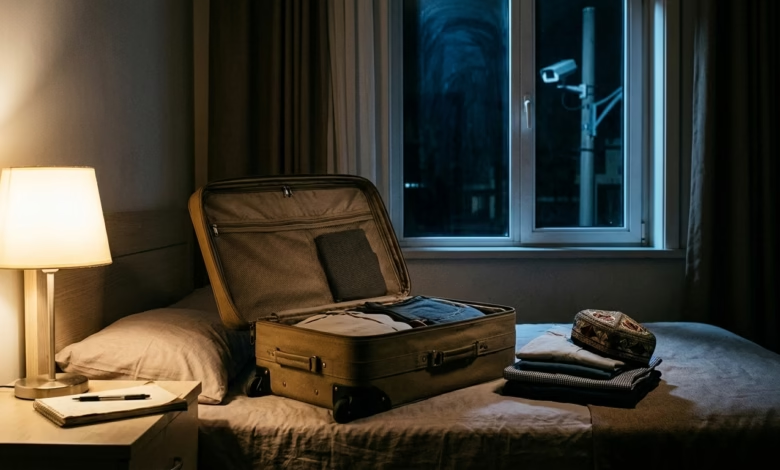
In The Context Of Reflections And Memories Comes The Book “Waiting To Be Arrested At Night: A Uyghur Poet’s Memoir Of China’s Genocide” By The Uyghur Poet And Filmmaker Tahir Hamut Izgil. It Stands As A Living Historical Memoir And A Resounding Human Testimony Emerging From The Heart Of Darkness To Expose One Of The Most Complex And Cruel Human Tragedies In The Modern Era. This Book Does Not Merely Present A Narration Of Political Events Or An Observation Of Violations, But Rather Weaves A Narrative Combining The Delicacy Of Poetic Sense And The Solidness Of Survival, The Story Of An Entire People Crushed Under The Weight Of A Systematic Oppression Machine. The Book Begins With A Deep And Touching Introduction By Translator Joshua L. Freeman, Who Immediately Places The Reader Before A Stark Paradox: You Might Take An Uber In The US Capital, Washington, And Your Driver Would Be One Of The Greatest Living Uyghur Poets. This Stunning Opening Summarizes The Tragedy Of Exile And Diaspora, As Tahir Arrived With His Family In The United States In 2017, Fleeing The Harsh Persecution Practiced By The Chinese Government Against His People, Narrowly Escaping An Almost Inevitable Fate Of Imprisonment In The Mass Internment Camps That Swallowed More Than A Million Uyghurs.
Through This Safe Haven, Tahir Was Able To Share With The World His Horrific Experiences In The Catastrophe That Swept His Homeland, Presenting A Direct Narrative Of What Is Considered One Of The Most Pressing Humanitarian Crises In The World, And The Survival Story Of One Family From The Clutches Of A Merciless Regime. The Translator Points To The Central Importance Of Poetry In Uyghur Culture, As Poetry There Is Not The Monopoly Of The Elite And Intellectuals, But Is A Fabric Permeating Daily Life, Integrated Into Conversations, Circulated Heavily On Social Media, And Written Between Lovers. Through Poetry, The Uyghurs Face Their Issues As One Body, Whether In Discussing Social Roles Or In Challenging State Oppression. In This Rich Cultural Context, The Name Of Tahir Hamut Izgil Emerges As One Of The Most Important Uyghur Thinkers, Writers, And Poets, Whose Poems Are Distinguished By Power, Depth, And Close Connection To The Rhythms Of Rural Uyghur Life In Which He Grew Up Near The Historical City Of Kashgar.
Tahir Was Born At The Peak Of The Chinese Cultural Revolution And Maoist Extremism, But He Matured During A Period That Witnessed Economic And Cultural Liberation In The Eighties, Allowing Him To Be Part Of A Literary Scene Teeming With Vitality And Renewal. His Educational Journey Took Him To Beijing, Where He Immersed Himself In The Study Of Western Literature And Avant-Garde Chinese Poetry, And Actively Participated In The Student Movement That Preceded The Tiananmen Square Protests In 1989. Despite The Repression That Befell That Movement, Tahir’s Interest In Politics And His People’s Issues Remained Burning. In 1996, Tahir Collided With The Bitter Political Reality Of The Uyghurs In China When He Was Arrested At The Border While Trying To Leave The Country To Study In Turkey, Where He Was Subjected To Torture To Extract Confessions On Fabricated Charges Related To Attempting To Reveal State Secrets, And Spent Three Harsh Years In Prisons And Forced Labor Camps, Which Left An Indelible Mark On His Body And Soul.
After His Release, And Despite The Security Stigma That Pursued Him, Tahir Managed To Rebuild His Life With Amazing Resilience, Transforming Into A Prominent Filmmaker And An Unrivaled Poetic Voice. But This New Life Was Built On Quicksand Of Escalating Ethnic Discrimination And Systematic Marginalization Practiced By The Chinese Authorities Against The Uyghurs, Which Included The Cancellation Of The Uyghur Language Education System, Forcing Children To Attend Chinese Boarding Schools, And The Spread Of Discrimination In The Labor Market, Leading To The Violent Explosion In Urumqi In 2009 And The Ensuing Brutal Repression. In Light Of This Terror-Charged Climate, The Writer Takes Us With Breathtaking Narrative Brilliance Into The Details Of A Daily Life Fraught With Dangers, Where Merely Existing As An Educated Uyghur Individual Becomes An Undeclared Crime Warranting Constant Surveillance.
In The Chapter With Which Tahir Actually Opens His Memoirs Under The Title “The Interrogation,” The Writer Highlights How Terror Invades The Most Minute Details Of A Quiet Family Life. On An Ordinary Spring Day In 2009, While He Was Reading In His Library And His Wife Was Arranging The Dishes, The Door Is Knocked To Reveal Plainclothes Policemen, Who Take Him Away With Suspicious Calmness To The Police Station Under A Flimsy Pretext Related To Registering His Family. This Opening Scene Embodies The Writer’s Brilliance In Portraying Bureaucratic Terror, Where The Worst Nightmares Hide Behind Routine Administrative Procedures. In The Car, The True Identity Of His Escorts Is Revealed As Elements Of The Public Security Bureau In Urumqi, And A Complex Psychological Game Begins Of Veiled Questions About His Work And His Relationship With His Writer Friends, Especially The Novelist Perhat Tursun Who Sparked Controversy With His Novel.
The Writer Reviews How The Chinese Regime Uses Precise Administrative Details As A Weapon For Control, And How Tahir Miraculously Survived Stricter Security Surveillance Due To A Previous Bureaucratic Error That Led To Changing His ID Number, Which Effectively Erased His Previous Prison Record From The Local System. This “Error,” Which Was A Hidden Blessing, Highlights The Absurdity And Randomness Of The Repressive Machine. In The Cold Interrogation Room, Tahir Is Subjected To Tactics Of Waiting And Psychological Pressure, Only To Discover In The End That The Reason For His Abduction And Interrogation Was Nothing But A Long International Phone Call He Made With His Friend Studying In The Netherlands, To Discuss Purely Literary And Poetic Matters. Criminalizing A Phone Call Between Two Friends, And Forcing The Writer To Hand Over The Passwords To His Postal And Electronic Accounts Under Veiled Threat, Reveals The Extent To Which The Surveillance State Has Penetrated The Most Accurate Details Of Human Privacy.
The Narrative Continues To Highlight How Life Became A Series Of Daily Maneuvers To Avoid The Traps Of The Security Apparatuses. Tahir Recounts How He Later Used His Intelligence To Evade Continuous Police Attempts To Recruit Or Blackmail Him With Informal Meetings, And How He Employed His Work In Government Cultural Projects As A Shield Protecting Him From The Harassment Of Junior Officers. This Chapter Excellently Embodies How Life In Xinjiang Turns Into A Terrifying Chessboard, Where An Individual Is Forced To Play With Supreme Skill Just To Ensure His Survival And Stay Outside The Walls Of The Detention Camps That Began To Expand Like A Mythical Monster Swallowing Everything In Its Path.
The Book Sheds Light On The Radical And Terrifying Transformation That Occurred In The Chinese Government’s Policies Towards The Muslim Uyghur Minority In The Xinjiang Region. While Persecutions And Arbitrary Arrests Had Been Part Of The General Scene For Many Years, The Year 2017 Constituted A Terrifying Turning Point, Where The Repression Took On A Completely New And Highly Alarming Scope. Tahir Narrates In His Memoirs A Harsh Tragic Paradox About False Hopes; Following Xi Jinping’s Assumption Of Power, A State Of Cautious Optimism Prevailed Among Some Uyghur Elites And Intellectuals. Tahir Quotes One Of His Intellectual Friends, Ilham, Saying Optimistically That Things Would Improve With The New Leadership, Asking Him To Convey This Positive Spirit To Their Friends In Urumqi. This Hope, Which Today Seems Completely Absurd In Light Of What We Know About Xi Jinping’s Policies, Reflected The Rapid Political Deterioration The Uyghurs Were Living, And Their Thirst For Any Glimmer Of Hope. But The Government Response Was To Adopt A “Radical Solution” To The Uyghur Issue, A Solution That Not Even Tahir – Who Spent Three Years In Re-Education Through Labor Camps In The Mid-Nineties Following Fabricated Charges And Confessions Extracted Under Torture – Could Have Expected Or Imagined The Extent Of Its Brutality.
What Distinguishes The Genocide Documented By Tahir Izgil Is The Integration Of Traditional Repression With The Latest Technological Surveillance Techniques, Creating A State Of Unprecedented Digital Despotism. The Uyghur Minority, Residing In Western China, Found Itself Living An Echo Of The Worst Atrocities Of The Twentieth Century, But This Time Amplified And Supported By China’s Creation Of A High-Tech Electronic Surveillance State That Sees Everything. The State No Longer Needed To Deploy Soldiers In Every Street, But Instead Planted Cameras, Biometric Checkpoints, And Smartphone Tracking Software In Every Corner. Merely Having A Uyghur Identity, In A Country Seeking To Erase This Existence Culturally And Physically, Makes Ordinary Daily Life A Political Act Par Excellence.
Beijing’s Strategy In The Past Decade Began With Completely Isolating The Uyghurs From The Outside World, And From Each Other As Well. When Strict Censorship And Surveillance Made It Impossible To Connect To The Internet To Bypass The Great Firewall Of China, Many Uyghurs Resorted To Using Shortwave Radios To Stay Connected With The World. But The Repressive Machine Did Not Leave This Small Outlet; Perhaps The First Sign Of The Worst Was When The Police Confiscated The Uyghurs’ Radios And Set Up Advanced Jamming Equipment To Cut Any Connection They Had With The Outside World. Indeed, The Government Banned The Sale Of These Devices And Organized Mass Raids On Citizens’ Homes To Confiscate Them.
The Repression Was Not Limited To Technological Restriction Or Geographical Isolation, But Extended To Be A Comprehensive War On Uyghur Memory, Identity, And Soul. Beijing Strives To Cut The Uyghurs Off From Their Past And Their Religious And Cultural Traditions. Tahir Documents How Copies Of The Holy Quran Were Seized From Homes, And How History Books Were Banned, Including Many Books That Had Previously Received State Approval. It Is A Systematic Erasure Process Aimed At Uprooting Roots. Even The Personal Names Of The Uyghurs Were Not Spared From This Attack, As They Became Part Of The Comprehensive Assault On Uyghur Culture, Forcing People To Abandon Their Traditional Names With Islamic Or Turkic Connotations. In This Suffocating Context, Poetry, For A Poet Living In A Culture Where Poetry Is Woven Into The Details Of Daily Life, Becomes An Inevitable Act Of Testimony And Resistance.
The Merit Of Tahir Hamut Izgil’s Memoirs Lies In Its Title “Waiting To Be Arrested At Night.” This Title Encapsulates The Psychological Essence Of The Terror Lived By Millions Of Uyghurs. Critics Point Out That The Tension In The Narrative Stems From The Dread Captured By The Title – The Dread Of Waiting For Arrest, The Dread Of Vanishing In Detention Centers, A Dread That No Uyghur Can Escape. The Book Is Not Filled With Bloody Torture Scenes, Excessive Violence, Or Bombastic Statements About Genocide; Rather, Izgil Writes With Calculated Restraint, And As His Title Suggests, The Real Terror Lies In Anticipation And Waiting.
Tahir Describes The Moment He Realized The End Was Approaching; When He Noticed That The Public Park Near His Home Had Become Almost Completely Empty Because A Large Number Of Neighbors Had Already Been Arrested And Abducted, And Then He Knew For Certain That The Police Would Come For Him Any Day. On One Dark Night, After His Daughters Had Gone To Sleep, Tahir Placed Sturdy Shoes, A Woolen Sweater, And A Heavy Coat Next To His Front Door, To Be Ready To Wear Them And Stay Warm If The Police Came To Take Him Away In The Middle Of The Night. This Scene, In Its Simplicity And Horrific In Its Implication, Embodies The Utmost Degrees Of Human Subjugation; To Be Forced To Prepare Your Arrest Clothes Yourself, And To Wait For Your Executioner In Silence So As Not To Wake Your Children.
Little By Little, Friends And Acquaintances Began To Disappear. More Than A Million People Have Vanished Inside The Detention Camps Set Up By China For Muslim Minorities. These Camps Are Officially Known By Misleading Names Such As “Vocational Education Centers,” But In Reality They Hold People Without Any Legal Proceedings Or Even Official Charges. Tahir Describes In A Terrifying Scene How He Saw, While Walking In One Of The Basement Corridors, A Cell Equipped With Iron Shackles And What Is Known As The Infamous “Tiger Chair,” Which Is Used To Force Detainees Into Extremely Stressful And Painful Positions, And In That Cell There Were Clear Blood Stains On The Floor.
People Began To Disappear, Initially In Small Numbers, Then The Pace Escalated To Eventually Reach About A Million People, As They Are Taken To “Study Centers” – Which Is The Secret Code For Mass Internment Camps – Without Anyone Knowing To Which Camp They Were Taken. Izgil Writes Sorrowfully: “They Simply Vanished.” The Police Would Knock On Doors Only When “Your Name Is On The List,” But The Tragedy Lay In That “There Is No Way To Know If Your Name Will Appear On The List Or When That Will Happen. We All Lived Inside This Terrifying State Of Uncertainty.” This Situation Created A Toxic Climate Of Suspicion, Where People Began To Fear Each Other As Much As They Feared The Authorities, Which Destroyed The Social Fabric And Mutual Trust In Uyghur Society. Tahir Conveys A Cry Of Bitterness And Despair From A Friend Who Said: “Since We Cannot Attain Freedom Anyway, Let Us Make The Whole World Taste The Flavor Of Oppression. Then We Will All Be Equal. We Will Not Be Alone In Our Suffering.”
With The Exacerbation Of The Situation And The Blockage Of The Horizon Of Survival, It Became Clear To Tahir And His Wife That Fleeing The Country Was The Only Remaining Hope To Save The Family. But Emigration From China, Especially For Uyghurs, Was An Incredibly Complex And Difficult Matter, Given That The Authorities Keep Their Passports And Prevent Them From Traveling. The Book Presents In Tedious And Suffocating Detail How The Family Was Forced To Wade Through The Corrupt And Restrictive Chinese Bureaucracy. Through A Series Of Desperate Maneuvers, They Managed To Overcome The Obstacles, But Only After Resorting To Paying Bribes To Doctors To Issue Forged Medical Certificates Stating That One Of Their Daughters Suffered From A Form Of Epilepsy Requiring Urgent Treatment Abroad. This Desperate Step Reflects The Extent Of The Degradation Of The Regime That Forces A Father To Claim His Daughter’s Serious Illness In Order To Save Her Life From Certain Annihilation. Under A Constant Threat Of Arrest And Facing Prison Camps, Tahir And His Wife Were Hesitant To Leave, Knowing For Certain That They Might Never Be Able To Return To Their Homeland And See Their Loved Ones Again.
Among The Prominent Uyghur Thinkers And Writers, Tahir Hamut Izgil Is Considered The Only Known One Who Managed To Flee From China Since The Mass Arrests Began. But This Survival Did Not Bring Absolute Happiness; Rather, It Brought With It A Heavy Psychological Burden. Critics Praise How The Author Boldly Sheds Light On The Complex And Contradictory Feelings Represented In Trading The Homeland For Lifelong Safety And The “Survivor’s Guilt” That Accompanies Him.
The Feeling Of Relief For Surviving Tyranny Intertwines With The Anguish Of Exile And The Torment Of Feeling Guilty For The Stay Of Others In Hell. Tahir Writes With Words Dripping With Pain: “While We Know The Joy Of Those Lucky Few Who Boarded Noah’s Ark, We Live With The Coward’s Shame Hidden In That Word ‘Escape’.” It Is The Tragedy Of Double Uprooting; The Physical Uprooting From The Land, And The Spiritual Uprooting Through The Feeling Of Abandoning Friends Whose Voices Were Silenced. Despite This Deep Pain, Tahir’s Memoirs Are Not Considered A Bitter Book, But Are Saturated With A Deep Sense Of Sorrow And Despair Even In The Midst Of Hope, As One Of His Poems Expresses: “But Our Words Could Not Undo Anything Here, / Even The Things We Brought Into Existence.” The Narrative Is Interspersed With Flashes Of Izgil’s Stunning Poetry, Which Often Revolves Around The Theme Of Rootlessness And Diaspora.
The Literary Strength Of This Book, As Many Critics Agreed, Lies In The “Restraint” Exercised By The Writer. While Many Human Rights Books Speak In The Language Of Direct Rhetoric, Izgil Presents A Narrative On How To Survive, And Negotiate One’s Path Through A Society Where Repression Has Become A Daily Routine And State Power Is Absolute And Invincible. The Restraint In The Book Is Also The Source Of Its Main Strength. Izgil Resists Detailing The Explicit Physical Violence He And His People Faced, And Instead, This Restriction Makes The Descriptions Of Continuous Harassment And Permanent Surveillance By The Police Seem More Terrifying, As If Cut From George Orwell’s Nightmares. He Gives A Sense Of Uyghur Cultural Life On An Ordinary Daily Level, Emphasizing Both The Suffering And Resilience Enjoyed By Uyghur Communities, And Thus Avoids Portraying The Situation Of The Uyghurs (Including Himself) As Merely A Case Of Absolute Victimhood.
In The End, “Waiting To Be Arrested At Night” Cannot Be Read In Isolation From Its Urgent Humanitarian Message. It Is Not Just An Autobiography Or Personal Memoirs, But Rather A Document Telling The Story Of The Political, Social, And Cultural Destruction Of Tahir Hamut Izgil’s Homeland. His Book Serves As An Urgent Distress Call Demanding The World To Wake Up From Its Heedlessness And Pay Attention To This Humanitarian Catastrophe Whose Chapters Unfold In Silence, And It Is At The Same Time A Tribute To His Uyghur Friends And Colleagues Who Were Forced Into Silence And Whose Voices Were Forcibly Absented.
From The Poems Of The Book:
1. The Women’s Prison
Autumn was a jumble of colors
staining our clothes as we walked the road
In the clay-bedded stream beside us
God’s cold water was flowing
In the water swirled leaves with holes
We passed a wide bare enclosure
A red light on the gate was shining like Satan
Qasimjan pointed
—That’s the women’s prison
His friend Rozakhun grinned
—I wouldn’t mind being locked in a cell full of women
The body of the land was in pieces
The roads were stitching them together
Cold air was leading its kin
down from the mountain
A sudden shiver went through me
2. Unity Road
Night fell for the red-blooded,
for the black-blooded as well.
Dawn broke for the forgetful,
for the vengeful as well.
He hurried back from the hot burial,
washing death from his face in the wind,
and then,
from faithful east to fickle west,
from mournful heights to joyous lows,
from familiar edges to the unknown center,
he set off with the step of a man who sinks in.
3. Your Unknown Place
Here people’s names were not contagious,
we said they were, it came to be.
There was no sand here growing roots,
we said there was, it came to be.
Here time did not drip from the walls,
we said it did, it came to be.
Here loneliness did not multiply,
we said it did, it came to be.
Here a thousand eyes did not fleck the skies,
we said they did, it came to be.
Here there were no fugitive forgettings,
we said there were, it came to be.
Yet our words could undo nothing here,
even the things we brought to be.
4. Lost in Paris
Like a stone gate standing motionless carved with
names I stared at the sky of an unknown street
while around me the city frothed and dizzied me
drenched me in cold sweat and rain
and before I really knew her I seemed to be lost
I was truly lost
I knew
At night there was no use setting my sights by the selfless
Eiffel Tower that bravely reached down into the Seine
to fish its fate out of the murky water
so in the smelly old metro as the
iron door handle wore away like time
I watched
The road map’s knotted strings seemed jumbled
like the manners of that uncouth old émigré and the heirloom
prayer beads given me by an unknown Turk aged thirty-eight
were of no use clicking softly in my pocket as
I listened
I passed two tipsy Arab shopkeepers a Latin
American taxi driver a guy delivering pizza someone walking
a dog and none of them were lost together with me
I felt
Moreover new destinations and also history romance perfume artwork beauties
daydreams et cetera
I must forgo them all
I understood
Paris whispered to me oh you ill-starred one
go back the way you came
5. Body
After exile water
after stray gatherings
after utter collision
after strange embraces
after bonding like ice
after infinite grinding
after silently rolling
after all the damn polishing
and
after fruitless forgettings
in the end
the grains of sand turned to stone
6. Somewhere Else
Besieged by these discolored words
within all these disordered moments
the target on my forehead
could not bring me to my knees
and also
night after night
one after another
I spoke the names of ants I’ve known
I thought of staying whole
by the road or somewhere else
Even
cliffs grow tired staring into the distance
But
in my thoughts I trimmed your ragged hair
with two fingers for a scissor
I splashed your chest with a handful of water
to douse a distant forest fire
Of course
I too can only stare
for a moment into the distance
7. What Is It
What is it
from far away, from behind the domed water,
that stayed with me, that came along with me?
A weak vow written in the yellowing fog,
audacity standing at an angle
or
the layered dimness passed from hand to hand?
These days
are crowded with shattered horizons,
shattered!
In the runaway season
when surrender hides deep in the suitcase
when noble doubts run over the weight limit
when dead ends continue onward
when the exodus stalls at the second floor
what is it
that keeps you from seeing I am still alive?
So simple are my inner soul and outer face,
oh dark-eyed one,
a tree that reddens from within
turns to stone beside me
A spray of sweet-smelling camel grass
grows quickly, blooms open
at the doorstep of the past