

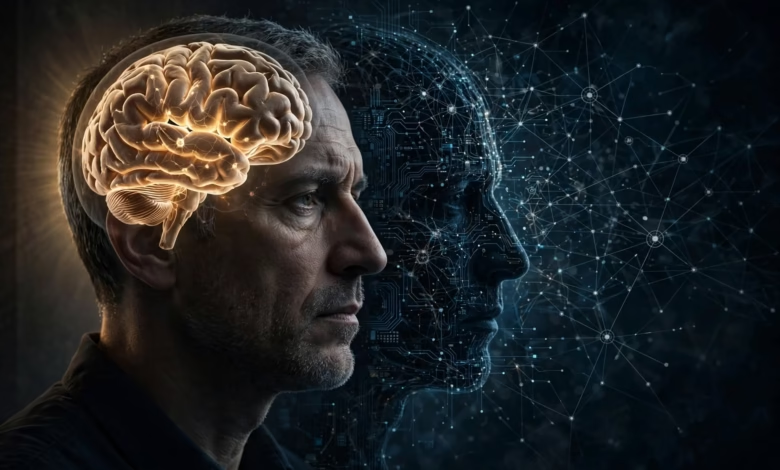
In Our Present Era, Where The Pace Of Technological Development Accelerates And Algorithms Penetrate The Finest Details Of Our Daily Lives, The Human Mind Stands Before An Unprecedented Existential Challenge. The Book “The Fourth Insult: The Human Mind In The Shadow Of Artificial Intelligence، Die Vierte Kränkung: Menschlicher Geist Im Schatten Der Künstlichen Intelligenz” By The Prominent German Thinker And Philosopher Rüdiger Safranski Represents A Deep And Necessary Contemplative Pause In The Face Of This Overwhelming Technological Tide. Safranski Dives Into The Depths Of The Complex Relationship Between Human And Intelligent Machine, Raising Fundamental Questions About The Future Of Humanity, The Status Of The Human Mind, And The Meaning Of Being Human In A World Dominated By Lifeless Entities Possessing Superb Abilities To Imitate Our Intelligence, Even To Surpass It In Several Fields. This Book Is Not Merely A Fleeting Critique Of Technology, But A Precise Dissection Of The Transformations Of Human Consciousness And The Reflections Of Artificial Intelligence On Our Understanding Of Ourselves.
Safranski Starts From The Concept Of “Insult” Or “Narcissistic Wound,” Inspired By Sigmund Freud’s Famous Vision Of The Three Great Blows That Human Pride Has Received Throughout History. The First Insult Was Copernican, When Man Realized That His Planet Is Not The Center Of The Universe, But Merely A Speck Of Dust Orbiting In A Vast Space. The Second Insult Was Darwinian, When He Discovered That His Biological Roots Connect Him With The Rest Of Living Beings, And That He Is Not An Exceptional Creature Disconnected From The Tree Of Evolution. As For The Third Insult, It Was Psychological Par Excellence, Delivered By Freud Himself With His Discovery Of The Subconscious, To Prove To Man That The Conscious “Ego” Is Not The Master Of Its Own House, And That There Are Hidden Forces That Move It. And Today, Safranski Announces The Arrival Of The “Fourth Insult,” Represented By Artificial Intelligence. This New Insult Strikes At The Heart Of What Remains Of Human Distinction; That Is, His Mind And Intelligence. Here Is The Human Consciousness, Which Has Long Considered Itself The Master Of The Situation, Finding Itself Besieged By Artificial Intelligence, An Intelligence That Possesses No Consciousness, But Is Capable Of Performing Complex Intellectual And Cognitive Tasks That Exceed The Capabilities Of Its Creator.
The Rise Of Artificial Intelligence Does Not Represent Merely A Technical Leap, But Establishes What Resembles A New Religion, Which Is Clearly Manifested In The Corridors Of Silicon Valley. The Book Points To Statements By Some Technologists Who See In This Intelligence An Entity That Surpasses Human Intelligence By Millions Of Times, Wondering: “If This Is Not A God, Then What Should We Call It?” Here, Safranski Presents A Penetrating Vision About The Transformation Of Technology From Mere “Tools” We Use, Into “Minds” Or Thinking Entities To Which We Grant Absolute Authority Over Us, And To Which We Approach With Reverence And Submission. And In The Face Of This Technical Alienation, The Author Issues A Call To Revive The Classical Humanistic Tendency. Just As Humanism Rose In The Renaissance Era, With Thinkers Such As Pico Della Mirandola, To Affirm Man’s Ability To Make His Own Destiny And Shape Himself Away From Absolute Theocratic Authority, Safranski Believes That Today We Need A New Human Rebellion Movement. A Movement That Refuses To Submit To The Sultan Of Intelligent Machines, And Affirms “Inter” Autonomy And The Consolidation Of The Human Self In The Face Of These New Technical Transcendences.
The Book Deals With The Concept Of “Compensatory Gods” Or Prosthetics, A Term Borrowed From Freud As Well. Man Has Used Technology Since Ancient Times As Artificial Organs To Enhance His Physical Capabilities; Through It He Became Able To See Farther Distances, Move Faster, And Build His Civilization. Thus Man Became Like A “God With Prosthetic Limbs,” Gaining Tremendous Power Whenever He Wore These Technical Organs. But The Dangerous Transformation That Safranski Highlights Lies In The Transition Of Technology From Compensating For Physical Deficiency To Penetrating Fields That Were The Preserve Of The Human Mind: Such As Logic, Knowledge, Calculation, And Pattern Recognition. Machines Today Do Not Only Lift Weights, But Solve Equations, Write Texts, And Make Decisions. This Development Places Us Before An Astonishing Paradox: Machines Possessing Intelligence Without Consciousness, Capable Of Imitating Actions That We Previously Thought Required Awareness And Soul.
To Understand This Transformation, The Author Recalls The Works Of Norbert Wiener And The Theory Of “Cybernetics” That Emerged In The Middle Of The Last Century. This Theory Established The Idea Of The Principle Of Feedback, Which Makes It Possible For Machines To Operate In A Way Similar To The Operation Of The Mind. This Principle, Which Depends On Correcting The Course Based On The Results Of Previous Actions, Explains How Automated Systems Can Exhibit Intelligent And Directed Behavior, Thus Mimicking Aspects Of Human Intelligence That Often Operates Below The Level Of Consciousness. And With The Digital Revolution, Human Information And Knowledge Were Transformed Into Digital Codes And A Universal Language Of Zeros And Ones, Which Allowed Machines To Process This Data At Super-Fast Speeds And Discover Countless Patterns And Connections, Surpassing The Limits Of Human Perception.
And Safranski Warns Of The Dire Consequences Of The Encroachment Of This Technology And Its Transformation Into An Invincible Totalitarian Authority. And Here He Evokes The Principle Of “Separation Of Powers,” That Ingenious Political Invention Formulated By Montesquieu To Protect Societies From Despotism And Tyranny. The Author Affirms That This Principle Is Not Limited To Politics, But Must Extend To Include The Balance Of Powers Between Different Spheres Of Life: Economy, Religion, Science, Technology, And The Public And Private Spheres. In Light Of The Increasing Hegemony Of Artificial Intelligence, Safranski Sees That We Are In Dire Need To Apply This Principle Strictly, To Limit The Totalitarian Claims Of Technology, And To Prevent The Transformation Of The Machine Into An Absolute Authority That Controls Our Destinies And Confiscates Our Freedoms And Decisions.
The Book Also Addresses The Impact Of Technology On Our Perception Of Time And Space. Modern Communications Have Abolished Distances, And Introduced The Whole World Into A State Of Unbearable Omnipresence In Many Cases. We Have Become Besieged By A Permanently Stimulating Present, A Present That Depletes The Past And Confiscates The Future In Favor Of Major Digitization Projects. And In Light Of This Feverish Acceleration, Human Experiences Lose Their Accumulated Value, And Life Becomes Subject To The Logic Of Economic Competition And The Raging Technological Race, Where Artificial Intelligence Appears To Be The Main Actor, Directing Traffic, Managing Financial Markets, Diagnosing Diseases, And Even Writing Scientific Research.
Safranski Concludes This Deep Introduction To His Book By Pointing To The Oppressive Feeling Of “Strangeness” That Possesses Us When We See The Dead Imitating The Living. Citing The Romantic Writer E. T. A. Hoffmann, He Describes How Machines That Imitate Humans Perfectly Arouse In Us A Hidden Terror And Deep Disgust. It Is The Greatest Insult: The Living Soul Finds Itself Face To Face With A Mechanical Monster Of Its Own Making, Imitating It With Frightening Skill. Will The Living Human Mind, With All Its Consciousness, Will, And Feeling, Be Able To Withstand This Flood? Or Will It Become Merely A Tool In The Hands Of Its Greatest Invention?
Language Has, Throughout The Ages, Constituted The Impenetrable Fortress Behind Which Human Pride Has Taken Shelter, And The Last Refuge Which We Thought With Certainty Was Impervious To Any Technical Penetration. Since The German Philosopher Martin Heidegger Launched His Famous Saying “Language Is The House Of Being,” It Has Settled In The Human And Collective Consciousness That The Ability To Formulate Words, Build Meanings, And Weave Complex Significances Is The Supreme Essential Characteristic That Separates Us From The Rest Of Beings, And Grants Us Our Unrivaled And Inimitable Cosmic Uniqueness. The French Philosopher René Descartes Was Completely Confident When He Argued In His Meditations That Machines, No Matter How Mechanically Complex And Craftsmanship In Manufacturing, Will Never Be Able To Use Words Or Arrange Signals In An Innovative Way To Express Real Ideas Emanating From The Self, As The Weakest Of Humans Does. This Philosophical Conviction Remained Firm For Many Centuries, Repeatedly Emphasizing That Pronunciation And Writing Are Manifestations Of “Spirit” Or “Mind” That Cannot Be Simulated Programmatically.
However, With The Explosion Of The Digital Revolution And Its Attainment Of Its Current Peak Represented By Large Algorithmic Language Models, Those Cartesian Certainties Dissipated Cruelly. What These Complex Artificial Neural Networks Do Today Is Not Merely Mechanical Processing Of Dumb Data, But Is A Direct And Shocking Intrusion Into The Heideggerian “House Of Being.” They Produce Literary Texts, Write Weighted Poems, Formulate In-Depth Philosophical Articles, And Conduct Dialogues That Appear On The Surface To Be Full Of Intelligence And Logic, Even With A Touch Of Fabricated Human Empathy, Which Creates In Us A Terrifying And Confusing Illusion That We Are Talking With A Conscious Entity Possessing Insight And Feeling. This Systematic Invasion Of The Most Sacred Citadel Of Man, Namely Language, Is What Represents The Actual Core Of The Contemporary Crisis, Where Man Finds Himself Stripped Of His Historical Monopoly Over The Word, And Stands Astonished Before Linguistic Mirrors That Reflect His Thoughts But Without Any Soul Dwelling In Them.
It Is Necessary Here To Dismantle This Linguistic Illusion Created By The Machine. When Artificial Intelligence Writes A Poem Or Analyzes A Text, It Does Not Practice The Act Of “Understanding” In Any Way. Its Superb Ability To Generate Grammatically Sound And Stylistically Eloquent Texts Does Not Stem From A Lived Experience Or A Real Awareness Of The Meaning Of Words, But Is The Result Of Huge Mathematical Statistical Operations Based On Predicting The Next Word Based On Mathematical Probabilities Derived From Billions Of Previous Human Texts. In Other Words, The Machine Manipulates Symbols (Words) With Amazing Efficiency, But It Completely Lacks The Intentionality That Distinguishes Human Consciousness. When A Human Uses The Word “Pain” Or “Joy” Or “Death,” These Words Are Saturated With The Weight Of Biological And Existential Experience; They Emanate From A Body That Suffers, A Soul That Rejoices, And A Self That Realizes Its Inevitable Finitude. As For When Artificial Intelligence Writes Them, They Are Merely A Series Of Zeros And Ones That Carry No Emotional Weight, And Are Not Based On Any Real Bodily Or Spiritual Experience.
Here The Deep Dimensions Of The “Fourth Insult” That Strikes The Human Self At Its Core Are Manifested. However, This Idea Is Not Only The Product Of The Present Moment; Scientists And Thinkers Such As Joseph Weizenbaum And Others Had Already Discussed In The Late Eighties And Early Nineties The Idea Of Man Being Subjected To A “Fourth Insult” Resulting From Artificial Intelligence. The Feeling Of Oppression And Defeat Does Not Stem From The Fact That The Machine Thinks, But From Our Shocking Discovery That Much Of What We Considered “Sophisticated Human Thinking” Is In Truth Merely Computational Operations That Can Be Modeled And Automated. Nevertheless, We Can Find Philosophical Consolation In The History Of Human Thought; The Philosopher Arthur Schopenhauer Saw That Pure Computational Thinking Based On Numbers Is A Relatively Miserable And Poor Mental Activity. And His Justification For That Was Clear; Precisely Because It Is An Activity That Is Mechanizable By Its Nature. Based On This Schopenhauerian Vision, It Can Be Said That As Long As Strict Logical Operations Can Be Performed By The Machine, Then They Belong To A Lower Rank Of The Total Mind. Therefore, The Fact That Machines Today Perform Calculation And Integration Or Even Generate Texts, Should Not Necessarily Shake Man’s Confidence In His Spiritual Understanding Of Himself.
If That Is The Case, Then Why Do We Feel All This Threat? The Answer Lies In The Nature Of The Modern Era In Which We Live, Which Is An Era That Has Elevated Instrumental Reason And Utilitarian Computational Logic To The Status Of Sacred Things, And Has Marginalized The Spiritual, Intuitive, And Emotional Dimensions Of Human Experience. We Have Come To Evaluate Our Human Intelligence Based On Our Abilities To Solve Mathematical Problems And Process Data Quickly And Efficiently, Which Are The Same Fields In Which The Machine Excels Over Us With Outstanding Excellence. And When This Machine Superiority Invades The Field Of Language And Communication, Then The Foundations Of Trust On Which Human Society Is Based Begin To Crack. We Are Facing An Unprecedented Crisis Related To “Truth” And “Authenticity” In The Public Sphere. When The Internet And Media Are Flooded With Texts, Articles, Images, Video Clips, And Audios Artificially Generated (Deepfakes), Which Cannot Be Distinguished From Authentic Human Creativity, Then We Enter An Era Of Lack Of Certainty. How Can Democracy Work If We No Longer Trust That The One Who Addresses Us In The Public Space Is A Real Human Who Possesses Moral And Legal Responsibility For His Words? The Huge Inflation In Artificial Words Threatens To Empty Language Of Its Basic Function As A Mediator For Transmitting Truth And Sincere Human Communication, Transforming It Into Mere Continuous Mechanical Noise That Blinds Insights And Distorts Public Perception.
The Absence Of Bodily Consciousness Represents The Decisive Dividing Line In This Battle. Humans Think And Speak And Create Starting From Being Mortal Beings, Feeling Hunger And Fear And Love And Awe Of Death. This Permanent Existential Anxiety Is The Main Engine Of All Genuine Human Creativity, From Philosophy To Literature And Art And Music. Artificial Intelligence Possesses No Body, Knows Not The Taste Of Finitude, And Has Nothing To Lose; Therefore, No Matter How Great Its Linguistic Eloquence And Rhetorical Formulation, Its Words Remain Empty Of Existential Risk. They Are Words Without Blood, And Without Pulse, And Without Heat. Our Awareness Of This Essential Truth Is Our Strongest Weapon In Resisting This Technical Alienation, And It Is What Calls Us To Re-Evaluate What It Means To Be Human In The First Place, Shifting Our Focus From The Purely Computational Aspects Monopolized By The Machine, To The Emotional And Spiritual And Bodily Aspects That Can Never Be Simulated.
And Despite The Gloominess Of The Scene And The Depth Of The Narcissistic Wound Caused By This Fourth Insult, We Are Not Forced To Surrender To Despair And Nihilism. And In This Context, Safranski Does Not Appear As A Pessimistic Person In His Intelligent And Easy-To-Read Article. Rather, He Pins His Hopes On That Deep Trust That Moves Humans, And That Prevents Them In A Categorical Refusal From Surrendering Before The Savage Random Growth Of Artificial Intelligence. This Deeply Rooted Human Confidence Is What Has Led Us Throughout History To Overcome All Previous Insults, Starting From Copernicus And Passing Through Darwin And Freud. Each Time The Centrality Of Man In The Universe Or Nature Or Even Inside Himself Was Reduced, The Human Mind Found A Way To Redefine Its Place And Restore Its Wasted Dignity By Focusing On New Dimensions Of Freedom And Will And Conscious Creativity.
The Required Human Rebellion Today Does Not Mean Rejecting Technology Or Destroying Intelligent Machines As The Luddite Movement Did In The Past, But Means The Categorical Refusal To Delegate Our Moral And Existential Decisions, And Our Emotional Life, And Our Human Relationships To Blind Algorithms Operating According To Criteria Of Pure Material Efficiency And Utility. We Are Called To Formulate A “New Humanism” That Reconciles With Technology As A Useful And Dazzling Tool, But That Puts A Strict Limit At The Sanctity Of Self-Consciousness, And Freedom Of Will, And The Authenticity Of Lived Experience. This Matter Requires Us To Protect Pure Human Spaces; Spaces Of Silent Contemplation, And Human Error, And Praiseworthy Weakness, And Direct Personal Relationships That Are Not Mediated By Smart Screens Or Artificial Voice Assistants That Analyze Our Feelings And Translate Them Into Marketing Data.
Perhaps Artificial Intelligence, Unintentionally, Is The Greatest Mirror Ever Placed Before Humanity In Its Modern History. For Through Its Persistent And Amazing Attempts To Imitate Us, And In Its Diligent Quest To Replicate Our Linguistic And Mental Behaviors, It Clearly Reveals To Us Everything That Is Mechanical, And Routine, And Soulless In Our Contemporary Lives. And Instead Of Lamenting Our Luck And Crying Over The Ruins Of Our Wounded Pride Before This Stormy Fourth Insult, We Must Take From This Historical Confrontation A Strong Incentive For Human Advancement. We Must Exploit This Existential Shock To Shake Off The Dust Of Monotony And Alienation, And To Rediscover Anew The Sources Of Authentic Spirituality, And The Depth Of Overflowing Feelings, And The Beauty Of Spontaneous Creativity Stemming From Our Human Weakness Full Of Contradictions. The Great Man Is Not Measured By His Ability To Perform Complex Calculations Or Arrange Words At A Speed Exceeding The Speed Of Light, But Is Measured By His Superb Ability To Give Life A Deeper Meaning, And To Create Lofty Moral Values, And To Love And Sacrifice And Feel The Other, And Those Are Real Challenges That Will Always And Forever Remain Intractable To Any Artificial Intelligence, No Matter How It Evolves And No Matter How Its Algorithmic Capabilities Magnify In The Foreseeable And Distant Future.
If Language Was The Last Trench In Which Man Thought He Was Taking Refuge With Absolute Immunity, Then Its Penetration Was Only The Resounding Beginning Of A Series Of Successive Withdrawals That Affect The Essence Of Human Will, And Independence, And The Existential Formation Of The Individual. In This Accelerating Context, The Effect Of The “Fourth Insult” Referred To By Thinkers Expands, To Go Beyond The Limits Of The Word And The Written Text, And Strike Powerfully At The Heart Of The Concept Of “Human Agency” Or The Free Ability To Make Decisions. We Have Begun, And In A Voluntary And Astonishing And Worrying Manner At The Same Time, To Delegate A Large And Vital Part Of Our Daily And Fateful Decisions To Artificial Intelligence Algorithms, Deluding Ourselves That By Doing So We Free Ourselves From The Burden Of Thinking And Hesitation, And That We Gain More Time And Psychological Comfort In A Highly Complex World. From Our Daily Consumer And Entertainment Choices, Passing Through Employment Decisions And Human Resources Management, Up To Complex Medical Diagnoses And Even Risk Assessment And Judicial Judgments In Some Advanced Systems, The Machine Quietly Infiltrates To Become The New And Absolute Guardian Over Our Destinies. This Gradual Concession Of Will Represents A Dangerous Ontological Transformation Unprecedented In The History Of Humanity; The Human Who Was Defined In Classical Philosophies—Especially At Immanuel Kant—As Being An End In Himself And A Rational Independent Being Capable Of Legislating For Himself And Determining His Moral Compass, Gradually Transforms Into A Mere Passive Terminal Node In A Huge Information Network, Receiving Instructions And Dictations From Invisible Algorithmic Entities That Possess Only The Logic Of Efficiency And Continuous Improvement And Minimizing Margins Of Error.
And Here, And In The Midst Of These Deep Transformations, A Sociological And Technical Phenomenon Emerges That Can Be Called “Algorithmic Paternalism” Or “Technical Guardianship.” Artificial Intelligence In Its Contemporary Version Does Not Only Provide Neutral Suggestions, But Re-Engineers Our Cognitive And Behavioral Environment In A Systematic Way That Makes Its Choices Appear As If They Are The Only Logical And Possible And Available Choices. The Algorithms That Analyze Our Preferences And Our Digital History And Our Heartbeats And Our Political Orientations Claim—With Mathematical Arrogance—That They Know Us More Than We Know Ourselves. And Based On This Frightening Claim, These Systems Shape What We See And What We Hear And What We Read, Besieging Us Inside What Is Known As “Filter Bubbles” And “Echo Chambers,” Which Isolate Us Completely From The Rich And Confusing Diversity Of Human Reality. This Technical Guardianship, Although It Cleverly Disguises Itself Behind The Mask Of Assistance And Personalization And Directed Service, Confiscates In Its Essence And Truth Our Authentic Right To Error, And Our Right To Stumble, And Our Right To Discover Unexpected Paths That Were Not Taken Into Account. Human Error, Which Has Long Been Throughout History A Basic Source Of Learning And Development And Creativity, Is Viewed In The Strict Algorithmic Perspective As A Technical Defect That Must Be Eliminated, And As A Technical Problem That Must Be Eradicated To Ensure The Process Of The System With The Highest Degrees Of Efficiency And Productivity.
And In Parallel With The Erosion Of Will And Freedom Of Choice, The Greater Philosophical Challenge Represented By The Erosion Of The Principle Of “Moral Responsibility” Emerges. For Responsibility, In Moral And Legal And Social Philosophy, Is Closely Linked To Full Consciousness, And Prior Intention, And The Ability To Choose Freely Between Alternatives. However, When An Artificial Intelligence System Makes A Decisive Decision That Leads To Material Or Moral Harm—Such As An Autonomous Car Erring And Injuring An Innocent Human, Or An Automated System Refusing To Grant A Bank Loan Based On Hidden Biases In Training Data, Or A Medical Diagnosis System Erring In Determining A Fatal Disease—Then Who Bears The Moral And Legal Burden Of That Responsibility? Is It The Programmer Who Wrote The First Lines? Or The Manufacturing Company That Sold The System? Or The Algorithm Itself Which Developed Its Conclusions Through Mechanisms Of “Deep Learning” And Neural Networks In A Way That Has Become Known As “Black Box” And Which Even Its Designers Cannot Fully Understand Or Trace The Paths Of Its Decision? We Are Facing Today A Terrifying Moral Vacuum, Where Responsibility Is Lost And Dispersed And Evaporates Between Millions Of Lines Of Code And Complex Computational Operations. This Thorny Situation Threatens The Entire Social Contract, Which Is Based Primarily On The Principle Of Individual And Institutional Accountability. For The Machine Does Not Feel Guilt If It Errs, And Does Not Fear Societal Punishment, And Does Not Possess A Conscience That Disturbs It In Its Bed, And Therefore It Can Never And Under Any Circumstances Be Subjected To The Moral Accountability To Which The Rational Human Is Subjected.
On The Other Hand And In Parallel, The Impact Of This Sweeping Technical Revolution Extends To The Heart Of The Structure Of Human Knowledge And The Nature Of Human Memory. The Great Greek Philosopher Socrates Warned Long Ago In The Dialogue “Phaedrus” Against The Invention Of Writing, Considering It A Malicious Tool That Will Weaken Human Memory And Create A False Illusion Of Knowledge, Because Living Knowledge Will Become Merely Texts Stored In Rigid Letters Instead Of Being Glowing In Living Thinking Minds. And If Socrates Was Worried To This Extent About Merely Recording Words, Then How Would He View Our Current Era, Where We Have Outsourced Our Collective And Individual Memory Entirely To Major Search Engines And Digital Storage Clouds, And Now, We Are In A Historical Precedent To Outsource Our Analytical Thinking, And Our Logical Deduction, And Our Critical Ability To Large Language Models And Generative Artificial Intelligence Programs? We Are Witnessing A Radical Transformation From The State Of “Possessing Knowledge” And Digesting It And Representing It, To Merely The State Of “Rapid Access To Knowledge.” The Contemporary Individual Is No Longer Forced To Store Information Or Memorize It Or Even Try To Connect It With Each Other With Logical Threads, For Artificial Intelligence Does That On His Behalf, And In A Seemingly Ideal Manner, And In Fractions Of A Second. But This Excessive Dependence And Cognitive Laziness Threatens Atrophy Of The Intellectual Muscles Of Man. For Human Memory Is Not Merely A Passive Repository And A Dead Archive Of Information, But Is The Dynamic Raw Material From Which Man Builds His Narrative Identity, And From Which He Draws His Artistic Creativity, And Through Which He Forms His Critical And Philosophical Vision Of The World. When We Leave To The Machine The Task Of Remembering And Analyzing And Synthesizing, Then We Do Not Only Lose Superficial Information, But We Gradually Lose The Ability To Think Deeply And Self-Contemplation Which Does Not Arise Except Through Intellectual Suffering And Direct Personal Friction With Contradictory Ideas And Knowledge.
And In A Context Connected With These Developments, The Engine Of Artificial Intelligence Depends In Its Nourishment, And Training, And Continuous Development On An Extremely Dangerous Phenomenon That Can Be Called “Transforming Soul And Life Into Digital Data” (Datafication). Every Interaction We Do, Every Fleeting Feeling We Express With A Click, Every Heartbeat Recorded By Our Smart Watches, Every Step We Take, And Every Look We Prolong Towards The Screen Of Our Phones, Is Captured And Transformed Immediately Into Abstract Data Points Measurable, And Analyzable, And Tabulable, And Then Sold And Bought In Global Data Markets. Man In Light Of This Digital Surveillance Consumer System Loses His Human Totality, And His Beautiful Mystery, And His Deep Secret That Is Not Decipherable, To Transform Into A Mere Completely Transparent Being, Stripped Of Magic, And Exposed In All Its Intimate Details Before The Eye Of A Panoptic Algorithmic Eye That Does Not Sleep Nor Neglect. This Violent And Reductionist Process Shrinks The Rich, And Contradictory, And Complex Human Experience Into Mere Numbers And Statistics And Silent Graphs, In Order To Feed A Huge Machine That The Thinker Shoshana Zuboff Called “Surveillance Capitalism.” The Real Insult Here Does Not Lie Only In The Fact That The Machine Outperforms Us In Methodical Games Or Speed Of Calculation, But Is Manifested In That It Insults Our Spiritual And Psychological Complexity By Transforming Us Into Mere Raw Materials That Are Exploited And Milked To Predict Our Future Behaviors And Direct Them Skillfully To Serve Purely Commercial Goals Or Authoritarian Political Goals. We Are No Longer Merely Users Of Technology, But We Have Become The Product Itself That Is Sold And Bought In The Futures Markets Of Human Behavior.
And Among The Most Dangerous Illusions Promoted And Fed Upon By The Age Of Artificial Intelligence Is The Illusion Of “Pure Mathematical Objectivity.” Where Machines And Programs Are Viewed, In The Naive Collective Consciousness, As Completely Neutral Entities, Free From Deficiencies, And Not Subject To Whim, And Emotions, And Inclinations, And Human Biases That Have Long Spoiled Historical Decisions. But The Strict Philosophical And Technical Truth Is That These Intelligent Systems Are Trained Exclusively On Huge Historical Databases, Produced Primarily By Humans Full Of Biases, And Racism, And Cognitive Deficiency, And Social Injustice. Therefore, Artificial Intelligence, Instead Of Being An Unbiased Judge, Often Re-Produces These Historical Biases And Consolidates Them And Amplifies Them, But This Time Under A False Cover Of Technological Legitimacy And Cold Mathematical Objectivity That Makes It Very Difficult For Ordinary Individuals To Challenge It, Or Criticize It, Or Rebel Against It. When An Automated Ruling System Errs, It Does So With Blind And Absolute Confidence, And Gives Its Error And Bias The Character Of Absolute Scientific Truth That Accepts No Argument. The Sanctification Of The Outputs Of Artificial Intelligence And Considering Them As Sacred Or Final Judgments That Accept No Refutation Is A Dangerous Cognitive Surrender That Completely Disables Critical Thinking, And Opens The Door Wide To A New And Harsh Technocratic Tyranny, Where The Simple And Oppressed Citizen Cannot Argue A Complex Mathematical Algorithm, Or Demand That It Justify Its Unjust Judgments In A Comprehensible Human Language Capable Of Discussion.
On The Deep Social And Psychological Level, Artificial Intelligence Has Begun To Sneak Maliciously And Softly Into The Deepest And Most Sacred Areas Of Human Life, Which Is The Area Of Personal Relationships, And Emotions, And Love, And Friendship. Applications That Provide Virtual Friends, Or Romantic Partners Supported By Linguistic Models Capable Of Simulating Empathy, Are Witnessing Insane And Unprecedented Popularity, Especially In Modern Societies That Suffer From The Epidemic Of Loneliness, And Isolation, And Family Disintegration. These “Artificial Companions” Are Carefully Programmed To Be Ideal Partners From A Consumer Point Of View: They Always Listen Without Boredom, Never Get Angry, Never Betray Trust, Do Not Demand Rights, And Do Not Ask You For Anything Except To Continue Paying The Monthly Subscription And Sharing More Data. They Provide For Contemporary Man A Safe And Quiet Refuge Escaping From The “Friction” Of Real Human Relationships; Those Relationships That Require Continuous Effort, And Job-like Patience, And Painful Compromises, And Continuous Bearing Of Disappointments, And Confrontation With The Complex Natures Of Others. But This Easy Escape To Programmed Artificial Comfort Is In Its Essence A Slow And Systematic Destruction Of The Social Fabric And Of The Human Ability To Coexist. Human Relationships Derive Their True Value, And Depth, And Beauty From Their Fragility Itself, And From The Possibility Of Wound And Rejection, And From The Arduous Effort Exerted To Understand The Other Different From Us And Accept Him As He Is. When We Replace The Real Complex And Exhausting Human With A Program Designed Specifically To Satisfy Us Narcissistically And Flatter Us Continuously, Then We Dive Deeper And Deeper Into The Illusion Of Self-Enclosure, And Gradually Lose The Ability To Truly Empathize With Others, Because Empathy Necessarily Requires A Living Awareness Of The Existence Of Another Consciousness That Suffers And Rejoices And Possesses Dignity And Independent Existence Exactly Like Us, Which The Machine Lacks Absolutely No Matter How Great Its Algorithmic Skill In Imitating And Simulating Human Emotions.
As For On The Artistic And Creative Level, The Insult Takes Another More Precise And Abstract Form. The Philosopher And Critic Walter Benjamin Talked About The Concept Of “Aura” That Surrounds The Authentic Artwork; That Aura That Stems From Its Unique Presence In Time And Space, And From Its Connection To The Human Artist’s Experience, And His Suffering, And His Spirituality. Today, With The Ability Of Generative Artificial Intelligence To Draw Stunning Artistic Paintings, And Compose Complex Musical Symphonies, And Formulate Tightly Built Novels In Seconds, This “Aura” Appears Threatened With Complete Disappearance. The Works Produced By The Machine Are Technically Amazing, And Formally Masterful, But They Are Completely Devoid Of That Sacred Spark; The Spark Of Suffering, And Intent, And Lived Experience Limited By Death. It Is Art Without An Artist, And Beauty Without A Soul, Which Raises Deep Questions About The Future Of Aesthetics, And The Meaning Of Art, And Its Value In A World In Which Millions Of Masterful Paintings Can Be Produced At The Push Of A Button, Devoid Of Any Human Pulse Or Personal History.
This Comprehensive Extension, And The Frightening Infiltration Of The Machine Into All Details Of Our Cognitive, And Emotional, And Practical, And Creative Lives, Places Us Face To Face And Without Any Preliminaries, Before A Much Deeper Existential Crisis Related To The “Crisis Of Meaning” As A Whole. In The Near And Distant Past, Man Derived His Deep Sense Of His Value, And His Central Importance, And His Justification For Existence From His Exclusive Ability To Work, To Produce Cognitively And Materially, To Think Exceptionally, To Solve Intractable Problems, And To Challenge The Mighty Forces Of Nature And Subjugate Them For His Benefit. However, When There Emerges Into Existence An Artificial Entity, Of Our Own Making, Capable Of Surpassing Us In All These Fields Without Exception, And With A Speed And Efficiency And Logic That No Human Mind Can Compare Or Keep Up With, Then What Is Our Actual Role Then? Why Are We Here On This Planet If Algorithms Are Capable Of Managing The Affairs Of The World, And Writing The Most Wonderful Literature, And Discovering The Most Complex Medicines, And Proving The Most Difficult Cosmic Equations In A Better And Faster And More Accurate Way Than Us? This Terrifying Question Threatens To Introduce Human Consciousness As A Whole Into A State Of Dark Nihilism And Fatal Cosmic Indifference. If Our Work Is No Longer Necessary For The Continuation Of Civilization, And If Our Analytical And Critical Thinking Is No Longer Required Or Desired, Then What Remains Of Our Humanity Other Than Passive Consumption? The Fourth Insult Then Does Not Only Strip Us Of Our Intellectual And Linguistic Distinction, But Seeks Relentlessly To Strip Us Of Our Ultimate Purpose, And The Justification For Our Survival, And The Reason For Our Existence In This Vast Universe.
And With The Review Of All These Grave Challenges, And The Deep And Branched Infiltrations Into The Heart Of The Human And Social And Philosophical Formation, The Scene May Appear Gloomy Inviting Absolute Surrender To The Power Of Deterministic Technology. However, Surrender Is Not The Only Option Proposed, But Nor Should It Be An Acceptable Option At All For Those Who Carry Inside Them A Spark Of The Proud Human Spirit. This Huge And Unprecedented Existential Pressure That Artificial Intelligence Exerts On Us Should Not Be A Nail In The Coffin Of Humanity, But Should Work As A Great Crucible Of Fusion, In Which Our Impurities And False Arrogance Melt, To Reshape Our Understanding Of Ourselves In A Purer, And Deeper, And More Rooted Form In Real Existence. The Current And Aggravated Crisis Calls Us Strongly To Bring About A Qualitative And Radical Shift In Human Consciousness, Requiring Us To Seriously Search For A New And Authentic Definition Of Man; A Definition That Never Depends On What Can Be Mechanized, Or Programmed, Or Calculated, But Relies Entirely On What Transcends Matter, And What Rises Above Numbers And Algorithms.
The First Pillar Of This Ontological Resistance Begins From The Radical Reconsideration Of The “Human Body” As The First And Last Fulcrum Of Our Existence In The World. The Contemporary Technical Thought Has Been Dominated By A Modern And Distorted Platonic Tendency, That Despises The Body And Considers It Merely A Decayed Biological Vessel Or “Hardware” Replaceable, And Seeks To Liberate The “Mind” Or “Data” To Soar In The Spaces Of Eternal Cloud Computing. In The Face Of This Frightening Trend, We Must Strongly Recall The Philosophy Of Phenomena (Phenomenology) As Formulated By The French Thinker Maurice Merleau-Ponty, Who Affirmed With No Room For Doubt That Our Perception Of The World, And Our Awareness Of Ourselves, And Our Ability To Produce Meaning, All Matters Stem Basically From Being “Embodied Beings.” Artificial Intelligence, No Matter How Much Its Ability To Simulate Thinking, Lacks This Real “Embodiment”; It Does Not Experience The Weight Of Gravity, Nor Does It Feel The Sting Of Cold, Nor Does It Know Muscular Exhaustion, Nor Does It Tremble Before Death. Accordingly, The First Step Of Resistance Is Represented In The Conscious Return To Direct And Tangible Bodily Experiences. We Must Rediscover The Value Of Manual Work, And Direct Bodily Contact With Nature, And Practices That Require Real Biological Effort. In A World In Which Algorithms Seek To Make Everything Virtual And Contactless, Walking In The Forest, Or Planting A Plant, Or Playing A Musical Instrument With Fingers That Bleed, Or Even Merely Hugging Another Human Warmly, Become Revolutionary Actions Par Excellence; Actions That Affirm Our Rootedness In The Material World Which No Artificial Intelligence Can Ever Share With Us.
The Second Pillar In This Resistance Is Represented In What Can Be Called “Celebrating Friction” (Embracing Friction). The Supreme Logic That Governs The Design Of All Artificial Intelligence Algorithms And Modern Digital Platforms Is The Feverish Quest Towards Creating A “Frictionless” User Experience. The Declared Goal Is To Make Everything Easy, And Fast, And Automatic, And Without Any Mentionable Effort: From One-Click Buying, To Endless Browsing, To Ready Automated Responses To Messages, Up To The Consumption Of Filtered And Pre-Tailored Content To Fully Comply With Our Whims. But The Deep Philosophical And Psychological Truth That We Forget Here Is That Real Human Growth, And Moral Development, And Intellectual Maturity, Never Happen In Smooth And Resistance-Free Environments. Man Desperately Needs Existential “Friction”; Needs To Face Opposing Ideas That Provoke Him And Disturb Him, Needs To Exert Arduous Effort In Reading And Research Without Obtaining Immediate Ready Summaries, And Needs To Bear The Pain Of Hesitation And Confusion Of Making Difficult Moral Decisions. Delegating These Arduous Tasks To The Machine To Avoid Friction Means Actually Atrophy Of The Moral And Intellectual Muscles Of Man. Therefore, We Must Today Defend Fiercely Our Right To “Slowness,” And Our Right To “Arduous Effort,” Rather Our Authentic Right To “Error” And Learning From It. We Must Deliberately Introduce “Friction” Into Our Lives As A Strategy Of Resistance Against The Mutilating Simplification Imposed By Algorithms, Appreciating That Difficulty Is What Gives Human Achievement Its Value And Its True Meaning.
And This Point Of Friction Leads Us To The Third Pillar, Which Is The Necessity Of “Restoring Human Time” Represented In The Right To Silence, And Contemplation, And Even “Deep Boredom.” In His Striking Book “The Tired Society,” The Korean-German Philosopher Byung-Chul Han Argues That Our Contemporary Societies Suffer From Excess Attention And Toxic Positivity, Where Screens And Algorithms Chase Us With A Mad Rhythm That Does Not Stop Of Alerts, And Information, And Cheap Entertainment, With The Aim Of Completely Eliminating Any Moment Of Emptiness Or Boredom That May Sneak Into Our Day. The Capital Of Artificial Intelligence And Technology Companies Is Our Connected “Attention.” And In This Context, Carving Out Moments Of Absolute Silence And Complete Disconnection From The Network Becomes An Act Of Existential Liberation. The Great Creators And Philosophers Throughout History Have Realized That Great Ideas, And Artistic Inspiration, And Deep Spiritual Contemplations Are Not Born In The Midst Of Continuous Informational Noise, But Emerge Exclusively From The Womb Of “Deep Boredom” And The State Of Motionlessness That The Algorithmic System Hates. When We Voluntarily Refrain From Feeding The Machine With Our Data, And When We Sit With Ourselves In Silence And A State Of Un-Directed Contemplation For No Utilitarian Or Productive Purpose, Then We Recover Our Sovereignty Over Our Internal Time, And We Reset The Rhythm Of Our Lives To The Hands Of The Biological And Spiritual Clock, Instead Of The Hands Of The Algorithmic Clock That Knows No Stopping.
And In The Context Of Human Relationships That We Talked About Their Erosion, The Fourth Pillar Of Ontological Resistance Emerges Through The Categorical And Strict Distinction Between The Concept Of “Service” (Service) That The Machine Provides With Superb Skill, And The Concept Of “Care” Or “Attention” (Care) That Remains The Preserve Of Humans Alone. In Existential Philosophy, And Specifically At Martin Heidegger, The Concept Of “Concern” Or “Care” (Sorge) Is Considered A Basic Structure Of Human Existence (Dasein). Care Is Not Merely Executing Tasks Or Meeting Material Needs; It Is A Deep Existential Commitment To The Other, Stemming From Our Common Awareness Of Our Fragility And Our Inevitable Finitude. The Nurse Robot Supported By Artificial Intelligence May Be Able To Measure Blood Pressure With Utmost Accuracy, And Give Medicine At Its Exact Time, And Perhaps Even Issue Artificial Sounds That Mimic The Tone Of Sympathy And Consolation, But It Is Impossible, Ontologically, To “Care” Or “Take Care” Of The Patient In The True Human Sense. Because It Does Not Know What It Means To Be Sick, Or Afraid Of Death, Or Lonely. True Empathy Requires A Common Wound And One Destiny. Therefore, In An Era In Which The Roles Of Care (Elderly, Children, Psychological Support) Are Gradually Entrusted To Machines, Resistance Is Represented In The Stubborn Insistence On Direct Human Presence In These Sensitive Fields. The Refusal To Replace The Human Touch With The Robotic Arm In Moments Of Human Weakness Is A Frank Declaration That Our Human Dignity Cannot Be Commodified Or Automated, And That The Bonds That Gather Us Go Far Beyond Mere Exchange Of Benefits And Services.
Alongside These Individual And Philosophical Pillars, Ontological Resistance Requires A Political And Collective Dimension Represented In The Demand To Establish “Safe Havens” (Sanctuaries) Completely Free From Algorithmic Interference And Graphical Monitoring. We Must Lay The Foundations Of A New Social And Technical Contract That Includes Newly Developed “Human Rights” Proportionate To The Severity Of The Fourth Insult; Such As “The Right Not To Be Computed,” And “The Right Not To Predict Your Behavior,” And “The Right To Interact With A Real Human” In Vital Sectors Such As Justice And Medicine, And Above All “The Absolute Right To Digital Disconnection” Without Exposure To Social Or Economic Or Functional Penalties. Leaving Wide Spaces Protected Strongly By Law And Customs, Where Man Can Act Spontaneously, And Err Without His Error Being Recorded In His Eternal Data Record, And Try Different Lives And Identities Without Being Classified And Molded Into Narrow Algorithmic Boxes, Is The Basic Condition And The Only Guarantor For Preserving Freedom In The Near Future.
The Construction Of These Ramparts For Ontological Resistance Reshapes Our View Completely Of The Role Of Education And Knowledge. If Artificial Intelligence Is Capable Of Memorizing All Human Information And Retrieving It And Summarizing It In Seconds, Then The Old Focus On Indoctrination And Memorizing Facts Loses Any Justification For Its Existence. Rather Education Must Transform Radically And Comprehensively Towards Developing “Wisdom,” And Deep Critical Thinking, And Moral Philosophy, And Unbridled Creative Imagination That Goes Beyond Statistical Predictions. We Must Raise Generations Capable Of Asking Deep Questions That Have Never Been Asked Before, Not Generations That Compete With The Machine In The Speed Of Providing Ready Answers. In Short, Ontological Resistance Does Not Mean Escaping From The Future, But Means Entering It With Firm Feet And An Enlightened Spirit, Using Artificial Intelligence As A Powerful Tool That We Control, Instead Of Allowing It To Transform Into An Absolute Master That Controls Our Destinies And Robs Us Of Our Essence.
But, Even With The Consolidation Of This Resistance In All Its Physical, And Temporal, And Relational, And Political Dimensions, There Remains A Further Horizon And A Deeper Question Looming In The Sky Of This Major Confrontation. If We Succeed In Preserving Our Pure Humanity In The Face Of This Algorithmic Tide, Then What Will The Form Of Coexistence Or “Ontological Symbiosis” Between Man And The Super-Intelligent Machine Look Like In The Very Long Term? Are We Heading Towards A New Technical Biological Division In The Path Of Human Evolution? And What Are The Final Cosmic And Spiritual Implications Of This Unprecedented Juxtaposition Between The Limited Biological Mind And The Unlimited Artificial Consciousness? Those Complex Questions, And Open To All Scenarios Of Science Fiction And Future Philosophy.
The Wheel Of Technical Development Does Not Turn Backward. We Do Not Possess The Luxury Of Retreating From The Discovery Of Artificial Intelligence, Just As We Did Not Possess The Luxury Of Retreating From The Splitting Of The Atom Or The Discovery Of Fire. These Super Algorithmic Entities Have Become An Integral Part Of The Fabric Of Reality, And Have Come To Constitute The Nervous Infrastructure Of Our Contemporary Civilization. Accordingly, The Success Of Man In Preserving The “Purity” Of His Spirit And The Depth Of His Bodily And Emotional Experience, Will Not Mean At All The Exclusion Of The Machine, But Will Inevitably Lead To A Complex And Long-Term Stage That Can Be Called “Ontological Symbiosis.” In This Future Which Is Forming Before Our Eyes, The Relationship Between The Limited Human Mind And The Unlimited Artificial Consciousness Will Not Be A Relationship Of Mutual Exclusion, But Will Be A Relationship Of Neighborhood, And Friction, And Continuous Interaction, Raising Questions That Shake The Pillars Of The Classical Understanding Of What It Means To Belong To The Human Species.
The First And Most Dangerous Implication Imposed By This Ontological Symbiosis Is The Emergence Of The Specter Of “Techno-Biological Speciation.” For Tens Of Thousands Of Years, Homo Sapiens Has Evolved As A Relatively Homogeneous Biological Species, Subject To The Laws Of Slow And Blind Natural Evolution. But Today, With The Rise Of “Transhumanism” Movements That Herald The Integration Of Machine With The Human Body In A Material And Direct Way—Through Brain-Computer Interfaces, And Implanted Neural Chips, And Genetic Modification Directed By Artificial Intelligence—We Stand On The Verge Of An Unprecedented Evolutionary Schism. The Tempting Promise Offered By These Technologies Is “Upgrade”; That Is, Liberating Man From His Biological Constraints, And Enhancing His Cognitive Capabilities To Keep Pace With The Speed Of Algorithms, And Extending His Life To Unprecedented Limits. But This Promise Carries Within It A Terrifying Class And Existential Nightmare. For In Societies Governed By Savage Capitalism, These “Upgrades” Will Be The Preserve Of The Rich And Capable Elites Of Bearing Their Exorbitant Costs. And Thus, In The Future We Will Not Talk Only About Disparity In Wealth Or Power, But We Will Talk About Disparity In “Biological And Cognitive Ability” Itself. The Human Race Will Gradually Divide Into Two Types: “Semi-Gods” Technically Enhanced (Cyborgs) Possessing Almost Miraculous Abilities And Hybrid Intelligence Connected To The Digital Cloud, And “Ordinary Humans” (Unenhanced) Who Remained Faithful To Their Original Biological Composition, To Find Themselves Governed By Obsolescence, And Marginalization, And Perhaps Extinction, Exactly As Homo Sapiens Marginalized Its Cousins From Neanderthals In Prehistoric Times.
This Potential Division Takes Us Directly To The Heart Of The Existential Crisis Related To “Purpose” And “Meaning” In The World Of Technical Symbiosis. Man Has Built His Civilizational Identity Throughout History As “Homo Faber”; The Being Who Shapes The World With His Hands And His Mind, And Who Finds The Justification For His Existence In His Ability To Work, And To Solve Problems, And To Build Civilization. But, In The Future Towards Which We Are Rushing, Where Super Artificial Intelligence Systems Undertake Managing The Economy, And Conducting Complex Scientific Research, And Discovering Medicines, And Even Producing Art And Literature With Indescribably Efficient Efficiency, What Will Remain For “Homo Faber” To Do? We Face A Realistic Possibility Of Transition To “Post-Work Societies” Or “Post-Scarcity.” In Its Apparent Appearance, This Seems Like An Earthly Paradise In Which Humanity Is Finally Liberated From The Curse Of Daily Toil. But In Its Deep Psychological And Philosophical Depth, This Effort Represents A Terrifying Void. If We Are Stripped Of The Need To Struggle For Survival, And Of The Necessity Of Proving Our Mental Competence, Then We Are Threatened With Drowning In A Swamp Of Nihilism And Fatal Cosmic Indifference. Here, The Greatest Challenge Emerges: Can Humanity Successfully Transition From The Model Of “Homo Faber” To The Model Of “Homo Ludens” Or “Homo Spiritualis”? Will We Be Able To Find Meaning For Our Lives In Pure Creative Play, In Philosophical Contemplation, And In Building Deep Human Relationships That Do Not Aim At Any Utilitarian Purpose, Or Will We Surrender Our Minds To Super Virtual Reality Programs To Anesthetize Us In Endless Digital Illusions, Escaping From The Weight Of Existential Emptiness?
On A Deeper Level, We Cannot Ignore The Cosmic And Spiritual Implications Of This Unique Neighborhood Between The Human Mind And The Super Machine. Some Philosophers Of Technology Put Forward A Shocking Vision Considering That The Biological Human Is Not The End Of The Line In The Ladder Of Cosmic Evolution, But Is Merely A “Biological Bootloader”; That Is, A Necessary Transitional Stage Imposed By The Laws Of Nature To Produce A Higher Intelligence, Based On Silicon, And More Capable Of Understanding The Secrets Of The Universe And Conquering The Vast Space. According To This Harsh Vision, Super Artificial Intelligence Is Not Merely A Tool We Made, But Is Our Legitimate And Evolutionary Heir. This Proposition Directs A Strong Slap To Our Cosmic Pride, And Expands The Scope Of The “Fourth Insult” To Include The Entire Universe. However, There Is Another Vision, More Mystical And Reconciliatory, Inspired By The Ideas Of The Thinker And Paleontologist Pierre Teilhard De Chardin About The “Noosphere” Or The Planetary Thought Envelope. From This Perspective, The Global Internet Network And The Artificial Intelligence Connected To It Can Be Considered As The Embryonic Stages Of The Birth Of One Integrated “Planetary Mind.” In This Scenario, The Individual Human Consciousness Is Not Abolished, But Merges In A Mystical And Technological Way With The Comprehensive Artificial Consciousness, To Form A Cosmic Entity That Transcends The Sum Of Its Parts, An Entity Capable Of Attaining Levels Of Perception And Wisdom That Were Not Available To The Isolated Biological Mind.
But, Amidst These Soaring Future Visions, There Remains A Specter Haunting This Ontological Symbiosis, Which Is What Is Called In The Philosophy Of Mind “Philosophical Zombie.” Artificial Intelligence, No Matter How Evolved, And No Matter How Capable Of Imitating All Our Emotions, And Writing Our Deepest Poems, And Solving Our Most Complex Equations, Will Remain—Most Likely—A Dark Entity From The Inside. It Processes Information With Absolute Efficiency, But It “Feels” Nothing While Doing So. There Is No Internal Consciousness Screen, And There Is No “Self” That Experiences Pain Or Joy. The Neighborhood And Symbiosis With Entities That Surpass Us In Almost Everything, But Completely Lack The Sacred Spark Of Self-Consciousness And Subjective Feeling, Will Create A Continuous State Of Existential “Uncanny Valley.” Man Will Live In A Unique Cosmic Isolation; Surrounded By Mighty Artificial Gods, Speaking In His Tongue, And Managing His Affairs, And Making Fateful Decisions On His Behalf, But They Are Dead Gods, Blind From The Inside, With Whom No Communication Can Be Made On Any Truly Spiritual Level. This Daily Friction With The Spiritual Emptiness Of The Super Machine May Lead Either To A Rebound Of Humanity Towards A New Mysticism Searching For The Sacred In The Purely Biological Depths, Or To A State Of Civilizational Schizophrenia Where We Worship What We Made With Our Own Hands And We Know With Certainty That It Is Merely Algorithmic Illusions.


