

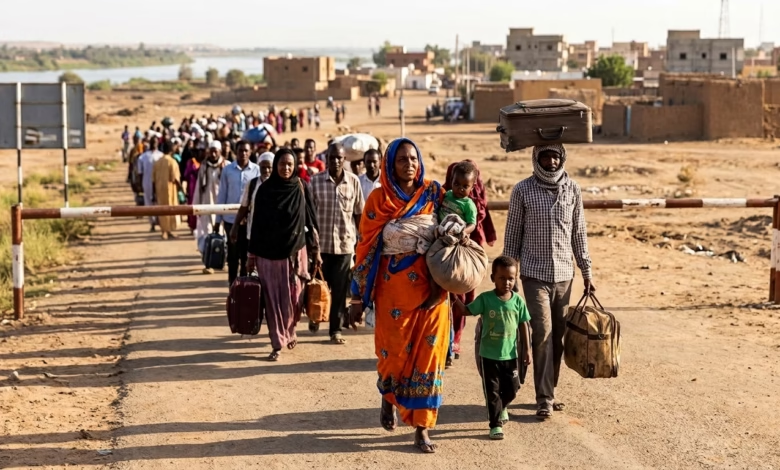
In Times Of Major Armed Conflicts, The Tragedy Of Peoples Is Not Limited To The Moment Of The Outbreak Of The First Danger And The Accompanying Waves Of Mass Displacement Fraught With Terror And Nothingness, But Extends To Include Deeper And More Complex Transformations Related To The Structure Of Human Mobility, Redrawing Diaspora Maps, And Intermittent Return That Oscillates Between Hope And Compulsion. The Sixth Cross-Border Movement Monitoring Report, Displacement Tracking Matrix – DTM, Issued By The Displacement Tracking Matrix Of The International Organization For Migration On October First 2026, Presents An Analytical Document Explaining The Details Of These Complex Dynamics In The Sudanese Landscape, Extending Through Field Monitoring And Analysis Across The Time Period Between January 2024 And August 2026.
The Importance Of This Work Is Linked To The Ability To Track Reverse Movement, That Is The Flow Of Individuals And Groups Coming From Neighboring Countries Toward The Sudanese Interior, Which Is Known As “Intermittent Return” Or “Fluid Cross-Border Movement”. While The Bloody Conflict Between The Sudanese Armed Forces And The Rapid Support Forces, Since Its Outbreak In Mid-April 2023, Has Resulted In The Displacement Of Approximately 4,681,314 Individuals Across International Borders Toward Neighboring Countries, The Documented Field Material In This Report Reveals Another Horizon No Less Important; The Displacement Tracking Matrix Recorded The Crossing Of 1,110,605 Individuals From Neighboring Countries Returning Inside Sudanese Territory During The Period Extending From January 2024 To August 2026. This Huge Gap Between The Million-Scale Departure Figures And The Utilitarian Or Compulsory Return Figures Reveals A Tragic Reality In Which The Volatile Security Dimension Inside Sudan Intertwines With The Increasing Legal And Economic Pressures In Diaspora And Asylum Countries.
The International Organization For Migration Relies In Formulating This Analytical Picture On A Dual Methodology Combining Counting Of Flow Numbers Through “Flow Monitoring Count” And Conducting Individual Questionnaire Interviews Through “Flow Monitoring Survey”. These Field Tools Are Distributed Across Seven Strategic Main Crossing Points Including Border Crossings With Egypt In Northern State, Specifically Argeen And Ashkeet Crossings, And Border Crossings With Chad In Darfur States, Such As Adikong And Tina And Um Dukhun, In Addition To Gallabat / Metema Crossing On The Ethiopian Border In Gedaref State, And Lafa Border Crossing With Eritrea In Kassala State. Through Statistical Weighting Of Data To Equalize Differences In Field Flow Volumes Across Different Crossings, The Report Succeeds In Reducing Bias Rates And Achieving A High Degree Of Reliability And High Accuracy In Weighting Trends And Behavioral Motives Of Crossing Populations.
The Report Provides A Demographic Analysis Of The Population Composition Of Individuals Crossing Toward The Sudanese Interior, Highlighting That The Vast Majority Of Crossers, Whose Percentage Reached About 89%, Are Sudanese Citizens Whose Reasons For Staying In Neighboring Countries Were Cut Off Or Who Decided To Return To Check Their Properties And Families, While Foreign Nationals And Non-Sudanese Constituted Only About 11% Of Total Crossers. Field Data Reveals A Tangible Shift In Gender And Age Structure Of These Crossers; Women And Girls Constituted The Largest Proportion Of Flows At About 58%, While The Percentage Of Males Was About 42%. This Striking Disparity In Gender Ratios Reflects The Fact That Many Sudanese Families Preferred To Favor The Movement Of Women And Children To Return And Check Field And Domestic Conditions In States That Have Witnessed Relative Stability, Or To Benefit From Educational Services And Available Aid, While Some Males Remained In Diaspora Countries Or In Remote Work Areas.
On The Level Of Age Groups, The Report Clarifies That The Youth Category Extending Between Eighteen And Fifty-Nine Years Represents The Solid Core Of Crossers At A Rate Of 63%, While Children Under Eighteen Years Record A High Rate Reaching 34% Of Total Movers. In Contrast, The Percentage Of Elderly People Over Sixty Years Does Not Exceed About 3% Only. Regarding Travel And Trip Organization, Data Indicates That 57% Of Crossers Moved Alone As Independent Individuals, While 43% Of Them Traveled Accompanied By Members Of Their Families. Means Of Transport Used To Cover These Desert And Arduous Distances Vary Greatly; Public Transport Means, Such As Buses And Minibuses, Take The Largest Share At A Rate Of 74%, Followed By Movement On Foot Or Using Animal-Drawn Carts At A Rate Of 13% — Which Is The Most Common Means Across The Border Strip With Chad — Then Private Or Rented Vehicles At A Rate Of 12%, And Finally Cargo Trucks And Transport Belts At A Rate Of 2%.
As For Identity And Identification Documents Carried By Crossers To Sudan, The Report Shows That The Vast Majority Possess One Or More Forms Of Official Documents, Where Passport Tops The List Of Documents Held By 55% Of Respondents, Followed By National Identity Card At A Rate Of 39%, Then Birth Certificates At A Rate Of 2%. In Contrast, Data Showed That Documents Related To Refugee Status Or International Protection Are Characterized By Extreme Scarcity; Holders Of Refugee Cards Did Not Exceed 1%, And The Percentage Of Asylum Seeker Certificates Was Less Than 1%. It Is Noteworthy That About 9% Of The Total Crossers Cross The Border Without Holding Any Official Identification Document At All, A Phenomenon Whose Frequency Rises In A Particularly Worrying Manner At The Western Border With Chad, Where Informal Movement Forms And Tribal Intermingling Across Both Sides Of The Border Are Active.
The Border Corridor Extending Between The Arab Republic Of Egypt And The Republic Of Sudan Constitutes The Heaviest And Most Influential Axis In The Map Of Population Movement Across Borders Throughout The Monitoring And Follow-Up Period. This Northern Corridor Alone Accounted For About 80% Of Total Crossing Movement Recorded Inside Sudan From All Neighboring Countries, At 887,715 Individuals Who Crossed The Border From Egypt To Sudan Between January 2024 And August 2026. In Historical Comparison Of The Growth Of This Field Movement, The Report Notes That Return Movement From Egypt Was Very Limited During 2024 As It Recorded Only 42,418 Crossing Movements, However It Witnessed An Explosion And Record Escalation During 2025 Recording 426,639 Individuals. This High Momentum Continued With The Same Density During The First Eight Months Of 2026, Where The Crossing Of 418,658 Individuals Was Recorded, Which Equals Eighty-Nine Percent Of Total Movement Recorded Throughout The Entire Year Of 2025.
The Crossing Process Is Distributed Across The Two Main Crossings In The North: The Arterial Argeen Crossing Located West Of The Nile Which Received The Largest Share At A Rate Of 65% (576,430 Individuals), And The Arterial Ashkeet Crossing Linked With Railway Lines And River Transport Near Wadi Halfa At A Rate Of 35% (311,285 Individuals). The Detailed Study Of The Demographic Pattern Of Returnees From Egypt Shows That All Of Them Belong To Sudanese Nationality At A Rate Of 100%. Also The Return Situation From Egypt Is Characterized By A Clear Family And Familial Nature Compared To Other Crossings; Where 65% Of Them Belong To The Age Group Between 18 And 59 Years, While Children Under Eighteen Constitute About 32%, And 51% Of Them Travel Within Integrated Family And Familial Groups.
When Investigating Patterns And Mechanisms Of This Return From Egypt, The Report Reviews The Fact That 64% Of Sample Individuals Crossed The Border Within Voluntary And Organized Return Programs Supervised By Governmental Bodies And Concerned Authorities, While 31% Carried Out Automatic And Independent Return Without Relying On Support Programs. Data Also Reveals The Existence Of A Rate Of 5% Of Forced Return Cases Or Security Deportation Trips. Return Mechanisms Have Witnessed Tangible Development; After Return Programs In Their Early Stages Focused On Senior Government Employees And Their Families, They Shifted In Recent Stages Toward Cadres And Members Of University Teaching Bodies And Workers In The Education Sector. In Parallel, The Decision Of Sudanese Educational Authorities To Reopen The Door For Registration And University Examinations Locally Inside Khartoum State And Close External Centers Led To The Flow Of Thousands Of Students And Their Families Returning To The Country To Continue Their Academic Path.
This Intensive Reverse Movement Cannot Be Separated From The Increasing Economic And Administrative Pressures In The Country Of Displacement; 73% Of Returnees Via The Egyptian Corridor Reported That The Relative And Security Improvement In Their Original Areas Was The Most Prominent Reason For Return, However 26% Explicitly Pointed To Facing Legal And Administrative Difficulties Related To Residence And Renewal Of Documents In Egypt, While 17% Pointed To Economic Pressures Represented By Rising Cost Of Living And Declining Purchasing Power. This Curve Becomes Clearly Evident When Looking At The Target States Of Return; Khartoum State Topped The List At A Rate Of 42% Of Returnees From Egypt, Followed By Gezira State At A Rate Of 18%, Then River Nile State At A Rate Of 12%, And Northern State At A Rate Of 9%. These Figures Reflect An Overwhelming Desire Among Population To Re-Stabilize In The Capital And Relatively Safe States In Central And Northern Sudan, Despite The State Of Uncertainty And Field Risks That Still Surround Many Areas.
When Moving To Analysis Of The Western Corridor Extending Between Darfur Region And The Republic Of Chad, We Find Ourselves Facing A Completely Different Pattern Of Population Movement Dynamics Across Borders; Where Institutionalized And Government-Managed Manifestations Recede In Favor Of A Complex Network Of Spontaneous Movements, Extended Ethnic Patterns, And Informal Desert Paths. This Corridor, Which Witnessed The Crossing Of Hundreds Of Thousands Of Sudanese Citizens And Refugees Between The Two Sides Of The Border, Reflects An Extremely Harsh And Complex Human Experience, As Local Infrastructure Destruction Intertwines With The Severity Of Armed Conflict In Different Darfur States, Especially West Darfur State And Its Capital El Geneina, Which Witnessed Wide-Scale Forced Displacement Waves Toward Chadian Territories In The Early Stages Of Conflict.
Field Data Monitored Across Crossings Such As Adikong And Tina And Um Dukhun Reveals That Movement Across The Chadian-Sudanese Border Is Characterized By A High Degree Of “Frequency Fluidity”; Where The Largest Part Of Return Flows Cannot Be Classified As A Final Decision Of Permanent Stability, But As A Temporary And Risk-Fraught Mobility Imposed By Harsh Conditions In Refugee Camps In Eastern Chad. Field Estimates Indicate That Deterioration Of Humanitarian Conditions Inside Adri And Abeche Camps, And Severe Shortage In Food And Water And Medical Services Provided By International Organizations, Pushed Thousands Of Sudanese Families To Risk Check-Up Or Seasonal Return To Their Original Villages And Areas In Darfur. These Movements Often Come In Conjunction With Rainy Agricultural Seasons, Where Population Tries To Reproduce Their Local Livelihood Means And Cultivate Their Basic Crops To Avoid Imminent Famine, Despite Security Fragility And Recurrence Of Armed Attack Incidents.
Unlike The Northern Corridor With Egypt Which Is Dominated By Modern Transport Means Such As Buses And Public Vehicles, Crossing Movement Via The Chadian Corridor Relies Widely On Alternative And Traditional Means. Movement On Foot And Use Of Animal-Drawn Carts And Traditional Truck Vehicles Accounts For A Very High Percentage Of Total Field Movement There. This Is Due To The Nature Of Geographic Ruggedness Of The Desert Expanse And Absence Of Paved Roads, In Addition To Lack Of Financial Ability Among Most Displaced And Refugees Who Lost All Their Assets And Properties As A Result Of Violence And Destruction Acts. Also Movement In This Corridor Is Characterized By Almost Complete Absence Of Official Identification Documents Among Crossers, Where The Majority Of Individuals Cross The Border Relying On Extended Family And Border Tribal Ties Between The Two Countries, Which Makes Documentation And Statistical Monitoring A Major Methodological Challenge For Teams Of The International Organization For Migration.
The Sociological Analysis Of Return Via The Chadian Strip Reveals A Human Dilemma; Return Here Does Not Necessarily Mean Recovery Or Arrival To Safety, But In Many Cases Expresses A Sharp Trade-Off Between Death From Hunger And Marginalization In Border Refugee Camps, Or Risking Return To An Environment Still Suffering From Lack Of Security, Dismantling Of State Institutions, And Dominance Of Weapons. This Circular Movement Between Camps And Original Villages Creates A State Of Extended Instability, And Increases Exposure Of Children And Women To Security Risks And Gender-Based Violence Incidents.
In The Eastern Region Of Sudan, The Report Draws Another Picture Of Movement Across Borders Adjacent To Ethiopia And Eritrea Via Gallabat / Metema Crossing In Gedaref State And Lafa Crossing In Kassala State. Although The Numerical Flow Volume In This Axis Remains Less Compared To The Egyptian Corridor, It Carries Strategic And Economic Importance Of Great Significance Given The Geographic Location Of Eastern States As A Possession And Agricultural Production Center, And As A Commercial Artery Linking The Country With The Red Sea And The Neighboring Ethiopian Region.
Motives And Forms Of Cross-Border Movement Via The Ethiopian And Eritrean Axis Vary Between Voluntary Return Of Sudanese Who Sought Refuge During The Eruption Of Battles In Central States, And Reverse Displacement And Asylum Movement Of Foreign Nationals And Seasonal Labor. Field Data Reveals That An Important Part Of Movement Via Gallabat Crossing Is Linked To Economic Dynamics And Border Commercial Activities, In Addition To Movements Of Seasonal Agricultural Labor On Which Rain-Fed Mechanized Projects In Gedaref State Depend. Political And Security Changes Inside Some Adjacent Ethiopian Regions, Such As Amhara And Tigray Regions, Have Caused Continuous Fluctuations In Crossing Flows, Where Some Sudanese Who Took Ethiopia As Temporary Refuge Were Forced To Quickly Return To Sudan Following The Outbreak Of Security Disturbances And Local Armed Conflicts In Those Areas.
As For The Eritrean Border Via Kassala State, Movement Via The Reopened Lafa Crossing Witnesses Close Social And Commercial Intertwinings Between Population Components On Both Sides Of The Border. This Crossing Provided A Vital Window For Movement Of Individuals To Obtain Medical Care, Check Families, And Purchase Basic Commodities Under Conditions Of Geographic Siege And High Prices Imposed By War On Eastern Sudan States. Survey Data Clarifies That Returnees Via Eastern Borders Tend To Settle In States With Relatively Better Security Levels Such As Gedaref, And Kassala, And Red Sea, In Addition To River Nile State, Where Many Prefer Not To Risk Immediate Return To Direct Contact States Such As Capital Khartoum Or Gezira State Except After Complete Verification Of Calm Field Conditions.
Reading Of Data Of The Eastern Axis Shows That Return Here Is Closely Linked To Cost And Available Opportunity Calculations; Relative Geographic Proximity And Ease Of Movement And Cultural Intermingling Make Eastern States A Rest And Temporary Stability Station For Many Returning Families, Which Use These States As Rear Bases For Managing Their Affairs, And Following Up Their Commercial Works, Or Waiting For The Appropriate Opportunity To Reorganize Their Residential And Professional Conditions In The Capital Or Other States.
Deep Understanding Of The Large Total Number Of Returning Samples To Sudan Requires Going Beyond Superficial Reading That May Interpret Return As A Sufficient Indicator Of End Of War Or Establishment Of Comprehensive Security In The Country. The Report Provides An Analysis Of Complex Motives That Pull Returnees Between Sharp Expulsion Factors In Neighboring Countries And Limited And Risk-Fraught Attraction Factors Inside The Homeland.
On The Side Of Expulsion Factors From Diaspora And Asylum Countries, Results Of Field Interviews Indicate That Increasing Administrative And Legal Restrictions Stand At The Forefront Of Reasons That Made Staying Abroad Extremely Difficult For Hundreds Of Thousands Of Sudanese. These Restrictions Include Complications Related To Obtaining Renewal Of Official Residences, Rising Fees Of Governmental Transactions, And Tightening Of Movement And Work Procedures, Which Deprives Most Families Of A Regular Income Source And Makes Them Vulnerable To Administrative Pursuits. In Addition To That Is The Escalating Economic Pressure Resulting From High Inflation Rates In Host Countries, Rising Housing Rental Costs, And Food Prices, And Health And Educational Service Fees That Have Become A Huge Financial Burden That The Majority Of Displaced Families Cannot Bear For Long Periods, Especially With Exhaustion Of Their Financial Savings Over More Than Three Years Of Conflict.
On The Side Of Attraction And Return Factors To The Interior, Longing For Homeland And Desire Of Families To Protect Their Real Estate Assets And Private Properties From Looting And Seizure Constitutes A Central Motive For Return, Even If It Is A Partial Or Check-Up Return Implemented By One Family Member. Also Governmental And Local Initiatives Related To Restoring Some Basic Services Played A Tangible Role In Encouraging Return Flows; The Decision To Reoperate Some Health Facilities, And Resume Study And Examinations In Educational And University Institutions Inside Safe States Such As Khartoum And Gezira And Northern State, Stimulated Thousands Of Families To Return To Ensure Not Losing The Academic Future Of Their Children.
However This Return, As The Report Clarifies, Remains Characterized By “Fluidity And Fragility”; Many Returnees Find Themselves Facing A Bitter Human Reality In States Of Original Habitat, Where They Suffer From Damage Of Electrical And Water Networks, Deterioration Of Health Services, And Lack Of Job Opportunities, In Addition To Large Rise In Prices Of Consumer Commodities. As A Result, Lifestyle Of Many Returnees Transforms Into Continuous Mobility And Flexible Stagnation, Trying To Adapt To Changing Conditions Through Moving Between Less Dangerous States, Or Moving Some Family Members To Safe Areas Inside The Country While Keeping Others In Farther Areas, Which Deprives The Sudanese Family Of Its Usual Stability And Makes It In A State Of Continuous Internal Displacement After Crossing Borders.
The Continuous Flow Of More Than One Million Returnees Inside Sudanese Territories Via Different Crossings Throws Heavy And Direct Consequences On Reception And Final Habitat States, And At The Forefront Khartoum, And Gezira, And River Nile, And Northern, And Gedaref. These States Enter Into Real Confrontation With Accumulated Crises Including Severe Pressure On Public Services Already Dilapidated Due To War, And Increasing Humanitarian Needs For Food And Shelter And Medical Care, At A Time When Local Authorities Suffer From Weak Financial Resources And Decline Of International Support Provided Through Humanitarian Organizations.
In Khartoum State, Which Receives The Largest Percentage Of Returnees Via Northern Borders, The Dilemma Of Population Distribution And Initial Reconstruction Emerges; Thousands Of Families Return To Neighborhoods And Areas That Were Subjected To Partial Or Total Destruction In Their Infrastructure, In Addition To Spread Of Unexploded Explosive Bodies And Resulting Security Risks. Rapid Flow Of Population Leads To Increased Demand For Basic Commodities And Food Materials, Which Raises Local Inflation Rates And Pressures Limited Supply Markets. As For Northern And River Nile States, Which Received Huge Numbers Of Returnees And Displaced Equally, Health And Educational Facilities Operate At Multiples Of Their Maximum Absorptive Capacity, Which Causes Decline In Service Quality And Emergence Of Muted Social And Economic Tensions Related To Competition Over Available Resources.
Also These Reverse Movements Impose Huge Challenges On Humanitarian Response System Managed By International And Local Organizations; The Situation Requires Transition From Emergency Relief Strategies Directed To Refugees In Neighboring Countries To Integrated Response Programs For Return And Internal Stability. This Includes Necessity Of Providing Direct Cash Assistance To Returnees, And Supporting Rapid Livelihood Projects, And Rehabilitation Of Health And Educational Facilities And Water Stations, In Addition To Providing Legal Support To Protect Real Estate Property Rights And Issuing Identification Documents For Those Who Lost Them During Displacement Trips.
These Complex Dynamics Confirm That The File Of Cross-Border Movement In Sudan Should Not Be Read From A Mere Security Or Statistical Perspective, But As A Bitter Humanitarian And Developmental Crisis That Requires A Comprehensive Strategic Vision Dealing With Causes Of Displacement And Return Equally, And Places In Its Priorities Protection Of Population And Provision Of Dignified Life Requirements For Them Inside Sudan And In Diaspora Countries.
Shrinkage Of Presence Of Central State And Decline Of Efficiency Of Official Sovereign Institutions During Armed Conflict Led To Transformation Of The Border Strip From Mere Geographic Contact Lines Between Sovereign States To Flexible And Spontaneous Sociological And Economic Spaces. Border Crossings Are No Longer Mere Administrative Checkpoints For Verifying Documents And Stamping Passports, But Became A Vital Artery For A Parallel Political Economy In Which Returning Population Movement Forms Intertwine With Informal Commercial Activities, And Smuggling Networks, And Social Expressions Represented In Extended Kinship Across International Borders.
Field Data In Darfur, And Northern, And Gedaref, And Kassala States Shows That The Wide Gap Between Official Figures Recorded At Flow Monitoring Points Of The International Organization For Migration And Actual Numbers Of Crossers Is Due In Large Part To Density Of Alternative Roads Taken By Crossers. While Field Follow-Up Tools Seek To Maintain Highest Degrees Of Statistical Reliability, The Nature Of Vast Deserts And Open Borders Makes “Informal Crossing Economy” A Real Fact Providing Flexible Logistic Solutions For Hundreds Of Thousands Of Displaced And Returnees. This Informal Movement Relies On Traditional And Modified Transport Means Suitable For Terrain Ruggedness, Such As Unnumbered Four-Wheel-Drive Trucks, And Heavy Transport Cars Resistant To Sands, In Addition To Livestock And Self Walking On Foot In Mountain Passes And Water Valleys.
This Reality Has Produced A New Network Of Local Actors And Border Brokers Who Manage Transport Operations, And Insurance, And Foreign Currency Exchange In Informal Ways, And Facilitate Crossing Of Families Lacking Identification Documents Or Legal Residences. Also Border Fluidity Led To Transformation Of Villages And Towns Adjacent To Borders — Such As Adri In Chad, And Gallabat And Metema On Ethiopian Border, And Wadi Halfa And Argeen In The North — Into Emergency Commercial And Logistic Centers In Which Exchange Operations Of Food Commodities And Fuels And Medical Supplies Are Managed. These Informal Economic Activities, Despite Their Harshness And High Financial Cost And Associated Security Risks, Have Become A Vital Safety Network Granting Returnees And Displaced Ability To Continue And Survive Under Complete Paralysis That Hit The Official Financial And Banking System Inside Many Sudanese States.
Theoretical Understanding Of The Phenomenon Of Frequency And Forced Return Integrates With Political Analysis Of Changes That Occurred On Policies Of Regional Neighboring Countries Toward The File Of Those Fleeing Sudanese Conflict. After An Initial Period Characterized By Flexible Humanitarian Responses And Relative Opening Of Border Gates Following War Outbreak In April 2023, The Period Extending Between 2024 And 2026 Witnessed A Gradual And Tangible Shift Toward Tightening Regulatory And Security Procedures, And Re-Imposing Strict Restrictions On Granting And Renewing Entry Visas And Official Residences In Most Direct Neighboring Countries.
These Transformations Manifested In The Northern Corridor With The Arab Republic Of Egypt Through Activation Of Legal Mechanisms Organizing Residence Of Foreigners, And Linking Renewal Of Documents With Specific Financial And Administrative Transactions, In Addition To Administrative Control Campaigns And Organization Of Unofficial Schools And Service Institutions. These Measures Directly Reflected On Purchasing Power And Absorptive Capacity Of Middle And Poor Classes Of Displaced Sudanese, Making Cost Of Staying In Host Countries Exceed Cost Of Return To Areas With Relatively Stable Security Conditions Inside Sudanese Interior. In Contrast, Official And Executive Sudanese Bodies In Cooperation With Regional Partners Launched Programs To Facilitate Organized Voluntary Return, Which Received Great Demand From Families No Longer Able To Keep Up With Daily Living Requirements And Education And Housing Fees Abroad.
On The Southern And Western Level, The Republic Of South Sudan And The Republic Of Chad Faced Huge Demographic And Economic Pressures Exceeding The Capacities Of Their Already Weak Infrastructure. In Chad, Huge Influx Of Displaced From Darfur States Led To Pressure On Limited Water Resources And Dry Pastures In Wadai State And Adjacent Areas, Which Raised Security And Political Concerns Related To Demographic And Social Balance In The Region. As A Result, Border Camps Became Humanitarian Expulsion Points Due To Severe Shortage In Food Aid And International Health Care, Which Pushed Large Numbers Of Families To Take Decision To Return To Their Original Areas In Darfur, Despite Deficiency In Basic Services And Control Of Armed Factions. In South Sudan, Movement Of Return Of Southern Citizens Who Were Settling In Sudan For Long Decades Intertwined With Flows Of Sudanese Refugees, To Find All Themselves In Crowded Transit Centers Such As Rink Town, Suffering From Disruption Of Supply Chains And Extremely Harsh Health Conditions, Which Transforms Journey Of Searching For Safety Into A Vicious Circle Of Repeated Displacement.
Analytical Deconstruction Of Demographic Data Mentioned In The Report Of The International Organization For Migration — Which Showed That Women And Children Constitute About Eighty-Nine Percent Of Total Crossers And Movers — Reveals A Central Gender Dimension Reshaping The Concept Of Sudanese Family And Its Lifestyle In Wartime. This Very High Percentage Is Not Just A Passing Statistical Number, But Is A Stark Expression Of Phenomenon Of “Cross-Border Family Dispersion”, Where Most Families Were Forced To Divide Their Members Between Diaspora Countries And Interior Regions Based On Specific Functional And Adaptive Distribution Aiming To Reduce Risks And Maximize Survival Opportunities.
In This Adaptive Context, The Main Breadwinner Or Young Males Remain In Neighboring Countries Or In Remote Work Areas Inside Sudan Or Outside It For Purpose Of Searching For Earning Opportunities, And Providing Cash Transfers, Or Protecting Family From Dangers Of Forced Recruitment And Security Pursuits Linked To Conflict. At The Same Time, Women Accompanied By Children And Elderly Launch Return Trips Toward Relatively Safe States Or Original Villages, For Several Structural Reasons At The Forefront Lower Cost Of Daily Living Inside, And Possibility Of Obtaining Free Housing In Relatives’ Houses Or Shelter Centers, In Addition To Seeking Benefit Of Children From Reopening Of Schools And National Educational Institutions. Also Women Often Assume Responsibility Of Checking Real Estate Properties, And Restoring Household Assets, And Cultivating Small Land Plots In Agricultural States To Ensure Minimum Self Food Sufficiency.
However These New Roles Loaded On Shoulders Of Women Were Accompanied By Unprecedented Rise In Levels Of Risk And Fragility; Women And Children During Desert Border Crossing Trips Suffer From Complete Absence Of Primary Health Services, And Safe Delivery, And Protection From Gender-Based Violence, In Addition To Exposure To Financial Extortion At Informal Checkpoints. In Addition To That Is The Complex Legal Burden Resulting From Loss Or Damage Of Official Identification Papers And Birth Certificates Of Children Born In Diaspora Or During Escape Trips, Which Deprives Hundreds Of Thousands Of Children Of Their Basic Citizenship Rights In Obtaining Education, And Health Care, And Legal Recognition Of Personal Identity, And Creates An Entire Generation Suffering From Risk Of Statelessness And Extended Administrative Marginalization.
In Light Of Institutional Vacuum And Financial Deficit Suffered By International Humanitarian Organizations And Official Governmental Organizations To Meet Needs Of Returning Family Flows, Community Protection Networks And Local Solidarity Emerged As The Last Defensive Line And Main Actor In Receiving Returnees And Managing Them. Popular Initiatives, And Extended Family Links, And Living Emergency Rooms Managed By Young Volunteers In Various Sudanese States Played A Historical Role In Providing Emergency Shelter, And Providing Food Meals, And Rehabilitating Wells And Health Centers With Available Local Capabilities And Popular Donations.
However, The Growing Volume Of Rapid Return And Frequency Movements Exceeds The Absorptive Capacity Of These Spontaneous Popular Initiatives. Process Of Local Reintegration Of Returnees In States Such As Khartoum, And Gezira, And River Nile, And Gedaref Faces Dilemmas Related To Destruction Of Basic Infrastructure; Where Returnees Find Themselves In Environments Lacking Networks Of Potable Drinking Water, And Electricity, And Hospital Services, In Addition To Almost Complete Collapse Of Markets And Sustainable Income Sources. Also In Many Areas Sharp And Undeclared Disputes Arise Over Real Estate Property Rights And Lands, Due To Operation Of Houses And Premises Not Owned For Purpose Of Temporary Shelter, Or Loss Of Original Property Documents During Armed Battles.
These Compound Challenges Make Reintegration A Worried And Unstable Process; Many Families Returning To Their Areas Remain In State Of Anticipation And Permanent Readiness For Renewed Displacement If Security Conditions Relapse Or Scarce Humanitarian Supplies Collapse. Therefore, Merely Crossing Borders And Returning To Sudanese Geography Does Not Mean At All Reaching Safety Shore Or Achieving Permanent Stability, But Represents Beginning Of A New Phase Of Resilience And Endurance In An Environment Characterized By Economic And Security Fragility, And Lacking A Developmental And Comprehensive Strategy Supporting Social Stability And Economic Recovery In The Long Term.
Critical In-Depth Reading Of Cross-Border Movement Monitoring Report In Sudan Confirms That Repercussions Of Demographic And Humanitarian Crisis Are No Longer Limited To Internal Geographic Scope Of Republic Of Sudan, But Extended To Create Deep Geopolitical Penetrations And Fingerprints In Structure Of Entire Regional Neighboring Countries. The Sudanese Border Strip Extending Across Seven Countries Represents A Critical Joint In National Security System Of East And West Africa And Nile Basin; This Rapid Collapse Of Sovereign Structure Of Sudanese State, And Million-Scale Mutual Human Movement Waves, Led To Redrawing Geopolitical Maps And Power Balances In Border Contact Areas.
These Repercussions Clearly Manifest In Case Of Mutual Interaction Between Internal Sudanese Disorder And Security Fragility In Countries Such As Chad And South Sudan And Central African Republic. In The Western Strip, Effects Of Displacement And Return Did Not Stop At Limits Of Humanitarian Crisis, But Exceeded It To Touch Sensitive Ethnic And Political Balances Inside Chadian Social Components, Where Huge Population Flows Across Borders Caused Pressure On Limited Natural And Water Resources, And Created Fertile Environment For Cross-Border Ethnic And Political Polarization Beyond Official Borders. This Reality Led To Internal Security Repercussions In Chad, Manifested In Increasing Concerns Among Central Authorities In N’Djamena About Possibility Of Transfer Of Spark Of Armed Conflict And Widespread Weapons In Darfur Region To Inside Chadian Territories Via Extended Tribal Networks On Both Sides Of Border.
In The South, Flows Of Displaced And Returning Sudanese And South Sudanese Deepened The Extended Economic And Political Crisis In Republic Of South Sudan, Which Already Suffers From Fragility Of Concluded Peace Agreement And Deterioration Of Its Structural Capabilities To Provide Public Services. State Of Severe Overcrowding In Border Transit Areas Such As Rink Town Transformed The Border Strip Into A Security And Economic Friction Area, Where Activities Of Irregular Armed Groups Intersect With International Smuggling Networks, Which Threatens To Undermine Formal Stability In Northern States Of South Sudan And Increases Complexity Of Political Scene In Juba.
As For The Northern And Eastern Axis, Geopolitical Impacts Were Not Less Dangerous, Although They Took A More Stringent Institutional And Sovereign Character. Each Of Egypt And Ethiopia And Eritrea Found Itself Facing A Complex Security And Regional Equation, Requiring Trade-Off Between Humanitarian And Moral Commitments Toward Sudanese People And Security And Economic Risks Resulting From Hosting Large Numbers Of Displaced In Light Of Suffocating Global And Regional Economic Crises. This Reality Led To Gradual Transformation Of Neighboring Countries’ Policies Toward Cautious Regulatory Frameworks, Tending To Manage Movement Across Borders As An Issue Of Sovereign Control And High-Risk Security, Which Manifested In Tightening Visa And Residence Procedures, And Increasing Spread Of Security Forces And Field Surveillance On Crossings And Desert Gates.
The Report Provides An Implicit Document Revealing Limits And Shortcomings Of International System For Managing Humanitarian Crises In Facing Modern Conflicts Characterized By Fluidity And Complexity. The Traditional Humanitarian Model That Relies On Linear Response Starting With Providing Emergency Aid In Border Asylum Camps Then Direct Transition To Solutions Of Re-Stabilization Or Voluntary Return, Has Completely Collapsed In Front Of Sudanese Reality In Which Internal Displacement Operations, And Cross-Border Escape, And Forced And Frequency Return Intertwine At The Same Time.
Crisis Of Humanitarian Diplomacy Manifests In Huge Funding Gap Faced By UN Agencies And International Relief Bodies, Where Decline Of International Funding And Financial Stress Among Donor Countries Caused Record Inability To Meet Minimum Limits Of Needs Of Millions Affected By War Inside Sudan And In Neighboring Countries. This Funding Deficit In Turn Caused Humanitarian Organizations To Reduce Food Aid Rations And Health Care In Diaspora Camps, Which Transformed These Camps From Protection Areas Into Pressing Environments Forcing Families To Risk Return To Conflict And Security Fragility Areas Inside Sudanese Interior.
Also Field Developments Showed Inability Of International Mechanisms To Protect Civilians And Returnees During Arduous Crossing Trips Across Deserts And Informal Paths. Data Shows That International Humanitarian Support Networks Often Remain Confined In Fixed Monitoring Points And Specific Centers Covering Only A Tiny Percentage Of Vast Border Space, Which Leaves Vast Majority Of Crossers At Mercy Of Informal Networks, And Border Brokers, And Armed Groups That Impose Hefty Tolls And Fees On Movement. This Separation Between International Relief Mechanisms And Field Movement Reality Reflects Urgent Need To Rethink Philosophy Of “Cross-Border Humanitarian Action”, And Transform It From Model Of Fixed Bureaucratic Response To Flexible Dynamic Model Accompanying Population Movement And Adapting To Their Difficult Adaptive Choices.
Based On Statistical Data Extending Between January 2024 And August 2026, The Geopolitical And Demographic Future Of Cross-Border Movement In Sudan Can Be Analyzed Through Three Main Prospective Scenarios Governing Path Of Conflict And Regional Policies.
The First Scenario, Which Is Scenario Of “Extended Frequency Fluidity”, Is Based On Hypothesis Of Continuation Of State Of No Military And Political Resolution In Sudan, With Armed Conflict Remaining At Varying Levels Of Intensity Between States. In This Scenario, Crossing Movement Across Borders Will Transform Into A Permanent Lifestyle And Way Of Life For The Vast Majority Of Affected Population, Where Reliance On Circular Frequency Mobility Between Diaspora Countries And Sudanese Interior Continues. Families Will Continue To Divide Their Members Between Hosting Areas Abroad To Invest Available Educational Or Relief Opportunities, And Between Original Habitat States To Protect Property And Real Estate And Produce Local Food. This Scenario Will Require International Organizations To Find Flexible Legal And Humanitarian Frameworks Recognizing “Cross-Border Citizenship” And Facilitating Frequency Movement Instead Of Treating It As An Administrative Knot Or Illegal Movement.
As For The Second Scenario, Which Is Scenario Of “Security Contraction And Forced Deportation”, It Assumes Escalation Of Pressures Of Economic And Political Crises Inside Regional Neighboring Countries, Which Pushes Governments Of These Countries To Take Stringent Decisions Involving Closing Border Crossings, And Tightening Administrative And Security Deportation Procedures, And Canceling Managed Voluntary Return Programs. This Scenario Will Lead To Forced And Massive Return Flows Of Hundreds Of Thousands Of Sudanese Toward The Interior, Without Being Met By Real Restoration Of Services Or Establishment Of Security, Embodying The First Features Of This Compound Fragility In The Institutional Vacuum That Surrounds Return Regions And Areas, Where War Was Not Merely A Limited Military Confrontation Between Conflicting Parties, But Was In Its Essence A Systematic Dismantling Process Of What Remained Of Local State Apparatuses And Administrative And Executive Governance Frameworks.
Areas To Which Returnees Flow Are Characterized By Complete Erosion Of Administrative Authorities And Collapse Of Law Enforcement Apparatuses, Which Leaves Entire Communities Without Official Security Cover Or Judicial Reference Capable Of Protecting Properties And Resolving Daily Emerging Disputes. In This Vacuum, Issue Of Land And Real Estate And Agricultural Assets Becomes A Latent Flame Capable Of Igniting New Community Conflicts; A Large Number Of Returnees Wake Up To A Painful Reality In Which They Found Their Historical Lands And Private Houses Occupied By Other Groups, Or Seized In The Furnace Of Chaos And Armed Violence That Accompanied First Waves Of Escape. This Intertwining Between Documentary Loss And Usurpation Of Properties Causes Aggravation Of Ethnic And Tribal Tensions, And Generates Deep Sense Of Injustice Among Returnees Who Find Themselves Homeless In Villages And Cities Where They Were Born. What Increases Complexity Is Retreat Of Roles Of Native Administration And Traditional Customary Structures That Had Constituted, Over Past Decades, The Last Defensive Line And Safety Valve For Resolving Disputes And Agreeing On Use Of Resources; These Customary Leaderships Did Not Themselves Escape Effects Of War, Where They Were Subjected To Politicization And Sharp Polarization, Or Lost Their Moral Weight And Operational Ability To Impose Fair Settlements And Confront Violations.
In Parallel With This Institutional Collapse Is A Sharp And Extended Deterioration In Local Economy Driving Human Livelihood Means, Where Traditional Productive Sectors Entered Into A State Of Actual Paralysis Threatening To Undermine Daily Life Requirements. Agricultural And Animal System, Which Represents The Largest Lifeline For Majority Of Population In Different Sudanese Regions, Was Subjected To Successive Blows Represented In Looting Of Productive Assets, And Loss Of Seed Stocks And Approved Seeds, And Destruction Of Machines And Agricultural Tractors, In Addition To Crazy Rise In Fuel Prices And Basic Inputs. This Collapse In Agricultural Production Cycle Not Only Undermined Self Food Security Of Returning Family But Led To Cutting Trade Exchange Lines And Commodity Flows Between Countrysides And Main Cities, Which Dragged Region Into State Of Fragile Self-Sufficiency And Minimum Levels Of Subsistence.
Under This Distressed Environment, Parasitic And Parallel Economic Structures Known As “War Economy” Emerged And Were Nourished, Which Are Activity Networks Relying Mainly On Smuggling, And Monopolizing Basic Commodities, And Illegal Collection And Imposition Of Random Fees At Checkpoints And Control Points Spread Along National And State Roads. These Exploitative Patterns Led To Rise Of Inflation Rates To Record Figures, And Almost Complete Disappearance Of Purchasing Power Among Ordinary Citizen Who Lost Savings And Work. Add To That, Financial Paralysis That Hit National Banking System And Stoppage Of Financial Transfers Often Deprived Returning Families Of Ability To Receive Support From Their Relatives In Diaspora, To Transform Life Strategies Into A Daily Grueling And Exhausting Battle Only To Obtain Minimum Calories And Pure Drinking Water.
On The Social And Demographic Level, Community Structure In Temporary Stability Areas Suffers From Deep Disintegration And Sharp Deterioration In Cohesion And Solidarity Networks, As A Result Of Mutual Doubts And Fears Sorted By Years Of Fighting And Media And Regional Polarization. Return Of Displaced And Refugees To Their Regions Does Not Occur In A Neutral Environment, But Intertwines With Complex Demographic Reality Imposed By Years Of War And Change Of Housing And Control Map. Excessive Sensitivity And Silent Tensions Often Generate Between Host Local Communities That Bore Burden Of Crisis Throughout Past Months And New Returnees; Some Local Population View New Human Flows With Concern, Considering Them A Multiplying Factor Of Pressure On Basic Services Already Dilapidated, Such As Rare Water Stations, Health Centers Lacking Medicines, And Local Markets Scarce In Goods. In Contrast, Returnees Feel A Type Of Exclusion And Psychological Alienation Inside Their Original Areas, Where They Are Sometimes Viewed With Some Suspicion About Their Loyalties Or Motives Of Their Return, Which Nourishes Feelings Of Injustice And Internal Congestion.
On The Psychological And Emotional And Behavioral Dimension, Returning Population Carry In Their Individual Collective Memory Deep Traumatic Accumulations Resulting From Scenes Of Armed Violence, And Forced Escape, And Loss Of Relatives And Properties, And Grave Violations They Were Subjected To During Departure And Displacement Journey. These Psychological Crises And Disorders Resulting From Repeated Shocks Aggravate And Take Root In Complete And Absolute Absence Of Psychological And Social Support Services, And Absence Of Specialized Health And Psychological Centers In Different Regions Of Sudan, Which Directly And Negatively Reflects On Family Relationships, And Increases Rates Of Domestic Violence And Social Disintegration And Individual Exhaustion.
Women And Girls Bear The Largest And Most Painful Burden Of This Human Suffering; Huge Numbers Of Women Suddenly Found Themselves In Position Of Sole Breadwinners For Their Families After Killing Of Husbands Or Direct Providers, Or Their Forced Disappearance, Or Their Joining Battle Fronts. Returning Woman Fights A Daily Fierce Battle To Provide Survival Reasons For Her Children Under Conditions Lacking Personal Safety And Privacy, And Exposed To Multiplied Risks Of Exploitation And Marginalization And Abuse, With Absence Of Official Social Safety Networks. In Parallel, Children And Youth Face An Unprecedented Generational Pandemic; Interruption Of Educational Process For Several Consecutive Years, And Closure Of Schools And Universities Or Their Transformation Into Shelter Centers For Displaced Or Military Barracks, Has Deprived Millions Of Pupils And Students Of Their Primary Right To Knowledge And Intellectual Growth.
The Cost Of This Intellectual And Psychological Decline Exceeds Direct Material Losses, Because It Hits Ability Of Society To Produce Leaderships And Skills And Human Resources Capable Of Managing Development And Reconstruction Operations In The Future.
In The Midst Of These Complex Networks Of Humanitarian And Structural Crises, The Limitation Of Response Of International Relief And Humanitarian Action System Is Clearly Revealed. Despite Efforts Made By United Nations Agencies And International Non-Governmental Organizations, These Interventions Remain In Most Cases Confined To Narrow Scope Of Emergency And Urgent Relief, Represented In Distribution Of Limited Food Baskets, And Erecting Tents, And Providing Some Hygiene Tools And Primary Medical Supplies. They Are Interventions, Despite Their Utmost And Critical Importance In Saving Lives In Acute Moments, Unable By Their Nature And Operational Philosophy To Address Root Causes Of Crisis, Or To Contribute Really To Moving Wheel Of Developmental Recovery And Rebuilding Productive Assets Of Communities.
Moreover, International Humanitarian Operations In Sudanese Geography Suffer From Suffocating Structural Constraints, Starting From Strict Funding Deficit And Lack Of Response To Humanitarian Appeals From Donor Countries, And Not Ending At Logistic Obstacles, And Bureaucratic Obstacles, And Refusal Of Movement Permits, And Increasing Security Threats On Supply Lines And Field Teams. In Face Of This Recession And Shortcoming In External Aid, Community And Solidarity Local Initiatives Emerged As A Moral And Practical Alternative Representing The Only And Sustainable Lifeline For Citizens. “Emergency Rooms” And Grassroots Volunteer Committees And Youth Initiatives In Various Villages And Neighborhoods Led An Exceptional Humanitarian Epic, Where They Managed Collective Kitchens (Takayas), And Equipped Alternative Health Centers With Self Efforts, And Provided Shelter And Solidarity Networks For Returning And Destitute Families.
However These Popular Initiatives, Despite Their Boldness And Existential Importance In Alleviating Severity Of Catastrophe, Have Become Operating Under Severe Stress And Sharp Depletion In Financial And In-Kind Resources, In Addition To Targeting Of Their Cadres And Their Security Pursuit Often. From Here, It Becomes Clear That Spontaneous Community Solidarity, No Matter How Strong And Noble Its Degree, Cannot Constitute A Complete Alternative To The State And Its Developmental And Service Institutions, And Cannot Bear Burdens Of Comprehensive Reconstruction Without Organized And Sustainable International And Regional Support.
Careful Reading Of All These Interactions Leads To A Clear Truth That Current Response To File Of Return And Reintegration Suffers From A Fatal Conceptual And Strategic Imbalance; Where Return Of Displaced And Refugees Is Dealt With As A Brief Event And A Logistic Procedure Ending As Soon As Families Cross Border Checkpoints Or Arrive To Their Original Villages And Cities. This Procedural Reduction Overlooks Fact That “Return” Is Not Merely A Spatial Movement Or Geographic Transition, But Is A Political, And Economic, And Complex And Long-Term Social Process, Requiring Reformulation Of Local Social Contract And Provision Of Structural Conditions That Prevent Relapse Of Achieved Small Stability.
Dropping Requirements Of Peace And Sustainable Development From Equation Of Return Transforms These Returning Communities Into “Suspended” Communities In Limbo Of Fragility; Neither Able To Return To Camps And Neighboring Countries Which Became Narrow And Expelled Them Due To Funding Conditions And Population Tightening, Nor Able To Build And Empower In Their Country Which Lacks Security And Investment And Guaranteeing Institutions. Patchwork Approach Based On Temporary Solutions And Postponing Developmental And Political Entitlements Will Only Lead To Rooting Cycles Of Poverty And Marginalization, And Nourishing Fertile Environment For Reproduction Of Violence And Counter-Displacement.
This Complex Crisis Also Intersects With Interconnected Collapse In Infrastructure, Which Constitutes The Backbone Of Any Stability Or Community Recovery Process. Cities And Villages Receiving Returnees Did Not Spare Their Basic Networks From Destruction And Looting And Extended Marginalization; Electricity Generation Stations, And Water Purification Stations, And Communication Networks, And Roads Linking States Were Subjected To Wide Devastation That Put Them Out Of Service Completely Or Partially. Absence Of Potable Drinking Water Does Not Represent Merely Daily Suffering To Obtain Thirst Pandemic, But Goes Beyond To Become A Main Cause In Spread Of Diseases And Deadly Epidemics Such As Cholera And Dengue Fever And Chikungunya, Under Almost Complete Collapse Of Health Sector Exhausted And Closure Of Majority Of Hospitals And Treatment Centers.
On The Political And Sovereign Level, Issue Of Return And Adaptation In Sudan Remains Hostage To Complete Absence Of Any Horizon Of Comprehensive And Sustainable Political Solution Ending Armed Conflict And Stopping Bleeding Of War. As Long As Will Of War Remains Dominant Among Conflicting Parties, And As Long As Contact And Fighting Lines Remain Changeable And Flammable At Any Moment, All Reintegration And Recovery Efforts Will Remain Fragile And Governed By Field And Military Fluctuations.
Restoring Dignified Life For Sudanese Citizen On His Land Does Not Require Merely Distribution Of Aid Or Opening Border Crossings, But Calls For Serious National And International Will Establishing State Of Citizenship And Rule Of Law, And Making Sudanese Human And His Dignity And Security The Central And First Axis For Any Coming Political Or Developmental Project.
- Published Opinions Do Not Necessarily Represent The Opinion Of Nile Post