


There Is A Scene That Repeats Every Day, And We Do Not Notice Its Strangeness Unless We Pause For A Moment. You Open Your Phone In The Morning, And News Pours In On You From Every Direction, Market Numbers Rise And Fall Before Your Eyes In Real Time, Satellite Images Of The Storm Approaching The Coasts, Analysis Of A Political Speech Delivered Minutes Ago, And A New Conspiracy Theory Born Last Night And Spread Like Wildfire. We Know More Than Any Generation That Came Before Us In The History Of Humanity, And Yet A Vague Feeling Haunts Us: That We Understand Less. This Is The Paradox From Which The British Writer And Artist James Bridle Starts In His Disturbing Book “The New Dark Age: Technology And The End Of The Future New Dark Age: Technology And The End Of The Future”, To Announce That We Have Entered, Without Signing Any Declaration Of War, A New Dark Age, Not Because Knowledge Has Disappeared, But Because It Has Overflowed Beyond Our Need Until It Drowned Us.
Bridle Is Not A Traditional Technical Writer Who Preaches The Future Or Warns Of Robots That Will Take Over The World. He Is An Artist And Researcher Who Investigates How Our Tools Have Turned Into Forces That Surpass Us. The Title Of His Book Is Borrowed From A Phrase Used By Map Designers In The Middle Ages When They Reached The Edge Of The Known World And Wrote “Here There Be Monsters”. Today We Have Drawn The Map Of The Entire World, Photographed Every Street By Satellite, And Put Every Book In Our Pockets, And Yet We Have Returned To Write The Same Phrase On The Edges Of Our Mental Maps: Here There Be Monsters, But This Time They Are Of Our Own Making.
Bridle Begins His Book With A Simile That Is Almost A Key To Understanding Everything That Will Come After. He Says That Learning Programming Alone Is Not Enough To Understand Technology, Just As You Do Not Have To Be A Plumber To Enter The Bathroom. But The Deeper Paradox, As He Hints, Is That This Plumbing System May Actually Be Trying To Kill You, And We Insist On Ignoring This Truth. Our Complex Computer Systems Are No Longer Just Tools We Use, But Have Become The Infrastructure Within Which We Live. We Live Inside The Network, We Breathe Its Air, We Drink From Its Pipes, And When These Pipes Leak Or Explode, We Do Not Even Have The Language To Describe What Is Happening.
The Central Concept That Bridle Establishes In The Opening Chapter Which He Called “The Chasm” Chasm Is That The Chasm Is No Longer Between Us And Our Machines, As We Used To Imagine In Old Science Fiction Films, But Has Become Inside The Network Itself. The Network Here Is Not Just The Internet, But It Is The Hybrid Entity That Includes Humans And Politics And Culture And Technology And Energy And Climate In One Soup Whose Components Cannot Be Separated. This Chasm Is A Gap In Understanding And The Ability To Act. We Produce More Data Than Any Human Or Even Machine Mind Can Comprehend, And We Build Systems That We Are Unable To Explain Their Decisions, Then We Demand That These Systems Make Fateful Decisions On Our Behalf In Courts And Banks And Battlefields.
And To Explain How We Got Here, Bridle Returns To The History Of A Small Metaphor That Deceived Us All: The Cloud. He Reminds Us That Engineers In The Fifties Of The Last Century, When They Were Drawing Diagrams Of Electrical Systems, Were Drawing A Vague Circle With Blurred Edges And Writing Inside It “Cloud” To Represent Everything They Did Not Want To Think About. It Was An Innocent Engineering Abbreviation. But With The Growth Of Networks, This Cloud Grew And Swelled Until It Became The Center Of The Digital Universe. We Started Saying “Our Pictures Are In The Cloud, Our Money Is In The Cloud, Our Memories Are In The Cloud”. This Beautiful Metaphor Is The Most Lying Metaphor In The History Of Technology. The Cloud Is Not Light And Not Transparent And Not Weightless. It Is Old Telephone Wires, And Fiber Optic Cables Extending At The Bottom Of The Ocean, And Satellites, And Huge Warehouses Of Servers That Consume As Much Water And Electricity As Entire Cities Consume, And Are Subject To The Laws Of Countries And Taxes Of Safe Havens. When Google And Facebook Say That They Are Building Their Data Centers In Ireland Or In Northern Sweden, The Reason Is Not The Beauty Of Nature, But Low Taxes And Cheap Energy And Free Cooling. And When Digital Empires Retain Disputed Islands Such As Diego Garcia Or Cyprus, The Reason Is That The Cloud Touches The Earth There, And Its Legal Ambiguity Can Be Exploited.
This Obscuration Is Deliberate. The Absence Of Understanding Is Not A Side Defect, But It Is A Basic Feature In The Cloud Economy. When You Do Not Understand Where Your Data Goes, You Lose The Ability To Hold Accountable Who Owns It. Your Messages, Your Children’s Pictures, Your Health Records, Your Political Preferences, All Are On Infrastructure Owned By Someone Else. The Cloud Is Not Just A Bad Metaphor, It Is A Power Relationship, And Most Of Us Are Not On The Stronger Side Of It.
But Bridle Does Not Stop At This Material Criticism, And It Is An Important And Necessary Criticism. He Goes Further To Retrieve Another Meaning Of The Cloud, Forgotten Since The Fourteenth Century, From An Anonymous Christian Mystic Book Titled “The Cloud Of Unknowing”. In That Book, The Cloud That Separates Between Man And God Cannot Be Penetrated By Knowledge And Reason, But By Love And Abandoning The Desire For Complete Knowledge. The Anonymous Author Says: “Knowledge May Deceive You Out Of Pride, But This Gentle Love Will Not Deceive You”. Here Bridle Picks Up His Most Dangerous Philosophical Thread: The Dream Of Enlightenment Which Was Based On The Idea That More Information Necessarily Leads To Better Decisions, Is A Dream That Has Collapsed. The Internet In Its Beginnings Was Presented To Us As The “Information Superhighway” That Would Enlighten The World. And Here We Are Today Connected To Huge Repositories Of Knowledge, And Yet We Have Not Learned How To Think. On The Contrary, Abundance Has Produced Darkness.
Bridle Cites At This Point A Terrifying Quote By The Writer Howard Lovecraft Written In 1926: “The Most Merciful Thing In The World, I Think, Is The Inability Of The Human Mind To Correlate All Its Contents. We Live On A Placid Island Of Ignorance In The Midst Of Black Seas Of Infinity, And It Was Not Meant That We Should Voyage Far”. Lovecraft Feared That Linking Separate Knowledges Together Would Reveal Truths That The Mind Could Not Bear. Bridle Says That This Is Exactly What The Internet Is Doing To Us Now. It Connects Everything To Everything, So It Reveals To Us The Extent Of Our Ignorance And The Fragility Of Our Stories With Which We Used To Reassure Ourselves.
The Darkness That Bridle Talks About Then Is Not The Ignorance Of The Middle Ages When Books Did Not Exist. It Is A Darkness Of A New Type, A Darkness Resulting From Intense Glare. A Clear Inability To See What Is Directly In Front Of Us, And An Inability To Act Effectively And Justly In This World. And So As Not To Be Accused Of Nihilism, Bridle Summons Two Female Voices From The Heart Of Darkness Itself. Virginia Woolf In Her Diaries In The Darkest Hours Of The First World War In 1915 Wrote: “The Future Is Dark, Which Is On The Whole, The Best Thing The Future Can Be, I Think”. The Researcher Rebecca Solnit Comments On This Sentence That It Is A Celebration Of Darkness, A Refusal To Turn The Unknown Into False Known Through False Astrology Or Gloomy Political Narratives. It Is A Desire To Remain Uncertain Even Of Its Own Assertion. Then He Summons Donna Haraway Who Reminds Us Of Woolf’s Call In Her Book “Three Guineas” In 1938: “Let Us Think In Offices, In Buses, And While We Are Standing In Crowds Watching The Coronation Of Kings… Let Us Never Cease To Think: What Is This Civilization In Which We Find Ourselves?”.
In This Spirit, Bridle Puts Forward His Thesis: Technology Is Not Just Making Tools And Using Them, But It Is Making Metaphors. When We Make A Tool, We Fix In It A Certain Understanding Of The World, And This Embodied Understanding Becomes Capable Of Producing Effects In The World, And At The Same Time Becomes A Moving Part Of Our Understanding Of The World, Often Without Our Awareness. The Hammer, As The Saying Goes, Makes Everything Look Like A Nail. But We Forgot To Think About The Hammer Itself. The Hammer Can Also Pull Out Nails, And It Can Shape Iron And Wood And Stone, And It Can Dig Fossils, And It Can Fix Anchors For Mountain Climbers. In The Hand Of A God, It Can Make The Weather. Thor’s Hammer, Mjolnir, Did Not Only Create Thunder And Lightning, But It Turned Into Amulets In The Shape Of A Hammer To Protect People. We Need To Re-Enchant Our Tools, As Bridle Says, To See Them Again As Thunderstones, Mysterious And Powerful, And Not Just As Boring Carpenter’s Tools. Because Our Crises Today, From Climate Change To The Collapse Of Social Consensus, Are Not Crises Of Lack Of Information, But They Are Crises Resulting From Our Inability To Understand The Turbulent And Intertwined Outputs Of Our Inventions. And Unless We Learn To Think Differently Inside And Through The Network, Darkness Will Swallow Us, Not Because We Do Not Know, But Because We Thought That Knowledge Alone Is Enough For Salvation.
In 1948, The IBM Company Installed A Giant Machine In A Glass Display Window On Fifty-Seventh Street In New York, Behind Thick Glass, For Passersby To See. It Was Called The Selective Sequence Electronic Calculator, SSEC. It Was Not Just A Machine, But It Was A Theater. Thomas Watson, The President Of IBM, Wanted To Prove To The Public That His Products Did Not Aim To Replace Humans, Because The Word Itself, The Word Computer, Was Still Applied To Humans Who Do The Calculation. So He Asked His Engineers To Remove The Ugly Columns That Fill The Place, And When They Failed, He Asked Them To Remove Them From The Promotional Photos With An Airbrush. This Is The Moment From Which James Bridle Begins The Computing Chapter, To Tell Us That Our Relationship With The Computer Began With Visual Deception. The Previous ENIAC Machine Was Noisy, Emitting A Flash That Could Be Tracked, You Hear Its Sound While It Thinks. As For The New IBM Machine, It Was Elegant, Silent, Mysterious, Placing An Interface Between It And The Audience. From That Moment, Computing Is Heading Towards Concealment.
Bridle Returns Us To This Beginning To Correct A Common Misunderstanding That Feeds Our Dark Age. We Think That Computing Is Something That Can Be Understood, Just Very Fast Calculations. But Real Computing, As It Has Evolved, Is Something Else Entirely. It Is Building Models Of The World That Work According To Its Own Logic. And He Gives An Example That Still Rings In Everyone’s Memory: Chess. In 1997, The Computer Deep Blue Defeated World Champion Garry Kasparov. The Incident Was Interpreted As A Victory Of The Machine Over Man. But Bridle Turns The Table. Kasparov Himself, After Years Of Defeat, Invented A New Type Of Chess He Called Advanced Or Centaur Chess, Where A Human And A Machine Play As One Team Against Another Team Of Human And Machine. And The Amazing Result Is That Teams Of Amateurs With The Help Of Modest Computers Were Defeating Chess Giants And The Strongest Computers Alone. Why? Because The Value Was Not In Raw Calculation, But In The Way The Human And The Machine Think Together. The Human Brings Intuition And Long-Term Strategy, And The Machine Brings Tactics And Accurate Calculation.
But Technology Companies Did Not Learn This Lesson. Instead Of Building Centaur Systems That Cooperate With Humans, They Built Systems That Want To Replace Them. We Arrived At AlphaGo, The Program That Defeated The World Champion In The Game Of Go, Which Is A Game More Complex Than Chess By Millions Of Times. AlphaGo Was Not Calculating All Possibilities, It Was Learning In A Strange Way, Developing Its Own Intuition. And When Go Experts Were Asked About Its Moves, They Said That They Are Beautiful But They Are Strange, Moves That No Human Had Thought Of Before, Inhuman Moves. Here Lies The Dangerous Shift. Computers No Longer Imitate Our Thinking, But Think In Another Way That We Cannot Understand, And Yet We Trust Them And Hand Them The Keys To Our Lives.
And Here Bridle Moves To The Most Urgent Chapter In The Book, The Climate Chapter, Where This Inability To Understand Becomes A Matter Of Life Or Death. He Says That The Climate Crisis Is In Its Essence A Computational Crisis. Not Because We Do Not Have Enough Data, But Because The Data We Have Is So Huge That It Exceeds Our Ability To Represent. Climate Models Built By Agencies Such As NASA Or The British Met Office Are Among The Most Complex Computer Programs Made By Man. They Divide The Atmosphere Into Three-Dimensional Cubes, And Try To Calculate The Interaction Of Heat And Wind And Humidity And Clouds And Oceans Inside Each Cube, And The Effect Of Each Cube On Its Neighbor. These Models Need Supercomputers That Consume The Energy Of A Small City. And They, Despite All That, Remain Approximate.
The Paradox That Bridle Reveals Here Is Amazing. To Understand The Planet, We Need Computers That Consume Energy That Itself Contributes To Heating The Planet. We Burn The World To Understand How It Burns. But The Deeper Problem Is Not In Energy Consumption, But In The Nature Of The Knowledge That These Models Produce. These Models Do Not Give Us A Final Truth, But They Give Us Probabilities, Scenarios, Statistical Distributions. They Say: If Carbon Emissions Continue At This Rate, Then There Is A 95% Probability That Temperature Will Rise Between Two And Three Degrees. This Is Accurate Scientific Talk, But The Political Mind And The Popular Mind Do Not Deal With Probabilities, But With Certainty. We Want A Simple Answer: Will My House Drown Or Not?
And Bridle Reveals How Climate Change Deniers Exploited This Gap Between The Probabilistic Language Of Science And The Certain Language Of Politics. In The Nineties Of The Last Century, Giant Oil Companies Funded Studies That Questioned The Models, Not Because The Models Are Wrong, But Because They Are Not Certain By One Hundred Percent. They Planted The Idea That Absolute Uncertainty Means That We Know Nothing. And This Is The Essence Of The New Dark Age: Using The Abundance Of Information, Or Rather The Abundance Of Doubt About Information, To Paralyze The Ability To Act.
Then Bridle Takes Us To A Tangible Physical Place: The Italian City Of Lampedusa, And The Norwegian Archipelago Of Svalbard. In Svalbard, There Is The Global Seed Vault, Which Preserves Copies Of All The Seeds Of The World In Anticipation Of A Catastrophe. And In The Same Mountains, There Is An Abandoned Coal Mine, And A Huge Data Center For Cloud Companies, And A Ground Station For Satellites. In One Spot Of The Earth, The Fossil Past, And The Digital Present, And The Climatic Future Meet. Bridle Goes There And Describes How Real Clouds, Clouds Of The Arctic, Disappear, While Data Clouds, The Digital Cloud, Swell. He Says That We Have Come To Trust The Images That Come To Us From Satellites More Than Our Trust In What We See With Our Own Eyes.
In One Of The Most Poetic Paragraphs In The Book, Bridle Narrates How Early Climate Scientists In World War II Were Using Radar Networks To Track Weather, And How The First Satellite Images Of The Earth As A Blue Ball Hanging In Darkness, That Famous Image “Earthrise”, Is What Gave Birth To Environmental Awareness. We Needed A Machine In Space To See Our Planet As One Unit. But The Same Machines That Made Us See Unity, Also Made Us Unable To Act As One Unit. We See Everything And Do Nothing.
Bridle Concludes This Section With A Disturbing Idea: Computing Promised Us That It Would Make The World Understandable And Controllable. But In The Field Of Climate, It Did The Opposite. The More Accurate Our Models Became, The More We Realized The Size Of The Complexity That Cannot Be Controlled. We Do Not Face A Lack Of Information, But We Face A Flood Of Information That Proves To Us That The World Is More Intertwined Than Any Model Or Government Or Company Can Control. And This Is The First Lesson Of The Dark Age: The Solution Is Not More Data, But Learning How To Live And Make Decisions Under Uncertainty, Exactly As An Old Sailor Does Reading Real Clouds, Not Predicting Them Accurately, But He Knows How To Sail Despite Them.
In The Early Eighties, The American Mathematician Theodore Kaczynski Stood In His Small Cabin In Montana, Writing By Hand A Long Manifesto Against Industrial Society. After Years, We Will Know That Industrial Society Itself Is Who Will Print His Manifesto On More Luxurious Papers, When The Washington Post And New York Times Newspapers Were Forced To Publish It Under The Threat Of Bombings. The Man Known As The Unabomber Saw That Technology Would Rob Man Of His Freedom. A Strange Story To Begin With A Chapter About Calculation, But Bridle Puts It Deliberately, Because Kaczynski Before Becoming A Terrorist, Was A Genius In Mathematics, Studying What Is Called Complex Systems. And What He Failed To See Is That Complex Systems Do Not Need A Conspiracy To Be Oppressive, It Is Enough That They Are Complex To The Degree That We Do Not Understand Them.
This Is The Essence Of The Calculation Chapter, And It Is Perhaps The Most Disturbing Chapter Of The Book. Bridle Takes Us To The Heart Of What Is Called Today Artificial Intelligence, And Reveals That It Is Not Intelligence In The Sense That We Understand, But It Is A Huge Statistical Calculation. He Reminds Us That The Computer In Origin Is A Calculation Machine, Calculator, But Modern Calculation Is No Longer Addition And Subtraction, But Has Become Probabilistic Estimation. When You Ask Google To Translate A Sentence, Or Facebook To Show You What Matters To You, The Machine Does Not Understand Meaning, But Calculates The Most Likely Probability Based On Billions Of Previous Examples.
The Problem, As Bridle Explains, Is That This Type Of Calculation Produces What Engineers Call Black Box. The Deep Learning Algorithm Consists Of Millions Of Parameters That Modify Themselves During Training. In The End, It Gives You A Correct Result In Many Times, But No One, Not Even Who Designed It, Can Explain Why It Made That Decision In Particular. And Here He Gives A Shocking Example That Still Echoes In Courts Until Today: The COMPAS System Used In American Courts To Assess The Risk Of A Criminal Returning To Crime. This System, Which Is Sold By A Private Company, Decides Whether A Person Should Remain In Prison Or Get Out On Bail, Based On Mysterious Calculation. And When Journalists From The ProPublica Website Analyzed Its Decisions, They Found That It Tends Systematically To Judge Blacks As More Dangerous Than Whites, Even When Their Precedents Are Similar. The Company Refused To Reveal How The Algorithm Works, Under The Pretext Of Trade Secrets. And Thus We Have Justice Governed By A Racist Machine That Cannot Be Interrogated.
Bridle Calls This New Form Of Power “Calculation Without Understanding”. We Move From A World In Which Decisions Had Reasons That Could Be Discussed, To A World In Which Decisions Are Statistical Results That Cannot Be Appealed. And When Calculation Makes A Mistake, No One Bears Responsibility. The Autopilot Crashes, And The Doctor Who Trusted It Is Blamed, And The Algorithm Remains Innocent.
And From Calculation He Moves To Complexity, Which Is The Chapter That Is Almost Philosophical. Bridle Borrows An Idea From Biologists: That Some Systems Are Complex By Nature, And Not Complex Only Because We Have Not Understood Them Yet. The Difference Is Precise But It Is Decisive. The Complex System Is Not A Clock Machine That Can Be Disassembled Piece By Piece And Understood. It Is Like The Weather, Or Like The Stock Market, Or Like A Big City. Each Part In It Affects The Other Parts In Non-Linear Ways, And New Properties Appear At The Level Of The Whole That Cannot Be Predicted From Studying The Parts.
And He Presents An Amazing Example From His World As An Artist. In 2014, He Discovered That There Are Videos On YouTube Made Entirely By Algorithms For Children, Strange Cartoon Characters Repeating Deformed Songs, Harvesting Millions Of Views. These Videos Were Not Made By Humans, But Made By Algorithms Trying To Satisfy Another Algorithm, The YouTube Algorithm That Suggests Videos. Algorithm Addresses Algorithm In A Language That Children Nor Their Parents Understand. This Is The Real Complexity Of The Network. Man Is No Longer The Only User Of The Internet. A Huge Part Of Data Traffic Today Is Machines Talking To Machines, Negotiating, Selling, Buying, Deceiving Each Other, And We In The Middle Watch Something We Do Not Understand.
At The Peak Of This Intertwining, Bridle Arrives At The Cognition Chapter, Where He Directs A Fatal Blow To The Most Popular Myths Of Our Era: The Myth Of Super Artificial Intelligence That Will Become Like Us Or Smarter Than Us. Bridle Says That We Fell Into A Linguistic Trap. When We Called These Systems “Intelligent”, We Imagined That They Think Like Us, But To A Better Degree. The Truth Is That Intelligence Is Not One Thing, But It Is A Wide Spectrum Of Ways Of Being In The World. The Intelligence Of The Octopus Differs Completely From The Intelligence Of The Crow, And The Intelligence Of The Crow Differs From The Intelligence Of Man, And The Intelligence Of Man Itself Is Not Centralized In The Brain Only, But Distributed In The Body And Culture And Tools.
And He Takes Us To A Famous Experiment Conducted By Psychologists Rosenthal And Jacobson In The Sixties Of The Last Century: They Told Teachers That Some Students In Their Class Are Geniuses, While Those Students Were Completely Ordinary. And After A Year, They Found That Those Students Actually Improved Their Performance Amazingly, Because Teachers Treated Them As If They Were Smart. This Is What Is Called The Pygmalion Effect. Bridle Says That We Do The Same Thing With Machines. We Call Them Smart, So We Begin To Treat Them As Smart, So We Grant Them Power They Do Not Deserve.
Then He Shows Us Recent Research On The Intelligence Of Animals And Plants. The Beech Tree Communicates With Other Trees Via A Fungal Network Underground, Sends Them Nutrients And Warns Them Of Insects. The Octopus Solves Complex Issues With Its Eight Arms Each Of Which Contains A Small Independent Brain. These Are Forms Of Decentralized, Distributed, Cooperative Cognition, That Do Not Resemble At All The Model Of The Central Brain On Which We Built Our Computers. When We Insist That Intelligence Is What Our Computers Do, Then We Do Not Raise The Status Of Computers, But We Lower The Status Of All Other Forms Of Intelligence On The Planet, Including Our Own Intelligence.
The Conclusion That Bridle Reaches In This Trilogy Is Heavy: We Use A Calculation That We Do Not Understand To Build Complex Systems That Cannot Be Controlled, Then We Call The Result Intelligence And Hand Over Its Reins. This Is Not Technical Progress, But It Is A Cognitive Concession. We Have Stopped Trying To Understand, And We Are Satisfied With Getting Results. And If The First Dark Age Was Distinguished By The Fact That People Believed In What They Did Not Understand Because Priests Told Them So, Then The New Dark Age Is Distinguished By The Fact That People Believe In What They Do Not Understand Because The Algorithm Told Them So. The Only Difference Is That The New Priest Does Not Himself Know Why He Said What He Said.
In 2010, A Young Engineer Sat In A Beautiful Office In Silicon Valley, Writing A Line Of Code. He Was Working On Improving An Algorithm To Suggest Video Clips On YouTube. He Was Happy, His Salary Was Rewarding, And His Office Offered Free Coffee. At The Same Time, Thousands Of Kilometers Away, In A Military Base In Nevada, A Pilot Was Sitting In An Air-Conditioned Container, Staring At A Screen, And Pressing A Button And Killing A Person In Waziristan He Had Never Seen In His Life, Depending On Data Collected By The Same Infrastructure That The Engineer Was Improving. This Is Not A Fictional Story, But It Is The Real Structure Of Today’s World, And It Is What James Bridle Calls In The Sixth Chapter Complicity.
Complicity, At Bridle’s, Is Not That You Are A Bad Person Who Does Bad Things, But That You Are An Ordinary Person Working Inside A System So Complex That You Cannot See The Results Of Your Work. This Is The Most Bitter Lesson In The New Dark Age. There Is No Longer A Need For Villains With Clear Features. It Is Enough That We Have A Huge Division Of Labor, And Abstraction Of Information, Until We All Become Complicit Without Knowing. Bridle Takes Us To Silicon Valley To Dismantle The Myth Of The Innocent Programmer. He Narrates How Companies Such As Google And Facebook And Palantir Built Big Data Analysis Tools Under The Pretext Of Organizing The World And Making It More Open, Then Sold The Same Tools To The National Security Agency And To The American Department Of Defense And To Immigration Agencies. Employees Who Designed Tools To Search For Terrorists Found Themselves Designing Tools To Chase Immigrants And Their Children On The Border. And When Some Of Them Protested, They Were Told That These Are Just Neutral Tools, And That Their Use Is Not Their Responsibility.
But Bridle Goes Further Than Blaming Companies. He Says That Complicity Is Built In The Infrastructure Itself. The Data Server That Saves Your Cat’s Pictures, Is The Same That Saves Pictures Of Mass Surveillance. The Fiber Optic Cable That Transmits A Video Call To Your Grandmother, Is The Same That Transmits Orders Of A Drone. You Cannot Separate Good Use From Bad Use, Because The System Is Designed To Be Invisible And Inseparable. And This Creates A New Type Of Moral Inability. Even If You Wanted To Be Pure, You Cannot. Just Owning A Smartphone Makes You Part Of A Supply Chain That Includes Cobalt Mines In Congo In Which Children Work, And Assembly Factories In China, And Electronic Waste Dumps In Ghana. Complicity Is No Longer A Choice, But Has Become An Existential Condition.
And From This Heavy Feeling Of Complicity And Inability, Is Born The Next Darkest Chapter: Conspiracy. If The Previous Chapter Says That The System Is Complex To The Degree That No One Controls It, Then The Conspiracy Chapter Says That Our Minds Cannot Bear This Idea. Man Is A Creature That Searches For The Story, For The Cause, For The Actor. When He Faces A Faceless Complex System, Then He Invents A Face For It. And This Is Exactly What The Internet Does.
Bridle Returns To The Famous Pizzagate Incident In 2016, When An American Man Was Convinced That A Pizza Restaurant In Washington Is A Front For A Child Prostitution Network Run By Democrats, So He Carried His Weapon And Went To Free The Children. The Man Was Not Crazy In The Clinical Medical Sense, But He Was Logical In A Tragic Way. He Was Applying The Same Methodology That The Internet Asks Him Every Day: Connect The Dots, Search In The Data, Discover The Hidden Pattern. The Problem Is That The Internet Provides You With An Infinite Number Of Dots To Connect Them. Any Two Leaked Emails, And A Picture Of A Restaurant, And A Tweet Of A Politician, Can Turn Into Conclusive Evidence If You Want Them To Be So.
Bridle Argues That Conspiracy Theories Are Not A Defect In The Internet, But They Are A Natural Product Of Its Logic. The Google Search Engine Works On The Principle That Everything Is Connected To Everything, And That The Most Connected Is The Most True. YouTube Works On The Principle That If You Watched A Video About Flat Earth, You Will Watch Another Video More Extreme To Keep You On The Platform. This Is Not A Conspiracy From Google, But It Is A Conspiracy Without Conspirators, A Conspiracy That Appears Automatically From The Interaction Of Algorithms That Want To Increase Interaction And Humans Who Want A Simple Explanation For A Complex World.
And More Dangerous Is That Bridle Shows Us How The Discourse Of Combating Conspiracy Theories Itself Has Become Part Of The Problem. When We Tell People That They Believe In A Conspiracy Theory, Then We Use The Same Language Of Conspiracy: There Is A Hidden Truth Known By Experts, And You Ignorant Do Not Know It. This Enhances The Feeling That There Is An Elite Hiding The Truth. The Solution, As Bridle Proposes, Is Not More Correction And Debunking Of Facts, Because Debunking Assumes That The Problem Is Lack Of Information, While The Problem Is Abundance Of Information Without Context And Without Trust. Trust Is What Has Collapsed, And Not Information.
Then Comes The Ninth Chapter, Concurrency, Which Is A Chapter That Seems Technical But It Is In Truth About Time Itself. The Word Concurrency In Computer Science Means The Occurrence Of Many Things At The Same Time. Our Life Today Is Concurrent In A Way Unprecedented. Thousands Of Videos Are Broadcast Live Now, Millions Of Conversations Take Place At The Same Moment, Trading Algorithms Sell And Buy In A Fraction Of A Second. Bridle Takes Us To The World Of Live Broadcasting On Facebook And YouTube, Where People Photograph Their Lives And Their Dead In Real Time. He Tells A Disturbing Story About A Live Streaming Site That Was Used By Teenagers To Publish Moments Of Their Suicide, While The Site’s Algorithm Suggests The Video To Others Because It Achieves High Viewing.
Concurrency Destroys Our Ability To Think Historically. When Everything Happens Now, The Past Becomes Unimportant And The Future Becomes Unimaginable. We Live In A Permanent Present, A Flat Present, Where A Tweet From 2012 Can Appear Next To Breaking News, And Both Have The Same Weight. This Permanent Present Is What Makes Planning For The Future, Whether It Is The Future Of Climate Or The Future Of Democracy, Impossible. How Can You Plan For Fifty Years Ahead, While Your Screen Asks You To Respond In Five Seconds?
Bridle Says This Gloomy Trilogy: Complicity Makes Us Guilty Without Knowing, Conspiracy Gives Us A False Story To Justify Our Guilt, And Concurrency Prevents Us From Stopping And Thinking About The Real Story. We Rotate In A Vicious Circle Of Incomprehensible Action, And Wrong Interpretation, And Immediate Response. This Is The Essence Of The New Dark Age, Not That We Do Not Have Light, But That We Have A Lot Of Bright Flashing Lights That Blind Us From Seeing The Darkness That We Make With Our Own Hands.
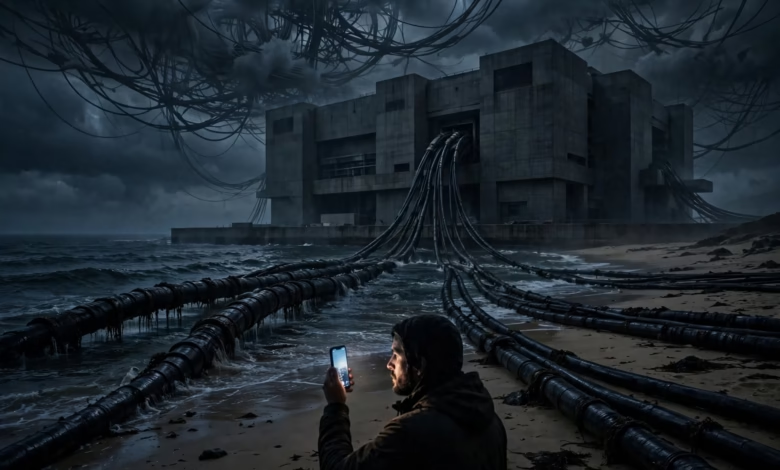
In The Summer Of 2015, A Strange Ship Stood Off The Coast Of The French City Of Marseille, Pulling Behind It A Bundle Of Cables Thick As A Man’s Arm. On The Beach, Workers Wearing Orange Helmets Were Digging A Trench In The Sand. None Of The Passersby Knew That What Was Happening Was The Birth Of A Small Part Of The Cloud. This Was The New Submarine Cable SEA-ME-WE 5, Which Connects Europe With The Middle East And Asia, Passing Through Egypt Which Stands At The Junction Of Almost All The World’s Cables. This Is The Image With Which James Bridle Concludes His Book In His Last Chapter, The Cloud Chapter, To Completely Demolish The Last Of Our Illusions About This Light Digital World.
We Live In Egypt, And We Pass Daily Beside This Infrastructure Without Seeing It. In Abu Talat In Alexandria, And In Zaafarana On The Red Sea, Cables Come Out Of The Sea, Enter Small Buildings Without Windows, Surrounded By High Walls And Cameras. These Are The Points Where The Internet Touches The Earth, And This Is The Real Cloud. It Is Not White And Not Soft, But It Is Copper And Steel And Plastic, And Complex International Agreements, And Transit Rights, And Geopolitical Threats. When A Ship Cuts Its Anchor By Mistake A Cable In The Mediterranean, As Happened Several Times, The Internet Slows Down In India And Pakistan. When The Egyptian Government Decided, As It Did In January 2011, To Turn Off The Internet, Then It Does Not Turn Off A Cloud In The Sky, But It Turns Off Electrical Switches In Specific Rooms.
Bridle Takes Us On A Global Tour To Track The Body Of The Cloud. He Goes To Data Centers In The State Of Oregon In America, Where Each Server Hall Consumes As Much Electricity As A Small Town Consumes, And Where Its Cooling Requires Millions Of Gallons Of Water. He Goes To Lithium Mines In Chile From Which Batteries Of Our Phones Are Made, And To Cobalt Mines In The Democratic Republic Of Congo. He Goes To The Agbogbloshie Dump In Ghana, Where Children Burn Copper Wires From Old Computer Devices To Extract Minerals, And Inhale Toxic Smoke. The Cloud Has Weight, It Has Heat, It Has The Smell Of Smoke. And When We Call It A Cloud, Then We Do A Linguistic Washing, We Clean It From Its Blood And Its Dust.
But The Last Chapter Is Not Just A Material Exposure, But It Is An Attempt To Answer The Question That He Left Hanging Throughout The Book: If We Are In A New Dark Age, Then How Do We Get Out Of It? Bridle Completely Rejects Easy Technical Solutions. He Does Not Tell Us Delete Facebook, And He Does Not Say Organize The Internet With More Laws. He Says That The Problem Is Deeper, And It Is In The Way Of Our Thinking Itself. We Inherited From The Age Of Enlightenment The Idea That Knowledge Is Accumulation Of Facts, And That Truth Can Be Reduced To Data, And That Understanding Means The Ability To Predict And Control. This Idea Is What Built The Cloud, And It Is Itself That Makes Us Helpless Before It.
Bridle Proposes Instead What He Calls Systemic Literacy. Not Digital Literacy In The Sense Of Learning Programming, But Literacy Of A New Type: The Ability To See Systems, To Understand Interconnections, To Think Ecologically And Not Mechanically. He Gives An Example From Biology Again. When We Look At A Forest, We Do Not See Separate Trees, But We See An Ecosystem, A Network Of Relationships Between Trees And Fungi And Animals And Soil And Climate. We Do Not Try To Control The Forest, But We Try To Understand It And Live Within It. Why Do We Not Look At Our Technical Network In The Same Way?
This Requires What He Calls The New Aesthetic, Which Is A Term Intended To Make The Invisible Visible. To Begin To See Pixels, And See Cables, And See Algorithms While They Work. To Draw New Maps That Do Not Hide Complexity But Reveal It. He Mentions An Artistic Project He Did, Where He Put A Self-Driving Car In A Parking Lot And Drew Around It White Lines Similar To Those That The Car Sees, To Show How The Machine Sees The World. The Result Was That The Car Got Confused And Stopped. When We Made Its Vision Visible To Us, We Revealed Its Limits.
And Bridle Concludes His Book With A Return To Virginia Woolf And Her Call To Think. He Says That Exiting The Dark Age Is Not With More Light, But By Learning To See In The Dark. Darkness Here Is Not Ignorance, But It Is Acknowledgment Of The Limits Of Knowledge, It Is Humility Before Complexity. He Quotes From The Mystic Cloud Book Again: You Cannot Penetrate The Cloud With Knowledge, But With Love. And Love Here Is Not A Romantic Emotion, But It Is A Practice, It Is Attention, It Is Care, It Is Acknowledgment That We Are Interconnected And That Our Actions Have Consequences That We Do Not See.