
The Historical Biography Of The City And Its Riverine Identity Prior To The Nineteenth Century
In The Ledger Of Human Civilization’s History, Cities Stand As Glass Microscopes Reflecting The Major Transformations Of Nations. However, Few Cities In The World Have Managed To Encapsulate The Contradictions Of The Twentieth And Twenty-First Centuries In Such An Epic Manner As Shanghai. In His Book Recently Published By Yale University Press For The Year 2026, Titled “Shanghai: The Story Of China’s Most Dynamic City”, The British Historian And Scholar Specializing In Chinese Affairs, Michael Dillon, Offers An Extended Historical and Exploratory Narrative That Dives Deep Into The Depths Of This Ancient Asian Metropolis.
Dillon Does Not Treat Shanghai As Merely A Geographic Area Containing Glass Skyscrapers Or Giant Financial Centers; Rather, He Sees It As A “Living Laboratory” Where The Wills Of Western Colonialism Met The Ambitions Of Chinese Modernization, And Where Twentieth-Century Ideologies Clashed—from Savage Capitalism To Radical Communism—leading To The Unique Hybrid Chinese Model In The Twenty-First Century.
The Book Proceeds From A Central Thesis: That Shanghai, Although It Was Never A Traditional Chinese City In The Stereotypical, Composed Sense Of History, Remained The Engine That Pushed All Of China Toward The Modern World. The Name Of The City Consists Of Two Chinese Characters: “Shang”, Meaning “Going Up To” Or “Toward”, And “Hai”, Meaning “Sea”. From This Simple Linguistic And Spatial Pairing, Dillon Establishes In The Opening Chapters The Geographical And Historical Vision Of The City As “China’s Gateway To The Ocean” And The Window Through Which The Middle Kingdom Looked Out At The Civilizational, Cultural, And Commercial Tide Arriving From Overseas.
The Author Immerses Himself In The Silent Archaeological Roots Of The City Prior To Its Adoption Of The Modern Model. The Book Corrects The Common Stereotype In Older Western Literature—promoted By Diplomats And Historians Such As H. B. Morse And J. K. Fairbank—which Reduced Shanghai To Being Merely A “Small Fishing Village Built On Swamps And Mud” Until The Arrival Of The British And The Establishment Of The Treaty Ports. Dillon Reveals, Through Recent Documents And Archaeological Research, That Shanghai And Its Extension In Songjiang And Qingpu Possess A Civilizational History Extending Back More Than 6,000 Years, Belonging To The Fertile Yangtze River Culture, A Culture No Less Important Or Advanced Than That Of The Central Plains Of The Yellow River.
Since The Era Of The Song Dynasty (960–1279 AD) And The Yuan Dynasty (1279–1368 AD), Shanghai Had Begun To Take Shape As A Regional Administrative And Commercial Hub. With The Arrival Of The Ming Dynasty Era (1368–1644 AD), Specifically In 1553 During The Reign Of The Jiajing Emperor, The City Witnessed The Construction Of Its Mudsill Defense Wall To Confront Attacks By “Japanese Pirates” (Wokou) Who Were Raiding Chinese Coasts. Those Records Were Not Merely A Protective Military Wall; They Were The First Administrative Confirmation Of The Separation Of The Ancient City From Its Rural Surroundings, Establishing The Core Of What Westerners Later Termed The “Walled Chinese City”.
Dillon Strengthens His Historical Analysis By Focusing On The Water Economy And Inland Maritime Trade. Shanghai Was The Main Gathering Point For The Fleet Of “Sand Ships” (Shachuan)—flat-Bottomed Boats With Three Sails That Navigated Along Coasts To Transport Rice, Textiles, And Cotton From The Fertile South To The Northern Capital. By The Eighteenth Century, Thousands Of Boats Were Crowding Shanghai’s Port, Creating A Vibrant Commercial Society And A Unique Guild System Encompassing “Provincial Associations” (Huiguan). It Was This Early Socio-Economic Structure That Prepared The City To Become The Commercial Backbone Of The Country, Even Before British Soldiers Set Foot On Its Coasts In The Wake Of The First Opium War.
The Book Shifts Toward The Dramatic Turning Point: The Treaty Of Nanking In 1842 And The Treaty Of The Bogue In 1843. These Treaties—described In Contemporary Chinese Literature As “Unequal Treaties”—marked The Beginning Of A Completely New Era. Shanghai Transformed As A Result Into One Of The Treaty Ports Opened To Western Trade. Dillon Accurately Recounts The Arrival Of Captain George Balfour, The First British Consul In Shanghai, And His Signing In 1845 Of The “Land Regulations” With The Local Chinese Governor (The Taotai) Gong Mujiu. These Regulations Were Not Merely A Real Estate Document; They Were The Foundation Stone For Establishing The British Concession, Followed By The French Concession In 1849, And Subsequently The Merger Of The American And British Concessions To Form The “International Settlement” In 1863.
The Book Frames This Transformation In Language That Reflects Civilizational Shock: Vast Portions Of The City’s Lands Were Carved Out To Become “States Within A State” (Guozhong Zhi Guo). The Western Concessions Came To Have Their Own Laws, Their Volunteer Police Forces, Their Consular Courts, And Their Administrative System Represented By The “Shanghai Municipal Council”. These Concessions Enjoyed The Concept Of “Extraterritoriality”, Meaning That A Foreigner Who Committed A Crime On Chinese Soil Was Not Subject To Chinese Laws But Rather To The Laws Of His Own Country. This Abhorrent Situation Sparked The Wrath Of Rising Chinese Nationalism, Making Shanghai A Dual Symbol: A Symbol Of Modernity And Economic Prosperity On One Hand, And A Symbol Of National Humiliation And Colonial Domination On The Other.
Dillon’s Brilliance Manifests In His Ability To Transport The Reader Between Details Of Ordinary Daily Life And Major Geopolitical Shiftings. The Violent Internal Rebellions Experienced By China In The Nineteenth Century—led By The “Taiping Heavenly Kingdom Movement” And The “Small Sword Society Rebellion” In 1853—caused Hundreds Of Thousands Of Chinese Refugees From Neighboring Countrysides To Pour Into The Borders Of The Foreign Concessions In Search Of Safety. This Sudden Demographic Influx Altered The Nature Of Western Concessions That Had Originally Been Designated Solely For Foreigners; Shanghai Transformed Into A Hybrid City Where Hundreds Of Thousands Of Chinese Lived Under The Administration And Supervision Of Western Authorities, Leading To The Emergence Of A Unique Social Structure Unseen In Any Other City In The Far East.
The Geography Of Neighborhoods, Foreign Concessions, And The Hybrid Society
Dillon Addresses The Urban Anatomy And Class Structure Of Shanghai’s Distinct Neighborhoods. Shanghai Is Not Merely A Homogeneous Block Of Concrete; Rather, It Is A Complex Mosaic Of Neighborhoods, Each Carrying Its Own Independent Historical, Social, And Political Memory. The Author Moves Between These Neighborhoods, Observing The Architectural Features And Structural Changes That Occurred Within Them Over The Decades.
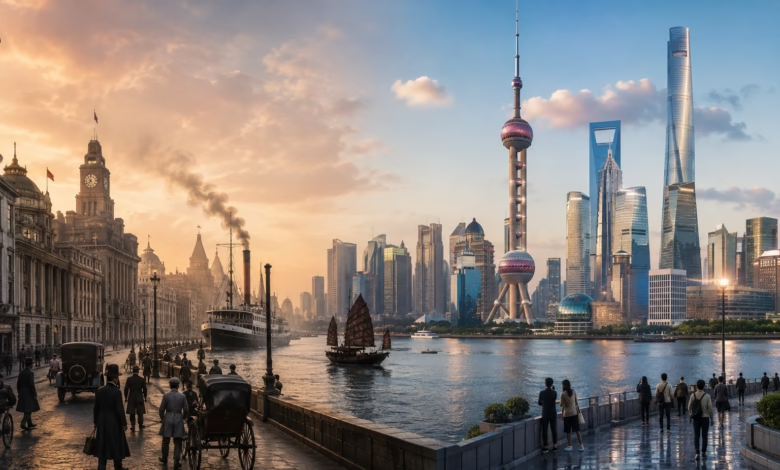
Dillon Begins By Exploring “The Bund” Area, Known In Chinese As “Waitan”, Which Literally Means The “Outer Muddy Bank”. The Bund Extends For Approximately A Mile Along The Western Bank Of The Huangpu River, Brimming With 52 Architectural Buildings Ranging From Neoclassical, Gothic Revival, To Art Deco Styles. The Bund Was The Facade Of Western Financial And Political Power In Asia; It Housed The Headquarters Of The Hongkong And Shanghai Banking Corporation (HSBC), The Famous Shanghai Club, Foreign Consulates, And Major Commercial Headquarters (“Hongs”). Dillon Views The Bund As Representing One Of The Most Complex Cultural Problematic Issues In The Modern Chinese Psyche: On One Hand, It Is A Constant Reminder Of The Myth Of “Colonial Control”, But On The Other Hand, It Has Become A Proud Symbol For The City And Its Ability To Adapt To Concepts Of Modernity And International Architecture.
In Parallel With The Bund, The Immediate Neighborhood Of The “Old City” Stands To Represent The Opposite Pole. While Foreigners Were Constructing Skyscrapers And Luxurious Stone Buildings Along The Bund, The Old City—with Its Wall, Traditional Buildings, The City God Temple (Chenghuang Miao), And Yu Garden—remained A Stronghold Of Traditional Chinese Culture, Handicraft Industries, And Also The Place Where Secret Societies Such As The “Triads” Flourished. The Book Points Out Those Stark Contradictions Observed By Western Travelers And Authors In The 1920s And 1930s, Such As Eric Linklater And John Gunther, Who Described Shanghai As A “Political Cancer On The Face Of China” And A “City Of Gross Contradictions”, Where Luxurious Marble Banks Bordered The Neighborhoods Of The Poorest Workers and “Rickshaw” Drivers Whose Life Expectancy Did Not Exceed A Few Years Due To Severe Misery And Exhaustion.
Dillon Devotes Considerable Space To Discussing The “French Concession”, Which Enjoyed A Cultural And Administrative Distinctiveness Separate From The British-American International Settlement. The French Concession Was Established In 1849 And Was Managed Directly By The French Consul. This Neighborhood Transformed Into One Of The Most Attractive And Elegant Areas In The City, With Its Streets Lined With Plane Trees And Elegant Paving, Most Notably “Avenue Joffre” (Current Huaihai Road).
The French Concession Was Not Merely A District Of European Architecture; It Became A Safe Haven For Political Dissidents, Intellectuals, And Gangsters Alike. There Lived “Du Yuesheng”, Leader Of The Underground Green Gang and The Most Prominent Organized Crime Figure In Shanghai, Who Played The Role Of Chiang Kai-shek’s Hidden Military Arm. At The Same Time, The French Concession Contained The Homes Of Several Pioneers Of The Chinese Renaissance, And The Historic Houses That Witnessed The Founding Of The Chinese Communist Party.
The Book Then Touches Upon The Unique Architectural “Shikumen” Houses. The Word Shikumen Means “Stone Warehouse Gate”, An Architecture Hybrid Style That Appeared In The Late Nineteenth Century, Merging English Terraced House Design With The Traditional Chinese Courtyard (Jiangnan Style). Shikumen Neighborhoods—such As “Xintiandi” And “Tianzifang”—became The Social Incubator For The Working Class And Lower-Middle Class In Shanghai. Today, Following Heritage Renovation And Development Operations, These Neighborhoods Have Transformed From Dark, Overcrowded Alleyways Into Upscale Tourist and Artistic Areas Housing Top Restaurants And Cafes, Reflecting Shanghai’s Unique Ability To Commodify Its Architectural Heritage And Reproduce It To Serve The Modern Consumption Economy.
Dillon Does Not Overlook The Extraordinary Socio-Ethnic Diversity That Characterized Shanghai During That Era; The City Was A Haven For Multiple Diaspora Communities. The Book Devotes Important Pages To Discussing The Jewish Community In Shanghai, Which Dillon Divides Into Two Main Waves:
-
The First Wave (Sephardic Jews): Who Arrived In The Mid-Nineteenth Century Coming From Baghdad And India Under The Umbrella Of The British Empire, Led By The Famous Sassoon Family, Who Became Major Real Estate Owners, Merchants, And Financial Magnates In The City, Constructing The “Sassoon House” And The Cathay Hotel (Currently The Fairmont Hotel).
-
The Second Wave (Ashkenazi Jews And Refugees Fleeing Nazism): Who Fled Massacres In Tsarist Russia After The 1917 Revolution, Followed By Tens Of Thousands Of European Jews Fleeing The Nazi Holocaust In The 1930s. Shanghai Opened Its Doors Without The Need For Entry Visas To Nearly 20,000 Jewish Refugees, Who Settled In The “Hongkou” District And Established A Community Rich In Cultural, Commercial, And Religious Activity, Embodied Today In The “Shanghai Jewish Refugees Museum” At The Site Of The “Ohel Moshe” Synagogue.
Dillon Also Highlights The “Hongkou” District As An “Unofficial Japanese Settlement” Or “Little Tokyo” (Xiao Dongjing), Where Japanese Settler And Commercial Presence Accumulated Since The 1870s, Transforming The Area Later Into The Military And Logistical Base For The Imperial Japanese Army During Its Invasion Of Shanghai In The 1930s. Similarly, The Book Mentions The Struggling Korean Presence; Shanghai Witnessed The Establishment Of The “Provisional Government Of The Republic Of Korea” In 1919 To Resist Japanese Colonialism.
The Era Of Revolution, Crime, And Cultural Prosperity In The Twenties And Thirties
Moving Into The First Decades Of The Twentieth Century, Michael Dillon Paints A Panoramic Canvas Of Shanghai As The Epicenter Of Modern China’s Political And Cultural Volcano. The 1920s And 1930s Were Simultaneously The “Golden Era” And The “Sinful Era” Of Shanghai; An Era Where The Highest Levels Of Material Prosperity And Cultural Liberation Met With The Extreme Degrees Of Political Corruption, Organized Crime, And Stark Class Inequality.
Shanghai During This Era Witnessed The Birth Of The Chinese “National Bourgeoisie” And “Compradores”—the Chinese Commercial Intermediaries Who Served As A Bridge Between Foreign Companies And The Local Market. This Feverish Commercial Activity Led To The Establishment Of Pioneering Modern Chinese Banks To Challenge Western Banking Dominance, As Well As The Founding Of The “Shanghai Stock And Produce Exchange” In 1920. By The 1930s, Shanghai Was The Undisputed Financial Center Of East Asia, Attracting Capital From All Over The World.
Yet On The Other Side Of This Prosperity, Shanghai Was A Cauldron Boiling With Political Radicalism And Labor Movements. Dillon Emphasizes A Fundamental Historical Fact: That Shanghai, Despite Being The Stronghold Of Asian Capitalism, Was The Natural Place That Witnessed The Birth Of The Chinese Communist Party. On July 23, 1921, Thirteen Delegates (Including The Young Mao Zedong) Met In A Traditional Shikumen House In The French Concession (Current Xingye Road) To Officially Declare The Establishment Of The Chinese Communist Party. When The French Police Raided The Premises, The Delegates Were Forced To Flee And Complete Their Meetings Aboard A Tourist Boat On “South Lake” In Nearby Jiaxing City.
The Book Covers In Deep Detail The Tragic Events Of The “May Thirtieth Movement” In 1925. When British Police In The International Settlement Killed A Number Of Striking Chinese Workers And Students Protesting The Killing Of A Chinese Worker In A Japanese Textile Factory, A Massive Wave Of National Anger Exploded, Paralyzing Commercial Activity In Shanghai And Galvanizing Anti-Imperialist Awareness Throughout China. These Events Forced Foreign Authorities To Implement Formal Adjustments To The Composition Of The “Shanghai Municipal Council” To Include A Small Number Of Chinese Representatives For The First Time.
The Historical Drama Reaches Its Peak In The Chapter Dedicated To The “Massacre That Occurred On April 12, 1927”. Dillon Recounts How Zhou Enlai (Who Later Became The First Premier Of The People’s Republic Of China) Led Communist Worker Militias In The “Zhabei” District To Take Control Of The City And Welcome The “Northern Expedition” Forces Of The Kuomintang Led By Chiang Kai-shek. However, Chiang Kai-shek, Fearing The Growing Influence Of The Communists And Backed By The Banking Bourgeoisie And Foreign Blocs, Struck A Secret Deal With The “Green Gang” Led By Du Yuesheng.
In A Single Night, Gang Members In Coordination With The Kuomintang Army Launched A Sweeping, Bloody Attack On Union And Communist Headquarters In Shanghai, Killing Thousands Of Workers, Communists, And Field Activists. This Horrific Slaughter Led To The Near-Total Annihilation Of Urban Communist Organization In Shanghai, Forcing Surviving Leaders—most Notably Mao Zedong—to Flee To Remote Villages And Countrysides To Establish A Peasant Army, A Transformation That Altered The Course Of The Chinese Revolution Forever.
Despite These Bloody Conflicts, The 1920s And 1930s Witnessed Shanghai’s Transformation Into China’s Cultural, Media, And Cinematic Capital. Dillon Describes How The City Became The Cradle Of Modern Journalism Through Major Newspapers Such As Shenbao, Founded By The Briton Ernest Major And Transformed By The Famous Journalist Shia Liangcai Into An Independent, Courageous Media Platform That Fought Political Tyranny And State Violence Until His Assassination By Chiang Kai-shek’s Intelligence In 1934.
Shanghai Was Also The Cradle Of The “Golden Age Of Chinese Cinema”. Production Companies Such As “Mingxing” (Star) And “Monopol” Produced Feature Films Addressing Social Issues, Women’s Rights, And Cultural Transformation, Most Notably The Film Nanfu Naqi (The Unhappy Couple), The Blue Angel, And Social Cinematic Masterpieces Like Street Angel And The Great Road. In This Artistic And Theatrical Environment, A Young, Ambitious Actress Named Lan Ping Rose To Prominence—the Woman Who Would Later Be Known As “Jiang Qing”, Wife Of Leader Mao Zedong, Who Would Play A Terrifying Role Leading The Cultural Revolution In The 1960s.
Shanghai During That Era Was Breathing A Hybrid Western Modernity: Jazz Music Resounded In Nightclubs, Hollywood Cinema Was Screened In Luxurious Theaters, And Western Fashion Blended With The Traditional Chinese “Cheongsam” Dress, While The Great Thinker Lu Xun Wrote His Sharp Critical Essays Explaining The Reality Of Chinese Society And Criticizing Intellectual Slavery And Western Colonialism Alike.
From The Ashes Of War To Mass Mobilization: Communist Control And The Cultural Revolution Era
Michael Dillon Continues His Precise Historical Dive To Take Us To The Most Brutal And Turbulent Chapter In Shanghai’s History: The Years Of World War II, The Chinese Civil War, And Finally The Communist Army’s Entry Into The City And Subsequent Radical Transformations Under The Rule Of The People’s Republic Of China.
Shanghai’s Modern Ordeal Began With The Imperial Japanese Army’s Invasion Of The City In 1937 Following The Famous And Arduous Battle Of Shanghai, Which Lasted Three Months And Caused Widespread Destruction To The “Zhabei” District As Well As The Bombing Of Major Hotels On The Bund. Although The International Settlement And The French Concession Remained Isolated As “Neutral Islands” For Several Years, The Japanese Attack On Pearl Harbor In December 1941 Ended This Exceptional Status; Japanese Troops Occupied The Foreign Concessions Entirely, Imprisoned Western Subjects In Internment Camps, And Seized The City’s Economic Resources.
After The End Of World War II And Japan’s Surrender In 1945, The Unequal Treaties Were Officially Abolished And The Foreign Concessions Were Handed Over To The Nationalist Government (Kuomintang). But The City’s Joy Did Not Last Long; The Chinese Civil War Erupted Between The Kuomintang And The Communists, Plunging Shanghai Into A Crushing Wave Of Hyperinflation, Government Administrative Corruption, And Economic Paralysis.
In May 1949, The Communist “People’s Liberation Army” Achieved A Decisive Victory And Entered The City Of Shanghai. Dillon Describes The Scene Of Shanghai’s Liberation/Fall: Communist Soldiers Arrived From Rural, Poor Backgrounds, And Many Of Them Were Seeing Skyscrapers, Tap Water, And Electric Light Bulbs For The First Time. The Book Conveys The Discipline Of Communist Soldiers Who Refused To Sleep In Citizens’ Homes Or Luxurious Hotels, Choosing Instead To Sleep On Shanghai’s Cold Sidewalks In Wet Clothes, Earning The Admiration And Astonishment Of City Residents And Remaining Western Merchants.
Nevertheless, Taking Over Shanghai Was A “Horrible Political And Economic Headache” For The Communist Party. The Senior Communist Leadership In Beijing, Led By Mao Zedong, Viewed Shanghai With A Degree Of Suspicion And Moral Distrust; They Considered It A “Swamp Of Capitalist Corruption”, A “Center For Western Vice”, And A Stronghold For Dissidents And Imperialist Companies. Indeed, Some Radical Leaders Suggested Demolishing Western Buildings On The Bund And Completely Destroying The City’s Architectural Heritage To Rebuild It From Scratch As A Chinese Workers’ City (an Option Fortunately Rejected In Favor Of Pragmatic Solutions).
During The 1950s, Shanghai Underwent A Series Of Fierce, Harsh Political Campaigns Launched By The Communist Party To Eradicate “Counterrevolutionaries”, Liquidate Organized Crime Networks, And Abolish Individual Capitalism. The “Three-Anti” And “Five-Anti” Campaigns Resulted In The Confiscation Of Properties Belonging To Businessmen, Merchants, And Compradores, Alongside Widespread Suicides Among Industrialists and Financiers Who Were Unable To Face Mass Investigations And Public Trials. Factories And Commercial Establishments Were Transformed Into State Property, And The Majority Of The Foreign And Chinese Capitalist Elite Evacuated Or Fled To Hong Kong, Taiwan, Or The West, Robbing Shanghai Of Its Financial And Academic Brilliance For Several Decades.
Then Ideological Conflicts Reached Their Catastrophic Peak During The Cultural Revolution (1966–1976). Dillon Devotes Several In-Depth, Detailed Chapters To This Era, Relying On Rare Chinese Sources And Analyses Of On-The-Ground Political Discourse. Shanghai Became The Solid Political Base For The “Gang Of Four”, Led By Jiang Qing (Mao’s Wife) And Zhang Chunqiao.
In January 1967, Shanghai Witnessed What Was Known As The “January Storm”; Worker Rebels In The “Workers’ Headquarters” Allied With The Red Guards To Execute A General Strike That Paralyzed Movement In Ports And Railways, Overthrowing The Traditional Administrative And Party Leadership Of The City. The Establishment Of The “Shanghai Commune” Was Proclaimed On The Model Of The Paris Commune, Before Later Being Replaced By The “Revolutionary Committee”.
Shanghai In The Sixties And Seventies Became A Stage For Stark Conflicts: Red Guards Roamed The Streets, Destroying Antiques And Ancient Books, Attacking Houses Of Intellectuals, Artists, And People Accused Of “Taking The Capitalist Road”. In Contrast, The Communist Party Promoted The Model Of The “Good Eighth Company”—a Military Unit Highlighted In The Media As A Symbol Of Asceticism, Austerity, And Ideological Firmness In The Face Of The Temptations Of Urban Life In Shanghai.
These Ten Years Of Turmoil Caused Complete Developmental Paralysis For The City, Leading To A Decline In Its Economic Role Compared To Other Asian Capitals. Shanghai Remained Struggling Under Excessive Politicization Until The Death Of Mao Zedong In 1976 And The Arrest Of The Gang Of Four, Allowing The City To Begin Its Journey Of Rebirth Anew.
Modern Economic Rebirth, Deng Xiaoping, And Shanghai Today And Tomorrow
In The Final Section Of His Review Of Michael Dillon’s Book, The Analyst Tracks The Tremendous Developmental Developments That Transformed Shanghai From A City Suffering From The Effects Of Political Turmoil And Dilapidated Infrastructure Into The Showcase Of China’s Ultra-Modernization In The Twenty-First Century, And A Financial Center Competing With New York, London, And Tokyo.
Following The Completion Of The Gang Of Four Trial And China’s Entry Into The Era Of “Reform And Opening Up” Under The Leadership Of Deng Xiaoping In The Late 1970s And 1980s, Shanghai Was Relatively Late In Joining Special Economic Zones Compared To Southern Cities Like Shenzhen And Guangzhou. However, Deng Xiaoping Soon Realized That The Success Of Modernizing China As A Whole Could Not Be Achieved Without Awakening The “Sleeping Dragon” In The Yangtze River Delta: The City Of Shanghai.
Two Prominent Local Leaders In Shanghai’s Party Played A Decisive Role In This Renaissance: Jiang Zemin And Zhu Rongji. The Two Men Took Over Shanghai’s Leadership In The 1980s And Succeeded In Reviving The City’s Entrepreneurial Spirit, Renewing Trust With International Businessmen, Attracting Foreign Investments, And Streamlining Bureaucratic Procedures. When Jiang And Zhu Moved To The Top Of The Power Pyramid In Beijing (as General Secretary Of The Party And Premier Respectively), They Carried With Them Shanghai’s Development Model And Imposed It Nationally, In What Became Politically Known As The “Shanghai Clique”.
The Historical Turning Point Occurred In 1990 When The Central Government Officially Announced The Development Project For The “Pudong New Area” On The Eastern Bank Of The Huangpu River. Pudong Until That Time Was Merely Agricultural Land, Old Warehouses, And Cemeteries. Within Just Three Decades, Pudong Transformed Into One Of The Most Stunning Futuristic Areas In The World.
Dillon Explains In Architectural And Economic Detail How The “Lujiazui” District In Pudong Became China’s Financial And Technological Nerve Center; Where Giant Skyscrapers Rose To Form The City’s Enchanting Skyline Today:
-
Oriental Pearl Tower: With Its Youthful Spherical Peaks.
-
Jin Mao Tower: Innovative In Its Harmonious Design.
-
Shanghai World Financial Center.
-
Shanghai Tower: The Second Tallest Building In The World At A Height Of 632 Meters With Its High-Tech Architectural Twists.
Pudong Was Not Merely A Display Of High-Rise Architecture; It Was The Headquarters Of The “Shanghai Free Trade Zone” Established In 2013, Attracting Hundreds Of Global Companies And Advanced Strategic Industries Such As Integrated Circuits, Biomedicine, And Artificial Intelligence.
Dillon Explores In The Book’s Final Chapters Shanghai Under Li Qiang—who Served As Shanghai’s Communist Party Secretary Before Becoming China’s Premier Under President Xi Jinping. These Chapters Address The Complex Challenges Faced By The City During The COVID-19 Pandemic And The Strict Lockdown Imposed On The City In 2022, As Well As The Resilience Of Shanghai’s Infrastructure And Civil Society In Recovering From That Economic And Social Shock.
On The Level Of Demographic And Cultural Diversity In The Twenty-First Century, Dillon Highlights The Phenomenon Of “Overseas Returnees”, Known In Chinese As Haigui (a Word Literally Meaning Returnees Across The Sea, Sounding Similar To Sea Turtles Returning To Their Birthplace). Millions Of Young Chinese Educated In Top Western Universities, Alongside Millions Of Migrant Workers From Other Chinese Provinces, Poured In To Contribute To Building An Open, Highly Intelligent Cosmopolitan Society Speaking The Language Of Technological Innovation And Global Trade.
Nevertheless, The Author Notes A Type Of Nostalgia And Confusion Among Native Shanghai Residents Who Speak The “Wu Language”; Some Fear The Extinction Of Their Local Linguistic And Cultural Identity Under The Pressure Of Language Standardization Policies Favoring Standard Chinese (Mandarin) And The Massive Influx Of Immigrants. It Can Be Said, Therefore, That Shanghai Is Not Merely A Major Chinese City; It Is The “Model Of Future China”. It Is The City Redefining The Relationship Between The Chinese State And Global Capitalism; The Place Where Imperial Heritage Coexists With Colonial Memory, And Political Authoritarianism With Economic And Cultural Liberation.