
Introduction: When Numbers Turn Into Documents Of Survival
In The World Of Humanitarian Reporting And Geopolitical Analysis, Rarely Does One Encounter A Document That Embodies The Magnitude Of The Gap Between Life And Death As Distilled Periodically By United Nations Organizations And Relief Agencies. The National Report Issued By The “National Health Cluster Bulletin” For The Month Of June 2026 Is Not Merely A Performative Inventory Of Numbers And Statistics, Nor Is It A Routine Statement Issued By The Corridors Of The World Health Organization And International And Local Partners; Rather, At Its Core, It Is A Deeply Dense Humanitarian, Political, And Ethical Document Tracking How An Entire Nation Attempts To Continue Breathing Between The Jaws Of Siege, Epidemics, And International Neglect.
The Importance Of This Review Of The Report Stems From The Fact That It Offers A “Cross-sectional Analysis” Of The Sudanese Tragedy At An Extremely Critical Juncture Of 2026. The Reader Of The Report Senses From The Very First Page That A Calm And Refined Language Is Being Used To Describe A Reality Exploding With Blood And Dangers. This Paradox Between The Administrative Calm Of The Field Document And The Tragic Noise Of The Field Reality Is The Primary Focus Captured In This Comprehensive Journalistic Reading.
Data In The Face Of Collapse
The Field Report For The Month Of June 2026 Consists Of Nine Pages Dense With Data, Data Visualizations, And Regional Maps. The Report Opens Its Header Dashboard By Presenting A Statistical Dashboard Highlighting The Tremendous Scope Of Need Against The Available Capabilities.
Preliminary Figures Indicate That The Number Of People In Dire Need Of Health And Humanitarian Assistance In Sudan During 2026 Reached A Shocking Figure: 21 Million People (People In Need – PIN). From Within This Massive Ocean Of Those In Need, The Health Response Plan Targeted Delivering Aid To 6.6 Million People. However, Descending To The Operational Reality Of June 2026, We Find That Field Partners Were Only Able To Reach Between 428 Thousand And 1.3 Million People.
This Enormous Gap Between Targeting And Reach Is Not Only Due To Logistical Impossibility, But Is Linked To Another Crucial Factor Highlighted By The Report On Its First Page: The Funding Gap. Out Of 325 Million US Dollars Requested To Cover The Health Response Plan For 2026, Only 93.5 Million Dollars Were Received As Of The Report’s Issuance Date, Representing A Massive Funding Gap Of 71.3%. This Severe Financial Deficit Coincides With The Health Emergency Classification In Sudan At Grade 3 Emergency, Which Is The Highest Level Of Emergency Response In The World Health Organization System, Reflecting A Profound Mismatch Between The Severity Of The Field Situation And The Financial Response Of The International Donor System.
Field Impact And Operational Figures
Despite These Financial And Military Pressures, The Bulletin Reveals A Broad Network Of Field Partners Numbering 50 Implementing Partners (Distributed Among 18 National Non-Governmental Organizations, 28 International Non-Governmental Organizations, 4 United Nations Agencies, And 1 Government Body, In Addition To 6 Observers). This Network Operates By Supporting Approximately 1,568 Health Facilities, Distributed As Follows:
-
1,568 Primary Health Care Facilities.
-
99 Mobile Clinics Traversing Remote Areas And IDP Camps.
-
94 Referral And Main Hospitals Attempting To Endure Strikes And Supply Disruptions.
These Efforts During The Month Of June Culminated In Delivering Around 900,000 General Medical Services, Including 860,000 Outpatient Consultations, Providing Inpatient Treatment For 6,506 Patients, Referring 1,389 Cases For Specialized Care, And Treating 105,418 Cases Of Infectious Diseases.
Services Were Not Restricted To General Medicine; They Extended To Reproductive Health Care And Immunization. The Report Showed Care Services Delivered To 38,000 Women, Including 11,426 Deliveries Conducted By Skilled Medical Personnel, 1,483 Caesarean Sections, Along With 25,418 Antenatal Consultations. On The Immunization Front Against Childhood Killer Diseases, 35,824 Children Were Vaccinated Against Measles, And 40,508 Children Received The Third Dose Of The Pentavalent Vaccine (Penta 3).
Attacks On Healthcare Facilities: A Structural Violation Of International Law
One Of The Harshest Chapters In This Report Is That Brief And Painful Text Titled “Attacks On Healthcare”. The Report Monitors The Continuation Of Lawlessness, Active Armed Conflict, Strict Movement Restrictions, And Ongoing Raids And Targeting Of Civilian Infrastructure.
These Attacks Do Not Merely Result In The Destruction Of Buildings; They Cause Disruptions In Medical Supply Chains, Impede Patient Referral Lines, Cut Off Field Supervision Avenues, And Force Medical Staff To Flee. The Report Issues An Explicit Appeal Reminding All Conflicting Parties Of The Necessity To Respect International Humanitarian Law, And Protect Health Facilities, Healthcare Workers, Patients, And Medical Supplies.
An Analytical Reading Of The Geographical Breakdown Of The Tragedy
The Report Divides Sudanese Territories Geographically And Operationally Into Four Main Zones:
-
West Zone – Darfur: The Most Volatile And Complex Area.
-
Eastern Zone: The Relatively Most Stable Region, Yet Staggering Under The Burden Of Displacement Inflows And Pressure On Services.
-
Central Zone – Kordofan And Neighboring States: The Arena Of Logistical Paralysis And Deadly Epidemic Risks.
-
Khartoum Zone: The Capital Turned Into A Field Of Health And Structural Depletion.
These Division Patterns Demonstrate That The Health Response In Sudan Is Not A Single Mold, But Rather Multiple And Varying Responses Depending On Security Levels, Logistical Access Capacity, And The Nature Of Impending Epidemic Risks In Each Region.
West Zone (Darfur): Between The Grindstones Of Fires, Drones, And Outbreaks
The Report Opens The File On The West Zone Corresponding To The Greater Darfur Region, Presenting A Living Testimony Documenting One Of The World’s Fiercest Humanitarian Crises. Throughout June 2026, Military Operations And Armed Conflicts Continued To Batter The Fragile Stability Of The Region.
The Report Speaks In Clear Terms About Factors Impeding Humanitarian Access: Drone Strikes, Criminal Incidents, And Accidental As Well As Arson Fires. The Blockage And Disruption Of Pivotal Roads—Such As The El Geneina-Adikong Corridor—Had A Profound Impact In Paralysing The Movement Of Aid Personnel And Convoys Carrying Life-Saving Medical Supplies.
On The Public Health Front, The Darfur Region Faces A Simultaneous Assault From A Array Of Severe Diseases: Measles, Malaria, Dengue Fever, Diphtheria, Polio, Acute Jaundice Syndrome, And Bloody Diarrhea. The Cholera Crisis Has Turned Into A Spectre Threatening Camps, Prompting Field Partners To Heighten Readiness By Enhancing Epidemiological Surveillance, Supporting Field Laboratories, Preparing For Vaccination Campaigns, And Coordinating Closely With The Water, Sanitation, And Hygiene (WASH) Sector.
At The Infrastructure Level, Despite The Presence Of 33 Health Partners Supporting 756 Health Facilities In Darfur, Severe Funding Deficits Forced Organizations Into Painful Decisions; More Than 100 Health Facilities Were Handed Over To State Ministries Of Health, Which Suffer Inherent Depletion And Collapse In Capacity. Therefore, Urgent Priorities For Darfur Center On Improving Surveillance Tools And Laboratory Capabilities, And Pre-positioning Supplies Before The Rainy Season Worsens.
Eastern Zone: Fragile Stability Under Pressure Of Displacement And Heat
Moving To The Eastern Zone, We Observe In The Report A Reality Different In Form But Similar In Substance And Strain. This Sector—Encompassing States Such As Red Sea, Kassala, Gedaref, Gezira, And River Nile—Is Relatively More Secure Compared To Darfur, Leaving Humanitarian Corridors Generally Open.
Nonetheless, The Report Delivers A Precise Analysis Of Structural Obstacles Hindering This Sector. The Declaration Of A State Of Emergency In Kassala State, Fuel Shortages, Exorbitant Transportation Costs, Severe Deficits In Essential Medicines, And Weak Medical Referral Networks Are All Factors Preventing Care From Reaching Displaced Populations And Remote Communities.
The Nature Of Health Threats In The East Takes On Seasonal And Environmental Characteristics; In Addition To Recording Cases Of Dengue Fever, Malaria, Measles, Diphtheria, And Pertussis, The Report Notes The Spread Of Suspected Meningitis Cases In River Nile State. In Red Sea State, A Health Threat Linked To Climate Change And Environment Emerges As Heat-Related Illnesses Among Displaced People. Furthermore, The Report Elevates Caution Regarding The Risk Of Ebola Virus Spillover Across Borders.
41 Health Partners Operate In The Eastern Zone Supporting Approximately 820 Health Facilities Spread Across 61 Localities. Strategic Priorities For The East Focus On The Pre-positioning Of Medical Supplies Prior To Torrential Rains That Sever Road Networks, Alongside Expanding Service Coverage In Underserved Areas.
Central Zone (Kordofan): The Choke Corridor And Silent Epidemics
The Sub-Zone Core (North, South, And West Kordofan States) Forms A Highly Complex Conflict And Siege Area. The Report Describes The Situation There As Extremely Difficult Due To Persistent Movement Restrictions And Acute Shortages Of Fuel And Resources.
Hospitals In Kordofan Suffer From Paralysis In Emergency Care And Maternal Care. North Kordofan Features Prominently In The Report As An Epistemological Hotspot For Measles Outbreaks, While Organizations Struggle To Setup Cholera Treatment Centers And Control Acute Watery Diarrhea (AWD) Before The Onset Of The Autumn Rains. 30 Partners Operate Active Interventions Supporting 502 Health Facilities In 58 Localities.
Heroes Of The Field: Dissecting International And National NGO Performance
International Medical Corps (IMC): An Integrated Response Model
In Pages 3 To 7, The Report Presents A Detailed Review Of Achievements By Health Cluster Partners. This Overview Begins With The Response Of International Medical Corps (IMC), Which Offered An Integrated Model For Multi-Sectoral Intervention Across 5 Sudanese States.
Through Supporting 16 Health Facilities, IMC Managed To Deliver 44,556 Outpatient Consultations, 4,107 Antenatal Visits, Conduct 820 Safe Deliveries, And 645 Postnatal Care Consultations. Its Interventions Were Not Confined Solely To The Medical Sphere; They Extended To The Water, Sanitation, And Hygiene (WASH) Sector, Pumping Over 3.4 Million Liters Of Clean Water To Hospitals And IDP Camps, Benefiting Over 229,000 Individuals.
IMC Is Also Credited With Prioritizing Mental Health And Psychosocial Support (MHPSS), Reaching 5,376 People With Services, Alongside Its Broad Gender-Based Violence (GBV) Prevention Program Benefiting 19,160 Persons.
ALIGHT: Confronting Cholera And Malnutrition In Fierce Hotspots
ALIGHT Emerges As One Of The Most Effective Organizations In Combating Outbreaks And Malnutrition During June 2026. The Organization Concentrated Its Activities In West Kordofan, East Darfur, South Darfur, Kassala, Gezira, And Gedaref States.
ALIGHT’s Capability Was Demonstrated In Urgent Interventions Confronting A Cholera Outbreak In An-Nuhud Locality, West Kordofan. The Organization Established Cholera Treatment Centers (CTCs), Treatment Units (CTUs), And Formed Rapid Response Teams (RRT). The Report Documents That Since The Outbreak Commenced In That Area, 743 Cholera Cases Were Reported, With 661 Recoveries And 81 Fatalities.
In East Darfur, ALIGHT Led A Large-Scale Screening And Nutrition Campaign Targeting 26,764 Children Under Five To Detect Severe Malnutrition. During This Campaign, 16,122 Children Received Vitamin A, 9,274 Children Obtained Mebendazole Deworming Medication, And Therapeutic Iron Supplements Were Distributed To Thousands Of Children And Women.
INTERSOS: The Supply Battle And Handover In Darfur
On Another Front, INTERSOS Played A Prominent Role Operating In North Darfur, West Darfur, Red Sea, And River Nile States. The Organization Delivered 12,171 Outpatient Consultations, 3,013 Routine Vaccination Doses, And Received 157 New Severe Acute Malnutrition (SAM) Cases.
The INTERSOS Experience In The Report Carries Important Strategic Significance Under The “Medical Supplies And Handover” Provision; The Organization Successfully Delivered The First International Shipment Of Medicines And Medical Supplies To Geneina & Tawila. At The Same Time, INTERSOS Completed The Handover Process Of Its Health Activities In West Darfur To Local Entities, Replenishing The Mangarsa PHCC With Ready-To-Use Therapeutic Food (RUTF) And Pharmaceuticals Sufficient For Three Months To Ensure Uninterrupted Service Delivery.
Première Urgence Internationale (PUI): Inclusivity In Times Of Displacement
PUI Features In The Report As A Major Actor Supporting Health Ministry Facilities And Mobile Care Teams In Four Active Conflict Zones: Khartoum, Gezira, West Darfur, And Central Darfur.
During June, PUI Managed To Provide 15,399 Outpatient Consultations, With Communicable Diseases Topping Illness Causes. The Organization Referred 50 Critical Cases To Higher-Level Specialty Hospitals. Reproductive Health Care Had A Significant Share In PUI Interventions, Performing 4,201 Consultations And Supporting 337 Safe Deliveries Via Skilled Midwives And Doctors. It Also Reached Over 13,000 Children And Women With Routine Immunizations.
The Bulletin Notes Evidence Of Sustained Capacity Building; PUI Trained Personnel On Infection Prevention Control (IPC) And Community-Based Management Of Acute Malnutrition (CMAM), Providing Financial Incentives For 238 Frontline Healthcare Workers To Prevent Attrition And Keep Them At Duty Stations.
Relief International (RI): Construction And Rehabilitation Amid Ruins
Relief International Covers A Vast Area Including North Darfur, Khartoum, Gezira, And Northern State. The Organization Recorded 20,226 Outpatient Consultations (The Majority Being In North Darfur). It Cared For 3,846 Pregnant Women And Supervised 1,430 Safe Deliveries.
A Defining Milestone Of RI’s Activity In June 2026 Was Structural Construction And Rehabilitation Projects; Work Continued On Rebuilding And Rehabilitating Tawila Hospital In North Darfur. This Project Represents A Real Lifeline, As Upon Completion It Will Deliver Complex Surgery, Emergency Obstetric And Newborn Care (EmONC), And Referral Services For Residents Of Tawila Locality And Adjacent Areas That Suffered Destruction And Displacement. The Organization Also Conducted Long-Lasting Insecticidal Net (LLIN) Distribution Campaigns In Mellit Locality To Curb Malaria Transmission.
Al-Manar Voluntary Organization (AMVO): The National Voice And Fatima’s Journey
National NGO Participation Gains Paramount Importance In The Health Cluster Document, Exemplified In The Achievements Of Al-Manar Voluntary Organization (AMVO). Supported By The Sudan Humanitarian Fund (SHF) And CARE, AMVO Managed 5 Health Centers Distributed Between Jebel Aulia Locality (Khartoum State) And Al-Leri Locality (South Kordofan State).
AMVO Treated 5,642 Patients, Provided Care For 387 Pregnant Women, And Vaccinated 1,078 Individuals. However, The Report Carves Out An Exceptional Human Space Titled “Fatima’s Journey”.
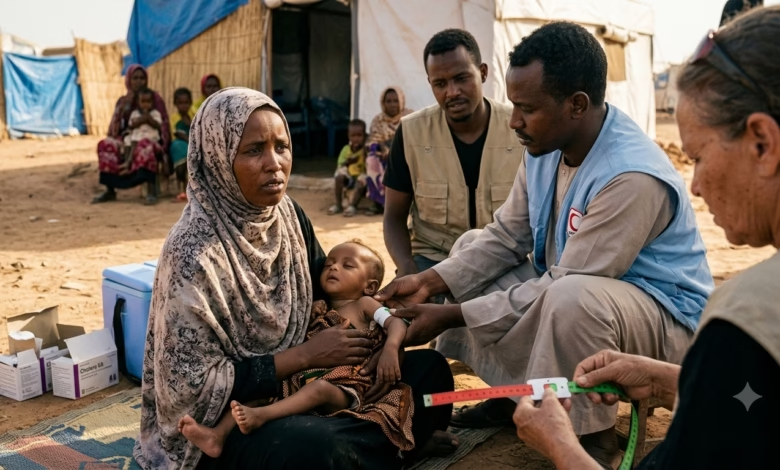
Fatima Is A 13-Month-Old Child Who Arrived At The AMVO Center Suffering From Life-Threatening Severe Acute Malnutrition (SAM) And Emaciation. Through The Outpatient Therapeutic Program (OTP), Delivery Of Ready-To-Use Therapeutic Foods, And Counseling Her Mother On Infant And Young Child Feeding (IYCF) Practices, The Child Showed Miraculous Recovery Within 4 Weeks, Her Weight Rising To 8.4 kg. Fatima’s Story Symbolizes The Ability Of Simple, Organized Nutrition Interventions To Spell The Difference Between Life And Death In Complex Conflict Settings.
Sudanese Red Crescent Society (SRCS): The Unsleeping National Network
The Sudanese Red Crescent Society (SRCS) Appears In The Report As A Formidable Field Force Backed By The International Red Cross And Red Crescent Movement. The Society Operated Fixed And Mobile Clinics Delivering Over 31,200 Outpatient Consultations. It Played A Pivotal Role Diagnosing And Treating 4,749 Malaria Cases.
In Maternal And Child Health, The Society Recorded 838 Visits For Advanced Antenatal Care (Fourth Visit And Above), Administered 631 Tetanus Vaccines, And Vaccinated Hundreds Of Children. Its Health Education And Hygiene Campaigns Reached 10,500 Individuals, While 3,560 People Received Mental Health Services.
Highlighted With Interest In The Report Was The Society’s Provision Of Caring For Staff And Volunteers Support Programs Addressing Occupational Burnout For 49 Staff Members To Sustain Their Operational Resiliency Under Massive Psychological Conflict Strains.
United Nations Population Fund (UNFPA): Protecting Women In The Heart Of The Storm
The Report Addresses The Quarterly Brief Issued By The United Nations Population Fund (UNFPA) Covering April To June 2026. The Fund Reached 302,311 Persons Across 54 Localities Through 63 Service Delivery Points (SDPs) And 18 Mobile Clinics.
137,215 Pregnant Women Received Dedicated Health Consultations, And 110 Medical Personnel Were Trained On Emergency Obstetric Care And Clinical Management Of Rape (CMR). The Fund Is Also Leading Updates To National Maternal Death Protocols And Reproductive Health Availability Mapping.
Despite These Successes, UNFPA Sounds An Alarm Regarding A Financial Deficit Of 6.14 Million US Dollars, Threatening The Closure Of Reproductive Care Outlets And Acute Disruptions In Protection Supplies For Women And Girls In Conflict Zones.
Conclusion And Consolidated Vision: Sudan Between The Hammer And The Anvil
An In-Depth Reading Of The Sudan Health Cluster Report For June 2026 Leads Us To Six Key Journalistic And Analytical Conclusions:
-
Field Resilience Versus Financial Deficit: Organizations Operating In Sudan (International And National) Demonstrate Exceptional Adaptability And Field Performance Under Fire, Yet This Resilience Collides With A Financial Wall Represented By The 71.3% Funding Gap.
-
Logistical Disruption As A Weapon: The Threat Of Epidemics Is Matched By Military Restrictions, Drone Strikes, And The Severing Of Primary Arteries (Such As The Geneina Corridor).
-
Cholera And The Impending Rains: Sudan Stands On The Brink Of A Catastrophic Torrential Rainy Season, And With Active Outbreak Hubs Of Cholera And Watery Diarrhea (As In An-Nuhud And Kordofan), The Looming Epidemic Catastrophe May Outstrip The Capacity Of The Crumbling Health System To Respond.
-
Handover Tactics: The Forced Handover Of Health Facilities To Local Councils Due To Deficits Is A High-Risk Strategy That Effectively Means Closure Due To State Governments Lacking Resources.
-
Women And Children As The Weakest Link: Malnutrition Figures (As In Fatima’s Story) And Reproductive Needs Demonstrate That Vulnerable Groups Pay The Highest Price Of Conflict.
-
The Imperative Of Safeguarding Healthcare: Demanding Adherence To International Humanitarian Law And Halting Attacks On Hospitals And Staff Remains The Foundational Condition For Preserving What Remains Of Life In Sudan.
The June 2026 Report Is A Cry Of Figures In The Face Of Global Conscience, Warning That Leaving The Health Sector In Sudan To Face Its Fate Alone Means Signing A Slow Execution Order For Millions Of Innocent People.