
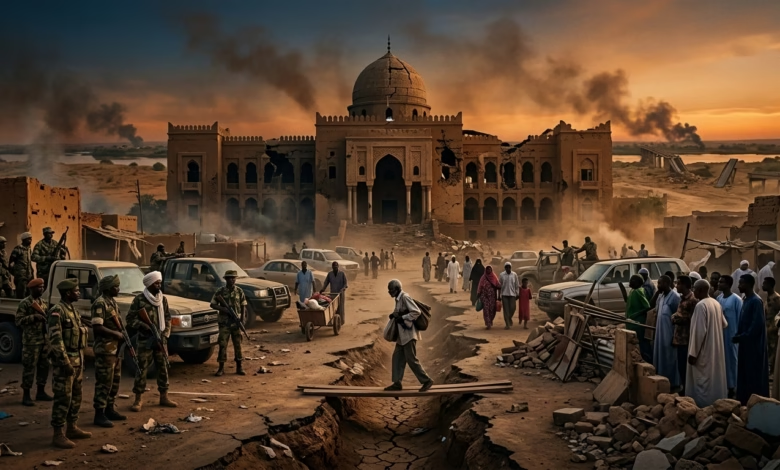
The Profound Geopolitical And Historical Transformations Sweeping The Nile Valley And The Horn Of Africa Region, Particularly In Sudan, Constitute A Pivotal Anchor For Understanding The Trajectories Of The Balance Of Power And The Conflict Of Wills In The Contemporary International System. In This Highly Complex Academic And Analytical Context, The European Union Agency For Asylum (EUAA) Report On Sudan Emerges, Which Evaluates The Security And Humanitarian Conditions, The Manifestations Of State Institutional Disintegration, And The Repercussions Of The Conflict On The Population And The Regional System. Issued In August Of The Year Two Thousand And Twenty-Six Under The Title “As A Document Highlighting The Institutional Construction And Fractures Witnessed By Sudan.” This Report Presents A Reading That Reflects A European Perspective On The Nature Of Divided Power, The Fates Of The Rule Of Law, The Repercussions Of The Collapse Of The Justice System, And The Impacts Of All This On The Societal And Political Structure In A Country Standing At A Historical Crossroads.
The Accelerating Military And Political Dynamics Since Mid-Two Thousand And Twenty-Three Have Produced A Turbulent Transitional Reality, Leading To The Splitting Of The Administrative And Political Authority In The Country Into Two Parallel Structures Contesting The Legitimacy Of Representing The Sudanese State. On The One Hand, The De Facto Government That Enjoys Official Recognition Emerged In The City Of Port Sudan, Which Was Named “The Government Of Hope,” Led By The Sudanese Armed Forces. On The Other Hand, In A Step Reflecting The Peak Of Institutional Fragmentation, The Rapid Support Forces Announced The Establishment Of A Parallel Government Named “The Government Of Peace And Unity,” Taking The City Of Nyala, The Capital Of South Darfur State, As Its Headquarters. This Sharp Division Did Not Stop At The Borders Of Political Slogans But Deepened To Create A Reality Characterized By The Fragmentation Of Governance, Where Administrative And Tax Systems And Power Structures Began Operating Outside The Unified National Framework That The Sudanese Were Accustomed To, Establishing A New And Different Reality In The Areas Under The Control Of The Rapid Support Forces.
In An Attempt To Restructure The Executive Authority And Fill The Constitutional Vacuum Following The Resignation Of Former Prime Minister Abdalla Hamdok In Two Thousand And Twenty-Two, The President Of The Transitional Sovereignty Council And The Commander-In-Chief Of The Armed Forces Took A Pivotal Step In May Two Thousand And Twenty-Five By Appointing Kamel Idris As Prime Minister. Kamel Idris Was Entrusted With The Daunting Task Of Forming A Non-Partisan Technocratic Government Consisting Of Twenty-Two Members, A Task That Took Several Months To Accomplish Amid Highly Complex Political And Security Intersections. The Path To Forming This Government Was Not Easy, But Clashed With Massive Pressures From The Armed Movements That Signed The Juba Peace Agreement For Sudan In Two Thousand And Twenty. The Leaders Of These Movements Clearly Threatened To Withdraw Their Support And Alliance With The Armed Forces If They Were Excluded From Executive Positions, Imposing A New Negotiating Reality That Ultimately Led To The Leaders Of The “Joint Force” – An Alliance Comprising Armed Movements Based In Darfur – Retaining Important Sovereign And Strategic Ministerial Portfolios, Including The Ministry Of Finance, The Ministry Of Minerals, And The Ministry Of Social Development.
In Parallel With This, The Transitional Sovereignty Council, Which Was Reconstituted After The Measures Of Two Thousand And Twenty-One, Proceeded To Tighten Its Grip On The Security And Military Joints Of The State, As The Council Directly And Exclusively Assumed The Appointment Of The Ministers Of Defense And Interior. The Final Formation Of The Government Sparked A Wave Of Sharp Criticisms From Sudanese Political And Civil Actors, Who Saw It As Lacking Broad And Comprehensive Representation Of All Spectrums Of Sudanese Society. The Intensity Of These Criticisms Increased With The Frequency Of Reports Indicating The Connection Of Several Ministerial Appointments To Figures Belonging To The Dissolved National Congress Party And The Sudanese Islamic Movement, Raising Real Concerns About The Possibility Of The Return Of Symbols Of The Previous Era To Positions Of Influence And Decision-Making, And The Marginalization Of Civil Forces. Despite This Complex Political Scene, And In Light Of The Fact That The Army Liberated Khartoum And Is Advancing With Rapid Steps To Regain Full Control, The New Prime Minister Kamel Idris Announced In January Two Thousand And Twenty-Six The Official Return Of National State Institutions To The Capital Khartoum, After Nearly Three Years Of The National Government Operating From The Coastal City Of Port Sudan.
A Careful Reading Of The Constitutional Context Reveals Radical And Profound Transformations That Have Affected The Legislative Structure Of The State, As The Transitional Sovereignty Council Made Fundamental Amendments In Two Thousand And Twenty-Five To The Constitutional Document Adopted In Two Thousand And Nineteen. These Amendments, Which Came Into Effect After Being Published In The Official Gazette On The Twenty-Third Of February Of The Same Year, Included A Package Of Measures That Redraw The Features Of Power, Most Notably Extending The Transitional Period For An Additional Thirty-Nine Months, And Canceling All References And Texts Referring To The Rapid Support Forces And The Armed Forces By Their Old Names, As Well As Granting The Military Institution Representation With An Explicit Majority Within The Transitional Sovereignty Council, Which Practically Means Postponing The Process Of Transition To Civilian Rule Indefinitely. Furthermore, The New Constitutional Amendments Prohibited Holders Of Dual Nationalities From Assuming High Government Positions, And Completely Deleted Any Reference To The Forces Of Freedom And Change Alliance. These Amendments Explicitly Stated That The Formulation And Implementation Of Sudan’s Foreign Policy Will Be Subject To The Direct And Absolute Supervision Of The Transitional Sovereignty Council.
Legal Observers And Constitutional Experts Viewed These Amendments With Suspicion, Describing Them As Lacking Legitimacy And Contradicting Recognized Constitutional Principles, Considering That They Entrench Absolute Control Over The Legislative, Executive, And Judicial Authorities. According To Reports, These Amendments Granted The Leadership Of The Armed Forces And The President Of The Sovereignty Council Wide-Ranging Powers To Control All State Institutions, Including The Exclusive Authority To Appoint The Chief Justice, Supreme Court Judges, The Prime Minister, His Ministerial Staff, And The Auditor General Of The Republic Of Sudan. In Light Of This Encroachment On Authorities, Anti-Corruption Indicators Recorded A Terrible Decline, As Sudan’s Ranking In The Corruption Perceptions Index Issued By Transparency International Plunged To Unprecedented Levels, Dropping From Fifteen Points To Fourteen Points Out Of One Hundred In Two Thousand And Twenty-Five, Languishing In The One Hundred And Seventy-Fifth Position Out Of One Hundred And Eighty-Two Assessed Countries. This Decline Places Sudan In A Very Low Rank Even When Compared To The Average Of Sub-Saharan African Countries, And Confirms The Continuation Of The State Of Institutional Decline. Reports Confirmed That Corruption Has Become Deeply Rooted Within Institutions Allied With The Authorities, And That Senior Officials Publicly Acknowledge Its Existence As An Integral Part Of The Governance Structures, Where Complaints Filed Against Administrative Corruption Are Met With Repression Instead Of Accountability.
On The Other Bank Of The Conflict, The Rapid Support Forces Proceeded In Two Thousand And Twenty-Five Towards Consolidating The Pillars Of Their Parallel Government That They Self-Installed In The Areas Under Their Control, Which Include Large Parts Of The Darfur Region And Parts Of The Kordofan And Blue Nile States. This Strategic Step Began In February Of The Same Year With A Call To Sign A Foundational Charter In The Kenyan Capital Nairobi. This Initiative Received The Support Of An Alliance Comprising A Number Of Armed Movements Hailing From Darfur And Kordofan, Most Notably The Sudan People’s Liberation Movement – North Sector, Along With Other Political Groups. Crowning This Path, The Rapid Support Forces Unilaterally Announced In March The Formation Of What They Called “The Government Of Peace And Unity,” Which Became Known As “The Founding State,” Coinciding With The Signing Of A Draft For A New Transitional Constitution. This Parallel Constitution Demanded The Cancellation Of The Two Thousand And Nineteen Constitutional Document And All Laws Preceding It, And Emphasized The Necessity Of Establishing A Secular State That Separates Religion And State, And Adopts A Decentralized System Divided Into Federal, Regional, And Local Levels, While Ensuring Equal Citizenship For All Sudanese And Granting Regions The Right To Self-Determination. This Foundational Document Outlined A Transitional Governance Structure Supposed To Pave The Way For General Elections, Calling For The Formation Of A Single National Army, Considering The Forces Sponsoring The Charter As The Core Of This Army.
However, This Parallel Government Faced Categorical Rejection And Isolation At The Regional And International Levels, As The African Union Hastened To Urge Its Member States Not To Recognize It, Renewing Its Full Support For The Sudanese Transitional Government Formed In Port Sudan In May Two Thousand And Twenty-Five. In Turn, The United Nations Security Council Issued A Resolution Categorically Rejecting The Declaration Of This Parallel Administration, While The United Nations Secretary-General Expressed His Deep Concern Over The Signing Of The Rapid Support Forces’ Charter, Stressing That Such Unilateral Moves Threaten To Fragment The Territorial Integrity Of Sudan And Deepen The Crisis. As For The Level Of Practical Application And Administrative Practice Within The Areas Under The Influence Of The Rapid Support Forces, Policies Varied Significantly, As The Administration Adopted Hybrid And Multiple Strategies Ranging From Absorbing The Pre-Existing Government Bureaucracy To Relying On Informal Practices Based On Tribal Loyalties And Economic Pragmatism, Taking Violence, Force, And Coercion As A Means To Impose Their Dominance And Derive Their Authority. In Their Quest To Impose This Reality, The Rapid Support Forces Established Bodies To Represent Them Before The Neighboring Chadian Authorities, Such As The “Civil Administration Of West Darfur,” And Began Issuing Transit And Customs Permits. Moreover, Their Civil Administration In East Darfur State Announced In Early Two Thousand And Twenty-Six A Controversial Step Represented By The Establishment Of The First Independent Regional Banking Institution.
The Fragmentation Was Not Limited To Military Power Structures, But Extended Its Roots Deep Into The Political And Civil Structure Of Sudan, As The Arena Witnessed The Crystallization Of Two Main Contradictory Political Blocs. The First Bloc Was Known As “The Democratic Bloc,” Which Brought Together A Wide Spectrum Of Political Parties And Armed Movements That Announced Their Alignment Alongside The Sudanese Armed Forces, While The Second Bloc Was Known As “The Founding Alliance,” Which Is The Coalition That Supported The Rapid Support Forces. “The Democratic Bloc” Included In Its Ranks Entities Such As The Democratic Unionist Party Led By Jaafar Al-Mirghani, The Justice And Equality Movement Led By Jibril Ibrahim, And The Sudan Liberation Movement Under The Leadership Of Minni Arko Minnawi. This Bloc Held Meetings In February Two Thousand And Twenty-Six To Discuss Mechanisms For Forming The Transitional Legislative Council. In Contrast, The “Founding” Alliance Consisted Of Twenty-Four Groups, And Proceeded In July Two Thousand And Twenty-Five To Form A Leadership Council And Name Mohamed Hassan Al-Taishi As Prime Minister For This Parallel Government.
This Sharp Polarization Has Further Complicated The Political Scene, Especially Since The Alliance Supporting The Armed Forces Witnessed, According To Sources, A Growing Influence And Presence Of “Islamic Networks,” Despite Official Denials, As These Currents Engaged In Popular Mobilization, Alerting, And Militarizing Communities On Tribal Bases. In The Capital Khartoum, Fighters Belonging To What Is Known As The “Al-Baraa Ibn Malik Battalion” Were Involved In Harassment Operations Targeting Volunteers Working In Emergency Rooms, Forcing Them To Displace. Crowning This Escalation, The United States Proceeded In March Two Thousand And Twenty-Six To Classify The Sudanese Islamic Movement And The Al-Baraa Ibn Malik Battalion As Global Terrorist Entities. Amidst This Polarization, The Main Opposition Civil Alliance (Taqaddum) Suffered Disintegration In February Two Thousand And Twenty-Five, With Some Choosing To Join “Founding,” While The Rejectors Formed A New Alliance They Called “Sumud” (Steadfastness), Which In Turn Faced Accusations Of Loyalty To The Rapid Support Forces. In A Final Effort To Find A Way Out, Prominent Civilian Leaders, Headed By Former Prime Minister Abdalla Hamdok, Met In Nairobi In December Two Thousand And Twenty-Five To Build An Independent “Third Pole” And Sign A Declaration Of Principles Outlining A Roadmap To End The War, With Broad Participation From Political, Syndicalist Forces, And Civil Coordinations.
In A Related Context Diving Deep Into The Institutional Collapse Documented By The Report, The Dimensions Of A Disaster That Struck The Justice And Legal System In Sudan Unfold, Constituting One Of The Most Dangerous Repercussions Of This Conflict Ever. The Infrastructure Of The Justice Sector Was Subjected To Systematic And Widespread Destruction, Including The Burning Of Courthouses, The Looting Of Judicial Archives, And The Vandalism Of Public Prosecution Headquarters, Leading To A Near-Total Paralysis In The Mechanisms Of Law Enforcement And Civil And Criminal Litigation In The Capital And Several States. This Paralysis Was Not Merely An Accidental Result Of Crossfire, But Appeared As A Parallel Track To Dismantle The State’s Legal Memory And Abolish Its Legislative References. With The Absence Of An Independent Judiciary Capable Of Resolving Disputes And Protecting The Constitutional Rights Of Citizens, The Issue Of Justice Turned Into A Relative Concept Subject To The Balance Of Military Power On The Ground, Which Entrenched A Culture Of Complete Impunity And Left The Sudanese Citizen Completely Defenseless In The Face Of The Escalating Machine Of Violence.
In The Areas Under The Control Of The Sudanese Armed Forces, The Declared State Of Emergency Imposed An Exceptional Legal Reality That Led To The Suspension Of Many Articles Of The Criminal Procedure Code, And The Expansion Of The Powers Of The Security And Military Intelligence Apparatuses To Include Preventive Detention, Searches Without Judicial Warrants, And The Confiscation Of Property. The Analysis Pointed To The Growing Phenomenon Of Field And Exceptional Courts That Lack The Minimum Standards Of Fair Trials, Where Charges Such As “Espionage” Or “Cooperation With The Rebellion” Began To Be Directed With Alarming Flexibility To Include Political Activists, Members Of Resistance Committees, And Actors In Humanitarian Emergency Rooms. This Security Encroachment On The Civil And Legal Space Emptied The Justice System Of Its Content, And Transformed It Into A Tool Of Political Control And Suppression Of Voices Opposing The Continuation Of The War, Which Deepened The State Of Alienation Between The Citizen And The State Institutions Supposed To Provide Them With Protection.
On The Other Bank, And In The Regions And States Where The Rapid Support Forces Tightened Their Control, A Terrifying Legal Vacuum Emerged That These Forces Attempted To Fill By Cloning Hybrid Justice Structures Lacking Legitimacy. In Light Of The Absence Of Regular Judges And Prosecutors Who Were Displaced Or Refused To Work Under The Umbrella Of These Forces, Resort Was Made To Activating The Mechanisms Of Native Administration And Tribal And Customary Courts To Adjudicate Both Civil And Criminal Disputes. This Shift Towards “Tribal Justice” Instead Of “State Justice” Did Not Only Lead To A Terrible Decline In Human Rights Guarantees And The Restriction Of Individuals’ Freedoms—Especially Women And Vulnerable Groups—But Also Contributed To Feeding Ethnic And Racial Polarization, As The Judgments Issued Began To Be Read From The Perspective Of The Tribal Affiliation Of The Judge And The Litigant. Furthermore, The Absence Of Professional Regular Police Apparatuses In These Areas Left The Door Open To Extortion Practices, The Imposition Of Illegal Levies, And The Legitimization Of Widespread Looting Operations That Affected Public And Private Property Under Fabricated Administrative Titles.
Perhaps One Of The Tragic Manifestations Of The Disintegration Of The Sudanese State Is The Comprehensive Collapse Of The Civil Registry And Passports System, Which Created An Identity And Existential Crisis For Millions Of Sudanese Who Found Themselves Stripped Of Their Identification Documents, Either Due To The Burning Of Headquarters Or The Breakdown Of Central Servers. This Crisis Deepened Dramatically With The Escalation Of Waves Of Internal Displacement And External Asylum, As The Escape Routes From The Hell Of War Turned Into Journeys Fraught With Death And Extortion. In This Complex Geopolitical And Humanitarian Context, The Massive Displacement Movement Northwards Towards The Egyptian Borders Emerges As One Of The Most Important Indicators Of The Collapse Of National Safety Nets. The Border Cities And Stations, Headed By The City Of Halfa, Have Transformed Into Coercive Gathering Points Reflecting The Magnitude Of The Tragedy, Where Huge Crowds Of Those Fleeing The Fires Of Battles Piled Up In Extremely Harsh Humanitarian Conditions, Sleeping On The Ground And Covered By The Sky While Waiting To Cross The Borders. The Scenes Formed In Halfa And Other Crossings Were Not Merely A Refugee Crisis, But Were A Living Embodiment Of The State’s Loss Of Its Operational And Sovereign Capacity; In That Geographical Spot, Consular Issuance Mechanisms Broke Down, And The Ability Of The Government Bureaucracy To Organize The Movement Of Its Citizens Or Provide Them With The Minimum Requirements For Subsistence And Healthcare Vanished, Leaving Them Prey To Smuggling Networks, Economic Exploitation, And Disease, In A Scene Reflecting The Peak Of Institutional Incompetence And The Official Abandonment Of The Responsibility To Protect The Citizen In Their Darkest Moments Of Vulnerability.
In Parallel With This Administrative And Humanitarian Collapse, The Analysis Accurately Observes How The Structure Of The Sudanese Economy Transformed Into A “War Economy” Par Excellence, Based On Depletion And Predation Instead Of Production And Development. With The Wheel Of Production Grinding To A Halt In Vital Sectors, The Destruction Of Industrial Infrastructure In Khartoum, And The Disruption Of Major Agricultural Projects Like The Gezira Scheme, The Parties To The Conflict Resorted To Financing Their Military Machine Through Shadow Economies And Systematic Looting. The Armed Forces, Through Their Control Over The Eastern Ports And Some Mining Areas, Sought To Monopolize Export Revenues And Direct The Entire Shrinking State Budget Towards The War Effort, At The Expense Of Halting The Salaries Of Public Sector Workers And Freezing Spending On Health And Education. Conversely, The Rapid Support Forces Engaged In Building Parallel Economic Networks Relying On Violent Control Over Gold Mines In Darfur, Imposing Coercive Transit Fees On National Highways, And Confiscating Agricultural Crops And Livestock, In Addition To Recycling And Selling Looted Property In Markets Popularly Known As “Dagalo” Markets.
This Economic Savagery Was Accompanied By A Systematic Destruction Of The Banking Sector, As Central And Commercial Banks Were Subjected To Widespread Looting Operations And Fires That Consumed Cash Liquidity And Financial Data. Despite Timid Attempts To Resume Banking Operations In Some Relatively Safe Cities, The Lack Of Trust, The Scarcity Of Liquidity, And The Collapse Of The Value Of The Sudanese Pound Against Foreign Currencies Turned The Formal Financial System Into An Empty Shell. This Collapse Pushed Citizens And Humanitarian Organizations To Rely Entirely On Digital Banking Applications And Expatriate Remittances As The Only Lifeline, Despite The Continuous Fluctuation In Communication And Internet Networks Used As Tools For Psychological Warfare And Collective Punishment By The Warring Parties, Which Increases The Isolation Of Millions Of Sudanese And Deprives Them Of The Simplest Elements Of Resilience In The Face Of The Creeping Famine.
This Bitter Reality Establishes A Phase Of “Statelessness” Whose Repercussions Are Not Confined To The Borders Of Sudanese Geography Alone, But Extend To Pose A Direct Strategic Threat To Regional Security In The Nile Basin And The Horn Of Africa. The Disintegration Of The Historical Center Of Power In Khartoum, And The Rise Of Warlords And Clientelist Networks, Paves The Way For The Fragmentation Of The National Entity Into Feuding Cantons, Fed By External Interventions That Find In This Vacuum An Opportunity To Settle Their Geopolitical Accounts. What Is Happening Is Not Just A Struggle For Power Between Two Generals, But A Process Of Structural Decomposition Of The Independence State, Requiring Analytical Approaches That Transcend Superficial Readings, And Dive Into The Roots Of The Historical And Social Crisis That Brought The Country To This Critical Point In Its Modern History.
In The Context Of Deepening This Analytical Reading Of What The Report Documented Regarding The Disintegration Of The Sudanese State, It Is Necessary To Pause Extensively At A Highly Dangerous Phenomenon Represented In The “Militarization Of The Societal Space” And The Splintering Of The Security Scene From A Bilateral Conflict Into A State Of Complex Militia Pluralism. The Theater Of Operations Is No Longer Limited To The Direct Confrontation Between The Armed Forces And The Rapid Support Forces, But The Prolongation Of The War And The Erosion Of The Center’s Ability To Extend Its Influence Have Produced A Disastrous Reality Manifested In The Random Multiplication Of Armed Movements, Self-Defense Groups, And Tribal Militias. The Policy Of Popular Arming And Mobilization Adopted By The Conflicting Parties To Fill The Deficit In Human Power Has Led To Pumping Massive Quantities Of Uncontrolled Weapons Into The Hands Of Civilians, Turning Neighborhoods And Villages Into Miniature Military Barracks. This Transformation Threatens To Establish An Era Of “Warlordism,” Where Pockets Of Local Influence Are Formed Subject To The Authority Of Minor Warlords Who Do Not Follow The Orders Of Central Commands, Making Any Future Process Of Disarmament, Demobilization, And Reintegration Closer To Impossible, And Establishing A Sustainable Cycle Of Violence That Transcends Grand Political Objectives To Drown In The Mud Of Settling Local And Regional Accounts.
This Security Splintering Is Accompanied By An Unprecedented Tearing In The Sudanese Social Fabric, Where Ethnic And Tribal Identity Has Turned Into The Most Lethal Weapon In This Conflict. The Warring Parties Have Deliberately Employed Tribal Chauvinism As A Tool For Rallying And Mobilization, Which Led To The Sliding Of The War In Regions Like Darfur And Kordofan, And Even In Some Areas Of The Center And The Capital, Towards Zero-Sum Ethnic Alignments. This Ethnic Trenching Not Only Threatens To Tear Apart The Fragile Peaceful Coexistence That Historically Characterized Broad Parts Of Sudan, But Reproduces Historical Grievances And Transforms Them Into Projects Of Genocide And Forced Displacement Based On Identity. An Individual’s Tribal Affiliation Has Become A Determinant Of Their Chances Of Survival, Their Right To Pass Through Checkpoints, And Even Their Access To Humanitarian Aid. This Deliberate Poisoning Of The National Conscience Destroys The Idea Of “Citizenship” From Its Foundation, And Replaces It With Narrow Loyalties That Make The Idea Of Rebuilding A Unified National State A Psychological And Social Challenge That Exceeds The Military And Political Challenges In Its Complexity.
On The Geopolitical Level, And Based On The Data, The Strategic Vacuum Left By The Disintegration Of The Center’s Authority In Khartoum Creates Violent Reverb Waves That Transcend The Geographical Borders Of Sudan, Striking Deep Into The Regional Security System Of The Nile Valley And The Horn Of Africa Region. The Transformation Of Sudan Into A Permissible Space Redraws The Maps Of Regional And International Influence, Where The Agendas Of International And Regional Powers Intersect As They Seek To Secure Their Strategic Interests, Whether In Controlling The Red Sea Coasts, Guaranteeing The Continued Flow Of Resources, Or Using The Sudanese Arena As A Platform To Settle Accounts Within The Framework Of Global Strategic Competition. The Collapse Of The Extended Sudanese Border Control System Opens The Door Wide For The Flow Of Weapons, Human Trafficking, And The Expansion Of Cross-Border Terrorist And Criminal Networks, Placing The Direct Neighboring Countries—Which Are Connected To Sudan By Demographic Complexities And Supreme Water And Economic Security Interests—Before Existential Challenges That Require A Comprehensive Reassessment Of Their Security And Diplomatic Approaches To Secure Their Strategic Depth From The Shrapnel Of This Massive Explosion.
Amidst These Transformations, A Silent But Most Destructive Tragedy For The Country’s Future Unfolds, Which Is The Systematic Destruction Of Social Infrastructure Sectors, Foremost Among Them Health And Education. Medical Institutions And Referral Hospitals Have Turned Into Military Targets Or Barracks For Fighters, Resulting In A Complete Collapse Of The Health System And A Total Inability To Provide Life-Saving Curative Services Or Manage Epidemiological Surveillance Programs. With The Stoppage Of Supply Chains For Medicines And Vaccines, Endemic And Infectious Diseases Like Cholera And Malaria Are Reaping Souls Outnumbering The Victims Of Bullets, In Light Of An Almost Complete Absence Of Effective International Interventions. Parallel To This, The Education Sector Is Witnessing A Definite Disaster Represented By Depriving Millions Of Children And Youth Of Their Right To Schooling For The Second Consecutive Year, The Destruction Of Ancient Universities, The Looting Of Research Centers And Libraries, And The Burning Of National Archives. This Depletion Of Human Capital Does Not Merely Mean A Temporary Halt To The Wheel Of Development, But Is A Deliberate Erasure Of The Nation’s Memory And A Structural Impediment To Its Future Renaissance, Ensuring That Sudan Remains In The Cycle Of Underdevelopment And Dependency For Decades To Come.
The Strategic Employment Of Communications And Digital Infrastructure As Tools For War And Collective Punishment Cannot Be Overlooked. Sudan Has Witnessed Repeated And Comprehensive Outages Of Communication And Internet Networks, Which Were Not Merely Technical Accidents, But Deliberate Military Tactics Aimed At Imposing A Complete Media Blackout That Isolates Civilians From The Outside World And From Each Other. This Blackout Not Only Serves The Purposes Of Covering Up Grave Human Rights Violations And Hiding The Features Of Crimes Committed Away From The Monitoring Of The International Community, But Fatally Strikes The Alternative Mechanisms Invented By The Sudanese Society To Survive, Such As “Emergency Rooms” And Digital Bank Transfers That Rely Entirely On The Availability Of The Internet. Paralyzing These Digital Arteries Multiplies The State Of Isolation And Fear, And Deprives Besieged Civilians Of Issuing Distress Calls Or Coordinating Evacuation And Relief Operations, Turning The Extended Sudanese Geography Into Open Prisons Where The Simplest Elements Of The Right To Life And Communication Are Absent.
In Another Analytical Track Revealing Extremely Cruel Strategic Dimensions In The Course Of This Conflict, The Employment Of The “Weapon Of Starvation” Emerges As A Systematic Military And Political Tool To Subjugate Communities And Reengineer The Demographic And Political Map In Sudan. The Comprehensive Collapse Of The Agricultural Sector, Which Represents The Backbone Of The National Economy And The Most Important Source Of Livelihood For Millions Of Sudanese, Was Not Just A Side Effect Of Military Operations, But Came As The Fruit Of Direct Targeting Of The Productive Infrastructure. Major National Agricultural Projects, Headed By The Gezira Scheme Which Represents The Breadbasket Of Sudan, Were Subjected To Widespread Sabotage Operations Including The Looting Of Machinery, The Destruction Of Irrigation Canals, And The Intimidation Of Farmers, Preventing Them From Planting Their Lands Or Harvesting Their Crops. This Systematic Targeting Of Food Production Means, Coupled With Imposing A Suffocating Siege On Supply Routes And Looting Relief Convoys And World Food Programme Warehouses, Created A Disastrous Reality Where The Steps Of Famine Accelerate To Knock On The Doors Of Millions Of Families. Transforming Food Into A Weapon For Extortion And Bargaining Reflects A Horrific Strategy Aimed At Breaking The Will To Survive Among Local Communities, Pushing Them Either To Surrender Or Forced Displacement, Emptying Vast Areas Of Their Indigenous Inhabitants And Paving The Way For Demographic Changes Serving Agendas Of Controlling Land And Resources.
Faced With This Comprehensive Collapse Of The Protecting And Sponsoring State Institutions, Alternative Societal Dynamics Emerged, Embodied In “Emergency Rooms” And Popular Committees That Formed Spontaneously And With A High Volunteering Spirit To Try To Fill The Massive Void In Basic Services. These Civil Entities, Born From The Womb Of Suffering, Represented The Last Line Of Defense For Civilians, Taking On The Tasks Of Managing Field Hospitals, Securing Evacuation Routes, Distributing Scarce Food Rations, And Collecting Donations Via Digital Applications. However, These Noble Societal Initiatives Were Not Spared From The Brutality Of The Military Machine; Rather, They Became A Direct Target For Polarization And Accusations Of Treason By Both Parties To The Conflict. In Areas Controlled By The Rapid Support Forces, Volunteers Faced Arrest And Torture On Charges Of Working For Army Intelligence, While In Areas Controlled By The Armed Forces—Which Continue Their Steady Advance After Liberating Khartoum In An Effort To Regain Full National Sovereignty—These Committees Sometimes Faced Harassment By Security Apparatuses And Armed Mobilization Groups Under The Pretext Of Their Political Affiliation With The Forces Of Freedom And Change Or Opposing Civil Forces. This Targeting Of Civil Actors Reflects The Complexities Of The Security Scene, And A Rejection Of Any Societal Independence That Might Be Read As A Departure From The Cloak Of Absolute Loyalty To The Military Institution Or Militias.
The Train Of Destruction Did Not Stop At The Borders Of People And Stones, But Extended In A More Dangerous Path To Target The “National Memory” And The Cultural Heritage Of Sudan, In An Attempt That Looks Like A Deliberate Effort To Erase The Historical And Cultural Identity Of The State. Successive Reports Documented Systematic Looting And Widespread Vandalism That Affected National Museums, Foremost Among Them The National Museum In Khartoum Which Houses Priceless Treasures From Ancient Nubian Civilizations, In Addition To Targeting The National Records Office, Libraries Of Ancient Universities, And Cultural Centers. The Disappearance Or Destruction Of Historical Manuscripts, Antiquities, And State Records Represents An Assassination Of The Nation’s Memory And A Forced Break With Its Past, Which Serves The Discourse Of Dismantling And Refounding Adopted By The Forces Seeking To Impose A New Reality From Scratch. This “Cultural Genocide” Intersects With Ethnic Cleansing Operations To Paint A Bleak Picture Of A Dismantling Project That Not Only Targets The Present, But Confiscates The Future And Distorts The Past, Making The Process Of National Recovery And Building A Shared Conscience An Extremely Complex Task That Requires Decades To Mend This Epistemological And Historical Rift.
In Parallel With The Internal Destruction, The Mechanisms Of The “Shadow Economy And Cross-Border Smuggling” Unfold As A Lifeline Nourishing The Continuity Of The Conflict And Ensuring The Financing Of The Military Machine In Isolation From Official State Institutions. The Open And Extended Sudanese Borders With Neighboring Countries Have Turned Into Safe Corridors For Complex Smuggling Networks, Where Looted Gold From The Mines Of Darfur, Kordofan, And Some Northern Areas, Along With Livestock And Cash Crops, Are Illegally Exported To Regional And International Markets. Conversely, Shipments Of Weapons, Ammunition, And Fuel Flow Through These Same Routes, In A Commercial And Military Exchange Process Managed By Interest Networks Where The Smuggling Mafia Intersects With Field Commanders Of Militias. This Parallel Economy Not Only Wastes The Nation’s Wealth And Depletes Its Capabilities, But Creates A Class Of Beneficiaries And War Profiteers Whose Interests And Survival Are Linked To The Continuation Of The State Of Chaos And Lawlessness. These Regional Economic Entanglements Make Attempts To Impose International Sanctions Or Besiege Funding Sources An Almost Impossible Task In The Absence Of Regional Political Will And The Tacit Complicity Of Some Parties Benefiting From This Bleeding.
To The Rhythm Of This Multidimensional Disaster, The State Of Incompetence And Paralysis That Afflicted The Mechanisms Of “Regional And International Diplomacy” In Dealing With The Sudanese Crisis Is Clearly Evident. The Multiple Negotiation Tracks, Starting From The Jeddah Platform, Passing Through The Initiatives Of The Intergovernmental Authority On Development (IGAD), And Reaching The Efforts Of The African Union, Revealed The International System’s Lack Of Real And Effective Pressure Tools Capable Of Compelling The Parties To A Ceasefire Or Securing Humanitarian Corridors. This Diplomatic Failure Is Not Only Due To The Intransigence Of Some Warring Parties, But Also Reflects The State Of Fragmentation And Division In The Positions Of Regional And International Powers, Which Deal With The Sudanese File From The Perspective Of Their Narrow Geopolitical Interests Rather Than Focusing On Saving The State From Collapse. The Absence Of A Unified Vision And Conflicting External Agendas Led To Emptying The Negotiation Platforms Of Their Content, Turning Them Into Mere Stages For Buying Time And Military Repositioning On The Ground, Leaving The Sudanese People Alone To Face Their Fate, And Highlighting The Structural Fragility In An International System Incapable Of Protecting Peace And Security In One Of The Most Vital And Strategic Regions Of The World.
In The Context Of Moving From Micro Internal Analysis To A Macro-Strategic Geopolitical Vision, This Reality Imposes An In-Depth Reading Of The Repercussions Of The Cracking Of The Sudanese State Structure On The Balance Of Power In The Horn Of Africa And Red Sea Region. Sudan, With Its Ruling Geographical Location As A Bridge Between The Arab And African Worlds And Its Strategic View Over One Of The Most Important Shipping Lanes In The World, Does Not Merely Represent A Local Conflict Arena, But Is A Focal Point In The Regional Security Structure. The Erosion Of The Center’s Authority Gradually Creates A Geopolitical Vacuum That Tempts Competing International And Regional Powers To Intervene To Redraw Maps Of Influence. This Competition Is Clearly Manifested In The Feverish Race Towards Securing Military And Investment Presence On The Sudanese Coast, Where The Major Interests Of Countries Seeking To Secure Their Maritime Supply Lines And Expand The Scope Of Their Hegemony Intersect With Other Countries Wary Of Any Change In The Status Quo That Might Threaten Their Direct National Security. This Strategic Scramble Transforms The Sudanese Crisis From An Internal Affair Into An International Security Dilemma, Closely Linked To Major Transformations In The International System, And Makes Sudan’s Stability Or Continued Fragmentation A Crucial Variable In The Equations Of Broader Geostrategic Competition.
From The Perspective Of International Relations Theories And State-Building Studies, The Current Sudanese Scene Presents A Glaring Model Of A State Of Sovereign Collapse, Where The State Loses Its Legitimate Monopoly Over The Means Of Power And Coercion, Distributing This Power Among Subnational Actors And Armed Gangs. The Attempt To Establish Independent Administrative And Legal Systems In Areas Controlled By Militias Represents A Radical Challenge To The Concept Of A Unified National State. This Fragmentation Is Not Limited To Geographical Division, But Extends To The Collapse Of The Social Contract Binding The Citizen To The State. When Official Institutions Temporarily Fail To Provide The Minimum Of Security And Services In Some Regions, Leaving Their Citizens Prey To The War Machine And Looting Economies, Primary Tribal And Regional Affiliations Emerge As Inevitable And Temporary Alternatives For Survival. The Attempt To Rebuild The State In Such A Context Cannot Be Done Through Top-Down Arrangements Or Traditional Power-Sharing, But Requires A Comprehensive Reformulation Of The Foundations Of Citizenship, And Building Institutions Capable Of Absorbing Diversity And Managing Resources Fairly, A Challenge That Necessitates Transcending Old Approaches That Proved Their Failure To Prevent The Country From Sliding Towards The Edge Of The Abyss.
On The Macroeconomic Level, The Repercussions Of The Sudanese War Economy Transcend National Borders To Create A State Of Economic Contagion That Strikes The Stability Of Direct Neighboring Countries, Specifically Egypt And South Sudan, Which Are Connected By Vital Economic And Historical Arteries To Khartoum. For South Sudan, The Disruption Of Oil Export Pipelines Passing Through Sudanese Territory As A Result Of Deliberate Sabotage And Military Operations Represents A Fatal Blow To The State Budget That Relies Almost Entirely On These Revenues, Threatening A Sovereign Economic Collapse In Juba. As For Economic Relations With Egypt, The Cessation Of Trade Exchange And The Collapse Of Agricultural And Animal Supply Chains Led To Heavy Losses Affecting Broad Sectors, In Addition To The Macroeconomic Burdens Entailed By Receiving Hundreds Of Thousands Fleeing The Hell Of Conflict And Residing At Border Crossings. This Systematic Destruction Of The Economic Infrastructure Destroys Decades Of Regional Integration Efforts In The Nile Valley, And Reshapes Trade Patterns In The Region In Favor Of Informal Routes Controlled By Smuggling Networks, Deepening The State Of Comprehensive Economic Fragility In The Entire Region.
Parallel To The Grinding Military Battles, Another War No Less Fierce Revolves In The Virtual And Media Space, Where Information Warfare Is Employed As A Strategic Tool To Manufacture Public Opinion, Rally Support, And Distort Facts On The Ground. The Rebel Militias Invested Massive Resources In Building Complex Propaganda Machines, Relying On Disinformation, Fabricating News, And Directing Electronic Armies To Control The Political Narrative Of The Conflict And Attempt To Launder Their Record Burdened With Violations And The Destruction Of Infrastructure. In Contrast, With The Decisive Field Developments That Culminated In The Army’s Ability To Liberate Khartoum And Continue Its Field Advance To Regain Control Over The Rest Of The States, The Narrative Of The National State Fighting For Survival And Securing Its Sovereignty Against Attempts At Hijacking And Subordination To The Outside Was Strengthened. This Media Battle Plays A Pivotal Role In Shaping International Positions, And Complicates Documentation Paths, Making The Process Of Monitoring And Documenting Violations An Extremely Difficult Task Fraught With The Risks Of Bias Or Falling Into The Trap Of Systematic Disinformation That Seeks To Equate Legitimate State Institutions With Outlaw Formations.
In Conclusion, A Central Deduction Crystallizes That The Sudanese Crisis Has Transcended, Since Its Early Months, The Phase Of Traditional Rebellion To Reach An Attempt At Structural Dismantling Of The Foundations Of The State And Its Geopolitical, Economic, And Social Pillars. This Accurate Monitoring Of The Fragmentation Of Power, The Collapse Of Justice, And The Systematic Destruction Of The National Economy Places The Researcher And The Decision-Maker Before A Complex Reality Demanding Approaches That Go Beyond Superficial Solutions. The Path To Recovery And Preserving Regional Security Requires Resolving The Battle To Restore The National State Institutions’ Legitimate Monopoly Over Power And Extend Their Control, A Path Whose Features Have Already Begun To Form With The Field Advance Of The Army. This Is Necessarily Followed By A Comprehensive National Project For Institutional And Economic Rebuilding, Founded On Addressing The Imbalance In Managing Diversity. Sudan Stands On The Threshold Of An Overwhelming Strategic Transformation, Either Rising From It As An Active State Contributing To The Stability Of Its Geopolitical Neighborhood, Or Leaving A Vacuum That Depletes Its Surroundings For Decades, Casting A Historical And Research Responsibility To Understand The Dynamics Of This Conflict And Provide Solid Readings Contributing To The Formulation Of National Visions For Salvation And Refounding.