

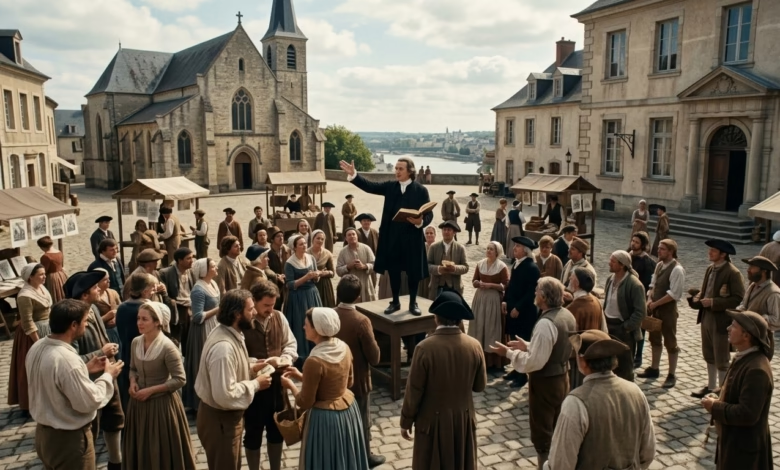
The Book “Religion In Public: Locke’s Political Theology” By The Author Elizabeth A. Pritchard, Published By Stanford University Press, Presents A Critical Review Of The Traditional Narratives That Address The Issue Of Secularism And The Separation Of Religion From The State. The Author In This Work Goes To Turn Conventional Wisdom Upside Down, Where She Presents A Different Reading Of The Concept Of Secularization, Not As A Process That Necessarily Requires Privatizing Religion And Confining It To The Individual Sphere, But As An Enhancement Of The Worldly Character Of Religion. In This Context, Pritchard Puts Forward A Central Idea That Secularization Means Placing Religion In The Sphere Of Public Circulation, And That This Very Project Is What The English Philosopher John Locke Defended As Part Of His Political Theology.
John Locke Is Often Invoked To Justify Readings That Link Secularization With The Privatization Of Religion, Where His Distinction Between The State And The Church Is Linked To The Distinction Between The Public And The Private, And Between Body And Soul. The Problem, As The Author Clarifies, Lies In The Fact That These Categorical Distinctions And The Meanings Entailed By Them Are Taken As Indisputable Axioms, Where It Is Assumed That They Represent Binary Contradictions And Clear And Distinct Systems That Have Remained Without Significant Change For More Than Three Hundred Years. Instead Of Confining Religion To A Private And Internal Space, Pritchard Argues That Locke Reformulates Religion To Be The Foundation Upon Which The Distinction Between The Private And The Public Is Based. Locke’s Political Theology Grants Humans, As Divine Property, An Inalienable Transcendence That Establishes Rights, And Promotes The Transformation Of Religion Into Convictions And Patterns That Are Tradable And Debatable And Subject To Judgment In The Public Sphere.
It Is Interesting That Locke Did Not Use The Distinction Between The Public And The Private Regularly In His Writings, And That These Two Concepts Do Not Easily Coincide With His Distinction Between Civil Authority And Ecclesiastical Authority. Locke Indicates That Private Matters Are Those That Do Not Affect Others, Which Suggests That He Considers The Public Sphere To Be Everything That Has An Impact On Others, Which Is Evident In His Insistence That The Ruler’s Powers Should Be Directed Towards The Common Good. The Author Agrees With Charles Taylor That The Modern Public Sphere Acts As An Independent Monitor Of Political Authority, And Sees That Locke Was Seeking To Promote A Civil Society Separate From The State, Expressing This By His Reference To Public Gatherings In Cities And Markets And Courts. Moreover, Locke Rejects The Assumption That Civil Gatherings Are Always Public And Open, While Religious Gatherings Must Necessarily Be Private. And He Emphatically Affirms That The Highest Duty Of Every Individual, Including The Ruler, Is To Attempt To Convince Others Of What He Considers Religious Truth, Which Indicates That He Views Religion And Religious Difference As Matters That Should Be Raised In The Public Sphere.
The Author Does Not Overlook Pointing To The Historical Context In Which Locke Wrote, Where Religion Possessed An Unparalleled Ability To Bind Bodies Or Separate Them, And It Determined Who Eats With Whom, And Who Trades, And Prays, And Marries. Therefore, The Challenge Lay In How To Enable Different Bodies And Ideas To Circulate And Interconnect Without Causing Offense Or Harm. In This Framework, Locke Seeks To Disentangle Religion From Bodies, Considering That True Religion Is Not A Weapon Directed Towards Bodies, Nor Is It Embodied In The Wasted Effort In Religious Rituals, But Its Value Lies In Opinion And Argument And Persuasion.
Pritchard Presents A Definition Of The Secular As “The Worldly,” Which Allows Cutting The Repeated Links Between The Secular And The Non-Religious. The Author Does Not View The Secular As A Retreat Or A Disappearance Of Enchantment, Nor Does She Agree With Narratives That Portray It As A Unique Turning Point Towards Enlightenment And Liberation. Instead, She Sees That What Locke Says About Religion Reflects The Broader Context Of Early Modern England, Which Was Characterized By Market Expansion, Colonial Rule, Unification Of Monetary Policies, And Huge Growth In Population And Publishing Movement. Locke Was Seeking To Expand The English Capitalist Market, And To Achieve That, He Supported Easing Immigration Restrictions, And Rewarding Large And Productive Families, And Expanding Colonialism. He Wanted Different Bodies To Communicate And Trade And Produce, And So That Religion Would Not Stand As An Obstacle To This Circulation, He Worked On Reshaping It. Locke Argued That Religion Does Not Settle In Bodies Or Stubborn Wills, Nor Is It Transmitted Through Families Like Inherited Property, But At The Same Time He Did Not Reduce It To Mere Internal Or Private Belief. Locke Did Not Bury Religion In The Mind, But Placed It In The Sphere Of Circulation, Retaining Its Character As A Form Of Communication And Power, So That It Becomes Available For Consumption By A Wider And More Diverse Audience.
In Locke’s Political Theology, Religion No Longer Integrates Political Bodies And Gives Them A Sacred Character, Nor Does It Justify Inflicting Harm Upon Them. Locke Imagines Members Of Political Systems Oscillating Between Consensus And Difference, And Therefore Seeks To Achieve Balance Between Belonging And Difference. Locke Insists On The Existence Of A Theological Consensus As A Basis For Public Religious Difference; The Consensus That Humans Are Inalienable Property Of A Creator And Benevolent God Feeds A Conception Of The Self As Possessing Protected Spaces That Call For Political Authority To Protect Them As Manifested In Various Human Rights Instruments. This Consensus Works As A Preventive Measure Against Random Mixing And Noisy Debate In Modern Societies. In Other Words, Locke’s Political Theology Does Not Privatize Religion, But Rather Derives From It The Basis For The Distinction Between Private And Public, And Builds The Difference Between What Is Alienable And What Is Inalienable.
The Father God Forms The Center Of Gravity In Locke’s Religious Market, For He Is The One Who Claims Ownership Of Humans As Their Creator. While Locke Promotes Religion As Something Disposable And Transferable, This Active Trade Is Stabilized By The Consensus That Every Human Being, As A Creature Of God, Carries An Inalienable Transcendence That Cannot Be Subjugated Or Enslaved Or Destroyed. In Addition, This God Has Relinquished The Authority Of Punishment To Humans And No Longer Threatens Them With The Specter Of Eternal Punishment, And Is Not In Need Of Someone To Avenge His Honor, So There Is No Need To Punish Or Kill Those Considered Heretics. Locke’s Political Theology Represents A Mitigated Form Of Patriarchy, Where The Human Patriarch, Whether In Politics Or Family, Has Become Obligated To Protect Human Bodies And Their Properties. Accordingly, The State Is Not Considered Completely Neutral, But Rather Derives Its Legitimacy From Its Recognition Of Citizens As Creatures Granted By God Inalienable Rights.
Locke Presents A Comprehensive Rethinking Of God’s Power To Be Complementary To His Political Philosophy Based On Consent And Acceptance. His Writings On Religion And Theology And Political Theory And Epistemology Continuously Address The Issue Of Power, And He Insists That The Difference Between Church And State Is A Difference In The Type Of Power Used, Where The Church And The Public Use Persuasive Authority, While The State Alone Uses Punitive Authority. However, Locke Describes The Power Of Empirical Knowledge And Emotional Shocks As Compelling, And Points To The Power Of Childhood Experiences, As Well As Evokes Freedom Of Expression And Public Censorship Symbolized By The Concept Of Fashion Or Trending Patterns. Locke Recognizes The Details Of Power In Persuasive Authority That May Appear Harsh, And Acknowledges That Words Can Be Weapons, And Insists On The Necessity Of Consent When Facing These Challenges.
Numerous Criticisms Have Been Directed At Liberalism, Of Which Locke Is Considered One Of Its Founders, Where Some, Such As Paul Morris, Have Accused It Of Adopting A Metaphysical Dualism Between Mind And Body, In Which Religion Is Privatized While Politics Manages Bodies. The Legacy Of Locke Is Also Blamed For The Endeavor Of Contemporary Liberal Theorists To Distance Religious Participants And Their Arguments From The Political Process. Critics Argue That Tolerance Becomes Meaningless If Religion Is Hidden Behind Closed Doors Or Confined To Hearts And Minds. In Response To Such Tendencies, Locke Wonders In His Letter On Tolerance Why Jews Are Allowed To Own Private Homes While They Are Prevented From Building Public Synagogues, Affirming That Their Public Gatherings Do Not Pose A Danger To Civil Peace Greater Than The Danger Of Their Private Gatherings.
Locke Affirms That Charitable Care Represented In Education And Warning And Persuasion Cannot Be Denied To Any Human Being, Considering That The Continuous Effort To Convince Others Of The Error Of Their Path Is The Greatest Duty. Locke Was Not Seeking To Isolate Religion, But To Change The Type Of Power Associated With It, Making It A Persuasive Power. And He Was Not Content With Merely Allowing The Existence Of Religion In The Public Sphere, But Insisted On It, Pointing Out That The Danger Lies In People Gathering In Secret Sects Isolated From The Public. He Believed That The Best Way To Regulate Erroneous Religious Opinions Is To Encourage Subjecting Them To The Oversight Of Public Opinion. It Is Better That Religious Positions Be Presented Publicly And Challenged Rather Than Leaving Them To Worsen And Mislead People In Secrecy.
This Vision Aligns With The Changes That England Witnessed In The Seventeenth Century Regarding Communication Practices And Publishing Movement, Which Marked The Emergence Of The Modern Public Sphere. That Period Witnessed A Shift From Standards Of Secrecy To Resorting To Public Opinion, And Printing Imposed A Dialogical System On Religious And Political Conflict. Locke Was Considered A Witness To This Increasing Circulation Of Religion In Printed Materials, And Advocated Transforming The Medium Of Religion From Bodies To Speech And Texts, Affirming That Religion Is A Material For Discussion And Arguments That Can Circulate Safely Away From Weak Human Bodies.
To Achieve This Transformation, Locke Had To Disassociate Religion From Body And Will And Family Ties. He Argued That True Religion Cannot Be Imposed By Force Because It Addresses Understanding And Not Will. And He Affirmed That Man Is Not Born A Member Of Any Church, And That Religion Is Not Transmitted By Inheritance Like Property. For Locke, Religious Selves Are Made And Not Born, And Religion Is Not About Blood Or Land, But About Words And Persuasion. Locke Sees That Tolerance Requires Viewing Religion As Speech Acts That Are Tradable And Changeable, And Not As A Family Legacy Or A Fixed Identity. By Separating Words From Bodies, Locke Seeks To Allow These Words To Circulate Freely Without Causing Harm, Which Opens The Door To New Opportunities For Redistributing And Reassembling These Bodies In Broader Economic And Political Contexts.
Continuing To Separate Religion From Fixed Identities, Locke Deliberately Likens Religious Differences To Matters Of Fashion Or Attire. In An Attempt To Reduce The Intensity Of Religious Conflicts, He Sees That Changing Religious Beliefs Is Somewhat Similar To Changing A French Hat Or Choosing A Specific Hairstyle. This Analogy Does Not Mean That Changing Religion Is Easy Like Wearing Different Clothes, But Aims To Clarify That Religious Convictions, Even If Not Entirely Subject To The Free Will Of The Individual, Are Nonetheless Changeable And Modifiable Exactly Like Opinions And Trending Patterns. Locke Sees That Differences In Ways Of Worship, Such As Sitting Or Kneeling, Should Not Pose A Threat To Civil Peace More Than Wearing A Coat In The Market Does.
Locke’s Use Of The Concept Of Fashion Reflects A Widespread Concern In His Era, Where Many Sources In The Seventeenth Century Expressed Increasing Anxiety About The Dominance Of Fashion And Its Fluctuations Over Religion, Which Is Supposed To Be Constant And Eternal. Critics, Such As The Quaker Leader George Fox, Pointed Out That Fashion Represents A Superficial Worldly Ornament That Fades With Time, While True Christianity Is An Internal Nature And Conduct. But Transforming Religion Into Something Like Fashion In Locke’s View Carries Deeper Dimensions Than Mere Trivialization, For It Points To The Communicative Nature Of Religion And Its Susceptibility To Evaluation And Comparison And Exchange In The Marketplace Of Ideas. And Just As Fashion Is Subject To The Censorship Of Society And Its Judgment, Religion As A Tradable Pattern Is Also Subject To The Discipline Of Public Opinion.
In Addition, Locke Does Not Completely Deny The Power Associated With Religious Discourse, But Uses Metaphors Of Power Clearly, Speaking Of A Christian War Waged With Weapons Of Guidance And Advice, And Of The Power Of Arguments That Refute Errors. At The Same Time, He Expresses His Concern About The Harsh Use Of Words And About Fanaticism That Breathes Nothing But Fire And Sword, Warning That Pens May Be As Guilty As Swords. This Ambiguity In Locke’s Position Shows That He Was Fully Aware Of The Power Latent In Persuasive Discourse, But He Insisted On The Necessity That This Power Be Exercised Through Consent And Acceptance.
Pritchard Bases Her Analysis On Locke’s Theological And Political Writings, At The Forefront Of Which Are The Book “The Reasonableness Of Christianity” And His Letters On Tolerance, To Show How The English Philosopher Harnessed The Tools Of Hermeneutics And Textual Criticism To Strip The Priestly Exclusivity From The Interpretation Of The Bible. The Purpose Of This Critical Approach Was Not To Empty The Religious Text Of Its Faith Content Or Present It As A Marginal Historical Document, But Rather Aimed Primarily At Liberating It From Complex Abstract Categories And Metaphysical Debates That Fueled Religious Wars And Sectarian Conflicts In England And Europe During The Seventeenth Century. By Emphasizing That The Core Message Of Christianity Is Characterized By Simplicity And Clarity And Is Available To Every Sound Mind, The Text According To Locke Transformed From A Monopolistic Authority Guarded By Ecclesiastical Institutions And By Which They Impose Their Hegemony, Into A Document Capable Of Direct Reading And Personal Understanding And Open Discussion Among Citizens. This Transformation Is Consistent With Pritchard’s Main Thesis, Where The Worldliness Of Religion Here Is Manifested In Its Transfer From The Corridors Of Closed Priesthood To The Open Space Of Circulation And Rational Discussion.
The Analysis Expands To Include Locke’s Position On Religious Rites And Rituals, Especially Baptism And The Lord’s Supper, Which Are Spaces That Have Historically Constituted Inflamed Points Of Contact And Grand Sources For Framing Collective Loyalties And Material Mobilization. Pritchard Argues That Locke Focused His Attention On Stripping Religious Ritual Of Magical Or Coercive Material Efficacy, Rejecting The Idea That Ritual Practices Possess In Themselves An Intrinsic Ability To Directly Affect Bodies Or Oblige Individuals To A Specific Political Compliance. Instead, Locke Redefines Rituals As Symbolic And Expressive Acts Linked To Individual Conviction And Free Choice. This Functional Deconstruction Of Ritual Removes From It The Ability To Divide Society Into Warring Material Blocs In Markets And Public Squares, And Elevates It To The Level Of Personal Choices And Open Expression That Can Be Practiced Publicly Without Having The Right To Infringe On The Rights Of Others Or Confiscate The Public Sphere. And In This Sense, The Transformation Of Ritual From A Coercive Act With Material Payload To A Symbolic Performance Subject To Persuasion And Choice Represents A Fundamental Pillar In Making Religion A Communicative Activity Active In The Public Sphere Without Threatening The Stability Of The Civil State.
Pritchard Then Moves To Examining The Economic And Social Dimensions In Locke’s Political Theology, Relying On A Careful Reading Of His Book “Two Treatises Of Government.” The Researcher Clarifies That The Lockean Theory Of Labor And Individual Property Is Not Separate From The Comprehensive Theological Vision That Governs His Philosophy; Man In Locke’s View Is Not A Being Absolutely Independent In Himself, But Is Pure Divine Property That May Not Be Enslaved Or Destroyed Or Its Fundamental Freedom Relinquished. This Concept Of God’s Ownership Of Humans Forms The Metaphysical Base From Which Inalienable Rights Arise, At The Forefront Of Which Are The Right To Life And Liberty And Property. From This Standpoint, Man’s Work And His Body And His Productive Activity Become A Means To Achieve The Divine Will In Building The Earth And Reclaiming Resources. Pritchard Sees That Locke Succeeded Through This Theological Link In Directing Human Energies Towards Material Economic Activity And Trade, Replacing Theological Conflict Over Doctrines With A Productive Effort That Serves The Common Good And Promotes The Growth Of The English Capitalist Market In That Era. And Thus The Worldliness Of Religion Appears As A Process Of Redirecting Faith Behavior Towards Material Development And Fruitful Social Interaction.
The Author Pays Special Attention To The Issue Of The Limits Of Tolerance In Locke’s Political Theology, Where She Stops At His Famous Exception Of Atheists And Catholics In “A Letter Concerning Toleration.” Pritchard Presents An Analysis That Moves Away From Superficial Justification As It Avoids Passing Historical Condemnation, Attempting To Understand This Exception Through The Internal Logic Of The Public Sphere That Locke Seeks To Establish. The Author Sees That The Refusal Of Tolerance Towards Atheists Does Not Stem From Mere Doctrinal Fanaticism, But From The Fact That The Atheist, In The Lockean Perspective, Lacks The Theological Reference That Gives Covenants And Pacts And Oaths Their Binding Value, Which Are Indispensable Tools For Building Trust And Signing Contracts In A Civil And Economic Society Based On Exchange And Circulation. As For The Exclusion Of Catholics, It Goes Back To The Fact That Subordination To The External Papal Authority Introduces A Competing Political Loyalty To The Sovereignty Of The Civil State, Which Disrupts The Principle Of Citizen Commitment To The Common Good Of The Republic. Pritchard Clarifies That These Limits Reveal The Nature Of Tolerance According To Locke As A Functional Framework Put In Place To Protect Freedom Of Intellectual And Economic Circulation And Ensure The Stability Of The Emerging Capitalist Society, And Not Merely Absolute Leniency With Every Intellectual Position That Threatens The Foundational Principles Of This System.
The Author Also Highlights How Locke’s Political Theology Contributes To Shaping The Concept Of Public Reason And Defining The Rules Of Discussion In The Open Society. Pritchard Points Out That Locke Did Not Find Danger In Displaying Religious Beliefs In The Public Space, But Rather Saw That The Real Danger Lies In Religious Groups Sliding Towards Secrecy And Ecclesiastical Isolation. When Beliefs And Opinions Are Presented Publicly In A Society Of Publishing And Printing And Markets, They Are Automatically Subject To The Rules Of Criticism And Social Oversight And Rational Refutation, Which Weakens Tendencies Of Fanaticism And Limits The Ability Of Extremist Groups To Covertly Mobilize. Locke’s Insistence On Transferring Religious Conflict From Arenas Of Material Confrontation And Bodies To The Space Of Printed Arguments And Debates Involved A Confident Bet On The Possibility Of Controlling Difference Through Mechanisms Of Dialogue And Persuasive Freedom. And Thus A Public Space Emerges In Which Individuals Learn How To Interact With Doctrinal And Intellectual Diversity As Options Subject To Continuous Discussion And Modification Under The Influence Of Public Opinion And Mutual Experience.
Pritchard In This Context Arrives At Formulating A Critical Position Towards Contemporary Secular Theories That Tend To Depict Modernity As A Process Of Complete Exclusion Of Theology From Public Affairs. The Researcher Affirms That Reading Locke’s Political Theology Clearly Shows That Secular Institutions And The Boundaries Separating Religion And State Did Not Arise As A Radical Rupture With Faith, But Were Designed By A Specific Political Theology That Worked To Redistribute Roles And Adapt Religious Efficacy To The Needs Of The New Concept Of The State And The Market. Secularism, According To This Proposition, Is Not Absolute Neutrality Or A Complete Emptying Of The Public Sphere From Metaphysical Purposes, But Is A System That Exerts Pressures To Direct Religions Towards Non-Coercive Communicative Forms Compatible With Free Circulation And Protection Of Individual Rights. And This Awareness Reopens The Debate About The Theological Origins Of Modern Political Concepts, And Urges Reexamining Secularism Not As An Absence Of Religion, But As A Specific Pattern Of Organizing Religion And Its Public Presence.
Pritchard Clarifies That The Lockean Project Was Not Limited To Redefining The Relationship Between Church And State Or Organizing Forms Of Discussion In The Public Sphere Only, But Extended To Draw The Features Of A Comprehensive Social And Economic System In Which Theological Obligations Are Integrated With The Requirements Of The Emerging Capitalist Market And The Modern State. The Scientific Reality Coupled With The Worldliness Of Religion According To Locke Goes Beyond Mere Intellectual Freedom, To Be Closely Connected To The Need To Move Bodies And Money, And To Find Stable Trust Networks That Enable Society To Expand And Produce And Trade Without Obstacles.
Pritchard Begins Her Analysis Of This Theological-Economic Dimension By Standing At Locke’s Writings Related To Criticism And Currency, Especially His Contributions During The English Recoinage Crisis In The Eighteen Nineties Of The Seventeenth Century. The Researcher Sees That Locke’s Staunch Defense Of The Actual Value And Fixed Weight Of Silver In Coins Was Not Merely A Technical Position In Political Economy, But Stemmed From A Deeper Theological And Metaphysical Vision That Views Trust And Honesty As Two Essential Conditions For The Establishment Of Civil Society And Public Circulation. Locke Saw That Counterfeiting Currency Or Reducing Its Nominal Value By An Arbitrary Decision From The Ruler Resembles Corrupting Language And Distorting Religious And Moral Truths; It Is An Assault On The Objective Standards Of Values That God Deposited In The Natural World. And Just As Religion Requires Truthfulness And Persuasion And Commitment To Covenants, Trade And Monetary Exchange Require A Stable Monetary Medium That Expresses The Truth Of Value And Is Not Subject To Political Whims Or Authoritarian Excess. And Thus It Appears That Financial Circulation According To Locke Parallels Completely Intellectual And Religious Circulation In The Open Space; Both Need Clear Standards That Ensure Stability And Prevent Deception And Safeguard The Rights Of Individuals.
As An Extension Of This Economic Logic Connected To Theology, Pritchard Addresses The Lockean Position On Colonial Expansion And Land Reclamation In The New World. The Researcher Shows How The Lockean Theory Of Labor And Property Contributed To Formulating A Theological And Ethical Justification For English Colonial Policies In North America. From Locke’s Point Of View, God Gifted The Earth To Humanity In Common, However This Divine Gift Carries Within It A Mandate To Work And Improve And Cultivate. Unused Land Left Fallow Without Improvement Is Viewed In The Lockean Perspective As A Waste Of Divine Blessings, While Human Labor Reshapes This Land And Bestows Upon It A Real Value That Makes It A Private And Legitimate Property. Pritchard Sees That This Intellectual Construction Allowed Locke To Frame Colonial Activity Not As Usurpation Or Coercive Seizure, But As An Achievement Of The Divine Will In Reclaiming The World And Transforming Disabled Resources Into Productive Wealth Benefiting Humanity. And By Disconnecting The Right To Land From Tribal Or Lineal Ancient Ties And Linking It To Direct Labor And Productive Investment, Religious Doctrine According To Locke Became A Driver For Opening New Horizons For Free Trade And Expanding The Scope Of Properties Across Seas.
The Analysis Does Not Stop At The Limits Of Criticism And Colonialism, But Goes Beyond That To Examine The Lockean Position On Population Management And Controlling Marginal Social Segments. Pritchard Studies Locke’s Proposals On Reforming Poor Laws And Managing Workhouses, Showing How Traditional Religious Values Of Care And Charity Were Transformed Into Mechanisms For Social Discipline And Economic Integration. Charity And Benevolence No Longer In Locke’s Perspective Are A Spontaneous Moral Act Seeking Internal Reward Only, But Became A Unified System Aiming To Transform Poverty And Unemployment Into Useful Productive Energies. Locke Viewed Collective Poverty And Begging As A Result Of Moral Deterioration And Weakness Of Individual Discipline And Not Only As A Temporary Economic Deficit, And Therefore Proposed Strict Measures To Train Poor Children And Employ Those Able Among Them, In A Way That Ensures Their Integration Into The Capitalist Cycle And Prevents Them From Turning Poverty Into A Means To Destabilize Social Stability. Pritchard Rereads These Proposals To Affirm That The Worldliness Of Religion According To Locke Required Formulating New Methods For Managing Bodies And Ensuring Their Productivity, Where Moral Training Integrates With Practical Rehabilitation To Create Citizens Capable Of Contributing Effectively To The Common Good.
And Within The Framework Of Forming This Modern Citizen, Pritchard Allocates Space To Study Locke’s Ideas On Upbringing And Moral Nurturing As Manifested In His Work “Some Thoughts Concerning Education.” The Researcher Observes How Locke Seeks To Replace Physical Punishment And External Coercion With Internal Educational Mechanisms Based On Building Self-Desire And Internal Control. What Is Known As “The Law Of Opinion Or Reputation” According To Locke Is Considered One Of The Strongest Means Of Controlling Human Behavior; Man By Nature Is Affected By The Esteem Of His Peers And His Society Or Their Reprimand. And By Developing The Sense Of Honor And Shame In The Child, The Required Transformation Towards Rational And Moral Behavior Can Be Achieved Without The Need To Use Material Violence. Pritchard Sees That This Educational Vision Intersects Completely With Locke’s Political Theology; Just As The State Should Not Use Coercive Force To Change Religious Beliefs, The Educator Should Not Use Physical Beating To Shape Mind And Conscience. And In Both Cases, Coercion Is Replaced By Mechanisms Of Persuasion, And Encouragement, And Directing Will Towards Voluntary Acceptance, Which Creates Independent Selves Capable Of Exercising Their Freedom In The Public Sphere With Responsibility And Balance.
Pritchard Then Delves Into Analyzing The Famous Lockean Concept Known As “The Appeal To Heaven,” Which Is The Concept In Which Locke Frames The People’s Right To Resist Tyranny And Revolt Against The Unjust Ruler In His Political Writings. The Author Clarifies That The Right Of Resistance According To Locke Does Not Go Back To An Anarchic Revolutionary Tendency Or A Desire To Undermine Civil Authority, But Is Based On A Decisive Theological Reference That Sees That The Ruler And The Ruled Are Subject Together To A Higher Divine Law. When The Ruler Exceeds The Mandate Granted To Him And Turns Into A Tyrant Who Assaults The Bodies Of Citizens And Their Properties And Freedoms, He Transforms The Relationship With The People From A Civil State Based On Law And Consent Into A State Of Coercive War. And In The Absence Of A Neutral Earthly Judge Who Decides Between The Two Parties, Nothing Remains Before The People Except “The Appeal To Heaven,” Which Is The Lockean Expression Of Resorting To Divine Law And The Natural Right To Defend One’s Survival. Pritchard Shows That This Concept Displays The Most Protective Side Of Individual Rights In Locke’s Political Theology; Religion Here Does Not Work As A Tool For The Subjugation Of Subjects As Was The Case In Theories Of The Divine Right Of Kings, But Transforms Into The Last Moral And Theological Support That Legitimizes Opposition Against Injustice And Protects The Material And Intellectual Freedoms Of Individuals In The Face Of The Encroachment Of Political Authority.
Pritchard Then Reviews The Location Of Locke’s Political Theology Within Contemporary Debates About Secularism And The Public Sphere, Proposing A Critical Comparison Between The Lockean Proposition And Modern Theorizations Issued By Prominent Thinkers Such As Jurgen Habermas And Charles Taylor And Talal Asad. The Researcher Sees That The Lockean Model Presents An Alternative That Goes Beyond The Shortcoming Existing In Some Modern Theories That Insist On Completely Removing Religion From The Language Of Official Political Dialogue Or Reducing It To Isolated Internal Feelings. While Some See That Secular Modernity Requires A Complete Ban On Religious Arguments In Public Discussions, Locke Proves That Faith Belief Can Be A Main Source For Formulating The Foundational Concepts Of Rights And Dignity And Freedom, Provided That This Belief Is Presented In A Dialogical Language That Seeks Rational Persuasion And Abandons Means Of Material Coercion. At The Same Time, Pritchard Moves Away From Simplification That Depicts Locke As A Spiritual Father Of Completely Neutral Secularism, Pointing Out That His Model Remained Loaded With Theological Assumptions About The Creator And Divine Ownership And The Commitment Of Human Beings To Building The Earth And Communication And Circulation.
The Author Also Highlights How Locke Differs From Previous Authoritarian Perspectives That Made Religion A Means To Frame Absolute Obedience. Locke Was Able To Transform Religious Discourse From A Means To Subjugate Minds And Bodies Into A Means To Open Fields Of Social And Commercial And Cultural Interaction. True Religion In Locke’s Perspective Is What Promotes Tolerance And Open Communication, And What Accepts Subjection To The Oversight Of Public Criticism Without Fear. This Understanding Makes Locke’s Political Theology An Early And Unique Experience For Integrating Doctrinal Diversity Into The Structure Of A Modern Society Characterized By The Movement Of Publishing And Printing And Circulation Of Goods And Ideas.
The Author Addresses How Locke’s Epistemological Structure Integrates With Her Basic Thesis About The Worldliness Of Religion And The Establishment Of The Modern Public Space; Pritchard Sees That Locke’s Empirical Theory Of Knowledge Was Not Merely A Pure Philosophical Occupation With The Limits Of The Human Mind, But Was In Its Essence A Theological And Political Response Dictated By The Need To End The Raging Religious Conflicts And Secure A Safe Space For Public Circulation. Locke’s Confinement Of The Sources Of Human Knowledge To Sense And Experience And Reflection, And His Insistence That The Human Mind Is Born As A Blank Slate, Combine With His Endeavor To Strip Enchantment And Coercive Mysticism From Faith Categories. Religion, Within The Framework Of This Epistemological Theory, Must Advance Before The Mind As Hypotheses And Arguments Subject To Examination And Scrutiny, And Not As Inspiring Truths In A Decisive And Closed Manner That Transcends Methods Of Proof And Civil Debate.
Pritchard Allocates An Analysis To Locke’s Position On The Phenomenon Of “Religious Enthusiasm” Or What Is Known As Spiritual Divine Inspiration That Spread Among Many Sects And Religious Groups In The Seventeenth Century. The Researcher Sees That Locke Viewed This Type Of Direct Inspirational Claim As A Radical Threat To The Structure Of The Public Sphere; The Enthusiast Who Claims To Receive Direct Revelation From God Without Need For Rational Or Printed Textual Evidence, Raises His Categories Above The Level Of Discussion And Refutation, And Demands Others To Submit Blindly To His Internal Inspiration. This Claim, In Locke’s View, Cancels The Possibility Of True Circulation And Reproduces Tyranny And Violence; The Individual Conscience Clustered Around Itself Turns Into A Coercive Authority Seeking To Subjugate Others. Therefore, Locke Poured His Philosophical Wrath On Religious Enthusiasm, Clarifying That True Revelation Cannot Contradict Reason, And That The Only Criterion For Distinguishing Divine Inspiration From Illusions Of The Self And Subjective Desires Is Its Subjection To Evidence And Proofs Capable Of Sharing And Criticism. And By Forcing Religious Claim To Pass Through The Filter Of Rational Examination Before The Public, Locke Ensures Protection Of The Public Space From Emotional Shocks And Fanaticism Resulting From Closed Spiritual Claims.
The Author Then Moves To Examining The Social And Family Dimension In Locke’s Political Theology, Pausing At His Sharp Intellectual Debate With Sir Robert Filmer Author Of The Book “Patriarcha.” Pritchard Shows That Locke’s Dismantling Of The Theory Of The Divine Right Of Kings Was Not Limited To Criticizing Absolute Political Authority, But Extended To Reorganize Family Ties And Gender Relations Inside The Home. Filmer Established A Decisive Analogy Between The Father’s Authority In The Family And The King’s Authority In The State, Considering That Both Exercise Absolute Authority Derived From The Authority That God Granted To Adam. However Locke, In “The First Treatise Of Government,” Works To Dismantle This Paternal Analogy; He Shows That Parental Authority Is Not Absolute Ownership Of Parents, But Is A Temporary Mandate And Care Aiming To Deliver Children To The Stage Of Rational Maturity And Independence Of Will. Moreover, Locke Insists On The Mother Sharing With The Father In This Parental Authority, Deducting Thus Part Of The Traditional Paternal Hegemony. Pritchard Sees That Reformulating The Family According To Locke Transforms It From A Closed Feudal Institution Based On Eternal Hierarchy Into An Organized Social And Civil Contract, Based On Consent And Mutual Responsibility, Which Contributes To Liberating The Bodies Of Women And Children From Absolute Subordination, And Preparing Them For Participation As Independent Selves In Economic And Social Exchange.
And In A Path Connected To Organizing The Public Sphere, Pritchard Studies The Position Of Locke’s Political Theology On Geography And Sacred Place. The Author Clarifies How The Lockean Perspective Contributes To Transforming Geographical Space From A Space Loaded With Theological Sanctity And Traditional Shrine Structures Into An Abstract And Secular Space That Allows Freedom Of Movement And Circulation For Individuals And Goods. In The Ancient And Medieval World, Sacred Places And Churches And Sanctuaries Enjoyed Material And Geographical Immunities That Imposed Restrictions On Movement And Determined Paths Of Bodies Based On Their Religious And Sectarian Belonging. However Locke Strips Intrinsic Sanctity From Places; The Mosque Or Church Or Temple Is Nothing But A Place For The Gathering Of Individuals Present Of Their Own Free Will For Worship And Circulation. Liberating Material Space From Ecclesiastical Theological Restrictions Serves In The First Place The Requirements Of The Modern Market And Freedom Of Movement Of Labor And Trade; The Entire Earth Becomes An Open Arena For Investment And Human Interaction Free Of Religious Obstacles. And Thus The Worldliness Of Religion Appears As A Process Of Reorganizing Material Space, Ensuring That Worldly And Capitalist Affairs Are Not Obstructed By Spatial Conflicts With Sacred Backgrounds.
Pritchard Also Reviews How To Redefine Religious Conscience In Lockean Philosophy. The Author Sees That Conscience No Longer According To Locke Is An Isolated Internal Refuge Or An Impenetrable Fortress That Refuses Communication, But Became A Communicative Force Desiring To Influence And Practically Persuade Within Civil Society. Traditional Religious Thought Viewed Conscience As An Absolute Internal Judge That The Individual Is Obligated To Follow Even If That Leads To Material Clash With Authority Or Society. But Locke Works To Transform Conscience From A Static And Closed Category Into An Interactive Activity Seeking To Present Bright Arguments Before Public Opinion. True Conscience Does Not Fear Publicity, But Finds In Public Circulation And Open Discussion Its Precious Opportunity To Convince Others Of The Truthfulness Of Its Categories. And Through This Transformation, Conscience Transforms From A Potential Source Of Armed Rebellion Or Sectarian Isolation Into An Active Element Participating In Building The Moral Standards Of The Open Society, Relying In That On Means Of Publishing And Oral And Written Dialogue.
The Researcher Also Sheds Light On How Locke Handles Human Desires And Emotions, Transforming Moral Discipline Into An Essential Element For Creating The Useful Citizen. Pritchard Notes That Locke Was Not Aiming To Suppress Human Desires Or Extinguish Material Passion In Individuals, But Was Seeking To Direct These Energies And Transform Them From Random Caprices Or Destructive Conflicts Into A Desire To Improve The Self And Acquire Wealth And Gain The Respect Of Peers. “The Power Of Opinion” Or Social Reputation Plays A Central Role In This Context; Man By Nature Seeks Praise And Avoids Blame And Shame In His Society. And By Organizing This Literary Authority And Directing It Towards Guaranteeing Rational Behavior, Individuals Can Be Pushed To Control Their Subjective Caprices And Adapt To The Requirements Of Work And Production And The Common Good. And Thus Moral Upbringing Integrates With Economic Interest, So That Good Behavior Becomes A Commercial And Social Advantage That Guarantees The Individual A Prestigious Position In A Society Of Exchanges.
Pritchard Does Not Hesitate To Present A Critical Reading Addressing The Limits Of This Model And The Forms Of Implicit Hegemony It Contains. The Researcher Argues That The Public Space That Locke Seeks To Build, Which Appears On The Surface As A Neutral And Open Space For All Rational Selves, Carries Within It Clear Normative Conditions That Indirectly Exclude Everyone Who Cannot Or Does Not Wish To Adapt To Its Rules. Locke’s Insistence On Deliberative Rationality, And On Reducing Religion To Speech Acts And Persuasive Acts, Involves A Bias In Favor Of The Educated Classes And Property Owners And Participants In The Publishing Movement And The Market. As For Groups That Express Their Religious Faith Through Intensive Physical Ritual Practices, Or Insist On Combining Religious And Political Authority, They Find Themselves Threatened With Exclusion Or Restriction. Pritchard Shows That This Implicit Hegemony Reveals That The Worldliness Of Religion In Locke’s Political Theology Was Not Merely A Liberation For Everyone, But Was Also A Process Of Re-Sorting And Reshaping That Redistributes Roles Of Power Within Society.
The Author Concludes By Pointing Out That Understanding Locke’s Political Theology Casts Its Shadows On Contemporary Problematics Facing Modern Liberal Societies In Their Dealing With Cultural And Religious Diversity. The Challenges Posed By The Presence Of Religion In The Public Space Today Do Not Go Far From The Challenges That Locke Faced In His Era. Pritchard Wonders Whether Current Secular Models, Which Insist On Complete Detachment From Faith Arguments In The Public Sphere, Lose In Doing So The Moral Theological Reference That Locke Himself Used To Establish Inalienable Rights And Protect Human Dignity. And She Affirms That What Locke Sought To Achieve Between Theological Consensus On God’s Ownership Of Humans And Tolerance With Doctrinal Differences Remains Rich Material For Philosophical And Political Reflection On The Origins Of Liberal Thought And Its Limits.
The Published Opinions Do Not Necessarily Represent The Opinion Of Nile Post.