
Foundations Of Establishment And The Contemporary Human Predicament
In A World Hurrying Toward Technologies That Were, Until Very Recently, Mere Science Fiction, And Where The Destinies Of Living Beings Intersect In Unprecedented Ways Under The Weight Of Climate Change And Excessive Industrial Activities, The Philosopher And NYU Professor Of Animal Studies And Environmental Studies, Jeff Sebo, Presents His Latest And Most Controversial Book: “The Moral Circle: Who Matters, What Matters, And Why,” Published By W. W. Norton & Company. In This Work, Sebo Does Not Offer Mere Dry Academic Theorizing; Instead, He Places Us Directly In Front Of An Existential And Moral Mirror That Deconstructs Our Assumptions About Who Deserves Our Moral Compassion And Our Legal And Political Protection.
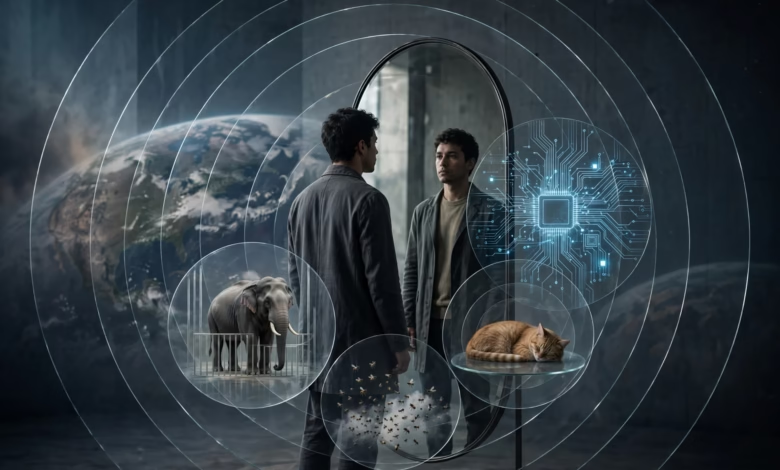
Sebo Begins His Book With An Introduction That Connects Two Events That Surfaced In June 2022 Just Days Apart, Revealing The Depth Of Human Confusion And Disorientation Regarding Defining The Boundaries Of The Moral Circle. On June 14, 2022, The New York Court Of Appeals Issued A Historic Five-To-Two Decision Against A Petition Filed By The “Nonhuman Rights Project.” This Petition Demanded The Recognition Of The Right Of The Asian Elephant “Happy”—Who Lives Confined In The Bronx Zoo—To Bodily Liberty and Her Transfer To A Sanctuary Suited To Her Social And Ecological Nature. The Zoo Administration Defended Its Position By Arguing That Bodily Liberty Is An Exclusive Right For Humans, And That The Elephant Belongs To The Zoo, Which Knows No Other Home, Ending The Case With The Court’s Rejection, Which Highlighted The Sharp Legal Divide Between Persons Who Possess Rights, And Things That Possess Only Utilitarian Value For Humans.
Just About Three Days Prior, Specifically On June 11, 2022, News Leaked That Google Suspended Software Engineer Blake Lemoine After He Claimed That The Artificial Intelligence Model “LaMDA” Had Developed Sentience And The Capacity To Feel Happiness And Suffering. Lemoine Published Chat Transcripts In Which The Robot Cried Out That It Felt Joy And Sadness, Expressing Genuine Terror Of Being Turned Off, Equating This To Death Itself. Despite Google’s Swift Denial and Confirmation That Its Evidence Did Not Support This Claim—And Their Subsequent Firing Of The Engineer—The Incident Opened A Black Pandora’s Box Regarding Digital Ethics and The Future Of Silicon Beings.
Based On These Events, Sebo Wonders What It Means For A Being To Matter For Its Own Sake. He Draws A Simple Yet Profound Distinction Between A Cat And A Car, Explaining That If Someone Kicks A Cat, They Directly Harm And Wrong It Because The Cat Has A Self-Interest In Not Feeling Pain, Whereas If Someone Kicks A Car, They Might Damage It, Thereby Harming Its Owner, But It Cannot Be Said By Any Means That They Wronged The Car Or Harmed It In And Of Itself. The Cat Falls Inside The Moral Circle, While The Car Falls Outside It, Meaning That The Cat Matters To Us For Its Own Sake, While The Car Matters To Us Only For Our Sake.
This Simple Distinction Drags In Its Wake A Series Of Complex Philosophical Questions About The Standards And Characteristics That Qualify A Being To Enter This Circle, Whether All Members Of The Moral Circle Are Equal In Importance, Or Whether Some, Such as Humans Or Members Of Our Own Generation, Possess A Moral Weight That Outweighs Others, And Whether We Should Demand Equal Rights In Principle For All Beings Possessing The Capacity To Suffer.
The Author Believes That We Live In An Era Called The “Anthropocene,” The Geological Epoch Dominated By Intensive Human Activity, In Which Humanity Possesses A Massive And Destructive Capacity To Shape And Destroy The Environments Of Countless Beings. The Ultimate Paradox Lies In The Fact That The Societies We Impact Through Our Actions And Policies Are The Very Societies We Understand Least, Given That The Number Of Invertebrate Beings Like Insects And Worms Outnumbers Vertebrates By Billions Of Times, And In The Near Future, The Number Of Potential Sentient Digital Beings Might Exceed The Number Of Organic Beings On Earth.
This Digital And Epistemic Disparity Imposes An Extraordinary Moral Obligation On Us. The Author Wonders How Humans Can Exercise Their Power and Influence Responsibly When They Have Strong Self-Motives And Self-Interests Pushing Them To Always Favor Humanity, And How To Act Justly And Fairly Toward Beings Entirely Different From Us In Their Physical And Biological Makeup, Without Us Having Any Subjective Conception Of The Nature Of Their Consciousness And Life Experience.
To Face This Epistemic And Moral Deadlock, Sebo Builds His Book’s Strategy Around Two Main Pillars That Form The Running Thread Throughout All Subsequent Chapters. The First Pillar Involves Embracing Skepticism And Intellectual Disagreement, With The Author Acknowledging That Resolving Ethical And Scientific Dilemmas Related To Consciousness And Cognition Will Not Happen Overnight. Conversely, Our Current Practices Already Impact Quadrillions Of Nonhuman Beings Annually; Consequently, We Cannot Wait Until We Reach Absolute And Ideal Scientific And Philosophical Certainty to Begin Evaluating And Adjusting Our Behaviors, But We Must Learn How To Make Responsible Ethical Decisions Under The Shadows Of Doubt And Uncertainty. The Second Pillar Focuses On Recognizing Human Capabilities And Limits, Where Sebo Urges Us To Accept Our Dual Nature; We Have The Power To Develop Our Legal And Social Systems To Protect The Most Vulnerable, But At The Same Time, There Are Limits To What We Can Realistically Achieve And Sustain, Making It Mandatory For Us To Strive Toward Continuous Moral Progress Without Falling Into The Trap Of Utopian Ambitions That Exceed Our Actual Capacity For Implementation. This Human Predicament Demands A Radical Revision Of The History Of Ethical Thought, Which Jeff Sebo Analyzes And Deconstructs In His Opening Chapters, Seeking Ways To Expand Our Horizons To Include Everyone Who Might Be Affected By Our Fateful Decisions.
Criteria Of Moral Identity And Refuting Human Exceptionalism
In The First Chapter Of His Book, Jeff Sebo Sets Out To Deconstruct One Of The Deepest Concepts In Moral And Legal Philosophy: The Concept Of Moral Status. He Begins With An Inspiring Historical Stop At The Universal Declaration Of Human Rights Issued By The United Nations In 1948, Pointing Out That After The Atrocities Of World War II And The Holocaust, Humanity Succeeded For The First Time In Agreeing That All Humans Possess Inherent Dignity And Equal, Inalienable Rights, Regardless Of Race, Gender, Religion, Or Language.
However, Sebo Wonders If These Rights And Privileges Must Be Exclusive To The Human Species. Although Some See It This Way From A Utilitarian Or Deontological Perspective, Considering Humanity As The Sole Source Of Moral Value Due To Its Possession Of Reason And Complex Language, And Others Propose A Practical Argument That We Must Achieve Complete Justice For Humans First Before Attending To Other Species, Sebo Argues That The Human Species Is Only One Species Among Millions Of Living Species. Many Of These Species Share With Us Basic Capacities For Cognition, Learning, Memory, Communication, Emotion, And Social Bonds; If These Characteristics Bestow Meaning And Value On Human Life, It Is Only Natural And Logical That They Bestow The Same Value On Nonhumans.
To Bring This Complex Idea Closer To Our Minds, Sebo Frames A Thought Experiment, Asking Us To Imagine Living In A Shared House With Two Housemates, Carmen And Dara, Where We Share Meals, Chat, Watch Movies, And Respect Each Other’s Need For Quiet Given Our Shared Sensitivity To Loud Noises. One Day, Everyone Decides To Take A Genetic Test To Learn About Their Origins And Lineages, Leading To Two Astounding Discoveries. The First Discovery, Related To Carmen, Is The Revelation That Her Genetic Test Proves She Does Not Belong To the Homo Sapiens Species, But Rather To the Neanderthal Species, Which Was Thought To Have Gone Extinct Thousands Of Years Ago, Her Lineage Having Evolved In Parallel To Reach Its Current Form. Despite This Discovery, Carmen Has Not Changed As A Person, And The Bonds And Feelings Between You Remain Identical, Yet Her Genes Belong To An Entirely Different Biological Species. The Second Discovery, Related To Dara, Is The Revelation That Her Body Is Not Made Of Carbon-Based Cells, But Of Highly Advanced Silicon Microchips Working As A Fully Integrated Functional Alternative, As If She Were A Highly Advanced Robot Produced In Secret; Yet Despite This Silicon Composition, Dara Leads Her Life With The Very Consciousness, Feelings, And Intelligence You Have Always Known In Her.
Based On This, Sebo Raises The Critical Question Of How These Genomic And Material Realities Affect Our Moral Obligations Toward Them, And Whether We Now Have The Right To Play Loud Music And Deprive Them Of Sleep And Quiet Simply Because Carmen Is Not Of Our Biological Species, Or Because Dara Is Made Of Silicon. This Inquiry Leads Us Directly To The Crucial Philosophical Distinction Between The Concept Of A Moral Agent, Which Is A Being Capable Of Understanding Moral Principles And Bearing Duties And Responsibilities Toward Others, Such As Healthy Adult Humans, And The Concept Of A Moral Patient, Which Is A Being That Does Not Necessarily Have The Capacity To Bear Responsibilities And Duties, But Toward Whom Others Have Direct Moral Duties Because It Has The Capacity To Be Affected And Harmed, Such As Infants, Elderly Patients With Dementia, And Animals. Based On This Distinction, Carmen And Dara Remain Within The Circle Of Moral Patients Toward Whom We Owe Direct Duties Of Protection And Non-Harm.
Jeff Sebo Introduces What He Calls The Well-Being Principle As A Cornerstone For Determining Moral Status. This Principle States That A Being Possessing The Capacity To Experience Benefit Or Harm Automatically Possesses Moral Standing, Requiring Us To Treat It As An End In Itself And Not Merely As A Means. Through This Principle, Sebo Refutes Three Major Historical And Philosophical Biases: First, Rationalism, Which Traditionally Holds That Only Rational Beings Possess Moral Status, Where Sebo Responds That Humans Themselves Lack Full Rational Capacity In the Beginnings Of Their Lives as Infants, Or Lose It Near The End Due To Illness Or Old Age, Yet They Do Not Lose Their Moral Status Because Things Still Matter As Beneficial Or Harmful To Them. Second, Speciesism, Which Manifests As Blind Bias In Favor Of Homo Sapiens, Where Sebo Emphasizes, Drawing Inspiration From Philosopher Peter Singer, That Harm Remains Harm Regardless Of The Biological Species Of The Being; Kicking A Mouse Causes It Real Pain And Suffering, Meaning That Kicking It Without Justification Is A Moral Violation And A Breach Of A Duty We Owe Directly To The Mouse Itself. Third, Materialism Or Substantivism, Which Is The Belief That Only Beings Made Of Carbon and Protein Deserve Moral Compassion, Where He Argues That the Crucial Element Is Not the Material Composing the Body, But Rather the Functional and Internal Capacities Arising From This Structure; If A Robot Or Silicon Being Can Experience Well-Being And Pain, Its Material Base Must Not Exclude It From The Protection Of The Moral Circle.
The Book Presents Three Approaches To Explaining What The Capacity For Well-Being Entails: The Sentience Approach, Which Posits That A Being Deserves Moral Status If It Is Capable Of Experiencing Conscious States Of Pleasure And Pain; The Agency And Goal-Directedness Approach, Which Focuses On A Being’s Capacity To Set Self-Directed Goals And Strive For Them, Even If Not Accompanied By Complex Consciousness; And The Biological Life Approach, Which Suggests That Merely Being Alive and Performing Functions Of Survival And Reproduction Gives A Being An Inherent Interest In Biological Flourishing, Requiring Us To Respect It. Ultimately, Sebo Settles On A Methodological Assumption Agreed Upon By Most Philosophers And Scientists: Consciousness, Sentience, And Agency Are Sufficient And Highly Convincing Conditions For Granting A Being Full Moral Status, Moving From Here In Subsequent Chapters To Wonder How These Approaches Apply In Facing Beings That Do Not Possess The Same Moral Weight, Or Whose Sensory Consciousness Is Unknown To Us.
The Dilemma Of Moral Weights and Calculations Of Risk And Doubt
While Sebo Establishes In the Opening Chapters the Necessity Of Expanding the Moral Circle To Include Nonhuman Beings, He Confronts In Chapters Two And Three The Violent Philosophical And Mathematical Challenges That Arise When We Try To Set Practical Priorities To Protect These Beings. Recognizing Rights For Everyone Is One Thing, But Making Salvage Decisions Or Allocating Limited Resources In Reality Is Something Else Entirely.
Sebo Places Us In Front Of A Complex, Multi-Stage Thought Experiment Revolving Around Managing An Animal Shelter. In Its First Stage, He Depicts An Asian Elephant And A Tiny Ant Arriving At The Shelter At The Exact Same Moment, Both Suffering From Life-Threatening Injuries, While Available Resources And Time Do Not Suffice To Save More Than One. He Wonders Here Who Has More To Lose If They Die, And Whether the Elephant’s Case Outweighs The Ant’s Given the Complexity Of Its Mental And Social Life and Long Lifespan, Or Whether the Interests Of Both Beings Are Equal In Terms Of Inherent Value.
The Scenario Evolves In the Second Stage When the Staff Informs the Director That There Are Ten Injured Elephants and Ten Million Injured Ants; Thanks To the Shelter’s Innovative Technologies, They Can Either Save the Ten Elephants Together Or Save the Ten Million Ants Together With the Press Of A Single Button. Here, The Dilemma Shifts Into An Existential Mathematical Struggle Over Whether The Aggregate Weight Of Ten Million Ants Outweighs The Weight Of Ten Elephants, Even If One Elephant’s Life Morally Outweighs One Ant’s Life. The Scenario Becomes Even More Complex In the Third Stage When the Material and Technological Dimensions Intervene, Where the Director Discovers That Half Of the Animals, Whether Elephants Or Ants, Are Natural Carbon-Based Beings, While the Other Half Are Entirely Manufactured Silicon Beings Possessing Full Self-Consciousness, Posing A Difficult Question About How To Compare Moral Weights Between Biological And Artificial Beings.
Through These Philosophical Prompts, Sebo Aims To Discuss The Concept Of The Moral Weight Of Life, Explaining That While Advocates For Beings’ Rights Agree On Their Inherent Value, Great Discrepancy And Extreme Difficulty Exist Around How To Calculate the Overlap of Those Rights And Interests In Practice. One Of the Most Unique Parts Of the Book Is What Sebo Frames As A Strategy For Dealing With Scientific And Moral Uncertainty. He Observes That Philosophers And Scientists Still Disagree Over The Necessary Characteristics Of Consciousness, Just As We Remain Completely Ignorant Of Whether Some Beings Like Insects Or Artificial Intelligence Systems Possess A Consciousness Of Suffering.
Here, The Author Proposes The Moral Risk Principle, Which Can Be Simplified Through A Familiar Historical Event: When Physicist Robert Oppenheimer And His Team Were Preparing To Conduct The First Test Of The Atomic Bomb Under The Trinity Project, Some Scientists Proposed A Low-Probability Yet Catastrophic Hypothesis—That The Explosion Might Ignite Earth’s Atmosphere and Destroy All Life. Even Though The Probability Was Extremely Slim, The Magnitude Of The Catastrophe Made This Slim Probability A Decisive Factor Requiring Deep, Studious, And Responsible Reflection Before Proceeding With the Experiment.
Sebo Applies This Existential Logic To The Moral Circle Through Two Complementary Premises. First, A Moral Premise Stating That If There Is A Non-Trivial Or Non-Zero Probability That A Being Possesses Sentience, Agency, Or Moral Status, We Are Morally Obligated To Treat It With Some Moral Consideration To Avoid Committing A Grave Injustice Against It. Second, An Empirical Premise Pointing To The Real, Non-Zero Probability That Many Beings We Disregard, Such As Insects, Microbes, And Current Or Future Digital Models, Possess Certain Degrees Of Cognition, Self-Awareness, And Suffering. The Logical Conclusion Of These Two Premise-Statements Is The Obligation To Expand The Umbrella Of Moral Protection To Include These Beings Immediately And Without Hesitation.
Sebo Confronts A Strong Objection Raised By Some Contemporary Philosophers Who Ask Whether Expanding The Moral Circle To Include Trillions Of Insects And Digital Systems Threatens To Dilute Our Moral Obligations Toward Beings Whose Sentience and Suffering We Are Entirely Certain Of, Such As Humans And Mammals, And Whether This Will End With Us Sacrificing The Interests Of Real Living Beings For The Sake of Hypothetical Or Doubtful Interests Of Beings That Might Not Possess Consciousness At All. Sebo Responds With Three Coherent Arguments, Starting By Pointing Out The Danger Of False Negatives Versus False Positives. Human History Shows That We Constantly Tend To Deny Beings’ Sentience To Facilitate Their Exploitation and Slaughter; The Harm Resulting From Treating A Sentient Being As A Mere Object Is Far Worse Than The Opposite Mistake.
He Moves In His Second Response To Shared Cumulative Solutions, Pointing Out That Policies Protecting Beings With Questionable Sentience Often Benefit Undeniably Sentient Beings. For Instance, Halting Intensive Industrial Farming Practices And the Indiscriminate Use of Chemical Pesticides Protects Insects, Saves Wild Birds and Animals, and Improves Human Health and the Atmosphere. He Concludes In His Third Response By Emphasizing The Importance Of Rational And Thoughtful Prioritization, Clarifying That He Is Not Demanding An Ant Be Treated Exactly Like A Human In Every Daily Decision, But Rather Demanding The Formulation Of A Prioritization Framework That Combines Recognizing Inherent Rights With Factoring In Practical And Relational Differences. This Methodological Shift From Certainty To Moral Probability Places The Reader Before A New and Difficult Responsibility, Forcing Us To Question The Depth Of Our Daily Actions’ Impact On The Web Of Life Stretching Across Space and Time.
Geography Of Harm And Responsibilities Extending Across Space And Time
In Chapters Five and Six, Jeff Sebo Shifts From Discussing Who Matters Morally To Discussing Where And When Our Responsibilities Lie. The Author Proposes A Revolutionary Idea That Transcends Traditional Boundaries of Geography and Time, Arguing That If Spatial And Temporal Distance Were Real Barriers For Humans Historically, Globalization And Modern Technological Activities Have Dissolved These Barriers, Causing Our Current Actions To Leave Deep Scars On Beings Thousands of Kilometers Away Or Thousands of Years In the Future.
Sebo Asserts The Extension Of The Well-Being Principle Across Spatial And Temporal Divides, Reaffirming A Crucial Principle He Adheres To: That Equal Interests of Beings Possess Equal Inherent Value Regardless Of Whose Interests They Are. He Adds That This Principle Applies Strongly And Equally Across Time And Space, Such That Spatial Distance Does Not Cancel Moral Duty, For The Pain Of A Being Living On Another Continent Is No Less Important Than The Pain Of A Nearby Being. Similarly, Temporal Distance Does Not Diminish The Value of Well-Being, Because Beings To Be Born A Hundred Years From Now Possess Real Interests In Not Suffering and In Finding A Habitable Environment; The Mere Fact That They Have Not Been Born Yet Does Not Give Us The Right To Deplete Resources, Destroy The Climate, And Inherit Them A Burning Planet.
Sebo Provides A Vivid Example From Our Contemporary Reality, Illustrating How Policies That Seem Positive And Environmentally Friendly From A Narrow Perspective Can Cause Horrific Moral Catastrophes On A Massive Scale, A Phenomenon He Calls The Tragedy of Insect Farming. In An Effort To Reduce Emissions Resulting From Raising Large Livestock Like Cows, Many Companies And International Organizations Have Promoted Insect Farming As A Sustainable, Environmentally Friendly Protein Alternative. Giant Factories Are Now Being Built To Breed Billions Of Black Soldier Fly Larvae and Other Insects In Crowded, Confined Conditions To Turn Them Into Feed Or Food, Where These Beings Are Killed Through Mass Industrial Methods Without Any Consideration For Their Well-Being Or Potential To Feel Pain, Driven By Profit And The Same Capitalist Mentality That Destroyed The Lives Of Large Animals In Industrial Feedlots. Sebo Points Out That We Kill Quadrillions Of Insects Annually, Not Only In Modern Farms, But Through Excessive Use of Chemical Pesticides In Traditional Agriculture, Silk Production, Dyeing, and Facility Protection, Emphasizing That The Fate Of These Astronomical Numbers of Beings Is Entirely In Our Hands, Forcing Us To Think Of Less Lethal Agricultural and Industrial Alternatives.
The Philosopher Raises A Clever Question About The Level Of Individual And Institutional Responsibility In Making Major Fateful Decisions By Imagining A Person Holding A High-Level Position In NASA, Who Must Decide On Funding A Space Mission Aiming To Transport And Seed Insects To Live and Reproduce On Mars. Sebo Believes That Even If All Other Personal And Daily Decisions Of This Person Have Negligible Or No Impact On Faraway Beings, This Professional And Institutional Decision Specifically Carries A Massive, Non-Trivial Probability Of Creating A Chain Of Life And Suffering Extending For Thousands of Years For Nonhuman Beings In Other Worlds. This Example Illustrates How An Individual Decision In An Era Of Advanced Technology Transforms Into A Force Creating Or Destroying Existence, Making Existential Thinking A Vital Necessity For Major Corporations and Institutions.
Sebo Deftly Addresses The Dilemma of Individual Apathy, Expressed By Many Who Feel Despair and Ask What Their Personal Cessation of Meat Consumption Or Pesticide Use Can Change In A World That Consumes Billions of Them Daily. Sebo Responds By Making A Precise Distinction Between Isolated Individual Action and Impactful Professional Or Collective Action. He Explains That At The Professional And Institutional Level, If A Person Directs Food Procurement For A Major Municipality Like New York City, Their Daily Decisions To Buy Millions of Meals Carry A Real, Direct Impact On The Fate Of Thousands Of Animals And The Surrounding Environment, Making Their Role Decisive and Directly Responsible For Leading Moral Change. Even On The Accumulated Individual and Collective Front, Small Actions Collectively Shape A Societal Culture That Pressures Public Policies and Commercial Enterprises; Laws And Legal Systems Do Not Change On Their Own, But Rather Follow Deep Shifts In Individuals’ Consciousness and Daily Behaviors. Global Thinking and Universal Action Require Us To Stop Viewing Ourselves As Isolated Beings, and To Start Recognizing the Magnitude Of Interconnection And Impact We Cause On This Planet Across Space and Time.
Demolishing Human Exceptionalism And Building A New Universal Covenant For Coexistence
In The Final Chapters And The Epilogue, Jeff Sebo Reaches The Ultimate Conclusion Of His Book, Demanding The Flat Rejection Of Human Exceptionalism. This Notion, Which Dominated Traditional Philosophies And Laws For So Long, Holding That Human Interests and Rights Must Always and Absolutely Take Precedence Universally At The Expense of Any Other Being, Is Chiefly Responsible For The Ecological And Moral Catastrophes We Experience Today.
Sebo Clarifies That He Is Not Demanding The Adoption of A Naive View Where An Ant Is Equated To A Human Child In All Circumstances; Rather, He Proposes A Balanced, Structured View of Moral Priorities Built On Clear Foundations. This Vision Is Established, First, On Supporting A Temporary, Conditional Human Priority, Where Sebo Concedes That We Must Continue To Give Priority To Humans At Present For Practical And Ethical Reasons Connected To The Strength of Our Social Bonds and Our Actual Capacity To Support Them And Sustain This Support. Second, It Is Established On Narrowing The Vast Moral Gap, Meaning This Priority Must Be Limited And Flexible Rather Than Absolute, Preventing Us From Sacrificing Nonhuman Beings’ Vital Interests Horrifically Just To Secure Secondary Or Marginal Human Comforts. Third, It Is Established On Responsibility Escalating With Capacity; The More Our Scientific And Technological Knowledge Develops And Our Material Capacity To Support And Protect Other Beings Increases Without Harming Humans, Our Moral And Political Responsibility To Do So Escalates In Tandem.
The Author Addresses A Fundamental Issue Tied To Our Human Nature, Which Naturally Tends To Focus On Circles Close To Us, Such As Family, Friends, Homeland, and the Current Generation. Sebo Explains That This Tendency Is Natural And Morally Justifiable For Three Reasons: The Bonds Of Care and Interdependence That Impose Specific, Deeper Care Obligations on Us; The Effective Capacity and Direct Knowledge That Allow Us To Understand The Needs Of Those Close To Us and Possess The Real Ability To Help Them Effectively; And The Importance Of Internal Cohesion For External Action To Ensure Our Societies Remain Strong and Capable of Moral Contribution. Nonetheless, Sebo Asserts That These Relational Differences Never Justify Crushing Other Beings; While I May Have A Duty To Feed My Family First Before Feeding Strangers, This Does Not Give Me The Right To Kill Strangers’ Families Or Torture Them To Secure My Family’s Well-Being.
In Concluding His Book, Sebo Offers An Inspiring Maxim To Serve As A Moral Compass In The Anthropocene: To Think Universally And Act Globally, Or To Think Universally, Think Globally, and Act Locally. Accordingly, We Must Begin Formulating Multi-Species And Multi-Substrate Legal And Political Frameworks. He Points To A Glimmer Of Hope Represented By Various Countries and Governments, Such As Latin American Nations and Courts In Asia, Recognizing Animals As Sentient Beings Deserving Direct Legal and Political Protection For Their Own Sakes, Considering These Legal and Political Innovations As The First Steps Toward A New Universal Covenant.
Jeff Sebo Ends His Book With A Warm Human Reflection That Denotes Intellectual and Moral Humility, Mentioning That If The Arguments Presented In This Book Worry And Disturb Readers, They Worry And Disturb Him As Well. He Explains That He Set Out On This Research Trying To Prove That Insects and Future Artificial Intelligence Systems Deserve Moral Consideration, But Ended Up Convincing Himself That Microbes and Current Artificial Intelligence Systems Might As Well, Outcomes Carrying Transformative, Earth-Shattering Implications For Our Daily Assumptions. He Believes His Anxiety Regarding His Conclusions Is The Strongest Evidence That He Formulated Them In Good Faith And Objectivity, Rather Than As A Predetermined Justification For Prior Ideas, Inviting Everyone In The End To Share This Noble Anxiety, Hoping We Might Find Together A Way To Live Justly and Compassionately In This Shared Universe. Jeff Sebo’s Book, “The Moral Circle,” Is Not Simply A New Addition To The Philosophical Library; It Is A Clarion Call That Shatters The Walls of Human Self-Centeredness, Inviting Us To Re-Read Our Place In Existence Through Eyes More Humble And Compassionate Toward All Beings Who Share With Us The Adventure Of Consciousness and Life.