
An Account of Settlement Atop the Ruins of Khartoum
In Mid-April of 2023, Khartoum Was Not Merely A Capital Preparing to Welcome Monotonous Spring Days, But Was Rather A Stage for A Silent Political and Military Congestion That Did Not Wait Long Before Exploding in Everyone’s Face Like A Ticking Time Bomb. The War Broke Out Between The Sudanese Armed Forces and The Rapid Support Forces to Turn, Within A Few Months, From A Struggle of Generals Over Power Into A Structural, Social, and Economic Earthquake That Laid Waste to Everything in Its Path. This War Put An End to The Hopes of The Fragile Democratic Transition That Followed The Ousting of The Previous Regime in 2019, and Plunged The Country Into One of The Worst Humanitarian and Economic Catastrophes in Its Modern History.
Today, As We Are in The Year 2026, and With The Conflict Entering Its Third Year, The Numbers Are No Longer Just Dry Statistics, But Rather A Living Testimony to The Tragedy of An Entire Homeland Facing The Threat of Dissolution. United Nations and International Estimates Point to The Displacement of Nearly Twelve Million People, Equivalent to A Quarter of Sudan’s Entire Population, From Whom More Than Four Million Refugees Fled to Neighboring Countries Such As Egypt, Chad, South Sudan, and Ethiopia. Estimates of Deaths Resulting From Direct Violence and Fighting Surpass The Forty-Four Thousand Threshold, With Terrifying Indications That The Total Number of Casualties May Exceed One Hundred and Fifty Thousand Dead If Deaths Caused by Devastating Hunger, Malnutrition, The Collapse of The Health System, and The Spread of Epidemics in Displacement Camps Are Taken Into Account.
Amid This Dark Horizon Comes The Book “War and Resilience: The Multifaceted Impacts of Sudan’s Conflict and Pathways to Recovery,” Published Recently by The International Food Policy Research Institute Under The Editorship of The Academic Trio Khalid Siddig, Oliver K. Kirui, and Paul Dorosh. This Book Does Not Offer A Mere Creative or Documenting Narrative of Events, But Rather Represents A Surgeon’s Scalpel Diving Deep Into The Body of The Exhausted Sudanese Political Economy. Relying On Arduous Field Surveys That Covered More Than Twenty Thousand Respondents in Eighteen Sudanese States, as Well as Satellite Imagery of Nitrogen Emissions and Night Lights, The Book Places Us Before A Precise Scientific Diagnosis of The War’s Dynamics, Its Economics, and The Resilience of Society in Facing It, While Drawing An Integrated Roadmap for The Future. We Present in This Comprehensive and Deep Journalistic Review A Detailed Reading of The Chapters of This Book, Which Lies At The Heart of The Ongoing Debate Over The Fate of Sudan, Reviewing Its Propositions Through Successive Installments That Deconstruct The Intellectual Structure and The Economic and Political Data Contained in This Exceptional Volume.
The Roots of The Catastrophe and The Political Economy of War
The Book Begins by Framing The Crisis Within Its Historical and Structural Context, Where The Expert and Analyst Suliman Baldo Undertakes The Deconstruction of The Local and International Roots of The War. Baldo Argues That The Current Conflict Is Not The Product of A Passing Moment in April 2023, But Is Rather The Result of Decades of Unequal Development, Marginalization of The Peripheries in Favor of A Dominant Center, and The Militarization of The National Economy. Sudan Has Inherited Since Its Independence in 1956 An Exclusionary Political and Economic Structure in Which Successive Ruling Elites Concentrated Investments and Services in Khartoum and The Nile Regions, While Leaving Vast Areas in Darfur, Kordofan, and The East to Face Poverty, Marginalization, and Local Conflicts. This Exclusionary Pattern Produced Successive Cycles of Rebellion and Suppression, Most Prominent of Which Was The Long Civil War That Ended Up With The Secession of South Sudan in 2011, An Event That Was Not Merely A Political Reality But A Crushing Blow to The Sudanese Economy, Which Lost With It Approximately Seventy-Five Percent of Its Oil Revenues and Sixty Percent of Its Foreign Exchange Revenues, Triggering A Structural Financial Crisis That Pushed The Military and Security Elites to Search for Alternative Sources of Wealth and Control.
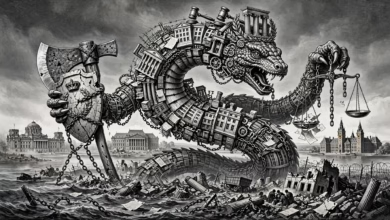
Here, Baldo’s Analysis Intersects With The Bold Proposition Presented by Researchers Danielle Resnick, Halah Abou Shama, Oliver K. Kirui, Khalid Siddig, and Mosab Ahmed Regarding State Failure and Elite Capture of The Agri-Food System in Sudan. This Analysis Reveals How The Agricultural and Food System in Sudan, Which Is Supposed to Be The Country’s Breadbasket, Turned Into An Arena for Elite Capture and Conflict of Interest Between The Military Institution and The Rapid Support Forces. Through Conducting More Than Fifty In-Depth Interviews With Experts and Insiders, The Authors Paint A Detailed Picture of The Political Settlement and The Economics of Predation That Prevailed over The Last Decade. The Analysis Shows That The Armed Forces and The Rapid Support Forces Built Parallel and Conflicting Economic Empires, Yet They Were At The Same Time Complementary in Some Instances. The Researchers Explain That The Army’s Empire Was Concentrated Mainly in Military Manufacturing Companies and State-Owned Enterprises That Dominate The Milling, Wheat Importation, Telecommunications, and Banking Sectors, While The Empire of The Rapid Support Forces Expanded in The Periphery Regions to Seize Almost Complete Control Over Gold Mines and Major Livestock Trade Routes Directed for Export.
The Chapter Discloses A Astonishing Phenomenon Termed by The Authors As The Oddly Synergistic Relationship in The Livestock Sector Before The War. While The Rapid Support Forces Controlled The Livestock Production and Assembly Areas in Western Sudan Such As Darfur and Kordofan, They Sold These Herds to Companies Affiliated With or Linked to The Army in Khartoum and Port Sudan, Which in Turn Undertook Exporting Them via Seaports. This Unholy Alliance Generated Hundreds of Millions of Dollars for The Leaders of Both Camps, While Depriving The State’s Public Treasury of Real Taxes and Revenues. However, This Mutually Beneficial Harmony Completely Collapsed With The Desire of Each Side to Swallow The Other and Exert Full Control Over The Joints of The State and The Economy. As Soon As The War Broke Out, This Commercial Integration Transformed Into A Tool to Cut Off Supply Lines and Destroy Commercial Activities Between The Regions Controlled by The Army and Those Controlled by The Rapid Support Forces, Causing Complete Paralysis to Production and Marketing Networks.
The Macroeconomic Impact and The Eyes of Satellites
In The Second Section of The Book, The Researchers Move to Measuring The Direct Economic and Social Impacts of The War Using Modern and Unconventional Scientific Tools. In Light of The Security Chaos and The Difficulty of Collecting Traditional Field Data From Active Combat Zones, There Emerges The Chapter Dedicated to Monitoring Economic Activities by Exploiting Satellite Technologies and Remote Sensing, Where The Researchers Used Concentration Data of Nitrogen Dioxide Gas Emitted From Factory Exhausts, Cars, and Power Plants, Along With Night Light Intensity Data to Compare Economic and Vital Activity Before The War and Directly After It. The Results Came to Give A Shocking Visual and Quantitative Proof of The Scale of Devastation, As The Three Capital Cities, Khartoum, Khartoum Bahri, and Omdurman, Recorded A Dramatic and Near-Complete Decrease in Gas Emissions and Night Light Intensity, Reflecting A Near-Total Cessation of Industrial and Commercial Activities, Transport Movement, and The Closure of Vital Facilities and Power Plants Due to Direct Bombardment, Looting, and Massive Displacement of The Population. In Contrast, Satellites Detected A Slight Increase in Emissions in Other Cities Such As Kassala in Eastern Sudan and Damazin, Which The Book Explains by The Flight of Hundreds of Thousands of Displaced People, Small Businesses, and Service Institutions to These Relatively Safe Areas, Creating Sudden Pressure and Emergency Consumer Activity There.
Linked to This Deterioration Is The Grain Crisis and Market Failure Discussed by The Researchers Through Tracking The Grain Production Sector, Markets, and Policies, Given That Grains Such As Sorghum “Feterita”, Millet, and Wheat Constitute The Fundamental Pillar of Food Security for Sudanese People. The Chapter Explains That Wheat and Sorghum Production Faced A Double Blow; On One Hand, The Battles Caused Disruption to Agricultural Inputs Like Fertilizer, Improved Seeds, and Fuel, and Led to Rises in Irrigation and Labor Costs, and On The Other Hand, The War Led to The Collapse of Marketing Channels and The Dispersion of Markets. Through An Econometric Analysis of Retail Prices in Different Markets Between 2019 and 2024, The Researchers Reveal A Severe Weakness in Market Integration and Connectivity, For While The Price of Wheat Rises Madly in Besieged Areas or Those Far From Ports and Production Centers, Quantities Might Be Available At Lower Prices in Safe Production Regions But Cannot Be Transported Due to Security Barriers, Armed Looting On Roads, and High Transit Fees Imposed by The Warring Parties. The Simulation of The Mathematical Model Contained in The Chapter Indicates That If Regional Trade Networks Were Allowed to Operate Without Obstacles, Wheat Consumption in Western Sudan Would Have Been Sixteen Percent Higher Than It Is Now.
This Analysis Connects to The Study of Trade Dynamics Resulting From The Conflict via Gravity Analysis of Sudanese Agricultural Exports, Which Poses A Highly Interesting Trade Paradox. On One Hand, Exports of Agricultural Products Whose Cultivation and Production Are Concentrated in Areas Under The Control of The Sudanese Armed Forces, Such As Sesame, Peanuts, Cotton, and Vegetable Oils, Witnessed A Tangible Increase. This Is Attributed to The Fact That The Army Controls The Port of Port Sudan As The Only Active Sea Outlet for The Country and Its Surrounding Areas, Which Facilitated The Sustained Flow of Exports From These Regions to Fund Its War Effort and Economy. In Contrast, Exports Declined Sharply for Products Produced Mainly in Areas Under The Control of The Rapid Support Forces or Along Their Routes, Such as Live Animals, Meat, and Sorghum, Where The Closure of Roads and Difficulty of Accessing Eastern Ports Led to The Paralysis of The Livestock Trade, Depriving Pastoral Communities in The West and Center of Vital Economic Revenues and Driving Meat Prices Domestically to Collapse There While Export Markets and Major Cities Face A Shortage of Them.
The General Economic Impact and Poverty Lines
The Economic Analysis Reaches Its Peak When Studying The Impact of The Conflict At The Macroeconomic Level and Recovery Pathways. By Using A Dynamic Computable General Equilibrium Model Relying On The Social Accounting Matrix of Sudan, The Researchers Offer A Realistic Quantitative Estimation of The Scale of Economic Damage. The Mathematical Simulation Indicates That The Sudanese Economy Faced An Unprecedented Destructive Contraction, As Macro Data For 2024 Shows A Contraction of Gross Domestic Product by Nearly Twenty Percent, With Projections of An Additional Decrease of Eight Point Three Percent Should Fighting Continue At The Same Pace. This Contraction Is Accompanied by Skyrocketing Inflation Rates Exceeding Two Hundred and Forty-Two Percent, and A Terrible Collapse in The Value of The Sudanese Pound by More Than Two Hundred Percent, Leading to Complete Erosion of Households’ Purchasing Power and The Loss of Millions of Jobs, With Unemployment Rates Crossing The Fifty-Eight Percent Mark Among The Economically Active Population.
The Social Results of These Macro Figures Look Extremely Terrifying, As The Model Predicts A Huge Leap in The Number of Poor and Undernourished People, With The Baseline Scenario of The War Showing A Sharp Increase in Extreme Poverty Levels and The Joining of Millions of Urban and Rural Households to The Circle of Destitution. Urban Households Suffer Particularly From The Disruption of Government Salaries and The Collapse of The Formal Private Sector, While Rural Households Suffer From The Loss of Markets and The Rise in Agricultural Input Prices. This Relates Directly to Investigating Food Consumption Patterns and Dietary Diversity Amid The Conflict and Deteriorating Food Security in Sudan. The Book Documents A Severe Deterioration in The Sudanese Food Basket and A Dreadful Decline in The Quality and Variety of Food Consumed, Since After Sudanese People Relied On Diverse Meals Comprising Vegetables, Meat, Milk, and Starches, The Vast Majority of Households Have Become Limited to Eating One or Two Meals of Simple Starches Such As Porridge or Kisra Made From Sorghum That Is Void of Micronutrients.
Within This Framework, Food Security Analysis Utilizing The Food Insecurity Experience Scale and The Mathematical “Rasch” Model Reveals That The Percentage of Households Suffering From Severe and Fierce Food Insecurity Has Risen to Include States That Were Historically Considered Centers of Stability and Production. Beside The States of Khartoum, Greater Darfur, and Kordofan Which Record The Highest Levels of Suffering, The Worrying Development Lies in The Spread of The Deterioration to Major Agricultural States Like Gezira and Sennar. This Decline Is Accompanied by Terrifying Levels of General and Severe Acute Malnutrition Among Children Under Five Years of Age When Measuring The Mid-Upper Arm Circumference, Placing Hundreds of Thousands of Children On The Brink of Starvation, in Addition to The Prevalence of Severe Thinness Among Pregnant and Lactating Mothers Living in Displacement Centers and Besieged Regions.
Threatened Human Capital and Worn-Out Coping Mechanisms
Under The Weight of This Total Economic and Food Collapse, A Highly Serious Issue Emerges Concerning The Future of Human Capital in Light of The Current Conflict and Its Effects on Health and Education in Sudan. The Authors Describe The Educational Situation As A Silent Existential Catastrophe, For The Fact That More Than Seventeen Million Children Are Out of School and Universities and Higher Education Institutions Are Completely Halted in Conflict Areas Does Not Mean Only The Loss of Academic Years, But Rather Represents A Systematic Destruction of The Country’s Future Human Capital. Schools and Universities Are Converted Either Into Military Barracks for Fighters or Into Overcrowded Shelter Centers for Displaced and Evacuated People. The Researchers Analyze The Repercussions of This Long Interruption, Pointing to Rising Risks of Child Labor, Child Marriage, and The Recruitment of Youths Into The Ranks of Armed Militias As A Means of Economic Survival for Destitute Families. On The Health Side, More Than Eighty Percent of Hospitals and Medical Centers in Combat Zones Have Gone Out of Service Due to Direct Bombardment, Shortage of Medical Supplies and Life-Saving Medicines, and The Migration of Qualified Medical Cadres Outside The Country. This Deterioration Brings Sudan Decades Backward, Where The Book Recorded A Sharp Rise in Maternal Mortality During Childbirth, Infant Mortality, and The Resurgence of Epidemic Diseases That Had Been Eradicated or Contained Such As Cholera, Dengue Fever, and Fierce Malaria, With The Destroyed Water and Sanitation Infrastructure Contributing Directly to Turning Displacement Centers Into Hotbeds for Deadly Epidemics.
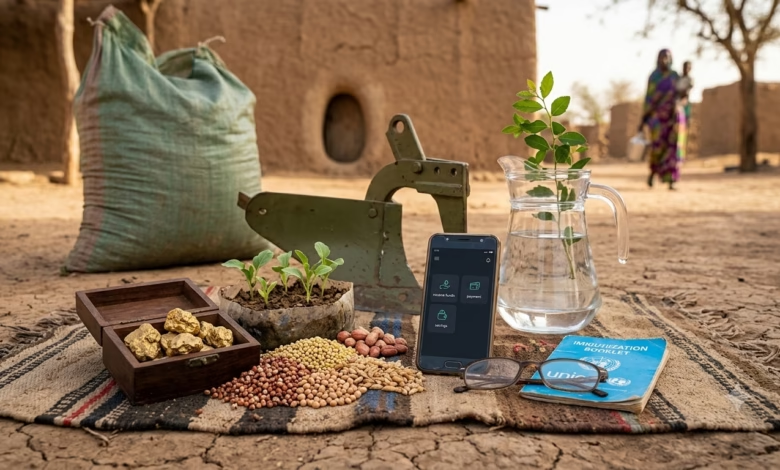
Despite This Comprehensive Collapse, The Researchers Attempt to Understand How Sudanese Society Stays Alive Amid This Hell by Exploring Shocks, Adaptation, and Household Livelihood Strategies in Wartime. This Chapter Reveals A Mind-Boggling Fact Stating That If It Were Not For Informal Social Safety Networks and The Solidarity of Sudanese Society, The Humanitarian Catastrophe Would Have Been Many Times Greater. These Popular Strategies Diversify to Include Social Solidarity Values Represented by Sharing Food and Housing Between Host Families and Displaced Persons, Liquidating Assets and Savings, Selling Gold and Livestock, and Relying On Grueling Marginal Work to Secure A Livelihood. External Financial Remittances Sent by Sudanese Expatriates via Digital Banking Applications Also Emerge As A True and Irreplaceable Lifeline for Millions of Households Whose Income Was Completely Cut Off. However, The Authors Warn That These Strategies Are Erosive Strategies That Consume The Assets and Future Savings of Households, Leaving Them Eventually Without Any Cover to Protect Them From Coming Shocks, Which Means That The Resilience of Society Has A Ceiling That Is On The Verge of Collapse If Immediate Intervention Is Not Made.
Digital Assistance and Pathways Out of The Tunnel
The Book Tackles A Highly Critical Logistical Issue Regarding How to Deliver Aid Amid Active Conflict and Insecurity Through Digital Remittances for Delivering Social and Humanitarian Assistance in Sudan. In Light of Geographical Blockades, Targeting of Traditional Humanitarian Aid Trucks, and Looting of International Organizations’ Warehouses, The Researchers Propose A Pioneering Idea Relying On Digital Cash Transfers by Tracking The Experience of Using Mobile Banking Applications, Chiefly The “Bankak” Application Affiliated With The Bank of Khartoum and Other Applications, As A Tool to Deliver Direct Financial Support to Families Trapped in Combat Areas or Displaced. The Researchers Find That This Digital Mechanism Gains Broad Acceptance and Anticipation Because It Provides Personal Safety for Beneficiaries Away From The Risks of Carrying Paper Cash At Checkpoints, and Reduces Transaction Costs by Delivering Aid Directly Without Intermediaries, in Addition to Its Crucial Role in Revitalizing Remaining Local Markets and Providing Liquidity to Small Traders to Continue Their Businesses. Yet, This Mechanism Faces Severe Technical and Structural Challenges, Such As The Frequent and Total Blackout of Telecommunications and Internet Networks by Warring Parties As A Weapon of War, The Lack of Cash-Out Points in Rural Areas, and The Imposition by Some Agents of High and Exploitative Commission Fees to Cash Out Funds. The Authors Recommend The Necessity of Supporting Satellite Communications Infrastructure and Protecting The Integrity and Independence of The Digital Banking System As A Supreme Humanitarian Priority.
To Exit This Dark Tunnel, The Prominent Sudanese Economist Ibrahim Elbadawi Presents A Promising Strategic Vision Proposing The Formulation of A Sudanese Strategy for Post-Conflict Agriculture-Led Transformative Growth. Elbadawi Argues That The Key to Sudan’s Future Stability Lies Not in Oil or Gold Rents, But Rather in Restructuring The Economy Around Modern Transformative Agriculture. Elbadawi Compares The Growth Pathways of Sudan and Ethiopia Over Past Decades, Showing How Ethiopia Succeeded in Raising Its Productivity and Developing Its Agricultural Sector Through Stable Investment Policies Despite Challenges, Whereas Sudan Declined Due to Neglecting The Rainfed Sector and Traditional Irrigated Farming and Relying On Imports and Short-Term Solutions. Elbadawi Suggests Creating Integrated Agricultural and Industrial Development Corridors That Link Production Areas in The States to Markets and Export Ports, While Encouraging Foreign Direct Investment in Food Processing and Logistics. For This Vision to Succeed, Elbadawi Deems It Essential to Have Security Coverage and Political Stability Supported by A Hybrid Regional or International Peace Mission Mandated to Protect Supply Lines and Rural Communities From The Encroachment of Armed Groups and Predatory Economies.
A Sudanese Rescue Prescription for The Future
Ultimately, The Editors Summarize The Ideas Under A Broad Title Looking Towards A Prosperous and Secure Sudan That Identifies The Way Forward. The Book Concludes That Sudan Is Passing Through A Defining Moment; Either Going Towards The Total Collapse of The State and Its Dissolution Into Feudal War Emirates, or Starting Immediately and Coordinatedly A Rescue and Recovery Process That Begins Even Before The Complete Silence of The Cannons. This Vision Crystallizes in Five Fundamental Pillars Starting Firstly with The Necessity of Restoring Security and Securing Internal Trade Routes to Facilitate The Movement of Goods and Integrate Fragmented Markets. Secondly, The Editors Suggest Adopting An Integrated Aid Package That Combines Digital Cash Transfers for Households With Capital Support for Small Businesses and Providing Production Inputs for Farmers Simultaneously to Maximize The Economic Impact. Thirdly, Recovery Requires Radical Governance Reforms That Deconstruct Military and Predatory Commercial Empires and Subject Economic Sectors to The Purview of The Official Ministry of Finance. Fourthly, Urgent Intervention Is Needed to Save Human Capital Represented in Children’s Health and Their Speedy Return to Education to Avoid Losing An Entire Generation. Fifthly and Finally, Sudan Needs Regional and International Coordination to Halt Weapon Flows and Mobilize Resources to Fund Humanitarian Stability Plans and Uplift The Agricultural Sector.
The Book “War and Resilience” Is A Highly Important Historical and Scientific Document; It Is An Awakening Cry Backed by Numbers, Maps, and Econometric Data, Placing The International Community and Sudanese Elites Before Their Historical and Ethical Responsibilities. The Resilience of The Sudanese People, Which The Book Skillfully Documented, Is Great, But It Is Not Without Limits, and Waiting More Might Make The Way Back Impossible. Hence, We Strongly Recommend Decision-Makers, Researchers, and Those Interested in Sudanese Affairs to Read This Reference Work, Which Transcends Superficial News Analyses to Offer A Robust Scientific Dissection of The Reality and Future of This Pivotal Arab and African Country.