
A Document From The Human And Political Abyss
In Political Science Literature And Strategic Analysis, Rarely Does A Document Possess Such Precise Rigor And Stern Analysis As The “Bertelsmann Stiftung Transformation Index” Country Report For 2026 (BTI 2026 Country Report: Sudan). Issued By The Prestigious German “Bertelsmann Stiftung” Foundation, Covering The Critical Era Extending From February 1, 2023, Until January 31, 2025, This Report Does Not Offer Mere Statistical Monitoring Or A Collection Of Routine Economic And Political Data; Rather, It Transcends That To Serve As An “Autopsy Report” For The Contemporary Sudanese State. It Documents With Unforgiving Figures And Deep Structural Analysis How One Of The Largest And Most Important Nations Of The African Continent and Arab World Transformed From A Painful Stage Of Democratic Labor Into A State Of Total And Absolute Collapse, Becoming The Most Fragile Structure On The International Map.
The Periodic Date For Releasing The Global Index Has Arrived To Reflect A Terrifying Decline In All Governing Indicators Of Human Life And The Destiny Of Nations; Sudan Lyes At The Bottom Of The International Rankings:
-
Status Index: Ranked 136 Out Of 137 Countries With A Score Of (1.46 Out Of 10).
-
Political Transformation Index: Ranked 135 With A Score Of (1.63 Out Of 10).
-
Economic Transformation Index: Ranked 135 With A Score Of (1.29 Out Of 10).
-
Governance Index: Ranked 136 With A Score Of (1.06 Out Of 10).
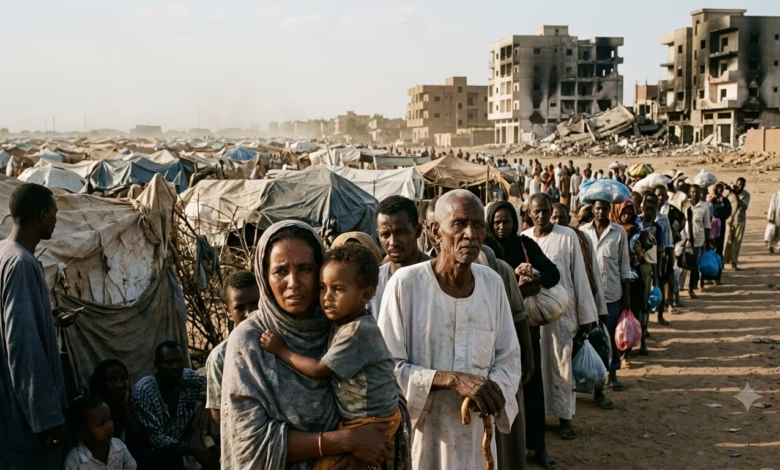
These Frightening Numbers Are Not Merely Deaf Figures In A Technical Statistical Table; Rather, They Are The Digital Embodiment Of A Human, Political, And Moral Disaster That The Report Described As Producing “The Largest Hunger And Displacement Crisis On Earth” At The Present Time; Where More Than 25 Million Humans Have Been Pushed To The Brink Of Acute Famine, Exceeding 14 Million Citizens Displaced Inside And Outside The Country, And Over 50,000 Killed In A War That Received Little International Attention Compared To Other Global Crises.
Authoritarian Duality And De Facto Division (SAF vs. RSF)
The Report Opens Its Strategic Analysis By Tracking The Dramatic Transformation Witnessed By Sudan Starting On April 15, 2023, When Comprehensive Armed Conflict Exploded Between The Sudanese Armed Forces (SAF) Led By General Abdel Fattah Al-Burhan, And The Paramilitary Rapid Support Forces (RSF) Led By Mohamed Hamdan Dagalo (Known As “Hemedti”). The Report Places This Explosion In Its Correct Structural Context As A Zero-Sum Conflict Over Absolute Power Between Two Generals And Two Military Forces That Were, Until Recently, Partners In Planning And Executing The Joint Military Coup In October 2021, Which Overthrew The Civilian Transitional Government And Tore Apart The Partnership Document With The Civilian Component.
The Report Paints A Harsh And Complex Geopolitical Scene For Present-Day Sudan: The Country That Was Officially A Single Unified State Has De Facto And Practically Split Into Two Contested Authoritarian Entities:
-
Port Sudan Authority (SAF Control Areas): The Sudanese Armed Forces Control The Northern State, The Eastern States, And Parts Of The Center. The Administrative Government And Ministries Were Forced Into Mandatory Evacuation And Mass Displacement From The Historical Capital, Khartoum, To Fortify Themselves In The Coastal City Of “Port Sudan,” Converting The Latter Into A Temporary Administrative Capital From Which The Military Establishment Exercises What Remains Of Administrative And Service Sovereignty With A Kind Of Forced Directness And Institutional Fragility.
-
Marginal Authority And Field Control (RSF Control Areas): In Contrast, The Rapid Support Forces Imposed Field And Fire Control Over Vast And Pivotal Parts Of The Country, Covering Most Neighborhoods And Bases Of The Tripartite Capital (Khartoum, Omdurman, Bahri), Al-Jazirah State—Which Serves As The Primary Agricultural And Food Pipeline Of The Country—The Pivotal Kordofan Region, Extending To Almost Full Control Over The Vast Darfur Region.
This Realist Division Did Not Merely Produce Two Authorities Within The State; It Created An Integrated Lawless Environment; Where The State Vanished Along With Its Monopolistic Institutions Of Legitimacy And Organized Violence, Replaced By De Facto Authorities Drawing Existence From The Barrels Of Guns, Relying On Extortion Practices, Armed Robbery, Levying Taxes, And Ransoms From Militia Networks.
Dismantling The Monopoly On Violence And The Fall Of The Military Myth
The (BTI 2026) Report Re-Evaluates The Concept Of “Monopoly On The Use Of Force” In Sudan, Crowning This Item By Awarding Sudan An Extremely Low Score (2 Out Of 10). The Report Clarifies That The Historic Sudanese State Crisis Summarizes In The Accumulated Structural Failure To Build A Professional, Unified National Army Subject To Civilian Sovereignty And Oversight. Instead, The Three Decades Of Omar Al-Bashir’s Regime Rule (1989-2019) Witnessed Deliberate Engineering To Dismantle The National Military Establishment And Create Parallel Militias To Ensure Regime Survival And Protect It From Internal Military Coups.
The Birth Of The “Rapid Support Forces” From The Womb Of The “Janjaweed” Militias Employed By The State In 2003 To Suppress Armed Rebellion In Darfur, Followed By Bestowing Legal Legitimacy Upon Them In 2013 And Feeding Them With Massive Mechanisms And Budgets From The State Treasury, Was The Suicidal Seed Planted By The Former Regime In The Entrails Of The State. Over Time, And With Regional And Financial Support Resulting From Direct Acquisition Of Gold Mines, Providing Mercenary Services, And Employing Security Files Such As The Migration File With The European Union (“Khartoum Process” Of 2014), This Parallel Force Transformed Into A Military And Economic Monster Competing With The Official Army And Surpassing It In Certain Tactical Field Maneuvers.
When The April 2023 War Erupted, It Was Not Merely A Conventional Military Rebellion; Rather, It Was The Direct Explosion Of Armed Military Duality. The Direct Result Of This Explosion Was The Collapse Of The Concept Of “Stateness” (Score 2 Out Of 10). The State Failed Completely To Provide Personal Safety And Minimum Legal Protection For Its Citizens. In The Absence Of Any Official Protection, Citizens Drowned In A Sea Of Total Chaos; Where The Actual Existence Of Institutions And Security Apparatuses Became Confined To A Narrow Geographic Strip East And North Of The Country, While Remaining Regions Transformed Into Open Battlegrounds And Destruction Of Citizens’ Properties.
The War Of False Narratives And Political Exploitation Of Religion And Ethnicity
The Report Pauses Lenghtily At The Ideological And Political Narratives Used By Both War Factions To Obscure The Real Causes Of Conflict And Legitimize Their Crimes Before Internal and International Public Opinion:
-
The Army Narrative (SAF): The Army Portrayed The Conflict As A “War Of Dignity” Against A Brutal Rebellion On Official State Institutions. It Invoked National And Institutional Literature To Request Popular Support, But Simultaneously Opened Wide Doors For The Re-Positioning Of Former Regime Elements (National Congress Party Regime) And Field Alliances With Ideological Islamic Militias And Brigades (Such As “Baraa Ibn Malik Brigade”).
-
The Rapid Support Forces Narrative (RSF): The Rapid Support Forces Adopted A Kerygmatic Discourse Declaring A Fight Against The “Colonial 1956 State,” Eradicating “Remnants And Islamists,” And Working To Establish A New Marginal Democratic System. However, This Democratic And Modernizing Discourse Clashed Starkly With Field Conduct Based On Ethnic Cleansing, Looting Citizens’ Homes, Raping Women, And Destroying Infrastructure.
Under The Item “No Interference Of Religious Dogmas” (Score 2 Out Of 10), The Report Reveals How Radical Ideological Discourse Was Resurrected; Where Senior Islamically Ideologized Officers Control Strategic Army Orientations, And Concepts Of “Jihad” And “Defending Religion” Were Used For Popular Mobilization, Despite Conflict Factions And Victims All Being Muslim Sudanese Citizens. This Ideological Charging Did Not Only Close Opportunities For Political And Negotiated Solutions, But Deepened Societal Fractures And Cancelled Basic Freedoms And Religious Minorities (Such As Christian Minorities Subjected To Restrictions And Arrests On Charges Of Political Malice And Militia Support).
Structural Marginalization And Ethnic Weaponry As War Tools
Among The Brightest And Deepest Analyses Provided By The (BTI 2026) Report Is Its Unveiling Of How Military And Political Leaders Exploited Social, Ethnic, And Historical Divisions To Serve War Mobilization. Sudan Has Suffered Since Its Independence In 1956 From Severe Structural Imbalance In The Concept Of Citizenship And Development: A Controlling Riverine And Cultural Center, Facing Vast Marginal Regions In The West, South, East, And New South Isolated And Deprived Of Political Participation And Fair Economic Growth.
In This Current War, These Grievances Were Re-Used As Destructive Fuel:
-
Genocidal Violence In Darfur: The Report Highlights Especially The Ethnic And Humanitarian Disaster Witnessed By The City Of El Geneina And West Darfur State In May 2023 And Beyond, Where Rapid Support Forces And Allied Arab Militias Executed Documented Genocide And War Crimes Against The “Masalit” Tribe And Tribes Of African Origins, Manifested In Mass Assassinations Of Native Leadership, Identity-Based Killings, Complete Destruction Of Residential Neighborhoods, And Mass Displacement Towards The Chadian Border.
-
Ethnic Liquidations In Army Areas: Conversely, The Report Documents Counter-Repressive And Ethnic Practices Committed By Intelligence Military Forces Through Search Campaigns, Field Arrests, And Physical Liquidations Targeting Unarmed Citizens Of Darfur Or Kordofan Origins In Their Control Zones (Such As Al-Jazirah, Khartoum, And Kanabi Areas), Based On Suspicion and Ethnic Incitement Under The Pretext Of Catching “Collaborators” Or “Sleeper Cells.”
Collapse Of Basic Administration And Vanishing Services
The Report Concludes The Political Transformation Section By Shedding Light On The Interconnected Collapse Of “Basic Administration” (Score 2 Out Of 10). Even Before War Erupted, World Bank Figures For 2022 Indicated That Only 64.9% Of The Population Had Access To Basic Drinking Water, 63.2% Had Electricity, And Only 36.9% Possessed Basic Sanitation Services.
With The Outbreak And Spread Of War, Service Networks, Water And Electricity Stations, And Hospitals Faced Direct Destruction, Aerial Bombardment, And Artillery Shelling. Given The Relocation Of Ministries And Administrative Bodies To Port Sudan, The Vast Majority Of Sudanese People Became Without Any Mentionable Government Services. Here Appeared The Only Form Of Resistance And Societal Resilience, Represented By “Emergency Response Rooms” (ERRs) And Youthful, Popular Initiatives Taking On The Burdens Of Providing Food, Medical Sponsorship, And Securing Evacuation, Amid An Environment Of Intimidation, Arrest, And Direct Targeting From Both Conflict Parties.
Financial Stripping, Market Collapse, And Structural Looting Of The Sudanese Economy
Economic Transformation In Any Country Forms The Essential Pillar For Stabilizing Pillars Of Political And Social Stability, Yet The Sudanese Case As Dissected By The Report Presents A Stark Model Of How To Destroy National Economic Infrastructure, Transforming It From A Development-Oriented Economy Into A Parasitic War Economy Relying On Direct Looting, Broker Networks, And Cross-Border Smuggling.
The Report Awarded Sudan An Extremely Low Score In The Economic Transformation Index, Not Exceeding One Point And Twenty-Eight Hundredths Out Of Ten Points, A Result Explicitly Indicating Total Paralysis Striking Markets, Disintegration Of The Banking System, And Failure Of The National Currency Against Foreign Currencies. This Result Was Not Merely The Instantaneous Outcome Of Armed Conflict Outbreak In Mid-April 2023; Rather, It Was The Logical Culmination Of A Long Series Of Financial And Structural Deterioration Striking The Macroeconomy Since The October 21, 2021 Coup, And Ensuing Freezing Of International And Regional Aid And Debt Relief Programs Approved By The International Monetary Fund And World Bank Under The Heavily Indebted Poor Countries Initiative.
The Report Paints A Bleak Picture Of The Financial And Monetary Landscape In The Country, Where Inflation Raged To Unprecedented Levels Exceeding Hundreds Of Percent, While The Sudanese Pound Lost Its Ability To Perform Basic Functions As A Measure Of Value Or Means Of Savings and Exchange. Mutual Bombardment Between Fighting Parties And Targeting Of Financial Institutions And Central Bank Headquarters In Khartoum, Alongside Widespread Looting Of Commercial Banks, Companies, And Factories, Led To A Complete Collapse Of The Official Banking System. Banks Were Forced To Close Doors In Most States, Leading To A Suffocating Liquidity Crisis Leaving Citizens Unable To Access Financial Savings To Face Daily Life Requirements And Purchase Food And Medical Supplies.
In Contrast To This Official Financial Institution Collapse, The Report Highlights The Rise Of A Parallel, Highly Dangerous Shadow Economy. The Street, Parallel Markets, And Indirect Electronic Transfer Applications Replaced Traditional Banks, And Hard Currency Became Sold And Paid In Black Markets Managed By War Merchants And Secret Networks Connected To Brigades Of Both Fighting Parties. The Report Clarifies That This Corrupt Economic Environment Allowed Military And Financial Influence Networks To Continue Accumulating Wealth At The Expense Of Impoverishing Millions Of Citizens, Where Fuel, Food, and Medicine Crises Were Exploited To Generate Massive Profits Feeding Armament Budgets And Recruiting Mercenaries.
On Market Competitiveness And Freedom, The Report Reveals Complete Decline In Economic Freedom Controls and Equal Opportunities. Economic Freedom In Sudan Historically Remained Besieged By State Monopolies, Army Institutions, And Rapid Support Forces, But The Current War Destroyed Remaining Independent Private Sector Activity. Major Industrial Areas In Khartoum, Bahri, And Omdurman Suffered Complete Destruction And Systematic Stripping; Machinery, Equipment, And Supply Inventories Were Stolen And Transported Via Smuggling Networks To Neighboring Countries Or Resold In Safe State Markets At Dirt-Cheap Prices, Causing Thousands Of National Businessmen And Investors To Exit The Sudanese Market and Small and Medium Enterprises Serving As Operational Backbones For Thousands Of Families To Go Bankrupt.
The Agricultural Sector, Representing The Last Lifeline For The Vast Majority Of Population And Vital Arteries For Securing National Food, Was In No Better Condition Than Other Sectors. The Report Analyzes How Expansion Of Military Operations To Al-Jazirah State, Kordofan, And Darfur Led To Complete Disruption Of Agricultural Seasons. Field Control By Rapid Support Forces Over Al-Jazirah State—Containing The Country’s Largest Irrigated Agricultural Scheme—Led To Looting Of Agricultural Machinery, Fertilizers, Seeds, And Fuel Stations, Forcibly Displacing Farmers From Villages. This Direct Disruption Of Agricultural And Animal Production Transformed The Country From Limited Self-Sufficiency Into Acute Food Insecurity Disaster, Where Prices Of Crops And Basic Commodities Rose To Astronomical Levels Entirely Beyond Ordinary Citizen Capacity.
The Report Clearly Addresses Natural Resources And Their Transformation From An Exhaustive Curse Into Vital Fuel Sustaining War. Gold Stands At The Forefront Of These Resources, Where The Report Clarifies How Gold Mining And Exporting Operations Became A Parallel Trade Managed Outside Official State General Budget Frameworks. Rapid Support Forces Controlled Major Mines In Darfur, Northern, And Eastern Regions Through Allies And Networks, Smuggling Gold Across Regional Borders To Buy Weapons, Equipment, and Pay Combatant Salaries. Conversely, Armed Forces And Ruling Authorities In Port Sudan Relied On Remaining Gold Exports And Customs Duties Imposed At Seaports To Cover War Effort Expenses And Purchase Drones And Heavy Weapons.
This Report Analysis Confirms That The Sudanese Economy No Longer Possesses Any Features Of An Organized Free Market Economy Or Development-Oriented Economy Aimed At Human Development And Structural Reform. Instead, An Ailing Economic Structure Emerged Based On Military Rent, Direct Looting, Weapon Trading, And Humanitarian Aid. Absence Of Financial Policies, Regular Tax Collection, Public Debt Inflation, And Lack Of Public Fund Oversight Converted The Sudanese State Into A Geography Without An Annual Budget Or Development Program, Making Future Reconstruction And Economic Recovery An Extremely Complex Task Requiring International Financial Flows And Radical Institutional Reforms That Current Conflict Circumstances Do Not Seem To Allow Even At Minimum Levels.
Disintegration Of Civil Society, Collapse Of Social Capital, And Absent Justice
Moving To Speak Of Political And Social Transformation Paints A Harsher Picture For The Country’s Future; The State Does Not Merely Collapse Through Destroying Its Apparatuses And Macroeconomy, But Suffers Systematic Stripping Of Social Capital, And Organized Depletion Of Living Civil Forces That Represented The Final Safety Valve For Survival And Domestic Cohesion.
The Report Efficiently Dismantles The Severe Blockade And Decline In Political Rights And Civil Liberties Indicators, Awarding Sudan Numbers Revealing Complete Absence Of Rule Of Law And Vanishing Separation Of Powers. The Ultimate Goal Of The December 2018 Popular Revolution Centered On Building An Independent Judicial System, Establishing Honest Judicial Power Capable Of Holding Al-Bashir’s Regime Accountable And Laying Transitional Justice Concepts. However, The October 2021 Coup And Subsequent War Outbreak In April 2023 Entirely Destroyed This National Dream. Judicial Premises, Strategic Courts, And Attorney General Headquarters In Capital And States Faced Destruction, Vandalism, And Looting, Leading To Total Paralysis In Official Justice Apparatuses, Converting The Country Into An Open Arena For Dark Impunity.
Comprehensive Review Indicates That Absence Of Justice And Independent Judicial Institutions Allowed Conflict Parties To Exercise Direct Suppression And Flagrant Violations Against Civilians Without Minor Fear Of Legal Accountability. Perpetrating Physical Liquidations, Arbitrary Arrests, Enforced Disappearances, Ethnic Searches, And Conflict-Related Sexual Violence Became Daily Typical Behavior Practiced By Army And Rapid Support Forces Personnel Alike. The Report Documents How Bodies Of Women And Girls In Darfur, Khartoum, And Al-Jazirah Became Battlegrounds For Revenge, Where Rape And Sexual Violence Were Used As Systematic War Tools To Humiliate Local Communities, Break Resolve, And Forcibly Displace Them From Homes.
Amidst This Comprehensive Institutional Collapse, The Report Pauses At The Extreme Historical Paradox Characterizing Sudanese Civil Society. Sudan Possessed An Ancient, Vibrant History Of Independent Civil And Trade Union Action, Where Professional Unions, Political Parties, And Civil Associations Succeeded In Leading Successive Popular Revolutions Overthrowing Military Dictatorships In 1964, 1985, And 2019. This Vitality Manifested During The December Revolution In The Rise Of Innovative Societal Bodies, Chief Among Them “Resistance Committees” Leading Field Revolutionary Movements With Remarkable Democratic Awareness.
With War Outbreak, This Historical Civil Reserve Faced Brutal, Dual Stripping. On One Hand, Security And Intelligence Apparatuses Affiliated With The Army, Supported By Former Regime Brigades, Targeted Political Activists, Professionals, And Resistance Committee Members, Levying Ready Charges Of National Treason, Agency, And Espionage For Rapid Support Forces, Labeling Them Fifth Columns Or Sleeper Cells. On The Other Hand, Rapid Support Forces Exercised Naked Violence Against Civil Actors, Medical Cadres, And Volunteers In Control Areas, Where Many Suffered Kidnapping, Torture, And Direct Murder Under Pretext Of Loyalty To The Army Or Old Regime.
This Dual, Continuous Suppression Led To Widespread Paralysis In Political Parties’ And Civil Alliances’ Ability To Move And Influence Internally. The Report Analyzes Political Performance Of Civil Alliances, Led By Coordination Of Civilian Democratic Forces Known As “TAGADUM,” Established Following War Outbreak Chaired By Former Prime Minister Abdalla Hamdok To Stop War And Restore Democratic Paths. The Report Views That These Civil Forces, Despite International And Regional Efforts To Convey Anti-War Voices, Faced Severe Challenges and Divisions, Exposure To Mass Treason Campaigns, And Increasing Social Isolation Due To Allegations Of Bias Or Leniency Toward Mass Violations Committed By Rapid Support Forces, Especially After Signing The “Addis Ababa Declaration” In January 2024.
The Only Pale Light Highlighted By The Report Amidst This Bloody Social Darkness Embodies In The Emergence Of A Unique, New Form Of Social Solidarity And Popular Adaptation, Represented By Grassroots “Emergency Response Rooms” And Grassroots Mutual-Help Initiatives. Youth Groups, Women, And Independent Volunteers United To Establish Local, Non-Politicized Relief Networks Practicing No Ideological Or Ethnic Discrimination. These Rooms Managed Mutual Kitchens To Provide Food For Families Trapped In Fighting Hell, Maintained Deteriorating Water And Power Networks, Operated Hospitals And Field Medical Centers Under Shelling And Battles, And Evacuated Stranded People From Danger Zones.
The Report Expresses Deep Appreciation That The Emergency Response Rooms Model Represents The Essence Of Authentic Social Capital Of Sudanese People Facing Disasters. However, This Great Popular Model Operates Under Extremely Harsh And Dangerous Conditions; Lacking Sustainable, Regular Funding Amid Faltering International Aid Access, Alongside Exposure Of Volunteers To Targeting, Arrest, And Direct Liquidation By War Parties Who See Every Independent Or Mutual Civil Action As A Threat To Fire Control And An Attempt To Break The Will Of Starving Citizens.
The Report Concludes In This Axis That Societal Fragmentation And Charging Ethnic And Regional Hate Speech Via Media Outlets And Social Networks Deepened Polarization Among Citizens Of One Homeland. Destruction Of Social Dialogue Opportunities, Absence Of Transitional Justice Mechanisms And National Reconciliation, And Displacement Of Millions To Neighboring Countries Resulted In Brain Drain And Unprecedented Forced Migration Of Academic, Medical, And Professional Cadres, Emptying The Country Of Human Capacities And Living Elites, Making Social Peace Restoration And Rebuilding Damaged Domestic Fabrics A Massive National Burden Requiring Long Generations And Immense Sacrifices To Repair Deep Scars.
Developmental Paralysis, General Administration Deficit, And Institutional Collapse Of State Services
Transitioning Toward A Modern, Viable State Requires Minimum Development Planning And Administrative Capacity To Produce And Implement Rational Policies. However, The Report Shocks Readers With Sharp Evaluations Dropping “Capacity For Management And Strategic Planning” And “Resource Utilization Efficiency” Indicators To Levels Approaching Absolute Zero, Reflecting Complete Absence Of State Policies And Vanishing Good Governance Mechanisms.
The Report Asserts That Administrative Failure In Sudan Is Not Born Of Instantaneous Field Fighting Between Armed Forces And Rapid Support Forces; Rather, It Is An Accumulated Result Of Long Decades Of Nepotism, Ideological Empowerment, And Details Of Political Quotas Destroying Civil Service. The Al-Bashir Regime Worked Throughout Three Decades To Fragment Bureaucratic Institutions And Void Them Of Professional Cadres And Respectable Expertise Favoring Party And Ethnic Loyalties. Following The December 2018 Revolution, Despite Transitional Government Attempts To Establish Institutional Reform, The October 2021 Coup Arrived To Resurrect Old Corruption And Empowerment Networks, Causing Executive Apparatus Confusion And Loss Of Internal and International Credibility.
With The Outbreak Of The April 15, 2023 War, This Administrative Deficit Transformed Into Comprehensive, Complete Institutional Collapse. The Report Offers Eloquent Analysis For The Concept Of “The Fleeing State”; Central Ministry Structures And Government Bodies In Khartoum Collapsed Immediately Upon Fighting Outbreak, Forcing The Paralyzed Executive Apparatus Into Mass Flight And Displacement Toward Port Sudan In The Red Sea State. However, This Relocation Did Not Include Genuine Reconstruction Of Public Administration; Instead, It Produced Warlord Authority And Fragmented, Caretaker Management Devoid Of Executive And Financial Tools, Unable To Collect Public Revenues, Failing To Prepare Preliminary State Budgets, Or Even Pay Public Sector Employees, Teachers, And Medical Cadres For Long Months.
The Harshest Picture Of This Administrative Deficit Appears In The Terrifying Collapse Of Infrastructure Services And Basic Service Sectors. The Report Reviews Documented Figures Of Tragic Service Realities, Noting That Percentages Of Access To Clean Drinking Water, Electricity Services, And Sanitation—Which Were Low And Below Regional Averages Before War—Witnessed Catastrophic Reversals. Mutual Artillery Bombardment And Airstrikes Caused Destruction Of Major Power Generation And Water Purification Stations In Khartoum, Al-Jazirah, And Darfur, While Hospitals And Health Centers Turned Into Military Barracks Or Targets For Shelling And Assault, Causing Over Eighty Percent Of Health Facilities To Exit Service Entirely.
The Report Points Out That Government Deficit Cast Relief, Health, And Education Burdens Entirely Upon International Organizations And Grassroots Volunteer Bodies. Yet, Existing Authorities In Port Sudan And De Facto Authorities Affiliated With Rapid Support Forces Were Not Content With Inability To Provide Services; Rather, They Exercised Miserable, Dangerous Obstruction Of Humanitarian Relief Operations. The Report Documents How Entry Visas, Internal Movement Permits, And Work Licenses For Foreign Organizations Transformed Into Bureaucratic Weapons Used By Port Sudan Authorities To Impose Blockades On Enemy-Controlled Areas, Especially In Khartoum, Darfur, And Al-Jazirah, While Rapid Support Forces Executed Direct Looting Of Relief Shipments And World Food Programme Warehouses, Targeting Driven Aid Convoys.
Regarding Education And Upbringing, The Report Highlights The “Lost Generation” Disaster As One Of The Most Dangerous Fruits Of Administrative And Institutional Collapse. With Educational Process Suspension In Most States, Thousands Of Schools And University Headquarters Converted Either Into Shelter Centers For Unarmed Displaced Persons, Or Barracks And Weapon Depots For Fighting Factions, While Libraries, Historical Documents, And Laboratories Faced Looting And Burning. This Extended Closure Deprived Over Nineteen Million Children And Youth Of Educational Rights, Causing Disruption To Intellectual And Social Growth Of New Generations, Doubling Risks Of Child Leakage Toward Direct Military Recruitment Within Brigades And Militias, Or Exploitative Labor And Forced Minor Marriage.
Penetrating Reading Of The Report Shows That Absence Of Strategic Vision and Pockets Of Financial and Structural Corruption Cut Any Hope For Achieving Near Developmental Recovery. Managing State Affairs Amid War Has Come To Be Managed With A Logic Of Paralysis And Denial; Where Remaining Government Body Roles Are Confined To Issuing Political Statements And Managing Narrative Wars, Leaving Millions Of Citizens Facing Destinies In The Open Against Famine And Incoming Epidemics Like Cholera And Dengue Fever, Without Recording Any Developmental Or Reformative Initiative Restoring Respect To Institutions Or Granting Citizens Sense Of Belonging To A State Safeguarding Rights And Guaranteeing Survival.
Regional Internationalization, Foreign Interventions, And Blocked Future Prospects
Sudan, With Its Unique Geostrategic Location Extending Between The Red Sea Coast, Deep African Continent, And Nile Basin, Was Never An Isolated Geography From External Power Ambitions. Instead Of This Location Forming A Strategic Advantage Bringing Investment And Development, Armed Conflict Converted It Into The Primary Arena For Settling Regional Accounts And A Stage For Influence Of Great Powers and Competing Blocs.
The Report Provides Analysis Of “International Cooperation” Levels, Crowning This Axis With Extremely Low Scores Reflecting Abject Failure Of Diplomatic Mediations And Lack Of Political Will Among Military Leaders Relative To The Size Of Their People’s Suffering. The Report Clarifies How The Sudanese Crisis Became Victim To Fragmented Foreign Initiatives And Conflicting Agendas Of Sponsoring Nations. From Early War Days, Multiple Negotiating Tracks Launched, Such As The “Jeddah Platform” Sponsored By The United States Of America And The Kingdom Of Saudi Arabia, “Intergovernmental Authority On Development” (IGAD) Initiatives, The African Union, And Neighboring Countries Conferences; Yet All Tracks Clashed With Systematic Stubbornness And Obstruction From Conflict Parties Who Consistently Bet On Settling Battles Militarily On The Ground Rather Than Offering Historical Concessions To Spare Civilian Blood.
The Report Reveals The Nature Of External Interventions Contributing To Pouring Oil On War Fires, Prolonging Duration, And Providing Material Nurture. The Report Documents How Sudan Transformed Into An Open Market For Military Hardware, Advanced Weapons, And Modern Combat Technology, Including Drones And Cyber Systems Flowing Across Borders And Secret Networks. Rapid Support Forces Relied On Complex Supply Lines Crossing Border Outlets With Regional Neighboring Countries In West And Central Africa, Supported By Financial Networks And Private Gold Trading Companies Headquartered In Regional Ports And Capitals, Alongside Recruiting Cross-Border Mercenaries And Private Security Companies.
Conversely, Sudanese Armed Forces Succeeded In Building And Fortifying Regional Diplomatic And Military Alliances To Enhance Field Positions. The Report Explains How Port Sudan Authorities Sought To Restore And Deepen Relations With Prominent Regional And International Powers Like Iran, Russia, Turkey, And Egypt, Where These Alliances Fruitfully Supplied The Army With Heavy Weapons And Qualitative Drones Turning Control Scales In Urban Fronts, In Exchange For Offering Strategic Promises And Enticements Guaranteeing Future Influence And Logistic Bases On Red Sea Coasts And Vital Sudanese Ports.
This Increasing Internationalization Of Conflict Led, According To Stern Report Readings, To Stripping National Decision-Making And Independent Sudanese Will, Transforming War From Internal Power Struggles Into Proxy Wars Fought By Local Parties Executing Geostrategic Agendas For External Actors. Amidst This Polarization, Arms Embargo Decisions Issued By The United Nations Security Council Became Mere Ink On Paper, And Credibility Of The International System And UN Apparatuses Crumbled, Incapable Of Imposing Genuine Protection For Civilians Or Forcing Both Parties To Open Safe, Sustainable Corridors For Humanitarian Convoys Without Conditions Or Restrictions.
The (BTI 2026) Report Concludes With A Deeply Bleak Analytical Rhythm And Warning Regarding Future Sudanese Prospects. The Scenario Closest To Realization Under Current Data And Continued Stubbornness Is Rooting “Libyanization” Or “Somalization”; Meaning Permanent Country Transformation Into Fractured De Facto Mini-States Void Of National Sovereignty, Run By Militias, Criminal Gangs, And Smuggling Networks Thriving On War Economies And Cross-Border Crime. Destroying Infrastructure, Stripping Productive Sectors, Impoverishing Millions, And Reviving Ethnic And Regional Animosities Created Fertile Soil For Reproducing Chaos, Making Recovery And Reconstruction Processes Require Long Decades And Massive Structural International Support Surpassing Currently Available Capabilities.