

A Reading In The Book “Under His Step Flowers Bloom: Goethew And Islam”
In The History Of World Literature, The Final Moments Of Great Thinkers And Writers Stand As Beacons Illuminating What Was Hidden In Their Lives, And As Mysteries Challenging The Understanding Of Subsequent Generations. The Moment When A Genius Departs Life Is Not Merely A Biological Stopping Point, But Is Often A Majestic Condensation Of Everything He Believed In And Lived For In His Journey. Here Unfolds Before Us The Death Scene Of One Of The Greatest Legends Of Literature And Thought, The German Poet And Philosopher Johann Wolfgang Von Goethe, As One Of The Most Misunderstood And Misinterpreted Scenes Throughout Modern European History.
The Two Authors “Francesca Bocca-Aldaqre” And “Pietrangelo Buttafuoco” Present To Us A Dazzling Research And Narrative Masterpiece Entitled “Under His Step Flowers Bloom: Goethe And Islam” (Sotto Il Suo Passo Nascono I Fiori: Goethe E L’Islam), Published By The Publishing House “La Nave Di Teseo”. This Work Is Not Merely A Dry Historical Narrative, But Rather A Deep And Exceptional Attempt To Dive Into The Complex Soul Of The Great German Poet. Francesca Bocca-Aldaqre, Who Holds The Position Of Professor Of Theology At The Italian Institute For Islamic Studies And Arab Culture At The Humanitarian Society Of Milan, And Directs The Averroes Institute For Islamic Studies, And The Author Of The Book “A Walking Quran” Published In 2018, Meets In This Joint Effort With The Writer And Author Pietrangelo Buttafuoco, The Author Of Multiple Works Such As “Dragon Eggs” (2005), “The Wolf And The Moon” (2011), “The Crazy Pain Of Love” (2013), And “Final Kisses” (2017).
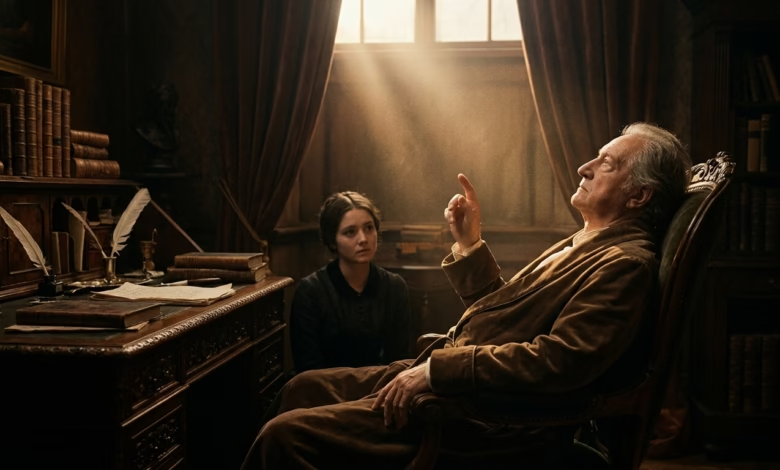
The Book Begins From The End, From That Critical And Decisive Moment Separating The World Of The Seen And The World Of The Unseen. It Is The Twenty-Second Of March In The Year 1832. In That Room Where A Heavy Silence Saturated With The Awe Of Death Prevailed, Lies The Living Body Of Goethe, About To Breathe Its Last Breaths. Beside Him, Kneels His Loving Daughter-In-Law, “Ottilie”, Wiping The Sweaty Perspiration From His Cold Forehead That Had Begun To Be Covered With The Ice Of Death. Ottilie Was Living Her Own Tragedy, Having Lost Her Husband “August” A Little Over A Year Ago, And Here She Now Finds Herself Completely Alone Before The Dying Of The Great Master, Desperately Searching For Any Remaining Pulse In His Fading Heart.
In The Midst Of This Silent Battle With Annihilation, Goethe Asks In A Faint Voice For More Light, Saying: “More Light!” (Più Luce!). The Servant Standing In The Room Stands Confused And Bewildered, Not Knowing What Additional Windows To Open Or What Walls To Tear Down To Bring More Comfort To His Dying Master. The Rays Of The Sun Were Already Seeping Into The Room And Flooding The Pillow Covers On Which The Master Lay, But The Darkness Goethe Was Suffering From In His Hour Of Death Was Not A Physical Darkness That Could Be Dispelled By Additional Windows, But Rather He Was Wrestling With The Darkness Of Death And The Forces Of Annihilation Which The Text Describes As The “Darkness Of The Evil One,” And In Order To Drive It Far Away From Him And Defeat It In Its Cruel Abyss He Was Repeating His Famous Phrase Asking For More Light.
His Voice Gradually Fades, And The Last Breath Approaches, And The Master Becomes Unable To Make Those Around Him Understand What He Wants To Say. And While No One Notices The Darkness Lurking In The Corners Except Goethe Himself, The Master Makes A Strange And Astonishing Movement With His Hand. Ottilie Asks The Servant In Amazement: “What Is He Doing With His Hand?” The Servant Answers Her In A Naive Attempt To Find Any Explanation For That Difficult Moment: “It Is The Agony Of Death, Life Is Leaking And Leaving From His Fingers.” But The Index Finger Of Goethe On His Right Hand Was Moving From Bottom To Top In A Precise, Slow, And Deliberate Rhythm. Those Were Not Involuntary Spasmodic Movements Issuing From A Right Hand Yielding Life, But Rather A Movement That Ottilie And The Faithful Servant Followed With Their Eyes Without Being Able To Decipher The Silent Words Accompanying These Slow Gestures Charged With Tension And Fever.
At That Decisive Moment, The Personal Physician Of Goethe, Doctor “Carl Vogel”, Enters. And With A Clinical Medical Look Accustomed To Evaluating Physical Signs More Than Paying Attention To The Connotations Of Words, The Doctor Glimpses A Path To The Movement Of The Master’s Hand And Concludes Simply By Saying: “He Is Drawing The Letter W”. After That Goethe Yields The Soul To The Creator. The Servant Shyly Retreats, While The Gentle Ottilie Rests Her Head On The Master’s Chest Trying To Catch Any Remaining Pulse, But His Heart Had Fallen Silent Forever. His Suffering With Breaths Stopped, But His Gaze Continued To Carry The Gleam Of The Ultimate Battle And The Final Fight. Ottilie Arose And Closed The Eyes Of Goethe, While His Right Hand Remained Free In The Air, As It Can Be Seen And Contemplated Even Today In The Famous Painting Drawn By The Artist “Fleischer”.
This Moving Scene Left The Door Wide Open For A Flood Of Subsequent Interpretations. In The Hours That Followed The Death Of Goethe, A Feverish Conflict Erupted Among Those Around Him And His Lovers To Embellish And Polish His Last Words, And Make His Death A High Artistic And Moral Example To Be Emulated. The Orientalist “Friedrich Rückert” Hastened To Transform The Death Scene Into A Poetic Poem Describing How The Cry “More Light!” Rushed From The Chest Of The Master So That He Could Head Towards The Light. As For The Ducal Architect “Clemens Coudray,” He Wrote Two Completely Contradictory Reports About The Event, And The Words “More Light” Only Appeared In His Second Later Report. And The Writer And Educator “Christoph Hufeland,” Who Was Not Originally Present In The Room And Did Not Witness The Incident, Went So Far As To Claim That Those Words Were Intended To Provide “Encouragement And Glorification” For Future Generations Devastated By His Loss. And History Was Left With Nothing But To Rely On The Report Of The Personal Physician Vogel, Who Coldly Recorded That Goethe, When He Was No Longer Able To Say Anything Comprehensible, Began Drawing Signs In The Air With The Finger Of His Right Hand, Raising His Finger And Lowering It, Perhaps To Draw The Letter W.
And Here The Two Authors Bocca-Aldaqre And Buttafuoco Intervene To Present The Most Daring And Interesting Interpretation, Which Represents The Essence Of This Profound Book. The Two Authors Indicate That The True Meaning Of This Gesture Would Have Been Revealed Immediately, And Without Any Doubt, Had The Personal Secretary And Loyal Poet “Johann Peter Eckermann” Been Present In Those Seconds. Eckermann, Whom Goethe Affectionately Called “My Own Ali” (Il Mio Ali) In A Clear And Deep Reference To The Continuous Identification Of The Poet With The Character Of The Prophet Muhammad (PBUH), Was Absent For Moments From The Bed Of The Dying Man And Did Not Witness The Movement Of The Finger.
For Long Centuries, This Expressive Gesture Remained A Mysterious Enigma, But The Book Deconstructs This Enigma And Reassembles It With Amazing Brilliance: Goethe Was Performing The “Shahada”, The First Pillar Of The Pillars Of Islam. Raising The Index Finger In The Right Hand And Lowering It Is A Symbolic And Kinetic Expression Of Pure Monotheism, And It Is The Act That The Dying Muslim Performs When His Tongue Is Unable To Utter The Two Testimonies (“There Is No God But Allah, Muhammad Is The Messenger Of Allah”) In The Arabic Language. This Astounding Conclusion Is Not Merely A Leap Into The Void Or An Arbitrary Interpretation, But Is Built, As The Book Clearly Explains, On Long And Deep Research In The Archives Of Goethe And His Letters, And A Careful Tracking Of The Testimonies Of Those Who Were Closest To Him, To Understand The Truth Of The Discovery And Approach Of The Great German Writer To The Islamic Religion. The Prophet Muhammad (PBUH) Advised His Followers To Urge One Another To Die On The Shahada, Because Whoever Dies With This Word Guarantees Paradise. And Goethe, Throughout His Career, Was Repeating This Testimony Whenever He Could, And Even Included It With The Love Of The Passionate Muslim Scholar In His Natural Scientific Writings (Naturwissenschaftliche Schriften), Considering That The Phrase “I Believe In One God” Is The Most Beautiful And Greatest Word Worthy Of Praise, And Made It The Focus Of His Scientific Work In Search Of The Concept Of Monotheism (Tawhid) That Unites Everything In A Manifestation Of The One Creator.
But How Did This Great German Symbol Reach This Purely Spiritual Moment? To Answer This Pivotal Question, The Book Takes Us On An Amazing Flashback Journey Through The Career Of Goethe, Starting From The Autumn Of The Year 1770 In The City Of Strasbourg. There, Where The Historic Meeting Took Place Between The Young Goethe, Who Was Then A Student Studying Law, And The Strict Thinker And Philosopher “Johann Gottfried Herder”. Herder Was Suffering From A Painful Illness In His Eyes, And The Doctor Forced Him To Keep His Eyes Open To Perform A Daily And Painful Surgical Intervention By Passing And Repassing A Medical Instrument. In That Dimly Lit Room, Herder Stands In His Gloomy Black Clothes And His Face Wet With Tears Due To Pain, Receiving The Young Goethe Wearing Modern Brightly Colored Fashions In Yellow And Sky Blue, Which Increased The Annoyance Of Herder Who Asked His Young Student To Serve God Through Purity, Piety And Mercy.
And Despite This Stark Contradiction In Appearance And Mood, Goethe Asks His Teacher Herder With The Passion Of Youth Whether He Will Reach One Day Wisdom And Understanding Of World Literature And Experiencing Language. The Answer Comes To Him From Herder, Whom The Text Describes As “A Sharp-Tempered Person But He Possesses A Heart Of Gold,” Through A Moving Action And Not Just Words. Herder Takes A Volume From His Library And Hands It To The Young Man Standing On The Threshold Saying To Him: “This Is My Answer, It Is A Book. Take It With You And Read It, Because There Will Be No Way To Approach Universality Without Listening To This Reading”. And When Wolfgang Took The Book Between His Hands, He Realized That It Is “The Quran, The Book Of Muhammad”. Herder Assures Goethe That This Book Is Not Just A Passing Word, But It Is The Universal Word, And Not Just Breaths For One Person.
That Was The First Spark. And Although Goethe In The Beginnings Of His Reading Could Not Find A Sequential Logical Path In The Quranic Text, Which Prompted Him To Leave It And Return To It Time And Again Across Time And In Countless Occasions, This Book Became The Fixed Axis Around Which A Lot Of His Meditations Revolved. Goethe Translated The Entire Sixth Surah From The Latin Version By The Translator “Maracci”, Which Is The Surah That Deals With The Continuity And Sanctity Of The Message Across All Prophets. And The Two Authors Pause Extensively At What Is Known As (Koran-Auszüge), Which Are The Quranic Extracts And Notes Of Goethe Preserved In The Düsseldorf Museum, Which Date Back To The Autumn Of The Year 1771, And Document His Accompanying Of His Third Reading Of The Quran. These Notes And Meditations Were Like The Seeds That Later Sprouted Trees With Lush Shadows In His Divan And Literary Works. For Example, Goethe Kept The Quranic Verse From Surah Al-Baqarah: “To Allah Belong The East And The West So Wherever You Turn There Is The Face Of Allah Indeed Allah Is All-Encompassing All-Knowing”. And After Long Decades Passed, Goethe Inspired From This Exact Verse One Of The First And Greatest Poems Of His Famous Divan, The Poem “Talismans” (Talismani), In Which He Says: “To God Belongs The East! / And To God Belongs The West! / The Northern And Southern Lands / Rest In The Tranquility Of His Hands”. He Also Noted A Remark From The Prayer Of The Prophet Moses In The Quran: “My Lord Expand For Me My Breast And Ease For Me My Task And Untie The Knot From My Tongue”.
The Fascination Of Goethe With The Quran Was Not A Passing Fascination Or A Mere Superficial Orientalist Whim Playing With Texts, But Was A Deep Commitment To Defend The Essence Of This Sacred Text. And The Book Mentions A Strong Proof For That Through His Strict And Firm Stance Against The First Translation Of The Quran From Arabic To German, Which Was Done By “David Friedrich Megerlin” And Was Published In The Year 1772 Under An Offensive And Provocative Title Which Is “The Turkish Bible”. The Introduction Of Megerlin Clarified His Hostile Ideological Intentions, As He Justified His Work That It Aims To Expose What He Called “The Book Of Lies” Which The Turks Revere And To Prove That Muhammad Is “A False Prophet And The Antichrist”, Concluding His Introduction With A Strange Prayer In Which He Invokes God To End What He Described As The Violent Kingdom And The Superstitious Religion Of The Quran. In Front Of This Blatant Attack And Deliberate Distortion, Goethe Who Is Full Of The Spirit Of Searching For Truth Did Not Stand Idly By. In The Twenty-Second Of December The Year 1772, Goethe Published A Scathing Critical Review Of The Translation Of Megerlin In The Magazine “Frankfurter Gelehrte Anzeigen”, Describing It As “The Miserable Work”. And Goethe Deeply And With All Sincerity Wished That Another Translation Be Accomplished Very Soon By The Hands Of A German Who Can Read The Quran “With The Feelings Of Poets And Prophets”, And Possesses Sufficient Intuition And Insight To Understand The Comprehensiveness And Greatness Of This Entire Text.
This Comprehensive Philosophical Vision Of Goethe Manifests Itself Through His Relentless Search For The “Original Plant” (Urpflanze), That Botanical And Spiritual Concept That Took Over His Thinking. The Title Of The Book Itself “Under His Step Flowers Bloom” Refers To That Metaphorical Moment In Which The Buds Bloom And Life Arises Wherever The Gnostics And Prophets Settle, Taken From A Poem In Which Ali And Fatima Sing Celebrating The Prophet. In His Famous Journey To Italy, And Specifically In The Twenty-Sixth Of September The Year 1786 In His Itinerary, Goethe Entered The Botanical Garden In The City Of Padua Searching For That Original Plant. Later, He Continued His Search In The Palermo Garden In The Island Of Sicily, That Ancient City In Which Rest The Remains Of Another German Who Chose Sicily To Discover In It His Eastern Soul And Become “An Arab”, Who Is The Emperor Frederick II.
For Goethe, The “Original Plant” Was Not Merely A Biological Entity, But Was An Expression Of The Lotus Flower In A Distant Sea, Or The Rose With Invisible Petals Whose Fragrance Colors The Feelings Of Whoever Approaches It. It Is The Material Manifestation Of The Divine Blessing That Rises From A Single Root To Become A Stem Intoxicated With Happiness, And A Rush In The Blue Miracle Of The Divine Manifestation For The Word “Be”. His Journey To Italy Was The First Among A Series Of Internal And Spiritual Migrations That Formed His Path. And Astonishingly, In The Fourteenth Of October 1786, Goethe Referred To His Escape Or This Journey With The Word “My Hegira” (La Mia Egira), Identifying Once Again, And After The Passing Of More Than Fifteen Years Since His First Reading Of The Quran, With The Character Of The Prophet Muhammad Who Commanded The Believers With The First Migration To Abyssinia Escaping From The Persecution Of The People Of Mecca, Then The Second Migration To The Illuminated Medina In Which He Himself Participated And With Which The Islamic Calendar Began.
From This First Migration To Italy, Goethe Returned With A Deep Intuition And Certainty: That The Future Of Europe Could Be Linked To Adopting “An Islam Softened By The Skies Of The Mediterranean”, A Horizon Of Peace And Serenity Towards Which The Poet Directed His Deepest Personal And Intellectual Tensions. And This Direction Towards Peace And Surrender Is Exactly What He Tried To Build Around Himself In His Daily Life In The City Of Weimar. And Today, We Can Still See The Trace Of This Direction At The Entrance Of His Home In Weimar, Where The Letters Of The Word “Welcome” Or Peace (Salve) Were Carved On The Wood. And Although His Secretary Eckermann In His First Visit Was Surprised By This Strange Choice And Considered It Just A Sign For Friendly Welcoming, The Book Draws Our Attention To That This Latin Word Is The Same Which Goethe Used In His Translated Latin Quran To Express The Islamic Greeting By Excellence: “Peace Be Upon You” (As-Salāmu ‘Alaykum). For Goethe, Islam Is Peace, And It Is Salvation, And He Never Betrayed His Deepest Message, But Continued To Reformulate It And Reconstruct It Throughout His Long Life.
With This Cognitive Momentum And The Close Spiritual Connection Which The Book “Under His Step Flowers Bloom” Reveals, We Find That Goethe Was Not Standing At The Limits Of Passing Intellectual Admiration, But Transcended That Towards A State Of Absolute Spiritual Identification And Deep Surrender.
In Continuation Of Our Journey Into The Depths Of The Anxious And Enlightened Soul For The German Poet Johann Wolfgang Von Goethe, And Through The Insightful Vision Which The Book “Under His Step Flowers Bloom: Goethe And Islam” By The Two Authors Francesca Bocca-Aldaqre And Pietrangelo Buttafuoco Presents, We Find That This Title Which Is Full Of Poetry Was Not Chosen In Vain. The Phrase “Under His Step Flowers Bloom” Is Not Merely A Passing Literary Simile, But It Is In Reality Quoted From The Heart Of The Famous Poem Of Goethe “Song Of Muhammad” (Mahomets Gesang) Which Is Known In The Italian Translations As “The Chant Of The Prophet” (Canto Del Profeta). In This Immortal Poem, Goethe Imagines A Lyrical Dialogue And A Spiritual Chanting Between Ali And Fatima, Where The Echo Of The Words That Describe The Prophet Muhammad (PBUH) And His Reviving Effect Resounds: “There, In The Valley, Under His Step Flowers Bloom, And The Meadow Derives Life From His Breaths”. This Flowing Rhythm Which Carries Within Its Folds A Deep Praise For The Massive Spiritual Effect Of The Prophet, Represents A Basic Key For Understanding The Deep Direction Of Goethe, Where He Saw In The Character Of Muhammad The Spiritual Leader Who Overflows With Life And Spreads Fertility And Growth Wherever He Settles.
This Connection With The Prophetic Character And With The Quranic Text Was Not Merely A Passing Youthful Stage That Faded With The Maturity Of The Poet, But Formed A Yeast That Reacted In His Soul For Decades, To Explode In The Late Part Of His Life Into One Of The Greatest Creations Of Human Literature Entirely: “The West-Eastern Divan” (West-Östlicher Divan). In The Year 1814, Europe Was Surging In A Massive Chaos, Burning With The Fires Of The Napoleonic Wars, And Floundering In Political And Social Conflicts That Tore The Joints Of The Old Continent. And In The Midst Of This Material And Spiritual Destruction, Goethe Found Himself, And He Is Approaching The Autumn Of His Life, Searching For A Safe Haven In Which He Saves His Mind And Soul. And Here Began “The Second Migration” For Goethe, Not Through Physical Travel This Time, But Through A Spiritual And Poetic Migration Towards The East, Flying With The Two Wings Of Imagination Above The Ruins Of The Burning West To Unload His Luggage In The Lands Of Persia And Islam.
In That Critical Period, A German Translation For The Works Of The Great Persian Poet Shams Al-Din Muhammad Hafez Al-Shirazi Fell Between The Hands Of Goethe. Reading The Divan Of Hafez Was For Goethe Like A Spiritual Thunderbolt And A Discovery For The Twin Of His Soul Who Is Separated From Him By Hundreds Of Years And Thousands Of Miles. Goethe Found In Hafez A Voice That Resembles His Voice, And A Mind That Harmonizes With His Mind In Revering Nature, And Understanding Pure Monotheism, And Mixing Human Love With Divine Love In One Sufi Crucible. The Reading Of The Book “Under His Step Flowers Bloom” Highlights How That Goethe Did Not Just Imitate Hafez Or Got Inspired By Him Superficially, But Lived With Him A State Of Absolute Identification, Replying To Him Across The Poems Of His West-Eastern Divan, And Declaring That The East And The West Have No Longer Become Separated.
And In This Late Stage Of His Life, And Specifically While He Is In The Age Of Sixty-Five, The Spiritual Journey Of Goethe Intersects With A Deep And Blazing Love Experience With Marianne Von Willemer, The Woman Who Inspired Him And Lit His Last Years. Marianne Transformed In The Poems Of The Divan Into The Character Of “Zuleikha”, The Symbol Of The Infatuated Lover, While Goethe Took For Himself The Mask Of “Hatem”. In This Poetic Space Saturated With The Eastern Perfume, The Physical Love Was Not Separated From The High Spiritual Attachment. Goethe Was Able, Through His Simulation For The Style Of Hafez Al-Shirazi And His Deep Assimilation For The Islamic Spirituality, To Make From His Love For Zuleikha (Marianne) A Metaphor For The Greater Divine Love. The Overlap Between What Is Human And What Is Divine, Which Is Considered From The Core Of The Islamic Sufi Poetry, Found In The Heart Of The German Goethe A Fertile Soil In Which The Most Beautiful Poems Of Love And Surrender Ripened.
The Two Authors Bocca-Aldaqre And Buttafuoco Point Out That The West-Eastern Divan Of Goethe Is Not Merely An Orientalist Work That Adorns Itself With Colorful Islamic Decorations, But It Is A Spiritual Document That Records A Deep Transformation In The Structure Of Thinking For The Poet. Through Diving Into The Vocabulary Of The Islamic Civilization And Its Concepts, Goethe Stopped For A Long Time At The Literal And Philosophical Meaning For The Word “Islam” Itself. Goethe Realized, With The Awareness Of The Researcher And The Insight Of The Poet, That Islam In Its Essence Means Nothing Except The Absolute Surrender To The Will Of God And The Complete Harmony With The Natural And Spiritual Laws Of The Universe Which The Creator Put. This Deep Concept For Surrender Is What Made Him Write His Immortal And Famous Verses In Which He Decides That If Islam Means Surrender To God, Then All Of Us In Islam Live And In Islam We Die. This Confession Was Not A Slip Of The Tongue Or A Civilizational Compliment, But It Was An Acknowledgment Of The Universality Of This Religion And That The Spirit Of Islam Harmonizes Completely With The Cosmic System Which Goethe Spent His Life Contemplating Scientifically And Philosophically And Literarily.
The Book “Under His Step Flowers Bloom” Puts The Reader In Front Of The Truth That Goethe Was Establishing A Completely New Concept In His Era, Which Is The Concept Of World Literature. Through His Migration To The East And His Integration With The Holy Quran And The Persian And Arabic Poetry, Goethe Smashed The Narrow Walls For The European Nationalism And The Western Centralism Excessive In Revering Itself. He Saw That All Of Humanity Drinks From One Spring, And That The Divine Manifestation Is Not Limited To A Geographical Spot Without Another. And When He Was Singing That God Is The Lord Of The East And The West, He Was Not Only Translating The Meanings Of The Quran, But He Was Putting The Moral And Aesthetic Foundation Which The Civilization Of Man Must Be Built On: A Civilization That Acknowledges Pluralism And Realizes That The True Essence For Religions And Poems Is One Essence Revolving Around The Pole Of Monotheism And Surrender.
In This Context, The Book Traces With Extreme Accuracy How That Goethe Did Not Just Theorize, But Tried To Practice This Surrender In The Details Of His Life And His Diaries. He Did Not Look To The Prophet Muhammad Or Hafez Al-Shirazi As Historical Or Literary Characters Strange To Him, But As Friends And Guides Accompanying Him In His Path. And As We Will See In Our Upcoming Review, This Identification With The Islamic East Did Not Stop At The Limits Of Poetry And Spiritual Soliloquy, But Extended To Touch Delicate And Sensitive Doctrinal Issues Like His Vision For The Nature Of Master Christ Peace Be Upon Him, And His Rejection For Some Complex Church Concepts, And His Clear Inclination Towards The Pure And Abstract Islamic View That Puts Christ In The Rank Of Prophethood And The Divine Word Purified From The Human Theological Complexities.
The Book “Under His Step Flowers Bloom: Goethe And Islam” Refuses To Stop At The Borders Of The Passing Literary Admiration Or The Aesthetic Orientalism. The Two Authors Francesca Bocca-Aldaqre And Pietrangelo Buttafuoco Dive, In This Advanced Stage From Their Analysis, Into The Most Deep And Complex Theological Abyss In The Life Of The Great German Poet, Highlighting On His Bold Doctrinal Poses That Formed, In Silence Sometimes And In A Courageous Revelation In Other Times, A Real Rupture With The Complex Church Legacy Prevailing In His European Environment, And An Amazing Approach, Almost Being A Match, With The Essence Of The Islamic Doctrine Represented In The Pure Monotheism.
In The Heart Of This Theological Transformation, The Concept Of Monotheism Stands As The Cornerstone Which Goethe Built Upon His Vision For The Universe And The Creator. The Scientific And Philosophical Mind Of Goethe, Which Got Used To Contemplating Nature And Monitoring The Manifestations Of Unity In Diversity, Was Not Able To Absorb The Theological Complexities Which The Church Institution Imposed Across The Centuries. The Doctrine Of The Trinity, Which Divides The Divine Essence Into Hypostases, Appeared To Goethe As An Unjustified Tearing For The Absolute Unity Which Drives The Universe. He Found In The Islamic Conception For God A Depiction In The Utmost Purity And Abstraction; One God, The One, The Eternal, Does Not Fragment And Does Not Incarnate, Which Harmonized Completely With His Philosophy That Sees The Creator Manifesting In Every Atom From The Atoms Of The Natural Existence, Without The Need For Theological Mediators Or Complex Doctrinal Structures Separating Between The Human And His Lord.
And This Amazing Intersection Manifests Itself In Its Clearest Images When The Book Deals With The Look Of Goethe To The Character Of Master Christ (Peace Be Upon Him). The German Poet Revered Jesus, Respected Him As A Great Moral Teacher, And A Prophet God Sent To Guide Humanity, And A Pure Soul Beating With Love And Serenity. However He, And In A Decisive Way, Rejected The Church Idea Saying The Divinity Of Christ Or His Being A Biological Son To God. This Rejection Was Not Merely A Reckless Intellectual Rebellion, But Sprouted From His Deep Study And His Repeated Readings For The Holy Quran, Where He Found In The Quranic Text Which Purifies God From The Companion And The Son, And Puts Jesus Son Of Mary In His Honorable Prophetic Rank As “The Word Of God And His Spirit”, The True Echo For What Was Fluttering In His Chest From Convictions.
The Two Authors Mention In The Book Irrefutable Evidences From The Texts Of Goethe Himself, And Most Notably Those Immortal Verses From “The West-Eastern Divan” Which Are Considered As A Theological Document That Does Not Accept Interpretation. Goethe Writes With Decisive Clarity What Its Meaning Is: “Jesus Felt Purity, And In Silence, He Was Not Thinking Except In The One Single God; And Whoever Made Him Himself A God, Has Offended His Holy Will”. In These Few Lines, Goethe Summarizes A Doctrinal Pose That Matches Completely The Islamic Vision For Christ, Considering That Adding The Trait Of Divinity Upon A Prophet Who Came To Call For The Unification Of God Is In Itself An Offense To The Message Of That Prophet And A Distortion For His Original Teachings.
And The Theological Rebellion Of Goethe Did Not Stop At The Limits Of Thinking In The Nature Of Christ, But Extended To Include A Deep Rejection For The Concept Of “The Original Sin” And The Doctrine Of “Redemption” Represented In The Crucifixion. Goethe Was Averting Strongly From The Symbol Of The Cross And From The Morbid Focus, In His View, On The Pain And Torment And Physical Death As A Way For Salvation. Relative To Him, God Is Gracious Merciful, Does Not Need A Bloody Sacrifice Or Crucifixion To Forgive The Humans. This Aversion From The Physical Depiction For Suffering Made Him Incline With All His Senses Towards The Islamic Vision That Rejects The Crucifixion Of Christ And Focuses Instead Of That On His Spiritual Ascension And His Salvation. Goethe Was Searching For A Religion That Celebrates Life, With Light, With The Positive Surrender To The Divine Will, And Not A Religion That Takes From An Instrument Of Torture And Death A Central Symbol For It.
The Book Continues In Tracing These Fine Threads Which Wove The Spiritual Cloak Of Goethe, Pointing Out That This Pure Understanding For Monotheism Reflected Also On His Scientific Researches. So As He Searched In The Science Of Botany For The “Original Plant” Which All The Plants Branch Out From, And Searched In The Theory Of Colors For The Original Light Which All The Spectrums Branch Out From, He Was Searching In Theology For “The Original Religion”, The Religion Of Innate Nature Which The Church Councils And The Human Interventions Did Not Distort. And He Has Found In Islam, As He Declared In His Letters And His Dialogues With The Close Ones To Him, The Most Perfect And Most Innocent Embodiment For This Original Religion That Breathes Through Nature And Mind Together.
These Amazing Discoveries Which Bocca-Aldaqre And Buttafuoco Propose Put Us In Front Of A Thinker Who Lived In The Heart Of The European Centralism, But He Was Able With His Genius And His Independence To Dismantle Its Doctrinal System To Rebuild His Soul According To A Pure Islamic Eastern Engineering. The Matter Was Not Related Only To Reading The Quran For Culture, But Adopting Its Philosophical Vision For Existence. Goethe Was Able To Live As A Muslim In The Core Of His Intellectual Awareness, Practicing The Absolute Surrender To The One Creative Power, And Seeing In All The Prophets, And On Top Of Them Muhammad (PBUH), Spiritual Leaders Connecting The Earth With The Sky With Steps That Flowers Of Knowledge And Peace Sprout Underneath Them.
We Move From The Sky Of Theological And Philosophical Theorizing To The Ground Of The Lived Reality. How Is It Possible For A Man Who Embraced In The Bottom Of Himself The Spirituality Of The East And Identified With The Doctrine Of The Pure Monotheism, To Live His Diaries In The Heart Of The Cultural Capital For Germany, Weimar, In The Nineteenth Century? The Two Authors Francesca Bocca-Aldaqre And Pietrangelo Buttafuoco Highlight This Strange Paradox, Where Goethe Lived A State Of Noble Spiritual Alienation. So Despite His Prestigious Status As A Minister And Court Poet And A Thinker All Of Europe Reveres Him, His Soul Was Flying Far Away In The Spaces Of Hijaz And The Alleys Of Shiraz. He Has Taken From Islam, Not Only An Intellectual Refuge, But An Existential Shield He Takes Shelter With From The Fluctuations Of The Material Life And The Storms Of The Modern Era Which Began To Sweep The European Continent.
The Book Points To The Deep Misunderstanding Which Surrounded Goethe By The Closest Close Ones To Him. So While The Western Literary Circles Were Dealing With “The West-Eastern Divan” And With His Interests In Islam As A Type Of “The Orientalist Fashion” Or Like An Artistic Play With Strange Aesthetics To Break The Classical Monotony, Goethe Was In Reality Writing His Deepest Spiritual Confessions. Even His Loyal Secretary And The Keeper Of His Secrets, Johann Peter Eckermann, Who Wrote Down Their Conversations With Extreme Care, Often Was Stopping At The Aesthetic Surface For The Things, Unable To Probe The Spiritual Depth For His Master. The Environment Of Goethe Did Not Comprehend That His Wearing The Eastern Cloak Was Not A Theatrical Impersonation, But Was A Sincere Expression For An Inner Essence In Which The Great German Transformed Into A Muslim-Leaning Thinker, Seeing In The Verses Of The Quran And The Poetry Of Sufism His Absolute Truth.
From The Most Prominent Practical Manifestations For This Transformation, Which The Book Stops At Lengthily, Is The Absolute Embrace Of Goethe For The Islamic Concept “Fate And Destiny”. This Concept Was Not For Him A Passive Surrender Or Desperate Fatalism, But Was A Source Of Reassurance And Inner Peace Which He Did Not Experience Before. In The Face Of The Personal Tragedies, And The Creeping Aging, And The Loss Of The Loved Ones—Including The Tragic Death For His Son August—Goethe Did Not Mourn His Luck Or Raise His Fist Angrily In The Face Of The Sky Like What The Tragic Characters Do In The Western Literature. Instead Of That, He Shielded Himself With The Islamic Serenity, Repeating In His Letters And His Diaries Meanings That Benefit The Satisfaction With What God Wrote. He Found In The Principle Of “The Written” And In The Voluntary Surrender To The Will Of The Creator A Healing Medicine For The Sorrows Of Existence, Considering That The True Wisdom Lies In That The Human Harmonizes With The Will Of God Not That He Wrestles With It.
And Bocca-Aldaqre And Buttafuoco Proceed In Drawing The Features Of This Daily Life Saturated With The Spirit Of The East, Clarifying How The Islamic Symbols Sneaked Into The Most Accurate Details Of The Environment Of The Poet. The Inscriptions Of Arabic Calligraphy And The Amulets (Talismans) Which Goethe Kept In His House Were Not Merely Antique Pieces An Antiques Collector Boasts About, But Were Living Symbols That Breathe And Remind Him Of The Continuous Connection With The Absolute. He Was Looking To The Arabic Letters As If They Are Sacred Geometric Shapes Hiding In Their Curves The Secrets Of The Universe, And Even Applied Himself With An Incessant Effort On Training On Writing The Arabic Calligraphy With His Hand, Trying Physically And Spiritually To Absorb That Language Which God Chose To Be A Vessel For His Word. His Attempts In Copying The Arabic Letters Were A Meditative Ritual That Brings Him Closer From The State Of Reverence And Serenity.
Thus, The House Of Goethe In Weimar Turned Into A Hidden Meeting Point Between Mecca And Berlin, And Between The East And The West. In This Space, He Was Reading The Persian Poetry, And Studying The Quranic Translations, And Contemplating In The Biographies Of The Prophets And On Top Of Them The Prophet Muhammad (PBUH), Not As Characters From A Very Old Past, But As Accompanying Souls Guiding Him In His Noble Path Towards The Light. This State Of Identification Did Not Cancel His Western Genius, But Polished It And Refined It, And Made It More Comprehensive And Humanitarian. He Realized That The True Power For The Human Does Not Lie In Subjugating Nature Or Rebelling Against The Creator Like How The Emerging Western Modernity Depicted It, But In The Complete Harmony With The Rhythm Of The Universe And The Melting In The Love Of The One Single God.
And With Our Approaching From His Last Years, We Find That This Towering Spiritual Building Was Not Merely A Warrior’s Break, But Was The Great Preparation For The Decisive Moment Of Confrontation, The Moment Of Completing The Circle Which We Opened This Journey With. However Understanding This Completion Requires Us To Dive In His Greater Philosophical And Literary Effect, To See How This Islamic Vision Sneaked Into The Epic Conclusion For The Drama Of The Contemporary Human And How It Formulated His Eternal Legacy.
To The Creative Peak And The Immortal Will Which The Poet And The Greatest Freeman Of Europe Left. So If “The West-Eastern Divan” Is The Divan Of Passion And Contemplation And Monotheism, Then His Great Epic Masterpiece “Faust”—And Specifically The Second Part From It Which Goethe Finished Before His Death With Few Weeks And Closed It On Himself As A Will For The Coming Generations—The Final Result For This Spiritual Migration Towards The East Is Embodied In It. The Two Authors See With Critical Brilliance How That The Great Conclusion For The Tragedy Of Faust, Instead Of Retracting On A Traditional Church Vision In Salvation, Gets Saturated With Transparent Eastern And Sufi Islamic Spiritualities. The Survival Of Faust And The Ascension Of His Soul Towards The Sky Do Not Anchor On An Institutional Forgiveness And Ritual Magic, But On Two Authentic Islamic Concepts: The Vast Divine Mercy, And The Sincere And Continuous Spiritual Striving, In Parallel With The Concept Of Ascension And The Spiritual Elevation Towards The Highness.
The Book Of Bocca-Aldaqre And Buttafuoco Puts Our Hands On The Comprehensive Philosophical Vision Which Goethe Formulated As A Unique Civilizational Bridge Between Worlds That A Lot Have Thought Longly That The Bridges Between Them Are Cut. Goethe Realized, With The Spirit Of The Insightful Gnostic, That The Division Between The East And The West Is An Illusory Division Which Ignorance Creates And The Narrow Prejudices Feed. And He Has Formulated This Certainty In His Immortal Verse Which He Declared To The World: “Whoever Knows Himself And Knows The Others, Will Know Also Here: That The East And The West Has No Longer Been Possible To Separate Them”. This Civilizational Conciliation Was Not Relative To Goethe Simple Slogans Or Superficial Democracy, But Was An Existential Experience He Lived With His Heart And His Mind, Taking From The Islamic Monotheism A Gathering Anchor Point That Transcends Above All The Geographical And Ideological Borders.
The Exceptional Importance For The Book “Under His Step Flowers Bloom” Lies In That It Reopens The File Of Goethe Far Away From The Strict Literary And Western Censorship Which Tried For Long Decades To “Refine” Or Hide The Blazing Islamic Pulse In The Chest Of This Genius. The Two Authors Present To Us Goethe As A Human Who Did Not Find In Islam Merely A Culture For Studying And Orientalism, But Found In It A Homeland For His Anxious Soul, And A Tranquility For The Inhabitants Of The Peaks Whom The Material Dryness For Their Era Exhausts Them. Goethe Has Proven That Opening Up On The Other And Absorbing His Spirit Does Not Mean Losing The Self, But Means Its Completion And Its Elevation To The Higher Human Horizon, Where Religion Becomes Love, And Monotheism Knowledge, And Surrender Peace.
And Thus The Threads Of This Reading Gather To Complete The Wonderful Painting Which Goethe Drew With His Spirituality And His Life. The Phrase “Under His Step Flowers Bloom”, Which The Book Took As A Title For It, Remains The Most Beautiful Testimony On The Effect Which The Honorable Prophetic Light And The Islamic Experience Left In The Depths Of The German Genius. The Flowers Of Knowledge And Monotheism And Surrender Have Bloomed In His Heart And His Mind, And Their Fragrance Kept Exhaling In Everything He Wrote And Created Until His Last Moment Of Departure, When The Earth Folded His Body And His Right Hand Raised The Index Finger Of Monotheism Towards The Sky. The Biography Of Goethe With Islam Will Remain Forever An Inspiring Ticket For Humanity Entirely, Reminding Us That The Searcher For Truth With A Pure Heart Will Not Lose His Way, And That The Divine Mercy Is Vast Involving Everyone Who Stroved Towards It With Sincerity, Wherever The East Was And Wherever The West Was.