

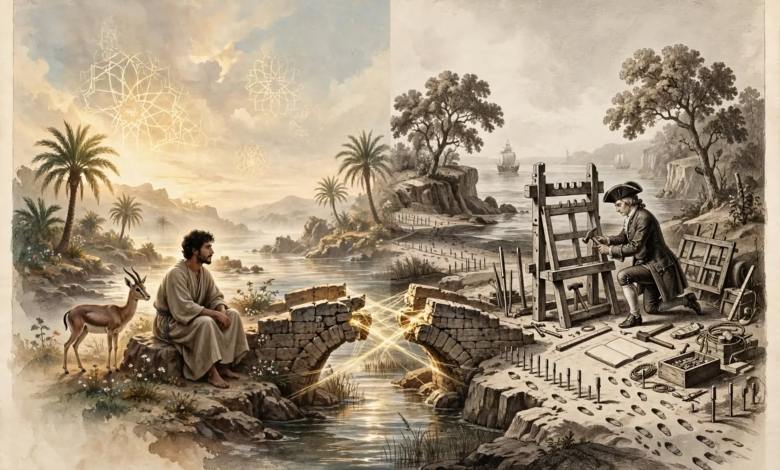
Forgotten Bridges Of Thought Between Islam And The West.. From “Hayy Ibn Yaqdhan” To “Robinson Crusoe”
In A World Tossed By The Waves Of Sharp Polarization, And Governed By Narratives Of Separation And Hostility, The Book “Nietzsche In Paradiso: Vite Parallele Tra Islam E Occidente” (Nietzsche In Paradise: Parallel Lives Between Islam And The West) By The Researcher And Academic Francesca Bocca-Aldaqre Emerges As A Resounding Intellectual Cry That Challenges Ready-Made Molds. This Book Does Not Merely Raise Questions About Identity, But Reshapes The Entire Map Of Human Thought, Presenting A Philosophical Vision. The Author, Who Studies Arab Culture At The Humanitarian Society And Islamic Civilization At The Vita-Salute San Raffaele University In Milan, Takes Us On A Journey From Hayy Ibn Yaqdhan To Robinson Crusoe To Disconnect The West From Its Desperate Need To Define Itself Through Opposition To Islam.
This Book Begins With A Decisive Rejection Of The Theories Of “The Clash Of Civilizations” And “The End Of History,” Considering Them Dead Ends That Failed To Lead Humanity Toward A True Identity, A Foundational Myth, Or A Unifying Culture. Instead, Bocca-Aldaqre Proposes A Bold And Charming Hypothesis: The Relationship Between Islam And The West Is Not An Inevitable Conflict, But A Path That Already Exists Yet Is “Broken” Or Cut Off. In A Serious Attempt To Restore This Path, The Author Does Not Resort To Geography Or Ideology, But Embodies These Identities In “Men”; Historical And Literary Figures, Real And Imagined, Standing Face To Face In Each Chapter Of The Book To Meet, Define, And Complete One Another.
In The Introduction Of The Book, The Author Places Us Before Brilliant Surreal Scenes That Captivate The Mind And Prompt Deep Reflection: The German Philosopher Friedrich Nietzsche Finds Himself In Paradise Within The Celestial Journey Written By The Muslim Poet Muhammad Iqbal, While The Great French Writer Victor Hugo Stands To Narrate With Reverence And Awe The Final Moments In The Life Of The Prophet Of Islam In His Poetry Collection “The Legend Of The Ages.” These Are Not Just Passing Tales Or Entertaining Anecdotes, But Living Examples And Irrefutable Testimonies To An Ever-Present Path Between Islam And The West, A Path That Has Not Been Properly Told Until Now.
The Core Of This Intellectual Project Lies In Showing How The Cultural Echoes Of Islam Have Permeated The Western Imagination In Unexpected Ways. Cartesian Doubt, Considered The Pinnacle Of Western Thought, Can Be Read Deeply Through The Lens Of Imam Al-Ghazali, And The End Of Metaphysics According To The German Philosopher Martin Heidegger Intersects And Intertwines With The Ideas Of The Greatest Mystic Muhyi Al-Din Ibn Arabi. These Comparisons Do Not Aim To Write A New History, But Are A Pure Attempt For “Thought” Itself; For Human Thought, In Its Essence, Is One Thought.
In This Context, The First Chapter Is Entitled “The Deserted Island,” Which Presents A Dazzling And Deep Comparison Between Two Legendary Figures: “Hayy Ibn Yaqdhan” By Ibn Tufail, And “Robinson Crusoe” By Daniel Defoe. The Author Asks In An Agile Investigative Style: If We Strip Man Of All The Determinants Of Birth And Environment, And Get Rid Of The Burdens Of Time, What Remains Of Him? The Answer Comes First From Andalusia, Specifically From Granada In 1175, Through The Story Of Hayy Ibn Yaqdhan. This Being Who Was Born Without A Father Or Mother, And Emerged From The Vapors Of The Earth On A Tropical Island.
The Life Of Hayy Ibn Yaqdhan Is Divided Into Seven-Year Cycles (Seven Cycles, Each Of Seven Years). In This Complete Isolation, And Without Even Using A Spoken Language, Hayy, At The Peak Of His Mental And Spiritual Capabilities, Reaches The Realization Of “The One” That Lies Behind All Things, Relying On Intuition, Observation, Scientific Experimentation, And Pure Contemplation. Bocca-Aldaqre Explains That This Literary Work Is Considered Authentic World Literature, And Has Moved To The West To Create A “Traffic” And A “Game Of Mirrors” Through Translations. It Was Translated Into Hebrew, And Pico Della Mirandola Owned A Copy Of It In The Fifteenth Century, Then Came The Latin Translation In Oxford In 1671 To Enchant The Minds Of Great Philosophers Like Spinoza And Leibniz. Leibniz Himself Used To Point Out To His Friends The Sublimity Of Arab Thought That Manifested In This Book, Emphasizing That Their Feelings Toward The Divine Are Equal To The Feelings Of The Highest Christian Philosophers.
But, As The Author Notes, The Distortion And Departure From The Original Began With The Translation Of The Title Into Latin To Become (Philosophus Autodidactus) Or “The Self-Taught Philosopher.” Bocca-Aldaqre Argues That Hayy Was Not A Philosopher In The Modern Western Sense Of The Word; Everything He Did Was Not Directed Toward Theorizing, But Was Driven By A Pure Spiritual Necessity. He Was Also Not “Self-Taught” In An Absolute Sense, For The Islamic Book Begins With The Quranic Quote Affirming That God Is “He Who Taught By The Pen, Taught Man That Which He Knew Not”; So God Is The Only Teacher In Hayy’s Journey.
In The First Twenty-Eight Years Of His Life, Hayy Goes Through An Amazing Journey That Begins With A Gazelle Caring For Him, Passing Through His Discovery Of Death Upon The Passing Of His Adoptive Mother, Then His Discovery Of Fire, Reaching The Realization That Every Existing Thing Has A Cause, And That There Is A “First Cause.” When Hayy Reaches This Knowledge, He Dives Into Contemplation And Sees Nothing In Creatures But The Creator, Thus Transcending The Need To Study Nature To Merge Into The Spiritual Vision.
In Stark Contrast To This Spiritual Tranquility, The Reflection Of This Work Appears In The English Novel “Robinson Crusoe” By Daniel Defoe. When The Idea Of The Deserted Island Reaches The Era Of Western Modernity, All Values Turn Into Their Opposites. The Sea And The Island For Crusoe Become An Echo Of “Loneliness” And Desolate Isolation, Which Is The Influence Of Romantic Literature, While The Calm Curiosity Of Hayy Is Devoid Of Any Feeling Of Sorrow Or Psychological Suffering. Hayy Contemplates, While Robinson “Acts.”
Robinson Crusoe Is The Son Of Western Modernity Par Excellence, Dominated By A Deep State Of Anxiety About The Passage Of Time, Which Drives Him To Make A “Calendar” To Track The Days, While Hayy Does Not Care About The Passage Of Celestial Bodies Except As Signs Pointing To The Creator, And Not As Tools For Calculation. More Importantly, Robinson Is Dominated By An Urgent Desire And Need To Shape Everything That Falls Before Him: The Island, Its Creatures, And Even His Servant Whom He Named “Friday.”
This Obvious Paradox Reaches Its Peak In The Scene Of The Meeting With The Other. Hayy Ibn Yaqdhan Meets The Mystic “Absal” Who Came To The Island Seeking Isolation. Hayy Observes Absal And Learns From Him Language And The Sciences Of Religion, Driven By Mercy And The Desire To Guide Others, So He Travels With Him To The Society Of Humans. But When Hayy Realizes That His Deep Spiritual Path Does Not Suit The General Public (Who Are Led By Salaman), He Quietly Returns With Absal To His Island To Complete His Spiritual Journey. On The Other Hand, The Author Hints That Robinson Crusoe’s Meeting With “The Savages” And With “Friday” Is A Distorted And Direct Translation Of The Meeting Of Hayy And Absal; Where Robinson Refuses To Adopt Anything From These “Savages,” Even Stripping Them Of Their Original Names And Imposing Subordination On Them. Hayy Reaches “Knowledge,” While Robinson Reaches “Control.”
The Echoes Of This Comparison Did Not Stop At Defoe, But Extended To Influence Jean-Jacques Rousseau In His Famous Educational Book “Emile.” Rousseau, Who Hated The False Society, Wanted To Raise His Ideal Child “Emile” Away From The Corruptions Of Civilization, And Allowed Him In A Certain Period To Read Only One Book: Not Aristotle Nor Pliny, But “Robinson Crusoe.” Despite The Apparent Similarity Between The Isolation Of Hayy And The Isolation Of Emile, Bocca-Aldaqre Dismantles This Similarity. Emile Is Subject To Strict Guidance From His Teacher With A Specific Goal: To Prepare Him To Return To Society As A Strong Citizen Capable Of Fighting Political And Social Corruption, So Isolation Here Is Just A Tool And Training. As For Hayy Ibn Yaqdhan, His Isolation And Spiritual Formation Are An End In Themselves; He Realized That The Masses Have Their Path Represented In Adherence To The Law And Sharia, While He Possesses The Path Of The Spiritual Elite (Direct Insight). Hayy Did Not Despise The Masses, But Gently Left Them And Returned To His Sublime Isolation.
The Author Concludes This Chapter By Clarifying The Fundamental Difference Between The Three Models. Robinson And Emile Are Models Within The Reach Of The Modern Western Reader; With Any Amount Of The Spirit Of Adventure Or Strict Educational Guidance, Any Person Can Become Robinson Or Emile, For They Present A “Technique” And A Practical And Colonial Approach. As For Hayy Ibn Yaqdhan, He Represents The “Aristocracy Of The Spirit” And The Elite Chosen By God To Reach Pure Knowledge, A Vision Deeply Rooted In The History Of Islamic Philosophy Believed In By Its Author Ibn Tufail And His Friend Averroes. The Ignition Of The Mind And The Opening Of The Gates Of The Heart Are What Move Philosophers, Rebels, Poets, And Saints.
After We Left In The First Chapter The Isolation Of “Hayy Ibn Yaqdhan” And The Limitless Ambition Of “Robinson Crusoe” To Control Nature And Matter, We Now Move To A More Spacious, Rebellious, And Noisy Horizon. We Leave The Deserted Tropical Ocean Islands To Soar In The Highest Heavens, Where The Author Places Us Before One Of The Most Bizarre, Astonishing, And Even Provocative Intellectual Encounters In The History Of Comparative Literature And Modern Philosophy: An Encounter Bringing Together The German Philosopher Who Shook The Foundations Of Europe And Declared “The Death Of God,” Friedrich Nietzsche, And The Muslim Poet And Philosopher, The Spiritual Father Of The Modern State Of Pakistan, Muhammad Iqbal.
If The First Chapter Discussed How The Western And Islamic Imagination Dealt With Nature And Complete Isolation, Then This Second Chapter Dives With Rare Boldness Into The Depths Of The Crisis Of “Modern Man” And His Spiritual Destinies. Bocca-Aldaqre Begins By Highlighting Muhammad Iqbal’s Immortal Masterpiece “Javid Nama” Or “The Book Of Eternity,” Which Is Considered An Islamic “Divine Comedy” Par Excellence That Intertextualizes With The Heritage Of The Ascension. In This Philosophical Poetic Epic, The Hero Of The Story Undertakes A Celestial Journey To Pierce The Cosmic Veils And Galaxies, Taking The Great Mystic And Poet Jalal Al-Din Rumi As His Spiritual Guide, Just As Dante Alighieri Took The Roman Poet Virgil As A Guide In His Journey Through Hell And Purgatory. But The Resounding Surprise Detonated By The Author Lies In One Of The Advanced Stations Of This Ascension Journey; For In A Place Beyond The Stars, And In A Sky Filled With Manifestations And Pure Light, Iqbal Meets A Completely Unexpected European Figure. It Is Friedrich Nietzsche, Standing There, In The Highest Paradise.
Here The Author Raises A Fundamental Question That Touches The Nerve Of Both Religious And Philosophical Thought, And Is Suitable To Be A Broad Headline In Any Cultural Discussion: What Is The Philosopher Of Nihilism, The Man Who Fiercely Attacked Religions And Considered Christianity The Morality Of The Weak And Slaves, Doing In The Paradise Of A Believing Muslim Poet Whose Project Is Based On The Revival Of Religion? How Can Someone Who Grabbed His Hammer To Destroy The Sanctities Of Europe Find A Comfortable Place In The Sky Of Poetic Islam? Bocca-Aldaqre Dismantles This Apparent Paradox. She Explains That Iqbal Did Not Look At Nietzsche As An Infidel Or A Heretic Deserving Eternal Torment And Exclusion, But Saw Him As A Noble Tragic Figure, As A Sincere Mystic Who Lost His Way In The Darkness Of The Mind, Or As Iqbal Himself Describes Him With An Amazing Phrase As A “Hallaj Without A Rope”; In A Deeply Significant Reference To The Famous Islamic Mystic Al-Husayn Ibn Mansur Al-Hallaj Who Was Crucified Because Of His Spiritual Ecstasies And Revelations That The People Of The Outward Appearance Could Not Comprehend. Nietzsche In Iqbal’s View, And In Bocca-Aldaqre’s Analytical Reading, Is A Man Who Possessed Vision And Piercing Insight, And Touched The Borders Of Absolute Truth, But Lacked The Prophetic Light And Guidance That Would Save Him From The Darkness Of His Harsh Revelations.
The Author Then Delves Deeper Into A Comparison Between The Intellectual Projects Of The Two Men. Both Lived In A Period Of Severe Historical Congestion And Transformations, And Both Realized Early On And With A Foresighted Sense That The Old Civilization Was Collapsing, And That The Man Of That Era Had Become A Distorted, Alienated Being, Lost In A Suffocating Materialism. Nietzsche, For His Part, Saw The Solution In The Concept Of The “Superman” (Übermensch), That Mighty Being Who Transcends His Inherited Human Weakness, And Creates His Own Values From Nothingness, Relying On The “Will To Power” Alone. In A Complete And Parallel Contrast, Iqbal Presented The Concept Of The “Perfect Man” Or “The Believer,” Drawing Inspiration From The Depths Of The Sufi And Islamic Philosophical Heritage. However, The Fundamental And Decisive Difference, As Highlighted By Bocca-Aldaqre, Lies In The Starting Point And The Endpoint Of Both Ideas. Nietzsche’s Superman Was Born Exclusively From The Womb Of “The Death Of God,” For He Is A Man Who Deifies Himself By Cutting His Roots From The Sky To Rule The Earth With The Logic Of Abstract Individual Power. As For Iqbal’s Perfect Man, He Was Born From The Womb Of Absolute “Monotheism,” Where The “Ego” Or The Self (Which Iqbal Calls: Khudi) Is Not Erased In The Divine Presence To Fade Away As In Some Overly Passive Sufi Doctrines, But Rather Strengthens, Refines, And Reaches Its Maximum Degree Of Power And Effectiveness In History Through Voluntary And Conscious Submission To The Creator.
The Author Points To An Amazing Point Of Intersection; For Nietzsche, In His Fierce Rebellion Against Conservative Europe, Which Was Sick With Decadence—As He Saw It—Was Desperately Searching For A New Point Of Pivot, He Was Looking For An “Eye From Outside Europe” Through Which To See The World Anew. The German Philosopher Was Deeply Fascinated By Eastern Cultures, And Held A Hidden And Strong Respect For Islam As A Religion That Affirms Life, And Calls For Strength, Masculinity, And Effectiveness, Exactly The Opposite Of What He Saw In The Ethics Of Submission And Surrender In Europe During His Time. Iqbal, Being A Deep Student Of Western Philosophy, Picked Up This Very Delicate Thread, And Realized That Nietzsche’s Violent And Resounding Cry Against Religions Was Not In Its Authentic Essence But An Existential Cry To Break Free From The Institutional And Material Idols That Enslaved Man.
In The Islamic Principle Of Monotheism, There Are Two Inseparable Halves: The Firm Negation “There Is No God,” And The Certain Affirmation “Except God.” Bocca-Aldaqre Believes, Agreeing Completely With Iqbal’s Philosophical And Poetic Reading, That Nietzsche Had Reached With Piercing Honesty And Unparalleled Intellectual Courage The Stage Of The Great Negation “There Is No God,” Where He Fiercely Smashed All The Idols Of Modernity, False Rationality, And Enslaved Morals That Shackled The Human Spirit, But Unfortunately He Stopped There At The Threshold Of Negation. The German Philosopher Drowned In The Fierce Storms Of Nihilism, And Could Not Make That Necessary Leap Of Faith Toward The Affirmation “Except God.” He Eventually Lost His Mind Because He Tried To Comprehend The Infinite And Absolute With The Tools Of The Limited Mind And Pure Human Logic, Without Possessing A Spiritual Guide Like “Rumi” To Teach Him The Language Of Sufi “Love” Capable Of Transcending The Contradictions Of The Mind.
The Genius Of This Chapter Of The Book Lies In The Author’s Ability To Make Us See Nietzsche Through Purely Eastern Eyes, And At The Same Time See Iqbal As A Global Philosopher Addressing The Crises Of The Modern West In The Language Of An Equal. Bocca-Aldaqre Has Managed To Weave An Imagined Dialogue Between The Two Peaks, But It Is A Very Real And Deep Dialogue In Its Intellectual Essence. Muhammad Iqbal Did Not Reject Western Modernity Completely, But Took Nietzsche’s “Hammer” To Smash With It The Jurisprudential Stagnation, Backwardness, And Lethargy That Afflicted The Islamic World In His Time, But Instead Of Letting His People Fall Into The Void Of Deadly Nihilism As Happened In The West, He Filled This Void With Renewed Spiritual Certainty That Stimulates Action. Nietzsche, In Iqbal’s Paradise, Is Not Just A Guest Of Honor Or A Poetic Decoration, But Is A Living Embodiment Of The Entire Contemporary Western Tragedy: A Mighty Mind That Cut Its Connection To The Sky So It Devoured Itself Out Of Extreme Hunger For Meaning.
The Author Concludes This Chapter With A Dazzling And Visionary Assertion That The Intellectual And Spiritual Bridges Between Islam And The West Have Never Been Cut, But Took Complex Esoteric Forms Invisible To The Superficial Eye. Placing A Figure Like Nietzsche In Paradise Is Not Just A Theological Provocation Or A Play On Words, But A Deep Human Recognition That The Sincere And Burning Search For Truth, Even If It Ends In Madness Or Apparent Denial, Is A Spiritual Attempt That Has Its Weight And Place In The Balance Of Eternity. Iqbal Used Nietzsche As A Reflecting Mirror In Which To See The Crisis Of The Human Spirit, And Bocca-Aldaqre Uses Both Together To Tell Us A Clear Message: Human Suffering In The Search For Meaning And Transcendence Is One Suffering, And One Cry, Whether Spoken In German, Or Written In Urdu And Persian.
After We Soared In The Previous Chapter In The Open Philosophical Heavens With Friedrich Nietzsche And Muhammad Iqbal, Where Destructive Nihilism Intersected With Spiritual Certainty, We Now Descend To Earth, Specifically To The Nineteenth Century, To Stand Before A Towering Mountain Of World Literature. We Leave The German Philosophical Complexities To Enter The Core Of The French Romantic Spirit, Where The Author Dedicates A Chapter To Many Stereotypes, Exploring In It The Deep, And Almost Forgotten, Relationship Between The Prince Of French Literature Victor Hugo, And The Prophet Of Islam Muhammad.
If The Modern West Is Searching For Its Roots And Cultural Identity, Then Victor Hugo Stands Without A Doubt As One Of Its Most Important Foundational Pillars. But, What Bocca-Aldaqre Reveals, Is That This Authentic Western Pillar Carries In Its Internal Engravings A Deep Admiration And Reverence For Islam, Not As A Strange Eastern Folklore, But As An Effective Spiritual And Moral Force In Human History. The Analytical Focus In This Chapter Is On Hugo’s Immortal Epic Poetry Collection “The Legend Of The Ages” (La Légende Des Siècles), Which Is Considered A Massive Poetic Attempt To Write The History Of Humanity And Its Spiritual Evolution. In The Heart Of This Huge Project, Hugo Presents Us With A Poem Dedicated Entirely To The Final Days Of The Life Of Prophet Muhammad, Entitled “The Ninth Year Of The Hijra.”
The Author Begins With The Historical And Cultural Context In Which This Poem Was Written. In That Era, European Orientalism Was At The Peak Of Its Immersion In Depicting The East As A World Of Magical Exoticism, Political Despotism, Or Harems And Violence, Which Are Stereotypes Designed To Justify The Colonial Expansion And Affirm Western Civilizational Superiority. However, Hugo, And From His Harsh Exile On The Island Of Guernsey, Chose A Completely Opposite Path That Destroyed All These Lazy Narratives. Bocca-Aldaqre Explains How Hugo Did Not Pay Attention To The Superficial Myths Of Orientalists, But Dove Into Studying The Available Historical Sources Seriously, To Present A Human, Noble, And Majestic Image Of The Prophet Of Islam, An Image That Transcends Geographical Affiliations To Address The Universal Human Conscience.
The Author Takes Us On An Analytical Journey Of The Verses Of The Poem, Where Hugo Paints A Scene Of A Venerable Sheikh, His Face Filled With Wrinkles, Standing On The Edge Of Death, Yet He Still Exudes Heavenly Majesty And Invincible Inner Strength. What Catches Bocca-Aldaqre’s Attention, And What She Highlights As The Core Of The Cultural Intersection, Is The Intense Focus By Hugo On The Extreme “Humility” Of The Prophet. The Poem Describes How This Man, To Whom The Arabian Peninsula Submitted And The Thrones Of Empires Shook, Used To Milk His Sheep Himself, Patch His Garment, And Sit On The Ground With The Simplest Of People. This Apparent Contradiction Between Absolute Power And Complete Material Detachment Is What Enchanted Hugo’s Mind And Conscience. For A Rebellious Writer Opposed To Tyranny And False Empires In His Time, This Prophetic Model Represented The Optimal Response To The Corruption Of Power And The Arrogance Of Kings In Europe.
Bocca-Aldaqre Asks A Deep Question: Why Did Hugo Choose To Focus On The Moment Of “Death” Specifically? She Answers That The Final Moments Are The True Revealer Of The Essence Of Messages. Hugo Showed Prophet Muhammad Not As An Immortal Mythical Being Untouched By Death, But As A Human Being Suffering The Agonies Of The End, Asking For Forgiveness From His Surroundings, And Offering His Back For Retaliation If He Had Wronged Anyone. This Deeply Human Vision Corresponds Amazingly With The Islamic Doctrine That Strongly Emphasizes The Humanity Of The Messenger, And Denies Him Any Divine Attribute, Which Is A Fundamental Meeting Point With Hugo’s Thought Which Despised The Priesthood And Infallible Religious Authority. The French Writer Saw In Islam A Religion Without Complex Mediation Between The Creator And The Created, A Religion Based On Clear Reason And Direct Individual Responsibility, Which Perfectly Aligned With His Personal Spiritual Convictions That Rejected Closed Traditional Church Institutions.
The Author Expands Her Reading To Include The Philosophical Dimension Of This Romantic Attraction. She Points Out That Hugo, Who Was Haunted By The Idea Of Justice And Mercy (As Manifested In His Novel “Les Misérables”), Found In The Character Of The Prophet Of Islam The Embodiment Of A Leader Bearing The Burden Of Humanity’s Pains. In The Poem, Hugo Depicts The Prophet Looking With Sorrow At The Suffering Of The Weak And The Oppressed, Feeling The Weight Of The Trust He Carries. It Is The Image Of The Savior Hero Who Does Not Seek Personal Glory, But Burns Like A Candle To Light The Paths Of Others. This Vision Completely Undermines The Thesis Of “The Clash Of Civilizations,” And Proves That Major Human Values Like Equality, Mercy, And Justice, Are A Common Language That A French Giant Can Find In Its Purest Manifestations In The Biography Of An Arab Prophet.
The Importance Of This Chapter Of The Book “Nietzsche In Paradise” Is Not Limited Only To Doing Justice To The Western Consciousness And Highlighting Its Bright Sides Toward Islam, But Extends To Be An Explicit Invitation To Reread The Western Literary Heritage With New Eyes. Bocca-Aldaqre Explains That This Openness Was Not Just A Coincidence Or A Passing Poetic Whim For Hugo, But Was Part Of A Hidden Yet Authentic Current In European Thought; A Current Searching For Wisdom Wherever It Is Found, And Realizing That Excluding The Other Is An Impoverishment Of The Self First And Foremost. When We Read Hugo Today Glorifying Prophet Muhammad, We Are Not Just Reading A Literary Text From The Past, But We Stand Before A Living Document That Challenges All Contemporary Discourses Of Hate And Islamophobia, Reminding Us That The Bridges Built In Imagination And Literature Are Bridges Immune To Destruction, Even If Politics Tries To Obliterate Them.
And The Author Concludes Her Reading Of This Station With A Poetic Contemplation Befitting The Greatness Of The Situation; Affirming That Hugo, In That Poem Of His, Had Created A Literary “Paradise” Where The West And The East Met In A Moment Of Pure Serenity And Reverence. Invoking This Moment Today, In Our Torn World, Is An Urgent Necessity To Restore The Moral And Spiritual Compass That We Lost In The Rush Of Material Conflicts. Hugo Read The Prophet’s Biography With The Eye Of The Heart And Fairness, So He Wrote A Text That Stands As A Just Witness That True Greatness Does Not Recognize Geographical Or Ethnic Borders, But Pierces The Veils Of Time And Space To Settle In The Conscience Of Every Free Person.
After We Explored The Bright Romantic Vision Carried By Victor Hugo Toward The Prophet Of Islam, We Now Leave The Worlds Of Poetry And Literature To Enter The Core Of The Harsh Philosophical Maze. The Author Places Us In This Chapter Before An Epistemological (Cognitive) Confrontation Of A High Caliber, A Confrontation That Precisely Defines The Features Of The Modern Western Mind And Puts It Face To Face With Its Classical Islamic Counterpart. We Stand Here Before Two Towering Peaks In The History Of Human Thought: The French Philosopher René Descartes, Nicknamed The Father Of Modern Philosophy, And The Proof Of Islam Imam Abu Hamid Al-Ghazali, One Of The Greatest Thinkers Of The Islamic Golden Age.
Bocca-Aldaqre Begins This Chapter By Observing The State Of The Psychological And Intellectual “Earthquake” That Struck Both Men, Showing How Their Journey Toward Truth Was Not An Academic Luxury, But A Matter Of Spiritual Life Or Death. The Author Expertly Compares Two Books Considered Among The Most Important Texts Of Intellectual Autobiography In History: “Discourse On The Method” (Or Meditations) By Descartes, And “The Deliverer From Error” By Al-Ghazali. The Amazing Thing, Which The Author Highlights, Is The Almost Literal Coincidence In The Course Of The Crisis For Both Of Them. Both Looked At The Prevailing Knowledge In Their Time, From Philosophy, Theology, And Sciences, And Found It Full Of Contradictions And Fragility. And Both Decided, With Rare Courage, To Demolish Everything They Learned To Start From Scratch, Relying On One Lethal Weapon: “Methodological Doubt.”
The Author Takes Us On A Journey Inside The Mind Of Both Al-Ghazali And Descartes While Practicing This Radical Doubt. Both Doubted Their Senses; For Sight Deceives Us And Makes The Distant Star Look The Size Of A Coin, So How Can We Prove That Our Senses Do Not Always Deceive Us? Then The Doubt Moved To A Higher Level, To The Mind Itself And Mathematics. Here, The Two Philosophers Correspond In Presenting The Terrifying “Dream” Argument: How Do We Know That This Life We Live And Consider A Certain Reality, Is Not Just A Long Dream From Which We Will Wake Up After Death To Discover A Completely Different Reality? Faced With This Comprehensive Cognitive Collapse, Where There Was No Longer Any Solid Foundation To Stand On, Both Men Entered A Grinding Existential Crisis.
Bocca-Aldaqre Describes The Spatial Scene That Accompanied This Crisis. Descartes, During His Winter In Germany, Voluntarily Isolates Himself In A Heated Room (Stove) Fleeing From The Frost Of Nature And The Frost Of Doubt, To Dive Into His Inner Meditations. As For Al-Ghazali, His Crisis Was Much More Violent, As It Turned From An Intellectual Crisis Into A Psychosomatic (Psychological-Physical) Illness That Made Him Lose The Ability To Speak And Teach, Prompting Him To Leave His High Position At The Nizamiyya School In Baghdad, And Abandon His Prestige And Wealth, To Wander In Disguise, And Isolate Himself In A Harsh Retreat In The Minaret Of The Umayyad Mosque In Damascus. Isolation Here, As The Author Points Out, Is Not Just A Spatial Withdrawal, But A Complete Detachment From All External References In Search Of An Internal Point Of Pivot.
And Here, We Reach The Climax Of The Chapter, The Great Point Of Convergence And Separation That Explains Many Of The Differences Between The Two Civilizations. How Did Each Of Them Emerge From The Dark Well Of Doubt? For Descartes, The Lifeline Came From The Mind Itself. He Found The Point Of Certainty In The Process Of Doubting Itself; For Even If I Doubt Everything, I Cannot Doubt That I “Doubt,” And Doubting Requires A Thinker, Therefore: “I Think, Therefore I Am” (The Cogito). The Author Emphasizes That This Sentence Was Not Just A Logical Conclusion, But Was The Declaration Of The Birth Of “Modern Western Man,” The Man Who Makes His Thinking “Ego” The Center Of The Universe And The Measure Of Truth, And Completely Separated From His Body And From The External World.
As For Al-Ghazali, He Realized, Through His Deeper Spiritual Experience As The Author Hints, That The Mind Which Led Him To Doubt Cannot Be The Same Tool That Brings Him Out Of It. The Attempt To Prove The Validity Of The Mind By The Mind Is A Vicious Circle. Therefore, Al-Ghazali’s Pivot Point Was Not A Logical Conclusion Like The Cartesian Cogito, But Was, As He Describes It Himself, A “Light That God Cast Into My Chest.” Al-Ghazali Transcended The Abstract Mind To Reach Sufi “Unveiling,” And Direct Spiritual Intuition That Is Not Grasped By Mathematical Proof, But By Taste And Spiritual Experience. Al-Ghazali Regained His Certainty, Not By Inflating The Thinking “Ego,” But By Submitting This Ego To The Light Of Divine Certainty.
Bocca-Aldaqre Raises In Her Critical Analysis A Fundamental Question Touching The Core Of The Contemporary Crisis: Was The Victory Of Pure Cartesian Rationalism In The West A Blessing Or A Curse? The Author Argues That Descartes’ Dualism (Which Separated Mind From Body, And Matter From Spirit) Has Led The West To Massive Scientific Achievements, But At The Same Time It Introduced Modern Man Into A State Of Harsh Alienation, And Made Nature A Mere Dead Machine Capable Of Exploitation. In Contrast, Al-Ghazali’s Model Presented A Comprehensive Integrated Vision, Which Does Not Cancel The Mind But Puts It In Its Proper Place Within A Hierarchical Sequence Crowned By Spiritual Perception, Which Preserved Human Harmony With The Universe And The Creator.
The Author Also Touches Upon The Ancient Historical Debate: Did Descartes Read Al-Ghazali? And Was The Idea Of “Methodological Doubt” Stolen From The Muslim Philosopher Through The Latin Translations That Were Widespread In Europe At That Time? Very Smartly, Bocca-Aldaqre Bypasses The Trap Of Reverse Orientalism Or Hollow Historical Boasting. She Asserts That True Value Does Not Lie In Proving “Intellectual Theft” Or Direct Influence, But In Proving The “Unity Of The Human Path.” The Coincidence Of Questions, Crises, And Methodologies Between A Thinker Who Lived In Baghdad In The Eleventh Century, And Another Who Lived In France In The Seventeenth Century, Is Bright Proof That The Human Mind Is One, And That The Major Existential Questions Hold No Nationality Nor Passport.
The Author Concludes This Chapter By Placing Us Before A Harsh Mirror. The West Chose Descartes’ Path, So It Produced A Mighty And Dominant Material Civilization, But It Suffers Today From A Terrifying Spiritual Desertification, And Tries In Vain To Search For Its Missing Parts. While The East Retreated From The Open Philosophical Search Founded By The Likes Of Al-Ghazali To Drown In Ages Of Stagnation. Putting Descartes And Al-Ghazali Face To Face In This Book Is Not Just An Academic Exercise In The History Of Philosophy, But An Urgent And Real Invitation To Integrate The Strict Cartesian “Cogito” With Al-Ghazali’s Revealing “Light,” In An Attempt To Save The Twenty-First-Century Man From His Dispersion Between Cold Rationality And Missing Spirituality.
We Reach In This Final Station The Deepest And Brightest Abstract Peak In This Intellectual Volume; Where The Paths Of Parallel Lives Lead Us To A Towering Ontological (Existential) Space, Transcending The Boundaries Of Rationality And Formal Logic To Dive Into The Secrets Of “Being.” The Author Places Us In This Final Chapter Before A Unique And Philosophical Approach, Bringing Together The German Philosopher Martin Heidegger, The Most Complex And Dangerous Mind In Modern Western Philosophy, And The Great Sheikh Muhyi Al-Din Ibn Arabi, The Sultan Of The Gnostics And The Imam Of Philosophical Sufism In Islam.
Bocca-Aldaqre Begins This Chapter By Placing Us In The Heart Of The Crisis That Heidegger Cried Out About Throughout His Intellectual Life: The Crisis Of “The Forgetfulness Of Being.” The Author Believes That Heidegger Diagnosed Western Philosophy, From Plato And Aristotle Up To Descartes And Nietzsche, As Having Deviated From Its Original Path; As It Became Preoccupied With Studying Material “Entities” And Objects Subject To Measurement And Control, And Forgot “Being” Itself In Its First Flow And Pure Truth. This Forgetfulness, In Heidegger’s View, Has Led To Transforming The World Into A Mere Reservoir For Technical Resources, And Transforming Man Into An Alienated Being Haunted By “Existential Anxiety,” Living Under A Strict Technical System That Strips Him Of Any Authentic Meaning Of Existence. Hence, Heidegger Tried To Declare “The End Of Metaphysics” And Search For A New Path To Listen To The “Voice Of Being.”
In Complete Contrast To This Stumbling Western Attempt To Transcend Dead Metaphysics, Bocca-Aldaqre Opens The Vast Sufi Worlds Of Muhyi Al-Din Ibn Arabi, Specifically His Immortal Vision Based On “The Unity Of Being.” The Author Shows That “Being” For Ibn Arabi Is Not An Abstract Mental Category, Nor Is It Merely A Total Gathering Of Material Objectivity, But It Is The Living And Sole Truth From Which All Forms And Manifestations Emanate. The Universe For Ibn Arabi Is Not Separated From The Creator, But Is An Arena For Continuous Divine “Manifestation”; Where Beings Are Renewed In Every Moment And In Every Breath Through Illumination, And There Is Nothing Dead Or Neutral In This Universe, But Everything In Existence Swims In The Light Of The Truth, Obscured And Apparent At Once.
The Researcher Takes Us To The Area Of Charming Intersections Between The Thinkers, Pointing Out That Both Heidegger And Ibn Arabi Tried Fiercely To Break The Sharp Traditional Duality Between “Subject” And “Object,” Or Between “World” And “Man.” Heidegger Put Forward His Famous Concept “Dasein” To Express Man As “Being-In-The-World,” A Being That Cannot Be Separated From Its Surroundings And Existential Context. Similarly, Ibn Arabi Saw That Man Is The “Microcosm” In Which All The Truths Of The Macrocosm Are Gathered, Indeed He Is The Most Perfect Manifestation Through Which Existence Recognizes Itself. Both Categorically Rejected The Cartesian View That Makes Man An Arrogant Master Over Nature Trying To Subjugate It With Technology And Material Control, And Called Instead For A Kind Of “Stillness” And Deep Listening To The Existential Truths That Manifest Before Us.
And Perhaps The Most Brilliant Point Of This Chapter, Is That Exquisite Analysis Of The Role Of “Language” For Both Men. Heidegger Utters His Famous Resounding Phrase: “Language Is The House Of Being,” Considering That Poets And Thinkers Are The Guardians Of This House Who Listen To The Call Of Being And Formulate It Into Words. In An Approach Overflowing With Poetics And Depth, Bocca-Aldaqre Points Out That This Meaning Finds Its Deepest And Purest Roots In Ibn Arabi’s Metaphysics; Where The Entire Universe Is Nothing But “Words” Cast By The Breath Of The Merciful (Nafas Rahmani), And Letters And Languages Are Not Merely Tools For Superficial Human Communication, But Are Formative Symbols And Spiritual Mediums That Create Reality And Reshape It. The Meeting Between Heidegger And Ibn Arabi Is A Meeting Between A Western Philosophy That Realized Its Crisis And Tried To Return To The Source, And A Gnostic Islamic Vision That Lived In That Source And Drank From It Directly Through Unveiling And Witnessing.
And With The Conclusion Of This Chapter, Bocca-Aldaqre Rises With Her Pen To Formulate The Comprehensive Holistic Vision For The Entire Book “Nietzsche In Paradise,” Reviewing The Great Path That The Reader Has Traveled Through The Five Parallel Lives. We Began The Journey On The Deserted Island Between The Spiritual Nature Of “Hayy Ibn Yaqdhan” And The Colonial Will Of “Robinson Crusoe,” Then We Soared To The Highest Heavens To See Nietzsche’s Nihilistic Cry Receive Containment And Mercy In Muhammad Iqbal’s Paradise, And We Descended To Earth To Listen To The French Writer Victor Hugo Chanting With Love And Reverence For The Biography Of Prophet Muhammad, And We Crossed The Dark Corridor Of Radical Doubt To See How Descartes Emerged With The Detached “Cogito” And Al-Ghazali With The Sufi “Light,” Arriving At This Peak Where Heidegger And Ibn Arabi Met At The Borders Of Existence And Language.
This Exceptional Work Is Not Satisfied With Simply Rereading Literary And Philosophical History, But Presents An Implicit And Polite Condemnation Of All Superficial Attempts Seeking To Reduce The Relations Between Islam And The West To Mere Wars, Conflicts, And Orientalist Or Ideological Grudges. Francesca Bocca-Aldaqre Proves, With Academic Depth, That The Spirit Of The West Was Never Self-Sufficient, And That The Noblest And Deepest Moments Of Western Intellectual Manifestation Were Always Echoing, Directly Or Indirectly, Spiritual And Philosophical Echoes Coming From The Depths Of The Islamic World. Human Thought, At Its Highest Levels, Does Not Recognize Thorny Borders Nor Geopolitical Maps, But Moves In One Horizon In Which Man Searches, In Every Time And Place, For His Meaning, Origin, And Destiny.
The Author Finishes This Journey With A Visionary Outlook Pulsating With Hope, Affirming That The “Broken Path” Between The Two Civilizations Is Not An Inevitable Fate, But A Historical Neglect That Can Be Repaired Whenever We Possess The Intellectual And Spiritual Courage To See The Other As A Mirror Reflecting Ourselves.


