
The Map’s Earthquake And The Historical Dilemma: A Structural Analysis Of Elitist Mistakes And Resource Geopolitics In The Secession Of South Sudan
Introduction: A Torn Geography And A Caesarean Delivery Behind Barbed Wire
When The Results Of The Referendum On The Self-Determination Of South Sudan Were Announced At The Beginning Of 2011, The Event Was Not Merely A Linear Adjustment On The Political Maps Of East Africa. Instead, It Was A Geostrategic Earthquake That Redefined The Concept Of The “Nation-State” In The Entire Arab-African Space. The Birth Of The State Of The “Republic Of South Sudan” Was Not Just An Administrative Separation Between Two Regions That Had Endured Decades Of Civil Warfare. It Was A “Surgical Amputation” In The Body Of An Entity Historically Described As The Only Cultural And Civilizational Bridge Between Arabism And Negritude, And Between Islam And Traditional African Cultures and Christianity.
In This Explosive And Anxiety-Ridden Context, The Book “The Secession of South Sudan: Risks and Opportunities”, Published By The Arab Center For Research And Policy Studies (Beirut, First Edition), Emerges To Represent A High-Level Intellectual And Journalistic Document. A Group Of The Most Brilliant Arab And Sudanese Thinkers And Researchers Participated In Its Formulation, Such As: El-Nour Hamad, Abdallahi Elfaki Elbashir, Abdullahi Ali Ibrahim, Abdelwahab El-Affendi, Amani El-Tawil, Hamdy Abdel-Rahman, And El-Shafi’a Khadir Sa’id, Among Others. The Book Spans Approximately 480 Large-Format Pages, Extending Across Chapters In Which Political, Economic, Historical, And Anthropological Approaches Intersect. It Offers Arab And International Libraries A Structural Dissection That Does Not Content Itself With Weeping Over “The Lost Paradise Of Sudan,” But Rathers Dives With A Surgeon’s Scalpel Into The Depths Of The Structural Crises That Made This Secession An Inevitable Outcome Of A Long Path Of Political And Elitist Failures.
The Uniqueness Of The Entity: The Uniquely Woven Country That Its Own People Ignored
The Book Opens By Stating A Major Anthropological Fact: Sudan Is Not Just An Ordinary Country, But Rather A Unique Cultural And Civilizational Case. It Is An Arab-African Entity Woven On Its Own, Dissimilar In Its Pluralistic Composition From The Vast Majority Of Other Arab Entities In Asia Or Africa. However, The Great Historical Tragedy That The Authors Highlight In The Book’s Introduction And Its First Chapters Is That This Rich Diversity, Instead Of Being A Source Of Strength, Resilience, And Prosperity, Turned Into A Historical Burden Due To The Short-Sightedness Of The Ruling Elites, Becoming A Ticking Time Bomb That Blew Up The Entity From Within.
For Decades, The People Of Sudan And Its Political Elites Remained Ignorant Of How To Manage This Richness. They Dealt With The State As An Ideological Or Ethnic Booty, Forgetting That Pluralistic Countries Can Only Survive On The Pillars Of Equal Citizenship And Mutual Recognition. The Book Extends Across Major Sections That Begin With The Historical And Social Preludes Of The Secession, Passing Through External And Regional Influences (Specifically The American And Israeli Roles), And Arriving At The Economic, Security, And Geopolitical Consequences And Challenges Resulting From The Split. Consequently, It Does Not View The Secession As An Isolated Event That Occurred At A Specific Moment In Time, But Rather As A Major Systemic Shock That Produced Repercussions That Continue To Unfold To This Day In Darfur, South Kordofan, And The Blue Nile, In Addition To Its Direct Effects On The Security Of The Red Sea And The Horn Of Africa.
The Identity Dilemma And The Failure Of Ruling Elites
In The First Chapter Of The Book, The Sudanese Thinker El-Nour Hamad Provides A Penetrating Global Insight Into The Current Turning Point, Dissecting The “Ethnic and Religious Identity Dilemma” That Raged Through The Country. Hamad Believes That The Northern Elites Who Took Over The Reins Of Power After Sudan’s Independence In 1956 Fell Into The Trap Of “Unilateral Centralism.” These Elites Attempted To Impose A Forced Identity Based On Narrow Religious And Ethnic Slogans On A Population Characterized By Tremendous Pluralism, Which Generated A Deep Sense Of Marginalization And Exclusion In The Peripheries, Led By South Sudan.
Hamad Explains How “The Dilemma Of The Religious Slogan” Was Used As A Tool For Political Mobilization And Civil War Instead Of Being A Spiritual Unifier. This Political Exploitation Of Religion, Specifically During The Era Of The “National Salvation Front” Led By Omar Al-Bashir And Hassan Al-Turabi, Contributed To Transforming The Conflict From A Political Struggle Over Resources And Citizenship Into A “Holy Religious War” That Stained The Landscape With Blood and Made Coexistence Under The Roof Of One State An Impossible Matter In The Eyes Of Southern Elites. According To Hamad’s Reading, The Elites And The Military In The North Lived In The Illusion Of A “Central Religious Role” and Attempted To Shape The Geography Of Sudan To A Narrow Ideological Measure, Ignoring Warnings That This Continuous Pressure Would Inevitably Lead To The Fragmentation Of The State. The Researcher Cites Evidence That Darfur, Which Shares The Same Religion With The North, Was Not Spared From Fragmentation And Armed Conflict Due To The Very Same Exclusionary Mentality, Making It A Candidate To Be “The Second Target Of Fragmentation” If The Conceptual Structure For Managing The Sudanese State Does Not Change.
Structural Failure In Managing Cultural And Linguistic Diversity
The Book Moves In Its Second Chapter, Formulated By The Researcher Abdallahi Elfaki Elbashir, Into A Deep Study Of “The Failure To Manage Diversity.” Elbashir Establishes A Precise Conceptual Entrance For Cultural Diversity, Reviewing The Historical Accumulation And The Present Reality Of Sudan. He Asserts That Sudan Possesses Linguistic And Ethnic Components That Make It A Miniature Continent; However, The Sudanese State’s Engagement With This Diversity Since Independence Has Been Merely Cosmetic And Palliative.
Elbashir Describes The Multiple Peace Agreements Signed By Successive Governments With Southern Rebels As Nothing More Than “The Restoration Of A Dilapidated Building.” There Was No Real Will To Reframe The Social Contract; Rather, They Were Temporary Political Deals To Share Power And Wealth And Quiet The Guns, Without Touching The Core Of The Structural Problem. In His Reading Of Dealing With Linguistic And Religious Diversity, Elbashir Believes That The State Practiced A Type Of “Symbolic Violence” Against Non-Arabic Local Languages And Cultures, Which Generated Social And Historical Resentment That Accumulated Over The Years. Elbashir Concludes With A Harsh Metaphorical Statement Describing The Sudanese Political Elite: “A Fish’s Rot Begins From Its Head.” The Failure Was Not A Popular Failure, Since Societal Coexistence Was Possible, But Rather An Elitist Failure Par Excellence, Embodied In The Continuous Call For A “Unilateral Islamic Constitution” That Ignores Millions Of Non-Muslim Citizens, Making Them Second-Class Citizens In Their Own Homeland. This Structural Defect Is What Paved The Way Geographically, Psychologically, And Politically To Make The Secession Option The Attractive And Only Option Available To Southerns At The Historic Referendum Moment.
Rereading History: What The Northern Narrative Ignored About South Sudan
Educational Curricula And Official Media Narratives In The Arab World And Khartoum Have Long Promoted A Single Stereotypical Narrative Surrounding The Southern Issue, Reducing It To A “Foreign Rebellion” Or A “Colonial Conspiracy” Aimed At Fracturing Sudan’s Unity. However, The Book “The Secession of South Sudan: Risks and Opportunities”, Specifically In The Chapter Penned By The Prominent Sudanese Historian And Researcher Abdullahi Ali Ibrahim, Offers A Highly Important Intellectual And Historical Review That Seeks To Restore Respect For Historical Facts And Deconstruct Northern Centralism In Reading Events.
Abdullahi Ali Ibrahim Takes Us On A Journey Through The Folds Of Neglected History, Reviewing The Emergence And Development Of The National Movement In South Sudan. He Believes That The Northern Elite Dealt With Southern Political Awareness With A Kind Of Condescension And Disdain, Historically Depicting Southern Leaders As If They Were Merely Tools Lacking A National Political Project. Ibrahim Flips This Narrative On Its Head, Showing That Southern Demands For The Recognition Of Cultural Specificity And Federalism Began Since Before Independence, Specifically In The Juba Conference Of 1947. However, The Northern Political Elite Who Inherited Power From The British Colonizer Practiced A “Hijacking Process” Of The State and National Decision-Making. They Ignored, Consciously Or Unconsciously, The Promises They Had Made To Southerns To Grant Them A Federal System That Protects Their Specificity And Consolidates Their Existence As Authentic Partners In The Homeland.
Ibrahim Illustrates How Southern Political Disappointment Transformed Into Armed Action After The Torit Garrison Mutiny In 1955, Which Served As An Early Alarm Bell That The North Refused To Listen To Seriously. This Critical Reading Restores Respect For The Social And Political History Of The South. It Asserts That The Path Of Secession Was Not A Coincidence Or A Transient Response To Western Dictates, But Rather A Terrifying Accumulation Of Broken Promises, And Long Years Of Cultural And Political Exile, Wherein The State Apparatus In Khartoum Practiced The Role Of An “Internal Colonizer” That Replaced The External Colonizer, Utilizing The Very Same Methods And Tools In Oppression, Marginalization, And Crisis Management.
The Arab Position On The Southern Issue: Between Absence Of Political Awareness And The Passivity Trap
Moving From The Local Sudanese Circle To The Regional Circle, The Book Allocates A Wide Analytical Space To Dissecting “The Arab Position” On The Sudanese Crisis From Its Outbreak Until Its Climax Represented In The Referendum And Secession. The Authors Point Out Clearly and With A Sharp Critical Tone That The Official Arab System, Represented By The League Of Arab States And Ruling Regimes, Lived Through Decades Of “Strategic Blindness” and Political Coma Regarding What Was Happening In South Sudan.
Arab Interaction With Sudan Was Based On A Flawed Reductionism: Sudan Is An Arab, Muslim Country, And A Member Of The Arab League, And Therefore Any Movement In The South Is Merely A “Disobedience” Or A “Conspiracy Targeting Arab National Security.” This Reductionism Prevented Arab Capitals From Building Real and Direct Communication Channels With Southern Elites and Leaders, Leaving The Southern Arena Completely Vacant For Other Regional and International Powers That Rushed To Fill The Vacuum, Building Strategic Alliances With The Sudan People’s Liberation Movement Led By John Garang.
Arab Regimes Did Not Realize That Preserving Sudan’s Unity Did Not Require Supporting Military Systems In Khartoum With Money and Weapons To Wage Wars That Had No Political Horizon. Instead, It Required Exercising Real Pressure On The Ruling Elite In The North To Urge Them To Accept The Principle Of Pluralism, Establish Equal Citizenship, And Direct Huge Arab Investments Toward Development In The Deprived and Marginalized South. Arab Developmental Investment Was Absent From The South For Decades, and When Arab Planes and Delegations Did Arrive, They Usually Arrived Within The Framework Of Belated Political Mediations That Neither Nourish Nor Avail Against Hunger, Or Within The Framework Of Military Support For An Alleged Ideological “Jihad” Waged By The Salvation Government. This Deepened The Bitterness Of Southerns Toward Everything “Arab,” and Depicted The Arab Space In Their Collective Imagination As A Partner In Crime and Suffering.
The Regional System And Foreign Interventions: The Violable Arena
In This Context Connected To The Arab Coma, The Book Discusses How South Sudan Transformed Into A “Violable Arena” For Surrounding International and Regional Powers. While The Arab System Contented Itself With Issuing Statements Of Condemnation And Affirming The Unity and Territorial Integrity Of Sudan, Other Powers Were Working With Dynamism and Strategic Patience On The Ground.
The Book Highlights The Role Of Neighboring African Countries (Such As Uganda, Kenya, and Ethiopia) Which Were Not Merely Mediators In The Conflict Through The “IGAD” System, But Were Main Parties Possessing Vital Interests In Weakening The Center In Khartoum, Securing Their Southern Borders, And Protecting Water Sources and The Geopolitical Security Of East Africa. These Countries Provided Logistical and Political Support and Safe Havens For Leaders Of The Liberation Movement, Effectively Contributing To The Internationalization Of The Issue and Ensuring The Imposition Of Southern Conditions in The Peace Negotiations That Ultimately Led To The Naivasha Agreement In 2005.
The Book’s Reading Of Regional and International Roles Reveals A Stark Paradox: The Sudan People’s Liberation Movement Succeeded, Thanks To The Intelligence Of Its Leadership and Its Exploitation Of The Northern Elite’s Ideological Stupidity, In Transforming Its Issue From A Modest Internal Problem Into A Global Public Opinion Cause Adopted By Major Western Capitals, Led By Washington. In Contrast, Arab Diplomacy Retreated To The Spectator Seats, To Be Surprised In 2011 That A New State Had Been Born In Its Southern Flank—A State Carrying A Deep Historical Enmity Toward The Arab System, and Ready To Fling Itself Into The Arms Of Any Power Providing It With Protection and Recognition, Including Israel and Western Powers, Representing The Pinnacle Of Arab Strategic Failure In Managing The Sudan File.
The Dilemma Of “The Right To Self-Determination” And How It Transformed Into A Mechanism For Secession
In This Section Of The Book, Researchers Turn To The Legal and Political Structure Of The “Comprehensive Peace Agreement” (Naivasha 2005). They Explain How Incorporating The Clause Of “The Right To Self-Determination” For The South After An Interim Period Lasting Six Years Was Nothing But An Announcement Deferring The Secession, And Not A Mechanism To Make “Unity Attractive” As Politicians In Khartoum Claimed At That Time.
During The Interim Period (2005–2011), Sudan Lived Through A State Of “Forced and Deceptive Unity”; Wherein Suspicions and Mutual Accusations Continued Between The Two Partners Of Governance (The National Congress And The Liberation Movement). Khartoum Dawdled In Implementing Core Clauses Of The Agreement Related To Sharing Power and Wealth and Demarcating Borders, While The Liberation Movement Was Arranging Its Internal House and Its Military Structure In Preparation For The Moment Of Decision. The Book Proves Through Analysis and Documents That The Ruling Elite In The North Sacrificed The Unity Of The Country In Exchange For Preserving Its Ideological and Political Power In The North, Preferring To Rule A “Sudan Whose Limbs Were Amputated” Over Ruling A Unified, Democratic, and Pluralistic Sudan In Which Southerns and Other Margins Participate On Equal Footing.
The Dilemma Of Geoeconomics And The Illusions Of Oil And Resources
The Political Geoeconomics Of Secession: Oil Geography And The Pipeline Dilemma
If Identity, Politics, and History Formed The Emotional and Ideological Drivers For The Secession Process, Economics and Oil Formed The Solid Material Structure Against Which The Ambitions Of Both Countries Collided Following The Geographical Fission. The Book “The Secession of South Sudan: Risks and Opportunities” Devotes Highly Important Chapters To Dissecting The Complex and Flawed Entanglement Of The Sudanese Economy, Demonstrating How Oil Transformed From A “Hoped-For Blessing” To Fund Development and Stability Into A “Geopolitical Curse” That Contributed To Accelerating Secession On One Hand, and Destroying The Economic Structure Of Both Countries On The Other.
In Their Economic Approaches, Researchers Point To The Fatal Geographical Paradox Left Behind By The Borderline Of July 1, 1956; Following Secession, The Newborn State Of The Republic Of South Sudan Came To Control Approximately 75% To 80% Of The Oil Reserves and Production Of Unified Sudan, Depriving Khartoum’s Treasury Suddenly Of The Primary Source For Foreign Exchange and The Financer For The North Of The Country. However, This Tremendous Wealth In The South Lacked The Ingredients For Real Economic Sovereignty; The South Is A Landlocked State Lacking Any Outlook On Seas and Global Outlets, and It Does Not Possess The Core Infrastructure, Refining Facilities, Or Historically Established Export Pipelines.
Here Emerged The Mutual Geoeconomic Dilemma That The Book Discusses Deeply: The South Owns Oil In The Depths Of Its Land, But It Cannot Sell Or Monetize It Except By Crossing Thousands Of Kilometers Through Pipelines Extending Across The Territories Of The Northern State (Sudan), Reaching Export Platforms and Bashayer Port On The Red Sea In Eastern Sudan. This Structural, Interdependent, and Forced Reliance Quickly Transformed Into A Tool For Political Blackmail and Military Confrontations, Instead Of Being A Motive For Partnership and Building Bridges; As Elites In Both Countries Fell Into The Trap Of A “Zero-Sum Game,” Where Each Party Deludes Itself That The Gain Of The Other Is An Absolute Loss To Itself.
The Failure Of The “Rentier Model” And The Evaporation Of Development Dreams
The Book Rigorously Analyzes How The Government Of Khartoum Failed (During The Oil Boom That Preceded The Secession Between 1999 and 2011) To Employ Tremendous Petroleum Revenues To Build A Diversified and Sustainable National Economy. Sudan Fell Into The Trap Of the “Dutch Disease,” Where The Easy Financial Flux Of Oil Caused The Neglect Of Traditional and Historical Productive Sectors That Represent The Backbone Of Food and Living Security For Sudanese, Led By The Agricultural Sector In Both Its Plant and Animal Branches, The Giant Gezira Scheme, And Small Manufacturing Industries.
When Secession Occurred, This Fragile Rentier Structure In The North Collapsed, and Khartoum Found Itself Facing A Terrifying Financial Deficit, Causing The Collapse Of The National Currency (The Sudanese Pound), Rising Inflation Rates To Unprecedented Levels, And Escalating Social Protests That Were The First Omen For The Fall Of The Totalitarian Regime Later On. The Situation In Juba (The Capital Of The South) Was No Better; As The New Ruling Elite, Mostly Composed Of Former Military Commanders In The Liberation Movement, Possessed No Developmental Vision Or Experience in Managing State Institutions and Macroeconomics.
South Sudan Suddenly Transformed Into A Stark Model Of A Failed Rentier State; Relying For Its Budget By More Than 98% On Oil Revenues, Without Any Attention To Agriculture, Infrastructure, Or Core Services Like Health and Education. Instead Of Directing Funds To Build A Modern Southern Society, These Billions Evaporated In The Corridors Of Rampant Financial and Administrative Corruption, And The Largest Share Was Pumped Into Armament Budgets, Fortifying The Ruling Military Elite Against Its Internal Opponents, Transforming The Dream Of The Newborn State Into A Nightmare For The Simple Southern Citizen Who Reaped Nothing From Secession Except Interchanging Oppressive Elites.
The Oil War Of 2012 And Mutual Self-Destruction
The Book Sheds Light On One Of The Most Dangerous Economic and Political Crises That Directly Followed Secession, Namely The Oil Transit Fees Crisis That Exploded In 2012. Due To The Sharp Dispute Over The Financial Value That Juba Must Pay To Khartoum As Fees For Using Pipelines and The Port, The Government Of South Sudan Took A Suicidal, Strategically Unstudied Step By Completely Halting Oil Production, Imagining That It Was Capable Of Choking The Northern Economy and Pushing It Toward Total Collapse.
The Outcome, As Explained By The Book’s Researchers, Was A Mutual Self-Destruction For The Economies Of Both Countries; Juba Lost Its Sole Income Source Almost Entirely, and Its Foreign Currency Reserves Eroded Within A Few Short Months, While The Structural Crisis Exacerbated In The North. This Step Mirrored Nothing But The Absence Of Political and Economic Wisdom Among The Elites of Both Countries, Proving That Political Secession Lines Are Incapable Of Unraveling The Organic Geoeconomic Linkage That Nature and Colonial History Imposed On Sudanese Geography.
Lost Opportunities: From “The World’s Food Basket” To Relief Lines
The Great Tragedy That The Authors Of The Book Review Is The Transformation Of Sudan (In Both Its Northern and Southern Sharters) From A Country That Was Classified In Arab and International Economic Literature As One Of The Few Approximations Qualified To Achieve “Arab Food Security” and “The World’s Food Basket”—Thanks To Millions Of Acres Of Arable Lands, and Tremendous Water Resources From The Nile, Its Tributaries, and Seasonal Rains—Into Two Entities Relying Primarily On Humanitarian Aid and International Relief Lines To Secure Food For Their People.
Secession Caused The Fragmentation Of Integrated Economic Blocs; The South, Which Teems With Tropical Forests, Vast Fertile Lands, and Abundant Water, Became Incapable Of Exploiting Them Due To The Civil War That Later Broke Out Inside The Southern House Itself, and Due To The Absence Of Road Networks and Internal Connectivity. In Contrast, The North Lost A Vital Part Of Its Environmental and Animal Diversity, and Continued To Suffer From Complex Irrigation Dilemmas and High Production Costs, Removing The Agricultural Sector From International Competition, And Making The Idea Of Arab-Sudanese Economic Integration Mere Ink On Paper and Depleted Political Slogans.
Political Anthropology And The Institution Complex
Civil Society And The Tribe: The Clash Of Traditional And Modern Structures
In Its Sociological Approaches, The Book Moves To Deconstruct One Of The Most Intricate Dilemmas In The Sudanese Space: The Clash Between The Traditional “Tribe Structure” and The Concept Of Modern “Civil Society.” Researchers Point Out That The Failure To Preserve Sudan’s Unity, Followed By The Failure To Build Internal Stability In The South After Secession, Is Rooted In The Fact That “Tribal and Ethnic Loyalty” Remained Far Stronger Than “Loyalty To The Modern National Institution.”
In The North, Successive Totalitarian Systems, Specifically The Salvation Regime, Utilized Native Administration and Tribal Chieftainships As Tools For Political Control and Military Mobilization Confronting Rebellion, Leading To The Politicization Of The Tribe and Weakening Modern Civil Society Organizations Such As Unions, Federations, And Political Parties Founded On Programs Rather Than Clan. In The South, The Tragedy Appeared Deeper; As The “Sudan People’s Liberation Movement” Was Nothing But An Anxious Alliance Among Multiple Ethnic Groups United By Fear Of The “Northern Center,” and When This Center Vanished Through Secession, Tribalism Fully Dominated The Political Scene.
The Book Analyzes How Newborn State Institutions In Juba (The Army, Police, and Ministries) Transformed Into “Tribal Fiefdoms” Subject To Quotas Between The Dinka, Nuer, and Equatorians. Instead Of The Nascent Southern Civil Society Being A Lever For Democracy and A Monitor Over Authority, It Was Swallowed Or Tamed By The Military. The Civil Political Conflict Over Freedoms and Development Transformed Into A Bloody, Armed Anthropological Confrontation, Proving That The Geography Of Independence Is Incapable Of Creating A “Nation” Out Of Merely A “People” Torn Apart By Primordial Loyalties.
Intellectual And Academic Elites: The Betrayal Of The Intellectual And The Silence Complex
The Book Devotes A Bitter Critical Space To “The Role Of Sudanese Intellectuals and Academics” In This Major Historical Crisis. The Authors Believe That The Intellectual Elite In Sudan (In Both Sharters) Fell Into Two Fatal Traps: Either “Ideological Alignment” With The Oppressive Authority, Or “Withdrawal and Indifferent Silence” Inside Ivory Academic Rooms.
A Significant Portion Of Northern Intellectuals Contributed To Formulating and Promoting Exclusionary Narratives, Providing Intellectual Cover For Policies Of “Forced Islamization and Arabization” Pursued By The Center, Staining The Conflict With A Civilizational and Religious Tinge That Accepts No Compromise. In Contrast, Many Southern Intellectuals Fell Into The Trap Of “Counter-Chauvinism,” Where They Promoted A Culture Of Absolute Hatred Toward Everything Arab and Muslim, Reducing The Complexities Of The Historical Crisis To A Single “Northern Demon.” This Blinded The Southern Collective Awareness From Seeing The Structural and Tribal Defects Within Their Own Society, and Deprived The New State Of The Voice Of Critical Reason That Could Have Spared It From Slithering Into The Catastrophic Civil War Of 2013. The Book Describes This Reality As “The Betrayal Of The Intellectuals” Who Abandoned Their Historical Role As Bridges For Communication and Enlightenment, Transforming Instead Into Kinetic Tools In The Hands Of Warlords and Politicians of Zero-Sum Ideology.
The Cultural Question And Media Structure: Manufacturing The Imagined “Other”
Among The Deep Angles That The Book Illuminates Is Studying “The Media and Cultural Structure” That Accompanied The Last Decades Of Unified Sudan and How It Contributed To Paving The Psychological Groundwork For Secession. Researchers Believe That Official Media In Khartoum Was Not A Media Expressing “Diverse Sudan,” But Rather Reflected The Culture, Language, and Interests Of The Ruling Elite.
During Years Of Civil War, Northern Media Transformed Into A Platform For “Jihadi Mobilization,” Depicting Southern Fighters As “Outlaws” Or “Agents For The West,” Which Caused A Deep and Scarring Psychological Wound In The Conscience Of The Southern Citizen, Who Felt Stranger and Unwelcome With Their Culture and Specificity In The Media Outlets Of Their Homeland. In Contrast, The Media Affiliated With The Liberation Movement Built A Counter-Cultural Narrative Founded On Absolute Grievance and The Denial Of Human Commonalities With The North. This Fierce Media and Cultural War Successfully Manufactured A Distorted, Imagined “Other” In The Minds Of Both Peoples; Unity In The Imagination Of The Southern Became Synonymous With Enslavement and Exclusion, and The South In The Imagination Of The Northern Became Synonymous With Permanent Rebellion and Security Apprehension. Hence, When The Referendum Moment Arrived In 2011, Psychological Secession Had Been Completed and Rooted In Hearts and Minds Before Pens Drew It On Political Paper and Maps.
A Comparative Dissection Of Armed Movements: From Liberation To Warlords
The Book Offers A High-Level Scientific Contribution To The Field Of “Military Sociology” By Conducting A Comparative Dissection Of Armed Movements That Emerged In Sudan, Led By The Sudan People’s Liberation Movement, And Subsequent Darfur Movements (Such As The Sudan Liberation Movement and The Justice and Equality Movement).
Researchers Illustrate That These Movements, Despite The Justice Of Raising Slogans Countering Marginalization and Achieving Development For Peripheries, Suffered From Fatal Structural Distortions In Their Internal Organization:
-
Absence Of Internal Democracy: These Movements Were Managed With Absolute Military Centralism and An Iron Fist By Founding Leaders (Such As John Garang), Preventing The Development Of Intermediate Civil and Political Leaderships Capable Of Managing The State In A Democratic Spirit After Peace.
-
Fragmentation And Splitting On Ethnic Bases: These Movements Split and Proliferated From One Another At Every Negotiating Station Or Financial Dispute, Where Each Commander Returned To Their Tribal Bosom To Establish A New Armed Faction Through Which To Blackmail The Center and The International System.
-
The Mentality Of Booty And Sharing Power: These Movements Mostly Lack Clear Economic Or Social Programs To Manage Societies, Reducing Their Historical Struggle To Their “Share of The Power Cake” and Constitutional Positions In The Capital. This Transformed Peace Agreements Into Personal Deals For Armed Elites Without Any Tangible Change Occurring In The Lives Of Marginalized Citizens In Villages And Wildernesses.
Water Geopolitics And The Fate Of Freedoms And Minorities
Hydropolitics: The Nile River And The Equation Of Interconnected Water Security
The Dimensions Of South Sudan’s Secession and Its Strategic and Geopolitical Implications Cannot Be Understood Without Diving Deeply Into “The Water Question”; The Nile River and Its Tributaries Represent The Organic Life Artery Linking The Geography Of The Equatorial Plateau To The Nubian Desert Reaching The Mouth In The Mediterranean Sea. The Book Devotes A Pivotal Chapter In Which Experts and Researchers Discuss The Weighty Transformation In The Water Security Equation For East Africa and The Nile Basin Following The Birth Of The Southern State.
Researchers Point Out That South Sudan Represents The Hydrological “Bottleneck” In The White Nile Basin; Its Lands Include The Vast Sudd Wetland, One Of The Largest Swamps In The World. In This Region, The White Nile Waters Lose Huge and Shocking Amounts Of Their Annual Yield Due To Intense Evaporation and Plant Transpiration, A Historical Dilemma That Sudanese and Egyptian Governments Attempted To Solve Via The Famous Jonglei Canal Project In The 1970s and 1980s, Whose Work Permanently Halted Following The Outbreak Of Civil War And The Targeting Of Excavation Machinery By The Liberation Movement In 1983.
The Book Explains That Southern Secession Shifted This Water Geography From The Circle Of “Single National Sovereignty” To The Circle Of “Multiple International Sovereignty”; Thereby, The Republic Of South Sudan Officially Joined As A New Source and Stream Country To Nile Basin Countries, Possessing A Tremendous Strategic Pressure Card. Researchers Analyze The Intense Regional Competition That Exploded Immediately Among Interested Capitals; As Ethiopia and Its Allies From Source Countries (Signatories To The Entebbe Agreement) Rushed To Win Juba To Their Camp Aimed At Reformulating Water Shares and Dismantling Historical Agreements Of 1929 and 1959. Meanwhile, Egypt and The Northern State (Sudan) Sought To Build Water and Political Alliances With Juba To Revive Joint Water Projects To Reduce Loss and Increase The Total Water Yield.
The Strategic Tragedy That The Book Highlights Is That The State Of The South, Due To Its Institutional Fragility and The Outbreak Of Its Internal Wars, Failed To Benefit From This Great Geopolitical Advantage; The Water Issue Transformed From A Tool To Build Giant Developmental Projects Funding State Independence Into An Arena For Polarizations and Regional and International Axes, Increasing The Complexity Of The Water Security File In The Region And Making The Nile Basin A Theater For Silent and Exposed Conflicts Threatening Regional Peace Entirely.
The Fate Of Minorities And Religious Freedoms In The Northern State
Moving From Physical Geography To Human and Political Geography, The Book Discusses With Utmost Depth “The Fate Of Minorities and Religious Freedoms” In Both Countries After 2011. Researchers Focus First On The Reality Of Christians and Southerns Who Chose To Remain In The Northern State Following Secession.
Structural Analysis Demonstrates That The Ruling Elite In Khartoum (The National Congress Regime) Dealt With Secession As An “Ideological Opportunity and Radical Commitment” To Shed The Cultural and Pluralistic Burdens Of The Old State; Hence, Famous Official Declarations Emerged Confirming That Sudan After Secession Had Become A Country With A “Muslim Majority, Its Language Is Arabic, And Its Culture Is Islamic,” Meaning Practically Closing The Door To Any Discussion Encircling State Secularism Or Its Civility, And Establishing A “Unilateral Islamic Constitution.”
This Ideological Orientation Reflected Catastrophically On Whomever Remained Of Christians and Ethnic Minorities In The North; Legal and Administrative Restrictions Tightened On Churches and Educational and Cultural Institutions Affiliated With Them, And Diversity In The Literature Of The Ruling System Was Depicted As A Threat To National Security and The Doctrinal Harmony Of The State. The Book Explains That The North, Instead Of Exploiting Secession As A Positive Shock To Review Its Sins and Reassure Minorities Remaining In South Kordofan, The Blue Nile, And Darfur, Forged Ahead In Deepening The Unilateral Vision, Exploding Internal Wars In Those Regions Anew and Confirming That The Center’s Mindset Neither Changed Nor Absorbed The Harsh Lesson Of Amputating The South.
The Fate Of Minorities And Freedoms In The Southern State: From Khartoum’s Oppression To Juba’s Tyranny
On The Other Side Of The Border, The Book Shatters Romantic Illusions Concerning The Status Of Freedoms and Minority Rights In The Newborn State Of South Sudan. The Prevailing Narrative During The Civil War Depicted The South As A Region Fighting For Emancipation From The Religious, Cultural, and Ethnic Oppression Of Khartoum, And Building A Democratic State Respecting Plurality. However, Practical Reality After Independence Came As Shocking and Entirely Contrary.
Researchers and Anthropologists In The Book Analyze How The Ruling Military Elite From The Dinka Tribe (The Majority) Practiced A Type Of “Crude Cultural and Political Hegemony” Over Other Ethnic Groups and Minorities In The South, Particularly In The Equatoria and Upper Nile Regions. Persecution Transformed From “Northern Against Southern” Into “Southern Against Southern”; Small Tribes and Non-Nilotic Ethnicities Suffered Political Marginalization, Their Lands Were Seized For Legally Unchecked Military Figures, And Their Cultural and Linguistic Aspirations Were Suppressed Via Methods Not Much Different From Those Practiced By Khartoum In The Past.
On The Front Of Religious Minorities, Specifically Southern Muslims, The Book Reveals Their Confrontation With Intricate Structural Challenges; Although The Liberation Movement Historically Attempted To Highlight Some Muslim Figures Within Its Ranks To Display Tolerance, Southern Muslims Found Themselves After Secession Facing “Psychological Apprehension and Suspicion” and Politics. Their Religion Was Depicted In The Collective Imagination Of Certain Extremists As An Inheritance From The Old Northern Colonizer. This Climate, Added To The Absence Of General Press and Political Freedoms and The Tyranny Of Security Services In Juba, Transformed The South From A Promised Homeland For Freedom Into A Vast Theater For New Grievances, and A Bitter Internal Ogre Proving That Totalitarian Mentality Has Neither Religion Nor Race, But Is A Natural Byproduct Of The Absence of State Institutions And Law.
Security Dilemma And Cross-Border Repercussions
Mutual Security Fragility: A Geography Mined With Undemarcated Borders
The Book’s Researchers and Authors Agree That Signing The Secession Document In July 2011 Was Not An End To Military Confrontations Between Khartoum and Juba, But Marked The Dawn Of A New Era Of “Mutual Security Fragility” and Proxy Wars. The Border Dilemma Extending Between Both Countries Over A Distance Exceeding 2,000 Kilometers Remained Mined With Sharp Geopolitical and Ethnic Conflicts, Where Both Parties Interchange Control and Claims Over Several Strategic and Vital Regions, Led By The Oil and Pasture-Rich Abyei Region, As Well As Other Commercial and Agricultural Areas Like “Kafia Kingi,” “Juda,” and “Al-Maqainis.”
The Book Deeply Analyzes The Abyei Issue As A “Powder Keg” Ready To Explode At Any Moment; The Region Embodies A Complex Anthropological and Geopolitical Struggle Between The Southern “Dinka Ngok” Tribes, Historically Settled and Loyal To Juba, And The Northern “Misseriya” Pastoral Tribes, Wholly Reliant On These Lands For Herding Their Cattle and Their Seasonal Migration Paths Toward Water. The Inability Of Political Elites In Both Countries To Find A Flexible Coexistence Formula Or Apply The Abyei Protocol Contained In The Naivasha Agreement Transformed Into A Tool For Ethnic Mobilization, Turning This Area Into A Continuous Tension Hotspot Depleting The Military Capabilities Of Both Countries, Requiring The Presence Of International Peacekeeping Forces (UNISFA) To Prevent Outbreak Of Full-Scale War.
The Shock Of “Cross-Border”: The Crisis Of South Kordofan And The Blue Nile
The Security Repercussions Of Secession Did Not Halt At Direct Contact Lines, But Extended Deep Into The Security and Political Structure Of The Northern State (Sudan). The Book Focuses On The Tragedy Of “Cross-Border” and The Exceptional Status Of South Kordofan (Specifically The Nuba Mountains) And The Blue Nile. These Fighters (Sudan People’s Liberation Army-North) Fought For Decades Side By Side With Southerns Against The Khartoum Government, and When Secession Occurred, Found Themselves Suddenly Outside The Geography Of The New Southern State, Abandoned To Confront Their Fate Under The Authority Of Khartoum Without Real Guarantees For Their Political and Cultural Rights.
This Structural Flaw In Peace Arrangements Led, As Explained By Researchers, To The Explosion Of Military Situations Anew In Both Regions Synchronously With The Announcement Of Secession. The Nuba Mountains and Blue Nile Regions Transformed Into Theaters For Attrition Wars Between The Sudanese Army and The Liberation Movement-North. Khartoum and Juba Exchanged Accusations; Khartoum Accused Juba of Continuing To Support and Assist Its Old Allies To Destabilize The North, While Juba Accused Khartoum of Supporting Southern Rebel Movements Opposing The Regime of Salva Kiir Mayardit In The South. This Vicious Cycle of Proxy Wars Confirmed That Geographical Separation Utterly Failed To Disentangle The Organic and Complex Security Engagement Among Components Of Old Sudan.
The Suicide Of The Southern Dream: The Outbreak Of The Civil War (Southern – Southern)
Perhaps The Most Tragic and Dark Chapter In The Book’s Reading Of Post-Secession Reality Is That Projecting The Internal Structure Of The Newborn Republic Of South Sudan. Researchers Dismantle Illusions Promoted By Southern and Western Elites That Independence From The North Would Mark The Dawn Of An Era of Democracy, Prosperity, and Societal Harmony. Once The “External Common Enemy” (Representation In Northern Elites) Vanished, Deep Ethnic and Tribal Fissures and Cracks Surfaced Within The Southern House Itself, And Independence Transformed Into A “Strategic Suicide For The Southern National Dream.”
In December 2013, Less Than Two and A Half Years Post-Secession, The Dreaded Armed Conflict Exploded Between Companions In Arms: President Of The State Salva Kiir Mayardit (Belonging To The Dinka Tribe, The Ethnic Majority) And His Dismissed Deputy Riek Machar (Belonging To The Nuer Tribe, The Second Largest Ethnic Group). The Book Analyzes This Struggle As A Naked Fight Over Power, Resources, and Oil Spoils, Cloaked In Sharp Tribal Slogans.
The Sudan People’s Liberation Movement, Throughout Its War Era With The North, Was Not A Democratic Political Institution, But A Totalitarian Military Organization Guided By The Mindset of “Warlords.” Upon Receiving Power, It Failed To Transform Into A Civil Political Party Believing In The Peaceful Transition Of Power, and Constructing National State Institutions Gathering All Tribal Components Without Discrimination Or Exclusion. The Outcome Was Catastrophic By All Human and Political Metrics:
-
Mutual Ethnic Cleansing: The Capital Juba and Major Cities Like Malakal and Bor Witnessed Brutal Massacres On Tribal Identity Between The Dinka and Nuer, Exceeding In Their Horror Long Chapters Of War With The North.
-
Complete Systemic Collapse Of The Social Fabric: Modest Existing Infrastructure Was Destroyed, Oil Production Halted In Numerous Fields, And The Newborn State Transformed Into A “Failed State” Par Excellence In Its Early Years.
-
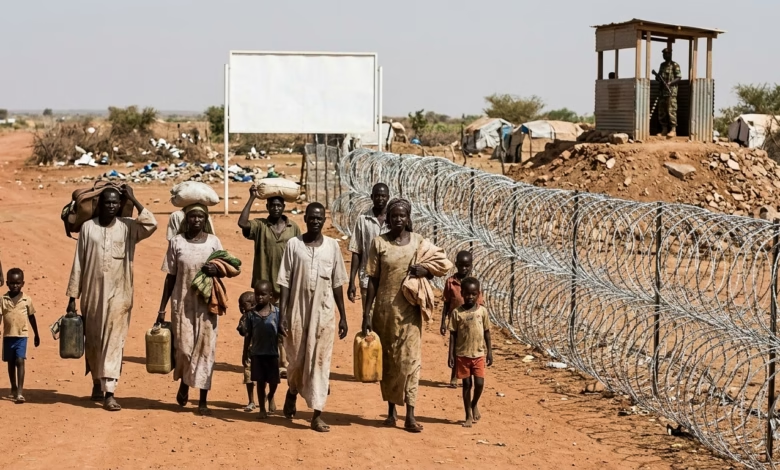
A Historical Refugee And Displacement Crisis: Millions Of Southerns Were Displaced, and The Stark and Painful Historical Paradox That The Book Highlights Is That Hundreds of Thousands of Southern Citizens Fled The Hell of Civil War In Their Newly Independent State, Only To Seek Refuge Once Again In The Northern State (Sudan) As Destitute Humans Searching For Safety, Mirroring The Height Of Tragedy And Geopolitical Fiasco Of A Secession That Was Not Evaluated Carefully.
Security Of The Red Sea And The Horn Of Africa: Regional Geopolitical Repercussions
Researchers Conclude This Security Section By Studying The Geopolitical Impact Of The South’s Secession On The Broader Regional System, Specifically The Horn of Africa And The Security of The Red Sea. The Birth Of A New State In This Sensitive Area Led To An Imbalance In Strategic Power Relations; International and Regional Powers Hurried To Establish Roots In Juba and Exploit The Fragility and Fragmentation That Afflicted Sudan.
South Sudan Became An Arena For Raging Regional Conflicts, Particularly Between Ethiopia and Egypt Around The File Of Nile Waters and The Renaissance Dam, and Among Competing Gulf Powers For Influence In East Africa and Ports Overlooking The Red Sea. This Increasing Internationalization of The Sudan File Made Both Countries (North and South) Hostages To External Dictates and Regional Axes, Depriving Them of The Capacity To Take Independent National Decisions Serving The Interests of Their Peoples, Transforming South Sudan From A Potential Safety Belt Into A “Zone Of Geopolitical Fractures” Threatening Stability In The Entire Region.
Future Scenarios And Lessons Learned
A Reading Into Future Horizons: Formulating Post-Shock Scenarios
The Book’s Final Analytical Chapters Elevate The Discussion From Daily Politics To A Comprehensive Intellectual Review Of State Failure Post-Independence. Researchers Offer Three Main Scenarios Governing The Relations Of The Two Neighbors and Their Internal Structures:
-
The First Scenario: Continuous Erosion and Sustainable Failed States Researchers Believe This Scenario Is Highly Likely If Ruling Elites in Khartoum and Juba Continue Relying On Exclusionary Mindsets, Running The Economy Via Narrow Rentier Visions, and Fragile Military Frameworks. In This Landscape, North and South Transform Into Permanent Zones of Conflict, Progressively Eroding Sovereignty In Favor of Warlords, Armed Movements, and Flagrant Foreign Interventions, Emptying Independence of Any Meaning For The Average Citizen.
-
The Second Scenario: The Exploding Belt and Successive Fissions The Book Warns of “The Domino Effect”; The Success of Secession In The South, Absent Correction of Historical Marginalization for Other Margins, Serves As A Psychological and Geographical Catalyst. Regions Like Darfur, South Kordofan, The Blue Nile, And Even Eastern Sudan Are Candidates To Demand Self-Determination and Separation From The Center, Unless Totalitarian Architecture Is Dismantled In Favor of Genuine Democratic Citizenship.
-
The Third Scenario: Interdependence and New Con-federal Integration This Optimistic and Strategic Scenario Is Presented As A “Historic Opportunity” That Must Be Seized. It Rests On Solid Geoeconomic Ground: Political Separation Cannot Undo The Historical, Geographical, and Hydrological Bonds Interlinking Both Countries. The North Requires A Stable South To Secure Its Borders and Port Revenues, While The South Requires A Secure North To Export Its Wealth and Oil Via Pipelines, and Integrate Into Its Arab-African Environment. This Interdependence Mandates That Future Elites Accept “Smart Partnership” and Found A Con-federal Market Guaranteeing Freedom of Movement, Trade, and Residence, Rendering Secession A Healthier Foundation for Mutual Interests.