

Brexit…The Earthquake Of The Decade That Liberated Britain From Europe And Tore It Apart From Within

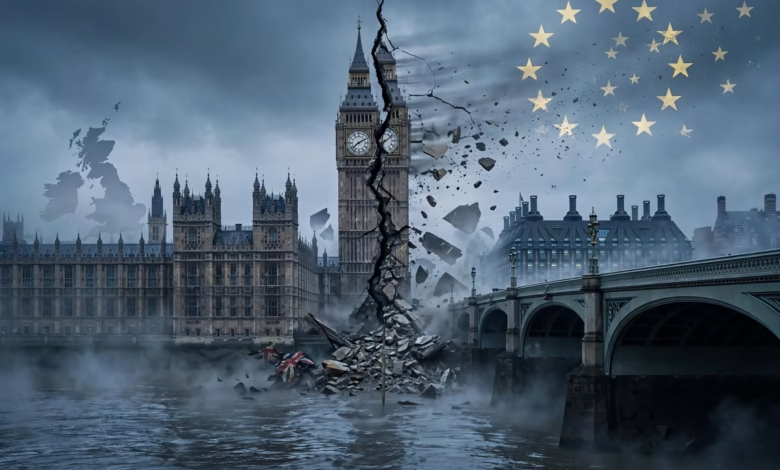
In The World Of Contemporary Politics And History, Works Are Published To Document A Momentous Event That Caused An Earthquake In The Structure Of A Major State, As Does This Book Entitled “The Brexit Effect, 2016–2026 (Anthony Seldon)”. This Work, Edited By The Distinguished Historian Sir Anthony Seldon With The Assistance Of Rex Bodycombe, And Published By Cambridge University Press, Represents A Serious And Rigorous Attempt To Understand One Of The Most Complex And Divisive Moments In Modern British History, Represented By Britain’s Exit From The European Union.
The Book Does Not Merely Recount Events, But Rather Dives Into The Depths Of The Past Decade, Providing A Precise Anatomy Of Britain’s Decision To Leave The European Union, A Decision Considered Perhaps The Most Divisive And Consequential Event In Modern British Politics. To Evaluate This Massive Impact On The Tenth Anniversary Of The 2016 Referendum, Sir Anthony Seldon Gathers An Unparalleled Roster Of Writers, Politicians, And Experts From All Sides Of The Conflict And Debate. This List Includes Prominent Figures Who Shaped The Scene, Such As Pro-Brexit MP Steve Baker, Former Cabinet Secretary Simon Case, Polling Expert John Curtice, Economist Paul Johnson, Former Foreign Secretary David Miliband, Former Shadow Cabinet Minister Emily Thornberry, Prominent Lawyers Marina Wheeler And Jonathan Sumption, In Addition To The Former Archbishop Of Canterbury Rowan Williams. All Of Them Provide A Meticulous Analysis Of The Reasons That Led To The Referendum, How Brexit Became Enforceable Law, Down To Its Profound Impact On Every Corner Of British Life.
To Realize The Historical Value Of This Work, We Must Look At The Praise It Received From Major Media And Political Figures. Steve Richards Described It As “Essential Reading For All Of Us Who Want To Understand Everything That Happened,” While Katya Adler Considered It, Ten Years After The Divisive Referendum, As An Enlightening “Conversation” Between Prominent Figures From The Remain And Leave Camps. Adler Adds A Fundamental Point That Relations Between The United Kingdom And The European Union Are Still Evolving, And That Brexit May Have Been “Done” But Its Record Is Certainly Not Closed Yet. For His Part, Nick Ferrari Stated That It Is Time To Dispel Any Confusion Or Ambiguity About Brexit, Praising The Book Which Dissected The Causes And Consequences With Reliable Sources And In A Wonderful Way For Current And Future Generations. As For Tom McTague, He Described The Collection As Admirably Balanced, Pushing The Public Debate Forward At A Time Of Dire Need For It, While Rachel Sylvester Confirmed That This Collection Of Essays Offers A Compelling Narrative Of The Forces That Pushed Towards This Seismic Vote.
Sir Anthony Seldon Is No Stranger To This Type Of Institutional And Historical Documentation; He Is Considered One Of The Most Prominent Political Historians In The Country And The Recognized National Authority On Everything Related To Government And The Prime Minister’s Office At “10 Downing Street”. This Book Comes As A Recent Installment Within “The Effect” Book Series Which Seldon Began Editing Nearly Forty Years Ago, Starting With “The Thatcher Effect”, Which Was Designed To Serve As An Auditing And Evaluative Process For The Impact Of The Thatcher Government And Successive Governments, Or In This Case, For The Impact Of Watershed Historical Events.
In His Introduction To The Book, Seldon Confronts Us With A Painful And Stark Truth: Brexit Has Been A Deeply Divisive Issue, Indeed More So Than Any Other Issue In British History Since 1945. This Event Tore Entire Families Apart, Separated Comrades And Coworkers, And Splintered The Ranks Of Political Parties, Media Companies, And Even Religious Institutions. It Led To The Breaking Of Friendships And Working Relationships, And Continues To Do So Even After Ten Years. The Author Points Out In A Scathing Critical Style That Many Still Insist That Their Point Of View Has Been Proven Correct, And That Some Are So Immersed In Affirming Their Rightness That They Cherry-Pick The Facts That Suit Them And Contradict Themselves In The Arguments They Present.
Seldon Asserts That Brexit Was Not Just A Single One-Dimensional Issue, But Rather A Multidimensional One, Touching Upon Highly Sensitive Concepts Such As Identity, Nation, Tribe, Economic Interests, And National Security. He Explains That Even Those Standing On The Same Side Of The Divide Were Not Always Speaking The Same Language Or Holding The Same Understanding Of What “Leave” Or “Remain” Meant. Emotion Was The Most Prominent Ruler, As The Heart Overruled The Mind For Many, Which Characterized The Entire Debate Throughout Those Years, And From Here This Book Comes As An Ambitious Attempt To Reverse This Order And Restore The Sovereignty Of Reason At The Expense Of Overwhelming Emotion.
The Book Then Takes Us On A Deep Historical And Geopolitical Journey Through The Introductory Chapter Written By Lord Jonathan Sumption, Under The Title “Britain And Europe: The Long View”. Sumption Opens His Analysis By Describing The 2016 Referendum Campaign As A “Dialogue Of The Deaf” Par Excellence, Where The Two Camps Fought Their Battles Based On Completely Different Agendas. For The Remainers Camp, The Central And Pivotal Issue Was The Economy, While For The Leavers Camp, The Issue Was About Sovereignty, Which Manifested Itself In A Stark And Electrifying Way In The Matter Of Immigration. Sumption Points To A Stunning Paradox; Idealism About The Idea Of A “United Europe” Was Almost Absent From The Agenda Of Remain Supporters, While Idealism About “British Identity” Was Very Strong And A Driving Force For The Emotions Of Leave Supporters.
Sumption Poses A Deep Philosophical Question: Perhaps The Most Important Question Any Society Can Ask Itself Is “Who Are We?”. He Invokes The Lesson Learned From The Scottish Independence Referendum That Preceded It By Two Years, Which Showed That The Strongest Economic Arguments Carry Only Relatively Little Weight With The General Public, As People Care More About Issues Of Identity And Autonomy. In A Bold And Clear Statement, Sumption Describes Brexit As Amounting To “Gross Economic Vandalism,” Noting That Many Leave Supporters Were Aware Of This At The Time, But Were Indifferent; It Seemed To Them That The Economic Hit Was A Price Worth Paying For Independence. The Slogan “Take Back Control” Proved To Be The Magic Formula For Winning.
But Sumption Is Not Satisfied With Contemporary Analysis Alone; He Dives Into The Depth Of Five Centuries Of British Engagement With Europe To Deconstruct This Mentality. He Explains That Participation And Intervention In European Affairs Has Been A Strategic And Inevitable Necessity For Britain For Many Centuries. Since The Reign Of Queen Elizabeth I, The Constant Axis Of British Foreign Policy Has Been To Maintain The Balance Of Power On The European Continent And Resist The Dominance Of Any Single Power Over It. This Orientation Was Driven By A Strong British Desire To Influence The Political Priorities Of European Countries And Shape Their Policies To Serve British Interests, Something That Would Be Impossible To Achieve If The Continent Were Subject To The Hegemony Of A Single Power.
Sumption Recounts Vivid Historical Examples; Queen Elizabeth Sent Armies To France And The Netherlands To Contain Spain’s Hegemony. In The Eighteenth Century, When France Was The Dominant Power, British Governments Intervened To Resist It With The Support Of Powerful European Allies. Indeed, Britain Was The Only European Power That Confronted Revolutionary And Napoleonic France Throughout The Period From 1794 To 1815. This Approach Extended To Include The Long Confrontation With Russia In The Nineteenth Century, Then The Rise Of Unified Germany In The Late Nineteenth Century Which Represented A New Challenge. He Cites A Famous 1907 Memorandum By Foreign Office Leader Sir Eyre Crowe, Who Described Britain’s Pursuit Of A Balance Of Power As “Almost A Law Of Nature,” Emphasizing The Need To Contain Germany, Which Had Become The Dominant Power.
For Centuries, Britain’s Defensive Arena Was Not The English Channel, But The Rhine Or The Oder River. The Constant Fear Was That In The Face Of A Dominant European Power Across The Channel, Britain Would Lose Control Of Its Destiny. This Policy Was Not Only Strategic And Military, But Also Cultural And Economic; Cultural Because It Was Directed Against Napoleonic, Tsarist, And Nazi Despotism To Preserve A Liberal Global Order, And Economic Because Any Europe Dominated By A Single Power Would Be Able To Disrupt British Trade And Finance, Just As Napoleon’s Continental System Tried To Do.
In Contrast, The Author Discusses In This Chapter The Counter-Current In British Strategic Thinking, Which Is Called “Atlanticism”. This Current Had Always Called For Disengagement From The Problems Of The European Continent And Focusing On The Vast Oceans, Presenting The Empire And The Navy As Alternatives To Europe And The Army. Although Major Conservative Politicians Like The Philosopher Bolingbroke, Benjamin Disraeli, And Even Winston Churchill Had Sympathized With This Romantic Idea At Different Times, Reality Always Imposed Itself. Sumption Affirms That The Policy Of “Splendid Isolation” Was Rarely Viable, And When Britain Tried It, It Paid A Heavy Diplomatic And Military Price And Quickly Reversed Course, Because European Crises Inevitably Turn Into English Crises.
This Deep Historical Review Presented By The Book At Its Beginning Paves The Way For Understanding The Mentality That Later Formulated Britain’s Opposition To Modern European Integration After World War II, And Its Ongoing Fears Of Losing Sovereignty And Melting Into A Federal Entity Led By The Franco-German Axis.
The Transition From The Deep Historical Roots Established By Lord Jonathan Sumption In The Book’s Opening Chapter Inevitably Leads Us Into The Arena Of Contemporary Politics, Where Historical Obsessions Turned Into Daily Political Tactics And Internal Rebellions. In This Part, We Dive Into The Behind-The-Scenes Of Partisan Splits And How The Dream Of Separation Was Translated Into A Legislative And Administrative Reality That Cast Its Shadow Over Various Joints Of The State.
Perhaps The Greatest And Most Important Value Of This Massive Tome Lies In Seldon’s Ability To Assemble An Unprecedented Roster Of Decision-Makers And Insiders Familiar With Deep Secrets; As The Book Includes Essays By Forty-Three Different Authors, Among Them Seven Lords, Four Baronesses, A Lady Holding The Title Of “Dame”, And Three Knights Of The Realm. This Massive Gathering Of High-Ranking Figures Makes This Work The Closest We Can Get To Semi-Official Thinking And Solid Institutional Documentation Of The Causes And Consequences Of Britain’s Exit From The European Union, And Places Us Directly In The Heart Of The Storm That Swept Through The Ancient Corridors Of Westminster.
When Deconstructing The Dynamics Of The Leave Campaign And The Subsequent Events, The Book Presents Vivid And Sometimes Painful Testimonies From The Campaign Leaders Themselves. In His Reflections On The Gains And Losses, Paul Stephenson, Former Director Of Communications For The “Vote Leave” Campaign, Provides A Description Of The Victory They Achieved At The Ballot Box, Describing It As Having Been A “Bittersweet” Victory All At Once. Stephenson Explains This Paradox By Saying That The Leave Camp Managed With Extreme Difficulty To Snatch Victory From The Jaws Of Defeat In Crucial Moments, But Soon Allowed This Victory To Be Snatched From It Again In The Corridors Of Politics And The Labyrinths Of Complex Negotiation. This Feeling Of An Aborted And Lost Victory Echoes Strongly In The Essay By Douglas Carswell, The Veteran Anti-EU Activist And Former Member Of Parliament For The UK Independence Party (UKIP), Who Concludes His Analysis In The Book With A Bleak And Disappointing Conclusion. Carswell Frankly Admits That The “Vote Leave” Campaign May Have Won Britain The Hoped-For Self-Rule And Political Independence, But He Bitterly Adds That They Have Not Yet Been Able To Govern Themselves Well. This Shocking Statement Summarizes The Leadership Crisis That Followed The Referendum, Which Manifested In The Succession Of Six Prime Ministers Since 2016, Prompting Observers And Decision-Makers To Seriously Wonder Whether Post-Brexit Britain Is Governable At All.
And If Politics Succeeded In Extracting The Decision To Leave, Administration And Governance Stumbled Horrifically In Implementing It. Here The Book Opens A Highly Important And Sensitive File Related To The Role Of The Civil Service And The Institutions Of The Deep State In Managing This Unprecedented Crisis. Prominent In This Context Is The Essay By Sir Simon Case, Former Cabinet Secretary, Which Came Under A Decisive Title: “Delivering Brexit: The Failure To Manage A Revolution”. Case Directs Scathing And Direct Criticisms At The Way The Results Were Handled, Admitting That The Vision Of A Nation Freed From The Shackles Of Brussels Bureaucracy Transformed With Astonishing Speed Into A Bitter Reality Of Muddled Thinking, Futile Fruitless Negotiations, A Deep Parliamentary Quagmire, And Comprehensive Administrative Confusion.
This Analysis Intersects With Fundamental Questions Raised By Lord Simon McDonald In His Chapter, Where He Frankly Asks Whether The Civil Service Was Adequately And Properly Prepared To Deal With The Brexit Earthquake And Its Ongoing Repercussions. To Complete This Complex Administrative Picture, Helen MacNamara, Former Deputy Cabinet Secretary, Intervenes To Provide A Precise Anatomy Of The Issue Of British Civil Service Impartiality Amidst This Acute Political Polarization Which Is Unprecedented In The Modern Era. The Administrative Criticism Does Not Stop There, But Extends To Include The Quality Of Government Work As A Whole, Which Is Addressed By Both Jill Rutter And Alex Thomas In Their Contribution That Sheds Light On The Quality Of Government In The Midst Of The Chaos That Followed The Referendum.
On The Foreign Policy Front, The Book Presents Global Dimensions To This Internal Retreat. Baroness Cathy Ashton Discusses The Impact Of Brexit On The United Kingdom’s Foreign Policy, And The Repercussions Of That On Its International Standing And Strategic Alliances. This Vision Complements The Propositions Of Lord Kim Darroch Regarding The Future Of Transatlantic Relations, And Whether Britain Is Capable Of Compensating For Its European Loss With Greater Rapprochement With The United States Of America.
Nor Does The Book Ignore The Heavy Economic Cost That Accompanied These Violent Political And Administrative Transformations. David Miliband, Former Foreign Secretary, Discusses In His Own Chapter Britain’s Economic Standing And Future Relations With The European Union, Revealing Facts That Cannot Be Ignored About Financial Contraction. Independent Analyses, Such As A Recent Stanford University Study That Coincided With The Assessments, Confirm That Brexit By 2025 Had Reduced The United Kingdom’s Gross Domestic Product By Between Six And Eight Percent Compared To What It Would Have Been Had It Remained In The Union. Investment Also Shrank Sharply, And Employment And Productivity Rates Declined Noticeably. Astonishingly, As The Book’s Critical Analysis Points Out, The Smart Leaders Of The Leave Camp Were Fully Aware That Something Of This Sort Would Happen, And That Economic Pain Was Inevitably Coming. Nevertheless, They Sincerely Believed That This Heavy Economic Price Was Merely A Tax Worth Paying In Exchange For Achieving Political Renewal And Taking Back Control, Which Was The Slogan That Formed The Actual And True Goal Of The Entire Campaign.
Thus, The Book Reveals The Massive Gap Between The Idealism Of The Political Discourse That Promised Liberation And The Restoration Of Glory, And The Pragmatism Of The Administrative And Economic Reality That Collided With The Complexities Of Institutional And Commercial Separation. However, This Administrative And Economic Failure Does Not Tell The Whole Story Of The British Scene. There Is An “Elephant In The Room” As Some Critics Described It, And There Is An Identity Crisis Much Deeper Than Mere Calculations Of Profit And Loss.
We Reach The Most Rugged And Sensitive Area In This Entire File. We Now Stand Before The “Elephant In The Room”, That Hidden And Deep Engine That Ignited The Spark Of Separation And Which Many Did Not Dare To Call By Its Real Name Amidst The Noisy Election Campaigns. This Engine Is The “Identity Crisis” And The Rise Of What We Can Clearly Call “English Nationalism”, Which Long Hid Behind Slogans Of British Sovereignty And Taking Back Control, Only To Explode At The Ballot Box As A State Of Violent Cultural And Social Rebellion Against The Political And Economic Elites.
Through The Contributions Of An Elite Group Of Sociologists And Political Thinkers, The Book Presents A Precise And Painful Anatomy Of This Cultural Rift That Split British Society Into Two Halves Where Neither Scarcely Understands The Language Of The Other. The Vote To Leave The European Union Was Not In Its Essence A Vote On Trade Agreements, Fishing Quotas, Or Customs Regulations, But Was At Its Core A Resounding Cry From Broad Segments Of Society That Felt Marginalized And Excluded. It Was An English Rebellion Par Excellence, Led By Provincial Cities And Towns And Former Industrial Areas That Suffered From Declining Living Standards And Shrinking Opportunities, Against The Metropolitan Elites In London And Major University Cities, Who Benefited From Globalization, Economic Openness, And European Freedom Of Movement. Analysts In This Massive Tome Explain How Brexit Revealed A Deep Rift Between What Some Sociologists Call The “Somewheres”, Who Are Those Whose Identity Is Strongly Tied To Their Local Communities And Traditions And Who See Rapid Change As A Threat To Their Way Of Life, And The “Anywheres”, Who Are The Educated And Globalized Elite Who Move Easily Across Borders, Adopt Liberal Universal Values, And View National Identity With A Perspective Characterized By Flexibility And Perhaps Transcendence.
The Stunning Paradox That The Book Dwells On At Length, And Which Represents A Unique Psychological And Political Phenomenon In Modern History, Is That State Of The “Alienation Of The Victors”. It Is Logical For The Masses Who Achieved A Historic Victory In The 2016 Referendum To Feel Satisfaction And Euphoria After The Leave Decision Was Implemented And Became A Reality. But The Reality, As Accurately Documented In The Book’s Chapters, Shows A Completely Different Picture; A Broad Sector Of Brexit Supporters Still Feel Overwhelming Anger, Extreme Bitterness, And A Deep Sense Of Betrayal. The Book Explains This Complex Phenomenon In That The Promises Made During The Referendum Campaign Were Not Just Measurable Political Or Economic Promises, But Were Closer To A Nationalist Utopia, And A Promise To Return To An Imagined Golden Age Where Britain, And Specifically England, Is The Complete Master Of Its Destiny, Free From Modern Complexities And From The Challenges Of Immigration And Demographic Change.
When These Romantic Dreams Collided With Hard Geopolitical And Economic Reality, And When People Discovered That “Taking Back Control” Did Not Necessarily Mean Improving Public Services, Ending Waiting Lines In Hospitals, Or Restoring Life To Closed Factories, A State Of Denial And The Search For Scapegoats Arose. The Book Points Out How Conspiracy Discourse Developed Within The Pro-Brexit Camp, Where The Blame For Any Failure Or Decline Came To Be Cast Upon The “Deep State”, Or The “Obstructive” Civil Service, Or The Political Elites Who Were Said To Have “Betrayed” The Real Brexit And Presented A Distorted Version Of It. This Constant Feeling Of Betrayal Turned Brexit Into A Permanent Revolution Whose Leaders Or Audience Cannot Be Satisfied, Because The Goal They Sought Was In Its Essence Psychological And Emotional More Than It Was Political And Implementable On The Ground.
And The Impact Of This Identitarian Earthquake Does Not Stop At The Borders Of England, But Extends To Threaten The Structure Of The “United Kingdom” Itself, Which Is One Of The Most Dangerous Files Discussed By The Book With Extreme Seriousness. Brexit Was, As Described By One Researcher In The Book, Like A Time Bomb Planted In The Heart Of The Union That Brings Together The Four Nations Of Britain. In Scotland, Which Voted Overwhelmingly To Remain In The European Union, Brexit Turned Into The Strongest Argument Possessed By The Scottish National Party To Demand Independence. Scotland Felt That It Had Been Dragged By Force Outside The European System Against Its Democratic Will, And Because Of The Votes Of English Voters, Which Fueled Scottish Nationalist Sentiments And Pushed The Relationship Between Edinburgh And London To The Brink Of A Permanent Constitutional Crisis.
As For Northern Ireland, The Impact Of Brexit Was More Complex And Dangerous, As It Threatened To Torpedo Decades Of Peace Efforts That Were Crowned By The Good Friday Agreement. Britain’s Exit From The Single Market And The Customs Union Imposed An Impossible Geographical And Political Reality: How Could A Customs Border Be Built Between Northern Ireland (Belonging To The United Kingdom) And The Republic Of Ireland (A Member Of The European Union) Without Stoking Sectarian Tensions And Violence Anew? The Book Explains In Tedious Detail How Patchwork Solutions, Such As The Northern Ireland Protocol And The Windsor Framework, Were Nothing But Desperate Attempts To Reconcile Irreconcilable Contradictions, Leaving Northern Ireland In A State Of Political And Institutional Paralysis, And Deepening The Feeling Of Pro-British Unionists Of Betrayal And Isolation From Their Motherland, In Yet Another Of The Unending Paradoxes Of Brexit.
Thus, The Book Places Us Before A Bleak And Confusing Canvas Of A Nation That Triumphed In A Battle It Fought Against Itself, Only To Discover In The End That The Spoils It Reaped Were Merely Fragments Of Its Torn Identity. Brexit Transformed From A Project For National Independence Into A Mighty Machine For Reshaping Affiliations, Tearing The Social Fabric And Posing Existential Questions That Britain Was Not Prepared To Answer. But, How Did These Deep Cultural And Social Transformations Translate Themselves Within The Corridors Of Parliament? And How Did They Cause An Earthquake That Destroyed The Traditional Structures Of The Venerable British Political Parties? And How Did All Of This Lead To Penetrating What Was Historically Known As The Labour “Red Wall” And Establishing A Completely New Political Reality? These Pivotal Questions, In Addition To Exploring The Future Of British Democracy In Light Of This Turbulent And Polarized Scene.
If The Streets Of Provincial Cities And Coastal Towns Were What Ignited The Spark Of Identitarian Rebellion, Then The British Parliament And The Venerable Traditional Parties Were The Ones That Bore The Greatest Burden Of This Explosion, As The Brexit Earthquake Resulted In Redrawing The Political Map Of The United Kingdom In Ways That Not Even The Most Hardened Strategic Observers Could Have Imagined Before 2016.
The Book Details How Britain’s Exit From The European Union Transformed From Merely A Foreign Policy Issue Or Trade Regulation Into A New “DNA” That Reshaped Voter Loyalties And Party Structures. Historically, The Conservative Party Was The Party Of Institutions, Economic Pragmatism, Big Business, And Maintaining The Status Quo. But The Chapters Of This Book Document How Brexit Swallowed This Venerable Party And Reproduced It In The Form Of A Populist Movement, Closer To Radical English Nationalism. We Have Witnessed, As Contributors To The Book Analyze, An Unprecedented “Purge” Operation Within Conservative Ranks, Where Moderate Pro-Europe MPs Were Excluded, And Replaced By A New Political Class That Owes Absolute Loyalty To The Project Of Separation. This Dramatic Shift Manifested Itself In Its Purest Form During The 2019 General Election, When Boris Johnson Led The Party Under One Unambiguous Slogan: “Get Brexit Done”, A Slogan That Struck The Chord Of Popular Exhaustion With Parliamentary Paralysis And Turned The Election Into A Second Referendum That Decisively Settled The Battle.
And Here We Reach The Most Prominent Political Phenomenon To Which The Book Devotes A Large Space For Analysis, Namely The Phenomenon Of The Collapse Of The “Red Wall”. For Many Decades, The Regions Of Northern England And The Midlands Remained Impenetrable Fortresses For The Labour Party, Where Voting For Labour Was Linked To The Class Identity Of Workers In Post-Industrial Periods. However, Brexit Caused A Seismic Crack In This Wall; These Traditional Voters Found Themselves In Stark Contradiction With Their Party Leaders Who Leaned Towards Remaining In Europe. Political Scientists In The Book Explain How Conservatives Succeeded In Capitalizing On This Cultural Alienation, Convincing The Working Class That The Labour Party Had Abandoned Them In Favor Of Big City (Metropolitan) Elites And Pro-Globalization University Youth. The Red Wall Vote For The Conservatives Was Not A Vote For Capitalism And Free Markets, But A Cultural And Emotional Vote Par Excellence, A Rejection Of Uncontrolled Immigration, A Defense Of Traditional Values, And An Overwhelming Desire To Deliver A Slap To The Political Establishment That Had Long Ignored Their Suffering.
On The Other Hand, The Book Paints A Bleak Picture Of The Labour Party During That Extended Era, Where The Party Found Itself Split In Half And Besieged In A Grinding Civil War. On One Hand, There Was The Young And Educated Urban Electoral Base Demanding The Adoption Of A Clear And Anti-Brexit Stance, And On The Other Hand, There Was The Traditional Working-Class Base In The North That Voted Strongly In Favor Of Leaving. Analysts Explain How The Policy Of Strategic Ambiguity And Trying To Hold The Stick From The Middle Pursued By Jeremy Corbyn Led To A Resounding Electoral Disaster In 2019. Even With The Later Arrival Of Keir Starmer, The Ghost Of Brexit Continued To Haunt The Party, Forcing The New Leadership To Adopt A Policy Of “Deafening Silence” And Avoid Mentioning The Word Brexit Or Pledging To Return To The European Union, For Fear Of Provoking The Anger Of Red Wall Voters Whom The Party Is Painstakingly Trying To Win Back. Brexit Became The Political “Voldemort” For Labour, The Name That Must Not Be Uttered In Election Campaigns.
And The Repercussions Of This Exceptional Decade (2016-2026) Are Not Limited To Changing The Colors Of Electoral Constituencies, But Extend To Include An Unprecedented Constitutional And Institutional Crisis Documented By The Book With Much Concern. Brexit Put Parliament In A Direct Confrontation With The Executive Branch, In A Confrontation With The Judiciary, And Even In A Confrontation With The Direct Will Of The People Represented By The Referendum Result. The Book Bitterly Recalls Those Critical Moments When Supreme Court Judges Were Accused Of Being “Enemies Of The People”, And Those Days When The Government Tried To Suspend The Work Of Parliament (Prorogation) To Pass Its Policies Without Constitutional Scrutiny. This Sharp Polarization Led To A Dangerous Erosion In The Traditions Of British Parliamentary Democracy Which Was A Paragon Of Stability, And Created A Political Environment Characterized By Hostility And Accusations Of Treason, Where Unwritten Constitutional Conventions Were Marginalized In Favor Of Narrow And Immediate Political Calculations.
Brexit Changed The Rules Of The Political Game In Britain Forever, Shattering Old Alliances, And Creating New Divisions That Are No Longer Defined By The Classic Marxist Right And Left, But By “The Open” Versus “The Closed”, And “The Globalists” Versus “The Nationalists”. These Complex Political Distortions Place Us Directly Before The Biggest And Final Question: After A Full Ten Years Have Passed, What Is The Final Tally Of This Earthquake? And How Does History, Not Daily Politics, Evaluate This Turbulent Decade?
Seldon, In His Concluding Deductions Alongside His Elite Writers Such As Polling Expert Sir John Curtice, Economist Paul Johnson, And Former Archbishop Of Canterbury Rowan Williams, Takes Us To An Inevitable Confrontation With The Concept Of “Global Britain”, Which Is The Glittering Slogan Put Forward By Post-Referendum Governments As A Strategic Alternative To Being Under The Umbrella Of The European Union. The Dreamy Vision Promised A Free, Agile Britain Capable Of Striking Fast Trade Deals With Rising Economic Powers In The Asia-Pacific, And Free From The Constraints Of Bureaucracy In Brussels. But, As The Sober Analyses In The Chapters Of This Book Reveal, This Vision Collided With The Wall Of A Global Reality That Is Increasingly Protectionist And Bloc-Oriented. London Discovered The Hard Way That Size Matters In International Trade Negotiations, And That The Bargaining Power It Enjoyed As Part Of A Bloc Comprising Half A Billion Consumers Cannot Be Easily Compensated For As A Single State, No Matter The Size Of Its Economy. Instead Of Britain Transforming Into “Singapore-On-Thames”, It Found Itself Struggling To Compensate For A Small Fraction Of The Trade Losses It Incurred From Placing Tariff And Non-Tariff Barriers With Its Closest And Largest Trade Partner Across The English Channel.
On The Economic Level, The Book Presents An Indisputable Tally, Relying On Precise Data And Statistics That Crystallized Over A Full Decade. The Economic Pain Was Not Merely A Short-Term Shock As Some Optimists Promoted, But Turned Into A Slow And Continuous “Structural Erosion”. Experts In The Book Speak Of A Chronic Decline In Foreign Direct Investment Rates, A Severe Shortage Of Skilled And Unskilled Labor In Vital Sectors Such As Healthcare, Agriculture, And Logistics Services, And A Decrease In Productivity That Led To Stagnation In Real Wages. Despite The Government’s Desperate Attempts To Conclude New Trade Agreements, The Net Economic Benefits Of These Agreements Remained Marginal Compared To The Cost Of Leaving The Single Market And The Customs Union. The Economic Tally Of The Brexit Decade, As Read By The Book, Is The Tally Of A State That Voluntarily Chose, For Political And Identitarian Reasons, To Impose Economic Sanctions On Itself, In A Precedent That Can Scarcely Find An Equivalent In Modern Economic History.
But Perhaps The Deepest And Most Lasting Impact Documented By This Reference Work Is That Related To Demographics And The Widening Generational Gap. The Book Poses A Highly Important Social Analysis Regarding The Younger Generations Who Were Not Eligible To Vote In 2016, And Who Today, In 2026, Have Become A Weighty Electoral Force And The Backbone Of The Workforce. These Generations Feel, With Extreme Bitterness, That Their Future And The Opportunities That Were Available To Them To Live, Study, And Work Freely In Twenty-Seven European Countries, Were Confiscated From Them By A Decision Made By Older Generations Driven By Nostalgia For An Imperial Or Nationalist Past That The Youth Never Experienced And Which Never Appealed To Them. This Silent Generational Anger, Which Is Slowly Escalating, Forms A Time Bomb Under The Foundations Of The Current Political Settlement. The British Youth Today, According To The Polls Cited By Polling Expert John Curtice, Overwhelmingly Tend To Consider Brexit A Grave Historical Mistake, Prompting Serious Questions About The Sustainability Of This Separation In The Long Term, And Whether The Coming Decades Will Witness Inevitable Attempts, Even If Timid At First, To Reintegrate Or At Least Find A Formula For A Much Deeper Partnership With The European Continent.
Alongside This Generational Rift, The Book Pauses At Length Before The Moral And Political Crack That Afflicted The Public Culture In The United Kingdom. As Sir Anthony Seldon Pointed Out In His Introduction, Brexit Was The Most Divisive Issue Since 1945, Tearing Families Apart, Splitting Parties, And Shattering Friendships. The Prioritization Of Emotion Over Reason, And The Dominance Of The Language Of Treason Accusations And Populism Over The Language Of Rational Dialogue, Poisoned The Well Of British Politics. Contributors To The Book Indicate That The Democratic And Institutional Price Was Exorbitant; Parliament Was Marginalized, The Independence Of The Judiciary Was Questioned, And The Impartial Civil Service Was Intimidated, All In The Name Of Implementing The “Will Of The People”, Which Was Transformed Into A Political Idol That May Not Be Touched Or Reinterpreted In Light Of Changing Circumstances. Brexit Left Behind An Exhausted, Polarized British Democracy, Less Confident In Its Institutions And In Itself.
In Conclusion, This Book, As Part Of “The Effect” Book Series Designed As An Auditing Process For Major Events, Places Us Before An Inevitable Historical Truth. The Evaluation Of An Earthquake The Size Of Brexit Cannot Be Done Solely Through The Lens Of Immediate Profit And Loss, But Through Its Impact On The National Spirit And The Ability To Adapt In A Rapidly Changing World. The Leave Camp Wanted To Write A New Chapter Of Absolute Independence, Inspired By Dreams About Sovereignty And Identity. But As Lord Jonathan Sumption Concludes, Splendid Isolation Was Rarely Viable In Britain’s Five-Century-Long History Of Engagement With Europe. The Past Ten Years Have Proven That Escaping The Geography Of The Continent And Its Complexities Is Pure Illusion, And That Britain, Wherever It Goes And However It Tries To Redefine Itself, Will Find That Its Destiny Is Organically Linked To Its Neighbors Across The Channel.


