

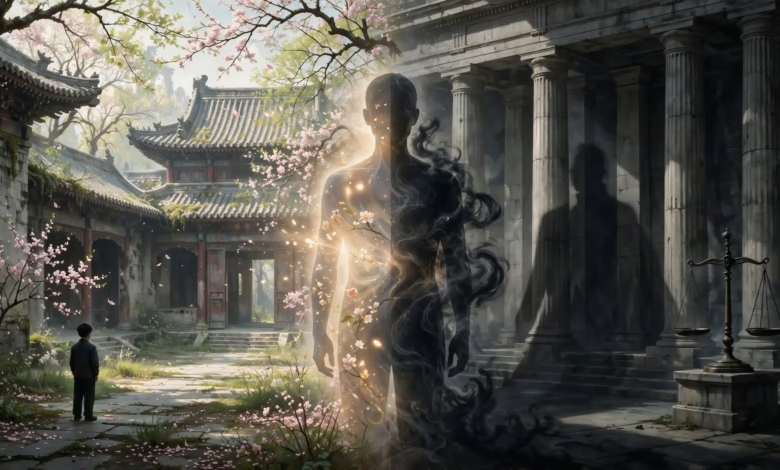
The Book “Dark Consciousness And Democratic Tradition” (幽暗意识与民主传统) Published By “New Star Press” (新星出版社) Is One Of The Most Prominent Intellectual Masterpieces Presented By The Researcher And Thinker Zhang Hao. This Work Has Sparked Wide-Ranging Controversy And Intellectual Debates Since Its Appearance, Thanks To Its Presentation Of Pivotal Concepts Such As “Dark Consciousness” And “Age Of Transformation”. The Role Of This Book Is Not Limited To Being A Mere Historical Narrative, But It Opens Entirely New Horizons And Provides An Innovative Perspective For Examining And Evaluating Traditional Chinese Culture And Chinese History In The Modern And Contemporary Eras, Making It A Work Qualified To Leave A Deep And Lasting Imprint. Perhaps The Driving Force Behind This Intellectual Achievement Lies In The Author’s Deep Life Experience, Where History Is Not Just Abstract Events For Him, But A Lived Experience.
The First Roots Of This Deep Historical Consciousness In Zhang Hao Are Intertwined With His Personal Memories And Feelings Towards A Turbulent Era, Specifically On The Eve Of His Departure From Mainland China In 1949. At That Time, The Author Was Still Twelve Years Old, And His Mind Was Young And Childish, Making Him Unable To Fully Comprehend The Political And Historical Significance Of The Huge Transformations That Were Sweeping The Country. However, The Charged Atmosphere That Heralded A Fierce Storm Had Crept Into His Inner Intuition, Leaving Vague But Strong And Deep Impressions In His Soul. The Author Recalls Those Days Clearly, For In The Spring Of That Year, Peace Talks Between The Nationalist And Communist Parties Collapsed, And Communist Armies Crept Closer To The Yangtze River, Causing The City Of Nanjing To Sink Into Utter Chaos. He Remembers How Schools Stopped Working, And How He Roamed With His Friends In The Upscale Neighborhoods Of Nanjing That Contained Luxurious Palaces Of Senior Officials In The Nationalist Government, Only To Be Surprised That They Could Run And Play Freely In Those Palaces Without Anyone Stopping Them, Because Everyone Had Fled And Left The City. Nanjing Had Turned Within A Few Days Into An Empty Ghost City, A Scene That Aroused Indescribable Confusion And Fear In The Boy’s Soul. That Bright And Shining Spring In The Jiangnan Region, With Its Green Gardens And Blooming Flowers, Left Inside Him A Strange Feeling Of Loneliness And Psychological Heaviness, As If It Were A Harbinger Of The Imminent Demise Of All Forms Of Prosperity And Urbanization That Surrounded Him.
Events Followed One After Another, As The Author’s Family Left Nanjing For Shanghai, And There, During A Short Period Lasting Only Two Months, He Enrolled In A School Located In The Suburbs Of The City. Zhang Hao Remembers How During His Weekly Trips Between The Suburbs And The City Center He Saw The Unceasing Movement Of Military Trucks And Soldiers Working Hard To Build Defensive Fortifications In The Fields, Creating A Scene That Embodied The Approach Of The Catastrophe Of War And The Arrival Of Ruin. He Also Remembers The Evenings At School, Where High School Students Gathered On Campus In Groups In The Shadows Of The Night, Singing Progressive Songs Reflecting An Atmosphere Of Anticipation And Enthusiasm Laden With Tension, While The Guards’ Calls And Orders Were Heard From Afar. All These Scenes Implanted In His Conscience An Instinctive Feeling That A Great Storm Was About To Occur. Later, The Author Moved To Taiwan, Which Was Then Under The Weight Of “White Terror” And Stifling Political Pressure, Which Affected His Political Consciousness And Intellectual Growth During His Teenage Years. Nevertheless, Those Visual And Sensory Impressions He Carried With Him From Nanjing And Shanghai Remained Alive In His Memory, Fermenting And Growing Like Groundwater That Nourishes His Sense Of The Era. Motivated By This Deep Sense, He Enrolled In The History Department At National Taiwan University, Where He Studied Under The Thinker Yin Haiguang, Before Moving To The United States Of America Where He Found A Broader Academic Space That Allowed Him To Transform His Accumulated Sense Of The Era Into A Central Question That Led His Intellectual Career: How Can The Intellectual Roots And Backgrounds Of That Great Storm That Swept His Era Be Explored?
From This Deep Personal And Historical Starting Point, The Book Dives Into A Systematic Analysis To Answer A Fundamental Question: Why Did Traditional Chinese Culture Fail To Forge A Path Towards Constitutional Democracy? To Answer This Question, Zhang Hao Presents A Comparative Analysis, Where He Distinguishes Between The Positive And Negative Aspects Of Confucian Cultural Traditions By Highlighting The Concepts Of “Transcendent Consciousness” And “Dark Consciousness”. The Author Brilliantly Argues That Western History Has Always And Continuously Possessed What Is Known As “Dark Consciousness”, Which Is A State Of Constant Vigilance And Cautious Anticipation Towards The Forces Of Evil Rooted In Human Nature. This Sharp Awareness Of Human Corruption And Susceptibility To Deviation Is What Slowly But Steadily Formed The Incubator In Which Western Democratic Traditions Grew. In Contrast, Although Confucian Religion In China Possessed Some Insights Into These Dark Aspects, In Its Essence It Adopted And Embraced An “Optimistic Theory Of Human Nature”. This Excessive Optimism About Human Righteousness Is What Drove Traditional Chinese Political Thought To Rely Entirely On The Concept Of “Rule Of Sages And Saints” Instead Of Relying On Institutional And Legal Guarantees.
But What Is The Precise Explanation Of The Concept Of “Dark Consciousness”? The Book Explains That This Consciousness Stems Essentially From The Explicit Awareness And Deep Recognition Of The Dark Forces Rooted And The Deep Roots Of Evil Existing In Human Nature And In The Universe As A Whole. It Is The Recognition That This World, Because Of These Rooted Forces, Is A Flawed And Incomplete World, And That Human Life Is Full Of Distortions, Ugliness, And Disappointments. However, This Direct Recognition Of The Dark Aspects Of Life And The Universe Does Not Represent An Acknowledgment Of Its Value Or A Moral Acceptance Of It; On The Contrary, This Consciousness Stems From A Strong And Refined Moral Sense. It Is Only Thanks To This Moral Sense That One Can See These Forces As “Darkness” And “Flaws” That Require Caution. Therefore, This Dark Consciousness Differs Radically In Its Spirit And Content From Various Forms Of Realism That Appeared In Chinese And Western Cultural Traditions, Such As The Legalist School In China, Or The Ideas Of Machiavelli And Thomas Hobbes In The West. It Also Completely Contradicts Modern Utilitarianism And The Doctrine Of Ethical Egoism In The West, Which Accept Selfish Human Desires And Interests As A Fundamental Value And Rely On Them In Viewing Issues Of The Individual And Society. As For Dark Consciousness, It Denies And Rejects Selfish Human Motives In Terms Of Values, And Proceeds From This Rejection To Search For Ways To Repel Them, Direct Them, And Mitigate Their Destructive Effects.
The Author Points Out That Many Ancient Civilizations Have Possessed Varying Degrees Of This Dark Consciousness, But It Was Particularly Deep In Indian And Western Cultures. Despite Its Depth In Indian Culture, The Essential Spirit Of That Culture Tended To Detach From The Material World, Which Prevented This Consciousness From Having A Positive And Active Impact On Political And Social Development There. As For Western Culture, This Consciousness Interacted With The Spirit Of Engagement In The Worldly World, Leading To Huge And Direct Effects On Political And Social Development, Especially In The Course Of The Development Of Liberalism. The Main Source Of This Consciousness In Western Culture Goes Back To The Ancient Hebrew Religious Civilization. The Central Idea In This Heritage Revolves Around The Fact That God Created Man In His Own Image, And Therefore Every Human Being Possesses In His Nature A Spark Of “Divine Light”, But This Light Was Obscured Because Of Man’s Rebellion Against God, Which Allowed Dark Forces To Expand And Cause The Fall Of Humanity. Although This Dark Consciousness Was Initially Expressed In Mythical Language, Its Symbolism Reflects A Deep Understanding Of The Dual Nature Of Human Beings. This Understanding Acknowledges That Man, Being A Divine Creature, Possesses A Sacred And Inviolable Dignity, But At The Same Time He Carries An Innate Tendency To Fall And A Latent Ability To Commit Sin. This “Duality” Makes Man A Being Standing In A Middle Position, Capable Of Spiritual Advancement, But Restricted By Limits That Prevent Him From Reaching The Absolute Perfection That God Alone Possesses, While His Ability To Decline And Become Corrupt Remains Open And Possible At Any Time.
This Christian Concept Of Human Nature Has Played A Decisive Role In The Development Of Western Liberalism. Researchers, Such As Professor Of The History Of Political Thought Carl Friedrich, Have Pointed Out That Free Constitutionalism In The West Was Based Essentially On A Christian Intellectual Background. While Many Emphasize The Positive Side Of Christianity Represented By Belief In The “Divine Spark” And Reason, Which Founded The Concepts Of Individual Dignity And Natural Law, Zhang Hao Highlights The Other Side: Realism And Dark Consciousness. Thanks To This Consciousness, Christianity Never Believed In The Possibility Of Embodying The Supreme Good On Earth Or Man Reaching Absolute Perfection, Because Sin Is Rooted In Him. This Belief That There Is No “Perfect Man” Led To Huge Political Consequences; It Made The Idea Of Searching For A “Saint King” Or “Philosopher King” To Assume Power An Unverifiable Idea In The Christian Heritage, Unlike Confucian Traditions Or Platonic Thought. Instead Of Relying On The Internal Morality Of The Ruler To Purify Power From Impurities, Western Thinkers Realized That Power In Human Hands Constitutes A Grave Danger Liable To “Overflow And Cause Disasters”, Which Pushed Them Towards Reliance On Legal And Objective Institutions As The Only Guarantee.
This Is Clearly Manifested In The Early Development Of Liberalism In England And America During The Seventeenth And Eighteenth Centuries, Which Was Closely Linked To Protestantism, Specifically Calvinism. The Puritans Carried A Severe Dark Consciousness, Built On The Contradiction Between God’s Perfection And Man’s Sin. This Consciousness Was Translated Politically Into The “Covenantal Theology”, Which Founded The Idea That Government Existed To Prevent Human Deterioration And Curb His Sins. The Puritans Were Fully Aware That The Tendency Towards Moral Corruption Settles In The Heart Of Every Human Being, Regardless Of His Position Or The Size Of His Power, Which Made Them In A State Of Permanent Alert Against The Tyranny Of Influential People. The English Poet John Milton, One Of The Leaders Of Puritan Thought, Expressed This Clearly When He Emphasized That Kings And Executives Are Human Beings Prone To Sin, And Therefore They Must Be Subjected To The Sovereignty Of The Law Made By The People. This Dark Consciousness Formed The Driving Force Behind The Puritan Revolution In The Seventeenth Century, And Later Influenced John Locke, The Father Of Modern Liberalism, Who Was Himself A Calvinist Protestant. Friedrich Pointed Out That The Principle Of “Separation Of Powers And Mutual Checks” Is A Direct Reflection Of The Christian Dark Consciousness; Since Human Nature Cannot Be Trusted, The Best Way To Prevent Tyranny Is To Divide Power Institutionally To Ensure It Is Not Concentrated.
This Influence Did Not Stop At The Borders Of England, But Extended Across The Ocean To The Colonies In North America, Where The Puritans Founded Their Societies Carrying With Them Their Constitutional Political Ideas That Later Became One Of The Most Important Intellectual Sources Of The American Revolution And State-Building. Despite The Influence Of The European Enlightenment Movement In The Eighteenth Century With Its Optimistic Ideas On The New Continent, It Did Not Succeed In Erasing The Dark Consciousness Left By The Puritans. This Dual Reality Is Clearly Manifested In The Thinking Of The Founding Fathers Of The United States. For Example, John Adams, The Second President Of The United States, Showed Continuous Vigilance Towards The Dark Aspects Of Human Nature. When The Founding Fathers Gathered In The Summer Of 1787 In Philadelphia To Draft The Constitution, Their Ideas, As Described By The British Historian James Bryce, Were Saturated With Deep Dark Consciousness, Where They Mixed Idealism And A High Sense Of Realism And Caution. In “The Federalist Papers”, Alexander Hamilton Stated The Necessity Of Assuming That Every Human Being Can Act As A Villain Seeking Only His Personal Interest. More Important Is The Proposal Of James Madison, Who Is Considered “The Father Of The Constitution”, Where He Considered Partisanship And The Pursuit Of Private Interests A General Human Trait That Must Be Confronted. Madison Clearly Wondered: Is Not The Existence Of Government The Best Evidence Of Human Nature? If All Human Beings Were Angels, There Would Be No Need For Government. This Fear Of Concentration Of Power, Whether In The Hands Of A Dictator Or The Dictatorship Of The Majority, Is What Inspired Madison To Establish The System Of “Separation Of Powers And Checks And Balances”, Believing That Dispersing Powers Allows The Selfish Interests To Neutralize Each Other, Ultimately Ensuring The Achievement Of The Public Good.
In The Same Context, The British Historian Lord Acton Emerges In The Late Nineteenth Century As A Living Example Of The Continuation Of Dark Consciousness In Guiding Western Liberal Thought Against The Dangers Of Power. For Acton, The Catholic Influenced By The Doctrine Of Original Sin, History Was Not Just A Linear Progress Towards Freedom, But Was A Path Full Of Blood And Darkness. This Doctrine Gave Him An Excessive Sensitivity Towards The Roots Of Evil That Lie Everywhere, And Made Him Realize That Power, Since It Emanates From Humans, Carries Within It Poisons That Are Difficult To Get Rid Of. Based On That, Acton Concluded That Holders Of High Positions Are More Prone To Corruption Than Others, Which Prompted Him To Launch His Immortal Saying: “Power Tends To Corrupt, And Absolute Power Corrupts Absolutely”. Acton’s Caution Was Not Limited To Influential Individuals, But He Also Warned Against The “Dictatorship Of The Majority” In Democratic Societies, Where The Masses Exploit Their Numerical Strength To Oppress Minorities.
On The Other Hand, When Looking At Confucian Traditions In China, We Find A Completely Different Interaction With The Issue Of Human Nature, Where Confucianism Began From The Point Of Positive Emphasis On The Possibility Of Completing Virtue, Instead Of Focusing On Man’s Drowning In Sin. However, This Positive View Is Not Without Its Other Face; The Continuous Emphasis On The Need For Self-Cultivation And Refinement Reflects An Implicit Acknowledgment That Real Life Suffers From The Absence Of Virtue And Is Characterized By Turmoil And Darkness That Needs Purification. Therefore, It Can Be Said That “Dark Consciousness” Has Coexisted Side By Side With “Consciousness Of Virtue” In Confucian Thought Since Its Beginnings, As Appears In The Book “The Analects” (Lunyu) By Confucius, Which Reflects A Deep Sense Of “Anxiety” For The Absence Of The Right Path In The World, An Anxiety That Gradually Turned Into Dark Consciousness Linking External Disorder And Internal Moral Deficiency. This Consciousness Developed Indirectly In The Works Of Philosophers Such As Mencius, Who Despite His Famous Optimism That “Everyone Can Become Like Yao And Shun” Thanks To Innate Seeds Of Goodness, Was Fully Aware That The Line Between Man And Animal Is Very Fine, Which Requires Continuous Vigilance And Caution To Preserve This Good Aspect.
“Dark Consciousness” Did Not Stop At The Limits Of Implicit Anxiety Or Veiled References In Confucius And Mencius, But Took A More Explicit And Radical Form With The Prominent Philosopher Xunzi. If Mencius Built His Intellectual And Political System On The Hypothesis Of “Goodness Of Human Nature” And Its Innate Tendency Towards Goodness, Then Xunzi Completely Reversed This Equation Through His Famous And Bold Theory Stating That “Human Nature Is Evil” (性恶论 – Xing E Lun). Xunzi Looked Coldly And Realistically At The Instinctive Motives Of Man, And Saw That Sensual, Material Desires And Selfish Instincts, If Left Without Compelling Refinement Or Institutional Restraint, Will Inevitably Lead To Fierce Conflict, Utter Chaos, And Complete Destruction Of The Social Order. This Sharp Awareness Of The Destructive Power Latent In Human Desires Represents A Clear Embodiment Of Dark Consciousness In Its Most Beautiful And Strongest Forms Within The Classical Confucian Traditions. However, Despite This Pessimistic And Dark Diagnosis Of The Original Human Condition, Xunzi Did Not Slip Into The Swamp Of Existential Nihilism Or Absolute Despair That Usually Follows Such A Philosophical Realization. On The Contrary, He Used This Diagnosis As A Decisive Starting Point To Emphasize The Paramount Importance Of Conscious Acquired Effort (Wei), Strict Education, And Absolute Commitment To Rituals (Li) As The Only Tools To Straighten This Innate Crookedness. Xunzi Believed Unshakably That Man, Despite His Selfish And Evil Nature, Is Capable Through Cultural Accumulation And Harsh Upbringing To Transcend His Animal Motives And Gradually Rise To The Rank Of The Sage. Here The Paradox In Confucian Thought Emerges: Even When Dark Consciousness Reaches Its Peak In Recognizing The Evils Of The Human Soul And Its Susceptibility To Deviation, It Remains Governed And Wrapped In A Thick Cover Of Final Moral Optimism, Represented In The Possibility Of Achieving Absolute Perfection Through Pure Human Effort, Without The Need For Divine Intervention Or A Constitutional Deterrent Separate From Human Will.
This Fundamental Difference Between Xunzi And Western Dark Consciousness, Specifically In Its Hebrew And Christian Roots, Represents A Pivotal Point In Thinker Zhang Hao’s Analysis Of The Conflicting Paths Of Political Development Between The Two Civilizations. In The Christian Heritage, Original Sin Is Considered An Ontological Stain That Cannot Be Erased By Self Human Effort No Matter How Much Asceticism Or Learning; Man Always Needs Divine Salvation, And Even With This Salvation, He Remains Governed By Living In A Flawed And Incomplete Worldly World That Cannot Be Upgraded In Any Way To The Level Of Earthly Paradise. This Constitutional Inability Imposes By Its Nature Political Humility And Permanent Institutional Vigilance Towards Any Human Claim To Possess Absolute Truth Or Complete Virtue. As For Xunzi, And The Rest Of The Philosophers Of The Confucian Current, Evil Is Not An Eternal Inevitable Fate From Which There Is No Escape, But Is Just A Temporary Condition Treatable And Radically Transformable. The Absence Of The Concept Of “Transcendent God” Completely Separate From The Material World In Chinese Philosophy Made The Focus Entirely On The Superb Human Ability To Absorb The “Way Of Heaven” (Dao) Inside Him. This Firm Belief In The Unlimited Moral Transformability Of Man, And Achieving The Integrative Unity Between Heaven And Man (Tianren Heyi), Ultimately Led To The Minimization Of Dark Consciousness And Making It Just A Transient Stage In The Eternal Search For Perfection, And Not A Permanent And Stable Truth Governing The Engineering Of Society And Organizing The Mechanisms Of Politics. As A Result, Xunzi’s Initial Pessimism Did Not Produce Political Thought Searching For Institutional Guarantees Against The Tyranny Of Power, But Produced An Excessive Emphasis On The Role Of The State As The Supreme Moral Teacher, Possessing Absolute Paternal Authority To Impose Rituals And Laws In Order To “Rectify” Subjects And Coercively Guide Them Towards Virtue.
Moving Historically And Intellectually To The Era Of The Song And Ming Dynasties, Where Neo-Confucianism Reached The Peak Of Its Theoretical And Metaphysical Complexity, We Notice The Continuation Of This Violent Intellectual Conflict Between Dark Consciousness And Moral Optimism, But In More Abstract And Deep Formulations. Great Philosophers Such As Zhu Xi Presented A Strict Cosmic Framework Based On The Tense Duality Between “Heavenly Principle” (Tianli) Which Represents Absolute Good, Pure Cosmic Order, And Abstract Moral Rationality, And “Human Desires” (Renyu) Which Represents The Dark, Chaotic, Selfish, And Material Side In The Human Soul. Thinkers Of This Classical Era Possessed A Dark Consciousness Highly Sensitive To The Most Precise Stirrings Of The Soul, And Clearly Realized How Easily The Human Mind Slips Into The Traps Of Selfishness, Arrogance, And Narrow Interests. The Continuous And Strict Call To “Preserve Heavenly Principle And Eliminate Human Desires” (Cun Tianli, Mie Renyu) Was A Blatant Expression Of How Dangerous And Deeply Penetrating Those Desires Were. The Neo-Confucians Fought Grueling Spiritual Battles Inside Their Minds And Hearts, Monitoring Their Thoughts With Extreme Precision To Prevent The Infiltration Of Any Impurity Of Selfishness In The Formation Stage. This High And Intensive Level Of Introspection, Self-Accountability, And Guilt Towards Thoughts Before Actions, Closely Resembles, And Perhaps Matches In Its Severity, The Spiritual Anxiety And Self-Flagellation That Characterized The Puritans In The West. Both Realized The Power Of Evil Latent In The Human Self, And Both Sought Strict Discipline To Control It.
However, The Two Civilizational Paths Diverge Again And In A Dramatic And Decisive Way At The Hoped-For End Point Of This Spiritual Struggle. While The Western Puritan Saw That This Struggle With Sin Is An Eternal And Continuous Struggle That Continues Until The Last Breath Of Life, And Cannot Be Finally Resolved In This Flawed Material World, The Neo-Confucian, Especially In The Current Of A Prominent Thinker Such As Wang Yangming, Believed Categorically And Decisively That “The Heart Is The Principle” (Xin Ji Li), And That Man Possesses In His Deepest Depths “Innate Good Knowledge” (Liangzhi) Capable, If Polished And The Thick Dust Removed From It, Of Radiating With Dazzling Moral Light Untained By Any Impurity. Wang Yangming Believed That Any Ordinary Human Being, Whatever His Status, Possesses The Latent Self-Ability To Become A Fully Qualified Saint, Just Like The Legendary Early Sage Kings. This Exceptional And Unprecedented Optimism About Man’s Ability To Achieve Absolute And Complete Moral Purity In His Worldly Life, Again Led To The Dissolution Of Dark Consciousness And Its Complete Absorption Within The Crucible Of Comprehensive Confucian Idealism. Awareness Of The Dark Side Was Only A Temporary Motivational Tool To Reach Absolute Light, And Did Not Constitute Recognition Of Human Structural Inability Or Eternal Deficiency. And This Deep Philosophical Difference Was Never Just Intellectual Luxury Or Isolated Theoretical Debate In Academies, But Had Huge And Devastating Implications For The Structure Of Political And Social Thinking And The Formation Of The State In Traditional China.
This Deep Moral Optimism Was Translated In Traditional Chinese Political Thought Directly And Explicitly Into The Central And Fundamental Principle Known As “Inner Sagehood And Outer Kingship” (Neisheng Waiwang). The Essence Of This Ancient Principle Is Based On The Idea That Legitimate Political Authority Must Be Just A Natural And Inevitable Extension Of The Internal Moral Perfection Of The Ruler. The Ideal And Legitimate Ruler Is Not The Person Who Derives His Legitimacy From A Consensual Social Contract, Or Democratic Mandate, Or Institutional Balance That Curbs His Excess, But Is The “Sage-King” Who Was Able, Through Long Processes Of Self-Refinement, To Reach A Level Of Transcendent Virtue That Makes Him Completely Harmonious With The Cosmic Order And The “Way Of Heaven”. Under This Pure Ideal Vision, It Is Implicitly Assumed That The Saintly Ruler Speaks Only The Frank Truth, And Acts Only Out Of Absolute Public Interest, Making Him Completely Exempt From Selfish Motives Or Personal Purposes That Usually Require Control, Accountability, Or Restriction Of Powers. As A Result, Almost All Political Attention In Traditional China Focused On Mechanisms Of How To Choose This Moral Ruler, How To Continue Educating Him, Advising Him, And Appealing To His Conscience To Ensure He Remains On The Path Of Virtue, Ignoring The Dark And Most Important Question Raised By Western Consciousness Strongly: What If The Ruler Becomes Corrupt? And What If The Revered Saint King Turns Into A Tyrannical Despot Who Crushes Servants And Lands?
Here Precisely, And In This Critical Gap, The Abject Failure Of Confucian Political Thought In Developing Effective Institutional Mechanisms To Limit The Tyranny Of Absolute Power Is Manifested. When The First Foundational Assumption Is The Possibility And Even Inevitability Of Achieving Moral Perfection In The Individual Ruler, Then Placing Constitutional Or Institutional Strict Restrictions On His Exercise Of Power May Be Viewed With Contempt As An Obstacle Hindering The Flow Of Virtue And Blessings From Top To Bottom. Confucians Absolutely Believed That “Rule Of Men” (Ren Zhi) Of The Good And Virtuous Is Better And More Flexible And Effective Than “Rule Of Law” (Fa Zhi) Rigid And Cold. Although They Succeeded In Establishing Highly Complex And Developed Administrative And Imperial Systems, And Invented An Extremely Difficult Imperial Examination System To Choose Bureaucrats Based On Their Moral Merit And Knowledge Of Classical Texts, And Despite The Existence Of A Unique System Of Self-Censorship Represented In The Institution Of “Censors” Or “Advisors” Whose Professional Duty Was To Direct Harsh Criticism To The Emperor If He Deviated From The Straight Path, All These Complex Mechanisms Depended In The End And Beginning On The Fragile Individual Moral Authority And Conscience, And Never Rose At Any Stage Of Chinese History To Form A Legal Or Independent Institutional Force Actually Capable Of Nullifying The Emperor’s Decisions, Or Invalidating His Orders, Let Alone Overthrowing Him If He Turned Into Absolute Tyranny Lacking Any Deterrent. There Was No Solid Material Balance Of Powers, But Only Fragile Moral Appeals That The Winds Of Influence Scatter.
The Complete Absence Of This Independent Institutional Balance Clearly Explains How The Chinese Empire, Even In Periods Of Its Exceptional Civilizational Prosperity, Turned Into A Huge Authoritarian Machine Whose Material And Spiritual Threads Are All Centered In The Hand Of The Sole Emperor. The Tyranny Of Moral Optimism Led To What Can Be Called “Political Blindness” Deliberate Towards The Demonic And Corrupting Nature Of Absolute Power That Is Not Subject To Control. Unlike The Western Path Which, Driven By Its Dark Consciousness, Saw In Political Power A Fierce Monster That Must Be Tamed And Restricted Immediately With The Solid Chains Of The Constitution And Strict Separation Of Powers, Based On Its Belief In The Corruption Of Human Nature, Traditional Chinese Thought Viewed Power As A Sacred Docile Tool In The Hand Of The Sage To Spread Virtue And Achieve The Hoped-For Cosmic Harmony. This Stark And Tragic Contradiction Between Philosophical Intentions Of Extreme Nobility And The Extremely Cruel Political Reality Made Chinese History Revolve For Dozens Of Centuries In Tiring Vicious Circles Of The Rise Of Ruling Dynasties And Their Consolidation Of Absolute Power, Then Their Decline And Horrific Fall Through Bloody And Catastrophic Peasant Rebellions, Without This Long History Ever Succeeding In Breaking Through The Impenetrable Ceiling Of Despotism And Establishing Sustainable Institutional Democratic Traditions That Protect The Individual And The State Together. For The Dark Consciousness That Could Have Been The First Seed Of Constitutional Vigilance Was Constantly Strangled Under The Weight Of Romantic Faith In The Unlimited Human Capacity For Moral Deification.
And With China’s Entry Into The Turbulent Thresholds Of Modern Times, Specifically Since The Mid-Nineteenth Century And The Harsh Military And Political Defeats That Followed At The Hands Of Western Colonial Powers, The Ancient Chinese Empire Entered The Furnace Of An Unprecedented Comprehensive Existential Crisis In Its Long History. This Crisis Was Not Just A Military Decline Or Economic Collapse, But Was, As Thinker Zhang Hao Describes With Superb Analytical Skill, A Complete Collapse Of The Cosmic And Cognitive Model On Which Chinese Civilization Had Based Itself For Thousands Of Years. In This Decisive “Transitional Era”, Which Extends Approximately From The Late Qing Dynasty Until The Third Decade Of The Twentieth Century, Chinese Intellectuals Found Themselves Standing On The Ruins Of The Collapsing Confucian Heritage, Surrounded By A Suffocating Feeling Of Spiritual Loss And Deep Existential Anxiety. Their Firm Convictions That China Is The “Middle Empire” And The Center Of Human Civilization Were Shattered, And Their Absolute Confidence In Their Moral And Cultural Superiority Collapsed Before The Overwhelming Material And Technical Superiority Of The West. This Resounding Collapse Of Their Traditional Institutions, Which Culminated In The Abolition Of The Imperial Examination System In Nineteen Hundred And Five, Did Not Only Deprive Them Of Their Social And Political Centers, But Also Deprived Them Of Their Moral Compass, Leaving A Huge Ideological Void That Had To Be Filled At Any Cost To Save The Nation From The Imminent Danger Of Annihilation.
In The Midst Of National Panic And The Frantic Search For Ways Of Salvation, The Eyes Of The Chinese Intellectual Elite, Especially The Pioneers Of The “New Culture Movement” And The “May Fourth Movement”, Turned Towards Importing Modern Western Ideas As A Last Lifeline. Doors Opened Wide For The Influx Of A Torrent Of Western Theories And Philosophies, And Loud Slogans Rose Calling For Adopting “Mr. Democracy” And “Mr. Science” As New Idols Worshipped In The Shrine Of Modernity. But, And Here Lies The Great Tragic Irony On Which Zhang Hao Sheds Light, This Intellectual Import Process Was Not A Neutral Or Objective Process, But Was Governed And Filtered Unconsciously Through Inherited Traditional Lenses, Specifically Through That Ancient “Moral Optimism” And The Absence Of “Dark Consciousness” That We Discussed In Previous Sections. Chinese Intellectuals Viewed The Western Enlightenment Era As A Single Homogeneous Bloc Representing Absolute Progress, Completely Ignoring The Deep Contradictions And Conflicting Currents Within Western Thought Itself. They Did Not Realize That The Western Enlightenment Carried Within It Two Widely Divergent Paths: An Anglo-American Path Rooted In Christian Dark Consciousness, Viewing Human Nature With Pessimism And Extreme Caution, And Seeking To Build A Constitutional Democracy Based On Brakes And Balances To Prevent Tyranny Of Power; And A French-Continental Path, Strongly Influenced By The Romanticism Of Jean-Jacques Rousseau, Starting From Radical Optimism About The Good Nature Of Man, Believing In The “General Will”, And Seeking To Build A Political Utopia Through The Comprehensive Revolutionary Destruction Of The Past.
Instead Of Intellectuals Absorbing The Institutional Wisdom And Political Realism Of The Anglo-American Path Represented By Thinkers Such As John Locke And James Madison, They Were Magically And Fatally Attracted To The Radical French Path Represented By Rousseau And Robespierre, And Later Towards Marxist-Leninist Radicalism. Why Did This Selective Attraction Happen? Zhang Hao Answers That This Is Due To The Hidden Harmony Between The Confucian Heritage Based On Optimism About The Possibility Of Achieving Human Perfection, And Modern Western Utopias That Promise Heaven On Earth. The Traditional Idea Of The “Saint King” Was Secularized And Transformed Into The Idea Of The “Vanguard Party” Or The “Infallible Revolutionary Leader” Who Embodies The General Will Of The Nation In An Infallible Manner. Due To The Absence Of Dark Consciousness, Radical Chinese Intellectuals Did Not Possess Any Intellectual Immunity Against The Temptations Of Absolute Power, But Naively And Dangerously Believed That Once The Corrupt Imperial System Was Overthrown, And The Old Structural Obstacles Removed, And Power Transferred To The Hands Of “The People” Or “The Working Class” Represented In Its Revolutionary Vanguard, Absolute Good Would Automatically Prevail, And There Would Be No Urgent Need To Build Complex Constitutional Mechanisms To Restrict This New Popular Power. They Considered That Western Constitutional Democracy With Its Concepts Of Separation Of Powers And Protection Of Minority Rights Is Just Bourgeois Complications Hindering The Speed Of Mass Mobilization Necessary To Save The Homeland From Imperialism.
The Absence Of Dark Consciousness Led To The Distortion Of The Concept Of Democracy Itself In Modern Chinese Consciousness. While Democracy In Its Deep Western Roots Represented A Defensive Mechanism In The First Place, Its Supreme Goal To Protect The Individual From The Encroachment Of The State And Prevent The Concentration Of Power In The Hands Of A Group Monopolizing Truth, Democracy In Modern Chinese Discourse Turned Into Just A “Mobilization Tool” Collective, Its Goal To Unify The National Will And Melt Individuals In The Crucible Of The Strong National State Capable Of Restoring Wealth And Power (Fuqiang). The Goal Was Not To Liberate The Individual For His Own Sake, But To Liberate His Energies To Serve The Collective. In This Feverish Collective Context, The Idea Of Natural Individual Rights That Must Not Be Violated Was Marginalized, And Personal Freedom Was Sacrificed On The Altar Of Supreme National Interest And Future Utopian Promises. Modernization Advocates In China Believed That The Problem Does Not Lie In The Nature Of Power Itself And Its Innate Tendency To Corruption As Lord Acton Warned, But Lies Only In Who Holds The Reins Of This Power. And If Power Is In The Hands Of “Good” Leaders Carrying A Noble Revolutionary Consciousness, Then Granting Them Absolute Power Will Not Be A Danger, But Will Be A Historical Inevitability To Accelerate The Wheel Of Progress And Bypass Historical Stages To Reach Directly To The Ideal Society.
This Explosive Mixture Of Deep Existential Anxiety, Inherited Moral Optimism, And Imported Radical Utopia Is What Shaped The Political Tragedy Of China In The Twentieth Century. The Search For National Salvation Turned Into A Blind Rush Towards Totalitarian Social And Political Engineering Experiments, Which Did Not Recognize Any Limits To The Ability Of Human Will To Reshape Reality And Create A “New Man” Pure Of All Traces Of Selfishness And Bourgeoisie. In The Absence Of The Epistemological Humility Imposed By Dark Consciousness, A Mentality Of Cancellation And Eradication Prevailed Towards Everyone Who Differs With The Prevailing Ideological Line, Where Political Opponents Were Demonized Not Only As Mere Opponents In Opinion, But As Absolute Enemies Of Goodness And Of The People And Of The Movement Of History Itself. The Lack Of Deep Realization That Evil Is Not Just A Result Of Bad External Conditions Or Exploitative Economic Structures That Can Be Removed By Revolutionary Decree, But Is An Element Rooted In Human Nature Itself That Cannot Be Completely Eradicated, Made The Chinese Revolutionary Elite Believe That Comprehensive Violence And Continuous Political Purification Are Legitimate And Necessary Tools To Achieve The Desired Utopian Purity.
The Book Finds It Necessary For Us To Stop Before The Leading Intellectual Elite That Topped The Scene Of Modernization In The Late Nineteenth And Early Twentieth Centuries. These Thinkers, Who Had Absorbed Confucian Heritage To The Core, Were Standing On The First Line Of Confrontation With The Western Civilizational Shock, And Tried With All Their Intellectual Energy To Translate Modern Political Concepts Into A Language That Chinese Culture Could Absorb. And In The Heart Of This Bold And Desperate Attempt At The Same Time, The Name Kang Youwei Emerges, That Reformist Thinker Who Tried To Mix The Classical Confucian Cosmic Vision With The Aspirations Of Western Modernization And Institutionalism. Kang Youwei Presented In His Famous Book “Book Of Great Harmony” Or “Great Utopia” (Datong Shu) A Stunning Futuristic Vision That Sought To Transcend All Forms Of Human Suffering And Social And Political Divisions. He Dreamed Of A World Without Borders, Without States, Without Classes, And Even Without Traditional Family Restrictions, A World Dominated By Absolute Harmony And Complete Equality. And Although Kang Youwei Was Aware, Through His Concept Of “Minimum Prosperity” Or “Lesser Peace” (Xiaokang), That The Real World Is Full Of Conflicts And Evils That Require Institutions And Laws To Control It, His Gaze Was Always And Forever Focused Towards That Final Absolute Utopia In “Great Harmony”. This Overwhelming Nostalgia For Absolute Perfection On Earth Was Nothing But A Natural And Radical Extension Of The Confucian “Moral Optimism” That Refuses To Recognize Human Structural Deficiency As An Eternal Truth. Kang Youwei Viewed Evil And Selfishness As Temporary Side Symptoms Resulting From Corrupt Social Structures And Archaic Institutions, And Not As An Integral Part Of Human Nature. Therefore, Removing These Structures, According To His Vision, Will Automatically Lead To The Liberation Of The Unlimited Innate Good In Man, Making The Need For Permanent Institutional Brakes Or Constitutional Democracy Built On Caution And Suspicion Unnecessary In The Final Stage Of Completion. This Utopian Blindness, Despite Its Noble Human And Philosophical Intentions, Was A Huge Stumbling Block In Front Of Establishing A Real Dark Consciousness Capable Of Absorbing The Pessimistic Defensive Philosophy On Which Constitutional Democracy In Its Anglo-American Version Is Based.
Moving To His Most Prominent Student And One Of The Most Important Chinese Thinkers In Modern Times, Liang Qichao, We Find Ourselves Before A More Complex And Realistic Attempt, But It Remains In The End A Prisoner Of The Same Inherited Mental Structure. Liang Qichao Realized, After His Bitter Experiences In Reform And His Failure To Establish A Strong Constitutional Monarchy, That The Real Problem Of China Does Not Lie Only In The Obsolescence Of Its Political Institutions Or The Backwardness Of Its Military Technologies, But Lies In The Spiritual And Moral Essence Of The Chinese People Themselves. From Here, He Launched His Huge Intellectual Project To Build “New Citizens” (Xinmin), Calling For The Necessity Of Planting “Public Virtue” Or “Civil Ethics” (Gongde) That Makes The Individual Capable Of Working For The Public Good Of The Nation, Transcending The Limits Of Narrow Family And Clan Loyalties That Traditional Confucianism Enshrined With Its Excessive Focus On “Private Virtue”. Liang Was One Of The First To Absorb The Concepts Of Rights, Freedom, And Political Participation, And Tried Hard To Establish A Modern Civil Consciousness. However, As Zhang Hao’s Analysis Brilliantly Points Out, Liang Qichao Did Not Succeed In Breaking Free From The Grip Of Moral Optimism. He Believed That Building The Modern Democratic State Depends Primarily On “Moral Education” And Transforming The Internal Spirit Of Citizens, And Not On Cold Institutional Engineering That A Priori Assumes Selfishness And Corruption. He Wanted To Create An Ideal Citizen Who Completely Merges With The Will Of The Nation-State, Ignoring The Deep Western Liberal Warning That Power, Even If Granted To A Nation Of Saints, Will Inevitably Tend Towards Corruption If Not Restricted By Strict Constitutional Chains. Liang Qichao’s Focus On “Renewing The People” As A Prerequisite For Democracy Practically Led To Postponing The Demand For Constitutional Institutional Guarantees, Which Later Opened The Door For Authoritarian Regimes To Justify Their Despotism Under The Pretext That “The People Are Not Mature” And Need Paternal Guardianship Until Their Moral And National Consciousness Is Complete.
And The Picture Becomes Darker When We Reach The Peak Of Chinese Enlightenment In The “New Culture Movement” And The “May Fourth Movement” In Nineteen Hundred And Nineteen. The Pioneers Of This Movement, Such As Chen Duxiu And Li Dazhao, Launched A Sweeping And Relentless Attack Against The Entire Confucian Traditions, Considering Them The Root Of All Backwardness And Decadence That Afflicted China. They Raised The Slogans Of “Science And Democracy” As Magical Tools Capable Of Uprooting Disease From Its Roots And Giving Birth To A Completely New And Modern Chinese Nation. But The Great Paradox Lies In The Fact That This Radical Break With The Past Was A Formal Break, While The Deep Structure Of Confucian Thinking Represented In Utopia And Radical Optimism About Human Nature Continued To Direct Their Compass In A Hidden Way. They Imported Western Democracy, But They Stripped It Of Its “Dark Consciousness” And Its Deep Doubts About Human Nature. They Did Not View Democracy As A Mechanism To Restrict Power And Prevent The Tyranny Of The Majority, But Considered It A Direct And Immediate Expression Of The Will Of The Masses Good By Nature. And When They Were Disappointed In Western Democracies, Especially After The West Let China Down At The Versailles Conference, They Quickly Turned With Unparalleled Enthusiasm Towards Marxism-Leninism. Why Was This Transformation Fast And Decisive? The Answer Lies In The Fact That Marxism, With Its Deterministic Historical Vision And Its Utopian Promise To Establish A Communist Society Free Of Classes, State, And Exploitation, Had Struck A Sensitive And Deep Chord In The Chinese Conscience That Had Long Dreamed Of “Great Harmony”. Marxism Presented A Modern Secular And Radical Version Of The Lost Confucian Utopia, Where The “Saint King” Was Replaced By The “Vanguard Party” Which Monopolizes Historical And Moral Truth, And Which Is Supposed To Have Revolutionary Perfection That Makes It Immune To Error And Deviation. Under This Holistic Vision That Promises Final And Absolute Salvation, All Shy Liberal Voices That Warned Of The Consequences Of Concentrating Power Were Marginalized, And The Demand For Individual Rights And Constitutional Freedoms Was Considered Just A Bourgeois Luxury Hindering The March Of National Liberation And Social Justice.
This Narrative Leads Us To Dissect The Tragedy Of The Modern Chinese Liberal Current, Which Tried To Sing Outside The Radical Flock But Did Not Possess Enough Strength Or Deep Roots To Withstand The Major Ideological Storms. Let Us Contemplate The March Of Prominent Liberal Thinkers Such As Hu Shi Or Later Yin Haiguang, Zhang Hao’s Own Professor. These Thinkers Tried To Defend Liberal Values Represented In Individual Freedom, Tolerance, Gradualism, And Respect For Institutions. But Their Defense Often Lacked The Solid Philosophical Foundation Provided By “Dark Consciousness”. Chinese Liberals Often Relied On The American Pragmatic School (As In The Case Of Hu Shi Who Was Strongly Influenced By John Dewey), Which In Turn Tends Towards Scientific And Educational Optimism That Sees Human Problems As Solvable Gradually Through Reason And Experience, Ignoring The Deep Ontological Dimension Of Evil And Destruction Latent In Human Will. Chinese Liberals Did Not Possess That Deep Tragic View That Distinguished Early Anglo-American Enlightenment Thinkers, Who Built The Fortresses Of Democracy Starting From An Authentic Fear Of The Demonic Side In Man. Because Of The Absence Of This Tragic Dimension, The Defense Of Chinese Liberals For Constitutional Institutions Seemed Like Just An Instrumental Utilitarian Defense, Lacking That Spiritual Warmth And Existential Necessity That Makes Democracy A Matter Of Life And Death In Confronting The Tyranny Of Power. They Stood Helpless Before The Radical Utopian Tide That Invested In Angry National Feelings And Promised Magical Immediate Solutions To China’s Excruciating Pains, So The Result Was The Decline Of Liberalism And Its Marginalization In Favor Of Totalitarian Authoritarian Currents That Did Not Hesitate To Use The Utmost Degrees Of Violence To Impose Its Utopian Vision On Society.
This Liberal Failure In China Was Not Just A Circumstantial Political Failure, But Was A Cultural And Epistemological Failure Par Excellence, Resulting From The Inability To Criticize The Traditional Intellectual Structure That Refused To Recognize Human Deficiency As An Irreversible Truth. The Modern Chinese Mind, Despite Its Rupture And Break With The Past, Remained A Prisoner Of The Illusion That Man Is Capable With His Pure Self-Powers, Whether Through Moral Education Or Comprehensive Revolutionary Mobilization, To Create An Earthly Paradise With No Place For Conflict Or Division. And This Illusion Specifically Is What Prevented The Crystallization Of A Firm Conviction Of The Necessity Of The Existence Of An Independent Civil Society Standing In Confrontation With The State, And Of The Necessity Of The Existence Of Laws Protecting The Minority From The Tyranny Of The Majority. The Political Culture In China, In Most Of Its Modern Manifestations, Tended Towards Sanctifying The Modern State, Whether It Was The State Of The Ruling Nationalist Party Or The State Of The Ruling Communist Party, Considering It The Exclusive Agent Of Virtue And Public Interest, Just As The Emperor In The Distant Past Considered Himself “Son Of Heaven” And The Sole Mediator Between The Cosmic Order And Humans.
Opinions Published Do Not Necessarily Represent The Opinion Of Nile Post.


