

• Featured Topics

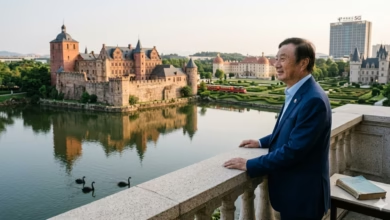
    Who Has The Right To Define China?

    An Introduction To The Complexities Of The Concept In The World Of Politics And Contemporary History, Few Concepts Evoke As…

    Read More »
  • Featured Topics

    Fear As a Political Tool: How Did the Alternative for Germany (AfD) Reshape The German Landscape?

    Roots Of Fear And The Manufacture Of Politics The Contemporary European Political Landscape Stands On A Bed Of Hot Coals,…

    Read More »
  • Featured Topics

    Bowing down to survive: Lao Tzu’s Wisdom In The Face Of The Illusion Of Dominance

    In A World Teeming With Major Transformations And Where Balances Of Power And Hegemony Struggles Intertwine, The Ancient Text Emerges…

    Read More »
  • Featured Topics

    British Empire In The Gulf

    Roots Of Dominance: The Legacy Of The British “Raj” And The Indian Shadow On The Gulf Shores Today, We Have…

    Read More »
  • Featured Topics

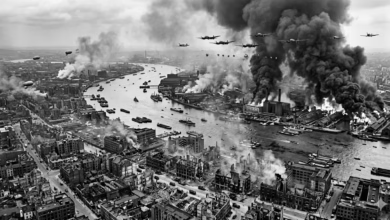
    How Hitler Created His Greatest Enemy

    The Book “Stalin’s Great Raid: The Rise Of The Soviet Union And The Plundering Of Germany” By The Author And Historian Bogdan Musial Is An Exceptional Historical And Investigative Document, And An Academic Reference That With Rare Courage Dismantles One Of The Most Complex, Bloodiest, Most Contradictory And Absurd Alliances In The Entire History Of The Twentieth Century, Namely The Secret And Overt Strategic, Economic And Military Alliance Between The Soviet Union And Nazi Germany. This Huge Work Does Not Merely Narrate Historical Events Within The Traditional Classic Framework We Are Accustomed To Reading In School History Books, But Rather Presents An Extremely Broad And Deep Panoramic Vision Of The Symbiotic And Lethal Relationship Between The Two Totalitarian Dictatorial Powers, Proving With Damning Archival Evidence That This Thorny And Intertwined Relationship Is What Actually And Decisively Shaped The Course, Repercussions And Results Of The Entire Second World War. The Bold Central Thesis That Musial Presents In A Smooth And Flowing Narrative Style Can Be Summarized In An Amazing And Shocking Historical Paradox For The Human And Political Conscience: That The Rise Of The Soviet Union As An Invincible Superpower After Its Crushing And Devastating Victory Over Germany In 1945 Would Never Have Been Achieved At All Without The Huge Material, Technological And Industrial Support That Germany Itself Voluntarily Provided To The Soviets, Driven By Short-Sighted Strategic Interests Before The Start Of Military Operations. While History And Peoples Often View These Two Huge Entities As Bitter Ideological Enemies, One Representing The Extreme Of Fascist Right And The Other The Extreme Of Communist Left, The Book, By Delving Into Recently Declassified Russian And German Archival Documents, Reveals That Until The Moment Of The Sudden And Stunning German Invasion At Dawn On The Twenty-Second Of June 1941, The Mighty German Industrial Machine Was The Main Supplier Of Engineering Expertise, Heavy Equipment, Precision Machines And Advanced Tools Without Which The Soviet Union, Amid The International Isolation It Was Living In, Could Not Have Built And Established The Foundations Of Its Heavy And Defense Industries. These Very Industries, Which Were Built Brick By Brick With German Machines, Presses And Lathes, Are What Enabled The Soviets Not Only To Absorb The First Horrific Shock And Withstand The Fierce Waves Of German Invasion That Swept Their Lands, But Also To Completely Turn The Tables On The Invaders, Crush Them Militarily, And Push Them To Retreat Step By Step Across The Plains Of Eastern Europe Until Raising The Red Soviet Flag Over The Ruins Of The Reichstag Building In The Heart Of The German Capital Berlin. In His Deep And Contemplative Introduction, The Author Borrows The Description Of The Writer And Historian Sebastian Haffner, Who Pointed Out With Unparalleled Brilliance That One Cannot Find In All Of Modern Human History Another Example Of Such Intimate Entanglement, Close Cooperation, And Deadly Enmity Between Two Nations As Happened Between Germany And Soviet Russia, Describing This Intertwined And Complex History As More Astonishing, Exciting And Terrifying Than Any Fictional Novel That A Dramatic Writer’s Mind Could Weave. To Demonstrate This Complex And Time-Spanning Entanglement, Musial Does Not Begin His Analysis From The Nineteen-Thirties Era As Most Historians Do, But Rather Takes The Reader’s Memory Back To The First Foundational Roots Of The Emergence Of The Soviet State Itself, Asking In A Deeply Indignant Manner Whether The Soviet Union Would Have Existed At All In The Pages Of History As A Ruling Political Entity Without The Direct Intervention And Generous Funding Provided By The German Empire. In The Spring Of 1917, Amid The Rampant Chaos And Political Unrest That Followed The Overthrow Of The February Revolution Of The Russian Tsar Nicholas II, Vladimir Ilyich Lenin, The Leader Of The Radical Bolshevik Faction, Was Living In A State Of Political Isolation And Marginalization In His Voluntary Exile In Switzerland, Cut Off From The Rapidly Accelerating Events In His Homeland. Lenin Would Not Have Been Able To Return To The Russian Scene To Overturn The Balance Of Power And Steer The Revolution Without Direct Assistance, Planning And Collusion From The Conservative German Government And The High Command Of The Imperial German Army At That Time. The Germans Provided Lenin And His Bolshevik Comrades With What Became Historically Known As The “Sealed Train,” A Safe And Secret Journey Through German, Swedish And Finnish Territories To The Finland Station In Petrograd, In Addition To Providing Very Huge Financial Funding Estimated At Millions Of Gold Marks, With A Purely Strategic And Military Goal Of Exploiting Lenin’s Inciting Skills To Destabilize Imperial Russia From Within, Destroy The Morale Of Its Army, And Ultimately Push It To A Humiliating Withdrawal From The First World War, Which Would Allow Germany To Close The Eastern Front And Mobilize All Its Forces To Crush The Allies On The Western Front. Haffner Describes The Decision To Send Lenin To Russia As Being Like Throwing “The Political Nuclear Bomb Of The First World War,” A Pragmatic And Tactical Alliance With The Devil On Both Sides That Eventually Led To The Outbreak Of The Bloody October Revolution And The Establishment Of The First Totalitarian Communist State In The World On The Ruins Of The Russian Empire. Without This Initial And Decisive German Assistance, Financially And Logistically, Lenin Might Have Remained Just An Obscure Political Theorist Living On The Margins Of The World’s Great Events, And The Geopolitical Map Of The Twentieth Century Might Not Have Been Formed In The Way We Know It Today. Musial Then Moves On To Discuss The Historical Doctrine, Political Justifications, And Ideological Restrictions That Surrounded That Pivotal Era, Pointing Out That Soviet History, Especially The Precise And Hidden Details Of German-Soviet Relations During The Interwar Period, Is Still Considered A Very Sensitive Subject Surrounded By Many Taboos That Are Forbidden To Approach, Especially In Contemporary Russia Which Has, With Governmental Support, Revived The Myth Of The “Great Patriotic War” As A Central, Essential And Sacred Element In Its Modern National Narrative, Deliberately Ignoring The Opportunistic Alliances That Preceded The Outbreak Of That War. Musial Sadly Explains How Many Historians And Academics In The Western Camp Have For A Long Time Repeated, In A Sometimes Unconscious And Naive Way, The Old Stalinist Propaganda That Tried Hard To Justify The Notorious Non-Aggression Pact, Known As The “Hitler-Stalin Pact” Or “Molotov-Ribbentrop Pact” Signed In Late August 1939, And To Market This Shameful Alliance To The World And Observers As A Purely Defensive And Compulsory Measure Imposed By Harsh Circumstances And The Inaction Of Western Democracies. This Misleading And Clever Defensive Narrative Was Founded And Its First Building Blocks Were Laid By Joseph Stalin Himself In February And March 1948 When He Wrote And Edited Large Parts By Hand Of A Famous Propaganda Booklet Published Widely Under The Title “Falsifiers Of History,” In A Desperate And Preemptive Attempt To Respond To The Leak By The United States Department Of State And The World’s Discovery Of The Secret Protocol Attached To The Pact, Which Explicitly Provided For The Division Of Eastern Europe And The Baltic States Into Spheres Of Influence Between Nazism And Communism. Stalin Claimed In That Justifying Booklet That The Soviet Union Was Forced Under Threat To Accept The Non-Aggression Agreement In Order To Gain Precious Time, Postpone The Inevitable Clash, And Prepare Its Forces And Modernize Its Industry To Confront A German Aggression That He Saw As Inevitably Coming. This Historical Claim Is Completely And Decisively Refuted By Musial, Based On Recently Declassified Russian Archival Documents And Minutes Of Politburo Meetings, Which Clearly Reveal That Stalin Was Not A Victim Seeking A Way To Survive, But Rather Was The Main Actor And Hidden Driver Who Deliberately And With All Strength And Cunning Sought To Ignite A Destructive And Comprehensive War Between The “Capitalist” And “Imperialist” Countries In Western Europe. Stalin’s Supreme Strategic Goal, Which He Expressed In Several Closed Speeches Before Party Leaders, Was To Push Germany On One Side, And France And Britain On The Other, To Exhaust Each Other In A Bloody And Long-Term Trench War Similar To The Slaughterhouses Of The First World War, So That The Soviet Union Lurking Safely Behind Borders Could Quietly Expand Geographically And Build Its Great Military And Economic Power, While All Its Ideological Enemies Bled To Death, Paving The Way, Without Realizing It, For The March Of The World Proletarian Revolution On The Bayonets Of The Red Army Toward The Exhausted Capitals Of Europe. On The Nineteenth Of August 1939, That Is, A Few Days Before The Staggering Announcement Of The Non-Aggression Treaty That Shocked European Capitals And Stunned The World Communist Movement, Germany And The Soviet Union Signed An Extremely Important And Dangerous Commercial And Credit Treaty, In Response To A Persistent And Urgent Request From The Soviet Capital Moscow Which Was Eager To Obtain Advanced German Technology. Under This Unprecedented Credit And Commercial Agreement In Its Size And Scope, The Government Of The German Third Reich Granted The Soviet Union A Huge Commercial Credit Worth 200 Million German Marks At A Low And Attractive Financial Interest Rate Of 4.5 Percent, And Berlin At The Same Time, Through Secret And Overt Protocols, Pledged To Export Additional Industrial Goods And Advanced Machines Worth 180 Million German Marks, On Condition That The Value Of These Advanced Equipment Would Later Be Paid Through The Soviets Delivering Strategic Raw And Agricultural Materials That Germany Severely Lacked And Suffered From A Chronic Shortage Of. Interestingly And Paradoxically, The Soviet Negotiating Side Was Given Complete And Absolute Freedom By The German Leadership To Choose The Major German Companies It Wished To Deal With And Buy Their Sensitive Products And Technologies, Where Modern German Industrial Machines And Giant Presses And Lathes Topped The Soviet Purchase List, Accounting For The Lion’s Share Of 44 Percent Of Total Purchases, With A Financial Value Of 167 Million German Marks, In Addition To Various Military Goods And Samples Of Modern Weapons Worth More Than 58 Million German Marks. This Close Economic Alliance, And The Comprehensive Securing Of The Eastern Front Provided By The Political Pact, Is What Gave Adolf Hitler Full Confidence And A Sense Of Security To Attack Hapless Poland At Dawn On The First Of September 1939, Igniting The First Spark Of The Second World War. And When Britain And France Abandoned The Policy Of Appeasement And Intervened And Declared War On Germany In Fulfillment Of Their Military And Moral Obligations Towards Poland, It Seemed As If Stalin’s Desired Dream Of An Imperialist War Exhausting The Great Powers Had Finally Become A Reality And A Bloody Drama Unfolding Before Him, While The Soviet Leaders Sat Quietly And Comfortably In The Corridors Of The Kremlin On The Sidelines Watching The Situation, Before The Invading Red Army Forces Later Intervened To Stab Poland In The Back To Invade And Divide Its Lands With Their New German Allies In Late September Of The Same Year, Meeting On The Bug River To Exchange Congratulations Over The Joint Victory On The Ruins Of The Polish State. Among The Most Prominent Strategic And Economic Axes That The Book Dismantles And Details With Sober…

    Read More »
  • Featured Topics

    Measuring The Harms of Slavery and Establishing Reparations

    Historical Reparations As A Necessity When Modern Democratic Societies Seek To Confront Their Dark Historical Legacy, They Often Clash With…

    Read More »
  • Featured Topics

    When Venice Met The Mongols

    The Myth Of “Primitive Savagery” In Both Western And Eastern Historical Culture, The Image Of The Mongols Settled For Long…

    Read More »
  • Featured Topics

    When The Prisoner Freed His Jailer: Mandela’s Long Walk To Freedom

    Long Journey Of Freedom: Dialectic Of Power And Empire In The Biography Of Nelson Mandela In The History Of Literature Related To Biographies, We Rarely Find A Work That Transcends Purely Personal Narration To Rise To The Level Of Major Historical Documents That Deconstruct Structures Of Global Power And Expose Mechanisms Of Colonialism And Hegemony. The Book “Long Walk To Freedom” By The South African Leader Nelson Mandela Is Not Merely A Diary Of A Political Prisoner Or Memoirs Of A Leader Who Led His People Toward Liberation, Where The Oppressed Ultimately Rises Not Only To Free Himself From The Chains Of Enslavement, But Also To Free His Oppressor From The Prisons Of Bias And Ideological Blindness. In This In-Depth Journalistic Reading, Which We Will Publish Gradually In Five Consecutive Installments, We Will Dive Into The Depths Of This Great Epic, To Explore How Political Philosophy Intersects With Human Experience, And How The Consciousness Of A Man Born In A Remote Village Became A Global Icon That Challenges The Foundations Of Hegemony And Changes The Course Of Contemporary History. Nelson Mandela Was Born On The Eighteenth Of July In The Year 1918 In A Small Village Called “Mvezo” Located On The Banks Of The Mbashe River In The Umtata District, The Capital Of Transkei. The Year Of His Birth Carried Great Symbolic Connotations; It Coincided With The End Of The First World War, The Drafting Of New Maps For Global Powers, And The Efforts Of Major Powers To Re-Divide Spheres Of Influence At The Expense Of Vulnerable Peoples. In This Turbulent Global Context, The Child Was Given The Name “Rolihlahla”, Which In The Xhosa Language Literally Means “Pulling The Branch Of A Tree”, But Its Common And Metaphorical Meaning Is “Troublemaker” Or “One Who Stirs Trouble”. This Name Was Not A Mere Passing Coincidence, But Seemed Like A Prophecy For A Man Who Would Shake The Pillars Of The Racist System Established By The British Empire And Inherited By The White Nationalist Regime Later. His Father, Gadla Henry Mphakanyiswa, Was A Tribal Chief By Blood And Custom, A Man Characterized By Firmness Of Character And Pride In History And Traditions. However, Even At That Early Time, The Institution Of Tribal Leadership Had Begun To Be Distorted And Diminished Under The Relentless Policies Of The White Government. The History Of Empires Is Always Written Through The Slow Erosion Of Local Sovereignties, And The Village Of Mvezo Was No Exception To This Strict Historical Rule. The First Features Of The Clash Between Legitimate Indigenous Authority And Imperial Arrogance Are Manifested In The Story Of Mandela’s Father With The British Judge. When The White Judge Summoned The Father To Investigate A Simple Complaint About A Stray Bull, The Response Of The Tribal Chief Was Laden With The Pride Of Centuries Of Sovereignty And History: “I Will Not Come, I Am Still Preparing For Battle”. This Response Was Not Merely Personal Stubbornness Or Ill-Calculated Rebellion, But Was A Foundation For A Principled Position That Denies The Legitimacy Of The Foreign Judge’s Authority And Appeals To Local Custom. The Immediate Result Of This Challenge Was That The Judge Dismissed The Father From His Position Without Any Investigation Or Trial, An Act That Embodies The Absolute Arrogance Of Colonial Power That Pays No Heed To Indigenous Rights Or Laws. The Family Lost Its Wealth And Status, And Was Forced To Move To The Neighboring Village Of “Qunu”. In This Incident, We Clearly See How The Colonial Machine Works To Strip Indigenous People Of Their Land And Authority, But At The Same Time Sows, Without Knowing It, The Seeds Of Rebellion That Will Later Destroy It. In The Village Of Qunu, Far From Direct Friction With White Authority, The Young Mandela Immersed Himself In A Fertile Pastoral Environment Governed By Ancient Traditions Harmonious With Nature And Its Eternal Laws. Society There Reflected A Holistic Cosmic Harmony That Did Not Know Those Sharp Dualities That Characterize Western Philosophical Thought; Where Religious Life Overlaps With Secular Life, And The Natural With The Metaphysical With Complete Smoothness. As A Small Cattle Herder, Mandela Learned To Fight With Sticks, To Gather Wild Honey, And Lived A Childhood Built On Strict Communal Sharing And Mutual Solidarity. Capitalist Individualism Had Not Yet Made Its Way Into Those Green Plains. He Absorbed From His Mother, Nosekeni Fanny, Stories And Legends That Carry Deep Moral Lessons About Generosity And Virtue And The Consequences Of Arrogance. This Psychological And Cultural Formation Was At The Opposite Pole From The European Centrality That Was Slowly Creeping Toward His Village To Devour Its Identity And History. The Winds Of Imperial Change Soon Reached Qunu Through Missionary Educational Institutions Which Were Considered The Soft Arm Of Colonialism. Under The Influence Of The Mbekela Family Which Adopted Western Education And Christianity And Considered It A Path To Civilization, Mandela Was Sent To School In A Step That Changed The Course Of His Life. And On The First Day, Cultural Hegemony Reared Its Head When The Teacher Decided To Give Each Child A Purely English Name, So She Gave Him The Name “Nelson”. This Authoritarian Practice Was Not Innocent; Rather It Is A Tool Of Systematic Identity Erasure, Where It Is Implicitly Assumed That African Culture Is Either Non-Existent Or Backward To The Point Of Shame, And That Joining The Ranks Of Western Civilization Requires Wearing The Cloak Of The Colonizer And His Name. Mandela Clearly Recalls That The Education He Received Was A Purely British Education, Which Implants In Tender Minds That British Ideas And Culture And Institutions Are The Highest And Most Sublime Without Dispute, And That There Is No Such Thing As African Culture. The Death Of His Father From Lung Disease Formed Another Radical Turning Point In His Life, Cutting The Ropes Of His Calm Childhood. He Moved With His Mother To “The Great Place” In Mqhekezweni, To Live Under The Guardianship Of Chief Jongintaba Dalindyebo, The Regent Of The Thembu Tribe Throne. This Transition Moved Him From A Simple Rural Life To The Beating Center Of Tribal Authority, Where He Began To Absorb Complex Concepts Of Leadership And Management Of Governance And Administration Of The Subjects’ Affairs. There, He Watched With Great Interest The Tribe Meetings Which Represented A Pure Form Of Consensual Democracy, Where Every Individual, Whatever His Rank Or Social Status, Has The Right To Speak Without Interruption Or Intimidation Until A Complete Consensus Is Reached. This Unique African Political Model Stands As A Strong And Influential Philosophical And Practical Alternative To Modern Western Democracies Which Often Depend On The Dictatorship Of The Majority And Marginalization Of Opposing Voices. In Mqhekezweni, The Historical And Political Awareness Of Mandela Was Formed Thanks To The Tales Of The Elders, Especially The Old Chief Joyi Who Narrated The Glories And Heroisms Of African Tribes Before The Coming Of The White Man With His Deadly Firearms. Joyi Narrated Bitterly How The Xhosa And Zulu And Pondo Tribes Lived As Brothers In Harmony Until The Greedy Colonizer Came Who Stole The Land And Tore Apart Bonds To Serve His Expansionist Ambitions. This Alternative Historical Narrative Was A Strong Intellectual Antidote Against The False Colonial Narrative Taught In Missionary Schools. Also The Circumcision Ceremony At The Age Of Sixteen, Which Is The Sacred Rite Of Passage To Manhood In His Society, Was Another Decisive Station; While Mandela Was Proud Of His New Name “Dalibonga”, Chief Meligqili Delivered A Fiery And Surprising Speech That Tore Apart The Illusion Of Claimed Manhood Under Colonialism, Affirming To The Shocked Attendees That They Were Merely Slaves And Tenants In The Land Of Their Ancestors, And That The Energies Of These Healthy Youths Would Inevitably Be Wasted In The Dark Mines Of The White Man. Although The Young Mandela Rejected These Harsh Words At The Time Because They Contradicted His Childhood Dreams, They Formed The First And Solid Seed Of Revolutionary Awareness Which Would Later Crystallize In A Bitter Dialectical Conflict With The Existing Fascist System. Mandela Then Moved To Continue His Education And Refine His Knowledge At Clarkebury Boarding Institute, Which Was At That Time The Highest Educational Institution For Africans In The Entire Thembu District. In This Prestigious Institute, Which Was Built On Lands Donated By The Great King Ngubengcuka, The Young Mandela Collided With A Harsh Truth That His Royal Lineage Did Not Grant Him Any Exceptional Privileges Or Special Appreciation Among His Peers And Colleagues. This Was A Positive Shock And A Harsh Lesson That Taught Him The Importance Of Proving Self Through Personal Merit And Diligent Work Instead Of Relying On The Comfortable Legacy Of Ancestors. Under The Administration Of Reverend Harris, Who Ruled The Institute With An Iron Fist And A Quasi-Military System, Mandela Realized That Power Can Be Exercised With Justice And Strictness At The Same Time To Serve A Higher Goal. However, One Cannot Ignore The Fact That These Educational Institutions Were Specifically Designed To Produce What Was Known As “Black Englishmen”, A Generation Of Africans Indoctrinated With The Culture Of The Colonizer To Serve The Empire Faithfully, And To Absolute Submission To The Superiority Of The White Man As An Indisputable Scientific Truth. By The Year 1937, And At The Age Of Nineteen, Mandela Headed To Expand His Horizons At Healdtown College In Fort Beaufort, Which Was Considered The Largest African School South Of The Equator In Its Entirety. In Healdtown, The Imperial Influence Was Manifested In Its Ugliest Ideological Form Through The College Principal, Dr. Arthur Wellington, Who Always Boasted Loudly That He Was A Descendant Of The Great Duke Of Wellington Who Crushed The French Leader Napoleon At The Battle Of Waterloo, Claiming Arrogantly That This Historic Victory Saved European Civilization From Collapse, And Saved Africans Consequently From The Clutches Of Backwardness. This Arrogant Discourse Aimed Systematically To Entrench The Inferiority Of The African Mind And Its Eternal Subordination To The Great British Empire. But, From The Womb Of This Psychological And Intellectual Oppression, The Features Of Bold Rebellion Began To Take Shape. In Healdtown, Mandela Met For The First Time African Teachers Who Broke The Barrier Of Fear And Hegemony, Such As Reverend Mokitimi Who Confronted The Arrogance Of Dr. Wellington With Rare Courage And Unprecedented Parity Never Known By Students Before. These Daily Incidents Were Qualitative Breaches In The Solid Wall Of White Hegemony, Where They Proved To The Young Mandela Beyond Any Doubt That The Educated And Competent Black Man Is Not Obliged To Bow And Submit Before Any White Man Merely Because Of The Color Of His Skin. In This Precise And Sensitive Age Stage Of Psychological And Political Formation, That Complex Dialectic Between The Colonizer’s Attempt To Shape The Minds Of The Colonized According To Its Own Molds That Serve Its Interests, And The Dawn Of Critical Awareness Among The Oppressed Elite Which Begins Intelligently To Use The Colonizer’s Own Tools – Such As Academic Education, And The English Language, And Institutional Political Thought – To Dismantle Its Imperial Structure From Within, Is Clearly Embodied Before Us. The Biography Of Nelson Mandela In These First Foundational Chapters Is Not Limited To Being Merely A Story Of An African Child Who Struggled Fiercely To Obtain Education Under Harsh Conditions, But Goes Beyond That To Become A Living Anthropological And Political Document That Accurately Records How The Traditional Social And Economic Structures Of African Tribes Were Destroyed, And How They Were Gradually And Deliberately Replaced By A Hateful Apartheid System That Subjects The Rural Man To The Wheels Of Fierce Capitalist Production In Deep Gold Mines. Thus, Mandela’s Long And Arduous Journey Toward Freedom Required As A First And Inevitable Step A Mental And Intellectual Liberation From The Chains Of Cultural Dependency That Had Shackled His People For Long And Dark Decades. The Careful Observer Of The History Of The Rise And Fall Of Great Powers In The International Scene Fully Realizes That Mighty Empires Do Not Fall Only Due To Military Defeats In Battlefields, But Actually Collapse And Lose Their Legitimacy When The Oppressed Possess The Ability And Courage To Rewrite Their History And Shape Their Own Narrative That Challenges The Official Narrative. And This Is Exactly What Began To Crystallize And Mature In The Mind Of The Young Nelson Mandela. Through The Ingenious Combination Of Deep Tribal Wisdom Acquired In The Court Of “The Great Place”, And Rigorous And Systematic Western Education In Clarkebury And Healdtown, Mandela Was Steadily Forging The Personality Of A Charismatic Leader Capable Of Confronting The Empire With Its Own Tools, Laying Thus The Solid Foundation Stone For A Huge Liberation Political Project That Will Not Only In The End Free The Oppressed And Marginalized Peoples, But Will Also Free Yesterday’s Executioners From The Illusions Of Their False Racial Superiority And The Shackles Of Their Historical Fear Of The Other. The Shock Of The Great City And The Formation Of Revolutionary Consciousness Nelson Mandela Joined The University Of “Fort Hare” In The Late Thirties, Which Was Considered As “Oxford” Or “Harvard” For Africans Throughout The Entire Continent South Of The Equator. This University Represented The Pinnacle Of The Educational Pyramid, And A Factory For The Black Elite Which The Colonial Government Hoped Would Be A Docile And Educated Tool To Serve Its Interests And Manage The Affairs Of Indigenous Populations On Its Behalf. In Fort Hare, Mandela Found Himself Surrounded For The First Time By Youth From Different Tribes And Ethnicities, From Sotho And Zulu And Tswana, And Not Only From Sons Of Xhosa. This Demographic Diversity Was The First Cognitive Shock That Began To Dismantle His Tribal Centrality And Expand His Horizons Toward The Concept Of The Comprehensive “African Nation”. There, He Met Personalities Who Would Later Form The Backbone Of The Liberation Movement, At The Forefront Of Them Oliver Tambo, The Calm And Intelligent Young Man Who Would Become His Closest Comrade In The Long Struggle. However, Fort Hare Was Living A Fundamental Contradiction; While It Taught Its Students The Principles Of Western Democracy And Enlightenment Philosophies, It Was Subject To A Paternalistic White Administration That Dealt With Students As Minors Needing Constant Guidance And Intellectual Guardianship. This Stark Contradiction Was Manifested In The Incident Of Student Elections Which Formed The First Real Test Of Mandela’s Will And Principles. When Students Boycotted The Elections Of The Representative Council In Protest Against Poor Food And Poor Services And Weak Powers Of The Council, Mandela Found Himself Elected By A Tiny Minority That Did Not Adhere To The Boycott. Instead Of Enjoying The Position And Prestige It Grants, He Made A Courageous Moral Decision To Submit His Resignation, Refusing To Represent A Student Base That Does Not Grant Him The Legitimacy Of The Majority. This Position Angered The University Director, Dr. Kerr, Who Put Mandela Before Two Decisive Choices: Either Comply And Accept The Position, Or Be Expelled From The University. In That Fateful Moment, The Young Mandela Chose To Sacrifice His Guaranteed Academic Future And His Elite Status, Preferring To Adhere To The Principle Of “Consent Of The Governed” Which Represents The Essence Of Democracy. This Was Not Merely A Reckless Student Rebellion, But Was An Early Declaration Of A Political Personality That Refuses To Compromise On Basic Principles, And Realizes That Authority Which Does Not Derive Its Legitimacy From The Consensus Of The Base Is Invalid Authority, Even If It Hides Behind A Respectable Academic Facade. After Returning To His Village Following This Expulsion, Mandela Faced A Challenge Of Another Kind, A Challenge That Touches His Deep Roots In Tribal Traditions. The Regent Chief Had Decided, According To Inherited Customs That Grant The Head Of The Family The Right To Plan The Future Of Sons, To Marry Mandela And His Son Justice To Girls Previously Chosen, For The Purpose Of Their Stability And Preparation To Assume Leadership Roles In Indigenous Administration. This Arrangement Represented The Natural And Safe Path For Any Aristocratic Young Man At That Time, But For Mandela It Was Like A Soft Prison That Confiscates His Absolute Right To Determine His Destiny. In A Step That Represents A Philosophical Break With The Determinism Of Tribal Fate And A Victory For Free Individual Will, The Two Young Men Decided To Flee Under The Cover Of Darkness Toward The City Of Johannesburg. This Escape Was Not Merely Flight From An Unwanted Traditional Marriage, But Was Flight From A Functional Role Pre-Drawn In A Social System That Had Become Unable To Accommodate New Aspirations; It Was A Declaration Of Beginning The Journey Of Self-Search Outside The Safe Walls Of The Tribe. Mandela Arrived In Johannesburg, Or “Egoli” (City Of Gold) As Africans Call It, To Collide With A Reality Completely Different From Everything He Knew. The City Was A Huge Metallic Monster That Feeds On The Sweat And Blood Of Black Workers Who Dig Deep In The Earth To Extract Wealth That Builds Skyscrapers For The White Man. In Johannesburg, The Halo Of Respect He Enjoyed As Son Of A Ruling Family Completely Faded; In The Eyes Of Apartheid Police And The White Capitalist System, Mandela Was Nothing More Than Just Another “Black Boy”, A Number In The Records Of Cheap Labor Forces. He Worked For A Brief Period As A Night Guard In One Of The Mines, And There The Infrastructure Of Oppression In Its Ugliest Forms Was Manifested Before Him: Crowded And Closed Residential Compounds, Workers Treated As Replaceable Machines, And An Economic System Designed Specifically To Ensure The African Remains At The Bottom Of The Social And Economic Pyramid Forever. Mandela Then Realized That His Battle Is Not Only For Political Rights, But Is In Its Essence A Struggle Against A Structural Exploitative System That Turns Humans Into Production Tools. In The Midst Of This Urban Loss, The Most Important Encounter That Completely Changed The Course Of Mandela’s Life Happened; His Meeting With Walter Sisulu. Sisulu Was A Self-Made Man, Who Did Not Enjoy A High University Education, But Possessed An Extraordinary Political Insight, And A Deep Understanding Of Mechanisms Of Organized Work In The Street. Sisulu Saw In The Young Mandela, With His Culture And Tall Stature And Innate Charisma, A Future Leader Capable Of Making A Difference. Thanks To Sisulu, Mandela Got A Job As A Clerk Under Training In A Law Office Owned By A White Jewish Lawyer Named Lazar Sidelsky. This Step Was A Major Breakthrough, As It Was Very Rare At That Time For White Law Offices To Accept Training Black Youths. In This Office, Mandela Was Exposed To An Unprecedented Intellectual And Ideological Cross-Fertilization. He Met White And Indian Communists Who Treated Him With Complete Parity And Genuine Respect Beyond Color Barriers. Although Mandela Initially Held Deep Reservations Toward Communism Because Of His Aristocratic And Religious Background, He Gradually Began To Realize That These Leftists Were In That Era The Only Category Of Whites Willing To Share Africans Their Struggle And Share With Them Risks In The Front Trenches. Parallel To His Slow Professional Rise, Mandela’s Daily Life In The Poor Suburb Of “Alexandra” Represented A Real Melting Pot For His Social Awareness. He Lived In A Narrow Room Of Tin And Mud, Without Electricity Or Running Water, Walking Long Miles Daily To Save The Price Of A Bus Ticket, And Studying Law By The Dim Light Of Candles. In Alexandra, Mandela Experienced The Humiliation Of The Hateful “Pass Laws”, Which Forced Every Black African To Carry An Identification Document That Determines His Permitted Places Of Presence, And Exposes Him To Humiliating Arrest By Any Policeman At Any Moment If He Forgot To Carry It Or Was Present In “White Areas” Without Prior Permission. This Harsh Life, Which Stripped Him Of All His Previous Privileges, Made Him Organically And Psychologically Merge With The Suffering Of The Crushed Masses, So He No Longer Looked At Politics As An Intellectual Luxury Or Salon Discussions, But As A Matter Of Life Or Death, As An Inevitable Necessity To Restore Daily Wasted Human Dignity On The Sidewalks Of The City. The Alexandra Bus Boycott In 1943 Formed A Practical Turning Point In His Path From A Sympathetic Observer To An Active And Field Activist. When Transport Companies Decided To Raise Ticket Prices Unjustly, Tens Of Thousands Of Suburb Residents Decided To Boycott Buses And Walk On Foot For Distances Up To Twenty Miles Daily To Reach Their Work In Johannesburg And Return From It. Mandela Walked With These Huge Crowds, Not As A Leader Directing Them, But As One Of Them, Breathing Their Dust And Feeling Their Fatigue. In Those Silent And Majestic Marathon Marches, Mandela Discovered The Power Of Organized Collective Action. He Realized That Law Alone, With All Its Loopholes And Texts, Is Unable To Demolish A System Built On Structural Injustice Unless It Is Supported By The Power Of Organized Masses On The Ground. This Field Experience Was The Spark That Lit His Real Political Awareness, Preparing Him For The Next And More Dangerous Step: Abandoning The Idea Of Individual Salvation Through Practicing Law And Class Advancement, And Embracing The Idea Of Collective Salvation Through Joining The Most Important Political Movement In The History Of The Country.…

    Read More »
  • Featured Topics

    A Journey Through the Mind of Time

    The Journey In Search Of Meaning In The Course Of Humanity And Deconstructing The Concept In An Era Where Events…

    Read More »
  • Featured Topics

    Why Do Empires Fall?

    In The Midst Of Major Transformations Witnessed By The Contemporary International System, Troubling Questions Escalated Surrounding The Fate Of Western…

    Read More »
Back to top button