
When Genes And Bones Tell The Story
How The Scientific Revolution Is Rewriting Our Origins

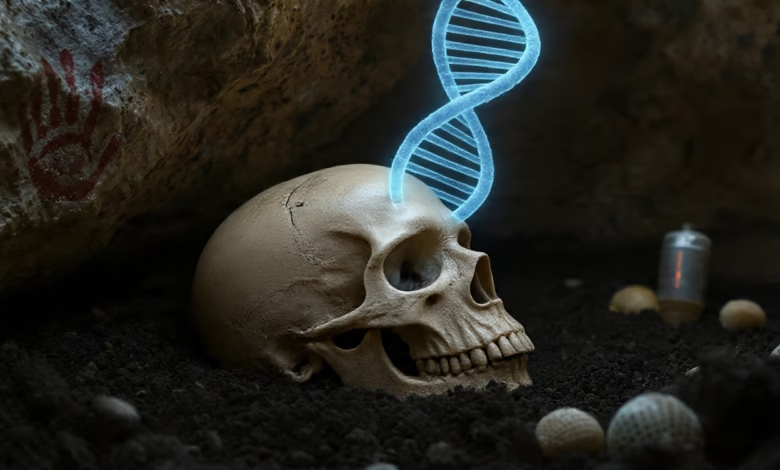
Deep In The Depths Of The Enchanting “Cheddar Gorge”, With Its Harsh Limestone Cliffs In Britain, Specifically In The Year 1903, Excavators Discovered The Skeleton Of An Adult Man Who Lived And Died About Ten Thousand Years Ago, In The Post-Ice Age Period. For Long Decades, A Firm Belief Prevailed That We Knew Everything That Could Be Known About “Cheddar Man”; Many Imagined Him With Traditional European Features That Fitted The Geography Of The Place Where He Was Found. This Calm Perception Continued Until 2018, When Scientists At The Natural History Museum In London Exploded A Resounding Surprise That Overturned Scientific Scales; By Extracting Fragments Of DNA From The Dense Temporal Bone In His Skull, They Were Able To Draw The Most Accurate Personal Image Of Him Since His Death. The Result Was Not Just An Update Of Information, But A Cultural Earthquake: This Ancient European Man Had Dark Skin, And Blue Or Green Eyes, And Wavy Brown Hair.
This Amazing And Surprising Story Represents Only The Enchanting Starting Point Used By The Renowned Archaeologist “Paul Pettitt” To Open The Doors Of His Pioneering Book “The Discovery Of Homo Sapiens Again: The Scientific Revolution That Is Rewriting Our Origins.” Pettitt, A Specialist In The Paleolithic Era, Takes Us On An Immersive Scientific Journey, Pushing Us To Abandon Our Dry Traditional View Of The Past. Archaeology Is No Longer Just A Process Of Digging In Search Of Shattered Bones And Silent Stones; Rather, It Has Transformed Into A Careful And Interesting Reading Of The Biological And Genetic Diaries Of Our Early Ancestors, Which Are Diaries That Reveal To Us That We, As A Human Race, Are Nothing But A “Crazy Evolutionary Experiment.”
The End Of The Era Of “Bones And Stones”: The Dawn Of The Molecular Revolution
Pettitt Asserts That Archaeology Is Going Through A Real Revolution During The Past Two Decades. In The Past, Scientists Stood Helpless Before Many Secrets Hidden By Bones, But Thanks To An Arsenal Of Advanced Scientific Techniques, We Have Begun To Dive Into The Depths Of Infinitesimal Molecules.
Among The Most Prominent Of These Techniques That The Book Reviews With A Style Combining The Precision Of A Scientist And The Passion Of An Adventurer, Is The Analysis Of Stable Isotopes. Collagen Extracted From Ancient Human Bones Is No Longer Just Decomposed Organic Matter, But Has Become An Accurate Dietary Record That Tells Us The Proportions Of Wild Or Aquatic Protein Consumed By The Ice Age Human. Through These Analyses, Scientists Discovered That Our Ancestors 20 To 30 Thousand Years Ago Did Not Rely Only On Hunting Large Mammals As Popular Drawings Suggested, But Rather River Fish Formed A Vital And Surprising Part Of Their Diet, Which Reflects An Intelligent Strategy To Ensure Survival (Food Security) In The Face Of Harsh Environmental Fluctuations.
The Magic Of Technology In The Book Extends To Include The Biological Identification Technique Via Mass Spectrometry, Known Abbreviated As “ZooMS,” Developed By Scientists Matthew Collins And Mike Buckley. This Technique Is Like Scientific Magic; It Uses Laser Beams To Vaporize Tiny Parts Of Eroded Bones That Are Of No Use To Anatomists, To Determine The Species They Belong To With Extreme Precision. Thanks To Its Amazing Ability, The Identity Of A Small Bone Fragment Found In The “Denisova” Cave In Siberia Was Revealed, To Reveal That It Belongs To A Hybrid And Amazing Human Species, A Girl Carrying Genes Shared Between The Denisovan Species (Which The Cave Was Named After) And The Neanderthals.
But The Most Prominent Adventure Of Pettitt Is Manifested In His Use Of The Uranium-Thorium Dating Technique. The Author Recounts A Breathtaking Personal Experience, When He And His Team Descended Into The Depths Of Three Spanish Caves (Including La Pasiega, Maltravieso, And Ardales). The Team Scraped Thin Crusts Of Stalactites That Had Formed Over Ancient Wall Paintings To Date Them. The Results Came Like A Thunderclap: These Stalactites Formed 65,000 Years Ago. Since The Paintings Are Located Beneath Them, This Means That The Paintings Are Necessarily Older Than That. And Because Homo Sapiens Did Not Arrive In Europe Until About 42,000 Years Ago, The Only Possible Conclusion Is That These Works Of Art Are The Creation Of “Neanderthal” Humans. This Earth-Shattering Discovery Doubled The Age Of Ice Art Overnight, And Broke The Human Arrogance That Always Assumed That Homo Sapiens Was The Only Creature Capable Of Producing Symbolic Art.
The Bill Of The Human Brain: From Treetops To The Savanna Fires
Pettitt Weaves The Threads To Return Us To The Roots, To The African Savanna Seven Million Years Ago, To Untangle The Mystery Of Our First Evolution. We Are, In The End, As He Clearly Decides, High African Apes That Still Retain Many Of Our Main Features Such As Fingers Designed For Clinging, And Relying On Three-Dimensional Vision Instead Of Smell.
The First Dramatic Driver In This Story Was None Other Than The Climate. About 8 Million Years Ago, The Global Drop In Temperatures Caused The Dense African Forests To Shrink And Fragment Into Scattered Patches Separated By Vast Expanses Of Open Savanna. Ancient Apes Could No Longer Rely Entirely On Moving Between Tree Branches To Obtain Fruit; So They Had To Adapt Or Become Extinct. Here, Walking On Two Feet (Bipedalism) Appeared Not As A Sudden Miracle, But As A “Hard Times Strategy,” As A Compromise Solution That Allowed Energy-Efficient Movement On Land To Gather Scattered Food, While Retaining The Ability To Climb The Remaining Trees.
However, The Greatest Adventure In Our Biological History Was The Growth Of The “Brain.” Humans Possess A Mighty Mind That Is Three And A Half Times Larger Than The Brains Of Their Closest Relatives, The Chimpanzees. Although The Human Brain Makes Up Only 2% Of Body Mass, It Voraciously Devours Between 15% To 20% Of The Total Basal Metabolic Energy (Compared To 2% To 10% In Other Apes).
The Author Pauses Wondering: Why Did Evolution Decide To Burden Us With This Very Expensive Organ? The Most Prominent Answer Comes From Evolutionary Psychologist “Robin Dunbar” Through What Is Known As The “Social Brain Hypothesis.” Managing A Vast And Complex Network Of Social Relationships, And Living In Large Groups To Protect Its Members, Requires Enormous Cognitive Ability. But To Pay This Exorbitant Energy Bill, It Was Necessary To Abandon The Strictly Vegetarian Diet That Is Not Enough To Power This Mighty Brain Engine In The Savanna Environment.
And So, “Meat” And Fat Sources Entered As Key Players In The Theater Of Human Evolution. As Time Approached 2 Million Years Ago, This Dietary Shift Coincided With Another Decisive Turning Point: Controlling “Fire.” The Author Highlights The Vision Of Anthropologist Richard Wrangham That “Cooking” Acted As External Pre-Digestion, As It Broke Down Root Carbohydrates And Meat Proteins, To Increase The Calorie Intake By About 50% And Eliminate Deadly Bacteria. Fire Did Not Only Provide Warmth And Safety From Predatory Animals, But Also Provided The Light That Extended The Hours Of Social Interaction At Night, And Allowed The Human Engine (The Brain) To Grow And Branch Out In Ways Unprecedented In The Animal Kingdom.
Ice Records: When The Depths Of The Earth Tell The Story Of Our Fluctuations
Paul Pettitt Takes Us In An Exciting Narrative Shift From The Hot African Savanna To A Very Cold Room At The Niels Bohr Institute In The Danish Capital, Copenhagen. There, Where His Teeth Chatter From The Cold, He Describes To Us A Scene That Seems Closer To Science Fiction: A Glaciologist Lifting A Huge Frozen Cylinder Resembling A Sparkling “Giant Popsicle,” Extracted From A Depth Exceeding Three Kilometers Under The Greenland Ice Sheet. This Cylinder Is Not Just A Piece Of Ice, But A Time Capsule Containing Within It The Snows That Fell 200,000 Years Ago.
The Author Explains How This Ice Transformed Into A Living Archive For The Earth’s Climate. Water, Which Makes Up 60% Of Our Bodies, Is The Basic Engine Of Life And Climate. By Studying The Isotopes Of Oxygen (O-16 And O-18) Trapped Within These Successive Ice Layers, Scientists Were Able To Read Atmospheric Temperatures With Stunning Accuracy Over Thousands Of Years. What These Records Revealed Was Shocking: The Ice Age (Pleistocene) Was Not A Continuous Era Of Bitter Cold, But Rather A Volatile And Sharp Series Of Climatic Transformations. Extremely Harsh Glacial Periods Followed By Warm Periods, With Rapid Fluctuations That Could Lead To Temperatures Rising By 16 Degrees Celsius Within A Few Decades, Followed By A Slow Cooling That Lasts For Thousands Of Years. This “Crazy” And Unstable Climate Was The Hammer And Anvil Between Which The Alloy Of Humanity Was Formed; Either Rapid Adaptation Or Inevitable Extinction And Death.
The Green Desert And The First Human Pulse Pump
The Author Returns Us Once Again To Africa, Our Birthplace, To Correct For Us A Misconception That Has Long Settled In The Mind. When We Think Of Africa In The Ice Age, We Imagine It As It Is Today, But The Reality Was Completely Different. In Interglacial Warm Periods, The Sahara Desert That We Know Today, As Well As The Arabian Peninsula, Were Dressed In A Lush Green Garment, Interspersed With Networks Of Rivers, Lakes, And Fertile Pastures. These “Green Desert” And “Green Arabia” Were Like Pulsating Arteries Of Life, Which Allowed Our Homo Sapiens Ancestors To Stretch And Expand Outside The Black Continent.
Pettitt Relies On Thermoluminescence Dating To Present Us With Shining Evidence From The “Jebel Irhoud” Site In Morocco. There, Where The Oldest Homo Sapiens Fossils Found So Far Were Found, Dating Back At Least 315,000 Years. These Early Humans Looked Very Much Like Us, Possessed Faces Resembling Our Current Faces, Large Brains Stored Inside Their Skulls, And They Were Skilled At Hunting Animals Using Stone Tools And Controlling Fire.
Due To These Violent Climatic Fluctuations, Africa Transformed Into Something Resembling A Geographical “Pump.” When Drought Settles In, Areas Of Life Shrink And Human Groups Are Isolated In Small Green Pockets (Ecological Refugia), And When Warmth And Rain Return, These Groups Expand, Meet, Exchange Genes And Experiences, And Then Rush North And East In Successive Waves Of Migration. The Discovery Of A Human Jaw In The “Misliya” Cave On Mount Carmel In Israel (Dating Back To Between 180,000 And 200,000 Years Ago) Explains That Homo Sapiens Tried To Leave Africa Much Earlier Than We Thought. The Out-Of-Africa Journey Was Not One Single Great Event As Myths Portray It, But Rather Constant Ecological Tides.
“Blombos” Shells: When Humans Invented Fashion And Identity
The Author Moves On To Describe His Visit To “Blombos Cave,” Overlooking The Southern Coast Of South Africa. There, Under The Warm African Sun, Pettitt Holds In His Hand A Collection Of Small Sea Shells Of The “Nassarius Kraussianus” Type, Carefully Perforated, And Bearing Traces Of Deliberate Heating To Turn Their Color To Black.
These Shells, Which Date Back To 75,000 Years Ago, Are Not Just Food Remains. The Author Recounts How His Colleague, Researcher Marian Vanhaeren, Proved That These Shells Were Not Gathered Randomly, But Were Chosen In Matching Sizes, To Be Perforated And Hung As Necklaces Or Sewn Onto Clothing. The Big Surprise Is That Identical Shells, Perforated In The Same Way, Have Been Found In Caves In Algeria, Israel, And Turkey, Thousands Of Kilometers Away From South Africa!
We Are Standing Here Before A Milestone Moment Culturally And Scientifically: The Birth Of Shared “Visual Culture” And “Fashion.” It Was No Longer Just About Survival And Hunting Food; Homo Sapiens Had Begun Using Symbols To Express Their Identity. These Necklaces Acted As Intercontinental ID Cards, Confirming That Whoever Wears Them Belongs To A Human Society With A Shared Culture, A Society Possessing A Visual Language That Allows It To Distinguish Between “Us” And “Them.” It Is The Spark Of Abstract Consciousness That Distinguished Our Species And Made It Capable Of Uniting Geographically Distant Human Groups Under One Symbolic Banner.
The Shock Of The Encounter: Facing The Neanderthals And Wars Of Environmental Attrition
While The Waves Of Homo Sapiens Were Rushing From Africa Toward Eurasia, These Continents Were Not Empty. They Were Already Inhabited By Other Human Species That Preceded Us By Hundreds Of Thousands Of Years; Most Notably The “Neanderthals” In The West, And The “Denisovans” In The East.
Pettitt Launches A Scathing Attack On The Superficial And Naive Stereotype That Popular Culture And Media (Such As The “Flintstones” Cartoons) Have Established About Neanderthals As Savage, Brutal, And Stupid-Looking Cavemen. Modern Science Erases This Caricature Entirely. Neanderthals Were Intelligent Humans, Who Adapted Brilliantly To The Harsh Glacial Environments Of Eurasia, And Were Skilled Hunters Of Large Prey Like Mammoths, Possessing Brains The Size Of Ours, And Perhaps Even Sharing With Us Some Forms Of Symbolic Art.
So, What Happened When Our Cousins Met In Common Areas Of Contact, Such As The Levant Region? Thanks To Deciphering The Human And Neanderthal Genome (Completed In 2010), We Know Today That The Encounter Was Not Necessarily A Bloody War Of Extermination As We Imagine In Hollywood Movies. Interbreeding And Mixing Occurred Between The Two Species! We All (Except For Pure Africans) Carry In Our DNA Neanderthal Genes Ranging Around 2%, And This Is A Remaining Impact Of Interbreeding That Happened More Than 50,000 Years Ago. In Fact, The Interbreeding Extended To Include The Third Species, The Denisovans, In The Heart Of Asia.
But, If Things Witnessed Coexistence And Interbreeding, Why Did The Neanderthals Go Extinct And We Remained? The Author Proposes A Genius Argument Based On Cold “Environmental Competition,” Citing Research By Anthropologist “Pat Shipman.” It Resembles What Happened When Gray Wolves Were Reintroduced Into “Yellowstone” National Park; The Wolves Did Not Exterminate The Coyotes (Their Competitor) Through Direct And All-Out Conflict, But Rather Out-Competed Them Brilliantly For Resources And Prey, Which Led To A Decline In Coyote Numbers And A Complete Change In The Ecosystem Structure.
By The Same Logic, Homo Sapiens Possessed A Secret Demographic And Technological Weapon. At A Time When The Neanderthals Relied Heavily On Direct Hunting Of Large Animals, Using Heavy Spears That Required Dangerous Proximity To The Prey (Which Explains The Many Fractures And Injuries In Their Excavated Skeleton Bones), Homo Sapiens Developed (About 50,000 Years Ago) Advanced Technology: “Light Spears And Projectiles” That Could Be Thrown With Accuracy And Speed From Safe Distances, Using Launcher Tools (Spear Throwing Tool Or Atlatl).
John Shea, One Of The Experts The Author Consults, Says: “These Light Projectiles Made Homo Sapiens The Absolute Generalist Creature.” Anyone Who Possesses An Accurate Rifle Will Inevitably Defeat Anyone Fighting With A Spear From Point-Blank Range. This Technical Superiority, Combined With Broader Social Networks, A More Flexible Diet Based On Hunting Small Prey, And Perhaps The Early Use Of Domesticated Wolf-Dogs, Made Our Ancestors An Unstoppable Survival Machine. We Did Not Erase The Neanderthals With The Sword, But We Robbed Them Of Hunting Grounds, And Pushed Them Slowly But Steadily Toward The Abyss Of Extinction, Crowning Ourselves, With Merit And Brutality At The Same Time, As The Absolute Masters Of Planet Earth.
Nature’s Wrath: Volcanic Eruptions And The Genetic Bottleneck
One Cannot Read The History Of Homo Sapiens Without Pausing At The Stations Where Our Species Was Almost Completely Wiped From The Face Of The Earth. Paul Pettitt Proposes In His Book A Dramatic Vision, Inspired By The Ideas Of Historical Paleontologist “Georges Cuvier” About “Catastrophism.” Human Evolution Was Not Just An Upward Line Toward Progress, But A Zigzagging Path Interrupted By Crushing Environmental And Climatic Disasters.
Among The Most Notable Of These Disasters That The Book Highlights Is The Great Eruption Of The “Toba” Volcano On The Indonesian Island Of Sumatra About 74,000 Years Ago. This Was Not Just A Regular Volcanic Eruption, But Was Of The Eighth (Maximum) Category On The Volcanic Explosivity Index. The Volcano Ejected Thousands Of Cubic Kilometers Of Ash And Sulfur-Laden Gases Into The Upper Atmosphere, Causing The “Volcanic Winter” Phenomenon. Sunlight Was Blocked, Global Temperatures Dropped Sharply, Plants Withered, And Animals Died.
In The Face Of This Cold Hell, The Numbers Of Homo Sapiens Shrank Terrifyingly. Modern Genetic Records Tell Us That Humanity Went Through What Is Known As A “Genetic Bottleneck” During That Period. Genetic Diversity Declined, And Only Small Isolated Groups Survived That Managed To Take Shelter In Relatively Warm “Ecological Refugia” In Africa And Some Parts Of Eurasia. We All Today, With All Our Apparent Diversity, Carry Within Us A Very Closely Related Genetic Heritage, Thanks To Those Few Survivors Who Clung To Life In The Darkest Moments Of The Planet, To Rebuild Humanity Again As Soon As The Ash Clouds Cleared.
And This Was Not The Last Disaster; 40,000 Years Ago, The “Phlegraean Fields” Volcano Near Naples In Italy Erupted, Coinciding With A Harsh Glacial Wave, To Empty Europe Again Of Its Inhabitants And Force Our Ancestors To Retreat Toward The South, Leaving Behind Empty Hunting Lands.
Conquering The Impossible: From The Dark Forests Of Asia To The Oceans Of “Sahul”
Once The Earth Recovered Slightly, Homo Sapiens Did Not Settle For Returning To Their Usual Areas, But Showed Unprecedented Ecological (Environmental) Flexibility. Pettitt Traces The Footsteps Of Our Ancestors As They Rushed Into The Unknown. In Asia, They Faced A Challenge Of A Different Kind: The Tropical “Rainforests” In The “Sunda” Region (Which Included Indonesia And Malaysia As A Single Land Mass). Rainforests, Unlike The Savanna, Are A Deceptive Environment; Despite Their Dense Greenery, Protein And Fat Food In Them Are Rare And Scattered, And Many Of Their Plants Are Toxic And Need Careful Processing (Such As Soaking Or Boiling) Before Being Eaten. And Yet, By 50,000 Years Ago, Our Ancestors Succeeded In Adapting To This Environment, As Fossils In The “Niah Cave” On The Island Of Borneo Show.
But The Greatest Achievement, Which The Author Highlights As Conclusive Evidence Of The “Cognitive Genius” Of Our Ancestors, Was Crossing The Oceans. To Reach The Continent Of “Sahul” (Australia, New Guinea, And Tasmania Currently) More Than 65,000 Years Ago, Homo Sapiens Had To Cross Deep And Dangerous Water Straits In The “Wallacea” Region. This Crossing Was Not Just A Coincidence Or Sliding On A Floating Tree Trunk; It Required Building Boats And Rafts Capable Of Sailing, A Precise Understanding Of The Movement Of The Stars And Maritime Navigation, And The Ability To Store Fresh Water. It Is Living Testimony That The Human Mind, Even In The Stone Age, Possessed A Huge Ability For Strategic Planning And Coordinated Teamwork.
Diaries Of Pain: Reading In The Bones Of “Cro-Magnon”
So That We Do Not Fall Into The Trap Of Romanticism And Beautifying The Past, The Author Drags Us To The Osteoarchaeology Laboratories To Show Us The High Price Our Ancestors Paid To Survive. Through The Study Of Famous Skeletons Discovered In The “Cro-Magnon” Shelter In France, And Using Micro-CT Scans And Three-Dimensional Modeling Techniques, Scientists Deconstruct The “Records Of Pain” Carved Into Every Bone.
Researchers Gave These Skeletons The Names “Alpha,” “Beta,” And “Gamma.” The Life Of These Individuals Was A Continuous Chain Of Grueling Physical Exertion. The Thigh Bones Of “Alpha” Reveal Exceptional Thickness (Crests) Resembling Those Found In Professional Long-Distance Runners Today, As A Result Of Constant Walking And Carrying Heavy Loads Across Rugged Terrain. These Individuals Did Not Escape Diseases; “Alpha” Suffered From A Terminal Illness (Perhaps Cell Cancer), While The Female Bones (Beta) Showed Huge Muscle Development In The Upper Part Of The Body, With Acute Arthritis In The Elbows.
Life Was Short And Harsh. Death Usually Did Not Come At A Quiet Old Age, But Rather Snatched Individuals In Their Youth As A Result Of Hunting Accidents, Childbirth Complications, Or Infection. An Amazing Scientific Study Of The Remains Of Two Young Men Buried Together In “Sungir” In Russia 34,000 Years Ago Shows That Their Tooth Enamel Bears Lines Known As (Hypoplasia), Which Are Physiological Scars Recording Periods Of Severe Hunger And Malnutrition They Suffered In Their Early Childhood.
However, The DNA Of These Young Men In “Sungir” Revealed Another Secret That Amazed Scientists: They Were Not First Or Second-Degree Relatives, Despite Living In A Small Group And Their Common Death. What Does That Mean? It Means That Homo Sapiens In The Ice Age Instinctively Realized The Danger Of “Inbreeding,” And Invented Open And Broad Social Systems That Allow Individuals To Mate Across Long Distances Between Different Tribes. They Were Humans Connected To Each Other, Building Alliances Spanning Thousands Of Kilometers In The Heart Of The Ice.
Palaces Of Ivory And Mammoth Bones: Art And Engineering In The Ice Age
If Western Europe Was Famous For Its Decorated Caves, Then Central And Eastern Europe (From The Czech Republic To Russia And Ukraine) Presented To Humanity A Different Model Of Genius. In Those Frozen Plains Where Caves Are Nonexistent And Trees Are Scarce, Our Ancestors In The “Pavlovian” And “Mezinian” Cultures Faced The Shelter Challenge In A Legendary Way; They Built Their Houses And Winter Villages Entirely From “Woolly Mammoth” Bones.
Pettitt Describes, With The Passion Of An Amazed Archaeologist, Sites Like “Mezhirich” And “Gontsy” In Ukraine. These Were Not Just Random Huts, But Amazing Architectural Works Of Art Requiring Huge Collective Effort. They Used Huge Mammoth Skulls To Form A Circular Base, And Planted Curved Tusks To Create Interlocking Domed Structures, Then Built The Walls Using Lower Jaw Bones Arranged In Zigzag And Chevron Geometric Patterns. These Huts Were Covered With Animal Skins And Lit From Within Using Lamps Relying On Bone Fat. They Built, Literally, “Villages” Of Bones, Thereby Refuting The Myth Linking The Emergence Of Settled Villages To The Agricultural Revolution In The Neolithic Era.
Fire, Ceramics, And Statues: The Symbolic Revolution
Creativity Did Not Stop At Architecture. In The “Swabian Jura” Heights In Germany, What The Author Calls The “Age Of Ivory” Emerged. There, Dead Mammoth Tusks Transformed Into Miniature Art Masterpieces. Most Notably, The “Lion-Man” Statue Discovered In The (Hohlenstein-Stadel) Cave, Which Dates Back To About 40,000 Years Ago. This Statue Represents The Half-Human Half-Animal As A Leap In Human Imagination; It Does Not Depict A Creature Existing In Nature, But Rather Embodies A “Myth” Or A Metaphysical Idea, Thus Breaking The Mental Boundaries Between Humans And The Animal World. In Addition, “Musical Flutes” Were Found In These Caves, Crafted Skillfully From Hollowed Bird Bones And Mammoth Tusks, Confirming That The Cold Ice Age Nights Were Teeming With Music, Myths, And Dancing.
The Magic Of This Early Creativity In Central Europe Is Completed With The Invention Of “Ceramics.” 30,000 Years Ago, At The “Dolní Věstonice” Site In The Czech Republic, Our Ancestors Did Not Just Carve Stones, But Kneaded Loess Clay With Water And Formed Small Animal Statues And Plump Female “Venus Figurines.” But The Surprising Thing Is That These Statues Were Intentionally Thrown Into Very Hot Burning Fires While Still Wet, To Explode And Shatter Loudly! Scientists Believe That This Was Not A Defect In Manufacturing, But A Deliberate Ritual Performance (Perhaps Magic To Bring Hunting Or To Celebrate The Fertility Of Life).
Thus, Homo Sapiens Had Discovered “Ceramic Technology” Thousands Of Years Before It Was Used To Make Pots And Dishes In Later Eras, Using It Initially For Purely Spiritual And Aesthetic Purposes.
Theaters Of Shadows: Caves As Gateways Toward “The Other”
The Discussion About Human Heritage Is Not Complete Without Diving Into The “Cathedrals Of The Stone Age.” In The Deepest Points Of The “Lascaux” Caves In France Or “Altamira” In Spain, Paul Pettitt Rejects The Traditional Interpretation That Sees In These Drawings Just “Art For Art’s Sake” Or “Magic Hunting” To Ensure Abundance Of Prey. Rather, He Proposes A More Profound And Influential Vision: That These Caves Were “Experiential Theaters.”
In Those Depths, Where Absolute Silence And Pitch Darkness Prevail, Homo Sapiens Practiced Rituals That Transcend The Visual Dimension. Thanks To The Dancing Lighting Of Torches, The Bodies Of Animals Painted On The Uneven Rock Walls Seemed As If They Were Moving, Breathing, And Rushing Out From The Depths Of The Rock. Pettitt Argues That These Drawings Were Not Just Images, But Rather A Medium For Contact With The Spirit World, Or The “Other Reality.” The Cave For Them Was A Womb Of The Earth, And A Place Where Time Melts, Where The Boundaries Between Human And Animal Merge. They Did Not Just Draw What They Saw, But Drew What They Believe In, What They Fear, And What They Aspire To. This “First Cinema” In History Reflects A Human Mind That Is Not Satisfied With Biological Survival, But Insists On Crafting An Existential Meaning For The Universe.
Rituals Of Farewell: When Death Became An “Institution”
Paul Pettitt, By Virtue Of His Specialization, Is Considered One Of The Most Prominent References In “Archaeology Of Death.” He Takes Us In This Chapter To The Core Of Human Consciousness: How Do We Deal With Loss? Pettitt Believes That The Appearance Of Intentional Burial Tens Of Thousands Of Years Ago Was A “Theological” Turning Point In The History Of Our Species.
Digging A Grave And Decorating The Body With Beads, Tools, And Shells, Is Not Just A Way To Get Rid Of The Smell Of Decomposition; It Is An Explicit Declaration Of “Identity” And “Continuity.” At The “Sungir” Site That We Mentioned Earlier, Pettitt Tells Us How Two Children Were Buried Together, Surrounded By Thousands Of Ivory Beads That Took Thousands Of Hours To Make. This Work Not Only Shows Deep Family Love, But Also “Social Hierarchy” And “Appreciation For Status,” Where The Child Is Inherited A High Social Status (Perhaps Political Or Religious) Despite His Young Age.
Pettitt Affirms That Death Forced Humans To Innovate Socially; The Dead Do Not Depart Completely, But Remain Part Of The Collective Memory That Connects The Group. This “Institution” That Began With Burial Developed To Become The Foundation For Religions, Rituals, And Tribal Ties That Still Govern Our Societies Today.
The First Ally: The Friendship That Changed The Fate Of The Earth
One Of The Most Wonderful Stories Of “Co-evolution” That The Book Reviews Is The Story Of “The Wolf That Became A Friend.” Pettitt Deconstructs The Myth Of “The Human Who Tamed The Wolf,” To Present Instead A More Realistic And Scientific Scenario: “The Wolf That Tamed Itself.”
Around The Fires Of The First Human Camps, There Was A Group Of Wolves That Were Less Aggressive And More Curious, Which Began To Approach Humans To Feed On Food Scraps. Over Generations, These Wolves Lived In A State Of Symbiosis With Humans; Protecting The Camp And Alerting Them To The Presence Of Strangers Or Predators, In Exchange For Food And Safety. The Author Explains How Dogs Became A Living “Technological Tool”; They Doubled The Human Capacity For Hunting, Expanded The Range Of Their Senses, And Became An Invaluable Companion In The Lonely Ice Age Nights. It Is A Success Story: We Transformed From Competitors In Hunting Prey To Partners In Survival, A Partnership That Continued To Be The Oldest And Strongest Cross-Species Bond In The History Of Our Planet.
The End Of The Journey: Crossing Into The New World
Pettitt Concludes His Epic Journey By Tracing The Final Path In The Story Of Ancient Homo Sapiens: “The Conquest Of The Two American Continents.” The Book Corrects Concepts Related To The “Clovis First” Culture That Prevailed For Decades As The Sole Hypothesis For Human Entry To The Americas. Pettitt Shows How New Archaeological Evidence (From Sites Like “Monte Verde” In Chile) Proves That Humans Arrived At The Southernmost Point Of The American Continent Much Earlier Than We Imagined, Perhaps Through Stunning Coastal Routes Along The Pacific Ocean, Using Their Innovative Boats.
This Journey Was The Ultimate Test Of Human Ability To Adapt; Crossing A Continent From Ice To Tropical Forests, And Facing Huge Animals (Megafauna) That Did Not Know Fear Of Humans. Our Arrival There, Before The End Of The Ice Age, Proved That Homo Sapiens Was Not Just A Lucky Animal, But Was An “Exploratory Being” Par Excellence, Who Does Not Rest Until He Sets His Foot On Every Inch Of This Planet.