

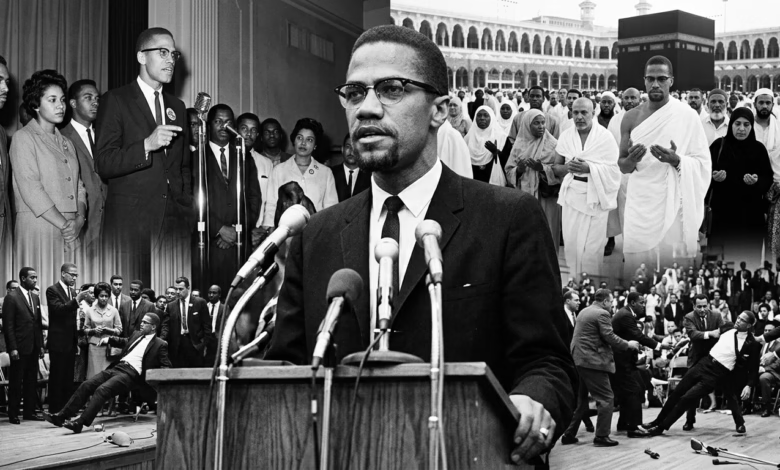
Preface: Between Myth And Historical Truth
Human History Stands Bewildered And Astonished Before Certain Figures Whose Simple Human Reality Transcends To Turn Into Eternal Icons And Symbols That Defy Oblivion. Among These Exceptional Figures, The Name Of “Malcolm X” Emerges As One Of The Most Important And Complex Leaders Of The Civil Rights And Black Liberation Movement In The United States Of America, And Indeed In The Entire World. Across Decades Of Time, The Image Of Malcolm X Has Been Framed In Ready-Made Templates; Sometimes As An Angry Preacher, Sometimes As A Symbol Of Black Rebellion, And Other Times As An Iconic Martyr Who Fell For The Sake Of His Principles. However, The Renowned Scholar And Historian “Manning Marable” Refuses To Surrender To These Simplified And Reductionist Narratives In His Massive And Important Investigative Book “Malcolm X: A Life Of Reinvention”. Marable Seeks In This Encyclopedic Work To Dismantle The Myth To Reach The Real Human, Tracing The Radical Transformations In Malcolm’s Character From His Tormented Childhood Until His Tragic Assassination.
This Book Is Not Merely A Traditional Autobiography That Narrates Events In A Dry Chronological Sequence; Rather, It Is A Tightly Crafted Historical And Journalistic Work That Dives Into The Depths Of The Social, Political, And Psychological Contexts That Shaped The Consciousness Of This Extraordinary Personality. The Book Raises Thorny Questions About The Official And Popular Narrative Of Malcolm’s Life, Pointing Out The Many Contradictions And Multiple Layers That Formed His Constantly Changing Identity, Starting From The Name “Malcolm Little”, Passing Through “Detroit Red”, And Reaching “El-Hajj Malik El-Shabazz”. In This Extended Journalistic Reading, Which We Will Divide Into Five Deliberate Installments, We Will Dismantle This Important Historical Tome And Dive Into Its Precise Details That Revealed Many Of The Secrets That Long Remained Kept Secret.
The Bloody Chapter: The Audubon Ballroom And The Fall Of The Hero
With Mastery And A High Dramatic Sense, Manning Marable Opens His Book From The Tragic End Point, Specifically From The “Audubon” Ballroom Events Hall In The “Washington Heights” Neighborhood In Northern Harlem. Marable Describes This Historic Building, Which Was Built In 1912 To Be A Luxurious Entertainment Center, Before The Demographic Makeup Of The Neighborhood Shifted To Become Predominantly Working-Class Black. On The Freezing Winter Sunday Afternoon Of February Twenty-First, 1965, The Grand Ballroom Had A Date With History, As It Had Been Reserved By The Organization Of Afro-American Unity (OAAU), Which Was Founded By Malcolm X After His Tumultuous Split From The “Nation Of Islam” Organization.
The Author Places Us In The Heart Of The Scene Charged With Tension And Anticipation. Death Threats Were Surrounding Malcolm From Every Side, And Barely One Week Had Passed Since His House In Queens Was Firebombed In The Middle Of The Night. Despite This Atmosphere Saturated With The Smell Of Death, Marable Reveals Fatal And Suspicious Security Vulnerabilities; No Police Officer Was Present At The Main Entrance Of The Hall, And The New York Police Settled For Placing Only Two Officers In Another Room Far From The Main Event, Which Later Raised Deep Questions About Collusion Or Deliberate Negligence On The Part Of The Authorities.
The Five Assassins, Belonging To The Newark Mosque Of The Nation Of Islam, Entered Easily Without Being Searched, Exploiting Malcolm’s Own Rejection Of The Idea Of Searching The Attendees Out Of Respect For His Audience. In A Sudden Moment, Shortly After Malcolm Ascended To The Stage, Two Of The Conspirators Staged A Fake Fight To Distract The Guards, Allowing A Man Carrying A Sawed-Off Shotgun To Step Forward And Open Fire On Malcolm, Followed By Two Other Conspirators Who Finished Him Off With Their Pistols. With Malcolm’s Fall Drenched In His Blood, His Story Did Not End; Rather, His Myth Began To Take Shape, Becoming The Embodiment Of Black Manhood And Uncompromising Resistance.
Dismantling The Autobiography: Behind Alex Haley’s Story
Among The Most Prominent Contributions Of The Book “A Life Of Reinvention” Is That Rigorous Critical Dissection Of The Most Famous Book, “The Autobiography Of Malcolm X”, Which Was Published Nine Months After His Death And Co-Authored By Journalist Writer “Alex Haley”. Marable Points Out That This Autobiography, Which Shaped The Consciousness Of Entire Generations And Was Considered A Sacred Text In University Curricula And “Hip-Hop” Culture, Was In Fact A Joint Work Subject To Divergent Agendas.
Alex Haley Was A Liberal Republican Who Detested The Racial Separatism And Religious Extremism Of The Nation Of Islam Organization, And He Aimed Through The Book To Present A Cautionary Tale About The Waste Of Human Potential And The Tragedies Generated By Racial Segregation. In Contrast, Malcolm Began Narrating His Story In 1963 With The Aim Of Glorifying His Leader At The Time, Elijah Muhammad, And Then Employed It Later To Justify His Split From Black Separatism And His Adoption Of Orthodox Sunni Islam Following His Journey To Mecca (Hajj).
Marable Reveals That Haley Deleted Entire Chapters Related To Malcolm’s Political Vision And The Building Of A United Front For Black Organizations Through The Organization Of Afro-American Unity, Chapters That Were Completely Omitted From The Final Text. Because Malcolm Was Assassinated Before The Book Was Published, He Did Not Have The Opportunity To Review Or Amend The Conclusions Imposed By Haley, Which Attempted To Frame Malcolm’s Journey Near Its End Within The Acceptability Of The Prevailing Civil Rights Movement. Based On This, Marable Asserts That Malcolm Was Adept At Creating Multiple Personas And “Masks” That Separated His Inner Self From The External World, And Contributed To Exaggerating Certain Details Of His Criminal Past (“Detroit Red”) To Make Himself A Symbol Of The Failure Of The American Judicial And Social System, Thereby Creating A Powerful Narrative Addressing The Most Marginalized Groups In Black Society.
Roots: The Garvey Legacy And Early Struggle In The Heart Of Racism
The Latent Anger And Sharp Political Consciousness Of Malcolm X Cannot Be Understood Without Returning To His Family Roots and The Charged Environment In Which He Grew Up. Marable Takes Us Back In Chapter One, Titled “Up, You Mighty Race!”, To The Story Of His Parents: Earl Little And Louise Norton. Earl Was A Tall, Powerful, Dark-Skinned Man From Georgia Who Suffered From The Scourge Of Racism And The Incidents Of Extrajudicial Executions (Lynchings) Sweeping The American South, Prompting Him To Migrate North To Escape This Hell. In Montreal, He Met Louise, An Educated, Light-Skinned Young Woman From The Caribbean Island Of Grenada, And They Married In 1919.
The Marriage Of Earl And Louise Was Not Merely A Traditional Union; It Was A Struggle Alliance Par Excellence; They Were United By A Deep Faith In The Ideas And Movement Of “Marcus Garvey”, The Charismatic Jamaican Leader Who Founded The Universal Negro Improvement Association (UNIA). The Garvey Movement Called For Black Economic And Political Independence, Pride In The Black Race, And Even Adopted The Idea Of “Cultural Nationalism” And A Symbolic And Political Return To Africa As A Radical Solution To The Reality Of Colonialism And Racial Segregation (Jim Crow).
Earl And Louise Became Active Leaders In The Garvey Movement, Moving Across Several States, From Philadelphia To Omaha In Nebraska, Reaching Milwaukee And Lansing In Michigan, To Spread The Principles Of The Movement And Establish Branches For It. The Family Faced Constant Threats From The Terrorist “Ku Klux Klan” (KKK) Group, Which Was Experiencing Widespread Growth In The American Midwest In The 1920s. In The Midst Of This Terror, Malcolm Was Born On May Nineteenth, 1925, Opening His Eyes To A World Saturated With Racial Hatred And Fierce Resistance.
Marable Relates Horrific Events From Malcolm’s Childhood, Such As The Night Attack By Ku Klux Klan Members On Their Home In Omaha, The Subsequent Forcing Of The Family To Leave Their Homes, Leading Up To The Arson That Destroyed Their Home In Lansing In 1929 Due To Racist Covenants Preventing Blacks From Owning Real Estate In Certain Neighborhoods. Despite These Tragedies, His Father, Earl, Was Instilling In His Children, Especially Malcolm, Whom He Used To Take To Movement Meetings, The Principles Of Pride And Self-Reliance, Repeating Garvey’s Famous Slogan: “Up, You Mighty Race, You Can Accomplish What You Will!”.
A Tragic End And Family Breakdown
The Realistic Drama Of The Little Family Escalates With The Horrific And Mysterious Death Of The Father, Earl, In 1931, When He Was Found Crushed Under The Wheels Of A Streetcar. Although The Police Recorded The Incident As An Accident, The Black Community And The Little Family Were Certain That He Was Murdered By The Fanatical “Black Legion” Group, Which Targeted Blacks And Catholics. This Incident Left A Deep Scar On Malcolm’s Soul And Plunged The Family Into A Dark Tunnel Of Abject Poverty And Psychological Collapse.
The Mother, Louise, Fought Fiercely To Provide For Her Eight Children, Facing The Racism Of The Welfare System And Its Humiliating Interventions In Their Lives. As Economic And Social Pressures Continued, Louise’s Mental Strength Collapsed, And She Was Admitted To A Mental Hospital In 1939, Causing The Family To Disperse And The Children To Be Distributed To Foster Care Homes. This Harsh Experience Of Destroying The Black Family Through The White Institutional System Formed The First Crucible For Malcolm’s Anger And Subsequent Rebellion.
In This Atmosphere Saturated With Despair, Malcolm, An Academically Outstanding Teenager In A Predominantly White School In Mason, Began To Feel The Weight Of His Color. When He Told His Teacher, Mr. Kaminska, Of His Desire To Study Law, The Latter Coldly Replied That This Goal Was “Unrealistic For A Nigger,” Advising Him To Learn Carpentry Like His Father. This Verbal Slap Was The Point Of No Return For Malcolm, As He Realized That Excellence And Brilliance Would Not Avail Him In A Society That Judged Him By His Skin Color, Leading Him To Decide To Leave School And Head Toward Boston In 1941, Where The Legend Of “Detroit Red” Would Begin To Take Shape.
The Attraction Of The Abyss: The Shock Of Boston And Disavowal Of The Middle Class
When Malcolm Little Left The Quiet City Of Lansing, Saturated With Memories Of Pain And Loss, Heading To Boston In 1941, He Was Not Only Seeking Shelter; Rather, He Was Seeking A New Identity To Fill The Immense Void Left By His Family’s Disintegration. Malcolm Settled With His Half-Sister, “Ella Little-Collins”, In The “Roxbury” Neighborhood Designated For Blacks. Ella Was A Strong Woman, Proud Of Her Roots, Possessing Financial Independence And A Leadership Personality, Making Her An Aunts-Like Surrogate Mother And Protective Shield For The Lost Teenager. Marable Attempts In This Part Of The Book To Dismantle The Complex Nature Of The Black Society In Boston At The Time, And How Malcolm Interacted With It.
Ella Tried To Integrate Her Brother Into Black Middle-Class Society, Those Who Resided On “Sugar Hill” And Attempted To Emulate The Values And Ethics Of The White Middle Class. However, Young Malcolm, Carrying Latent Class And Racial Anger, Despised This Behavior, Viewing It As Sycophancy And Alienation From Oneself. Instead Of Engaging In Tea Parties And Black Elite Clubs, Malcolm Was Drawn Like A Magnet To The City’s Underbelly, To The Poor And Working-Class Neighborhood Where The Streets Pulsated With A Boisterous Nightlife, And Where He Found In Bars, Pool Halls, And Nightclubs A Community That Accepted Him As He Was Without Affectation Or Pretense.
Rebellion Of The Body: Zoot Suit Fashion And Conk Culture
Manning Marable Offers A Deep Sociological And Cultural Analysis Of The Physical And External Transformation That Occurred In Malcolm During That Period, Considering It Part Of A Broader State Of Rebellion Led By Black Youth In America During The Years Of World War II. The First Of These Steps Was The Process Of Straightening Curly Hair Using Harsh Chemicals (The Conk), A Painful Process That Malcolm Later Considered In His Autobiography The Height Of “Self-Hatred” And A Desperate Attempt To Resemble The White Man. However, Marable Places This Practice In Its Historical Context; It Was Not Merely Self-Hatred As Much As An Entry Ticket Into Rebellious Urban Street Culture, And A Declaration Of Break With The Image Of The Submissive Rural Negro.
This Change Was Accompanied By Malcolm’s Adoption Of Wearing Loose-Fitting “Zoot Suits” With Loud Colors And Exaggerated Cuts. These Suits Were Not Just Fashion; They Were An Unspoken Political Statement And A Visual Challenge To Conservative White Society. In Those Suits, And With His Mastery Of “Lindy Hop” Dances At The Roseland Ballroom, Malcolm Transformed From A Confused Rural Teenager Into A Dazzling Urban Youth, Living To The Rhythm Of Jazz Music And Moving Confidentially In The Night’s Underground Worlds.
Sliding Into Darkness: From Boston To Harlem
The Journey Of Self-Discovery Did Not Stop At The Borders Of Boston. Upon Reaching The Age Of Seventeen, Malcolm Secured A Railroad Job As A Sandwich Salesman On The Train Traveling From Boston To New York. There, In The Famous “Harlem” Neighborhood, Malcolm Found His Ultimate Destination. Marable Describes Harlem In That Era As The Cultural And Political Capital Of Blacks In The World, But It Was Simultaneously A Cesspool Of Organized Crime, Prostitution, And Drugs.
Malcolm Fell Quickly Into The Temptation Of Harlem, Leaving His Legitimate Job To Immerse Himself Entirely In The Informal Street Economy. Due To His Reddish Hair (Which He Inherited From His Caribbean Grandfather On His Mother’s Side) And His Midwestern Origins, Harlem Residents Nicknamed Him “Detroit Red.” Under This New Code Name, Malcolm Began Ascending The Ranks Of Crime, Starting From Drug Dealing, Passing Through Managing Gambling (Numbers) Games, Up To Involvement With Prostitutes And Working As A Pimp For Prominent Figures In The Neighborhood.
Dismantling The Myth Of The “Hardened Criminal”
Here Manning Marable Pauses To Make One Of His Most Important Critical Interventions In The Traditional Narrative Of Malcolm’s Life. In “The Autobiography”, Malcolm Exaggerated (With Alex Haley’s Help) In Portraying Himself As A Dangerous Criminal, A Ruthless Gang Leader, And A Relentless Mobster Who Regularly Carried Weapons And Stood As An Equal To Major Mafia Bosses In New York. The Goal Of This Dramatic Exaggeration, According To Marable, Was To Create A Stark Contrast Between His Sinful Past and His Pure Present; The Deeper The Pit Of Sin, The More Miraculous And Impactful The Story Of Religious And Spiritual Redemption He Would Later Experience Would Appear To The Masses.
However, Historical Documents And Police Records Unearthed By Marable Reveal A Different Picture. “Detroit Red” Was Not A Major Criminal Leader; Rather, He Was In Reality A Small-Time Criminal, A Novice Hustler Struggling To Survive On Unforgiving Streets. He Was Often Entangled In Gambling Debts And Was Forced To Flee New York Back To Boston After Inciting The Wrath Of Criminals Far More Dangerous Than Himself. Marable Asserts That Malcolm Used His Sharp Intelligence And Extraordinary Storytelling Ability To Create The Myth Of “Detroit Red,” But The Bitter Truth Is That This Young Man Was Drifting Rapidly Toward Self-Destruction, Driven By A Deep Sense Of Despair And The Absence Of Any Horizon For A Bright Future In A Society That Tightly Closed Its Doors Against The Ambitions Of Black Youth.
Return To Boston: The Burglary Gang And Crossing Red Lines
After Means Of Livelihood Narrowed For Him In Harlem And Gambling Debts Accumulated Upon Him, Finding Himself Cornered By Threats From More Seasoned Criminals, “Detroit Red” Returned Back To The City Of Boston In 1945. Here, Malcolm Was No Longer That Teenager Dazzled By The City’s Enchanting Lights; Instead, He Became A Frustrated, Resentful Young Man Seeking A Quick Strike Of Wealth To Compensate For His Failure In New York. Manning Marable Documents In This Part How Malcolm Formed A Small Burglary Ring In Cooperation With His Close Friend “Shorty” And Another Individual, But The Most Important And Complex Point In The Composition Of This Gang Was The Joining Of Two White Girls From Relatively Prestigious Families, One Of Whom Was His Lover Whom He Named In His Autobiography “Sophia” (Her Real Name Being Bea).
Marable Reveals How Malcolm Employed These Romantic Relationships, Heavily Intersecting With Racial Taboos, To Facilitate Organized Burglaries Of Wealthy White Homes In Affluent Suburbs. The Girls Would Scout Targeted Homes Under The Pretext Of Asking Owners For Fictitious Addresses, Without Raising Suspicion, While Malcolm And His Black Friends Handled The Subsequent Break-In And Theft. These Operations Were In Their Essence Retaliatory In Nature And A Flagrant Defiance Of The Social Order That Excluded Him.
The Racist Trial: Punishment For “A Crime Against White Honor”
This Criminal Success Did Not Last Long; In Early 1946, Malcolm Fell Into Police Custody While Attempting To Repair A Stolen Watch In A Shop. But The Real Story That The Book Highlights With Analytical Brilliance Transcends Mere Capture Of A House Burglar. The Courtroom Transformed Into An Arena For Settling Racial Scores and Chastising This Rebellious Youth. Judicial And Societal Rage Was Not Directed At The Thefts Themselves Or The Value Of Stolen Goods, But At The Unpardonable “Great Sin” Committed By Malcolm And His Friends: Involvement In Sexual Relationships With White Women.
The Author Analyzes How The Judicial System Was Weaponized To Punish Malcolm For Violating That Sacred Social Barrier In America At The Time. He And His Black Friends Were Handed Harsh, Vindictive Sentences Reaching Up To Ten Years In Prison, While The White Girls Involved In The Same Crimes Received Extremely Leniency, Being Viewed As Victims Who Had Been Seduced. This Unjust Sentence Was A Stark Embodiment Of Double Standard Justice, And A Clear Message To Every Young Black Man Who Might Contemplate Crossing Drawn Racial Boundaries.
The Solitary Cell And The Birth Of “Satan”
As The Doors Of The Ancient, Dreadful “Charlestown” Prison Closed Upon Malcolm, Barely Past His Twentieth Year, A New Chapter Of Organized Torment Began. Prison, As Marable Describes It Relying On Historical Records, Was A True Hell; Narrow Cells Lacking The Lowest Standards Of Hygiene, Absence Of Basic Human Rights, And A Penal System Designed To Crush The Soul Before Exhausting The Body. In This Suffocating, Dark Environment, Malcolm’s Anger Exploded In A Destructive And Senseless Fashion.
Malcolm Transformed Into A Rebellious, Violent Prisoner, Cursing Guards, Refusing To Obey Orders, Possessed By Absolute Despair That Drove Him To A Flat Rejection Of Any Concept Of God, Religion, Or Divine Justice. From His Constant Blasphemy And Outrage Over Everything, His Fellow Inmates Nicknamed Him “Satan”. Marable Views In His Psychological Analysis Of This Phase That This Blind Rage Was Nothing But A Final Defense Mechanism For A Young Man Stripped Of Everything: His Freedom, His Identity, And His Sense Of Human Dignity, Finding In Verbal Rebellion His Only Means To Prove His Existence.
Light From The Cracks: Family, Model Prison, And The Call Of The Nation Of Islam
At The Bottom Of This Hell, While Malcolm Was Consuming Himself From Within, A Lifeline Arrived From Where He Least Expected. Marable Devotes Ample Space To Documenting The Decisive Role Played By Malcolm’s Siblings, Specifically Reginald, Philbert, And Hilda, In Saving Him Spiritually And Mentally. His Siblings Had Recently Embraced The Teachings Of A New Religious And Nationalist Movement Known As The “Nation Of Islam”, Led By A Mysterious Figure Named Elijah Muhammad. Through Constant Letters And Visits, The Siblings Began Passing These Teachings To Malcolm.
This Family Effort Coincided With A Major Turning Point Represented In Malcolm’s Transfer To “Norfolk Prison Colony”, A Model Prison Distinguished By Housing A Massive Library That Once Belonged To A Philanthropist. There, Under The Impact Of His Brother Reginald’s Shocking Idea That “The White Man Is The Devil”, Malcolm Found A Logical And Deep Explanation For All His Past Torments And The Tragedies That Befell His Family. Malcolm Began Devouring Books With An Unbelievable Appetite, Reaching The Point Of Copying The Entire Dictionary By Hand To Learn Words And Improve His Penmanship, Transforming The Prison From A Graveyard For The Living Into A Real University That Formed His Political And Religious Consciousness. In That Library, With Every Letter Sent To Elijah Muhammad, The Burglar’s Path Was Fading Away, Beginning A Harsh Purification Journey That Would Change The Face Of American History.
The Fall Of “Little” And The Birth Of The Rebel Letter (X)
With His Release From Prison In The Summer Of 1952, The Young Man Who Left Behind Bars Was No Longer The Same Disturbed Burglar Who Entered. He Emerged As A New Man, Armed With A Solid Doctrine, Iron Discipline, And Most Importantly, A Clear Worldview. In A Symbolic And Deeply Significant Step, Manning Marable Highlights Malcolm’s Decision To Abandon His Family Surname “Little”, Considering It A “Slave Name” Imposed By White Masters On His Enslaved Ancestors. Instead, He Adopted The English Letter (X) To Be His New Surname. This Letter Was Not Merely A Compensation For An Unknown Name; Rather, It Was A Resounding Political Declaration; The Letter (X) Symbolized Lost African Identity, Erased History, And A Definitive Break With The Legacy Of Slavery And Cultural Alienation. By This Radical Act, “Malcolm X” Was Born, The Figure That Would Shake The Foundations Of American Society And Force It To Face Its Ugliest Sins.
Searching For The Father: The Long-Awaited Meeting With Elijah Muhammad
Following His Release, Malcolm Headed To Detroit To Live With His Brother And Officially Join The Ranks Of The “Nation Of Islam”. There, He Finally Met The Man Who Saved Him From The Brink Of The Abyss, “Elijah Muhammad”. Marable Analyzes This Complex And Pivotal Relationship In Malcolm’s Life, Pointing Out That It Was Not Merely A Relationship Between A Follower And A Spiritual Leader; Rather, It Was The Embodiment Of Malcolm’s Deep Psychological Need To Compensate For The Absence Of His Father, Earl Little, Who Was Brutally Assassinated In His Childhood. Malcolm Found In Elijah Muhammad A Spiritual Father, Mentor, And Moral Compass. Thanks To His Absolute Loyalty And Unparalleled Dedication, Malcolm Rose With Astonishing Speed Through The Organization’s Ranks, Becoming The Leader’s Most Prominent Assistant, Personal Envoy, And An Unrivaled Official Spokesperson.
Organizational Genius: Utilizing Street Smarts In Evangelism
Among The Most Important Insights Presented By “A Life Of Reinvention” Is The Analysis Of How Malcolm Employed His Past Skills As A “Hustler” In The Streets Of Harlem And Boston To Serve The Goals Of The “Nation Of Islam”. Malcolm Did Not Deny His Past; Instead, He Recycled It With Extraordinary Genius. He Knew Street Language, Understood The Psychology Of The Marginalized, And Fully Realized The Volume Of Rage And Despair Brewing In The Breasts Of Black Youth In Poor Neighborhoods. Therefore, He Was Not Content With Preaching Inside Elegant Temple Halls; Rather, He Descended To The City’s Underbelly; To Bars, Pool Halls, Dark Street Corners, And Even Inside Prisons, To Address Drug Addicts, Prostitutes, And Thieves. His Speech Touched Their Open Wounds, Granting Them Dignity And Discipline Denied To Them By Society. Thanks To This Fierce Field Strategy, Malcolm Succeeded In Transforming The Organization From A Small, Marginal Religious Group Whose Membership Did Not Exceed A Few Hundred, Into A Massive Grassroots Movement Owning Hundreds Of Temples And Tens Of Thousands Of Followers Across The United States, Most Notably His Masterful Management Of Mosque No. 7 In The Heart Of Iconic Harlem.
The Resounding Voice Of Black Anger Facing The Integrationist Current
As The Sphere Of The Nation Of Islam’s Influence Expanded, Malcolm X Emerged As The Most Radical And Sharp Voice Expressing Black Anger. Marable Highlights How Malcolm Stood In The Trench Of Direct Intellectual And Political Confrontation With The Prevailing Civil Rights Movement, Headed By Dr. Martin Luther King Jr. While King Called For Integration, Non-Violent Resistance, And Dreaming Of An America That Does Not Differentiate Between The Colors Of Its Children, Malcolm Ridiculed These Ideas, Considering Integration An Illusion, And Peaceful Resistance Weakness And Submission Before A System Armed With Institutional Violence. He Called For Economic And Social Separatism As The Sole Solution To Ensure The Dignity And Security Of Black People, Emphasizing The Right To Self-Defense “By Any Means Necessary”. This Sharp, Confrontational Rhetoric, Which White Society Was Unaccustomed To Hearing From Black Leaders, Attracted Mainstream Media Attention, Especially After The Airing Of The Television Documentary “The Hate That Hate Produced” In 1959, Which Placed Malcolm And The Nation Of Islam In The National Spotlight, Turning Him Overnight Into The Most Terrifying And Controversial Figure In America.
However, This Rocket-Like Rise, And The Bright Lights Cast Upon A Student Who Surpassed His Master In Charisma And Impact, Began Sowing Seeds Of Discord Within The Corridors Of The “Nation Of Islam”. Between The Jealousy Of Traditional Leaders And The Uncovering Of Deep Moral Scandals Involving The Spiritual Leader Elijah Muhammad, The Ground Began Shifting Beneath Malcolm’s Feet, Portending A Storm Of Betrayal And Schism That Would Change The Course Of His Life Forever.
The Shock Of Betrayal: Collapse Of The Idol And Point Of No Return
The End Of Malcolm X’s Relationship With The “Nation Of Islam” Organization Was Not Merely An Administrative Or Political Disagreement; Rather, It Was Akin To A Devastating Psychological Earthquake Whose Aftershocks Shook His Entire Being. Manning Marable Reveals In This Pivotal Part How Doubts Began Seeping Into Malcolm’s Heart As Rumors Reached Him Concerning Moral Scandals Surrounding His Leader And Spiritual Mentor, Elijah Muhammad. After Careful Investigation, Malcolm Faced The Bitter Truth: The Man He Considered God’s Representative On Earth Had Engaged In Illicit Relationships With Several Of His Young Secretaries, Fathering Children With Them. This Discovery Constituted A Complete Collapse Of The Idol And The Moral Compass Upon Which Malcolm Had Built His New Life.
This Deep Psychological Rift Coincided With Increasing Jealousy And Resentment From Traditional Leaders In The Organization And Those Surrounding Elijah Muhammad, Who Viewed Malcolm’s Overwhelming Charisma And Fame As A Direct Threat To Their Influence And Financial Interests. Soon, The Golden Opportunity To Topple Him Arrived Following The Assassination Of US President John F. Kennedy In Late 1963. At That Point, Malcolm Stated That The Assassination Was Merely “Chickens Coming Home To Roost”, Indicating That The Climate Of Violence Nurtured By America Abroad And Domestically Had Rebounded Upon It. Elijah Muhammad Used This Controversial Statement As A Pretext To Silence Malcolm, Imposing A Ninety-Day Public Speaking Ban On Him. Malcolm Realized Then That This Suspension Was Not Temporary Discipline, But Deliberate Isolation Paving The Way For His Moral And Physical Assassination, Prompting Him In March 1964 To Announce His Final Split And Establishment Of The “Muslim Mosque, Inc.” Organization.
The Great Purification Journey: Mecca And The Birth Of “El-Hajj Malik El-Shabazz”
Away From The Shackles Of The “Nation Of Islam” And Its Separatist Literature, Malcolm Found Himself In A Space Of Intellectual Freedom That Prompted Him To Search For The True Meaning Of Islam. In The Spring Of 1964, He Took His Historic Decision To Perform The Hajj Pilgrimage. Marable Describes This Journey As The Most Important Spiritual Turning Point In Malcolm’s Career; In Holy Mecca, The Final Scale Fell From His Eyes. There, He Saw What He Had Never Imagined Existing One Day: Hundreds Of Thousands Of Pilgrims, Of All Races And Colors, Wearing Unified White Garments, Eating Together, And Praying Side By Side Without Any Discrimination.
Seeing Muslims With Blonde Hair And Blue Eyes, Treating Him As A Brother In Faith, Radically Shook His Previous Convictions Regarding The “Demonization” Of The White Man. He Realized That The True Problem Lay In The Structure Of Western Racial Supremacy, Not In Skin Color Itself. From The Womb Of This Deep Spiritual Experience, Malcolm Was Born Anew, Abandoning Racial Separatism In Favor Of Universal Human Brotherhood, Returning To America Carrying A New Name Embodying His Orthodox Sunni Identity: “El-Hajj Malik El-Shabazz”.
Internationalizing The Cause: From Civil Rights To Human Rights
Malcolm’s Transformations Were Not Confined To The Spiritual Aspect; Rather, They Extended To Include His Political And Strategic Maturity. Following Hajj, He Undertook An Extensive Tour Including Many African And Middle Eastern Countries, Meeting Leaders Of National Liberation Movements. The Book Highlights How Malcolm Sought In His Final Months To Extract The Black Struggle In America From The Local “Civil Rights” Encapsulation Subject To American Judiciary, Moving It Into The Global “Human Rights” Sphere. He Planned To Submit The File Of Black Oppression To The United Nations, Inspired By The Experiences Of Newly Independent African Nations And Attempting To Link The Fate Of The Black Minority In America With The Struggle Of Third World Peoples Against Imperialism. To Achieve This Goal, He Founded The “Organization Of Afro-American Unity” As A Secular Political Organization Aiming To Unite Ranks And Build Bridges Of Communication With The Dark Continent, Bypassing All Traditional Lines Of Division.
The Immortal Legacy: An Unfinished Reinvention
Manning Marable Brings Us Back At The End Of This Investigative Tome To Where We Began; To The Audubon Ballroom And The Blood That Stained Its Stage. Malcolm Was Assassinated While At The Height Of His Intellectual Production, And At The Moment He Was Dismantling The Shackles Of The Past To Build A More Comprehensive And Complex Future Vision. Marable Concludes His Reading By Emphasizing That Malcolm X’s Greatness Does Not Lie In Him Being An Infallible Saint Or A Mythical Hero Without Sins; Rather, It Lies Specifically In His Humanity And His Astonishing Capacity For Self-Criticism And Continually Reinventing Himself. He Was Brave Enough To Admit His Mistakes, And To Renounce His Previous Convictions When Their Shortcomings Became Clear To Him. Malcolm’s Life, As Documented By Marable, Stands As A Living Testimony To The Triumph Of Human Will Over Conditions Of Physical And Psychological Oppression, And A Cry Of Truth Whose Echoes Still Resound In Every Dark Corner Demanding Justice And Dignity.