

World Economic Forum Report: China’s Industrial Transformation: Policies, Practices And The Path To Scale
At A Critical Stage In The History Of The Global Economy, Where Geopolitical Challenges Intertwine With Accelerating Technological Revolutions, The New World Economic Forum Report Titled “China’s Industrial Transformation: Policies, Practices And The Path To Scale” Published In June 2026 Emerges As A High-Importance Document Deserving Careful Reading And Deep Analysis. This Report, Prepared In Cooperation With The Energy Development Research Institute Of China Southern Power Grid, Provides A Comprehensive And Scrutinizing Panoramic View Of One Of The Most Important Economic Transformations In Modern Times. Industrial Transformation Is Not Merely A Shift From Exporting Primary Resources To Producing Higher Value-Added Manufactured Goods, But Rather The Fundamental Engine Of Economic Development Across Various Countries. In This Context, China, With Its Huge And Diverse Economy Characterized By Vast Regional Differences In Resources, Industrial Structures, And Development Stages, Provides A Rare And Distinguished Observation Point To Understand The Mechanisms Of This Strategic Transformation.
The Success Achieved By China In Its Industrial Transformation Has Attracted The Attention Of The Entire World, Driven By Its Sustained Focus On The Real Economy And Continuous Investments In Industrial Modernization And Capacity Building. The Fruits Of This Orientation Are Clearly Evident In The Numbers And Statistics Reviewed In The Report; China’s Per Capita Gross Domestic Product Rose From $10,632 In 2020 To Reach $13,953 In 2025. In Parallel, Total Economic Output Surged Close To The $20 Trillion Mark, Solidifying China’s Position As A Primary Engine And Indispensable Driving Force For Global Economic Growth.
On The Environmental And Energy Front, The Report Highlights Pivotal Achievements Reflecting China’s Commitment To The Green Transition Path. The Share Of Non-Fossil Fuel Sources Increased From 16% Of Total Energy Consumption In 2020 To Exceed The 20% Threshold In 2025. More Importantly Is The Continuous Decline In Energy Consumption Per Unit Of Gross Domestic Product, An Achievement Placing China Among The Fastest Globally In Reducing Energy Intensity.
As For Technology and Digital Modernization, Achievements Appear Even More Impressive. Industrial Internet Applications Succeeded In Achieving Comprehensive Coverage Across All 41 Major Industrial Sectors. Manufacturing Robot Density Reached A Record Level Of 470 Units Per 10,000 Workers, A Figure Far Exceeding The Global Average, Reflecting A Radical Shift Toward Automation And Artificial Intelligence At The Core Of The Industrial Infrastructure. One Of The Most Important Achievements Documented In This Report Is China’s Ability—as A Country With A Vast Area And Unevenly Distributed Resources—to Coordinate Development At The National Level While Adapting Flexibly To The Unique Local Conditions Of Each Region, Contributing To Building A Broad-Based Consensus Among Stakeholders To Achieve High-Quality Industrial Transformation Outcomes.
The Report Begins In Its First Chapter With A Precise Characterization Of The Background And Strategic Significance Of This Transformation, Noting That The Global Economy Stands Today At A Critical Crossroads. Deep Shifts In The Geopolitical Landscape Have Led To Political And Economic Frictions Working To Erode The Shared Vision For Global Prosperity, And Even Reversing Its Course At Times. This Confusing Path Imposes Immense Challenges On The Traditional Model Of Cross-Border Division Of Labor. Amid This Complex Scene, A New Wave Of Technological Revolution Accelerates, Led By Artificial Intelligence And Renewable Energy Technologies, Changing How Economies Function And Industries Compete, While Steadily Raising Technological Entry Barriers To Markets.
These Dynamics Combined Have Exacerbated Inequalities In Global Development, With Developing Economies Bearing The Primary Burden Of This Impact. Spillover Effects From Geopolitical Conflicts, Widening Technological Gaps, And Accumulating Systemic Risks Like Extreme Climate Events All Intertwine To Narrow The Growth Space Available To Developing Economies, To The Extent That Some Countries Have Become Vulnerable To Complete Marginalization Within The Global Industrial System. In Facing These Severe Challenges, Manufacturing-Centered Industrial Transformation Has Emerged As A Decisive Response and Lifeline For Many Economies Seeking To Overcome These Obstacles.
Here China Emerges As An Exceptional Model. China’s Industrial Transformation Has Achieved Impressive Results, And Through Concrete Action, The Country Emerges As An Active And Effective Contributor To Global Industrial Development. Through Long-Term Practices And Explorations, China Managed To Build An Industrial System Combining Massive Scale With High Quality. The Added Value Of China’s Manufacturing Sector Ranked First Globally For 16 Consecutive Years, Approaching The $5 Trillion Ceiling In 2025, And Remaining Stable At Around 25% Of Gross Domestic Product.
The Report Adds Another Dimension To This Success, Represented By The Rise Of High-Tech Manufacturing, Which Now Accounts For 17% Of The Value Added Of Industrial Enterprises Above A Designated Size. Chinese Leadership Is Not Limited To That; The Country Leads The World In Both Production And Sales Of New Energy Vehicles, As Well As Installed Renewable Energy Capacity. Furthermore, China’s Nationally Determined Contributions Announced For 2030 And 2035 Inject Growing Momentum And Greater Certainty Into Global Climate Governance, Making Green Development The Cornerstone And Solid Foundation For The Country’s Industrial Transformation Plan.
The Report Moves On To Unpack The Code Of This Success Through Analyzing “Top-Level Design And Systemic Guidance By The Government.” China Has Established A Multi-Level Policy Framework Offering Comprehensive Systemic Guidance For Industrial Transformation. Comprehensive Policies, Led By National Five-Year Plans, Define The Overall Direction Of Industrial Governance Across All Levels Of Government Administration. Based On This Strategic Blueprint, More Specific Policies Are Developed Gradually Around Priority Transformation Areas To Drive Implementation. Parallel To That, A Set Of Complementary Measures Focusing On Market Development, Operations, And Public Service Provision Ensures That Markets Play A Decisive Role In Aggregating Production Factors And Allocating Resources Efficiently.
The Formulation And Implementation Of Five-Year Plans Are Considered Among The Most Important Governance Tools Used By The Chinese Government. This Process Does Not Occur In Isolation From Society, But Engages A Wide Range Of Stakeholders, Including Industry, Academia, Financial Institutions, And Civil Society, Giving Meaningful Expression To The Collective Aspirations Of Society As A Whole. As The Third Decade Of The Twenty-First Century Unfolds, Where Achieving Further Growth In National Income Depends On Greater Contributions From Knowledge- And Technology-Intensive Industries, China Significantly Doubled Its Focus On Innovation-Driven Development. It Also Intensified Efforts To Improve Industrial Structures, Gradually Establishing Three Major Directions For Its Industrial System: Smart Development, Green Development, And Integrated Development.
In This Context, The Report Reviews Core Arrangements For Industrial Transformation Set Out In The 14th Five-Year Plan (2021–2025) And The Newly Issued 15th Five-Year Plan (2026–2030). This Meticulous Review Covers Five Pivotal Dimensions: Scientific And Technological Innovation, Industrial Upgrades, Digital And Smart Empowerment, Greening And Decarbonization, And Finally Integration And Cooperation. Both Plans Demonstrate Clear Continuity And Cohesion, With The 15th Five-Year Plan Adjusting Its Arrangements Based On Accumulated Practical Experience And New Domestic And International Developments.
Regarding Scientific And Technological Innovation, China Positioned Innovation During The 14th Five-Year Plan Period As A Central Engine For Industrial Transformation, Giving Enterprises A Stronger Role In The Innovation Ecosystem. Policies Such As Enhanced R&D Tax Incentives Helped Reduce Testing Costs, While Leading Companies Increased Collaboration With Universities, Research Institutes, And Supply Chain Partners To Establish National Innovation Platforms. Industrial Parks Were Also Developed As Innovation Nodes, Providing Infrastructure And Incubation Services To Support Early-Stage Technology Commercialization. Looking Toward The 15th Five-Year Plan, Policy Orientation Places Greater Emphasis On Enterprise-Led Innovation And Cross-Sector Collaboration. R&D Tax Incentives Have Been Increased Further, And New Approaches, Including More Flexible Licensing And Commercialization Models, Aim To Accelerate The Deployment Of Emerging Technologies, Especially Among Small And Medium-Sized Enterprises.
As For Industrial Structure Upgrading, The 14th Five-Year Plan Focused Strongly On Strengthening The Real Economy As The Foundation Of Development, Upgrading Manufacturing Capacity And Cluster Ecosystems. Priorities Included Addressing Bottlenecks In Core Technologies And Materials, Improving Supply Chain Resilience And Diversification, Modernizing Traditional Industries, And Developing Strategic Emerging Industries And Future Industries. The 15th Five-Year Plan Maintains The Strategic Importance Of The Real Economy, Emphasizing Orderly Industrial Upgrading. Policies At This Stage Become More Functional And Inclusive, Addressing Structural Imbalances And Directing Industries Toward Mid-To-High-End Sectors. Application Scenarios For Emerging Industries Are Strongly Encouraged To Accelerate Commercial Scaling. Given The Uncertainty Surrounding Future Industries, China Enhances Opportunity Identification And Dynamic Adjustments, Relying On Industry Research, Proof Of Concept, And Experimental Industrial Zone Trials.
By Completing The Deep Dive Into Strategic Orientations Outlined In Successive Five-Year Plans, We Reach The Third Pivotal Pillar In The Structure Of Chinese Industrial Transformation: Digital And Smart Empowerment. Analyzing This Pillar Reveals That China’s Industrial Digitalization Strategy Was Ingeniously Designed To Operate Along Two Parallel, Mutually Reinforcing Tracks: Developing Digital Industries Per Se, And Comprehensive Digital Transformation Of Traditional Sectors. Under The 14th Five-Year Plan, A Solid Foundation Was Laid For Integrating Digital Technologies Into The Industrial Fabric Under The Digital China Initiative, Where Policies Focused On Accelerating The Development Of A Vibrant Digital Economy Based On 5G Technologies And Big Data. This Was Not Limited To That; It Extended To Building Industrial Internet Platforms And Digital Transformation Promotion Organizations To Provide Specialized, Precise Services To Enterprises. At The Same Time, China Encouraged Digital Transformation In Key Industries, Leading To Innovative New Business Models Such As Customized Production And Flexible Manufacturing, Deepening The Integration Of Digital Technologies With Industry At A Root Level.
Looking Ahead To The 15th Five-Year Plan Period, We Observe Policy Orientation Placing Greater And Deeper Emphasis On Artificial Intelligence Applications Across All Industrial Sectors, Representing One Of Six Main Priorities Under The National AI Plus Initiative. Priorities In This Advanced Strategic Context Include Expanding Computing Infrastructure, Improving Data Utilization, And Accelerating Industrial AI Deployment Across All Production And Management Operations. These Massive Efforts Combined Aim To Boost Productivity Gains, Raise Operational Efficiency, And Drive Broader Industrial Modernization To Ensure Victory In The Accelerating Global Competitiveness Race.
Not Far From This Technological Context, The Equally Important Fourth Pillar Emerges: Greening And Decarbonization, Which Has Become The Compass Guiding Global Development. During The 14th Five-Year Plan Period, China Focused Its Efforts On Laying Solid Foundations For Industrial Decarbonization Within Its Broader Climate Goals Of Peaking Carbon Emissions And Achieving Carbon Neutrality, Known Strategically As The 3060 Target. Key Measures In This Phase Included Applying Strict Energy Consumption Intensity Controls, Expanding Carbon Market Mechanisms, Green Upgrading Of Heavy Energy-Consuming Industries, Launching Circular Economy Initiatives, And Developing Green Finance Tools. Transitioning To The 15th Five-Year Plan, Focus Shifts Toward Deep Decarbonization, Treating Carbon Intensity And Absolute Emissions As Equally Essential Strategic Goals. Mechanisms Adopted In This Phase Include Sectoral Carbon Emission Management, Project-Based Carbon Assessments, Expanding Carbon Market Coverage, Accelerating Clean Electricity Substitution, And Phasing Down Coal Reliance. Zero-Carbon Factories And Industrial Parks Are Being Built, Green Finance Products Are Diversifying To Meet Growing Needs, Waste Recycling Systems Are Maturing Significantly, And Remanufacturing Industries Are Growing Steadily—all Contributing Together To Securing The Achievement Of 2030 Carbon Peaking Targets Effectively And Efficiently.
The Fifth Pillar In This Strategic Structure Clearly Manifests In Integration And Cooperation, As China Increasingly Views Industrial Integration As A Vital Tool And Primary Lever For Industrial Transformation. The 14th Five-Year Plan Recognized Industrial Ecosystems As Complex Networks Of Functionally Interconnected Actors, Promoting Close Collaboration Across Value Chains, Innovation Systems, And Diverse Business Models. Applied Policies Strengthened Effective Connections Between Large And Small Enterprises, Manufacturing And Service Sectors, And Digital And Real Economies To Form A Resilient Economic Fabric. Looking Toward The 15th Five-Year Plan, Integration And Cooperation Are Expected To Become Even More Central To Guiding Industrial Strategy. Beyond Cross-Sector Coordination, Greater Policy Emphasis Is Placed On Linking Innovation, Industry, Finance, And Talent Systems To Improve Industrial Development Efficiency, Resilience, And Coordinated Sustainability Against Future Challenges.
Throughout The Execution Of Its Ambitious Five-Year Plans, China Gradually Translated This High-Level Design Into Concrete Actions By Drafting Targeted Policies Centered On The Three Priority Industrial Development Directions. Rather Than Imposing Harsh Administrative Mandates That Could Hinder Market Dynamics, These Policies Act As Clear Guiding Signals For Governments At All Levels And Industries Of All Types And Sizes. These Policies Feature Remarkable Flexibility, Accommodating Resource Nuances Across Regions While Preserving Market Actors’ Independent Decision-Making Space, Fostering Ideal Conditions For Bottom-Up Experimental Exploration And Business Model Innovation.
Detailing These Direction-Specific Policies, Industrial AI Policies Developed Systematically Along Two Parallel Tracks: Digital Industry Growth On One Side, And Digital Transformation Of Traditional Industries On The Other. Early Efforts Focused On Foundational Tasks Like Expanding Digital Infrastructure And Building Data Analytics Capabilities, Followed By Direct Support For Industrial Applications And Pilot Initiatives With Rapid Market Scaling Potential. Similarly, In Greening, China Developed A Comprehensive “1+N” Policy Framework To Drive Green Transformation Under Broader Climate Goals. In This Framework, National Policies Define Overall Directions And Priorities, While Sectoral Policies And Implementation Plans Provide Detailed Pathways And Support. Complementary Policies, Including Green Finance Mechanisms, Precise Emission Accounting, And Green Consumption Incentives, Facilitate A Smooth Transition Toward Sustainable Low-Carbon Industries. Furthermore, In Integration, China Adopted Adaptable Approaches To Encourage Cross-Sector Integration, Diverse Enterprise Cooperation, And Production Factor Synergy. Prominent Examples Include Promoting Service-Oriented Manufacturing And Transforming Standalone Factories Into Shared Service Platforms. Many New Concepts Were Tested In Pilot Programs Before Broader Deployment.
The In-Depth Analysis Of The WEF Report Explores Key Enabling Factors Driving This Massive Industrial Transformation. While Five-Year Plans Provide The Philosophical Framework And Targeted Policies Detail Priorities, The Government Plays A Vital Role In Market Development, Management, And Public Service Provision, Enabling Efficient Resource Allocation Across Regions And Sectors. Leveraging Market-Based Tools And Legal Frameworks, The Government Continually Improves Factor Allocation Channels, Creating Favorable Conditions For Strategic Concentration In Priority Areas.
The First Crucial Enabling Factor Lies In Ensuring The Supply Of Core Production Factors To Establish A Solid Foundation. Complex Transformation Depends On Sustainable Flows Of Long-Term Capital And Skilled Talent. China Strongly Encourages Market-Oriented Financial Institutions To Innovate Dedicated Business Lines Like Green Finance And High-Tech Financing. In The Green Transition, Institutions Harness Tools Like Carbon Emission Reduction Facilities, Concessional Green Credit, And Green Bonds To Lower Financing Costs And Direct Private Capital Toward Clean Energy, Energy Conservation, And Environmental Protection. In Parallel, China Strengthened Academic-Industry Collaboration, Reformed Vocational Education, And Enacted Talent Attraction Policies. Consequently, It Operates The World’s Largest Vocational Education System, Comprising Over 10,000 Schools And 34 Million Students Across 1,434 Majors Covering Every UN-Recognized Industrial Category, Generating A Steady Pool Of Skilled Talent.
The Second Strategic Enabler Involves Market-Oriented Reforms To Allocate Transition Resources Efficiently. Leadership Leverages The Market’s Decisive Role To Enhance Rational Value Discovery And Overall Transition Efficiency, Aiming For A Unified National Market. The Government Built And Refined Complex Institutional Systems Governing Quotas, Open Market Trading, And Environmental Regulations. A Prime Example Is China’s Carbon Emission Trading Market—the World’s Largest—covering Power Generation, Steel, Cement, And Aluminum Smelting, Representing Over 60% Of National Carbon Emissions. By Late 2025, Cumulative Trading Exceeded 800 Million Tons, Reaching Nearly $8 Billion In Turnover. Concurrently, China Strengthened Intellectual Property Rights Protection Under Legislation Like The Patent Law Of The PRC. This Integrated Approach Allows Enterprises To Commercialize R&D Via IP-Backed Financing And Licensing, Boosting R&D Incentives. Industrialization Rates Of Corporate Patents Rose From 45% In 2020 To 54% By 2025.
At The Top Of Enabling Factors, The Third Factor Involves Fundamentally Improving The Institutional Environment To Stimulate Economic Vitality And Build Confidence. Enacting Laws Like The Foreign Investment Law And Regulations On Optimizing The Business Environment, Alongside Fair Competition Reviews And Bureaucratic Streamlining, China Continuously Improved Its Business Climate. A Key Indicator Is Reducing The Negative List For Market Access To 106 Items In 2025, A 30% Decrease From 2018. Crucially, All Foreign Investment Restrictions In Manufacturing Were Removed, And Pilot Programs Expanded Market Access In High-Value Telecommunications, Biotechnology, And Foreign-Owned Hospitals.
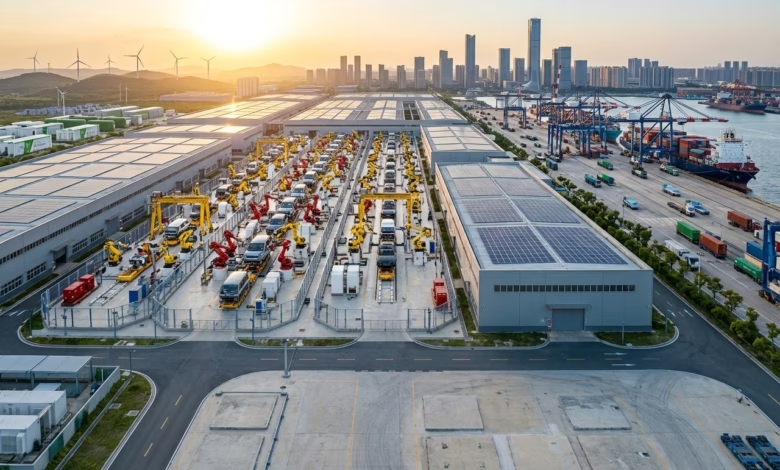
The Report Shifts From Strategic Theory To Practical Ground Realities Within Industrial Parks And Production Platforms. The WEF Notes That Industrial Parks Transformed From Isolated Factory Clusters Into Micro-Ecosystems Of Systematic Innovation and Core Building Blocks Of Transformation. These Parks Serve As Testbeds For Technologies And Business Models Before National Rollout, Creating Interaction Between Top-Down Guidance And Ground Initiatives.
Detailing These Parks, The Report Highlights “Zero-Carbon Industrial Parks,” A Key Product Of The Greening Strategy. These Parks Rely On Direct Renewable Energy Integration (Solar, Wind) Rather Than Traditional Grids. Entities Like China Southern Power Grid Developed Smart Microgrids Managing Energy Fluctuations With Battery Storage And Green Hydrogen Technologies. Consuming Clean Energy On-Site Reduces Transmission Losses And Grants Local Enterprises A Competitive Edge In Low-Carbon Markets.
Concurrently, The Report Details The Technological Leap Transforming Parks Into Data-Driven Smart Entities. Deploying Industrial 5G Networks And IoT Sensors Created “Digital Twins” Of Entire Parks, Enabling Real-Time Monitoring Of Production, Resources, And Supply Chains. Shared Digital Infrastructure Lowers Entry Barriers For SMEs; Rather Than Building Private Data Centers, Parks Offer Cloud Computing And AI Services, Accelerating SME Digital Transformation.
At The Corporate Level, The Report Dissects The Symbiotic Relationship Between Anchor Enterprises And Specialized SMEs. Large Firms Act As Engines Pulling Supply Chains Toward Modernization; When A Leading EV Or Solar Firm Adopts Smart Production Or Green Procurement, It Cascades Requirements Down Its Network. This “Technological Pull” Forces SMEs To Upgrade. In Response, Government Policies Nurture “Little Giants”—SMEs Focused On Niche Technologies That Invest Heavily In R&D To Become Global Leaders In Specific Components, Adding Resilience To China’s Industrial Fabric.
Additionally, The Report Examines Circular Economy Practices Applied In Parks. Industrial Waste Transformed From An Environmental Burden Into A Strategic Resource. Parks Adopt “Industrial Symbiosis,” Where Outputs Of One Factory Become Inputs For Another. Waste Heat Generates Power, Industrial Water Is Recycled In Closed Loops, And Emitted Gases Are Captured For Chemicals, Boosting Economic Efficiency And Environmental Sustainability.
These Interconnected Practices Demonstrate How High-Level National Policies Translate Into Sustainable Operational Success, Proving That Execution Capacity At The Production Base Is The True Pillar Guaranteeing Strategic Visions Become Competitive Economic Reality.
In Its Final Chapter, The Report Moves To Complex Global Realities, Highlighting Challenges And Geopolitical Risks Facing China’s Transformation. The WEF Acknowledges Transformation Happens Amid Polarization And Protectionism. “De-Risking” Or “Decoupling” Policies By Major Western Economies Impose Pressure On Global Supply Chains Centered In China. High Tariffs On Chinese Green Tech (Solar Panels, Batteries, EVs) Create Artificial Barriers Disrupting Innovation Flows And Raising Global Transition Costs. However, External Pressures Act As An Inverted Catalyst, Accelerating China’s Self-Reliance In Core Technologies And Deepening Innovation To Overcome Supply Chain Bottlenecks, Turning Geopolitical Challenges Into Drivers For Technological Sovereignty.
Domestically, Structural Challenges Require Skillful Navigation. Accelerating Demographic Shifts—an Aging Population And Shrinking Youth Labor Force—Necessitate Automation, Advanced Robotics, And AI Deployment To Maintain Productivity. Alongside Demographics, Securing A “Just Transition” Is Critical; As Decarbonization Accelerates, Traditional Heavy Industries And Coal-Dependent Regions Face Economic Marginalization And Job Losses. The Report Emphasizes Flexible Social Safety Nets And Large-Scale Retraining Programs To Ensure No Region Or Group Is Left Behind In The Low-Carbon Economy.
Facing Dual Internal And External Dynamics, The Report Details “The Path To Scale” Adopted By China To Reshape Its Global Role. China Has Shifted From Being The “World’s Factory” Exporting Goods To Exporting Development Models And Industrial Standards. Through Strategic Initiatives Aligned With The Belt And Road Vision, Chinese Firms Localize Capacity By Building Smart, Green Industrial Parks In The Global South And Emerging Economies. This Systematic Expansion Transfers Technology And Management Practices, Diversifies Supply Chains, Mitigates Geopolitical Risks, And Accelerates Industrialization In Host Countries, Solidifying China’s Position As A Reliable Development Partner.
The WEF Concludes By Urging The International Community To Abandon Zero-Sum Mindsets Regarding China’s Technological Rise. Major Existential Challenges—Climate Change And Generative AI Governance—Are Transnational And Cannot Be Addressed In Isolation. The Report Emphasizes Maintaining Open Communication Channels, Building International Frameworks For Carbon Accounting And Green Certification, And Establishing Consensus Regulations For Emerging Tech. Leveraging China’s Renewable Scaling Experience And Facilitating Affordable Green Tech Transfer To Emerging Economies Is The Only Rational Path To Supply Chain Resilience, Sustainable Development Goals, And Planetary Protection.