

Sudan’s Renewable Sun: How Did Solar Energy Illuminate The Path To Survival Amidst The Darkness?

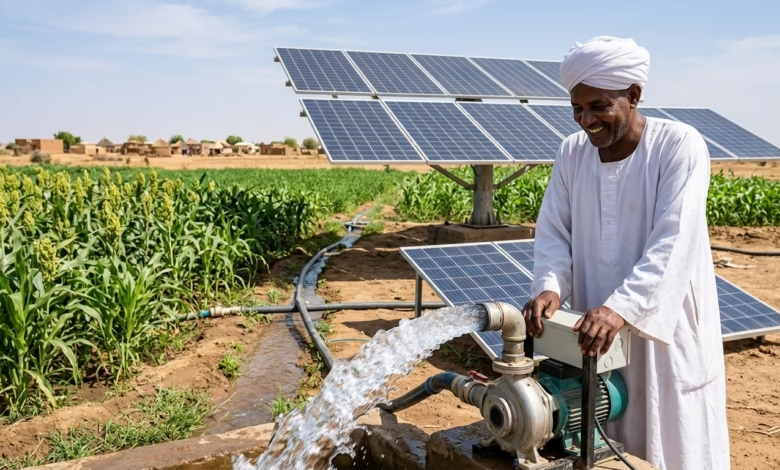
Light In The Heart Of Darkness.. How Solar Energy Has Transformed Into A Lifeline In Sudan?
In The Midst Of One Of The Most Complex Humanitarian, Economic, And Institutional Crises In Modern Sudanese History, A Ray Of Hope Emerges From The Debris Of The Collapsed Infrastructure, Represented By The Sunlight That Has Long Illuminated The Skies Of This Vast Country. The Recently Issued Report Titled “Sudan Solar Energy Value Chain” Presents Us With A Precise And Detailed Panoramic Picture Of The Energy Situation In Sudan, Where The Shift Toward Solar Power Is No Longer Just An Environmental Luxury Or An Alternative Option To Improve The Quality Of Life. Instead, It Has Radically Transformed Into The Primary And Virtually Sole Lifeline For Ensuring The Continuity Of Livelihoods, Maintaining Essential Services, And Supporting Local Economic Activity Under Force Majeure Extraordinary Conditions. This Dramatic Shift Came As An Inevitable Consequence Of The Ongoing Conflict That Severely Disrupted Electricity Infrastructure And Cut Off Fuel Supply Chains, Leaving Households, Communities, And Businesses Facing A Harsh Reality With A Severe And Unprecedented Shortage Of Reliable Power Supplies.
A Careful Reading Of The Report Reveals To Us The Magnitude Of The Economic And Social Disaster Rooted Deeply In Sudanese Society. The Ongoing Conflict Has Resulted In Widespread Economic Destruction, Massive Job Losses, And A Worrying Increase In Unemployment Rates. Central Government Functions Have Been Almost Completely Paralyzed, Which Negatively Impacted Service Delivery, Especially At The Local Level. This Coincided With A Sharp Drop In Tax Revenues That Drove The Ministry Of Finance To Halt Government Transfers And Capital Expenditures. This Gloomy Picture Is Exacerbated By The Displacement Of Over 11 Million People, While Recent Estimates Point To An Extreme Scenario Where 2025 Could Witness A Contraction In Gross Domestic Product Of Up To 42%, A Halving Of Agricultural Sector Employment, And A Massive Surge In The National Poverty Rate By About 19 Percentage Points.
In This Tragic Context, The Report Reviews How The Energy Sector Was Severely Affected By The Conflict, Even Though Structural Problems Were Rooted In It Even Before The Outbreak Of The Crisis. Under The Power System Restructured By The Electricity Act Of 2001, The Sector Suffered From Systemic Inefficiency And Limited Grid Coverage, Particularly In Rural Areas, Impeding Any Tangible Progress. Electricity Access Rates In Sudan—According To Multiple Sources Cited In The Report—Range Between 45% And 60%, Concentrated Mostly In Urban Areas, While Remote Regions Were Left In Complete Darkness. With The Collapse Of The National Grid And The Destruction Of Traditional Energy Infrastructure—Where Losses In Generation And Transmission Networks Are Estimated At Over 1.7 Billion Dollars And Could Reach Up To 3 Billion Dollars—Reliance On Decentralized Systems, Specifically Solar Energy, Has Become An Indispensable Necessity.
The Report Emphasizes That Off-Grid Solar Energy Holds Strong Potential, Especially For Women, Who Reported That Using Solar Photovoltaics (PV) Reduces The Risks Associated With Dealing With Black-Market Fuel Traders, Who Are Predominantly Male. However, The Pre-Conflict Adoption Of This Technology Was Slow Due To High Costs And Limited Financing Options. The Challenge Now Lies In How To Turn This Crisis Into An Opportunity, As The Absence Of Government Electricity And The Global Availability Of Low-Cost Solar Panels Have Become A Strong Incentive For Citizens And Businesses To Seek Individual Decentralized Solutions That Guarantee Survival And Production Under Extremely Harsh Conditions.
Gaps In Value Chains.. A Arduous Journey From Factory To Consumer
When We Dive Deeper Into The Pages Of The Report, We Find A Precise Surgical Analysis Of The Solar Energy Value Chain In Sudan, A Chain Suffering From Structural Gaps And Logistical Obstacles That Make Providing Power An Extremely Arduous Task. The Report Identifies The First And Largest Of These Gaps As The Absence Of Local Manufacturing And National Supply Chains; All Solar Photovoltaic System Components (Panels, Inverters, And Batteries) Are Fully Imported From Abroad. This Absolute Reliance On Imports Makes The Entire Sector Hostage To Macroeconomic Fluctuations, Primarily The Acute Shortage Of Foreign Currency In The Domestic Market, High Inflation Rates, And Continuous Devaluation Of The National Currency.
The Daily Suffering Of Importers And Businesses Operating In This Field Manifests In “Logistical Bottlenecks” At Ports, Which Have Worsened Horrifically Since The Onset Of The Conflict. The Report Clearly Points Out That The Arbitrary Nature Of Import Regulations And Customs During The Conflict Represents A Major Bottleneck. The Goods Clearance Process At Port Sudan Suffers From Severe Bureaucracy And Exorbitant Costs; Customs Clearance Times At The Port Escalate Dramatically To Sometimes Reach Two And A Half Months, Leading To Heavy Daily Demurrage Fines That Can Reach Up To 200 US Dollars Per Day. This Is In Addition To The Lack Of Technical Knowledge Among Personnel At The Sudanese Standards And Metrology Organization (SSMO), Leading To Arbitrary Quality Decisions, Inconsistent Certification Requirements, And Cargo Stagnation.
Obstacles Do Not Stop At Port Gates; Once Attempting To Transport This Vital Equipment Into The Sudanese Interior, Companies Face A Nightmare Of Another Kind, Represented By Road Insecurity And The Need To Obtain Multiple Permits From Various Authorities, Including Military Intelligence And Traffic Management. Furthermore, Inter-State Transportation Represents A Major Problem Due To Time Restrictions (Such As Banning Entry Into Cities After 6 PM), As Well As Arbitrary Fees And Taxes, As Each State Imposes Its Own System, Creating A Fragmented Governance Environment That Increases Political And Logistical Risks.
The Report Adds Another Dimension To These Gaps, Represented By Weak Distribution Networks, Installation Services, And After-Sales Support, Especially Outside Major Cities. Rural And Marginalized Areas Suffer From A Severe Shortage Of Trained Technicians And Service Providers, Leading To A Decline In Consumer Confidence Regarding The Reliability Of Solar Systems When They Malfunction And Cannot Be Maintained. This Issue Is Compounded By Merchants Seeking Quick Profits Who Entered The Market After The Conflict Began, Flooding The Market With Low-Quality Equipment And “Supply Waste” That Includes Damaged Products And Panels With Fake Capacity Labels, Impairing The Overall Reputation Of Solar Technology. All These Factors Ultimately Lead To High Capital Requirements For Businesses And Exorbitant Upfront Costs For Consumers, Making This Technology Exclusive To Those Digitally Capable While Excluding The Poorest And Most In Need Strata.
Market Trends And Import Dynamics.. Demand Paradoxes In Time Of War
By Reviewing The Data And Statistics Provided In The Report, We Discover A Striking Picture Of Market Activity And Import Trends In Sudan’s Solar Sector—A Picture Reflecting Forced Adaptation To The Reality Of War And Infrastructure Collapse. The Report Shows That Sudan’s Solar Photovoltaic (PV) Imports Witnessed Fluctuations Linked To Policy Changes And Conflict-Driven Demand. While Average Imports In Sub-Saharan Africa Remained Relatively Stable, Sudan Experienced Notable Spikes.
The First Of These Spikes Came In Response To Purely Economic Decisions, Specifically The Removal Of Fossil Fuel Subsidies In September 2020 And The Exchange Rate Unification In February 2021, Which Made Solar PV More Competitive Against Diesel Generators, As Clearly Evidenced By The Increase In Imports In 2021. The Second And Intriguing Surge Occurred In 2024, Directly Attributable To Rising Demand For Solar PV Following The Outbreak Of Armed Conflict. The Widespread Destruction Of Electricity Infrastructure Led To A Sharp Increase In Demand For Solar Power, Even Among Households And Businesses Previously Connected To The National Grid. The Report Indicates That This Demand Took Time To Materialize (From April 2023 To January 2024) Due To Supply Chain Instabilities In The Initial Months Following The Outbreak Of Conflict.
The Bright Side In This Data, As Confirmed By The Report, Is The Continuous And Massive Decline In Prices Of Imported Solar Equipment. The US Dollar Price Per Watt Has Steadily Declined Over Time, Dropping From 0.38 Dollars Per Watt In Early 2017 To Between 0.05 And 0.10 Dollars Per Watt By Mid-2025, Representing A Staggering Drop Ranging Between 73% And 85% Over An Eight-Year Period. This Substantial Drop In Global Prices Made The Technology Far More Affordable; Otherwise, The Cost In Light Of The Local Currency Collapse Would Have Been Nearly Impossible For Average Citizens. The Report Shows That Almost All Imports Consist Of Solar Panels, With A Very Small Percentage Of Imported Solar Cells.
Despite This Growth, The Report Reveals Deep Geographical Disparities In Energy Use Within Sudan Prior To The Conflict; Survey Data Displayed A Divide Between Regions Relying On The National Grid (Such As Khartoum, Central, Eastern, And Northern States) And Those Lacking Any Official Energy Source And Relying On Firewood Or Candles (Such As Darfur And Kordofan). Interestingly, Household Solar Adoption Rates Were Highest In Khartoum (Over 7%), Followed By Kordofan (Around 6%) And Then Darfur (Around 5%), Reflecting Growing Reliance On Off-Grid Solutions In Regions Suffering From Chronic Service Deficits Even Before The War.
Survival Struggle For MSMEs And Available Business Models
The Report Devotes Broad And Important Space To Analyzing The Devastating Impact Of War On Micro, Small, And Medium Enterprises (MSMEs), Which Represent The Backbone Of The Local Economy And A Primary Engine For Employment. The Ongoing Conflict Triggered A Multifaceted Crisis For These Businesses, Disrupting Their Operations Ranging From Energy Access And Production To Supply Chains And Financial Stability. Energy Deficits Led To Widespread Disruptions In Economic Activity, As Businesses Suffer From Continuous Power Outages Exacerbated By Infrastructure Damage And Lack Of Maintenance, Interruptions That May Last For Days Or Even Months.
Grid Failures Were Accompanied By Severe Shortages In Diesel And Gasoline Fuels, Alongside Insane Price Hikes, Making Reliance On Private Generators Extremely Expensive And Completely Eliminating Profit Margins. Under These Harsh Conditions, Numerous Businesses And Farmers Turned To Solar Energy As A Stable And Cost-Saving Alternative. Nevertheless, A Huge Barrier Impedes This Transition: Initial Capital Cost. Study Participants Unanimously Agreed That Upfront System Installation Costs Are Unaffordable For Most Small Enterprises And Farmers Across All States, Representing The Most Critical And Recurring Obstacle.
The Report Discusses Business Models In The Solar Sector, Explaining That The Sudanese Market Today Is Dominated By The “Outright Purchase” Model, Where The Customer Pays Full Equipment Costs Upfront. In Contrast, The “Energy-as-a-Service” (EaaS) Model Is Emerging, Where Customers Pay For The Energy They Consume Rather Than The Equipment Itself, Removing Large Upfront Capital Expenditure Burdens. Although This Latter Model Is Considered The Theoretical Best Solution To Energy Poverty In Sudan And Was Successfully Applied In East African Nations Via Pay-As-You-Go (PAYGO) Systems, It Is Currently Disrupted In Sudan. According To The Report, This Disruption Is Due To Major Macroeconomic Factors; Sudanese Pound Volatility Makes Long-Term Contracts High-Risk For Service Providers Who Import In Hard Currency And Collect Revenue In Local Currency. Furthermore, The Success Of This Model Relies Heavily On Mobile Money Services, Which In Turn Suffer From Unreliability And Weak Infrastructure Among Telecom Companies Severely Damaged By Conflict.
The Unfortunate Result Of These Constraints Is That The “Outright Purchase” Model Excludes The Overwhelming Majority Of Citizens And Enterprises Who Lack Adequate Cash Liquidity. Liquidity Shortages And Bank Closures Or Scaled-Back Operations Have Restricted Loan Availability And Financing Programs, And Even Available Loans Come With High Interest Rates (20-35%) Or Extremely Short Repayment Windows. These Issues Are Doubled By Acute Shortages Of Qualified Technicians And Engineers Required For Proper Installation And Maintenance, As Well As Widespread Concerns Regarding Imported Equipment Quality Amid An Absence Of Reliable Warranties.
Solutions Pathways And Strategic Interventions.. Toward Building A Sustainable Market
The Report Presents A Comprehensive Roadmap And Practical Recommendations For Strategic Interventions Aimed At Addressing Critical Gaps In The Solar Energy Supply Chain And Building A Resilient Market That Supports Livelihoods Across Sudan. The Report Does Not Merely Diagnose The Disease; It Extends To Prescribing Treatment Through Short-, Medium-, And Long-Term Interventions Targeted At Various Actors, Including The Government, International Organizations, And Multilateral Development Banks.
In The Short Term, Government Intervention Emerges As An Urgent Necessity To Streamline Emergency Imports And Lower Costs. The Report Recommends That The Government Grant Comprehensive And Temporary Customs And Tax Exemptions On All Approved Solar PV Components (Such As Panels, Inverters, Batteries, And Pumps). This Measure Would Directly Address The Upfront High Cost Obstacle Burdening Consumers And Small Businesses. In Parallel, The Report Stresses The Need To Accelerate Customs Clearance By The Sudanese Standards And Metrology Organization (SSMO) For Products Pre-Certified By Reputable International Bodies, Suggesting The Use Of Solar Labs For Random Spot-Checks Rather Than Mandatory Pre-Shipment Inspections To Curb Fatal Logistical Delays In Port Sudan.
Regarding Addressing The Financing Crisis And De-Risking For Businesses, The Report Proposes Establishing “De-Risking Facilities” Supported By International Organizations To Offset Losses Arising From Extreme Exchange Rate Volatility, Enabling Solar Importers To Secure Cargoes Without Facing Bankruptcy. There Is Also An Urgent Need To Support Hard Currency Credit Lines For Reputable Importing Companies To Ensure The Flow Of Equipment.
As For Capacity Building And Quality Assurance, The Report Suggests Interventions Focused On Training An Army Of Skilled Technicians Capable Of Designing, Installing, And Maintaining Solar Systems, Rebuilding Consumer Trust And Increasing Project Efficiency. Because The Agricultural Sector Represents The Backbone Of Livelihoods, The Report Offers An Intervention Model Based On Providing Microfinance To Establish Decentralized “Micro-Grids” Supporting Irrigation And Rural Economic Activities.
The Document Represents A Warning Cry And Simultaneously A Strategic Action Guide. It Reaffirms That Transitioning To Solar Energy In Sudan Is No Longer A Noble Environmental Choice, But A Matter Of Survival, As Well As National And Community Security. By Adopting A Comprehensive Value Chain Approach And Providing Proper Financial And Regulatory Support, The International Community And Local Actors Can Turn This Crushing Crisis Into A Historical Opportunity To Lay The Groundwork For A Resilient, Decentralized, And Sustainable Energy System That Illuminates The Path For Sudanese People Toward Recovery And Reconstruction.
Silent Revolution In The Agricultural Sector.. Solar-Powered Water Pumping
Continuing The Reading Of The Complex Landscape Surrounding Sudan’s Energy Sector, Agriculture Emerges As One Of The Most Important Domains Experiencing A Silent Revolution Thanks To Expanding Solar Energy Utilization. In The Recent Past, The Sudanese Farmer Groaned Under Near-Total Reliance On Diesel Generators, Which Transformed Upon Conflict Outbreak And Supply Chain Collapse Into Heavy Financial Burdens Threatening To Halt Production And Destroy Crops. However, Strategic Developmental Interventions Proved That Solar Power Can Completely Change Game Rules In Agricultural Areas. Hundreds Of Solar Water Pumping Systems Were Installed Over Recent Years, Producing Astounding Real-World Results. This Achievement Was Not Limited To Reducing Dependence On Expensive And Scarce Fossil Fuels; It Extended To Lowering Operational Costs By Dramatic Percentages Reaching Seventy Percent In Numerous Applications. This Substantial Expenditure Cut Reflected Directly And Tangibly On Increased Agricultural Yields And Improved Profit Margins, Transforming The New Energy System Into An Integral Part Of Agricultural Production That Serves As A Lifesaver Protecting National Food Security Under Darkest Conditions.
Energy Re-Engineering.. DC-Native Infrastructure
With The Inevitable Expansion In Relying On Solar Energy As A Strategic Alternative Rather Than A Temporary Fix, An Extremely Critical Engineering And Economic Question Arises: Should Every Unit Of Solar-Generated Electricity Be Inverted Into Alternating Current (AC) Merely To Power Conventional Appliances? Advanced Discussions Regarding Sudan’s New Energy Model Strongly Drive Away From This Traditional Pattern Riddled With Substantial Energy Losses, Pushing Instead Toward Establishing Native Direct Current (DC-Native) Infrastructure. This Revolutionary Concept Relies On A Simple Yet Highly Effective Idea; Since Solar Panels Produce Direct Current (DC), It Is Logical To Adopt Equipment And Appliances Operating Directly On DC. Eliminating Inverters Converting DC To AC Significantly Reduces Power Losses While Lowering Capital Expenditures And Complex Maintenance Faults. This Shift Means Ceasing To Treat Electricity Merely As A Consumer Service And Commencing Its Utilization As A Direct Strategic Foundation Propelling Industry And Agriculture, Giving Sudan An Exceptional Advantage To Build A More Efficient And Reliable Energy Ecosystem Suited For Decentralized Production.
Strategic Cooling And Supply Chains.. Solar Cold Rooms As A Model
This New Infrastructure Gains Multiplied Importance When Moving To One Of The Most Sensitive And Vital Applications For Sudan’s Economy And Public Health: Strategic Cooling Systems. In A Country Suffering From High Temperatures, Massive Post-Harvest Crop Losses, And Dire Needs For Preserving Medicines And Vaccines Amid Conflict, Cold Rooms Become An Urgent Necessity. Instead Of Complex Traditional Models Linking Solar Panels To Inverters And AC Compressors And Fans, The New Approach Proposes An Innovative And Efficient Design; Energy Travels Directly From Solar Panels Via DC Lines To Power Compressors And Control Systems Purpose-Built For DC Operation. Eliminating Unnecessary Energy Conversion Enhances System Technical Efficiency While Rendering It More Sustainable And Operational In Remote, Challenging Environments. Elevating Direct Solar Cooling Into A Pioneer National Application Creates Enormous Added Value, Protecting Agricultural And Medical Assets Previously Prone To Continuous Spoilage Due To Grid Outages And Fluctuation.
Micro-Grids.. Lifelines For Rural And Remote Communities
The Disaster Befalling The National Electricity Grid, With Losses Estimated In Billions Of Dollars, Imposes A New Geographic And Development Reality, Particularly For Rural And Remote Communities Already Suffering From Long-Term Deficits. Instead Of Waiting Decades For High-Voltage Transmission Lines To Reach Every Remote Village, Attention Turns Firmly Toward Developing Decentralized Solar Micro-Grids Serving Productive Purposes. These Micro-Grids Present A Practical, Rapidly Scalable Solution Designed To Operate Independently From The Collapsed Main Grid, Delivering Clean, Reliable Power To Service-Deprived Areas. This Rigorous Direction Demands Strict Adherence To Global Technical Standards For Solar Array Design, Including Precision Isolation Protection Systems Ensuring Network Stability And Sustainability. Through Micro-Grids, Sudanese Villages Transform From Communities Awaiting Intermittent Central Power Into Self-Sufficient Energy Production Hubs Capable Of Powering Water Pumps, Grain Mills, And Light Processing Units, Generating Local Jobs And Anchoring Populations.
From Core Collapse To Economic Powerhouse.. Toward A Comprehensive Sustainable Vision
Ultimately, It Appears Clear That The Severe Shock Sufferings Of Sudan’s Energy Sector, Despite Their Harshness And Catastrophic Fallout, Carry A Historic Opportunity To Rebuild A National System On Modern, Flexible, And Innovative Foundations. Overcoming Conflict Hardships Requires Embracing A Comprehensive Development Vision Moving Beyond Superficial Damage Repairs To Fully Restructuring The Sector According To Future Realities. This Vision Rests On Parallel Tracks Starting With Rehabilitating Viable Infrastructure, Expanding Source Diversification Through Heavy Reliance On Unused Renewable Resources, And Focusing Firmly On Energy Efficiency Via Direct Technology. Most Importantly, The Ultimate Goal Of This Energy Transformation Must Be Driving Local Industrialization—Using Independent, Decentralized Energy As A Lever To Develop Industries Ranging From Agro-Processing To Artisanal Manufacturing. Sudan Stands At A Pivotal Crossroads, Capable Of Turning Power Outages And Institutional Ruin Into A Launchpad For A Resilient Economic Model Driven By Vast Solar Potential.